Bill C-471 (Historical)
Pay Equity Task Force Recommendations Act
An Act respecting the implementation of the recommendations of the Pay Equity Task Force and amending another Act in consequence
This bill was last introduced in the 40th Parliament, 3rd Session, which ended in March 2011.
This bill was previously introduced in the 40th Parliament, 2nd Session.
Sponsor
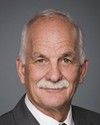
Michael Ignatieff Liberal
Introduced as a private member’s bill. (These don’t often become law.)
Status
Introduction and First Reading
(This bill did not become law.)
Elsewhere
All sorts of information on this bill is available at LEGISinfo, provided by the Library of Parliament. You can also read the full text of the bill.
Votes
- May 5, 2010 Passed That the Bill be now read a second time and referred to the Standing Committee on the Status of Women.
Status of Women
Committees of the House
Routine Proceedings
November 3rd, 2010 / 3:35 p.m.
See
context
Liberal
Hedy Fry Vancouver Centre, BC
Mr. Speaker, I have the honour to present, in both official languages, the fourth report of the Standing Committee on the Status of Women, on Bill C-471, An Act respecting the implementation of the recommendations of the Pay Equity Task Force and amending another Act in consequence.
November 2nd, 2010 / 8:50 a.m.
See
context
Liberal
The Chair Hedy Fry
I call the meeting to order.
We are meeting today, pursuant to the order of reference of Wednesday, May 5, with regard to Bill C-471, an act respecting the implementation of the recommendations of the pay equity task force and amending another act in consequence.
We will go to clause-by-clause consideration.
Pursuant to Standing Order 75(1), consideration of the preamble and clause 1 is postponed.
(On clause 2--Implementation of recommendations)
Are there any motions?
I think we have a motion with regard to clause 2. It is from Ms. Neville.
October 28th, 2010 / 10:30 a.m.
See
context
Conservative
The Vice-Chair Cathy McLeod
Everyone has these in front of them. Do we need to have them read out?
Is there any debate on this motion?
(Motion negatived) [See Minutes of Proceedings]
Just as a quick reminder, the members of the committee are asked to send to the clerk their proposed amendments to Bill C-471 by Friday, October 29, at 4 o'clock. And we will be doing clause-by-clause on November 2.
October 28th, 2010 / 10:20 a.m.
See
context
Conservative
The Vice-Chair Cathy McLeod
Thank you.
That finishes our three rounds.
I'd like to thank all the witnesses.
I have to say, the commitment to pay equity is a very important issue. Really, it becomes the deliberation whether Bill C-471 or the Public Sector Equitable Compensation Act is the better way to get there.
But please be assured that we all, I think, want to achieve pay equity. Really, the debate is about the best way to achieve this. So thank you again.
I believe we now have a motion from Madame Demers that we'll be discussing.
We'll suspend for 30 seconds.
October 28th, 2010 / 10:10 a.m.
See
context
Senior Consultant, Opus Mundi Canada
As Ms. Pageau mentioned, the task force report also includes comments on aboriginals, visible minorities, and disabled people. In respect, I think Bill C-471, by its reference to the task force report, has a broader ambit than section 11 of the Canadian Human Rights Act, and it is absolutely broader than the PSECA, which covers essentially gender.
October 28th, 2010 / 10:10 a.m.
See
context
Liberal
Yasmin Ratansi Don Valley East, ON
That's fine.
When we talk about human rights, I think there was a response in the status of women report on pay equity in 2004. I think it was a very good report because it basically balances out that pay equity is separate from bargaining rights because they are two separate issues.
Bill C-471 deals with those issues. I'd like you to comment on how that would help or enhance equality between genders and equality among different Canadians.
October 28th, 2010 / 9:20 a.m.
See
context
Bloc
Nicole Demers Laval, QC
Thank you, Madam Chair.
Thank you very much for appearing today. My first question is addressed to you, Ms. Michaud. I would first like to express our gratitude for all the work you do at Statistics Canada.
Why are the data you have presented so old? You presented data going back to 1997. For one thing, it seems to me that the situation, as well as the data relating to women's education have changed considerably. So, I am not sure that these data are accurate, compared to the image we have of women in the labour market. Things may have evolved over the last 13 years. The data we have on educational attainment date back to 1997, which makes them very old.
Ms. Pageau, I would like to know whether you are concerned about possible repercussions if we are not able to pass Bill C-471 fairly quickly. Do you think there will be consequences for public sector employees if, for some reason, the House were to be prorogued or Parliament were to be dissolved before we were able to pass Bill C-471 and if, unfortunately, Bill C-9, which has been passed, were to go into effect in January, as planned?
I would like to hear first from Ms. Michaud, and then, Ms. Pageau.
October 28th, 2010 / 9 a.m.
See
context
Executive Director, Federally Regulated Employers - Transportation and Communications (FETCO)
Thank you, Madam Chair.
My name is John Farrell. I'm the executive director of Federally Regulated Employers - Transportation and Communications. Joining me today as an adviser on pay equity matters is Ms. Barbara Gagné, manager of labour relations and classification at Nav Canada, a FETCO member.
I have provided the clerk with a full report of our point of view. It will be translated and will be provided to the committee. Given time constraints, I'll confine my comments basically to those key matters that we believe are important to federally regulated employers with respect to Bill C-471.
First of all, FETCO unequivocally supports pay equity. The vast majority of FETCO members are federal contractors and already comply with section 11 of the Canadian Human Rights Act and with other employment legislation, including the Canada Labour Code and the Employment Equity Act. The challenge is to devise and execute a fair and equitable plan that will achieve pay equity to the extent possible in an appropriate period of time.
FETCO appeared as a witness before this standing committee with respect to the Public Sector Equitable Compensation Act. We gave evidence that we believed certain aspects of this act were beneficial, primarily in that it requires both employers and unions to share the responsibility for equitable compensation. It also proposed, in our view, more efficient, effective, and equitable problem-solving and dispute resolution procedures.
With respect to the recommendations of the pay equity task force, I wish to reiterate FETCO's point of view, which was expressed in advance of the pay equity task force in 2004 and when we made comments on the report of the pay equity task force at that time.
First and foremost, FETCO supports a proactive problem-solving approach to pay equity. However, pay equity has an integral part in the determination of wages and other employment compensation, in conjunction with the many other factors that influence wages and compensation in a market-driven economy. The skill level, effort, responsibility, and working conditions required for a given career path affect wages. So do the supply of persons available and the demand for employees in a given labour market. The state of the company or the organization affects pay equity, and the state of the industry in which the company operates affects pay. The level of unionization of the workforce and the relative strength of the union in its ability to bargain for the bargaining unit and to negotiate wage and benefit increases also affect pay practices. The priorities of the workforce in terms of trade-offs involving wages, benefits, working conditions, work–life balance, and the duration of collective agreements affect pay practices.
Therefore, a full understanding of all the aspects that affect compensation is required in order to develop a plan and redress any inequities that may exist. In addition to possessing an understanding of human rights matters, persons assisting in the resolution of pay equity matters and the adjudication of pay equity disputes must also understand wage and benefit compensation, labour and employee relations, and business economics.
Pay equity legislation must be simultaneously considered in conjunction with the Canada Labour Code. Both employers and unions must jointly be held accountable for achieving pay equity. This must be a bilateral responsibility, not a unilateral employer responsibility, as is currently the case. This is one of our major points. In a unionized environment, it is the employer and the union acting together that make a bilateral agreement about what compensation is to be paid to employees. In fact, the union plays a major role in the distribution of the total compensation package. Both pay equity and collective bargaining are over the same activity: the level, structure, nature, and amount of compensation. In a unionized environment, these two activities must be integrated.
The current process allows unions to negotiate an agreement and then file a complaint under section 11 of the Human Rights Act and claim it has been violated. The end result is additional wage adjustments. In effect, the unions are using pay equity as a means to double-dip. This is one of the principal reasons that pay equity complaints have been protracted and contentious. This double-dipping must stop.
October 28th, 2010 / 8:50 a.m.
See
context
Gisèle Pageau Human Rights Director, Communications, Energy and Paperworkers Union of Canada
Good morning, everybody.
I've prepared a statement so that I can stay within the five minutes. I think I'm three seconds over, so I hope you'll indulge me.
The CEP appreciates the opportunity to appear before the standing committee and to comment on proposed Bill C-471. The CEP is one of Canada's largest private sector unions, representing about 120,000 workers in a wide range of occupations across Canada, including both the private and the broader public sectors. The CEP has a longstanding record of defending the human rights of its members, and we have a strong interest in pay equity matters. We were the first union to undertake joint union and management pay equity initiatives in several of Canada's private and publicly owned telephone companies. Our telephone operators lived through a 15-year nightmare as a result of inadequate legislation. The CEP fought hard to bring pay equity to 4,700 women, 18% of whom died before ever seeing any compensation.
We support Bill C-471, which will see the abolishment of the Public Sector Equitable Compensation Act, the long overdue implementation of the 2004 pay equity task force recommendations, and finally will ensure that pay equity remains a human right for all women.
Sex- and gender-based pay inequity is a human rights issue. It is the result of systemic discrimination and societal perception of the value of work traditionally performed by women. Consequently, to consider pay equity as a labour issue to be dealt with at the bargaining table is not only detrimental, it is an inaccurate characterization of the nature of pay inequity. It is imperative that pay equity remain a human rights issue and not form part of collective bargaining schemes.
There are a number of reasons why the characterization of pay equity as simply an aspect of labour or employment law should be avoided. Firstly, to characterize it as such undermines Canada's international commitment to human rights, including equal pay for work of equal value. In a labour context, human rights are paramount, and parties cannot legally contract out of human rights obligations. Forcing pay equity into collective bargaining processes and out of the process of human rights would be to risk the bargaining away or erosion of whatever pay equity gains have been made for women. The rights of disadvantaged groups and minorities should never be subject to the whims of the majority.
Secondly, the inclusion of pay equity as an issue to be negotiated through collective bargaining ignores the systemic and encompassing nature of pay inequity. The systemic discrimination is reflected not just in the organization of workplaces but also in the structure and the strength of the bargaining units and unions. Bargaining units that are predominantly female may invite the replication of patterns and perceptions, or gender segregation and the undervaluing of work. This lends itself to an inherent though sometimes unconscious power imbalance at the bargaining table, thereby undermining the principles that pay equity attempts to promote.
We advocate a proactive, comprehensive, and collaborative model of pay equity legislation for all workplaces. While the CEP believes that individuals should have a mechanism available to them whereby complaints can be initiated, we acknowledge that the complaint-based system alone cannot ensure pay equity compliance. This would include a positive duty on employers to review organizational wage structures and remedy gender-biased pay equity practices. Audits must be conducted thoroughly and consistently to ensure a seamless continuity of pay equity throughout the federal sphere. In addition, employers must be provided with realistic and tangible timelines for the implementation of equitable wage structures and payouts for past discriminatory practices.
It is the view of the CEP that pay equity is not a one-time remedy, but rather pay equity in the workplace must be examined frequently. It should be said that union participation cannot be equated with union responsibility from a compensation perspective. Employers pay wages and are solely responsible for non-discriminatory compensation practices. The inherent power imbalance within the employer-union relationship and the fact that ultimately employers hold the purse strings precludes unions from liability for pay equity.
As you are all aware, the pay equity task force has exhaustively studied this issue. Almost 200 people gave oral presentations. There were 60 written submissions from groups across the country. There were five round-table discussions with multi-stakeholder groups. The task force looked at proactive pay equity legislation in a number of jurisdictions in Canada to identify best practices.
The CEP supports the task force recommendations. This government does not need to reinvent the wheel on this issue. It's time to put it to rest once and for all and do what's right and long overdue for the women of Canada.
Thank you.
October 28th, 2010 / 8:50 a.m.
See
context
Conservative
The Vice-Chair Cathy McLeod
I call the meeting to order.
Pursuant to the order of reference of Wednesday, May 5, 2010, we are considering Bill C-471, an act respecting the implementation of the recommendations of the pay equity task force and amending another act in consequence.
Today we have a number of witnesses. We have, from the Equal Pay Coalition of Ontario, Mary Cornish; from the Communications, Energy and Paperworkers Union of Canada, Gisèle Pageau; from the Federally Regulated Employers - Transportation and Communications, FETCO, John Farrell and Barb Gagné; from Opus Mundi Canada, Paul Durber, senior consultant; and from Statistics Canada, Marie Drolet and Sylvie Michaud.
You'll have five minutes for your presentations, and then we'll be going into questions and answers. I believe most of you have been here before, so you're familiar with our routine.
We will start with the Equal Pay Coalition of Ontario.
Thank you.