I declare the motion defeated.
It being 6:20 p.m., the House will now proceed to the consideration of private members' business as listed on today's Order Paper.

House of Commons Hansard #53 of the 37th Parliament, 3rd Session. (The original version is on Parliament's site.) The word of the day was gst.
Criminal CodePrivate Members' Business
6:15 p.m.
The Deputy Speaker
I declare the motion defeated.
It being 6:20 p.m., the House will now proceed to the consideration of private members' business as listed on today's Order Paper.
Excise Tax ActPrivate Members' Business
May 12th, 2004 / 6:20 p.m.
Bloc

Caroline St-Hilaire Bloc Longueuil, QC
moved that BillC-456, An Act to amend the Excise Tax Act, be read the second time and referred to a committee.
Mr. Speaker, today we are debating Bill C-456, an act to amend the Excise Tax Act, which is intended to exempt cloth and disposable diapers for children from the goods and services tax.
First, I will tell you that I am very honoured to speak in this House, especially since Quebec is celebrating family week until May 16. I invite the people of Longueuil and Quebec to take part in the many events that are being held everywhere in Quebec. Let us say that the time is quite appropriate to debate a bill on families. It could not be more timely.
As you know, the GST is aimed at a wide variety of goods and services, and it applies to products that are considered essential to families. However, there are several exceptions based on social, economic or administrative grounds. Supplies are thus said to be tax-free or exempted. The purpose of my bill is precisely to change one of these exceptions in Schedule V to the act by adding supplies relating to child care.
In terms of the mechanics, there is no problem, and GST exemptions have already been granted on a number of essential, not to say indispensable, goods and services, as should be the case for children's diapers. For example, there is no GST on adult diapers, while there is GST on diapers for children. Someone will have to explain the logic of that to me.
As for the Bloc Quebecois's interest in this, we have always been concerned about the interests of families and about improving the living conditions of families. In order to do so, we must introduce progressive measures that will encourage and enable young couples to start and raise a family in dignity and respect for family values. This is a very simple step and only a small one, but we all know that long journeys are begun with small steps.
Thus, in proposing to abolish the GST on diapers, I want to give families with young children a way to decrease the cost of certain purchases, such as diapers for their children. At present, GST applies to all these products, even though they are essential to the care and upbringing of a child.
Since I am now the mother of two beautiful boys—probably the most beautiful and the sweetest—Étienne and Louis-Félix, I can testify to the essential nature of these items. Believe me, it ends up costing a lot.
We cannot talk about families without talking about challenges. One of these challenges is to ensure that Quebec families have a better income, using fiscal and other measures. Another major challenge requiring attention is the decline in population growth. Obviously, the mere fact of exempting diapers from GST will not entirely improve a family's financial situation, or the demographic problem. Still, I am convinced that with a number of measures, we can make a difference and encourage couples to have larger families and more children.
Some will say that the amount families will save will be very small. In truth, it is not a large sum for a middle-class family. On the other hand, it would make a difference for a family living below the poverty line. Unfortunately, many families in Quebec, and in Canada, are raising their children in sometimes extremely difficult conditions. This amount, however tiny, can make a huge difference for many people.
The federal tax system is partially responsible and is among the most voracious and regressive in the industrialized world, and young families and women are its first victims.
The Minister of Finance must recognize these inequities, which oblige a couple with two children and a single income to pay federal income tax starting on an income of $13,719, while in Quebec, that same family starts paying income tax only when its income reaches $30,316. The federal tax threshold is completely unacceptable. The $13,719 is below the poverty line established in Quebec in 2003, which is $22,000 for a couple with two children.
Quebec, however, is among the most progressive governments in North America. Yet, it does not have the same manoeuvring room as the federal government since, unlike Ottawa, its expenses increase more quickly than its revenue. Obviously, not everyone has the same priorities, and the reality for families seems to escape the federal government.
If the Minister of Finance wants to show openness to families, then he should promise right now to change federal taxation, as the Bloc Quebecois has been asking since 1994.
The federal government must resolve once and for all the many injustices impoverishing Quebec and Canadian families, and thereby perhaps improve the birth rate.
To me the demographic problems are particularly worrisome. According to Statistics Canada, Canada's birth rate declined again in 2002 and dropped to 10.5 births for every 1,000 people. Over the past 10 years alone the rate dropped by 25.4%, which is an unprecedented dip.
In Quebec, there were 72,477 births in 2002, or 1.7% fewer births than in the previous year. At the beginning of the 20th century, the birth rate was close to 40 births for every 1,000 people in Quebec. The fertility rate is currently 1.5 children per woman, while a rate of 2.1 children per woman is needed and this does not take into account the contribution of immigration to stabilizing the population.
In light of these revealing data, I feel it is our duty as parliamentarians to introduce measures to promote demographic growth. If we do not, there will be heavy consequences in the next few decades. It is imperative to get our priorities straight.
Of course, the implementation of a real family policy is the responsibility of the governments of Quebec and the other provinces, but the federal government also has a major duty in this respect, namely to give Quebec and the provinces the means to carry it out. The federal government, which is awash in surpluses and able to find money for its friends, should be able to find some for families at least.
The federal government can afford to act on my bill, Bill C-456, and exempt baby diapers from the GST. GST revenues are forecasted to be $31 billion in 2004-05, while my proposal would cost slightly over $2 million a year.
According to Statistics Canada, in 2001, the federal government took in around $2.3 million in revenues from the GST on disposable diapers. It is fair to assume that, if it eliminated the GST, its revenues would decrease by the same amount every year. This goes to show that the measure means very little to the federal government, but it would certainly make a huge difference for some families.
As a matter of fact, while on the topic of the GST, I would like to remind the House that on, May 6, the National Assembly unanimously passed a resolution supporting the government's efforts to ask Ottawa to transfer the GST revenues to the province to rectify the fiscal imbalance and to fund, among other things, health care or other measures to help families.
I must deplore therefore the attitude of the Prime Minister of Canada, who clearly stated he had no intention of transferring any GST revenues. In Quebec alone, the GST collected on behalf of Canada amounts to $7 billion. Imagine what we could do in Quebec if we had an extra $7 billion.
The federal government has many other sources of revenue. Allow me to remind you of a few savings it made on the backs of Quebec families.
For instance, ever since the introduction of the $5 daycare program in 1998, the federal government has saved $1 billion on the backs of Quebec parents, without counting the parental leave program, which deprives Quebec families of a much more generous plan than the federal one, and which the Quebec government is postponing implementing for lack of money. What the federal government owes for this program is now estimated at around $630 million.
These are but a few examples. I do not have the time to give you the whole picture of the shortfall in Quebec and the surplus in Ottawa, commonly known as the fiscal imbalance, which deprives Quebec of $50 million every week.
We in Quebec would know just where to invest that money, in a society where Quebec takes care of its young people, its families and its senior citizens. We would invest in a healthy, well-educated society, keen to bring the stork back to Quebec.
In closing, I would like to thank Lisa Dion from my riding, who shared with me her indignation that there is tax on diapers. I share that indignation. This is one more example of the role and the power of the public.
Finally, on the occasion of family week in Quebec and in light of the importance of this measure, I seek the support of all my colleagues in the House of Commons.
Excise Tax ActPrivate Members' Business
6:30 p.m.
Canadian Alliance

Ken Epp Canadian Alliance Elk Island, AB
Mr. Speaker, I listened to every word the member said and enjoyed her speech and her argument in favour of eliminating the GST on diapers for children. If I remember correctly, I believe she was the member who carried her first baby while she was a member of Parliament. It was interesting to watch that development, shall we say.
However I would like to thank her for bringing this issue up at this time. We remember it was the Liberals who said that they would eliminate the GST on everything. While her bill purports to favour eliminating it on this one item, the Liberals said that they would get rid of it, kill it, but of course that never happened.
As she said, diapers are necessities and certainly should come under the same category as food and other necessities of life. It also is interesting that we do not have exemptions for clothing which, in our climate, is pretty much essential. Beyond that, we also have GST on food. If we buy small quantities, such as five doughnuts, we have to pay GST, but if we buy six doughnuts we do not. There are many crazy anomalies in the GST program.
I would like to ask this member to comment further on whether it is a good idea to just keep adding lists of items that are exempted from the GST instead of dealing with the issue in its totality.
Excise Tax ActPrivate Members' Business
6:30 p.m.
Bloc
Caroline St-Hilaire Bloc Longueuil, QC
Mr. Speaker, I thank my colleague for his comments and question. I did indeed have the good fortune and privilege to have my first son, Étienne, during my first term here, and, during the second, I had Louis-Félix. Who knows what will happen during a third? But seriously, it was a great honour to give birth to those two boys.
In my functions as an MP, I have met people in my riding who expressed their indignation at having to pay tax on diapers. We must recall that the GST was supposedly a tax on goods and services, but that there essential items were to be exempt. Goodness knows that diapers are essential to anyone with children. I do not know many people who go around with an undiapered infant, and that is probably a good thing.
That being said, when we talk about products that were exempted from the GST, there is something about this government that I do not understand. Particularly, and this is probably the most blatant example, diapers for adults are exempted from the GST. It is appropriate that they are, but the government should explain to me why it does not do so for children. To me, this is an obvious comparison; this is why this bill is important to me and why I wish all members in this House would support it.
Excise Tax ActPrivate Members' Business
6:30 p.m.
Liberal

Peter Adams Liberal Peterborough, ON
Mr. Speaker, I hesitate to ask this question because I have two daughters, a son and eight grandchildren, but are in fact disposable diapers disposable in the environmental sense? Has progress been made to make them truly disposable? I know they are called disposable but are they disposable?
Excise Tax ActPrivate Members' Business
6:35 p.m.
Bloc
Caroline St-Hilaire Bloc Longueuil, QC
Mr. Speaker, I thank the member for his question. Indeed, when the bill was drafted, we were wondering if we would limit the exemption to disposable and re-usable diapers, which is very interesting from the environmental standpoint. However, today, in 2004, most Canadians use disposable diapers. Of course, in terms of the environment, we must find measures to encourage people to use re-usable diapers. The fact still remains that most parents are now using disposable diapers.
Yes, as parliamentarians, we must send environmental messages, but we must be aware that, in 2004, parents are still using disposable diapers.
Excise Tax ActPrivate Members' Business
6:35 p.m.
Liberal

Sophia Leung Liberal Vancouver Kingsway, BC
Mr. Speaker, I am pleased to speak to private member's Bill C-456, which asks Parliament to amend the Excise Tax Act to exempt cloth and disposable diapers for children from the goods and service tax, the GST.
The government recognizes that my colleague's intent of the bill is to assist low income families with young children. I am pleased to hear that she has two young children now. I remember when she was expecting her first child. I am sure she is very busy.
Canadian society is one of caring and compassion and it is up to the government to reflect that attitude in its legislation. In that regard, the federal government has introduced many measures in recent budgets to help Canadians who need it the most, in particular families with children.
I trust my colleagues would agree that while tax reduction must ultimately benefit all Canadians, it must primarily benefit those who need it the most, middle and low income earners, especially families with children. The best way to help these families is to provide targeted tax relief. That has been a priority of this government ever since we achieved a balanced budget in 1998.
Personal income tax cuts can be better targeted to low and middle income families rather than providing GST relief on specific items, such as diapers, that may be purchased by both low and high income individuals.
Let me explain. As a general principle, it is better to tax a broad base of goods and services rather than to exclude a certain GST base. The broad base of the GST allows the tax rate to be set at a relatively low rate, while still ensuring an adequate level of revenue. Moreover, value added taxes such as the GST are more efficient when applied to a wide range of goods and services consumed in Canada.
It is also important to mention here that removing certain items from the GST base could, over time, erode the tax base, hampering the government's ability to keep the GST at a relatively low rate.
To return to the issue of targeted tax relief, for individuals and families, GST relief is provided through the GST credit. The government provides approximately $3 billion a year through the GST credit to help low income families and individuals with the sales tax they paid during the year. The credit has proven to be an effective means of targeting and delivering tax relief, particularly to low income families. This is the fairest and the most efficient means of providing targeted relief from the GST.
As well as the GST, targeted tax relief is provided by way of the $100 billion five year tax reduction plan. This plan was introduced in 2000, and it continues to provide tax relief to low and middle income Canadians. The plan has reduced federal personal income taxes by 21% on average and for families with children, that figure is 27%.
This year's budget builds on prior actions for families with children by helping them accumulate savings for their children's post-secondary education.
Our economy must be powered by ideas, imagination and innovation. Knowledge is the key not only to individual opportunity but also to economic success.
In previous budgets we improved assistance to students, created the Canada study grants, supported lifelong learning, enhanced the education tax credit and added the Canada education savings grant, CESG, to registered education savings plans.
The 2004 budget announced a broad package of measures aimed at promoting learning at every stage of life, including the very young. This budget commits additional resources to the multilateral framework on early learning and child care so more children will be better prepared to learn at school and succeed in life.
The government will also provide increased resources to understanding the early years, a pilot project which will identify children with learning disabilities. The program will be extended to 100 more communities.
Family saving is very hard for low income families who struggle just to make ends meet. To help these families, the government currently provides support through the Canada child tax benefit, in particular the national child benefit supplement. All in all, the annual federal investment in Canadian children and youth through the Canada child tax benefit is about $10 billion, making it one of the nation's most important social programs after medicare.
Too many Canadians from low and middle income families cannot have a college education because the cost is too high. To further assist those families to save for their children's education, the 2004 budget announced three important new measures.
First, beginning this year the government will introduce a learning bond in the amount of $500 which will be available to every child born after 2003 to families earning less than $35,000. Each year thereafter, for 15 years, the Government of Canada will contribute an additional $100 bond for children in low income families. This will provide up to $2,000 for post-secondary education. Even with no additional contributions by parents or others, when placed in an RESP, these funds could grow to nearly $3,000 by the time the child reaches 18, providing a foundation for higher education and a better future. The learning bond will benefit for than 120,000 newborn children this year alone.
Second, for families earning less than $35,000, we will double the Canada education savings grant from 20% to 40% on the first $500 of contributions each year. The means that for every $5 that a low income family contributes to an RESP, the Government of Canada will add $2. As a result, families receiving the learning bond and contributing as little as $5 a week to an RESP could have close to $12,000 by the time their children ready for a college education.
Third, we will provide some 20,000 students from low income families with new grants worth up to $3,000 to cover a portion of the first year of tuition.
Furthermore, for families earning between $35,000 and $70,000, the CESG will increase from 20% to 30% on the $500 of contributions each year. This could benefit more than two million children in middle income families.
Each year the Canada student loan program provides financial support for almost half of the full time students in post-secondary education. Students across Canada will have told the government--
Excise Tax ActPrivate Members' Business
6:45 p.m.
The Deputy Speaker
Time has lapsed. During private members' business, members have a limited amount of time and the time has passed, so I must move on. Resuming debate, the hon. member for Medicine Hat.
Excise Tax ActPrivate Members' Business
6:45 p.m.
Canadian Alliance

Monte Solberg Canadian Alliance Medicine Hat, AB
Mr. Speaker, it is a pleasure to rise to address the bill, Bill C-456, an act to amend the Excise Tax Act.
Before I get into that, I just want to say to the speaker who just spoke that we wish her all the best in her career after politics. She is one of many members who will be leaving this place. Although we are on different sides in this case, I think there is a real collegiality in this place at the end of the day and people do want to see the people, who were even their political adversaries, go on to prosper in their careers after they leave Parliament. Certainly that is my wish.
I want to begin by commending the member for bring forward Bill C-456. I really commend the motives behind this. It is a bill that would see the GST on diapers exempted so there would be no GST them. It is motivated by a good thing. The member makes it clear she wants to help people who, in many cases, cannot afford diapers.
I am someone who knows a little about diapers. At one point I was a struggling young man with a family who had to try to pay for diapers, formula, clothing, playpens, all the things required to raise children. I have a tremendous amount of sympathy with people who are struggling with that. It is a very hard situation.
We did not have much money when we first had our children. It is a difficult thing. I changed many diapers. I remember my youngest son was very ill when he was first born and we went through a lot of diapers. Therefore, I have tremendous appreciation for the intent behind the bill. It is difficult to afford all those things, whether it is clothes, formula, some of the accessories and certainly diapers.
Let me address the specifics. The argument the member has made is that although this would not necessarily amount to a lot of money, to someone who is poor, it is substantial. I agree with that. I also think that there are maybe some better ways to address it.
It is pretty clear that if we exempt diapers, then other people would argue for further exemptions, whether it is on clothes or other things. Those things are commendable, but I think a lot of people would argue that a better approach is to lower taxes in general for people on the low end. I think we should have lower taxes for people on the low end.
My leader spoke not long ago in Truro about the need to ensure that families with children received special attention in the future and that there be substantial tax relief for them, irrespective, by the way, of how they looked after their children. A lot of the tax breaks and benefits in Canada today have been based on how we look after our children. We do not think that is the appropriate way to deal with it. The important thing is that we get some tax relief if we have children. We want to honour the fact that people have made the decision to have children and who want to support them.
We want to provide some kind of acknowledgement of that through lower taxes for families with children, whatever their special challenge. If it is a case like mine where we had a very sick child and went through a lot of diapers, then we could use those lower taxes to help with that. If it is a situation that is different, maybe they need extra medication, whatever it is, they would be in a position as the recipient of lower taxes to keep more of that money. They then could decide on their priorities.
I really do appreciate the point of this, and we are very sympathetic to it, but we would take a little different approach.
Generally speaking, taxes in Canada are far too high, I would argue, for everyone. I was looking at the numbers the other day. In Canada today, all three levels of government spend about 42% of GDP.
Excise Tax ActPrivate Members' Business
6:50 p.m.
Liberal
Excise Tax ActPrivate Members' Business
6:50 p.m.
Canadian Alliance
Monte Solberg Canadian Alliance Medicine Hat, AB
They are down from 45% he says. I am not sure about that, but it is around 42%. So, that is really the level of taxation in Canada. The average family spends almost 50% of its income on taxes.
There was a Fraser Institute study that came out the other day and it went through all the taxes. There are so many of them, and it is almost 50%. An average family in Canada earns around $60,000 which is not a huge amount of money, especially if there are a lot of children. It is pretty clear that if one is spending 50% of one's income on taxes there is not a lot left over to deal with some of the things that are important to people, whether it is having some money to pay for diapers, or to put children in hockey or ballet, or buy them music lessons, or whatever it is. These are not really luxuries, I would argue. They are important things for families.
We must have lower taxes in Canada and we are not hearing that from my friends across the aisle right now. My leader, the member for Calgary Southwest, has made the argument that we must have lower taxes, both to acknowledge the difficult struggles of families today and also because ultimately it is the road to growth.
If we have lower taxes, then there is the possibility of accumulating capital that can then be used to purchase education, the tools that are necessary to make a person more productive, expand the economy, and bring more revenues into government. And ultimately, to have a stronger social safety net to again help people on the low end who, through no fault of their own, cannot make it for some reason.
We all want that in this place, but I think the government is missing the boat when it does not address that in a fundamental way. I would also say to my friend from the Bloc that it is also the way that Bloc members should be arguing. They should be arguing that we need lower taxes in general to help people so that whatever their situation is, they will have that money.
If they are on the low end of the income scale, they would be able to deal with the problems that they face, but ultimately, and just as importantly, lower taxes in the end broaden the tax base. They make us more productive, they raise the standard of living, and they ensure that there are more revenues coming in so that we can have a sustainable social safety net. To me that is just so important.
The other day a group of us talked with a senior economist here in Canada, somebody who does this work and considers these issues all the time. We talked about the problem of the coming demographic crunch. We talked for a long time about the need to make Canada far more productive so that we will have the revenues coming in to ensure that we have a strong social safety net, so that when it comes to health care, pensions, and social programs, the money will be there.
Let me conclude by again congratulating the member for her initiatives and certainly for her motives. They are completely honourable and we all should be concerned with the fate of people who are less well off then we are. We need to find ways to help them.
We would argue that we should be approaching this in a slightly different way. She seems to be upset about that. We really do honour what she is attempting to do and we think it is a good effort, but we would approach it differently.
Excise Tax ActPrivate Members' Business
6:55 p.m.
NDP

Wendy Lill NDP Dartmouth, NS
Mr. Speaker, it is an honour to speak tonight to Bill C-456, an act to amend the Excise Tax Act to exempt cloth and disposable diapers from the GST. I appreciate the bill put forward by the member for LongueuiI. I also appreciated her comments at the beginning of the debate. I hope that her two boys are watching their mom on CPAC, or whatever the equivalent is in Quebec. I hope they are watching their mother speak out on an issue which is very important to families.
I think, if anything, this bill speaks to the reason why we need a lot more women in the House of Commons. We see issues that are very down to earth and essential to our families. They need to be discussed here in order to bring forward practical solutions. This is as good an example as any why we need a lot more women in the House of Commons.
I support this bill and I believe that New Democrats support this bill. We are trying to come up with ways of eliminating more of the hardships facing Canadian families all over this country and helping people deal with the rising costs of raising children. It will make a difference. It will bring relief on a dollar per dollar basis of the amount that goes out every week on essentials, such as diapers. That is a really positive benefit of this bill.
The member for Longueuil mentioned that Quebec is more progressive when it comes to measures to assist families. I have always looked to Quebec and the kind of day care assistance it gives to families. I have wished very much that we could offer the same kind of assistance for all families in Nova Scotia, where I live and where I represent people.
I think that Quebec has also been working to assist families deal with escalating costs of raising children in other ways. I read that effective March 31, the Quebec sales tax is no longer applicable to the following items, and these are again important items involved in child raising: children's diapers and training pants, breast and bottle feeding equipment, waterproof pants worn over washable diapers, absorbent liners, and biodegradable paper used with children's diapers.
The goods and services tax continues to be applied to these items, but the Quebec sales tax, QST, has been removed. This is an important progressive step. The NDP believes in this kind of step to remove these consumer taxes on items that are essentials in daily life.
In February, my colleague, the member for Winnipeg North Centre, introduced a private member's bill to eliminate the goods and services tax on feminine hygiene products. That is another important elimination of a consumption tax on essentials. At that time, she said that charging the GST on feminine hygiene products clearly affects women only. It unfairly disadvantages women financially, solely because of our reproductive role.
If a proper gender based analysis had been done when the GST was introduced, this discriminatory aspect of the tax would never have been implemented. I agree with the member for Winnipeg North Centre.
I would say that applying the GST to diapers unfairly disadvantages people who have children. I would hope that this is certainly not the intent of the government. It certainly is not the intent of anyone in the New Democratic Party. The NDP finds this kind of consumption tax on essentials unacceptable.
The NDP has been at the forefront in speaking out on child poverty in this country. A decade ago the House of Commons gave unanimous support to an NDP motion made by our leader at the time, Ed Broadbent. It was a resolution to eliminate child poverty by the year 2000. At the present time, one in five children still lives in poverty.
There is a direct relationship between child poverty and poverty facing parents in this country. Last week I had the opportunity to speak with people from Campaign 2000, a group speaking out about child poverty. I heard some astounding statistics. More than 60% of single mothers living in poverty earn less than $10 an hour.
Canada is a very low wage country among industrialized countries in terms of our wage scale. We are second only to the United States. One in four wages in this country is under $10 an hour. Into that mix are added on some very expensive consumer taxes to essential products such as diapers and feminine hygiene products. It is unacceptable that we have such low wages and unacceptable that so many people are living in poverty. It is also unacceptable that we further penalize people by putting on these kinds of consumption taxes.
I appreciate and support the bill put forward by my colleague from Longueuil. I hope that the bill will have the support of everyone else in the House.
Excise Tax ActPrivate Members' Business
7 p.m.
Liberal

Alan Tonks Liberal York South—Weston, ON
Mr. Speaker, as has been said, Bill C-456 is a proposal to amend the Excise Tax Act to exempt cloth and disposable diapers for children from the goods and services tax.
I would like to preface my remarks by saying that I think all members in the House would agree that the role of families, and in particular the role of mothers, in nurturing their families is an extremely important part of what makes Canada the kind of place it is. A society that believes in nurturing its young and attempts to find those ways through the taxation regime to help and assist in that nurturing is the kind of civil society that we all believe in.
I would suggest that while there are the kinds of problems with the tax regime that exists, and which this motion tries to come to grips with, the government has done a great deal through the tax regime to help families, particularly low income families with children.
Before I address the specifics of this bill, I would like, as has been done already, to allude to some of those initiatives that the government has taken in order to come to grips with those challenges facing Canada's low income families with children.
As we know, cumulative tax relief of $100 billion was announced in 2000 under the five year tax reduction plan. The plan has reduced federal personal income taxes by 21% on average, and for families with children that figure is in fact 27%. We have been attempting over the last five years to take the $100 billion and in fact apply it strategically to families in the low income category to lower, reduce and soften the impact of the tax system.
I also would draw the House's attention to the fact that personal income tax reductions account for three-quarters of those tax reductions and are providing significant relief, particularly for low income and modest income families with children.
I would like to remind the House that families with children have also benefited from these particular improvements: the reductions in tax rates for all income levels; the elimination of the deficit reduction surtax; the increases in the amount they can earn tax free and the amounts at which higher tax rates apply; and finally, the restoration of full indexation of the personal income tax system, which protected families against automatic tax increases and the erosion of benefits caused by inflation.
However, the government has not stopped there. As I mentioned earlier, in terms of broad-based help for families with children, the 2003 budget built on the five year reduction plan by providing additional support for low income families and taking further steps to encourage investment, job creation and economic growth.
For example, the national child benefit supplement was increased by $150 per year in July 2003 and will be increased by $185 in July 2005 and by another $185 in July 2006.
In addition to that, a new child disability benefit was established as a supplement to the Canada child tax benefit for low income and modest income families with a child with a disability. It provides annual support of up to $1,600 a year.
Most recently, the 2004 budget builds on previous commitments by increasing support for early learning and child care.
Ensuring that all children get the best possible start in life and equal opportunities throughout their early lives is a fundamental part of the legacy Canadians leave to future generations. This has been a longstanding priority of the government.
Previous speakers have alluded to the $500 Canada learning bond available to children born after 2003 in families entitled to the national child benefit supplement.
The budget also makes changes to the successful Canada education savings grant to further help children in low income and middle income families. The enhanced CESG will be available to the families of more than 4.5 million children and is expected to cost $80 million annually.
Early learning and child care also play an important role in promoting the development of young children, which is why the 2004 budget proposes to accelerate implementation of the multilateral framework on early learning and child care with an additional $75 million in both the 2004-05 budget and the 2005-06 budget.
Over the next two years, the total federal commitment to early learning and child care will be $375 million and will result in up to 70,000 fully subsidized spaces for children from low income families.
I believe that the government puts forward these kinds of improvements to illustrate that the commitment by the government is to help lower income Canadians, particularly those with families, and this is the approach to do it.
The bill before us today asks that the GST be removed from disposable and cloth diapers. While I certainly appreciate that the bill is presented with the intent of helping low income families, and I congratulate the member for putting the bill forward, this government believes that personal income tax benefits can be better targeted to low income and middle income families rather than providing GST relief on specific items such as diapers.
Removing the GST from certain items risks eroding the tax base and restricting the government's ability to keep the GST at a relatively low rate. Furthermore, I trust that hon. members can appreciate that high income individuals as well as low income families may purchase such items.
Earlier I mentioned the tax reduction initiatives taken by the government to assist low income and middle income families. In addition, hon. members are no doubt aware that GST relief is provided for individuals and families through the GST credit, which has proven to be effective in targeting and delivering tax relief, particularly to low income families. Last year, for example, the government provided over $3 billion in tax relief to lower income families and individuals.
This is the fairest and most efficient means of providing targeted tax relief to those who need it most.
In view of these remarks, although we agree with the intent of the bill, the government would have to ask hon. members not to support the bill in its present form.
Excise Tax ActPrivate Members' Business
7:10 p.m.
Scarborough East Ontario
Liberal

John McKay LiberalParliamentary Secretary to the Minister of Finance
Mr. Speaker, like other speakers, I recognize and honour the intention of the member in bringing forward her bill. I too have five children and I have seen the business end of too many diapers as far as I am concerned.
Unfortunately, we cannot support the bill.
Let me start by saying that we appreciate the positive parts of this bill. Helping with the day to day expenses of a young family is very important. I trust that the hon. member and hon. members generally would agree that one of the responsibilities of the federal government is to help those families, in particular those who need it most.
However, it is my job as a parliamentary secretary to raise the questions that need to be raised about any private member's bill that comes before the House.
Rather than excluding certain items from the GST base, as this bill is asking us to do, the government takes another view. The hon. member raised the issue of feminine hygiene products. Another member raised the issue of strollers and cribs and various other things for raising a young family, and of course young families are probably the most financially vulnerable. We could develop quite easily a list of genuine and worthy exemptions from the GST base.
However, the government takes the view that there are better ways to deliver and target tax relief, particularly to low income and middle income families. That is one of the points that I did want to raise. When we approach this as the hon. member does with this particular bill, it does not particularly distinguish between those families that have a genuine need for relief and those families that do not have as much need for relief.
One of the key features of the GST is that it applies to a broad base of goods and services. This broad base allows the tax to be set at a relatively low rate while still ensuring the adequate level of revenue needed for the government. I suppose we could arrive at some sort of basket of exemptions, but in arriving at the basket of exemptions we then would make the tax somewhat more complicated and also, in order to generate a similar amount of revenue, we probably would end up raising the rates. I dare say that not many Canadians wish to have the GST rate raised.
While the intent of the bill is certainly positive, I trust that hon. members can appreciate that removing the GST base over time risks eroding the tax base and hampering the government's ability to maintain the low rate.
Furthermore, creating new GST exemptions would complicate tax compliance and administration and costs for both business and government. It is interesting to note that we went through this yesterday with respect to another item on the excise tax, namely, jewellery. There it attracts an excise tax of something in the order of 10%, starting at a threshold of $3. I think it is pretty hard to fathom how many Canadians would understand a luxury tax that would cut in at a base of $3.
However, when we started to talk about how to adjust that, it quite quickly became clear that we had to bear in mind the administrative costs of both the government and the businesses that have to remit the tax. We did not want to respond in a haphazard fashion that actually would create more work and difficulties for both the government collecting and the businesses remitting.
That is why the government has chosen other means to provide tax relief and target it to those who need it most.
To begin with, for individuals and families, GST relief is provided through the GST credit. The government provides approximately $3 billion a year through the GST credit to help offset sales tax paid by lower income families and individuals.
To give an example, for a typical family of four in the year 2004, the GST credit is about $684. This, we believe, is the fairest and most efficient means of providing targeted tax relief from the GST. I want to emphasize fair. It is fair because it is set at an income threshold and it is efficient because it is efficient both on the part of the collector and on the part of the remitter. This is a means that is an efficient means, which is important to everyone concerned.
The GST credit is only part of the tax relief initiatives offered by the government to help families.
As other members have mentioned, the $100 billion five year tax reduction plan was introduced in the year 2000, which was quite a revolutionary budget, and continues to provide tax relief to low and middle income Canadians. The plan has reduced personal income taxes by 21% on average and, for families with children, that figure is in the order of 27%.
The actions taken since 2000 have removed about one million Canadians from the tax rolls. Just to give members a feel for the significance of this, if they refer to the budget documents they will see that a typical single parent with one child and an income of $25,000 receives an additional $1,139 in annual federal benefits in terms of the difference between the year 2000 and this taxation year. A typical one-earner family of four earning $40,000 pays $2,003 less in annual net federal income tax, a saving of about 60%. A typical two-earner family of four earning $60,000 pays $1,984 less in annual net federal income tax, a saving of about 35%.
There is a significant savings and it is probably a better way to get money into the hands of Canadians who are in the lower end of the income scale.
An important component of the five year tax reduction plan, another budget initiative since 2000, has been enhanced through targeted support to families with children through the Canada child tax benefit; probably one of the, if not the most, significant initiatives on the part of the government in terms of its relationship with families. Approximately 3.2 million families with children benefit from the Canada child tax benefit.
The 2003 budget increased the national child benefit supplement by an annual amount of $150 per child in July 2003. It also legislated increases of $185 in 2005 and $185 in July 2006. This means a $965 million a year increase in the NCB supplement to the Canada child tax benefit. That is just under $1 billion.
With those changes, the maximum amount of the Canada child tax benefit for the first child in July 2004 will be $2,719. It is projected to reach $3,243 in 2007, more than double the 1996 benefit. In total, the program is projected to reach $10 billion in the year 2007.
I am sure everyone will agree that this is a means of addressing issues, such as the one the hon. member's bill raises, and the ones raised by the members from Halifax and Dartmouth concerning feminine hygiene products, and various other bills that have come through the House on this point and related points. I am sure members will agree that the Canada child tax benefit is a better way in which to help disadvantaged families and, similarly, I am sure they will realize that this is a much more even-handed treatment.
In addition to these tax cuts, I would like to take a moment to remind the House what the government has done in recent years with respect to helping parents provide for their children so that they become healthy and productive adults who will contribute to tomorrow's society.
Let me start with the changes to the employment insurance program that were put in place four years ago to benefit parents. These changes have increased the number of weeks for parental leave from 10 weeks to 35 weeks. That is a pretty significant increase. That is more than just a threefold increase. I think by anyone's standard, 35 weeks would be considered to be fairly significant.
In the Speech from the Throne the government pledged action on a number of fronts relating to children. For example, the government pledged to accelerate, with the help of the provinces and territories, initiatives under the multilateral framework for early learning and child care.
Excise Tax ActPrivate Members' Business
7:20 p.m.
The Deputy Speaker
I am sorry to interrupt the hon. member, but the time provided for the consideration of private members' business has now expired, and the order is dropped to the bottom of the order of precedence on the Order Paper.
A motion to adjourn the House under Standing Order 38 deemed to have been moved.
Excise Tax ActAdjournment Proceedings
7:20 p.m.
Liberal
Peter Adams Liberal Peterborough, ON
Mr. Speaker, I thank the industry minister for trying to answer my question about gas prices but the time available in question period was not enough for either of us to fully express ourselves. I look forward to a more complete response from the parliamentary secretary.
This is a matter that I and other MPs from eastern Ontario have raised before. For years we have received calls about oil companies jerking around consumers. People notice that prices go up before weekends, especially long weekends. This is important in a tourist area like eastern Ontario. Prices go up suddenly but they come down slowly over a period of days. Prices seem to rise and fall at all gas stations at the same time. People want to know how it is that gas, which is already in the tanks at the station, can change in price like that. My constituents see excess profit taking, price gouging and collusion in these patterns.
I have raised my constituents concerns on such matters in the House before. The Liberal member for Pickering—Ajax—Uxbridge and the Liberal committee on gas pricing in Canada worked hard to hold oil companies accountable. We pushed for public inquiries but they invariably showed no collusion and the pricing practices continued.
People want to know why we do not compensate for the excessive gas price hikes by lower federal taxes. I point out that the federal share of taxes is lower than the provincial share and that the federal excise tax is fixed; it does not go up with the price. The GST portion of the tax does increase with price but there are rebates for low income people, farmers, school bus operators, truckers, municipalities and others. We successfully lobbied for a home heating rebate a few years ago.
However the trick here is to lower taxes without providing a windfall profit for oil companies. Gas selling for 90¢ this week can be sold for the same price next week with or without tax. How do we prevent the tax difference going to the oil companies?
Also, it has been pointed out to us federal MPs that price control is a provincial jurisdiction and that the few provinces that have tried gas price control have seen negative effects on their economies.
However Canada is a major oil producer and net exporter of oil. Taxpayer money has been used and is being used to stimulate and support that industry.
While I can see that Canadian consumers do not need protection when world prices are reasonable, surely there is something we can do to protect them from sudden and unreasonable price changes. We are told that the current price increase is driven by a huge surge in world prices resulting from the Iraq war and troubled times in the Middle East. Most Canadians can accept that, but the member for Pickering—Ajax—Uxbridge calculates that the current world price for oil should have resulted in prices in the 80¢ per litre range not the $1 per litre range that is being experienced in various parts of the country.
Why should Canadians who have invested in their domestic oil industry be subjected to price gouging like this?
I look forward to the parliamentary secretary's reply on behalf of the minister with great interest.
Excise Tax ActAdjournment Proceedings
7:20 p.m.
Leeds—Grenville Ontario
Liberal
Joe Jordan LiberalParliamentary Secretary to the President of the Treasury Board
Mr. Speaker, I am pleased to address the question about retail gasoline prices raised by my colleague, the member for Peterborough, on May 6.
Like many of the items that he raises, he seems to be ahead of the curve in terms of the issues that are important to Canadians. He and I served on the task force on gasoline pricing. I want to congratulate my colleague, the member for Pickering--Ajax--Uxbridge, for his work there. It certainly provided us with a very thorough grounding on exactly what was happening in the area of gasoline prices.
All of us are concerned with the recent increase in gas prices in Canada and its impact on consumers and businesses. We want to ensure that these prices are a proper reflection of supply and demand. It is therefore important for all Canadians to know why prices have increased.
On May 4, the Competition Bureau, an independent law enforcement agency responsible for the administration of the Competition Act, began a national inquiry regarding gasoline prices. It is examining whether the recent increases in gas prices have resulted from anti-competitive practices in the industry, such as a conspiracy among oil companies to fix or co-ordinate prices, or whether there is some other explanation such as a worldwide or North American supply and demand change.
To examine the issue, the bureau is obtaining data to track pricing trends and will obtain and analyze information from industry experts and participants from all sectors of the petroleum industry to determine whether there has been any breach of the act. More specifically, the bureau is studying refiner margins, crude oil and retail price indices, and other industry data to determine if the recent rapid rise in the price of gas is due to anti-competitive conduct or to other factors.
I can assure hon. members that where the Competition Bureau finds that companies or individuals have engaged in anti-competitive conduct, it does not hesitate to take immediate and appropriate action under the Competition Act. Under the criminal provisions of the act, wrongdoers risk fines of up to $10 million for each count and five years in prison.
If anyone has evidence that prices of petroleum products are being set by agreement among competitors and not by market forces, I encourage them to bring the evidence to the Competition Bureau. All information given to the bureau is done so in strictest confidence. There are whistleblowing provisions in the act which protect employees who provide evidence. The bureau also has an immunity program which protects companies from prosecutions and individuals who come forward with information.
Retail gasoline prices around the world reached very high levels last week. This is a worldwide problem. Even so, the latest available data from the International Energy Agency, an autonomous agency linked with the OECD, showed that in March 2004 Canada had lower gasoline prices than most of the other industrialized countries studied.
In May 2003 the Standing Committee on Industry, Science and Technology held hearings to explore possible causes of the February-March 2003 increases in the price of gasoline. The committee tabled its report on November 7, 2003, and concluded that price increases in the February-March period were the result of industry participants, competitive reactions to a series of international crises. The report stated that there was no basis to conclude that there was a conspiracy to raise and fix prices.
The member is absolutely right. Federal taxes on gas are generally lower than the provincial portion, and the excise portion of federal tax is on a per litre basis, so it does not increase when the price increases.
While I realize this is little comfort to consumers who had to pay more to fill their gas tanks, I must remind the hon. members that the Government of Canada does not have the authority to directly regulate retail gasoline prices except in emergency situations. Under the Constitution, the decision whether or not to regulate retail prices rests with the provinces. I should point out that some provinces have used this authority with very mixed results.
Excise Tax ActAdjournment Proceedings
7:25 p.m.
Liberal
Peter Adams Liberal Peterborough, ON
Mr. Speaker, the parliamentary secretary has addressed some of my concerns, but I urge the government to use every means at its disposal to address this matter. This is something that affects our entire economy, that affects every household in Canada, every Canadian.
Also, it is not just a matter of money. It is something that affects the self-confidence and comfort of people in their everyday lives, getting to work, getting the children to school, and getting out on weekends. It hits those on fixed incomes, especially seniors, very hard.
Most countries are helplessly in the power of the oil companies. We, as an oil producing nation, are not. We should be able to protect our citizens from the worst excesses of oil price fluctuations.
While in the short run, decreasing dependence on overseas oil and increasing dependence on our own oil resources, the government should continue with its efforts, through Kyoto and other provinces, to decrease dependence on oil itself.
Excise Tax ActAdjournment Proceedings
7:25 p.m.
Liberal
Joe Jordan Liberal Leeds—Grenville, ON
Mr. Speaker, I want to congratulate my colleague for bringing this matter forward in the informed way that he has.
There are certain constituencies that are calling simply for the government as a short term measure to reduce the federal portion of the tax, somehow suggesting that this will lower the retail price.
I want to quote the member for Okanagan—Coquihalla who, while he was the finance minister in Alberta, was under a great deal of pressure to do just that, to reduce a portion of the tax with the assumption that it would reduce the price at the retail pump. At the time he said:
If we look at lowering the gas tax, what kind of guarantees do we have that the gas retailers will also drop the price, or are they just going to fill in the ditch?
That is a direct quote; it is not a term I would have used, but I think he was on to something. When we cannot determine what supply and demand factors would dictate the retail price to be, either the federal or provincial government's vacating tax room with the understanding that the retail price would go down is probably a very misguided approach.
There is a better approach. The Liberal task force on gasoline pricing looked at the Competition Act and looked at structural reasons within the industry. One of them is the chain of ownership. We proposed divorce legislation. There is Bill C-249 which is presently in the other house. The Liberal members supported it. We did not get similar support from the opposition.
There is no easy fix here, but I want to assure my colleague that we will continue to work extremely hard to minimize the negative aspects of the spike in gasoline prices.
Excise Tax ActAdjournment Proceedings
7:30 p.m.
Liberal

Marlene Catterall Liberal Ottawa West—Nepean, ON
Mr. Speaker, on April 30 I asked a question of the Parliamentary Secretary to the Minister of Public Safety and Emergency Preparedness concerning the position the government had taken before the inquiry into the matter of government involvement in the detention of Mr. Maher Arar in Syria for a year.
The parliamentary secretary's reply suggested that it was not appropriate for parliamentarians to comment on the arguments used by counsel for either side before the inquiry.
Let me point out that counsel operates on behalf of its client and at the direction of its client. In this case the client is the Government of Canada. I think it is appropriate for me to comment on the position my government has taken on a matter of such direct interest to a constituent of mine. My duty to represent my constituent and his best interests and those of his family does not end simply because a thorough public inquiry has commenced.
Let me say first though that I do have every confidence in Mr. Justice O'Connor to conduct a thorough and expeditious inquiry. I notice in his comments in recent days that he has emphasized the importance of conducting this inquiry expeditiously so that some of the questions before him can be resolved.
I also want to express my appreciation that he has, in fact as I suggested in my question to the parliamentary secretary, levelled the playing field by ensuring that Mr. Arar's legal costs will be paid by the inquiry, therefore putting him on an equal footing in front of the inquiry with the Government of Canada and any other party.
I cannot emphasize too much the importance of this inquiry. Mr. Arar's history is well known to the House and to Canadians generally. The findings of this inquiry's process are extremely important, not only to the Arar family, but to literally tens of thousands of Canadians who have a background of birth not in this country but who have come here to make this their home and who are, in my view, entitled to all the protections of Canadian citizenship.
Mr. Arar and his family continue to suffer the consequences of his detention in Syria under extreme conditions. The inquiry's job is to find out whether and what government involvement or involvement of government agencies there may have been that led to that detention.
It is important that we find out how our government officials may have operated that led to what will be, I can only say, lifelong implications for Mr. Arar and his family of this horrendous year that he experienced. There is no question he was away from home for a year. He suffered terrible conditions and terrible treatment, but it is not over yet and he continues to be unable to find employment.
The inquiry clearly has to get to the bottom of how this happened to him to make sure as far as possible it does not happen to another Canadian.
Excise Tax ActAdjournment Proceedings
7:35 p.m.
Anjou—Rivière-Des-Prairies Québec
Liberal
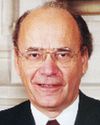
Yvon Charbonneau LiberalParliamentary Secretary to the Deputy Prime Minister and Minister of Public Safety and Emergency Preparedness (Emergency Preparedness)
Mr. Speaker, I rise today in response to the request put to the House by my colleague, the member for Ottawa West—Nepean, in regard to allowing Mr. Arar's counsel to participate in the in camera hearings of the Commission of Inquiry into the Actions of Canadian Officials in Relation to Maher Arar. We recognize the particular interest and the work that the member, our colleague, brings to this file.
As hon. members know, this commission of inquiry was called on the recommendation of the hon. Deputy Prime Minister and Minister of Public Safety and Emergency Preparedness to investigate into and report on the actions of Canadian officials in the Maher Arar affair.
The government has appointed a well respected judge in the person of Mr. Justice O'Connor to conduct an impartial review of all the evidence relating to the way Mr. Arar was treated by Canadian officials.
The role of the factual inquiry is not to investigate the actions of Mr. Arar. It is meant to investigate and report on the actions of Canadian officials in relation to Mr. Arar during his detention in the United States, his deportation to Syria via Jordan, his imprisonment and treatment in Syria, his return to Canada, and any other circumstances directly related to Mr. Arar that the commissioner deems relevant to fulfill his mandate.
In this process, Justice O'Connor is seconded by his own counsel, Paul Cavalluzzo, who will have access to all the information and all the witnesses who will be heard during the inquiry, including those testifying in camera.
The commission's counsel will be in charge of calling witnesses and thoroughly testing their evidence. The interim rules of procedure and practice provide the following:
Commission counsel will thoroughly test the evidence heard in camera by examination in chief or by cross-examination where deemed appropriate.
We also recognize the provisions of rule 46, whereby, prior to going in camera, all parties shall raise with commission counsel specific areas for questioning, which would include representations by Mr. Arar's counsel.
It is also important to note that in accordance with rule 41 of the commission's draft rules of procedure and practice, the commissioner will appoint an independent legal counsel to act as an amicus curiae to appear in the in camera hearings to make submissions with respect to the request for in camera hearings. This counsel shall be independent of government and shall be a person with a background in security and intelligence. His or her mandate shall be to test in camera hearing requests on the grounds of national security confidentiality.
Some parts of the commission's hearings will likely be held in camera—the decision will be made by the judge—because of the nature of the information that the commissioner will review during his inquiry. In camera hearings are necessary to prevent the disclosure of information which, if it became public, could, according to the commissioner, be prejudicial to international relations, defence or national security, as mentioned in paragraph (k) of the mandate of the public inquiry commission.
In summary, the government has called this inquiry to provide assurances to Canadians that an independent and respected jurist has examined all of the relevant evidence about the actions of Canadian officials in relation to Mr. Arar's arrest, detention, treatment in Syria, and return to Canada, through both public and in camera proceedings.
Excise Tax ActAdjournment Proceedings
7:35 p.m.
Liberal
Marlene Catterall Liberal Ottawa West—Nepean, ON
Mr. Speaker, I thank the parliamentary secretary for his additional response.
I must say I fully understand and respect the need to consider the requirements of national security and the safety of other people who might be jeopardized, among other things, by the release of information that should not be released. Having said that, I think we are all very well aware of the public debate about what is the proper balance between national security and the need for secrecy around certain issues and the rights of average Canadians to the protection of Canadian law.
The purpose of my question was to ensure as far as possible that we are respecting that balance, that Mr. Arar has, as far as possible, fully equal status with the Government of Canada in any proceedings before the inquiry.
As I said, I appreciate the parliamentary secretary's additional comments, but I do think that this is a question that will continue to engage this Parliament: the proper balance between our security concerns and our respect for the human rights of all Canadians.
Excise Tax ActAdjournment Proceedings
7:40 p.m.
Liberal
Yvon Charbonneau Liberal Anjou—Rivière-Des-Prairies, QC
Mr. Speaker, I would like to remind the hon. member, who is understandably concerned about this rather disturbing situation, that the government made a commitment to get to the bottom of this issue by launching a public inquiry.
Unlike a trial, the inquiry process is not adversarial in nature. Commissioner O'Connor is responsible first and foremost for establishing the facts. The commissioner will be assisted by lawyers whose role will consist in examining the evidence in an impartial and independent fashion, to help him determine what happened.
Successive Canadian governments have consistently maintained that they have an obligation to protect certain fundamental principles including the right to privacy, the confidentiality of officials' advice to ministers, cabinet confidences and sensitive national security, law enforcement and international relations information.
The government has a responsibility to balance the importance of public disclosure against national security concerns.
I want to reassure the hon. member by telling her that the minister will always ensure that this balance is maintained.
Excise Tax ActAdjournment Proceedings
7:40 p.m.
The Deputy Speaker
The motion to adjourn the House is now deemed to have been adopted. Accordingly, this House stands adjourned until tomorrow at 10 a.m., pursuant to Standing Order 24(1).
(The House adjourned at 7:41 p.m.)