Mr. Speaker, the Conservatives have been in office for two and a half hours--years. I wish--
House of Commons Hansard #89 of the 39th Parliament, 2nd Session. (The original version is on Parliament's site.) The word of the day was application.

House of Commons Hansard #89 of the 39th Parliament, 2nd Session. (The original version is on Parliament's site.) The word of the day was application.
Access to InformationOral Questions
2:20 p.m.
Liberal
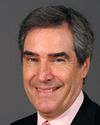
Michael Ignatieff Liberal Etobicoke—Lakeshore, ON
Mr. Speaker, the Conservatives have been in office for two and a half hours--years. I wish--
Access to InformationOral Questions
2:20 p.m.
Some hon. members
Oh, oh!
Access to InformationOral Questions
2:20 p.m.
Liberal
The Speaker Liberal Peter Milliken
Order, please. The hon. member for Etobicoke—Lakeshore has the floor and everyone wants to hear the question.
Access to InformationOral Questions
2:20 p.m.
Liberal
Michael Ignatieff Liberal Etobicoke—Lakeshore, ON
Mr. Speaker, either way, it feels like a lifetime.
Not only is the government refusing to give Canadians access to information but furthermore it is not consulting the Office of the Information Commissioner of Canada.
Why did it refuse to consult the Office of the Information Commissioner of Canada before deciding to eliminate the database?
Access to InformationOral Questions
2:20 p.m.
Provencher Manitoba
Conservative
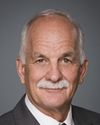
Vic Toews ConservativePresident of the Treasury Board
Mr. Speaker, the member does not need to take my word for it but he should take Mitchell Sharp's word for it.
When the former minister, David Collenette, resigned in October after an access to information turned up a letter he had written that breached cabinet ethic guidelines, Mr. Sharp said:
With the CAIR system, any request involving a minister's conduct is shipped to the PM's desk.... [So Mr.] Chretien was able to consult...decide upon Collenette's fate and choose the successor--all before the request was filled and the media feeding frenzy began.
The Liberal system was all about controlling information.
International AidOral Questions
May 6th, 2008 / 2:25 p.m.
Bloc
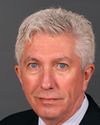
Gilles Duceppe Bloc Laurier—Sainte-Marie, QC
Mr. Speaker, the current death toll from the cyclone in Burma is now over 20,000 and 41,000 people are missing. A number of countries, including Canada, have offered their help. The Burmese military junta has said it is prepared to allow emergency aid to enter, but under certain conditions, including obtaining a visa. We suspect that this very junta has done nothing to prevent such a humanitarian disaster.
Under the circumstances, how does the Prime Minister intend to ensure that aid will get to the local population affected by the cyclone?
International AidOral Questions
2:25 p.m.
Calgary Southwest Alberta
Conservative
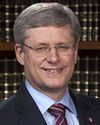
Stephen Harper ConservativePrime Minister
Mr. Speaker, first, the Government of Canada and the people of Canada wish to send their condolences to the families and friends of those who have died in Burma.
The minister responsible for CIDA has already announced significant Canadian aid. We will work through international organizations to ensure that this aid is delivered to the families and people affected in Burma.
International AidOral Questions
2:25 p.m.
Bloc
Gilles Duceppe Bloc Laurier—Sainte-Marie, QC
Mr. Speaker, the Prime Minister is referring to the Minister of International Cooperation who said yesterday that the United Nations had obtained permission from the military junta to allow humanitarian workers to enter the country. Nothing could be further from the truth, since a number of UN agencies are still waiting for the military junta to allow them to enter the country.
How will the Prime Minister ensure that Canadian humanitarian aid will not end up in the hands of the Burmese military junta?
International AidOral Questions
2:25 p.m.
Calgary Southwest Alberta
Conservative
Stephen Harper ConservativePrime Minister
Mr. Speaker, we will work through international organizations. Obviously, we are concerned by the reaction and position of the Burmese government. We will work with our international allies to encourage the Burmese government and to pressure that government to allow aid to get to its people.
International AidOral Questions
2:25 p.m.
Bloc

Diane Bourgeois Bloc Terrebonne—Blainville, QC
Mr. Speaker, faced with a humanitarian crisis in which more than 20,000 people have died and over 40,000 have disappeared, the junta has postponed the referendum by two weeks in the worst hit areas, but the rest of the country is to go to the polls on Saturday. The opposition is calling for the referendum to be postponed everywhere.
Instead of accepting the junta's empty promises, does the Prime Minister not think that the humanitarian and political situation is serious enough for him to recommend that the UN Security Council get involved?
International AidOral Questions
2:25 p.m.
Beauce Québec
Conservative
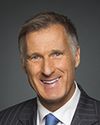
Maxime Bernier ConservativeMinister of Foreign Affairs
Mr. Speaker, I agree with my colleague that both the humanitarian situation and the political situation in Burma are very serious. That is why we have imposed the strictest sanctions in the world against the Burmese regime, that horrible military junta. What we want is to exert pressure. That is what is needed, and that is what we have done.
We have imposed sanctions that are even tougher than those imposed by France, the United States, England and Switzerland. We are proud of those measures, and we hope that the Burmese government can understand the situation and act in the best interests of the Burmese people.
International AidOral Questions
2:25 p.m.
Bloc
Diane Bourgeois Bloc Terrebonne—Blainville, QC
Mr. Speaker, the embargo imposed by the government to prohibit Canadian companies from doing business with Burma was just smoke and mirrors. The Department of International Trade readily admits that Canada is powerless to enforce this embargo.
Does the Prime Minister plan to take the same lax approach to ensuring that the humanitarian aid reaches the people affected by the disaster?
International AidOral Questions
2:25 p.m.
Beauce Québec
Conservative
Maxime Bernier ConservativeMinister of Foreign Affairs
Mr. Speaker, like all Canadians, I hope that the Burmese regime will open its doors to the international community, the UN and countries that want to help the people of Burma. To that end, we must exert pressure on that regime, as Dr. Win, the prime minister of Burma's government in exile, said yesterday at the press conference. Referring to the economic sanctions we have imposed on Burma, he said that Canada was taking the right approach and that he hoped other countries would follow Canada's example.
That is what we are trying to do. Canada is a leader in promoting human rights, and we will continue to demonstrate leadership in this area.
Aboriginal AffairsOral Questions
2:30 p.m.
NDP
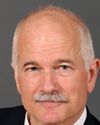
Jack Layton NDP Toronto—Danforth, ON
Mr. Speaker, the gap between the rich and the rest is widening, and the Auditor General has found that the Conservatives are causing irreparable harm to aboriginal children. Because of limited financial support from the Conservatives and the Liberals before them, aboriginal children are taken from their homes repeatedly and more often than elsewhere. This is devastating for these families.
Does the Prime Minister realize that inaction is not an option for these aboriginal children?
Aboriginal AffairsOral Questions
2:30 p.m.
Calgary Southwest Alberta
Conservative
Stephen Harper ConservativePrime Minister
Actually, Mr. Speaker, the government is trying to fix the problems in these services. That is why we invested approximately $450 million in these services in 2006 and 2007. We created a new model in partnership with the Alberta government, and this year we have added another $43 million.
I am disappointed that the New Democratic Party voted against this significant funding.
Aboriginal AffairsOral Questions
2:30 p.m.
NDP
Jack Layton NDP Toronto—Danforth, ON
Mr. Speaker, it is a good thing that the Prime Minister was not able to get his spin control on the Auditor General's communications department, because her report shows that the lack of federal funding is causing irreparable damage to aboriginal kids and to their families. They are six times to eight times more often taken out of their homes as a result of inadequate financial support for home care and home support. What kind of life is that for these families?
The choices have been made. Whether it was in Attawapiskat or in Kashechewan, we cannot trust this government. Corporate tax giveaways instead of helping--
Aboriginal AffairsOral Questions
2:30 p.m.
Liberal
Aboriginal AffairsOral Questions
2:30 p.m.
Calgary Southwest Alberta
Conservative
Stephen Harper ConservativePrime Minister
Once again, Mr. Speaker, the government is aware of the challenges in these services. I just quoted that in 2006-07, $450 million was invested in these services. The Minister of Indian Affairs and Northern Development signed a new model with the Government of Alberta that we are taking now across the country to improve these services. We added an additional $43 million this year, but once again, all the NDP did was complain and vote against this funding for aboriginal people.
Elections CanadaOral Questions
2:30 p.m.
Liberal
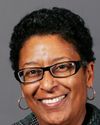
Marlene Jennings Liberal Notre-Dame-de-Grâce—Lachine, QC
Mr. Speaker, despite the role he played in Quebec during the election campaign, the Minister of Transport, Infrastructure and Communities is still playing innocent.
Some candidates, like the member for Beauport—Limoilou, were forced to accept a transfer to their campaign account—and then transfer out again—some $50,000, but the minister himself transferred only $5,000. That is $50,000 compared to $5,000.
Given this difference in price for the same advertising, how can the Conservatives claim that the purpose of their scheme was not to circumvent the Elections Act?
Elections CanadaOral Questions
2:30 p.m.
Nepean—Carleton Ontario
Conservative

Pierre Poilievre ConservativeParliamentary Secretary to the President of the Treasury Board
Mr. Speaker, let us quote the return of the member for Don Valley West to Elections Canada. On July 9, 2004 there was a transfer from the Liberal Party to the member for Don Valley West's local campaign for $5,000. On July 15, 2004, one week later, there was a transfer from the member for Don Valley West's local campaign to the Liberal Party for $5,000. That is $5,000 in and $5,000 out. In, out, where is Elections Canada?
Elections CanadaOral Questions
2:30 p.m.
Liberal
Marlene Jennings Liberal Notre-Dame-de-Grâce—Lachine, QC
Mr. Speaker, Elections Canada and the Federal Court have already ruled. They found that these instances were not relevant. An email sent December 19, 2005, confirms that the Minister of Transport, Infrastructure and Communities and three organizers carefully chose the ridings in Quebec. They apparently chose these ridings even before the candidates had been selected. The Minister of Transport himself was responsible for Quebec candidates.
Will the Prime Minister tell his minister, who is sitting right next to him, to make public his emails and any other doings concerning—
Elections CanadaOral Questions
2:35 p.m.
Liberal
The Speaker Liberal Peter Milliken
The hon. Parliamentary Secretary to the President of Treasury Board.
Elections CanadaOral Questions
2:35 p.m.
Nepean—Carleton Ontario
Conservative
Pierre Poilievre ConservativeParliamentary Secretary to the President of the Treasury Board
Mr. Speaker, let us talk about Yvan Corriveau, the Liberal candidate in Mégantic—L'Érable. On January 24, 2006, there was a transfer from the Liberal Party to Mr. Corriveau's local campaign for $4,950. On January 24, the same day, there was a transfer from Mr. Corriveau's local campaign to the Liberal Party for $4,950. That is $4,950 in and $4,950 out. In, out, where is Elections Canada?
Elections CanadaOral Questions
2:35 p.m.
Liberal
Ujjal Dosanjh Liberal Vancouver South, BC
Mr. Speaker, the Conservatives' story was the same in British Columbia: unsuccessful candidates booking disproportionate amounts, illegally filing claims for bills they did not pay and ads they knew nothing about.
Losing candidates in Vancouver East and Vancouver Kingsway were told to book $30,000 a piece, while the public safety minister only had to pitch in $10,000.
Since those who lost are not here to answer questions, could the public safety minister tell the House if he will stop stonewalling the RCMP and hand over all the documents pertaining to these ad buys?
Elections CanadaOral Questions
2:35 p.m.
Nepean—Carleton Ontario
Conservative
Pierre Poilievre ConservativeParliamentary Secretary to the President of the Treasury Board
Mr. Speaker, or we could talk about Aileen Carroll, the Liberal candidate in Barrie—Simcoe—Bradford. On July 26, 2004, there was a transfer from the Liberal Party to Aileen Carroll's local campaign for $5,000. On August 6, 10 days later, there was a transfer from Aileen Carroll's local campaign to the Liberal Party for $5,000. That is $5,000 in and $5,000 out. In, out, where is Elections Canada?