House of Commons Hansard #44 of the 40th Parliament, 3rd Session. (The original version is on Parliament's site.) The word of the day was quebec}.

Topics

The Environment
Oral Questions

2:15 p.m.

Calgary Centre-North
Alberta

Conservative

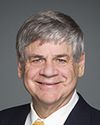
Jim Prentice Minister of the Environment

Mr. Speaker, as the hon. member knows, Canada has an exceptional regulatory agency in the form of the National Energy Board.

We have been very clear. The government has been clear and the National Energy Board has been clear that no drilling will take place in Canada unless the environment is protected and public safety is protected. We have an extraordinary record as a country, and we will continue to proceed on that basis.

The Environment
Oral Questions

2:15 p.m.

Liberal

David McGuinty Ottawa South, ON

Mr. Speaker, in December offshore drilling regulations were deliberately weakened to allow oil companies to set their own environmental protection goals and safety standards.

In contrast to the United States' using a strict and prescriptive approach for every offshore platform, the Conservatives do not even require safety valves and blowout preventers. What this really means is that the Conservatives are asking industry to put the public interest ahead of their self-interest and shareholder profits.

Will the government reinstate tough regulations that hold oil companies to the highest standards or not?

The Environment
Oral Questions

2:20 p.m.

Mégantic—L'Érable
Québec

Conservative

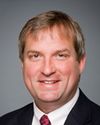
Christian Paradis Minister of Natural Resources

Mr. Speaker, nothing could be further from the truth. Canadian regulations require companies to prove they can operate safely in specific situations using the most advanced technology tailored to their circumstances.

We have stringent regulations that put the onus on industries to prove to regulators that they can protect their workers, the public and the environment. No drilling will proceed unless the government is convinced, period. Canadians expect nothing less.

The Environment
Oral Questions

2:20 p.m.

Liberal

Larry Bagnell Yukon, YT

Mr. Speaker, instead of reading his notes, why did the minister not explain why the government weakened the requirements?

The Prime Minister said the Gulf of Mexico spill is “a horrific environmental catastrophe”.

When asked why he placed Canada's pristine Arctic environment at risk because he had no plan, he said, “There are rules for relief wells”. BP's chief operating officer says the relief well will take 70 or 80 days more. If the Prime Minister says two weeks is a horrific environmental disaster, what would our pristine Arctic look like after a three-month wait for the Prime Minister's relief well?

The Environment
Oral Questions

2:20 p.m.

Mégantic—L'Érable
Québec

Conservative

Christian Paradis Minister of Natural Resources

Mr. Speaker, instead of looking at his notes while I answer, he should listen to my answer.

Canadian regulations require operators to employ the best technology, equipment and training techniques available, and we will not accept any weakening of these requirements. No drilling will proceed until this government is convinced that the safety of the workers and the environment is protected. Canadians expect nothing less.

The Environment
Oral Questions

2:20 p.m.

Liberal

Joyce Murray Vancouver Quadra, BC

Mr. Speaker, last week in light of the environmental disaster in the Gulf of Mexico, I asked if the government would respect the 1972 moratorium banning oil tanker traffic from B.C.'s Pacific north coast, and I got no answer.

We know a major crude oil spill off B.C.'s coastline would be catastrophic. Yesterday I returned from New Orleans where I saw firsthand the devastation that region is facing.

I ask again, will the government finally promise to respect the Pacific coast oil tanker ban, yes or no?

The Environment
Oral Questions

2:20 p.m.

Mégantic—L'Érable
Québec

Conservative

Christian Paradis Minister of Natural Resources

Mr. Speaker, this government has been very clear from the beginning.

We expect Canada's regulators to enforce this country's strong environmental standards, including our offshore drilling safety region.

Let me be clear. There will be no drilling until we are convinced that the safety of the workers and the environment is protected, period.

The Environment
Oral Questions

2:20 p.m.

Liberal

Gerry Byrne Humber—St. Barbe—Baie Verte, NL

Mr. Speaker, the government repeats the refrain that the chance of a serious accident ever happening in Newfoundland's offshore is zero because of established protocols, but yet sadly, we still remember the empty promise about how the Ocean Ranger was unsinkable and how Cougar helicopter operators were under the most stringent safety protocol in the world.

Disasters happen. They happen here at home. Does the government understand that having no backup rig is an irresponsible roll of the dice for the Canadian offshore? Does it accept that accepting an 11-day response time to a disaster is an irresponsible move for each and every one of us as Canadians?

The Environment
Oral Questions

2:20 p.m.

Calgary Centre-North
Alberta

Conservative

Jim Prentice Minister of the Environment

Mr. Speaker, we all recall the tragic circumstances of the Ocean Ranger. In addition, I would say that we all, as Canadians, are watching what is happening in the Gulf of Mexico and we are appalled and horrified by what is happening there.

I point out, however, that the regulatory framework that applies in Canada is quite different. Perhaps the hon. member should pay some regard to what is happening, even today, when the United States is making an announcement that it will break up the responsibility in the United States to follow a regulatory regime that is in fact very close to what Canada has with the National Energy Board.

Securities
Oral Questions

May 11th, 2010 / 2:20 p.m.

Bloc

Gilles Duceppe Laurier—Sainte-Marie, QC

Mr. Speaker, yesterday, a coalition of Quebec's business community, unions and even Quebec's finance minister denounced the creation of a Canada-wide securities commission. Their message is clear: if this commission sees the light of day, there will be job losses in Quebec and decision-making power will shift to Toronto.

Why is the Prime Minister insisting on moving forward with this plan and ignoring the OECD, which says the current system is working quite well?

Securities
Oral Questions

2:20 p.m.

Calgary Southwest
Alberta

Conservative

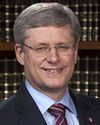
Stephen Harper Prime Minister

Mr. Speaker, it is true that the provinces have most of the jurisdiction over this. Some provinces, including Quebec, have decided not to take part, but other provinces have decided to contribute to the creation of a national securities commission. That is their right, and we are working closely with those provinces.

Securities
Oral Questions

2:25 p.m.

Bloc

Gilles Duceppe Laurier—Sainte-Marie, QC

Mr. Speaker, Quebec's finance minister says that creating a Canada-wide commission will be disastrous for Quebec's economy. According to him, it will provide an additional incentive for international corporations to set up their head offices in Toronto.

Will the Prime Minister face the facts and scrap his plan for a Canada-wide securities commission?

Securities
Oral Questions

2:25 p.m.

Calgary Southwest
Alberta

Conservative

Stephen Harper Prime Minister

Mr. Speaker, no decision has been made on setting up the commission's head office in Toronto. As I have said, effective financial regulatory reform is being discussed worldwide. We must follow suit in Canada. Nonetheless, Quebec is entitled to opt out. The other provinces have the right to take part in this, and we will work with them.

Securities
Oral Questions

2:25 p.m.

Bloc

Daniel Paillé Hochelaga, QC

Mr. Speaker, Jean Coutu, Pierre-Karl Péladeau, the Lemaire family, unions, chambers of commerce, notaries, lawyers, the Barreau du Québec and the Caisse de dépôt et placement du Québec oppose the dismantling of the AMF and the creation of a Toronto securities commission. The Quebec finance minister is afraid that there will be an exodus to Toronto. The Fédération des chambres de commerce du Québec said that the federal project is “dubious, prejudicial and harmful to Quebec.”

Why are the Conservative members from Quebec bent on destroying the financial autonomy of Quebec?

Securities
Oral Questions

2:25 p.m.

Whitby—Oshawa
Ontario

Conservative

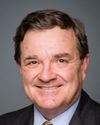
Jim Flaherty Minister of Finance

Mr. Speaker, Canada is the only major industrialized country in the world without a common or national securities regulator. We cannot afford to wait endlessly, in order to better protect investors, to enhance enforcement, to strengthen our response to financial instability, to reduce unnecessary costs, to attract new international investments.

The studies on jobs show that the gain would be about $10 billion a year in economic output and 65,000 jobs gained with a Canadian securities regulator.