An Act to implement the Protocol on the Accession of the United Kingdom of Great Britain and Northern Ireland to the Comprehensive and Progressive Agreement for Trans-Pacific Partnership

Sponsor

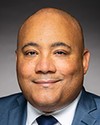
Maninder Sidhu  Liberal

Status

This bill has received Royal Assent and is, or will soon become, law.

Summary

This is from the published bill.

This enactment implements the Protocol on the Accession of the United Kingdom of Great Britain and Northern Ireland to the Comprehensive and Progressive Agreement for Trans-Pacific Partnership, done at Auckland and Bandar Seri Begawan on July 16, 2023, by updating how that Agreement is defined or referred to in certain Acts and by amending other Acts to bring them into conformity with Canada’s obligations under that Agreement and Protocol.

Elsewhere

All sorts of information on this bill is available at LEGISinfo, an excellent resource from Parliament. You can also read the full text of the bill.

Bill numbers are reused for different bills each new session. Perhaps you were looking for one of these other C-13s:

C-13 (2022) Law An Act for the Substantive Equality of Canada's Official Languages
C-13 (2020) An Act to amend the Criminal Code (single event sport betting)
C-13 (2020) Law COVID-19 Emergency Response Act
C-13 (2016) Law An Act to amend the Food and Drugs Act, the Hazardous Products Act, the Radiation Emitting Devices Act, the Canadian Environmental Protection Act, 1999, the Pest Control Products Act and the Canada Consumer Product Safety Act and to make related amendments to another Act

Debate Summary

line drawing of robot

This is a computer-generated summary of the speeches below. Usually it’s accurate, but every now and then it’ll contain inaccuracies or total fabrications.

Bill C-13 implements the protocol allowing the United Kingdom to accede to the Comprehensive and Progressive Agreement for Trans-Pacific Partnership (CPTPP). The legislation facilitates expanded trade and market access between Canada and the United Kingdom, while sparking parliamentary debate regarding agricultural reciprocity, pension indices, and dispute settlement mechanisms.

Liberal

  • Support for UK accession: The Liberal party supports the bill, viewing the United Kingdom’s entry into the CPTPP as a vital step in promoting rules-based, liberalized trade and rejecting protectionism.
  • Strengthening economic ties: Recognizing the United Kingdom as Canada's third-largest trading partner, the party believes this agreement will build on significant recent trade growth and deepen historical bilateral connections.
  • Addressing stakeholder concerns: The party acknowledges market access concerns from the cattle industry and the pension indexing issue for British residents, pledging to continue high-level advocacy with the United Kingdom to resolve these matters.

Conservative

  • Supports bill and CPTPP expansion: The party supports the bill and the United Kingdom's accession to the CPTPP, viewing it as a common-sense measure to diversify trade and provide Canadian businesses with enhanced access to a major global market.
  • Criticism of agricultural trade imbalances: Members criticize the government for failing to use the negotiations to resolve non-tariff trade barriers that effectively block Canadian beef and pork from the U.K. market while allowing U.K. products to flood into Canada.
  • Neglect of British state pensioners: The Conservatives highlight the missed opportunity to address the frozen pensions of British expatriates in Canada, arguing that the lack of indexing is discriminatory and imposes an annual cost on the Canadian social safety net.
  • Requirement for trade-enabling infrastructure: The party emphasizes that trade deals are ineffective if domestic infrastructure, such as ports and rail systems, remains congested and inefficient, preventing Canadian goods from reaching global customers reliably.

NDP

  • Need for economic transparency: The NDP supports diversifying trade with the United Kingdom but criticizes the government for failing to table a required economic impact assessment, which undermines accountability and prevents informed parliamentary decision-making.
  • Barriers to agricultural exports: The party expresses concern over non-tariff barriers affecting Canadian beef and pork producers. They emphasize that while imports from the U.K. have increased, Canadian exports have stalled due to unfair sanitary and phytosanitary regulations.
  • Opposition to ISDS provisions: New Democrats argue for the exclusion of investor-state dispute settlement provisions that allow foreign investors to challenge public interest policies. They note that the government failed to secure side letters similar to those signed by the U.K.'s other partners.
  • Resolution of frozen pensions: The party calls for the government to use trade leverage to address the issue of frozen British pensions. They highlight the unfair financial burden on seniors and Canadian taxpayers when the U.K. fails to provide cost-of-living increases.

Green

  • Opposition to ISDS mechanisms: The party opposes the investor-state dispute settlement (ISDS) mechanisms within the agreement, arguing they grant foreign corporations superior rights to sue governments over democratic decisions that might impact their profits.
  • Concerns over democratic sovereignty: May argues that these agreements allow secret tribunals to overturn laws intended to protect workers or the environment, characterizing the provisions as corrosive to democracy and biased toward larger economic powers.
  • Critique of transparency standards: The party highlights that the CPTPP's dispute resolution rules are less transparent and fair than those in other agreements like CETA, and remains concerned that UK corporations will now use these rules to sue Canada.
  • Future trade policy shift: While acknowledging the difficulty of renegotiating current terms, the party calls for Canada to stop entering into trade deals that include noxious investor-state dispute resolution clauses in the future.
Was this summary helpful and accurate?

An Act to Implement the Protocol on the Accession of the United Kingdom of Great Britain and Northern Ireland to the Comprehensive and Progressive Agreement for Trans-Pacific PartnershipGovernment Orders

March 12th, 2026 / 10:40 a.m.

The Assistant Deputy Speaker (Alexandra Mendès) Alexandra Mendes

There being no motions at report stage, the House will now proceed, without debate, to the putting of the question on the motion to concur in the bill at report stage.

An Act to Implement the Protocol on the Accession of the United Kingdom of Great Britain and Northern Ireland to the Comprehensive and Progressive Agreement for Trans-Pacific PartnershipGovernment Orders

March 12th, 2026 / 10:40 a.m.

Brampton East Ontario

Liberal

Maninder Sidhu LiberalMinister of International Trade

moved that the bill, as amended, be concurred in.

An Act to Implement the Protocol on the Accession of the United Kingdom of Great Britain and Northern Ireland to the Comprehensive and Progressive Agreement for Trans-Pacific PartnershipGovernment Orders

March 12th, 2026 / 10:40 a.m.

The Assistant Deputy Speaker (Alexandra Mendès) Alexandra Mendes

If a member participating in person wishes that the motion be carried or carried on division, or if a member of a recognized party participating in person wishes to request a recorded division, I would invite them to rise and indicate it to the Chair.

An Act to Implement the Protocol on the Accession of the United Kingdom of Great Britain and Northern Ireland to the Comprehensive and Progressive Agreement for Trans-Pacific PartnershipGovernment Orders

March 12th, 2026 / 10:40 a.m.

Liberal

Kevin Lamoureux Liberal Winnipeg North, MB

Madam Speaker, I ask that it be carried on division.

An Act to Implement the Protocol on the Accession of the United Kingdom of Great Britain and Northern Ireland to the Comprehensive and Progressive Agreement for Trans-Pacific PartnershipGovernment Orders

March 12th, 2026 / 10:40 a.m.

The Assistant Deputy Speaker (Alexandra Mendès) Alexandra Mendes

Is that agreed?

Some hon. members: Agreed.

(Motion agreed to)

An Act to Implement the Protocol on the Accession of the United Kingdom of Great Britain and Northern Ireland to the Comprehensive and Progressive Agreement for Trans-Pacific PartnershipGovernment Orders

March 12th, 2026 / 3:15 p.m.

Conservative

Ziad Aboultaif Conservative Edmonton Manning, AB

Mr. Speaker, the U.K. is Canada's third-largest trading partner and ally, and with this new relationship, I can see the opportunity for increased trade. However, there have been missed opportunities, and not only with pork and beef.

Like many members of the House, I have met with representatives of 127,000 British state pensioners living in Canada, who have raised the issue of their pensions with me. Those state pensions are equivalent to our Canada pension plan. They and their employers made payments for years before retirement. However, unlike the CPP, their pensions are frozen at the rate they were at when first received and do not increase with inflation. This has been British policy for decades. That does not seem fair to me, because British pensioners are fully indexed in other countries, including the United States.

The Government of Canada has made multiple representations to the U.K. government over the years with the aim of negotiating a social security agreement to end this discriminatory policy, but there has apparently been no willingness on the part of Britain to have such an agreement. The CPTPP was a perfect opportunity to revisit the issue. After all, the British policy comes with a cost to Canadian taxpayers. It has been estimated that this policy costs Canada about $470 million annually.

Canada's social security pensions are indexed, increasing the purchasing power of our citizens wherever they choose to live in retirement and ensuring they have sufficient funds to live. In failing to provide reciprocity, the British government is relying on Canada to provide for its citizens if they should find themselves in need. The Liberals missed the opportunity to address this issue when they negotiated the Canada-U.K. Trade Continuity Agreement. They missed it again when it was not included as a part of the U.K.'s accession to the CPTPP.

The U.K. is Canada's third-largest single-country trading partner for goods: $39.4 billion in 2024. It is also the third-largest single-country trading partner when it comes to services: $21.6 billion in 2024. In the last decade, bilateral trade in goods and services has increased by 52.9%. Working to increase trade with someone we already have a strong relationship with would seem to be a good thing. The U.K. is also Canada's second-largest investment partner. Inbound direct investment to Canada totalled $97 billion in 2024. We want to see that number increase.

Bill C-13, if passed, provides immediate duty-free, quota-free, unlimited access to sweet corn. There is no volume limit, as there was under the previous agreement. It provides more liberal rules of origin for Canadian agriculture export interests, including meat, processed foods, sugar-containing products and pet food. It will provide enhanced protections for investors and their investments in the U.K., with greater predictability and transparency.

Canadian investors will also have access to arbitration for resolving disputes related to U.K. measures that breach CPTPP investment provisions. These are positive outcomes. As well, there will be guaranteed access to U.K. procurement opportunities at all levels of government, including regional and local contracting authorities, as well as guaranteed access to U.K. procurement opportunities undertaken by bodies governed by public law, including schools, universities and colleges, national museums and galleries, and national park authorities. This is good news for Canadian business.

Yes, the government failed to address some of the issues that should have been a priority when it was negotiating this agreement. Our beef and pork industry will still have complaints about the inequity of treatment compared with how U.K. producers are treated in Canada, and those U.K. pensioners living here will continue to be treated as a second-class citizens, unfairly, by their government because Canada's Liberal government did not do the right thing and stand up for fair treatment. I am sad that our government did not take a more principled stand.

However, I think we can all agree that Canada needs more trade and more diversified trade. We have seen the results when we put too many eggs in one basket. Could this bill have been better? I think that is true of any trade agreement. Sometimes compromises are made to allow an agreement to move forward. That may be the situation we find ourselves in here.

An Act to Implement the Protocol on the Accession of the United Kingdom of Great Britain and Northern Ireland to the Comprehensive and Progressive Agreement for Trans-Pacific PartnershipGovernment Orders

March 12th, 2026 / 3:20 p.m.

Conservative

Dan Muys Conservative Flamborough—Glanbrook—Brant North, ON

Mr. Speaker, I thank my colleague from Edmonton Manning for his excellent remarks, which started before question period, and for raising the issue about the British pensioners and his knowledge on that. It was surprising to hear that is a $470-million cost to Canada.

Why does the hon. member believe that the government was unsuccessful in so many missed opportunities to remedy that issue? Is it lack of will or laziness? What is the reason?

An Act to Implement the Protocol on the Accession of the United Kingdom of Great Britain and Northern Ireland to the Comprehensive and Progressive Agreement for Trans-Pacific PartnershipGovernment Orders

March 12th, 2026 / 3:20 p.m.

Conservative

Ziad Aboultaif Conservative Edmonton Manning, AB

Mr. Speaker, there is a saying that, in life, that we do not get what we deserve; we get what we negotiate.

I believe that the government has failed to negotiate well to finally resolve this issue, which costs the Canadian economy close to $500 million a year and made it unfair for some of the pensioners. They deserve to get a fair shot out of their investment for life, especially as seniors.

Negotiations could and should have been done better. This is an opportunity we have missed for the second time, and the government could have done a better job.

An Act to Implement the Protocol on the Accession of the United Kingdom of Great Britain and Northern Ireland to the Comprehensive and Progressive Agreement for Trans-Pacific PartnershipGovernment Orders

March 12th, 2026 / 3:20 p.m.

Winnipeg North Manitoba

Liberal

Kevin Lamoureux LiberalParliamentary Secretary to the Leader of the Government in the House of Commons

Mr. Speaker, I want to go back to a question I asked of the previous member.

Talking about the United States, a member of the Conservative Party, the MP for Bowmanville—Oshawa North, went down to the United States. He met with the President and the vice-president, came back and gave a report saying, in essence, that we should not have a hissy fit against the Americans. Following that visit, the leader of the Conservative Party will be going too. I am not sure when or if he will be meeting with the President and the vice-president.

Does the member believe that he will come back with a report that he can share with Canadians at some point?

An Act to Implement the Protocol on the Accession of the United Kingdom of Great Britain and Northern Ireland to the Comprehensive and Progressive Agreement for Trans-Pacific PartnershipGovernment Orders

March 12th, 2026 / 3:20 p.m.

Conservative

Ziad Aboultaif Conservative Edmonton Manning, AB

Mr. Speaker, if the government does its job, no one has to do anything, but the government is not doing its job. The hon. member knows that.

The Liberals have failed to come back to Canada and deliver on their promises. It has been one deadline after the other, and we still have not seen a result. If the government is suggesting that people should sit around, do nothing and not stand for Canada, then that is the member's problem. It is not our problem. I believe that we should never politicize this issue.

An Act to Implement the Protocol on the Accession of the United Kingdom of Great Britain and Northern Ireland to the Comprehensive and Progressive Agreement for Trans-Pacific PartnershipGovernment Orders

March 12th, 2026 / 3:20 p.m.

Green

Elizabeth May Green Saanich—Gulf Islands, BC

Mr. Speaker, I would like to thank my colleague from Edmonton Manning for raising the issue I have also been working on for years on behalf of British pensioners within Saanich—Gulf Islands.

There have been many years and many missed opportunities to try to negotiate with the British government on how it indexes the pension for Canadian expats. It does not make sense, and as the member rightly pointed out, it is a cost to the Canadian economy. It is also a needless worry to wonderful people. I am sure that each member in their own riding has had people come see them about this unfairness.

I carried with me a stack of petitions to try to hand directly to Boris Johnson when I went to a COP in Glasgow, and I had the help of my hon. colleague. I will not say his riding name because it will take too long, but we tried really hard to hand it directly to the Prime Minister of the U.K. so we could say that this is so unfair.

What do we do now? This agreement is in front of us. What can we all do collectively to push the government to get a proper deal with the U.K. government to defend our pensioners?

An Act to Implement the Protocol on the Accession of the United Kingdom of Great Britain and Northern Ireland to the Comprehensive and Progressive Agreement for Trans-Pacific PartnershipGovernment Orders

March 12th, 2026 / 3:25 p.m.

Conservative

Ziad Aboultaif Conservative Edmonton Manning, AB

Mr. Speaker, the hon. leader of the Green Party and I were together for many occasions when we met with those pensioners, trying to, first of all, listen to them and understand the issue—

An Act to Implement the Protocol on the Accession of the United Kingdom of Great Britain and Northern Ireland to the Comprehensive and Progressive Agreement for Trans-Pacific PartnershipGovernment Orders

March 12th, 2026 / 3:25 p.m.

The Deputy Speaker Tom Kmiec

I have to interrupt the member. There is an incredible amount of noise coming from courtyard, and there are people outside of the chamber interfering with the work of the chamber. Right now, I cannot even hear the member for Edmonton Manning.

I will let the member for Edmonton Manning restart from the point where he was to continue his reply.

An Act to Implement the Protocol on the Accession of the United Kingdom of Great Britain and Northern Ireland to the Comprehensive and Progressive Agreement for Trans-Pacific PartnershipGovernment Orders

March 12th, 2026 / 3:25 p.m.

Conservative

Ziad Aboultaif Conservative Edmonton Manning, AB

Mr. Speaker, the hon. leader of the Green Party and I were together, more than once, to meet with these pensioners who, we believe, have been treated unfairly.

I believe that there is still a chance for Parliament to ask the government to push for that. This could be the second time that we miss such an opportunity, but it would be great if we could do it. It would be historical. We would help a lot of people, and it would be an act of fairness to all these people who deserve it the most.

An Act to Implement the Protocol on the Accession of the United Kingdom of Great Britain and Northern Ireland to the Comprehensive and Progressive Agreement for Trans-Pacific PartnershipGovernment Orders

March 12th, 2026 / 3:25 p.m.

Conservative

Tako Van Popta Conservative Langley Township—Fraser Heights, BC

Mr. Speaker, I thank my colleague for his speech on Canada accepting the U.K. into the CPTPP. It is my understanding that Canada trades freely with the other countries in that agreement with respect to beef and pork.

Do Canadians have a legitimate concern that the government has failed to come to that agreement with the United Kingdom?

An Act to Implement the Protocol on the Accession of the United Kingdom of Great Britain and Northern Ireland to the Comprehensive and Progressive Agreement for Trans-Pacific PartnershipGovernment Orders

March 12th, 2026 / 3:25 p.m.

Conservative

Ziad Aboultaif Conservative Edmonton Manning, AB

Mr. Speaker, it is true. People in the beef and pork industries are not happy with this. The government could have negotiated better to get this because, again, this is a golden opportunity to do something better, and if that is missed, the industry will be hurt. It will be affected by it.

An Act to Implement the Protocol on the Accession of the United Kingdom of Great Britain and Northern Ireland to the Comprehensive and Progressive Agreement for Trans-Pacific PartnershipGovernment Orders

March 12th, 2026 / 3:25 p.m.

Ottawa Centre Ontario

Liberal

Yasir Naqvi LiberalParliamentary Secretary to the Minister of International Trade and to the Secretary of State (International Development)

Mr. Speaker, I appreciate being acknowledged. You always look good in the chair and you do a really good job. I am hoping you will give me some leniency while I am speaking.

I will be sharing my time with the hon. member for Saanich—Gulf Islands. I am thrilled to share my time with her, as I consider her to be a close friend in this place.

I appreciate the opportunity to speak to Bill C-13, which is an act to implement the protocol on the accession of the United Kingdom of Great Britain and Northern Ireland to the Comprehensive and Progressive Agreement for Trans-Pacific Partnership, the CPTPP. I often try to say that five times really fast to see if I can get the acronyms right. Nonetheless, it is an important agreement that Canada is a part of. This particular piece of legislation deals with United Kingdom's becoming part of that agreement and Canada's ratification for that particular accession.

Very similar to what I did yesterday, when I was speaking to Bill C-18, which deals with the Canada-Indonesia Comprehensive Economic Partnership agreement, I do want to acknowledge the work that has been done on this important legislation and this agreement, starting with the officials at Global Affairs Canada, who work extremely hard in representing our country. They work diligently and they make us proud. They wave our flag boldly and proudly, so I want to take this opportunity to thank them.

I also want to acknowledge the work of the Standing Committee on International Trade. We have a really good committee with all three recognized parties. We work well together in co-operation. The work that took place in relation to Bill C-13 is an example of that. Again, I want to acknowledge all members from the official opposition, from the third party, the Bloc Québécois and, of course, the government members for their thoughtful work in this regard.

I also want to take the opportunity to thank the British high commissioner to Canada, Robert Tinline, for his work. It is a pleasure to work with him. I also thank our folks at the High Commission of Canada in the United Kingdom, Canada House, including the deputy high commissioner, Robert Fry, who is a seasoned diplomat. Also, as of this week, former member of Parliament, a colleague from this place, the Hon. Bill Blair, has assumed his role as the high commissioner for Canada in the United Kingdom. He will be serving as well. It takes all of us to do this important work, and I am really mindful of the participation and the role of all of us in this endeavour.

CPTPP, or the Comprehensive and Progressive Agreement for Trans-Pacific Partnership, is an important trade agreement that includes 11 founding members that make up the agreement. They include countries like Australia, Chile, Mexico, Singapore, Brunei, Japan, New Zealand, Vietnam, our own country Canada, Malaysia and Peru. For the first time, a new member has been added, and that is United Kingdom. The way the CPTPP is designed, it requires consensus among all founding members to agree to new members becoming part of it. Therefore, the 10 countries, including Canada, have collectively negotiated and have agreed that the United Kingdom can be made part of CPTPP. It is an important step and a symbol, in terms of the group of countries that have trans-Pacific as a natural point of bond, reaching out to a European country like United Kingdom and making it part of it.

In this moment in time, it is a very important message being sent, that we are not going to go the way of protectionism as we are seeing stated explicitly by the current administration of the United States. Putting tariffs on countries is not how we are going to grow our economy. In fact, we think that a free trade, liberalized trade, rules-based trading system is the best way to grow our economies, where we actually rely on each other's economy, leverage our comparative advantage in things that we are self-sufficient in producing and growing, exchange that, sell to each other and be able to benefit from other economies.

For Canada and the United Kingdom, as natural allies and friends with deep historical ties, to be able to take that step to join in and be part of this really thoughtful, large and comprehensive agreement is a very important message to the world and to other countries, which says that protectionism is not the way to create prosperity for our citizens. In fact, the way we should do it is by creating alliances, by making sure that we are part of each other.

I think it is also important to recognize that the U.K., as I was mentioning, from a cultural, historical and a people-to-people ties perspective, is very close to Canada. We share a lot. Economically, the United Kingdom is also an important partner of Canada's. In fact, the U.K. is Canada's third largest single-country trading partner, which is remarkable. I believe the United States is first, China is number two and the United Kingdom is the third largest single-country trading partner for Canada. We continue to see really impressive trade growth between our two countries.

According to the notes that I have, since 2016, Canada-U.K. trade increased by almost 53% to $61 billion in 2024, and that was under the signed Canada-EU economic agreement. That was then continued through the Canada-U.K. trade continuity agreement. Our two respective leaders, our prime ministers, our Prime Minister and Prime Minister Keir Starmer, are also working very closely together because they want to grow that relationship. They want to make sure that there is more trade taking place between Canada and the United Kingdom. This agreement, of course, is going to play an important role.

We did hear from a lot of stakeholders who came to the committee and presented really thoughtful opinions. I know that, in the House, members have been talking about it. We heard from the cattle industry, which has some concerns about access to the U.K. market, and we are quite sympathetic to those concerns. We are continuously engaging with the government of the United Kingdom to reduce these barriers. Having, of course, a more coordinated approach and making sure that we are part of an agreement like this will give us more opportunities to open those markets, but I do want to acknowledge their concerns. I want to say that we are quite aware of them.

The other issue is, and I know this will be discussed, British pensioners. Of course, a lot of us have heard from those British pensioners. They also presented at committee. It is an important issue. It is an issue that Canada continues to raise with the United Kingdom. In fact, just last week, some of us parliamentarians, from both the Liberal and Conservative sides, were in the United Kingdom as part of the Canada-U.K. Inter-Parliamentary Association. If someone were to ask all the members who were on the trip, we would tell them that, in every single meeting with U.K. MPs and with U.K. ministers, the issue of British pensioners was raised. It was always a very thoughtful, robust conversation. We did our utmost best to really highlight the unfairness on the British government's part in not indexing the pensions of British pensioners who live in Canada. We will continue to do that work, and we will continue to advocate for them.

At the end of the day, this agreement is a good news story. I urge all members in the House to support the legislation so that the U.K. can become part of the CPTPP. Therefore, we could have even stronger ties and bonds and economic prosperity, both for Canada and the United Kingdom.

An Act to Implement the Protocol on the Accession of the United Kingdom of Great Britain and Northern Ireland to the Comprehensive and Progressive Agreement for Trans-Pacific PartnershipGovernment Orders

March 12th, 2026 / 3:35 p.m.

Conservative

Tako Van Popta Conservative Langley Township—Fraser Heights, BC

Mr. Speaker, Bill C-13 is the bill by which the United Kingdom will be brought into the Comprehensive and Progressive Agreement for Trans-Pacific Partnership, or CPTPP. All of the other countries, and I believe there are 11 of them besides Canada, accept beef imports and pork imports from Canada, yet the United Kingdom is putting up non-tariff barriers to that. I wonder if the member could comment on that. Was that an oversight on the part of the Canadian negotiating team?

An Act to Implement the Protocol on the Accession of the United Kingdom of Great Britain and Northern Ireland to the Comprehensive and Progressive Agreement for Trans-Pacific PartnershipGovernment Orders

March 12th, 2026 / 3:35 p.m.

Liberal

Yasir Naqvi Liberal Ottawa Centre, ON

Mr. Speaker, the member for Langley Township—Fraser Heights was one of the members I had the chance to travel with, and I got to know him personally quite well. I appreciate his public service and his representation of his community. He would remember that in every conversation we had, including with the Minister for International Trade from the United Kingdom, we brought up the issue of these non-tariff barriers, saying that we should find a way to move forward to ensure that our cattle ranchers and beef producers are able to export to the United Kingdom. There are some issues around sanitary and phytosanitary circumstances. By having a deeper relationship and making sure the U.K. is part of this agreement, there will be more opportunities for us to really make effective arguments to the U.K. and to bring those barriers down for our ranchers.

An Act to Implement the Protocol on the Accession of the United Kingdom of Great Britain and Northern Ireland to the Comprehensive and Progressive Agreement for Trans-Pacific PartnershipGovernment Orders

March 12th, 2026 / 3:35 p.m.

Bloc

Simon-Pierre Savard-Tremblay Bloc Saint-Hyacinthe—Bagot—Acton, QC

Mr. Speaker, my colleague and I studied this agreement together at the Standing Committee on International Trade. I was disappointed that he voted against almost all of my amendment proposals, which were nothing more than requests for transparency, for reports on certain elements, on the environment, on human rights and on lawsuits by multinationals against governments. All I was doing was demanding transparency and accountability.

That said, I was even more disappointed that he voted against my amendment to ensure that the agreement would not come into force before an agreement on sanitary and phytosanitary measures was reached. It seems to me that, during negotiations, particularly when we are doing the United Kingdom a favour by helping it join the Comprehensive and Progressive Agreement for Trans-Pacific Partnership, we could have requested that meat be allowed to enter freely there.

An Act to Implement the Protocol on the Accession of the United Kingdom of Great Britain and Northern Ireland to the Comprehensive and Progressive Agreement for Trans-Pacific PartnershipGovernment Orders

March 12th, 2026 / 3:35 p.m.

Liberal

Yasir Naqvi Liberal Ottawa Centre, ON

Mr. Speaker, I am very pleased to be able to work with my colleague on the Standing Committee on International Trade. He has contributed a great deal to the work of that committee. The committee adopted an important amendment that was put forward by the opposition member.

That particular amendment would enhance transparency. It would allow for Global Affairs Canada to report back on the progress and the implementation of the agreement. I thought that was a good amendment, and that is why we agreed and made it part of this legislation.

An Act to Implement the Protocol on the Accession of the United Kingdom of Great Britain and Northern Ireland to the Comprehensive and Progressive Agreement for Trans-Pacific PartnershipGovernment Orders

March 12th, 2026 / 3:40 p.m.

Liberal

Dominique O'Rourke Liberal Guelph, ON

Mr. Speaker, to my hon. colleague, thank you so much for all the work that you are doing to boost international trade—

An Act to Implement the Protocol on the Accession of the United Kingdom of Great Britain and Northern Ireland to the Comprehensive and Progressive Agreement for Trans-Pacific PartnershipGovernment Orders

March 12th, 2026 / 3:40 p.m.

The Deputy Speaker Tom Kmiec

Members should address comments to the Speaker, through the Chair, not directly to the member.

I will let the member continue.

An Act to Implement the Protocol on the Accession of the United Kingdom of Great Britain and Northern Ireland to the Comprehensive and Progressive Agreement for Trans-Pacific PartnershipGovernment Orders

March 12th, 2026 / 3:40 p.m.

Liberal

Dominique O'Rourke Liberal Guelph, ON

Mr. Speaker, I want to thank my hon. colleague for all the work that he does to boost Canada's trade globally. Canada has a goal to increase our non-U.S. trading, to double it over 10 years. I just wondered if my hon. colleague would expound upon the importance of partnerships like this one.

An Act to Implement the Protocol on the Accession of the United Kingdom of Great Britain and Northern Ireland to the Comprehensive and Progressive Agreement for Trans-Pacific PartnershipGovernment Orders

March 12th, 2026 / 3:40 p.m.

Liberal

Yasir Naqvi Liberal Ottawa Centre, ON

Mr. Speaker, it will require a lot of hard work for us to really meet the objective of doubling our non-U.S. exports in the next 10 years. The work that is necessary is to deepen relationships with our existing partners and to build new partnerships. The United Kingdom is a really good example. It is a nation that, as I mentioned earlier, enjoys a very long-lasting relationship with us. This agreement would allow us to make it even deeper and create more opportunities to open more markets.

Similarly, we were talking about Indonesia yesterday. That is a new market that we are opening for our farmers, for our energy providers and for our manufacturers. Similarly, there is the work we are doing in negotiating an agreement with the ASEAN countries, like Thailand and the Philippines, and with the Mercosur countries, which include Brazil, Argentina, Paraguay and Uruguay. In all those places, the work we are doing creates more opportunities for Canadian businesses and for Canadian farmers to be able to sell our produce. This will allow us to meet that particular objective that the member was referring to.

An Act to Implement the Protocol on the Accession of the United Kingdom of Great Britain and Northern Ireland to the Comprehensive and Progressive Agreement for Trans-Pacific PartnershipGovernment Orders

March 12th, 2026 / 3:40 p.m.

Green

Elizabeth May Green Saanich—Gulf Islands, BC

Mr. Speaker, I want to thank the hon. parliamentary secretary for splitting his time with me.

This is an alphabet soup, as people have mentioned. It is sometimes hard to see why the U.K. is suddenly joining the CPTPP and why we are discussing it today, but there are overlays and previous trade agreements. Perhaps something of a narrative might work to quickly review how we got to where we are today, and then I can highlight the concerns the Green Party has about it.

The trans-Pacific partnership agreement started quite a long time ago. As others have mentioned, there is a long list of countries that were initially involved, all of course in the Pacific region. There is Singapore, Malaysia and Japan, but then there are ones we do not necessarily expect, such as Peru as well as Canada and New Zealand. Of course, one of the instigators of the original trans-Pacific partnership agreement was the United States. However, back in President Trump's first term in 2017, he pulled the U.S. out of the trans-Pacific partnership.

Going back to Canada's trade relationships with the U.K., this is obviously not the first or even the most important of Canada's trade agreements with the U.K. Again, this goes back to trade agreements that countries enter into, and then when somebody pulls out, the pieces have to sort of reassemble.

Looking back at Canada's first trade agreement with the U.K., it was when the U.K. was part of the European Union, before the very tragic events that led to Brexit. For the U.K., and indeed the European Union, it was dreadful, with the skullduggery, the use of algorithms and social media, Cambridge Analytica and the sort.

There is a tremendous documentary for people who want to see how vulnerable our democracies are to the misuse of social media and those kinds of campaigns. It is called Brexit: The Uncivil War. I am not going to give a whole film review, but it does star Benedict Cumberbatch, in case anyone wants to look it up on Netflix. Members can watch it, and for parliamentarians or someone who runs for elected office, it may leave them feeling quite shaken about how vulnerable we are to misinformation and how the British public was misled into pulling out of not just a very good trade agreement but a governance agreement within the European Union that had a lot of benefit for the U.K., and that also had benefit for the European Union when the U.K. was in it.

Canada's first trade deal with the U.K., back to this particular piece, was the Canada-European Union Comprehensive Economic and Trade Agreement, which was negotiated between Canada and the EU. Of course, part of the EU at that time was the U.K. Therefore, we had a lot of pre-existing negotiations and conversations, and then there was the TPP, which was negotiated without the U.K. but with the U.S.

What are the differences between these two agreements? Do they entirely overlap since we already negotiated them? We went back once the U.K. left the European Union, and Canada renegotiated the bits we needed so that Canada would continue to have a trade deal with the U.K. once the U.K. left the European Union. That got done. We have an existing trade agreement with the U.K., which is still called the comprehensive economic and trade agreement, but between Canada and the U.K. It is largely based on the previous agreement that was done with the European Union. Now we have the TPP and the CPTPP, which is without the United States but with the U.K.

Why do I go through all this other than to remind people of the threads they may have heard before? It is because there are differences between these agreements, and one is less advantageous to Canada and Canada's environment than the other. Both the CPTPP, which we are debating today, and the comprehensive economic and trade agreement, the CETA, include things called investor-state dispute settlement mechanisms.

The hon. member for Saint-Hyacinthe—Bagot—Acton has been the most engaged on this subject as we continue to debate it. I certainly agree with him and have always supported any efforts Canada can make to get out of such lopsided agreements, which inevitably, invariably and always give superior rights to foreign corporations investing in Canada or operating in Canada. Even if they do not invest, they can open up a post office box somewhere and be considered an investor.

Private sector corporations are bestowed with rights under investor-state dispute resolution mechanisms and agreements, the very first of which, by the way, we are now out of, which was chapter 11 of NAFTA, which ironically did not survive into the new negotiations when it became CUSMA. I am very glad chapter 11 of NAFTA is no more, but it was a prototype. Here is what it did. It said that if what a government does to a foreign corporation can be considered tantamount to expropriation, then that foreign corporation can sue the country in which it is operating. We have had S.D. Myers sue Canada. We had Ethyl Corporation of Richmond, Virginia, sue Canada.

Canada tends to lose on these challenges. Not only does Canada lose, but in general, the larger economic power wins. It is not always the corporation that wins, but if a U.S. corporation sues a government and the U.S. corporation is a giant, the U.S. corporation will win. If a Canadian corporation sues the U.S, the Canadian corporation will lose. There is a pattern. The larger economic power tends to win. The arbitrators are drawn from a rank of four. They are operating, $500 an hour, $1,000 an hour, lawyer kinds of people. The investor-state dispute resolution mechanisms, as has been established through numerous global studies, tend to favour the larger economic power.

It was a shocker when it first happened. This means that decisions and laws passed democratically by governments, whether at the provincial or federal level, could be overturned by secret tribunals run by for-profit secret lawyers who make a case and argue that something was done that cost the corporation money. They do not even have to allege that it was done with animus or that it was discriminatory towards that country or nation or corporation, just that it cost them money. For example changing the regulations to protect the environment or changing the regulations to protect workers, if it costs them money, the Government of Canada is going to pay out and pay a company from the U.S, which has happened to Canada an unfortunate number of times.

As we negotiate and discuss this agreement today, the CPTPP, it includes investor-state dispute resolution mechanisms that are of an order that is slightly less fair and slightly less transparent than similar agreements that were negotiated with the European Union under the CETA. Between the two, they both have investor-state dispute resolution mechanisms, but the one we are debating today, to which we are adding the U.K. and which means U.K. corporations will be able to sue Canada under the CPTPP, just as we are now allowing Peruvian or, more likely, Canadian companies to sue Peru if we are mining in their country and do not like the laws to which we are being subjected, will have less transparency than if we were working under the CETA. This is because there were enough elements that the European Union refused to pass the CETA as long as these investor-state dispute resolution measures were included.

I do not have much time left to wrap up my speech so I will end by saying that it is too late at this point to renegotiate and remove the investor-state dispute settlement mechanism.

However, it is time to shine a light on them and decide that henceforth Canada should get out of agreements that allow foreign corporations to have more power to sue the Canadian government, a province, a first nation or a municipality, for that matter. These agreements are corrosive to democracy. It is time to shine a light on them and start carving them out. It has now become routine with trade deals to throw in investor-state dispute resolutions. They are noxious.

An Act to Implement the Protocol on the Accession of the United Kingdom of Great Britain and Northern Ireland to the Comprehensive and Progressive Agreement for Trans-Pacific PartnershipGovernment Orders

March 12th, 2026 / 3:50 p.m.

Conservative

Jacob Mantle Conservative York—Durham, ON

Mr. Speaker, I have to disagree with her with respect to investor-state dispute resolution. I know that she believes in the rule of law, so surely she must agree that when the Canadian government violates the rule of law, treats companies in a discriminatory fashion or expropriates their property or investments, there should be recourse. There is through these ISDS provisions. They are not secret. The Government of Canada is there defending those decisions. The decisions are almost always public and written, so the Canadian public can see what arguments were made and the decision made.

What is her solution to when the Canadian government is behaving badly, discriminating against companies or expropriating their property?

An Act to Implement the Protocol on the Accession of the United Kingdom of Great Britain and Northern Ireland to the Comprehensive and Progressive Agreement for Trans-Pacific PartnershipGovernment Orders

March 12th, 2026 / 3:50 p.m.

Green

Elizabeth May Green Saanich—Gulf Islands, BC

Mr. Speaker, I can tell the hon. colleague from York—Durham that, for an absolute fact, there is absolutely nothing illegal about things the Canadian government has done for which we have ended up having to shell out money.

As for being secret, I recommend that the member have a look at the Canada investment promotion and protection agreement with the People's Republic of China, which must remain entirely secret throughout the entire tribunal. The results may be made public by Canada at the end, but the fact of a challenge by the People's Republic of China against the Canadian government is secret and must remain secret. We are bound to it for 35 years without ever having had a vote in the House, because it was approved by Stephen Harper's cabinet.

An Act to Implement the Protocol on the Accession of the United Kingdom of Great Britain and Northern Ireland to the Comprehensive and Progressive Agreement for Trans-Pacific PartnershipGovernment Orders

March 12th, 2026 / 3:50 p.m.

Bloc

Simon-Pierre Savard-Tremblay Bloc Saint-Hyacinthe—Bagot—Acton, QC

Mr. Speaker, I would like to begin by thanking my colleague for her kind words about the work I did on investor-state dispute settlement. I would also like to ask her about that.

How does she explain the fact that the two pro-multinational parties in the House, which have been trading power back and forth in Canada since the beginning, are constantly signing agreements with these archaic provisions? These provisions basically elevate multinationals to the status of sovereign powers, as though no other state-to-state remedies involving diplomacy exist. There is the World Trade Organization's dispute resolution body, for example. States are going to be facing off against one another.

Indeed, some countries are going to react badly to investments and behave in unacceptable and unfair ways, but that is where diplomacy comes in. There are adjudicative bodies. The notion of giving multinationals the right to subvert the democratic will of countries is outrageous. Does Canada condone the lawsuits brought against countries for anti-tobacco measures, minimum wage, carbonated drinks, the cancellation of pollution-causing projects and all kinds of other things?

An Act to Implement the Protocol on the Accession of the United Kingdom of Great Britain and Northern Ireland to the Comprehensive and Progressive Agreement for Trans-Pacific PartnershipGovernment Orders

March 12th, 2026 / 3:50 p.m.

Green

Elizabeth May Green Saanich—Gulf Islands, BC

Mr. Speaker, I wholeheartedly agree with my colleague, because the problem is that the major parties here, in this Parliament, despite their many political differences, all share the same high regard for big multinational companies, big oil and big pharma.

Big oil and big banks get the respect of Liberals and Conservatives always, regardless of who is leading the parties, which is at the base of giving them superior rights to Canadian corporations.

An Act to Implement the Protocol on the Accession of the United Kingdom of Great Britain and Northern Ireland to the Comprehensive and Progressive Agreement for Trans-Pacific PartnershipGovernment Orders

March 12th, 2026 / 3:55 p.m.

Winnipeg North Manitoba

Liberal

Kevin Lamoureux LiberalParliamentary Secretary to the Leader of the Government in the House of Commons

Mr. Speaker, even though I understand the arguments the member is putting forward, I tend to disagree with them.

Having said that, I think Canadians have an interest in knowing where the Green Party actually might be on the issue of trade. We have numerous trade agreements that were signed in the past. We have a very ambitious trade agenda going forward.

The question I have for the leader of the Green Party is this: What is the Green Party's official position on trade agreements?

An Act to Implement the Protocol on the Accession of the United Kingdom of Great Britain and Northern Ireland to the Comprehensive and Progressive Agreement for Trans-Pacific PartnershipGovernment Orders

March 12th, 2026 / 3:55 p.m.

Green

Elizabeth May Green Saanich—Gulf Islands, BC

Mr. Speaker, as with all our policies, the member can find it online. We support trade that is respectful of environmental protections, indigenous rights and labour rights, in other words, fair trade.

In fact, for the record, we voted for the Canada-Ukraine trade deal when every single Conservative voted against it.

An Act to Implement the Protocol on the Accession of the United Kingdom of Great Britain and Northern Ireland to the Comprehensive and Progressive Agreement for Trans-Pacific PartnershipGovernment Orders

March 12th, 2026 / 3:55 p.m.

Conservative

John Barlow Conservative Foothills, AB

Mr. Speaker, it is a pleasure to rise in the House. I will be splitting my time with the hon. member for Peace River—Westlock.

The focus of my speech today is going to be on what the difference is between free trade and fair trade. As members have heard today, Conservatives are not opposed to the United Kingdom's accession to the CPTPP. However, what we are frustrated with is that once again the Liberal government has backed down when Canadian business and industry need it the most.

We have heard a number of times from my Liberal colleagues today that they understand the unfair advantage that beef and pork producers in the United Kingdom and the European Union have over Canadian producers, and that they feel for them, yet once again, when the Liberals could have had some leverage to try to address the non-tariff trade barriers, the Liberal government has done absolutely nothing. In fact it has ignored the issue by trying to fast-track the accession of the United Kingdom into the CPTPP.

Let us be clear: There is some leverage. The United Kingdom cannot join the CPTPP without Canada on its side. A unanimous agreement must happen for a new member to join this trade agreement. To put our agriculture commodities, producers and farmers at risk as part of this agreement without resolving some long-standing trade issues is a failure of the current government.

In 2024, Canada exported approximately $100 billion of agriculture and agri-food products around the world. The sector employs 2.3 million Canadians and is $150 billion of Canadian GDP. To put that in perspective, that is more than the automotive and aerospace sectors combined. That is the impact of Canadian agriculture. However, while we are seeing success in some parts of the world, we are seeing a reversal of our success in the United Kingdom and the EU.

I want to highlight just how stark the contrast has been with respect to what is going on with Canada, the United Kingdom and the European Union. Under the trade continuity agreement, the United Kingdom has imposed non-tariff trade barriers that have literally shut out Canadian beef and pork exports to the United Kingdom and to the European Union. We are not just raising rhetoric here; the facts speak for themselves.

I will start with beef as the first example. In 2024, Britain exported 42 million dollars' worth of beef from the United Kingdom into Canada. Last year, in the first half of 2025 alone, that number was already at $28 million. The amount of beef imported into Canada has increased year over year.

In contrast, in 2024, Canadian beef exported to the United Kingdom was just 25,000 dollars' worth. Last year, the amount of Canadian beef imported into the United Kingdom was zero. While the United Kingdom's imports continue to flood into Canada, there is no reciprocal or fair trade going the other direction. The Liberal government has been at the helm for more than 10 years and has done nothing to resolve this, as we have seen the discrepancy in those numbers continue to increase.

Pork is no different. In 2024, the United Kingdom exported nine million dollars' worth of United Kingdom pork to Canada. In the first half of last year, that number was already at $3.6 million. By contrast, Canadian pork exports to the United Kingdom in 2023 were zero. In 2025, we were at $120,000, pennies on the dollar compared to what is being brought into Canada.

I want to highlight that it is not any different when we look at the numbers in the European Union, where the trade imbalance is just as bad. In 2024, the European Union exported 92 million dollars' worth of beef to Canada, while Canadian beef exports to Europe fell by 40%, down to only $14 million, less than a quarter of what is being imported into Canada. Pork is much the same. From the numbers we have seen, the discrepancy continues to grow.

This is yet another failure by the Liberal government to stand up for Canadian producers. It is signing onto these agreements or shepherding the United Kingdom into the trans-Pacific partnership without addressing any of these long-standing issues. The United Kingdom will not recognize our carcass-washing practices here in Canada, which are of a higher standard than what is done in the United Kingdom and the European Union. It is simply a non-tariff trade barrier that the Liberal government refuses to address. The United Kingdom does not recognize our breeding and hormone practices and animal livestock protection practices here in Canada, even though the standards are recognized around the world.

Instead of addressing these non-tariff trade barriers, the Liberals are willing to hold the hand of the United Kingdom, ignore those problems and ensure it is joining the trans-Pacific partnership. We do not oppose the United Kingdom's being a member of that critical trade partnership. What we are concerned with or oppose is the fact that the Liberals are not addressing any of the long-standing non-tariff trade barriers before being a partner to the United Kingdom's joining that trade partnership.

The secondary issue is that the CPTPP has been an outstanding trade partnership, in that all of the decisions in the trade relationships have been science-based. We have not had any of the non-tariff trade barriers and shenanigans that we are seeing currently between Canada and the United Kingdom. However, if the United Kingdom joins the CPTPP, our concern is whether it would be bringing that philosophy with it to the agreement. Into what has been a very solid partnership among a number of countries, we would now perhaps welcome non-science-based decision-making and non-tariff trade barriers, for all intents and purposes throwing a wrench into a wheel that has been running very smoothly.

However, this is not the first time we have seen the current Liberal government fail when it comes to Canadian agriculture and trade. Only a few years ago, for example, we had a deadline with the Canadian Food Inspection Agency and the World Organisation for Animal Health for Canada to get negligible risk status for BSE. I was at a conference with ranchers from across Canada and members of CFIA when CFIA said it forgot about the deadline, forgot to apply for negligible risk status and that it would have to wait until the next year. It made it sound like just “Sorry about that. The government forgot.” That cost Canadian ranchers tens of millions of dollars in lost market access. It took us more than 20 years to regain that access after the BSE outbreak.

We have also seen that when the Liberal government has said now and again that it will address the specified risk material, SRMs, which is once again an additional step we have to do in Canada. It costs our producers about $60 a head to deal with SRMs. The United States does not have to do it, and it puts our producers at a competitive disadvantage. Time and again the Liberal government says it is going to address the SRMs. Time and again it has failed to do so, and that irritant is still in place.

Every single time Canadian producers need the Liberal government the most, it is nowhere to be found, and now, when we need to be focused on research and development and sanitary and phytosanitary to push our standards around the world, the Liberal government's response is to close seven research centres across Canada. Two of them, in Lacombe, Alberta, and in Nappan, Nova Scotia, focus on the beef industry and the things we do here in Canada that we need to convince the rest of the world to meet or exceed their standards.

Last, I would be remiss if I did not mention the other issue that the Liberal government did not address, and that is British pensioners' not seeing their pensions indexed to inflation, which happens in the United States. Our cousin in the United Kingdom is not allowing the same rights to 100,000 Canadians who are suffering with that indignity here in Canada, including my wee mother-in-law from Scotland, who is also not seeing her pension indexed. I know she would like to be treated just like British expats right around the world.

An Act to Implement the Protocol on the Accession of the United Kingdom of Great Britain and Northern Ireland to the Comprehensive and Progressive Agreement for Trans-Pacific PartnershipGovernment Orders

March 12th, 2026 / 4:05 p.m.

Liberal

Michael Coteau Liberal Scarborough—Woburn, ON

Mr. Speaker, I am wondering if the member has spoken to anyone in the agricultural sector about this enhanced trade deal with the U.K., and if so, what opportunities they have identified and what their position is on this overall.

An Act to Implement the Protocol on the Accession of the United Kingdom of Great Britain and Northern Ireland to the Comprehensive and Progressive Agreement for Trans-Pacific PartnershipGovernment Orders

March 12th, 2026 / 4:05 p.m.

Conservative

John Barlow Conservative Foothills, AB

Mr. Speaker, I appreciate the question from my colleague, who is doing a great job as the chair of the agriculture committee.

I spend time pretty much every day speaking to producers right across the country. I will say that there is guarded optimism. There is no opportunity to take advantage of these trade agreements, because they do not trust that the elements of those trade agreements will actually come true. We have seen that in what is going on with the United Kingdom and the European Union, in the games that have been played, certainly with China, and in the inability of the Liberal government to rebuild our most important trade relationship, which is that with the United States. More than 70% of our agricultural commodities go south across the border.

An Act to Implement the Protocol on the Accession of the United Kingdom of Great Britain and Northern Ireland to the Comprehensive and Progressive Agreement for Trans-Pacific PartnershipGovernment Orders

March 12th, 2026 / 4:05 p.m.

Bloc

Simon-Pierre Savard-Tremblay Bloc Saint-Hyacinthe—Bagot—Acton, QC

Mr. Speaker, I thought that my colleague's speech was very good. He demonstrated just how much of a failed negotiation this was. He explained that the government's negotiations failed with respect to meat exports from Canada and Quebec to the United Kingdom. It seems to me that when doing a favour for a country by allowing it to become party to an agreement as significant as the trans-Pacific partnership, one negotiates. However, there are sanitary and phytosanitary barriers that are not based on much science.

The Conservatives had one thing to do. In committee, I introduced an amendment to the bill. The amendment sought to prevent the agreement from entering into force until a sanitary and phytosanitary agreement was reached with the United Kingdom so that Canadian meat could enter the market. All the Conservatives had to do was vote in favour of that amendment. We would have done the work that the Liberal government did not do. However, the Conservatives preferred to give the government a blank cheque. Now they are crying for the farmers.

Will my colleague call out the hypocrisy of his Conservative colleagues?

An Act to Implement the Protocol on the Accession of the United Kingdom of Great Britain and Northern Ireland to the Comprehensive and Progressive Agreement for Trans-Pacific PartnershipGovernment Orders

March 12th, 2026 / 4:05 p.m.

Conservative

John Barlow Conservative Foothills, AB

Mr. Speaker, I apologize, but I am not aware of the amendment that my colleague moved at committee.

However, I want to be clear that our agriculture stakeholders have changed their position. They want to support the United Kingdom, in good faith, joining the CPTPP. They are upset because the Liberal government should have addressed these issues before the continuity agreement expires and before the United Kingdom's accession to the CPTPP.

We are a party of free traders. Our agriculture groups are free traders. They rely on that. Again, our point is that the Liberals had the leverage to address this issue and failed to do so.

An Act to Implement the Protocol on the Accession of the United Kingdom of Great Britain and Northern Ireland to the Comprehensive and Progressive Agreement for Trans-Pacific PartnershipGovernment Orders

March 12th, 2026 / 4:05 p.m.

Conservative

Branden Leslie Conservative Portage—Lisgar, MB

Mr. Speaker, I am hoping my colleague can expand upon what is a failure in negotiations.

At the time of the announcement, Canada was going to be the first country to pass legislation enabling Britain's accession to the CPTPP. Looking forward, beyond this, we have seen the Prime Minister go and sign a number of agreements. While we support the diversification of trade, what other opportunities, particularly for the livestock sector, are we potentially missing in these negotiations, as we could have enhanced imports from other countries and not have reciprocal exports going back out the door?

An Act to Implement the Protocol on the Accession of the United Kingdom of Great Britain and Northern Ireland to the Comprehensive and Progressive Agreement for Trans-Pacific PartnershipGovernment Orders

March 12th, 2026 / 4:05 p.m.

Conservative

John Barlow Conservative Foothills, AB

Mr. Speaker, my colleague brings up an excellent point. The Prime Minister has gone to the United Kingdom on a number of occasions, and he is on his way there again later this week or next week, I believe. It is his second home, for all intents and purposes. He keeps talking about his close relationship with the Government of the United Kingdom and the EU. He calls himself a European.

Why is he not resolving any of these issues? The Prime Minister says he has this close relationship, and our agriculture commodities could be taking advantage of these opportunities, not only in the United Kingdom but certainly around the world. The Prime Minister is a big talker, but there is no delivery. That is where we are seeing the frustration coming from Canadian farmers.

An Act to Implement the Protocol on the Accession of the United Kingdom of Great Britain and Northern Ireland to the Comprehensive and Progressive Agreement for Trans-Pacific PartnershipGovernment Orders

March 12th, 2026 / 4:10 p.m.

NDP

Gord Johns NDP Courtenay—Alberni, BC

Mr. Speaker, we would be hard-pressed to find another member of Parliament that advocates more for the livestock and agriculture industry than that member. I wanted to state that here. Agriculture is not a partisan issue, and this member has been a champion of that.

I want to say how important the conversation around the indexing of British pensions here in Canada is when we have any discussion on trade.

An Act to Implement the Protocol on the Accession of the United Kingdom of Great Britain and Northern Ireland to the Comprehensive and Progressive Agreement for Trans-Pacific PartnershipGovernment Orders

March 12th, 2026 / 4:10 p.m.

Conservative

John Barlow Conservative Foothills, AB

Mr. Speaker, I agree. I ran out of time in my speech, but I agree with the member. The indexing of the British pensions in Canada is a critical piece of this, and I hope that is resolved.

An Act to Implement the Protocol on the Accession of the United Kingdom of Great Britain and Northern Ireland to the Comprehensive and Progressive Agreement for Trans-Pacific PartnershipGovernment Orders

March 12th, 2026 / 4:10 p.m.

Conservative

Arnold Viersen Conservative Peace River—Westlock, AB

Mr. Speaker, it is my honour to rise today on behalf of the good people of Peace River—Westlock and to talk about the accession of the U.K. and Northern Ireland to the CPTPP.

As a bit of background, it has been frustrating for me to watch the government let one opportunity after the other pass us by as it governs Canada. It speaks on our behalf around the world. When Brexit happened, I thought that there was a major opportunity for Canada to fill in the void that was going to come from the lack of that EU agreement that had been in place, the free trade that Britain had with the EU. There was going to be a void of product that was going to be able to get into the U.K. from the EU, and there was an opportunity, given the fact of our shared heritage, that Canada could step up to fill the void immediately. All we needed to do was have that relationship nailed down and sorted out, coming into it. We could see for a number of years that this Brexit thing was coming. We could have seen that we could have had a free trade deal with the U.K., and when it did happen, we could have been the first at the table.

This was something that we talked about as Conservatives. We said, “This is happening. Get on it, Prime Minister.” That was 2020. That was five or six years ago, so we could have had a robust relationship.

I want to talk about a number of products that come from northern Alberta: beef in particular, but also softwood lumber. Many people do not know that Canada, for hundreds of years, was a major supplier of lumber to the U.K., and we have lost that position over the last number of years to the point that we are a minimal supplier of lumber to the U.K. We should be able to maintain that relationship.

Many of my colleagues have spoken today about beef, and I am going to talk about that as well. We apparently have this agreement with the U.K. to trade with them, yet we are happy to compete. Many of us talk about the difference in how much beef comes into Canada from the U.K. and how much does not get into the U.K. Actually, in a free trade system, we should not be too concerned if beef is only running in one direction and not the other, but when the beef is not running in the other direction, to the U.K., because the country is blocking it with particular regulations, that is when we get a little frustrated.

We could make the case that their farmers are more efficient, that their winters are less harsh than Canadian winters, that it is a little easier for them to make beef and that their beef is a bit cheaper than Canadian beef, hence it is coming into Canada. We might say, okay, but we are allowed to at least ship our beef into the U.K. We could say, okay, those numbers are not reciprocal, but we understand there are other reasons. However, when particular rules in the United Kingdom are preventing our beef from getting in, that is what gets us quite upset. That is the reality.

This has been a problem going back for a very long time, and I would point out that we have had Liberal governments for over 10 years that have failed to address this issue, even though they have had multiple opportunities to address these issues. Every time there is a change in the relationship, there are opportunities to say that, by the way, this beef issue or this pork issue continues to be a challenge for Canadian producers. We say that we have this free trade agreement with the U.K., yet the U.K. is using other mechanisms to block our beef and our pork from getting in.

Softwood lumber is a different story. We are being out-competed by the Scandinavian countries to get our lumber into the U.K. That is kind of understandable. It is not that they are blocking our lumber from getting in there. It is just that the Scandinavian countries overproduce for their own countries. They are much closer to the U.K., so shipping costs are less. All of that kind of makes sense. We have this free trade deal, and I think there are some tweaks that the Canadian government could do. Building code changes in the U.K. would allow for our style of dimensional lumber to get into the U.K. a little more easily, and there are a number of these things that the government could be working on to ensure that Canadian lumber can get in there.

On the beef side of things, there are blatant regulations that the U.K. has put in place that specifically block our beef and pork from getting in. This is a major frustration.

We hear from the Liberal government all the time that it is a new government and has a new Prime Minister. The Liberals are not wrong in saying they have a new Prime Minister who has a great relationship with the U.K. He was the governor of the central bank in the U.K. Certainly, he would have some contacts over there. It feels to me like this beef problem that we are having and this pork problem that we are having with the U.K. would just need a text message or a phone call for a guy who has a contact list like the Prime Minister does, who has been the Governor of the Bank of England. Certainly he would be able to sort this out in about five minutes.

I have pointed out the multiple opportunities along the way where we have had opportunities to change this. To be fair, that was under a previous prime minister, who may not have understood pork or beef production, who liked his fancy socks and things like that. Today, we have a Prime Minister who is very integrated with the U.K., who knows a lot of people over there, who carries a passport from that side of the ocean and who calls himself a European. Certainly, if there was a Prime Minister of Canada who could get this done, it would be the current Prime Minister. It is a total failure.

Today, we are being asked to accept the U.K. and Northern Ireland into the trans-Pacific partnership, which is something that we support, but this would have been another opportunity to fix some of the frustrations that we have.

We hear over and over again about concerns about unity in this country and frustrations from, particularly, Alberta, that Ottawa never listens to what their concerns are. Here again, we have another one. Alberta beef is the best beef in the world. Alberta produces a lot of beef for this country. Beef in Canada and Alberta beef are quite synonymous. Again, here we have one of the sticking points, one of the reasons that folks in Alberta get frustrated with the Ottawa government, which is that when the priorities of central Canada are a concern, if there is a risk to jobs in central Canada, the Liberal government bends over backwards and burns down the phone lines to get a resolution to these things. When it comes to western Canada's concerns, to get a pipeline to the east coast or to fix some of the trade friction around beef products or other agricultural products, canola exports and all these kinds of things, suddenly the government seems to say that there is nothing it can do about it. It seems to sit on its hands or just to completely forget about it.

Maybe that is the case. Maybe, when the Prime Minister is going over to England, he just fails to remember that there is the beef problem, which is an interesting thing, because he also says to us all the time that he is an Alberta boy. Alberta and Alberta beef are quite synonymous. One would think that, coming from Alberta, he would remember to bring up beef. Those are some of the major frustrations with the Liberal government that we have around a free trade agreement with the U.K.

I look forward to the U.K.'s accession and the agreement being brought in. I know that there are mechanisms within the bill for the resolution of some of these issues. I hope that the government is prepared and that, the moment the U.K. is recognized in the trans-Pacific partnership, we will start using some of these mechanisms for these dispute resolutions, so that we can get reciprocal agreements on beef and pork across the country.

I also hope that we can sort out some of the U.K. citizens' pensions here in Canada. This is another thing that was brought up. I know that many of my colleagues have brought that up. I just wanted to make sure that I mentioned it for the number of constituents in my riding who are facing this issue.

An Act to Implement the Protocol on the Accession of the United Kingdom of Great Britain and Northern Ireland to the Comprehensive and Progressive Agreement for Trans-Pacific PartnershipGovernment Orders

March 12th, 2026 / 4:20 p.m.

Winnipeg North Manitoba

Liberal

Kevin Lamoureux LiberalParliamentary Secretary to the Leader of the Government in the House of Commons

Mr. Speaker, it was interesting listening to the member opposite. I have found, when it comes to the issue of trade, that there is a team Canada approach to dealing with it. It concerns me that the member somewhat promotes hatred toward central Canada and does not really justify it. With cattle exports, the product has a lot more to do with drought and so forth.

The Minister of Agriculture was in the Philippines promoting Alberta beef and invited people from the Philippines to Calgary for the Calgary Stampede. This government has been very proactive in the Prairies dealing with and promoting trade. Why would the member want to promote disinformation to cause people in the Prairies to be anti-Ottawa?

An Act to Implement the Protocol on the Accession of the United Kingdom of Great Britain and Northern Ireland to the Comprehensive and Progressive Agreement for Trans-Pacific PartnershipGovernment Orders

March 12th, 2026 / 4:20 p.m.

Conservative

Arnold Viersen Conservative Peace River—Westlock, AB

Mr. Speaker, I do not know what to say. I do not think the member even listened to my speech. I made the exact opposite case. I said there are sentiments that Ottawa does not listen to Alberta.

Once again, this here is an example. When trying to get our beef into the U.K., we see the dissimilar rules around beef coming into Canada or beef going to the U.K. They are different. Again, it does not feel like the government is listening to Alberta.

An Act to Implement the Protocol on the Accession of the United Kingdom of Great Britain and Northern Ireland to the Comprehensive and Progressive Agreement for Trans-Pacific PartnershipGovernment Orders

March 12th, 2026 / 4:20 p.m.

Bloc

Patrick Bonin Bloc Repentigny, QC

Mr. Speaker, I would like to add to what my colleague said earlier. We share some concerns about things like agriculture and meat.

My Bloc Québécois colleague proposed an amendment in committee that would essentially have required the bill to be conditional on a sanitary and phytosanitary agreement with the U.K. to ensure that Canadian meat can get into the U.K.

Can my colleague explain why his party voted against this amendment even though he says he wants to open up these markets to Canadian meat?

An Act to Implement the Protocol on the Accession of the United Kingdom of Great Britain and Northern Ireland to the Comprehensive and Progressive Agreement for Trans-Pacific PartnershipGovernment Orders

March 12th, 2026 / 4:20 p.m.

Conservative

Arnold Viersen Conservative Peace River—Westlock, AB

Mr. Speaker, I am not aware of why we did not vote for that amendment. I am not familiar with the amendment, to begin with.

What I do know is that our allies that are also part of the CPTPP are looking forward to this being assented to, so that the U.K. can enter into the CPTPP. I do not think we want to hold that up. I do not know the particulars of that, but I do know we want this to go through.

An Act to Implement the Protocol on the Accession of the United Kingdom of Great Britain and Northern Ireland to the Comprehensive and Progressive Agreement for Trans-Pacific PartnershipGovernment Orders

March 12th, 2026 / 4:20 p.m.

Conservative

Tako Van Popta Conservative Langley Township—Fraser Heights, BC

Mr. Speaker, I agree with my colleague from Peace River—Westlock that Alberta grain-fed beef is the best in the world. I love our friends from Great Britain, and I want them to benefit from Alberta grain-fed beef, but here is another thing. I love people from Ontario, and I want them to benefit from the best wine in Canada, British Columbia wine.

I know it is not the topic of the day, but can my friend comment on the importance of British Columbia wine in LCBO stores?

An Act to Implement the Protocol on the Accession of the United Kingdom of Great Britain and Northern Ireland to the Comprehensive and Progressive Agreement for Trans-Pacific PartnershipGovernment Orders

March 12th, 2026 / 4:25 p.m.

Conservative

Arnold Viersen Conservative Peace River—Westlock, AB

Mr. Speaker, I love the topic of free trade. Canada's Conservatives are the party of free trade, and we have been advocating desperately for free trade between the provinces. We have been calling on the federal government to stand on the provinces a little bit to ensure that the barriers between provinces are also eliminated.

While we are excited to be assenting to the free trade agreement with the U.K., we also call on the government to eliminate free trade barriers within Canada.

An Act to Implement the Protocol on the Accession of the United Kingdom of Great Britain and Northern Ireland to the Comprehensive and Progressive Agreement for Trans-Pacific PartnershipGovernment Orders

March 12th, 2026 / 4:25 p.m.

Marc-Aurèle-Fortin Québec

Liberal

Carlos Leitão LiberalParliamentary Secretary to the Minister of Industry

Mr. Speaker, our colleague was talking about beef production in Alberta. He has also spoken often here in the House about food affordability. Meat prices are very high in Canada, indeed, because there is a shortage of beef coming from Alberta, in particular.

Is the member opposite against increased British exports to Canada at this time?

An Act to Implement the Protocol on the Accession of the United Kingdom of Great Britain and Northern Ireland to the Comprehensive and Progressive Agreement for Trans-Pacific PartnershipGovernment Orders

March 12th, 2026 / 4:25 p.m.

Conservative

Arnold Viersen Conservative Peace River—Westlock, AB

Not at all, Mr. Speaker. I think I laid that out very well in my speech.

Another thing that is really cool about free trade and free markets is that high prices cause these products to move, so I am excited to see increased production here in Canada.

An Act to Implement the Protocol on the Accession of the United Kingdom of Great Britain and Northern Ireland to the Comprehensive and Progressive Agreement for Trans-Pacific PartnershipGovernment Orders

March 12th, 2026 / 4:25 p.m.

The Deputy Speaker Tom Kmiec

Resuming debate, the hon. gentleman from Prince Albert has caught my eye.

An Act to Implement the Protocol on the Accession of the United Kingdom of Great Britain and Northern Ireland to the Comprehensive and Progressive Agreement for Trans-Pacific PartnershipGovernment Orders

March 12th, 2026 / 4:25 p.m.

Conservative

Randy Hoback Conservative Prince Albert, SK

Mr. Speaker, I really feel honoured to catch your eye. It is a privilege for me to be here on a Thursday afternoon and know that the Speaker has my back.

I think everybody agrees that Bill C-13 should go through. It is common sense. It should be almost like a routine item. I am going to talk about some of the frustrations that we have with the U.K. wanting to join the TPP. I think it is good that it is joining the TPP. I look forward to it joining. I look forward to Costa Rica joining, hopefully, at the end of the month. I think whenever we can expand the TPP to include other countries, we make it a better multilateral agreement. It gives our Canadian manufacturers, producers, farmers and industries a chance to have access not only to another market but to other partners, to compete globally in a lower-tariff environment. Those are all good things.

However, I am disappointed at this lost opportunity. As this agreement was being discussed, as we were talking about the fact that the U.K. wanted to join, we had the opportunity then and there to say that some things in our continuity agreement were not resolved, and they could have been resolved as the U.K. entered the TPP. We could have dealt with the additives in food products. We could have dealt with the carcass wash. We could have dealt with the pension issues. We could have said that these things were stumbling blocks that were really a barrier to the U.K. coming into this agreement and that we needed to come to some sort of agreement on all those issues, not only so the U.K. has fair access to Canada but also so we have fair access to the marketplace in the U.K.

We could also have made the ethical argument about the U.K. treating its own civil servants with respect and dignity no matter where they live, especially if they decided to live here in Canada. I can understand why they would want to live here in Canada. I think we would all agree Canada is a wonderful country. Why would someone not want to live here? It is awesome. Unfortunately, that opportunity was lost and squandered. After 10 years of the Liberal government, there are so many examples of squandered and lost opportunities that have come back to roost at this point in time.

Let us look at a current example. We have the world knocking on our door again looking for natural gas or oil and gas. We could have been developing our pipe and our oil and gas infrastructure, liquefied natural gas, over the last 10 years, and we could have built in and solved some of those problems globally. Now we are trying to do it. I guess it is better late than never, but if we would have done it then, just think of how much wealthier this country would be, how much more leverage this country would have globally and how much better everybody in the world would feel knowing they are getting an ethical supply of oil and gas. That is a lost opportunity that could have been done quite simply and quite effectively over the last 10 years.

When we talk about things that are important to Canada, we have the Prime Minister right now going around the globe talking to different countries, and I actually think that is a good thing. I really do. After 10 years of Trudeau, there is a lot of rebuilding that has to happen. In fact, I can remember sitting in a coffee shop back in Prince Albert. A farmer sat down next to me and asked what we could do about Trudeau and if we could take his passport away or something. Every time that prime minister left the country, there was a disaster that followed, whether it was the India event or the open mic in the U.K. There is example after example of when the former prime minister went and burned goodwill, burned our image abroad and impacted our reputation negatively. Now we have the Prime Minister going around and trying to rebuild that reputation. I think it is good that he is doing that because it has to happen.

With a Conservative government, that would have been the priority of our prime minister, Prime Minister Poilievre. In that scenario, he would have been able to—

An Act to Implement the Protocol on the Accession of the United Kingdom of Great Britain and Northern Ireland to the Comprehensive and Progressive Agreement for Trans-Pacific PartnershipGovernment Orders

March 12th, 2026 / 4:30 p.m.

The Deputy Speaker Tom Kmiec

The member knows we cannot use members' names in the chamber, only titles.

I will let the member continue.

An Act to Implement the Protocol on the Accession of the United Kingdom of Great Britain and Northern Ireland to the Comprehensive and Progressive Agreement for Trans-Pacific PartnershipGovernment Orders

March 12th, 2026 / 4:30 p.m.

Conservative

Randy Hoback Conservative Prince Albert, SK

Mr. Speaker, I thought I could sneak that in there.

If there was a Conservative prime minister, I know he would be going around the world opening up those markets and rebuilding those relationships. That would be a top priority. In fact, we will see the Conservative leader go to the U.S. next week and do exactly that. He will talk about how Canada is such a great place to invest in and a great place to do business, and he is going to be very successful, just as he was last week in the U.K. and Germany.

One thing he learned when he was in Germany, and here I am going to lead into the next part of my presentation, is the LNG aspect. When Germany came knocking on Canada's door, Trudeau said there was no market or economic potential for LNG going outside of Canada and into the rest of the world. Germany proved him 100% wrong. Look at what Germany did. In a matter of less than 60 days, it approved and permitted an LNG facility. In a matter of six months, it was operating. We should think about that, the urgency with which Germany could move and react to an ongoing crisis. The Prime Minister has been saying that we have a crisis in Canada and that we have to be bold and move forward. If that is the case, then why are we not doing the same thing?

It is okay to go around the world, talk about rebuilding and sign MOUs on trade agreements that were developed by Ed Fast and Prime Minister Harper back in the 2008-15 era. It is nice to see the Prime Minister encouraging companies and people to take advantage of those 51 trade agreements, going out and trying to sell Canada again, but if people cannot get their goods to market, what good are they?

Harper and Ed Fast understood that when we do a trade agreement, we also need to build the infrastructure to deliver the goods to market in a timely manner that is consistent with what the consumer and the supplier agreed upon and in a time frame that is bankable. We do not have that right now. In fact, if members talked to customers in Japan or other parts of Asia, they would say they love Canadian product. I will use the grain sector. They would say they love Canadian wheat but will never give us 100% of their business because they cannot rely on us to deliver it on time in a manner that is consistent and bankable. We have a reputation problem in our ports, in our rail system and in our infrastructure. It does not matter how many trade deals or MOUs we sign; if we cannot get the product to market in a bankable manner, they are useless. That is the scenario we face in Canada today.

Three of our four top ports are in the bottom 15% of the globe. They are the worst in the world. Halifax, to its credit, is in the top 50. I will give Halifax credit. I toured Halifax in 2024. It has done a great job in expanding, utilizing and managing the port. However, in Prince Rupert, Vancouver and Montreal, there is a lot of work that needs to be done and a lot of infrastructure that needs to be put in place.

When we talk to customers and ask what their biggest threat or concern is, let us say, in Vancouver, they say it is congestion. What is being invested today to help with congestion? What is being invested today in the Port of Vancouver to take the wait time of a vessel from 10 days down to two days? If we went to the port of Montreal or Prince Rupert, I think we would see the same issues. These ports need to become the best ports in the world. They need investment and to be able to deliver products when they say they are going to. We need to spend money there and understand that if we truly want to take advantage of all the goods that God has given us and export them around the world, we have to have the infrastructure to do that.

We have not reinvested in our highways. Why do so many heavy semis going from east to west go into the U.S.? For example, a semi coming out of Quebec would go into the U.S. to come to Saskatchewan rather than using the Trans-Canada Highway. Why is that? Why do we rely on a pipeline, line 5, that goes to the U.S. to come back up to Sarnia to provide propane for Quebec and puts Sarnia and the industries relying on natural gas in jeopardy and held up by the U.S.? Where is that infrastructure investment? Where is that commitment to make us self-reliant? It has not showed up or been talked about.

We need to make these ports the best in the world, we need to make our infrastructure some of the best in the world, and we need to look at our rail system and revamp our rail service. Our rail service is so bad in Canada, and it has been bad for years. When I was farming, our biggest complaint on the farm was the rail service and lack of it.

We had CEOs who were more concerned about the shareholders than their customers, and those same CEOs are still more concerned about their shareholders than their customers. They know they are going to get the grain. They know they are going to get the lumber. They know they are going to get the oil. They know they are going to get it, so why do they care when? That is what has happened and it is why, when a customer in Japan is saying, “Listen guys, I love your wheat. I want more of it, but I cannot take more because I do not know when I am going to get it. You may give me a thousand tonnes one week and nothing for the next six weeks,” that has to do with our ports and rails.

When are they going to fix those systems? When are they going to invest in that type of infrastructure? When are they going to make it so that when I have a container of manufactured goods, I know exactly where it is throughout the chain?

We do not have those capacities here, and that was a big frustration in the port of Halifax. People really do not know what is coming into Halifax until it hits Halifax, and the reason they do not know is that the computer systems have not been invested in so that they have the ability to see what is coming in. When they get the paper manifest, that is when they find out what is in that container. Keep in mind that Halifax takes those containers and has a huge opportunity to take those big ships, unload those containers, put them onto smaller ships and go into New York, Boston and all those other harbours. Port of Halifax personnel have that potential if we give them the proper hardware and software to do that, and if the railways and the ports can talk to each other in a manner that is consistent. We do not have that in Canada. We need to put those types of systems in place. It can be done. Other countries in the world have done great jobs on their ports and the port systems in their infrastructure.

We do not need to reinvent the wheel. I have never been one for reinventing the wheel unless there is something new that has not been invented before. There are companies and groups in the world, in Singapore for example, who run tremendous port facilities. Why do we not just go talk to them and ask them how we should do it in Vancouver? Why would we not take advantage of that knowledge and that wisdom and make sure that we have that here in Canada?

We want to grow this economy and diversify trade, but if we do not spend the money on the infrastructure and on making sure that we can deliver the products, it does not matter. They can go around the world and sign all the trade agreements they want, but if they cannot get the goods to market, what good is it?

The goods that we have in Canada are what the world wants. Think about it. Just in my province of Saskatchewan there are uranium, forestry products, grains and oilseeds, lentils and pulses, oil and gas, potash and fertilizer. That is just in Saskatchewan. Let us go down into Manitoba. Manitoba has grains and oilseeds and hydro. What does Alberta have? It has all sorts of things.

We can go province by province and we have everything that the world wants. I am sure a lot of businessmen from Asia and around the world, when they come into Canada and they look at the maps, say, “Wow, this is awesome.” Then, they go in and they try to develop it and realize that it is 14 years for a mine, so they say, “Next.” Then they say, “Okay, I can get a mine, but I do not have a train or a truck or a road. Next.” That is what has been reoccurring over the last 10 years here in Canada.

It is not that we do not have the resources. It is not that we do not have the educated workforce. It is not that we do not have the opportunity. We do not have the systems to allow people to say yes. We get in our way. That has been showing up over and over again, and we have left so much wealth on the table. That wealth could have been used for our hospitals, our pharmacare program and our dental care program. It would have been used to balance our budgets. That is how they get the money to provide the social programs that they want to deliver to Canadians.

Norway is a perfect example of that. They have taken their sovereign wealth fund and used it to provide not only social services across Norway but wealth for the next generation and the generation after that. Norwegians know their kids and grandkids are going to be taken care of. We know our kids and grandkids here in Canada cannot buy a house and probably may never be able to buy a house unless something drastically changes.

When we look at that and we see all these opportunities and all the potential and all the things that could be happening here in Canada, it makes us wonder why. What has gotten in the way? It was 10 years of Trudeau, for sure. It was 10 years of bad policy, at both the federal and provincial levels, a lack of infrastructure and infrastructure investment, and a lack of desire to actually allow it to happen. They have people who are basically the “no development” crowd, who say we should not develop anything but should just leave it all in the ground. I am sorry. In this day and age that does not work. That will not feed our kids. That does not provide the wealth that Canadians have come to expect.

Let us go into some of the other aspects that are happening around the globe today. We are talking about the USMCA, or CUSMA, whatever we want to call it. It is a file that I know fairly intimately and that is very close to my heart. If we want leverage in that file, the best thing we can do is develop our country. The best thing we can do is control the things we can control.

We do not know what the President of the U.S. is going to do, and he has every right to do whatever he wants to do. It is his country. The Americans will have those debates among themselves. Congress will decide how much leeway it will give the President when it comes to trade, trade issues and trade files. Again, that is out of our hands. We cannot control that.

We can do our best to influence it. We can do our best to make sure the Americans understand the consequences of it. I was part of a team that did that in 2018. I still remember going there with Brian Masse from the NDP and Wayne Easter and Andrew Leslie from the Liberal Party and talking about the importance of trade and what it meant to them and their districts. I remember working very closely with the embassies down there, making sure we had the proper data and information so that when we sat down with a member, not only did they know when we left what the relationship was, but they knew how many jobs were created because of trade with Canada. They knew exactly how much economic activity was happening in their district because of Canada. They had a good sense and understanding of exactly what that agreement meant.

We can do all that again. I know the embassy down in the U.S. has good people. It really does, and they are doing the best they can. However, the reality is that we are weak, and they know we are weak. The reality is that they know we do not have a lot of leverage, unless we start to develop the things we have.

In fact, we used to use the leverage of critical minerals. We would say to the Americans, when we had disputes over the last four years, that we have critical minerals and that they did not want to piss us off because we have critical minerals. The first year, that worked. The second year, they said, okay, that it is good. They needed critical minerals and did not want to buy their critical minerals from China. The third year, they looked at us and said to prove to them we can get them out of the ground and that we can actually do something.

This is the question I would have for the Prime Minister. It is to prove to Canadians that he is actually going to accomplish something. He has made some great speeches and people are raving about some of the speeches he has given around the world, which is fair enough. Words are good and important, but actions really show who someone is. I ask him show us the actions. He should show Canadians the actions he is going to take to position us properly, and not just for this negotiation because that is irrelevant as it is going to be what it is. It is what it is. Who is going to position Canada going into the future? Who has the vision of Canada to take advantage of the resources we are given, and to do it in a manner that we can all appreciate and respect and that is honourable?

Canada has so much going for it. We have a good rule of law and a great global reputation. We have a great education system. There is no reason we cannot be the best, most popular superpower in the world when it comes to delivering, whether it is resources, finished goods or AI products. Name it and we can do it.

I am going to end with a challenge. If the Liberal government really wants to do something, if it really wants to leave an impact that is going to help our kids, it must get serious about the infrastructure. If it is going to invest in things, it needs to get serious about those types of things and invest in those. If it is not going to get serious on that, if it is not going to get serious about improving our efficiency and our costs of production and getting those down, if it is not going to get serious about doing those types of things, then we are going to have another year until the next election, or whenever that may be, of lost opportunity. Do not let it be an 11-year lost opportunity. Make some changes. I implore the government to do that. If it will not, we will.


An Act to Implement the Protocol on the Accession of the United Kingdom of Great Britain and Northern Ireland to the Comprehensive and Progressive Agreement for Trans-Pacific PartnershipGovernment Orders

March 12th, 2026 / 4:45 p.m.

The Deputy Speaker Tom Kmiec

It is my duty, pursuant to Standing Order 38, to inform the House that the questions to be raised tonight at the time of adjournment are as follows: the hon. member for York—Durham, Ethics; the hon. member for Yellowhead, the Economy; the hon. member for Langley Township—Fraser Heights, Housing.

An Act to Implement the Protocol on the Accession of the United Kingdom of Great Britain and Northern Ireland to the Comprehensive and Progressive Agreement for Trans-Pacific PartnershipGovernment Orders

March 12th, 2026 / 4:45 p.m.

Liberal

Dominique O'Rourke Liberal Guelph, ON

Mr. Speaker, it is a good day in the House of Commons when we all agree that we need to boost our trade and that we need to invest in infrastructure.

However, I am really puzzled when I hear a member opposite talk about the importance of improving our ports, roads and railways and talking about the importance of infrastructure to drive down food prices, when the member opposite voted against a $5-billion trade diversification corridor fund that was in budget 2025, which was aimed specifically at new port infrastructure, railway upgrades and road and airport projects tied to trade flows. Time and time again, there are massive investments being made on this side of the House and members opposite vote against them.

An Act to Implement the Protocol on the Accession of the United Kingdom of Great Britain and Northern Ireland to the Comprehensive and Progressive Agreement for Trans-Pacific PartnershipGovernment Orders

March 12th, 2026 / 4:45 p.m.

Conservative

Randy Hoback Conservative Prince Albert, SK

Mr. Speaker, if I remember that bill, it was an ominous bill that had all sorts of things in it, including that. When we put a piece of pie in with a bunch of garbage, it is still a bunch of garbage. We do not get the chance to separate the piece of pie.

There are things the member said that I would agree with, vote for and say they are good investments in Canada. However, the way the Liberals went about doing it made it impossible to support. Yes, they had their political wedge, and I congratulate them on it, good job, but did they do Canada any favours? No, they did not.

An Act to Implement the Protocol on the Accession of the United Kingdom of Great Britain and Northern Ireland to the Comprehensive and Progressive Agreement for Trans-Pacific PartnershipGovernment Orders

March 12th, 2026 / 4:45 p.m.

Bloc

Patrick Bonin Bloc Repentigny, QC

Mr. Speaker, I would like my colleague to talk about the investor-state dispute settlement, which, among other things, allows investors to sue states directly before an international tribunal.

In the North American Free Trade Agreement, there was a provision in Chapter 11 that was removed when the Canada-United States-Mexico Agreement was renewed in 2020. This chapter was abolished so that multinational corporations and large institutions would not have a disproportionate amount of power to sue countries and make it more difficult for them to legislate in their own jurisdiction. The World Trade Organization already exists to allow countries to settle such disputes among themselves.

I would like my colleague to explain why he agrees with giving more power to multinational corporations and limiting government action and intervention, when there are already international tribunals, including the World Trade Organization, that can resolve these disputes.

An Act to Implement the Protocol on the Accession of the United Kingdom of Great Britain and Northern Ireland to the Comprehensive and Progressive Agreement for Trans-Pacific PartnershipGovernment Orders

March 12th, 2026 / 4:45 p.m.

Conservative

Randy Hoback Conservative Prince Albert, SK

Mr. Speaker, that is a great question. I am in favour of ISDR when it makes sense to have an investor-state dispute mechanism.

When we looked at removing chapter 11, the history of it and the number of disputes, the amount paid out versus the amount of trade we actually did was very small. The percentage was so small it was unreal. When we looked at what was being paid out, the reality is that it was because of the nationalization of a pulp mill. If a pulp mill is nationalized by a provincial government, does one not think that company deserves some sort of settlement?

Let me reverse it. If a Canadian company is investing in another country and all of a sudden that country changes its constitution, changes its laws and comes back saying it is nationalizing that facility and the company has no recourse, is that fair? That is the idea behind ISDR, investor-state dispute resolution. It can be a small or medium-sized enterprise that is engaged in that type of situation. It does not have to be a big corporation, which everybody from the left seems to want to say is what is going on. The left has raised more money on investor-state dispute resolution than what the actual facts show. There are times we need those types of agreements in our trade agreements in order to make sure the investments we do abroad are protected. That is why they are there.

An Act to Implement the Protocol on the Accession of the United Kingdom of Great Britain and Northern Ireland to the Comprehensive and Progressive Agreement for Trans-Pacific PartnershipGovernment Orders

March 12th, 2026 / 4:45 p.m.

Conservative

Eric Melillo Conservative Kenora—Kiiwetinoong, ON

Mr. Speaker, I appreciate the member's speech, specifically what he had to say around critical pieces of key infrastructure. We have heard many times throughout this debate that Canada has what the world wants and needs, but we have to be able to get it out to the world.

Of course, northern Ontario is home to the Ring of Fire, which hosts many critical minerals. The Province of Ontario is moving ahead with a road to the Ring of Fire, and the federal government is dragging its feet and completely not at the table. This is the type of nation-building project Canadians want to see moving forward, so we can ensure our economic self-reliance and support our economy. The member mentioned a bit about that. I wonder if he has any further comments on the need for that critical piece of infrastructure.

An Act to Implement the Protocol on the Accession of the United Kingdom of Great Britain and Northern Ireland to the Comprehensive and Progressive Agreement for Trans-Pacific PartnershipGovernment Orders

March 12th, 2026 / 4:50 p.m.

Conservative

Randy Hoback Conservative Prince Albert, SK

Mr. Speaker, we need the Ring of Fire. The reality is that for the types of goods and products we are producing into the future, the elements sitting in the Ring of Fire have to come to market. Either we bring them to market or the Chinese are going to bring them to market. If we want economic independence and the ability to take care of ourselves and our allies, the Ring of Fire becomes very crucial to seeing that develop.

I will compliment Premier Ford for moving forward with that road. I am very concerned that the federal government is dragging its heels. It needs to shape up, get out of the way and make sure things happen. I am sorry, but it should not take five years to approve a mine that has been talked about for the last 15 years.

An Act to Implement the Protocol on the Accession of the United Kingdom of Great Britain and Northern Ireland to the Comprehensive and Progressive Agreement for Trans-Pacific PartnershipGovernment Orders

March 12th, 2026 / 4:50 p.m.

Winnipeg North Manitoba

Liberal

Kevin Lamoureux LiberalParliamentary Secretary to the Leader of the Government in the House of Commons

Mr. Speaker, I found the speech to be interesting. The member talked about ports and that Canada needs to do a better job with respect to ports. If we look at the top 10 ports in the world, they are not in the United States or Canada.

When the member talks about ports, he has to be fair with the comments he raises. For example, we have a prime minister and a government that are investing in a massive expansion of the Montreal port. We have the first Prime Minister in generations talking about developing a port in Churchill, Manitoba. I think we need to recognize that we have a prime minister who has made significant strides on that, not to mention the billions in infrastructure commitments, and this is all within the last 12 months. I am interested in his thoughts on that.

An Act to Implement the Protocol on the Accession of the United Kingdom of Great Britain and Northern Ireland to the Comprehensive and Progressive Agreement for Trans-Pacific PartnershipGovernment Orders

March 12th, 2026 / 4:50 p.m.

Conservative

Randy Hoback Conservative Prince Albert, SK

Mr. Speaker, I applaud the Prime Minister if that is actually what he ends up doing at the end of the day, once he proves to me that he has shovels in the ground and is doing it.

However, where have you been for the last 10 years? How did we get into such a bad deficit situation in the last 10 years? Where have you been? The same Liberal members are sitting over there with a different guy leading them. That is all it is. You are telling me one person can now make all this happen? Where have you been for the last 12 years?

Churchill is a perfect example. Wab Kinew, and I give him credit, is promoting that. I think that is a great idea. I am standing behind it. It seems to me that makes a lot of sense for bringing grains out of western Canada into the European marketplace. I would think it is great for LNG, and maybe even oil and gas.

Where have you been for the last 10 years when we were talking about the port of Churchill? SARM has been on it, and a lot of other groups have been talking about it. Where has the Liberal government been? It has been nowhere to be found.

An Act to Implement the Protocol on the Accession of the United Kingdom of Great Britain and Northern Ireland to the Comprehensive and Progressive Agreement for Trans-Pacific PartnershipGovernment Orders

March 12th, 2026 / 4:50 p.m.

The Deputy Speaker Tom Kmiec

Before I continue questions and comments, I think it is a good time to remind members that when using “you”, it is through the Chair.

I have been here for a few terms now. I think it has been just over 10 years.

An Act to Implement the Protocol on the Accession of the United Kingdom of Great Britain and Northern Ireland to the Comprehensive and Progressive Agreement for Trans-Pacific PartnershipGovernment Orders

March 12th, 2026 / 4:50 p.m.

Some hon. members

Oh, oh!

An Act to Implement the Protocol on the Accession of the United Kingdom of Great Britain and Northern Ireland to the Comprehensive and Progressive Agreement for Trans-Pacific PartnershipGovernment Orders

March 12th, 2026 / 4:50 p.m.

The Deputy Speaker Tom Kmiec

Questions and comments, the hon. member for Portage—Lisgar.

An Act to Implement the Protocol on the Accession of the United Kingdom of Great Britain and Northern Ireland to the Comprehensive and Progressive Agreement for Trans-Pacific PartnershipGovernment Orders

March 12th, 2026 / 4:50 p.m.

Conservative

Branden Leslie Conservative Portage—Lisgar, MB

Mr. Speaker, I would like to commend my colleague for what was an excellent speech, highlighting the fact that Canada does indeed have what the world wants, but through a suite of Liberal policies over the last 10 years, as he described, we have become an unreliable trading partner and had our port infrastructure and major trade-enabling infrastructure fall apart. In fact, Vancouver was recently ranked 347th out of the 348 most effective ports in the world.

We now have a government using the powers under Bill C-5 to name the Alto project, a $90-billion, turning into a how many billions more, boondoggle.

Could the member talk a little about how the priorities of ports and trade-enabling infrastructure, whether that be Vancouver or, rightfully so, Churchill, contrast with other government policies, like a marine protected area and a national park proposal, which would get in the way of any of the infrastructure that, even if we built it, could actually get trade to market?

An Act to Implement the Protocol on the Accession of the United Kingdom of Great Britain and Northern Ireland to the Comprehensive and Progressive Agreement for Trans-Pacific PartnershipGovernment Orders

March 12th, 2026 / 4:50 p.m.

Conservative

Randy Hoback Conservative Prince Albert, SK

Mr. Speaker, there is a lot in that question.

The member talked about the Alto train and the $90 billion, which will probably be $150 billion and which will probably be $200 billion by the time it is actually built and completed, where the average ticket cost will probably be around $2,000 one way in a corridor that actually is already being served by bus, existing rail and airplane.

If the government has that kind of money, just think what it could do for port infrastructure and highway infrastructure that could actually bring revenue and royalties back to our country and provide the social programs that we want to see going forward. It is not that we do not want to dream. Dreams are fine, but reality does have to set in once in a while, and practicality has to rule the day.

The reality is we have more priorities that have to come first before we see something like the Alto rail.

An Act to Implement the Protocol on the Accession of the United Kingdom of Great Britain and Northern Ireland to the Comprehensive and Progressive Agreement for Trans-Pacific PartnershipGovernment Orders

March 12th, 2026 / 4:55 p.m.

Green

Elizabeth May Green Saanich—Gulf Islands, BC

Mr. Speaker, I will just quickly dispute the notion that we have brought more money into protest groups than Canada paid out. Canada paid out $8 million for a perfectly legal decision rendered by the federal Minister of Environment, John Baird at the time, and the Progressive Conservative provincial Minister of Environment for Nova Scotia. Bilcon of Delaware got away with murder and took our money.

An Act to Implement the Protocol on the Accession of the United Kingdom of Great Britain and Northern Ireland to the Comprehensive and Progressive Agreement for Trans-Pacific PartnershipGovernment Orders

March 12th, 2026 / 4:55 p.m.

Conservative

Randy Hoback Conservative Prince Albert, SK

Mr. Speaker, the member laid out an example that I am not familiar with. I do not know the details and cannot answer the question effectively.

The member and I are going to dispute investor state dispute settlements, because she looks at it through a different window than I do. I look at it as the mechanism for making sure that things are done fairly, equally and properly, and that everybody is protected, no matter what happens.

An Act to Implement the Protocol on the Accession of the United Kingdom of Great Britain and Northern Ireland to the Comprehensive and Progressive Agreement for Trans-Pacific PartnershipGovernment Orders

March 12th, 2026 / 4:55 p.m.

Conservative

Jagsharan Singh Mahal Conservative Edmonton Southeast, AB

Mr. Speaker, I will be splitting my time with another member of the House. It is an honour to be here and speak to Bill C-13, an act implementing U.K. accession to the Comprehensive and Progressive Agreement for Trans-Pacific Partnership, commonly known as CPTPP.

Common-sense Conservatives support free trade. Canada is a trading nation, and we know that through free trade, we get better economic results. Free trade lowers prices for consumers and provides a greater variety of goods. Having more producers in the market drives down costs and leaves the consumer better off. It increases efficiency. With international competition, businesses are encouraged to improve their resource allocation and utilization.

Finally, it allows us to specialize to our advantages. Canada has many resources and a lot of human capital. That benefits us in the global economy. It helps Canada to be the global leader it is in many industries and sectors.

The Conservative Party has a strong legacy in promoting free trade. It was the old PCs under Mulroney who created NAFTA, leading to free trade in North America. Later on, former Conservative prime minister Stephen Harper may have been the greatest proponent of international trade in Canadian history. Under his Conservative government, Canada concluded 15 free trade agreements with 51 countries, giving Canada preferential access across the world.

The CPTPP, the very trade agreement we are discussing, also fits into the Harper legacy. His legacy put Canada in a strong position globally, one that, unfortunately, the Liberal government has squandered, namely with the United States. The Prime Minister promised to negotiate a win by July 21 last year. We are now well into 2026, and there is no deal. On August 1, President Trump's government raised tariffs to 35% on Canadian goods not covered by CUSMA. That was a great job, Prime Minister.

The free trade uncertainty is far from over as the government prepares for the July 1, 2026 CUSMA review. Even the Prime Minister has expressed uncertainty, expressing that Canada may need to change the terms for U.S. access to our market if the negotiations fail. This is our biggest trading partner, but the Prime Minister has yet to establish respect from Americans, flip-flopping on our commitments to them and even recently being called governor in a social media post by the President.

I think we can all see the writing on the wall, that the current Liberal government may fail us just as they have in the past, and Liberal failures are having a real impact on Canadians. I look at the Food Banks Canada “Hunger Count 2025” report. The results are sad, but unfortunately, unsurprising. Canada is becoming a country where hunger is normalized. Food prices have risen 25% in the last four years, and the month of March saw over two million food bank visits. This is the highest ever in Canadian history.

I recently attended an event in my riding, hosted by Infinity Safety Awareness and organized by Sunil Phool. We discussed the intersection of food insecurity and mental health. I met with students, single parents and many suffering from this insecurity. I learned how much this affects families and children. Imagine kids going to school with no food. This affects their mental health, not just their stomachs.

How sad is it that we now live in a country where working families are forced to use food banks? This goes to show what 10 years of Liberals have done to this country. With the current failure to keep jobs in Canada, things may only get worse. Every plant moving to the U.S. or shutting down due to lack of market access means more and more families will have to turn to food banks to keep their stomachs full.

With regard to this legislation, where we are approving the necessary legislative changes for the U.K. to join the CPTPP, there is a major sector that the Liberals fail to defend, and that is the beef industry, an important industry for Canadians and Albertans. The United Kingdom exported over 16 million dollars' worth of beef to Canada in 2023, over $42 million in 2024 and $28 million in 2025. Meanwhile, Canada exported only $85,500 dollars' worth of beef to the U.K. in 2023, $25,000 in 2024 and no beef at all in 2025. How can this be, given that Canada is one of the largest beef producers in the world, with the best quality of meat and world-class safety standards?

This comes at a time when beef exports are doing well. In 2024, Canada exported $3.88 billion in beef, with Alberta exporting $3.8 billion, almost all of it. The reason we have no exports to the United Kingdom is that it refuses to approve the carcass washing applied at Canadian slaughter plants and opposes the use of growth promotants in beef production. These objections are not based in fact. In fact, the U.K.'s position is anti-scientific. Canadian food, especially Alberta beef, is some of the best quality in the world, and the vast majority of countries recognize our standards as world-class.

The U.K. is using non-tariff barriers to keep Canadians out of its market, but at the same time, we let it into ours. That is not fair, and that is why the Canadian Cattle Association has called for the termination of the Canada-UK Trade Continuity Agreement previously. The Liberals have failed beef producers and Albertans by not standing up on this trade irritant. Instead, they expect us to approve the U.K.'s accession to the CPTPP without anything in return. This is a bad negotiation strategy and goes to show what we already know, which is that the Prime Minister does not care about farmers, he does not care about the beef industry and he does not care about Alberta.

Conservatives will support the expansion of our trade market, but it is with great displeasure that beef producers and, in turn, Albertans were not taken into account. Otherwise, the U.K. has and will continue to be a close partner for Canada. Our history is intertwined. Our country, our values and our democracy, including this very House of Commons, come from the U.K. It is good for both countries to maintain their ties and open market at a fair level.

An Act to Implement the Protocol on the Accession of the United Kingdom of Great Britain and Northern Ireland to the Comprehensive and Progressive Agreement for Trans-Pacific PartnershipGovernment Orders

March 12th, 2026 / 5:05 p.m.

Winnipeg North Manitoba

Liberal

Kevin Lamoureux LiberalParliamentary Secretary to the Leader of the Government in the House of Commons

Mr. Speaker, I am grateful that it appears the Conservative Party will be voting in favour of the legislation, but I find it unfortunate that the member has put a great deal of questionable information on the record. I will give an example.

When you talk about the Harper era, you say 50-some countries. That is just not true. You cannot say there were 50-plus countries that signed off on an agreement or that were a part of an agreement. Ed Fast did not score the goal on the issue. The Conservatives might have done some advanced negotiations, but it is not true and the member should not give that kind of information. Throughout his comments, there were incidents, like when he said the government does not care about Alberta. Again, it is not true.

An Act to Implement the Protocol on the Accession of the United Kingdom of Great Britain and Northern Ireland to the Comprehensive and Progressive Agreement for Trans-Pacific PartnershipGovernment Orders

March 12th, 2026 / 5:05 p.m.

The Deputy Speaker Tom Kmiec

I want to remind members using “you” to not speak directly to the member but through the Chair.

The member for Edmonton Southeast.

An Act to Implement the Protocol on the Accession of the United Kingdom of Great Britain and Northern Ireland to the Comprehensive and Progressive Agreement for Trans-Pacific PartnershipGovernment Orders

March 12th, 2026 / 5:05 p.m.

Conservative

Jagsharan Singh Mahal Conservative Edmonton Southeast, AB

Mr. Speaker, we know that the member opposite is famous for twisting myths around to sound like they are real. I said that during Stephen Harper's time, we signed 15 trade agreements with 51 countries. That is a fact. The member does not have anything to refer to saying that my information is incorrect or is not well informed, so I encourage him to come up with the facts and the sources he is relying upon.

An Act to Implement the Protocol on the Accession of the United Kingdom of Great Britain and Northern Ireland to the Comprehensive and Progressive Agreement for Trans-Pacific PartnershipGovernment Orders

March 12th, 2026 / 5:05 p.m.

Conservative

Kelly McCauley Conservative Edmonton West, AB

Mr. Speaker, my colleague, my almost-neighbour from Edmonton, made a great comment.

One of the issues that has come up a lot today is about the need to reduce red tape. According to StatsCan, as well as the Canadian Chamber of Commerce, there are currently well over 300,000 individual regulations in Canada right now. Of course, here come the Liberals to the rescue, creating another bureaucracy to fight bureaucracy: a department of red tape reduction that employs well over 30 employees. Last year it managed to cut 89 regulations, so we have only 320,900 to go.

I wonder if the member could comment about how the government's focus seems to be on adding bureaucracy rather than reducing bureaucracy and red tape, which would actually get our economy and productivity going.

An Act to Implement the Protocol on the Accession of the United Kingdom of Great Britain and Northern Ireland to the Comprehensive and Progressive Agreement for Trans-Pacific PartnershipGovernment Orders

March 12th, 2026 / 5:05 p.m.

Conservative

Jagsharan Singh Mahal Conservative Edmonton Southeast, AB

Mr. Speaker, that was a wonderful question. My take on the Liberals' stand of adding bureaucracy is that it gives them more airtime to make statements and slogans. If there is less bureaucracy, then time has to be spent on actual results. When we cannot get results, all we have to rely upon are slogans and statements.

An Act to Implement the Protocol on the Accession of the United Kingdom of Great Britain and Northern Ireland to the Comprehensive and Progressive Agreement for Trans-Pacific PartnershipGovernment Orders

March 12th, 2026 / 5:05 p.m.

Bloc

Simon-Pierre Savard-Tremblay Bloc Saint-Hyacinthe—Bagot—Acton, QC

Mr. Speaker, when it comes to trade agreements such as the ones we have just studied in committee, the Conservatives often get all worked up and rightly accuse the government of not knowing how to negotiate. However, by supporting the amendments I proposed, they would have had the opportunity to change that and correct certain mistakes.

Why did the Conservatives not do that, preferring instead to fall obediently into line behind the government in this fine Liberal-Conservative coalition?

An Act to Implement the Protocol on the Accession of the United Kingdom of Great Britain and Northern Ireland to the Comprehensive and Progressive Agreement for Trans-Pacific PartnershipGovernment Orders

March 12th, 2026 / 5:05 p.m.

Conservative

Jagsharan Singh Mahal Conservative Edmonton Southeast, AB

Mr. Speaker, we are supporting the bill, as I said in my speech, with great displeasure. We know that the bill needs further amendments, and we know that there is room for further ratification that needs to be done. I look forward to the Liberal government's making sure that the agreement, when it comes into effect, is balanced for both the U.K. and Canada.

An Act to Implement the Protocol on the Accession of the United Kingdom of Great Britain and Northern Ireland to the Comprehensive and Progressive Agreement for Trans-Pacific PartnershipGovernment Orders

March 12th, 2026 / 5:10 p.m.

Liberal

Kevin Lamoureux Liberal Winnipeg North, MB

Mr. Speaker, I was actually here when the EU agreement was signed with 27 countries. It was a Liberal government that signed it.

Can the member opposite tell us, does he believe it was a Liberal government that signed the EU agreement, or was it the Conservatives?

An Act to Implement the Protocol on the Accession of the United Kingdom of Great Britain and Northern Ireland to the Comprehensive and Progressive Agreement for Trans-Pacific PartnershipGovernment Orders

March 12th, 2026 / 5:10 p.m.

Conservative

Jagsharan Singh Mahal Conservative Edmonton Southeast, AB

Mr. Speaker, again, if we go into the details, it was the Harper government. It was the Conservative government that laid out all the framework for that agreement to be signed.

An Act to Implement the Protocol on the Accession of the United Kingdom of Great Britain and Northern Ireland to the Comprehensive and Progressive Agreement for Trans-Pacific PartnershipGovernment Orders

March 12th, 2026 / 5:10 p.m.

NDP

Gord Johns NDP Courtenay—Alberni, BC

Mr. Speaker, it is an honour to rise today to speak to Bill C-13, legislation that would implement the protocol on the accession of the United Kingdom of Great Britain and Northern Ireland to the Comprehensive and Progressive Agreement for Trans-Pacific Partnership. At its core, the bill would update Canadian legislation so the United Kingdom can formally join the CPTPP trade agreement so Canada can meet its obligations under that accession protocol.

I will begin by acknowledging the broader context in which this legislation is being debated.

Canada's economy is deeply tied to international trade, as members are well aware. Millions of jobs in this country depend on exports and on our ability to access global markets. Over the past several years, we have been reminded about how fragile global supply chains can be and how risky it can be for Canada to rely too heavily on a single trading partner. We acknowledge, as New Democrats, that diversifying our trade relationships matters, that strengthening economic co-operation with democratic allies matters, and that building resilient, rules-based trading systems is in Canada's long-term interest.

The United Kingdom is an important partner in that effort. It is a G7 country, one of the world's largest economies and a nation with which Canada shares deep historical ties, cultural connections and long-standing diplomatic relationships. Expanding trade opportunities between Canada and the United Kingdom has the potential to support Canadian exporters, encourage investment and reinforce the global rules-based trading system at a time when that system is facing increasing pressure. It is for those reasons that there is value in strengthening our economic partnership with the United Kingdom.

However, supporting trade diversification does not mean giving the government a blank cheque. Parliament has a responsibility to ensure that trade agreements serve Canadians fairly, protect our public interests and deliver real benefits for workers, farmers and communities across this country. On that front, Bill C-13 raises several important concerns that must be addressed.

The first concern is transparency. Under the Government of Canada's policy on tabling treaties in Parliament, when the government introduces implementing legislation for a new free trade agreement, it is required to table an economic impact assessment outlining the projected costs and benefits of the agreement. This policy exists for a simple reason, which is that members of Parliament cannot make informed decisions about trade agreements without understanding their economic implications.

The requirement was introduced after repeated calls for greater transparency in trade negotiations. In fact, in 2020, the government committed to strengthening parliamentary oversight of trade agreements by ensuring that economic impact assessments would accompany implementing legislation. However, in the case of Bill C-13, no economic impact assessment has been tabled. This undermines accountability and weakens the ability of the House to properly scrutinize the agreement before us.

The second concern we have relates to the ongoing barriers faced by Canadian agricultural producers in accessing the United Kingdom market. For years, and we heard this in the House today repeatedly, Canadian beef and pork producers have raised concerns about the United Kingdom's sanitary and phytosanitary regulations. These rules relate to food safety and to animal and plant health, but in practice, they function as non-tariff barriers that prevent Canadian products from entering the U.K. market.

Despite years of discussions, consultations and negotiations, these barriers remain largely unchanged. This needs to be fixed. The result is a trading relationship that is far from reciprocal. In fact, the numbers tell a very clear story: There were no Canadian beef exports to the United Kingdom in 2024 and none in 2025. At the same time, imports of U.K. beef into Canada have increased significantly. They rose from $16.6 million in 2023 to $42.5 million in 2024, representing an increase of more than 150% in a single year. This is not the outcome Canadian producers were promised when the negotiations began.

Organizations representing Canada's agricultural sector, including the Canadian Cattle Association, the Canadian Pork Council and the Canadian Meat Council, have all raised serious concerns about the lack of meaningful market access. They need to be consulted.

Canadian farmers and ranchers operate under some of the highest food safety standards in the world. They produce high-quality products that are competitive in markets around the globe, and they deserve fair and reciprocal access to markets, especially when Canada is opening its own market to imports. Without meaningful access to the U.K. market, the benefits of this agreement will remain limited for many Canadian producers.

The third concern relates to investor-state dispute settlement provisions, commonly known as ISDS. These provisions allow foreign investors to challenge government policies through international arbitration if they believe those policies harm their investments. Under NAFTA, Canada faced numerous ISDS claims from foreign investors. More than 60% of the cases filed against Canada under NAFTA were linked to environmental or natural resource measures. That is deeply concerning.

These experiences raise serious questions about the impact of ISDS provisions on the government's ability to regulate in the public interest. That is one of the reasons Canada removed the ISDS from the renegotiated Canada-United States-Mexico Agreement, CUSMA.

In the case of Bill C-13, the government has not secured a side letter with the United Kingdom to exclude ISDS provisions between our two countries. This is particularly puzzling because the United Kingdom has already signed such side letters with Australia and New Zealand in their agreements. Canada could have negotiated the same arrangement, and we hope it will. Instead, these provisions remain in place.

A coalition of civil society organizations, labour unions and academics from both Canada and the United Kingdom has called on the government to remove ISDS protections from this agreement. We are hoping that the government will act. If Canada has already recognized these risks in other agreements, then it is reasonable to expect the government to address them here as well.

We have heard a lot today that there is another issue connected to Canada's relationship with the United Kingdom that deserves attention in this debate. It is a decades-long issue of fairness that affects tens of thousands of seniors living here in Canada. I am referring to the problem of frozen British pensions. At the outset, I want to thank Ian Andexser from Nanaimo, the chair of the Canadian Alliance of British Pensioners, for his leadership on this issue, as well as all those who are members of that organization.

More than 100,000 British pensioners live in Canada and receive a state pension from the United Kingdom. Those pensions are frozen at the rate the pensioners first received when they retired or when they moved abroad. For over 70 years, unlike British pensioners living in the United States, Israel, Turkey, the Philippines, the European Union or several other countries, British pensioners here in Canada do not receive annual cost of living increases. This is unfair.

Canada itself does not treat pensioners this way when they move overseas. Whether a Canadian retiree lives in Vancouver, in London, or in Sydney, Australia, their CPP benefits continue to increase with inflation. The U.K.'s policy stands in stark contrast to that. The consequences are very real for many seniors. As inflation rises and living costs increase, the purchasing power of frozen pensions declines year after year.

Some seniors are struggling to afford basic necessities such as food, heating and medication. I think about Anne Puckridge, a 100-year-old veteran, who is receiving literally less than half of her pension because she chose to retire in Canada. While pensioners in the U.K. receive 176 pounds a week, the freeze means she is getting only 72 pounds a week. Like Anne, many were unaware of this policy before they moved to Canada. We know that a third of women who are over the age of 65 in this country are living in poverty.

People like Anne who spent decades contributing to the U.K. pension system, believing their retirement income would follow them wherever they chose to live, which it should have, have instead discovered too late that their pension would never increase. Because these pensions remain frozen, many seniors eventually rely on Canadian income support programs, including the guaranteed income supplement. In effect, Canadian taxpayers end up helping to fill the gap created by the U.K. government's policy. Estimates suggest this situation costs Canada hundreds of millions of dollars a year.

Successive Canadian governments have raised this issue with the United Kingdom repeatedly, and each time the U.K. has declined. That raises an important question: If Canada is strengthening trade relations with the United Kingdom and deepening our economic partnership through agreements like this one, why is this long-standing injustice not being addressed as part of those negotiations? Trade negotiations are moments of leverage. They provide opportunities to resolve long-standing disputes and secure fair outcomes exactly like this one, yet once again the government appears to have failed to use that leverage.

Bill C-13 represents an important step in Canada's trade relationship with the United Kingdom. Trade diversification matters. Building stronger partnerships with trusted allies matters. Strengthening the global trading system matters, but Parliament must ensure these agreements are fair, transparent and in the public interest.

This means providing the economic analysis needed for informed decision-making. It means ensuring Canadian producers receive meaningful access to international markets. It means protecting democratic policy-making by addressing problematic investor-state dispute resolution settlement provisions, and it means standing up for fairness for the tens of thousands of seniors in Canada affected by the U.K.'s frozen pension policy.

Trade agreements should reflect more than economic opportunity. They should reflect fairness, reciprocity and respect for the people whose lives are shaped by these policies.

An Act to Implement the Protocol on the Accession of the United Kingdom of Great Britain and Northern Ireland to the Comprehensive and Progressive Agreement for Trans-Pacific PartnershipGovernment Orders

March 12th, 2026 / 5:20 p.m.

Winnipeg North Manitoba

Liberal

Kevin Lamoureux LiberalParliamentary Secretary to the Leader of the Government in the House of Commons

Mr. Speaker, the issue of non-tariff restrictions has come up a great deal throughout the debate. It is important to put it into the perspective that, unfortunately, even within provinces we have non-tariff-related restrictions that hamper freer trade among Canada. The federal government is working on that.

Unfortunately, there are the same sorts of restrictions, whether it is with the EU or the U.K. For example, whether someone is a pork producer or cattle producer here in Canada or the United States, there are restrictions overseas that create those non-trade barriers and cause restrictions. The government will continue to work on that, but we still support the need to have this particular agreement.

Does the member actually support the principle of trade and this specific agreement?

An Act to Implement the Protocol on the Accession of the United Kingdom of Great Britain and Northern Ireland to the Comprehensive and Progressive Agreement for Trans-Pacific PartnershipGovernment Orders

March 12th, 2026 / 5:20 p.m.

NDP

Gord Johns NDP Courtenay—Alberni, BC

Mr. Speaker, as I outlined at the beginning, we of course support trade, and we put conditions on how we support trade. It cannot be a blank cheque from the government. We also believe in reciprocity. We outlined, regarding the pork producers and the beef producers, that it is not reciprocal. These countries are getting access to our market, but we are not getting the same access to their markets. That is unfair. That actually has to be addressed when we negotiate. Of course, there are issues outside of this that we need to have at the table, like the British pension issue that I talked about. These issues all need to be part of the conversation, but we need to make sure it is fair.

An Act to Implement the Protocol on the Accession of the United Kingdom of Great Britain and Northern Ireland to the Comprehensive and Progressive Agreement for Trans-Pacific PartnershipGovernment Orders

March 12th, 2026 / 5:20 p.m.

Bloc

Alexis Deschênes Bloc Gaspésie—Les Îles-de-la-Madeleine—Listuguj, QC

Mr. Speaker, I think we share a lot of the same concerns about Bill C-13.

My question is about investor-state dispute settlement and the tension between our legitimate need to ensure national sovereignty, in other words, that everyone who does business here is working within the same laws, and this kind of parallel mechanism that international trade agreements often tend to put in place.

What are my colleague's thoughts about this mechanism that will allow investors from the United Kingdom to bypass our courts and our common law systems by going directly to an arbitration mechanism?

An Act to Implement the Protocol on the Accession of the United Kingdom of Great Britain and Northern Ireland to the Comprehensive and Progressive Agreement for Trans-Pacific PartnershipGovernment Orders

March 12th, 2026 / 5:20 p.m.

NDP

Gord Johns NDP Courtenay—Alberni, BC

Mr. Speaker, my colleague from the Bloc raises a really important point. It is something I hopefully addressed, for the most part, in my speech, but he is absolutely right. This exposes Canada when it comes to the environment and when it comes to sovereignty here at home. We were able to get those ISDS, or investor-state dispute settlement, provisions removed from CUSMA. It should be something we could also negotiate in this agreement. I do not understand why the government is not putting that in as part of this agreement. I am glad to see the Bloc and the New Democrats advocating for this, so that this is dealt with and there is a responsible way forward when it comes to Bill C-13.

An Act to Implement the Protocol on the Accession of the United Kingdom of Great Britain and Northern Ireland to the Comprehensive and Progressive Agreement for Trans-Pacific PartnershipGovernment Orders

March 12th, 2026 / 5:20 p.m.

Conservative

Tako Van Popta Conservative Langley Township—Fraser Heights, BC

Mr. Speaker, Bill C-13 is about bringing the United Kingdom into the comprehensive trade agreement with the Pacific. The member for Courtenay—Alberni mentioned frozen pensions for U.K. pensioners who decide to retire here in Canada. It seems deeply unfair, particularly since the U.K. does not do that for other countries like the United States. As a matter of fact, it seems to be picking on Commonwealth countries. This agreement seems like the perfect opportunity to resolve that problem, yet the Prime Minister has failed to do that.

I would like to hear the member's comments on what that says about the Prime Minister's ability, or perhaps lack thereof, to negotiate good deals for Canada.

An Act to Implement the Protocol on the Accession of the United Kingdom of Great Britain and Northern Ireland to the Comprehensive and Progressive Agreement for Trans-Pacific PartnershipGovernment Orders

March 12th, 2026 / 5:25 p.m.

NDP

Gord Johns NDP Courtenay—Alberni, BC

Mr. Speaker, like I said earlier, U.K. pensioners living in the United States, Israel, Turkey, the Philippines and the European Union are actually not penalized like this. Their pensions are not frozen. They are indexed, just like our pensions are for Canadians who are retiring abroad. However, for some reason, Canada has not been able to get an agreement with the U.K. The Prime Minister supposedly has this great relationship with the U.K. He should be able to negotiate this unfairness and this unjust policy by the U.K. government.

Like I said earlier, a third of Canadian women over the age of 65 are living in poverty. This is absolutely a critical step to addressing that and this injustice. I hope that the government will take it seriously. This is an opportune moment, when it comes to a trade agreement, to address irritants like this that are impacting the lives of British citizens who are living here in Canada.

An Act to Implement the Protocol on the Accession of the United Kingdom of Great Britain and Northern Ireland to the Comprehensive and Progressive Agreement for Trans-Pacific PartnershipGovernment Orders

March 12th, 2026 / 5:25 p.m.

The Deputy Speaker Tom Kmiec

Is the House ready to hear the question?

An Act to Implement the Protocol on the Accession of the United Kingdom of Great Britain and Northern Ireland to the Comprehensive and Progressive Agreement for Trans-Pacific PartnershipGovernment Orders

March 12th, 2026 / 5:25 p.m.

Some hon. members

Question.

An Act to Implement the Protocol on the Accession of the United Kingdom of Great Britain and Northern Ireland to the Comprehensive and Progressive Agreement for Trans-Pacific PartnershipGovernment Orders

March 12th, 2026 / 5:25 p.m.

The Deputy Speaker Tom Kmiec

The question is on the motion.

If a member participating in person wishes that the motion be carried or carried on division, or if a member of a recognized party participating in person wishes to request a recorded division, I would invite them to rise and indicate it to the Chair.

An Act to Implement the Protocol on the Accession of the United Kingdom of Great Britain and Northern Ireland to the Comprehensive and Progressive Agreement for Trans-Pacific PartnershipGovernment Orders

March 12th, 2026 / 5:25 p.m.

Liberal

Kevin Lamoureux Liberal Winnipeg North, MB

Mr. Speaker, I would ask that it pass on division.

(Motion agreed to, bill read the third time and passed)

An Act to Implement the Protocol on the Accession of the United Kingdom of Great Britain and Northern Ireland to the Comprehensive and Progressive Agreement for Trans-Pacific PartnershipGovernment Orders

March 12th, 2026 / 5:25 p.m.

Liberal

Kevin Lamoureux Liberal Winnipeg North, MB

Mr. Speaker, I rise on a point of order. I suspect that, if you were to canvass the House, you would find unanimous consent to call it 5:30 p.m. so we could begin private members' hour.

An Act to Implement the Protocol on the Accession of the United Kingdom of Great Britain and Northern Ireland to the Comprehensive and Progressive Agreement for Trans-Pacific PartnershipGovernment Orders

March 12th, 2026 / 5:25 p.m.

The Deputy Speaker Tom Kmiec

Is it agreed?

An Act to Implement the Protocol on the Accession of the United Kingdom of Great Britain and Northern Ireland to the Comprehensive and Progressive Agreement for Trans-Pacific PartnershipGovernment Orders

March 12th, 2026 / 5:25 p.m.

Some hon. members

Agreed.