Safe Social Media Act

An Act to enact the Digital Safety Act and the Digital Safety Commission of Canada Act and to make consequential amendments to other Acts

Sponsor

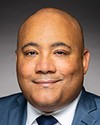
Marc Miller  Liberal

Status

In committee (House), as of Oct. 29, 2026

Subscribe to a feed (what's a feed?) of speeches and votes in the House related to Bill C-34.

Summary

This is from the published bill. The Library of Parliament has also written a full legislative summary of the bill.

Part 1 enacts the Digital Safety Act , whose purpose is, among other things, to promote the safety of persons in Canada, particularly children, reduce harms caused to them as a result of harmful content online and ensure that the operators of regulated social media services, regulated chatbot services and other regulated online services are transparent and accountable with respect to their duties under that Act.
That Act, among other things,
(a) imposes on the operators of regulated services
(i) a duty to act responsibly in respect of the regulated social media services that they operate, including by implementing measures that are adequate to mitigate the risk that users will be exposed to harmful content on the services, by providing tools to users to enable them to block other users and flag harmful content and by labelling synthetic content,
(ii) a duty to act responsibly in respect of the regulated chatbot services that they operate, including by implementing measures that are adequate to mitigate the risk that the chatbot will communicate harmful content to a user, measures to ensure intervention in crisis situations and measures that are adequate to mitigate the risk that the chatbot will engage in certain harmful behaviours,
(iii) a duty to protect children in respect of all of the regulated services that they operate by integrating into those services design features that are set out in the regulations, by implementing minimum-age restrictions for accessing pornographic content on regulated services, and, if provided for by regulations, by implementing minimum-age restrictions for being able to have an account with, or being otherwise registered with, regulated social media services,
(iv) a duty, in respect of the regulated social media services that they operate, to make inaccessible to persons in Canada, in certain circumstances, content on that service that sexually victimizes a child or revictimizes a survivor and intimate content communicated without consent, and
(v) a duty to be transparent in respect of all of the regulated services that they operate, including by submitting a digital safety plan to the Digital Safety Commission of Canada to assist it in determining whether an operator is complying with its duties under that Act;
(b) authorizes the Governor in Council to make regulations to make the operators of other online services subject to the duty to protect children and the duty to be transparent;
(c) provides that persons in Canada may make a complaint to the Digital Safety Commission of Canada that content on a regulated social media service is content that sexually victimizes a child or revictimizes a survivor or intimate content communicated without consent and authorizes the Commission to make an order requiring the operator of the service to make that content inaccessible to persons in Canada if the person making the complaint has used their best efforts to seek recourse from the operator of the service under that Act; and
(d) provides that persons in Canada may make submissions to the Digital Safety Commission of Canada respecting the measures taken by the operator of a regulated service to comply with its duties under that Act.
Part 2 enacts the Digital Safety Commission of Canada Act , which establishes the Digital Safety Commission of Canada, which has powers, duties and functions under the Digital Safety Act . The Part also makes consequential amendments to other Acts.

Elsewhere

All sorts of information on this bill is available at LEGISinfo, an excellent resource from Parliament. You can also read the full text of the bill.

Bill numbers are reused for different bills each new session. Perhaps you were looking for one of these other C-34s:

C-34 (2022) Law National Security Review of Investments Modernization Act
C-34 (2021) Law Appropriation Act No. 3, 2021-22
C-34 (2016) An Act to amend the Public Service Labour Relations Act and other Acts
C-34 (2014) Law Tla'amin Final Agreement Act

Budget 2025 Implementation Act, No. 2Government Orders

November 4th, 2026 / 4:50 p.m.


See context

Liberal

Michael Coteau Liberal Scarborough—Woburn, ON

Mr. Speaker, I thank the hon. member for his commitment to young people, to families and to education.

There is no question that education is the best tool we can use for success and to build a strong Canadian individual and family. That is the best investment, I believe, we can make.

I try every single Friday to go to at least one elementary school. Last week I was at a school, and we talked about Bill C-34 and the impact the bill would have on the school. In fact, a high school has invited me to come talk about the bill.

That type of engagement, that type of consultation, is important. I always leave the classroom telling students not to let people make decisions on their behalf without their paying attention, because throughout their lifetime, there will be people in rooms such as this, at city halls and in provincial governments, who will be making decisions on their behalf, and their political literacy has to be at such a level where they can figure these things out and challenge the people who are making decisions if they are bad decisions.

Artificial IntelligenceAdjournment Proceedings

November 3rd, 2026 / 6:30 p.m.


See context

Green

Elizabeth May Green Saanich—Gulf Islands, BC

Mr. Speaker, let me be clear. I do not think we can trust any of these AI companies, and Bill C-34 would not make them behave in ways that would make them trustworthy. They have to be held accountable.

As much as I support the intent of Bill C-34, proposed section 85 says:

The purpose of a penalty is to promote compliance with this Act and not to punish.

These are multi-billion-dollar profit-making criminals. They plunder the earth for their profit. They do not care about children's safety. They will not care about Canadian children's safety until they are really afraid of the punishment.

I hope that when we go to committee and go to clause-by-clause, the government will agree that it is important to put in threats to their profits and put in strict liability and personal liability for directors on the boards of companies like Anthropic and others so they realize that for shareholder benefit, they have to be punished.

Artificial IntelligenceAdjournment Proceedings

November 3rd, 2026 / 6:30 p.m.


See context

Vancouver Granville B.C.

Liberal

Taleeb Noormohamed LiberalParliamentary Secretary to the Minister of Artificial Intelligence and Digital Innovation

Mr. Speaker, I want to thank my hon. friend for her question. We are both British Columbians. We have both felt the pain of the families and victims at Tumbler Ridge. I am a dad. No day goes by that I do not think about what it is like for the parents who lost children or whose children have been injured, and what it is like for that entire community. I think it is not an exaggeration to say that Canadians and all of us in this House are heartbroken, and we continue to keep the families, survivors and victims in our thoughts and prayers.

To the hon. member's question, our AI for all strategy is built on three pillars: trust, opportunity and sovereign control. It has to begin with trust. We all know that Canadians are only going to use and benefit from AI when they know they are protected and when they can trust it.

Over the course of the last several months, we have spoken to parents, we have spoken to kids and we have spoken to teachers, educators and experts. That is how we have come up with our response. That is why our government is taking the approach of protecting children, strengthening privacy protections and putting clear rules in place so that Canadians can use this technology safely. That is the right way to move forward.

These protections are not an afterthought. It is quite the opposite. They are the foundation and cornerstone of our strategy. It starts with clear rules around how personal information is used. The hon. member referenced legislation. We are modernizing Canada's consumer privacy law through Bill C-36, which was introduced in June and recognizes privacy as a fundamental right. It would safeguard children's information. It would strengthen Canadians' control over their personal data. It would create a right to deletion. It would protect them against surveillance pricing.

However, trust also means keeping Canadians, especially our kids, safe online. Bill C-34, the safe social media act, would hold social media platforms accountable for reducing harms from online content. It would also protect children from the harmful content the hon. member mentioned: AI chatbots.

We are taking tangible action to stop AI from being used to mislead voters. We are working with police and security experts to stop people from using AI to scam Canadians, cause harm or worse. We have committed $50 million to expanding the Canadian AI Safety Institute, strengthening Canada's ability to track risks and advance technical safety research. Our government has invested $150 million in LawZero, led by Yoshua Bengio, the world's leading AI safety researcher. Alongside Germany, we are helping build AI that is safe by design right here in Canada.

Following this tragedy, our government summoned OpenAI officials to Ottawa to demand stronger accountability and clear escalation pathways. I was in that conversation, and I can say that our government has been tireless in ensuring that young people know that we will keep them safe from any risks related to AI. Following this, OpenAI established direct contact with the RCMP to report high-risk cases, and our government directed the company to apply stronger standards and to review past cases while the Canadian AI Safety Institute continues its review.

Canadians' safety is our first priority. We will ensure that companies operating in this space act responsibly and that Canadians, and particularly Canadian kids, are protected. Nothing that we can do will change what happened at Tumbler Ridge, but we owe it to survivors like Maya, who is now home, to ensure that young people and families know their government is taking steps to ensure that this technology serves them and keeps them safe, not the other way around.

Artificial IntelligenceAdjournment Proceedings

November 3rd, 2026 / 6:25 p.m.


See context

Green

Elizabeth May Green Saanich—Gulf Islands, BC

Mr. Speaker, I cannot tell the House how often memories come back to me of the Speaker's saying, “It being now 12:40 a.m., pursuant to an order reached earlier this week”, deeming a motion to adjourn the House to have been moved, and saying, “The hon. member for Saanich—Gulf Islands has the floor.” It is nice that our adjournment proceedings are beginning at a more civil hour and that there are still members in the chamber.

I am pursuing a question I asked in question period on June 4. It was the day the government announced its artificial intelligence strategy, which was called “AI for all”. My question for the government started by noting that I just wondered how the slogan “artificial intelligence for all” lands in Tumbler Ridge. We had just become increasingly aware of the role AI had played in the tortured and challenging mental health crisis that was being experienced by the adolescent who then killed children and caused such unbearable pain.

I noted that seven families were in court seeking redress for the loss of their children who were not adequately protected, and I asked when there would be protection. The hon. secretary of state who responded to my question did, of course, share that sense of grief, and said, “[The government is doing] everything we can, including working with AI companies and advancing our protective legislation, to ensure that these types of tragedies never happen again in Canada.”

I am glad I submitted an Adjournment Proceedings slip, not because the answer was particularly egregious from the secretary of state but because our response to this is inadequate. I also referenced in my question on June 4 that I was very much taken by the advice of Pope Leo XIV that artificial intelligence, in his words, needs to be “disarmed”. That was before the additional trauma and additional facts were unearthed about the Tumbler Ridge tragedy.

It is still with me. I am so honoured that I was included, and I thank the Prime Minister for including all leaders of the other opposition parties so we could all go to the vigil in Tumbler Ridge together. It has not left me for a day how searing that tragedy is and how avoidable it was.

Flags were raised within OpenAI and other companies that are really creating an addiction problem for young people and creating real mental health issues, even to the extent that artificial intelligence and what are now called chatbots were actually engaging in a conversation to encourage the very tragic and disturbed person who committed these crimes.

It has now come to light that there are at least allegations, which have been unearthed through joint work of the RCMP and law enforcement in the United States, that there was another person who was in an ongoing conversation with the young person in Tumbler Ridge, promising them that they would become famous because the person in the States was promising to livestream the killings in the school as they happened. Again, this would never have been possible without artificial intelligence.

We have before us Bill C-34 now. I asked my question before Bill C-34 was tabled, which happened later in June. I know that a lot of levels of government and different countries around the world are trying to grapple with what we do with artificial intelligence. We are being warned by people such as Geoffrey Hinton, a Canadian who is actually credited and known as the godfather of AI, that there is an existential risk.

Here we are, and we still have no answers.

Business of the HouseOral Questions

October 29th, 2026 / 3:10 p.m.


See context

Gatineau Québec

Liberal

Steven MacKinnon LiberalMinister of Transport and Leader of the Government in the House of Commons

Mr. Speaker, it has been a historic week here in Ottawa. It culminated in our annual meeting with our friends and cousins from the European Union, with whom we are now developing deeper ties in order to diversify our foreign trade and provide Canadians with prosperity, quality of life and new employment opportunities for future generations.

Concerning the budget, I am not sure whether my esteemed colleague will like it, because it is going to focus on affordability and Canada's competitiveness. We often see that the Conservatives are not always thrilled with Canada's success. That said, we continue to act in a spirit of collaboration and reach out to our Conservative friends.

This afternoon, we will continue the debate at second reading of Bill C-34.

Tomorrow we will call Bill C-41, the medical assistance in dying safeguards act, which was introduced earlier this week.

Monday of next week shall be an opposition day.

On Tuesday and Wednesday, we will begin debate at report stage and third reading of Bill C-31, a second act to implement certain provisions of the budget tabled in Parliament on November 4, 2025.

On Thursday, we will begin debate on Bill S-5, the connected care for Canadians act, and at 4 p.m., as my esteemed colleague mentioned, the Minister of Finance and National Revenue will deliver his budget speech.

Protecting Young Persons from Exposure to Pornography ActPrivate Members' Business

October 28th, 2026 / 6:10 p.m.


See context

Conservative

Rosemarie Falk Conservative Battlefords—Lloydminster—Meadow Lake, SK

Mr. Speaker, protecting children from harm should always be a priority. As legislators, we have the responsibility to protect the vulnerable and put reasonable safeguards in place.

I want to thank members from across party lines who have spoken in support of Bill S-209, which seeks to protect children from online pornography. Many members who have taken part in this debate are parents themselves. They understand the challenges of raising children in a digital age, when so much content is available at the click of a button.

Children are being exposed to pornography at very young ages. Sometimes they come across it accidentally. Other times, curiosity leads them to content they are not mature enough to understand. The concern is not just how young children are when they encounter this content, but what they may see. Age checks are often absent or ineffective on websites that host pornography. Children can encounter videos that portray aggression, degradation and sexual violence. Some depict acts that can cause serious physical harm, including choking, while presenting them as healthy or even desirable. Children's brains are still developing. They are learning to understand relationships, consent and appropriate behaviour. Repeated exposure to this content can shape how they understand sex, consent and expectations in relationships.

Parents have a very important role to play. They set boundaries. They have difficult conversations and use parental controls, but in reality, they cannot monitor every search, every link or every video. They should not have to carry this responsibility alone.

During this debate, the member for Vancouver Granville raised Bill C-34 as another way to address children's exposure to online pornography, but that is not correct. Bill C-34 does not have the same explicit reach as Bill S-209. Bill C-34 would require age verification to user-generated pornography on sites like OnlyFans. Just so members know, OnlyFans is a site where users generate pornography and upload it. However, Bill C-34 does not stipulate age verification for pornography websites. The government has provided Bill C-34 to the House, a bill that is supposed to protect children, but it does not cover pornography websites. The Liberal government has not clearly stated that it intends to use the powers in Bill C-34 to ensure that all commercial pornography websites restrict children's access.

If we agree that protecting children from online pornography is important, we cannot just leave it to Bill C-34. We need a direct approach, and that is what Bill S-209 is. It is a targeted approach that would require all commercial pornography websites to use prescribed age verification or age estimation methods to restrict children's access to it.

To be clear, Bill S-209 would not ban pornography for adults. It would establish an additional safeguard to help keep this adult content away from children. It also would not come at the expense of Canadians' privacy. This bill includes safeguards governing the collection, use and destruction of personal information used for age checks. We can protect children from content they are not ready to see while also protecting Canadians' personal information.

This issue has been before Parliament since 2016, when the House unanimously supported Motion No. 47, which called for a study on the public health effects of easy access to online sexually explicit material. This is the third version of this legislation being considered, yet children still lack these safeguards. Other jurisdictions, including the United Kingdom, France, Germany and more than 25 American states, have taken steps to restrict minors' access to online pornography.

We cannot keep debating this issue without taking action. Our children deserve safeguards, and I urge all members in the House to support Bill S-209.

Protecting Young Persons from Exposure to Pornography ActPrivate Members' Business

October 28th, 2026 / 6 p.m.


See context

Liberal

Jessica Fancy-Landry Liberal South Shore—St. Margarets, NS

Mr. Speaker, I rise today to speak to Bill S-209, the protecting young persons from exposure to pornography act. I want to begin not only as a member of Parliament in the chamber but also from the perspective of a former educator and as a mom.

Before I entered politics, I spent almost two decades working with young people. I saw their potential, their curiosity and their struggles. Every day, I was reminded that the adults in a child's life have a responsibility to create conditions where they can learn, grow and thrive safely. Today that responsibility extends far beyond the classroom. It extends into a digital world that is available to our children 24 hours a day, seven days a week. That reality should concern us all.

In rising here today as a mom, like parents across the country, I have watched technology transform childhood. Many of us remember growing up in a world where childhood had limits, where certain materials were difficult to access and where adults acted as gatekeepers. Today a child can stumble across explicit and violent sexual content in a matter of seconds, and not because they were looking for it, not because parents have failed and not because teachers have failed but because the online world has been built in a way that makes that exposure possible, and where, instead, they are learning from an industry designed to generate profits. That should alarm every one of us.

As an educator, one of the most important lessons I tried to teach my students was the difference between reality and performance, yet when children encounter pornography at a young age, often before they are emotionally prepared to understand what they are seeing, that distinction becomes very blurred, as their expectations are shaped, their perceptions are shaped and their ideas about relationships are shaped. In some cases, those consequences can be quite profound. Our laws have not kept pace. Our Parliament is right to examine ways to reduce that exposure, because protecting kids from these harms is a responsibility we all share, regardless of party.

I want to take a moment to also thank Senator Miville-Dechêne for her work and service by keeping this issue before us here in Parliament, as well as my colleague from Saskatchewan, with whom I sat on HUMA, for her undying support in protecting children. I am happy to also be a seconder to the bill.

Our government is committed to keeping Canadians, especially children, safe, including online. We agree on the objective of preventing children from accessing online pornography. Bill S-209 shares this objective very closely and aligns with Bill C-34, the safe social media act. Let me be clear. Our government fully supports the principle behind the bill. Its alignment with Bill C-34 is not an obstacle. It is precisely why we support sending Bill S-209 to committee for study, as the bill asks the right questions and demands action to prevent children from accessing online pornography.

At its core, the bill would require commercial providers of online pornography to take concrete steps to restrict access by people under 18 years of age The status quo is not acceptable. Online services must take greater responsibility to protect children from being exposed to harmful content on their platforms. The remaining question is not whether action is needed but how to build a framework that works in practice, protects privacy, can be enforced effectively and remains responsive as technology changes.

Bill S-209 closely aligns with the work of our government that we are advancing through our safe social media act, Bill C-34, which would place an affirmative obligation on operators of regulated services. This would ensure that safeguards are put in place to mitigate the risk before children are exposed to harmful content, rather than after the situation has occurred. If an operator has reasonable grounds to suspect that its service makes pornographic content accessible, it would have to implement age verification or age estimation measures to mitigate the risk of children's being exposed to this content. Adequate protection is the first consideration.

The digital safety and data protection commission of Canada, an independent, permanent regulator that would be created through the safe social media act together with Bill C-36, would have to be satisfied that the measures implemented by an operator will meet that requirement. This is so essential, as the objective is not merely to demonstrate that an age assurance measure has been implemented. Its objective is to mitigate the risk that children will be exposed to pornographic content.

This approach recognizes that regulated services do not all operate in the same way, as their designs, users and methods of providing access to content might differ. Bill C-34 would establish the required outcome and assign responsibility for assessing the adequacy of the measure to the regulator with the necessary technical expertise to do so.

Second, Bill C-34 would also set clear limits on the collection and use of personal information for age assurance so that personal information could only be used to verify or estimate a person's age, and it would have to be protected and destroyed as soon as the process is complete. These safeguards are built directly into the safe social media act because protecting children should not create new privacy risks.

The digital safety and data protection commission of Canada would provide the continuing institutional capacity needed to apply this framework. As the body responsible for administering and enforcing that legislation, the commission would also assess the measures used by regulated operators and determine whether they satisfy the applicable requirements. This commission could establish guidelines concerning the protection of children in relation to regulated services. It could also make regulations specify design features that operators must integrate into regulated services as part of their duty to protect children.

While this authority also extends beyond age assurances, it demonstrates the central role that the commission would play in giving practical effect to the duty to protect our kids, much like our senator's bill. That continuing role is particularly important because age assurance technologies and industry practices will evolve. Different services might require different measures, and new evidence might identify more effective, privacy-protective approaches. The framework would therefore permit this flexibility and innovation without leaving adequacy entirely to the discretion of its regulators.

As we know, the Internet has created some extraordinary opportunities, but it has also created unprecedented access to harmful content. The question before us is whether we are willing to acknowledge that reality and then take action. As a former educator, I want young people to learn about relationships through respect, empathy and healthy human connection. As a mother, I want children protected during the years when they are most vulnerable. As a woman, I want girls growing up in a society that values their dignity, equality and humanity.

Those goals should be uniting all of us. This debate is not about politics. It is about children, families, the kind of culture that we are going to build for this next generation, and whether we are willing to say that the safety and well-being of our children matter more than a convenience of an online industry. I believe they do.

For those reasons, I am pleased to support Bill S-209 and these objectives of protecting young persons from exposure to pornography online.

Protecting Young Persons from Exposure to Pornography ActPrivate Members' Business

October 28th, 2026 / 5:40 p.m.


See context

Liberal

Louis Villeneuve Liberal Brome—Missisquoi, QC

Mr. Speaker, I am pleased to rise today to speak to Bill S-209 on an issue that affects us all: our children's safety online.

A week ago, I welcomed my 17-year-old nephew, Charles André, to the Hill. He wanted to deliver a message to the Minister of Health and the Minister of Canadian Identity and Culture. He came to talk about how he became addicted to porn at the age of 10 and suffered psychological and physical harm as a result. Fortunately, my nephew has a strong support network and managed to break free from this vicious cycle. However, he wanted to make sure that our government puts measures in place to protect children.

I want to commend him for his leadership and courage in speaking out publicly about his experience. The post about his meeting with the ministers went viral, and he had to deal with a lot of hateful and violent comments, which is another problem that comes with social media. However, he also received a lot of kind comments. Young people, mothers and fathers expressed their support for Charles André's call for action, which strikes me as a clear message that people want to see the government take the necessary measures to protect our young people.

Children across Canada use online services every day to learn, to express themselves and to connect with their friends, their family and their community. However, these services can also expose children to inappropriate and harmful content and interactions. These harms are very real. They can harm young people's mental health, their development and their understanding of what healthy, respectful relationships look like.

Too many children are exposed to measurable and preventable harms online, and our laws have not kept pace. Pornography is a big part of that challenge. Children are exposed to it, whether they are looking for it or not, including on services that many of them use every day, such as social media. All too often, it only takes a few clicks, without any verifications, for a child to access such content. Parliament is right to examine how we can reduce that exposure. Protecting children from such harm is a responsibility we all share, across party lines.

I would like to acknowledge the work of Senator Julie Miville‑Dechêne, who brought this issue to Parliament's attention through Bill S‑209, as well as the member for Battlefords—Lloydminster—Meadow Lake, who is sponsoring it in the House. This bill reflects a legitimate and widely shared concern that children should not have unrestricted access to online pornography. Let me be clear. Our government fully supports the principle underlying this bill, which is the protection of children. That is why I am pleased to confirm today that the government will support sending Bill S‑209 to committee for study.

This bill is closely aligned with the work we are undertaking through Bill C-34, the safe social media act, but that alignment is not an obstacle. On the contrary, it is exactly why we should move forward with Bill S-209. Bill C-34 is based on a simple premise: A child's online experience is shaped by the content they see, by the way these platforms are designed and by the interactions these platforms enable. These risks rarely exist in isolation. The content, the design and the interactions can combine to amplify the effects on children. That is why Bill C-34 proposes comprehensive measures to make online services safer from the design stage onwards. Furthermore, together with Bill C-36, it establishes a new framework to better protect Canadians online.

Rather than relying on voluntary commitments from platforms, our government is proposing to enshrine clear legal responsibilities for operators of regulated social media services and AI chatbot services.

Their duties would be brought together under a single framework based on transparency, accountability and independent regulatory oversight. Operators would have a duty to act responsibly by assessing and mitigating risks associated with harmful content. They would have a duty to protect children by incorporating age restrictions into the design of their services. They would have a duty to make content that sexually victimizes a child as well as intimate content communicated without consent, including deepfake sexual images, inaccessible within 24 hours. The bill would also prevent children under the age of 16 from opening accounts on regulated social media platforms unless those services can demonstrate that they are safe for them.

As for chatbots, they will be required to direct users to support services when users express thoughts of suicide or self-harm. One important point is that Bill C-34 directly addresses children's exposure to pornographic content. Under this bill, if the operator of a regulated service has reasonable grounds to suspect that its service is making pornographic content accessible, it would be required to implement age verification or age estimation measures. These measures should be sufficient to mitigate the risk that children will be exposed to pornographic content on the service in question. This requirement is also part of the broader duty to protect children set forth in the bill.

The bill also provides clear safeguards by establishing a framework for these measures. Among other requirements, the regulator would be required to ensure that the measures are effective. Personal information could be collected or used only for age verification or age estimation purposes. It would have to be protected while it is being retained and then destroyed once the verification or estimation is completed. These requirements are set forth directly in Bill C-34. They are intended to ensure that the measures designed to protect children also respect privacy. To ensure that these protections are effective, the bill also provides for ongoing independent oversight. It recognizes that protecting young people online requires binding rules and a regulator capable of enforcing them.

Bill C‑36 would create the digital safety and data protection commission of Canada, an independent, permanent regulatory body made up of members with proven expertise. For the first time, the major online platforms would be accountable to a Canadian regulator with real power. The commission would be able to conduct audits and inspections, issue compliance orders and impose administrative monetary penalties of up to $10 million or 3% of an operator's gross global revenue, whichever is higher. It would review the digital safety plans that operators would be required to publish to explain how they are identifying and mitigating risks on their services. It could also make regulations to issue guidelines. The commission would offer support to victims of online harm. It would also serve as a recourse for users who are dissatisfied with a platform's response to more serious content. It would operate independently. Platforms would no longer be able to get by on mere promises. They would have to demonstrate convincing results.

Bill S‑209 and Bill C-34 are both grounded in a well-established principle: Children deserve to be protected, including online. Both bills recognize the importance of protecting children from being exposed to online pornography. This common objective presents an opportunity for us to consider how these two approaches can complement one another and strengthen our efforts to protect children online. That is why our government supports sending Bill S-209 to committee for study. Our commitment to protecting children is clear. The committee is the appropriate forum to examine Bill S-209 alongside the new framework proposed in Bills C-34 and C-36 and to ensure that these initiatives work together toward the shared goal of creating a safer online environment for children and families across Canada.

By protecting our children, we are protecting Canada's future. The experiences young people have online today will help shape the citizens, workers, innovators and leaders they become tomorrow. We have a responsibility toward them and toward Canada's future.

Protecting Young Persons from Exposure to Pornography ActPrivate Members' Business

October 28th, 2026 / 5:35 p.m.


See context

Conservative

Jeremy Patzer Conservative Swift Current—Grasslands—Kindersley, SK

Mr. Speaker, it is always an honour to rise on behalf of the great people of southwest Saskatchewan.

I want to thank my colleague from just north of me in the province, the member for Battlefords—Lloydminster—Meadow Lake, for sponsoring this Senate bill to address the issue of kids accessing pornography online. As a father of three, including two teenagers, I appreciate seeing all the good work she has done over the years to support children and families. She lives with the modern reality facing parents because she is a mother of young children herself. Raising children who are minors is something each of us has in common with many others in the House, from all parties. That is the most important thing we should be focusing on here today.

As parents, we want the best for our kids. We try to give them everything they need to have their best start in life. Our goal is to help them become adults who can reach their full potential for health, happiness, success and good character. While they are in the process of growing up, we want to keep them away from anything that is harmful to their development. It is an important part of our job to protect them when they are most vulnerable and too young to fully understand how certain things can negatively affect them and sometimes have a permanent impact, for life. As children enter their teen years, parents have to guide them through new challenges, including relationships and sexual development.

I'll quickly quote something from a book called Every Young Man's Battle, which is written from a faith-based perspective to help teens think about these issues. The authors say to the young reader, “One of the most difficult assignments you’ll ever have is to integrate your sexuality with the emotional, spiritual, social, and relational person you want to be.” They goes on to talk about having a healthy outlook on sexuality, which is integrated and balanced with other parts of our lives, including our emotional, relational and spiritual needs. This is a special part of how we are made. We know it is supposed to be a beautiful expression of love, which should lead us toward personal fulfillment, but instead of following that type of path, pornography easily takes a young person in the opposite direction and quickly creates some distorted impressions.

Especially during early puberty, or even before it begins, the damage of exposure to pornography can cause serious problems. One of those problems that can develop at a more formative time is addiction. As time goes on, now with more than one generation growing up with online pornography, we hear from professional and popular discussions about things like porn addiction and sex addiction. Like other forms of addiction, it has negative effects on the person experiencing it, but there are also ways for other people to be harmed, not only relationally but physically as well. That is why Bill S-209 starts off by saying that its purpose is to protect public health and public safety. To do that, it would bring forward a simple solution by requiring age verification. This is really nothing new. The law already has an age limit of 18 years old for selling or distributing sexually explicit material.

We do not allow minors to access these things at a physical store in the real world, and having this rule in place has helped to achieve some good in the process. In some ways, it is similar to the idea of setting an age for people to buy alcohol, but everybody knows that in practice, the situation is very different when it comes to the Internet. The Canadian Centre for Child Protection has said that children as young as eight and nine years old can easily come across sexually graphic material online. In Alberta, a separate study of adolescents found that one-third had been exposed to pornography by the age of 10. There are people who will simply say that this is just boys being boys, and their curious minds will find this material regardless, but many people's experience, and a huge amount of research, shows that it is a bigger problem than that, and I am going to explain why.

The human brain is growing and not finished developing until the age of 26 or thereabouts. To put it simply, while a person's brain is being wired and developing until they are 26, everything that happens in those first 26 years of their life goes a long way to determining who they are, because it can make a difference in how they develop at the biological level. Along with the psychological effects on mental health, we are also talking about experiences that can result in physical changes in the brain while it is still in the middle of development.

Viewing pornography is obviously very different from having sex with a real person. Besides the direct experience, there is something different happening with the brain. Studies have shown that people who are addicted to pornography have a similar brain pattern to people who are addicted to cocaine. Now, take that brain pattern and place it in a preteen or teenage boy or girl, and we have a recipe for disaster. It creates an addiction and a dependency that they will continue to seek from now on, and this is happening at a crucial stage when they are forming their self-image or dealing with insecurities. At the same time, they are learning new ways to handle relationships with their peers and having their first experiences, which shape how they will handle intimate relationships when they are older.

Here are some more stats. When intentionality is questioned, 44% of teens say they looked it up on purpose, but as many as 58% say they encountered porn accidentally. The rates of intentional consumption are actually higher among respondents who identify as LGBT. For that group, some studies show it was 50% higher or could even be 66% higher. We have these youth, who are already vulnerable and seeking affirmation for who they are, exposed to sexually explicit, graphic and violent material while working through deeply personal questions of identity. That higher rate of consumption actually puts them at even more risk than their peers of being victimized.

Pornography also creates erratic behaviour and false expectations of what sex is. I am going to give a couple of examples of such behaviour, and what I am about to say is quite disturbing. There was a case of a 12-year-old schoolboy who raped his seven-year-old sister after watching hard-core porn with his buddies on an Xbox. After viewing this content, he wanted to try to do the things in real life that he was watching online. There was another instance in 2019 of a 14-year-old boy sexually assaulting his eight-year-old stepsister after watching pornography on a regular basis. These are both very shocking and disturbing cases, and it is a mistake to dismiss them as a couple of isolated incidents. They are alarm bells for a much larger problem. Stories like this are less surprising if we realize what is happening beneath the surface.

When studies on this issue have been done, they have found that 38% of teens reported viewing porn that depicts rape, choking or deliberately causing someone pain; 21% agreed that “most people” like to be spanked, hit or slapped during sex; and the numbers get worse among those who purposely watch violent pornography. Those numbers skyrocket to 80% for teenagers who watch porn at least three times a week, yet only 30% say that some form of consent was given by the people in the videos.

Pornography is destroying how healthy relationships are viewed. It is creating massively false expectations for intimate partners about what is deemed to be normal conduct in the bedroom. This is something that is hard to overcome. We could ask any cocaine addict how hard it is to overcome that addiction and then imagine what it is like dealing with this addiction. When we have expectations and ideas being influenced by violent pornography, it is not difficult to imagine how this can contribute to abusive relationships or domestic violence.

All of this is why I support Bill S-209 to restrict access to pornography for young people. We can take action and require age verification. We can help to prevent and reduce early exposure among the future generations. We can take a simple step to fight some of the worst impacts of online pornography. It is impossible for government to replace the role of parents, and it should never try to do that, but it is also true that parents are looking for help to protect their kids online, and the government knows that. It says as much when it promotes Bill C-34 to restrict access to social media. I find it interesting that we are debating both of these bills at the same time. Hopefully, it helps my colleagues on the government side understand where this bill is coming from and support this one as well.

There are real concerns with young people using social media, which I share as a parent, but it is also likely that the negative effects of online pornography are even substantially worse, yet Bill C-34 would do nothing to address an issue of protecting the innocence of kids and youth from material that they should never see. Parenting has always been a tough job, but it has only gotten more complicated in a digital world. The least we can do for them is to pass Bill S-209.

Protecting Young Persons from Exposure to Pornography ActPrivate Members' Business

October 28th, 2026 / 5:30 p.m.


See context

Bloc

Alexis Deschênes Bloc Gaspésie—Les Îles-de-la-Madeleine—Listuguj, QC

Mr. Speaker, what purpose do the laws we pass here serve? They serve to civilize society. That is what I have always loved about the law and the body of legislation built over time. Obviously, when new sectors emerge, the law often lags a little behind. The government has to catch up and figure out what is happening.

With the development of digital and virtual technology, we have work to do as legislators. Last week, one of the topics we discussed was the digital services tax. A little while ago, we discussed Bill C‑34, which also seeks to regulate the social media sector. Now, we are now discussing Bill S‑209, which is a worthwhile bill. The Bloc Québécois supports it, because what is happening online should be regulated more.

More and more people are living their lives online. The online world is increasingly becoming the place where people communicate, interact, meet and learn. It is crazy. I was looking at some statistics earlier. Young people spend more than three hours a day online. The law must adapt. One of the risks children face online is coming across pornographic material, and we know that exposure to such material can have damaging effects on their healthy sexual development. Bill S-209 seeks address that issue. That is why we support it.

I want to say from the outset that the Association des pédiatres du Québec also supports this bill and believes that this initiative must be commended. I think that this bill will transcend party lines.

Now that information technology makes pornographic content more widely available, the government has a duty to restrict minors' access to such material as much as possible. Bill S-209 makes it an offence for organizations to make pornographic material available to young persons on the Internet. Furthermore, it enables a designated enforcement authority to take steps to prevent pornographic material from being made available to young persons on the Internet in Canada. This bill is motivated by a desire to better regulate online access to pornographic material through age verification, which is currently limited to a mere declaration. In fact, that is the main purpose of this bill.

We should commend Senator Miville-Dechêne for laying the groundwork in Bill S-203, which is moving forward under a new name.

The bill does not answer every question, but it sets forth the general principles of verifying the age of customers seeking access to pornographic content. Once enacted, the bill will authorize the relevant authority to make regulations establishing a specific framework to be implemented. The bill also sets out the consequences for pornographic websites that violate the law, whether or not they are hosted in Canada. People may be wondering whether we can still civilize the virtual world when everything is hosted overseas. The answer is yes, we can still take action within our own borders.

The bill allows the government to block sites that fail to comply with the future age verification regulations. Is this a silver bullet that will ensure no child ever gains access to pornographic content? Probably not. There will always be ways to circumvent age verification measures, whether through VPNs or other workarounds. Nonetheless, we believe the bill will have beneficial effects because it will make access more difficult and, ultimately, protect children.

In our view, supporting Bill S‑209 is common sense. It means standing up for measures designed to protect the public and promote healthy lifestyle choices. This bill addresses a real concern in our communities. That is why we will support this bill and recommend that it pass second reading.

Business of the HouseOral Questions

October 22nd, 2026 / 3:15 p.m.


See context

Liberal

Arielle Kayabaga Liberal London West, ON

Mr. Speaker, I would like to take this opportunity to offer my condolences to the Canadian Armed Forces members in Wainwright who are dealing with loss, Canadian military families across Canada and the families of the injured who are still dealing with the aftermath of the fire. My prayers and thoughts are with them, and I know the people of London West are also thinking about the people in Alberta.

I also want to recognize that on Monday, Albertans voted to stay in Canada. They voted to believe in building a strong country. They voted for building our nation together with Canadian workers, with Canadian material, and that together we will continue to build a strong country. I want to recognize that.

The member opposite mentioned our budget that is going to be tabled on November 5, which is a Thursday. I would like to remind the member that after the many years he has sat here, he is well aware that we also sit on Friday. I welcome him coming in on Friday, November 6, to ask a lot of questions. Many members will be in the House to answer those questions.

Tomorrow, we will begin to study two bills. In the morning, we will study Bill C-28, the Canadian space launch act. In the afternoon, we will study Bill S-3, on weights and measures.

On Monday, we will resume consideration at second reading of Bill C-40, strengthening Canada's defence sector act.

Tuesday, October 27, shall be an allotted day.

On Wednesday and Thursday of next week, we will call Bill C-34, the digital safety act, at second reading.

Finally, I would like to inform the House that, pursuant to Standing Order 66(2), we will resume debate on Motion No. 10 to concur in the 10th report of the Standing Committee on Human Resources, Skills and Social Development and the Status of Persons with Disabilities, on Tuesday, October 27.

Young People and PornographyStatements by Members

October 21st, 2026 / 2:15 p.m.


See context

Liberal

Louis Villeneuve Liberal Brome—Missisquoi, QC

Mr. Speaker, I rise today to commend the courage of Charles-André, a 17-year-old who chose to give evidence before our Minister of Health about how easy it is for young people to access pornography, as well as the harmful effects it has on their development, both psychologically and physically. He talked about how he would like to see the government take action on this issue in order to better protect young people. That is exactly what we want to do.

I want to commend the courage he showed in sharing his own experience, despite the highly intimate nature of the subject, in an effort to help other young people. His evidence will help raise awareness about the consequences of trivializing sexuality and help discourage some inappropriate behaviour among young people. His testimony serves as a powerful reminder of the importance of Bill C-34 and the legislation that came out of Bill C-16.

Charles-André is a role model for young people his age. I would like to thank him for his inspiring conduct, his commitment and his courage. We are proud of him.

Business of the HouseGovernment Orders

October 8th, 2026 / 3:30 p.m.


See context

Gatineau Québec

Liberal

Steven MacKinnon LiberalMinister of Transport and Leader of the Government in the House of Commons

Mr. Speaker, first of all, we certainly want to acknowledge the very high ratings for this part of the week with the Thursday question.

I also want to celebrate the fact that, while every week is a good week to help Canadians with affordability, this week was a particularly good week, because the groceries and essentials benefit, which is up to $1,800 or $1,900 a year, went into the bank accounts of Canadians. The quarterly deposit was made. The Prime Minister announced today measures that will help tens of thousands of Canadians convert their homes to heat pumps, saving them money while helping with the cost of installation. The Parliamentary Budget Officer confirmed that our measures to reduce the gas tax and prolong the reduction will save the average family about $275 a year. It is a good week for affordability.

Finally, the bill that is so obviously and patently good in terms of moving Canada's strong economy forward that even Conservatives realized it was worthy of their support, Bill C-39, has now passed through second reading and is off to a special legislative committee.

It has indeed been a good week for Canadians.

Tomorrow we will proceed with second reading of Bill C-37, the first nations clean water act. When we return from constituency week, priority will be given to Bill C-40, which aims to strengthen Canada's defence sector; Bill C-38, the Canadian fuel affordability act; and Bill C-34, the safe social media act.

Note that Thursday, October 22, shall be an allotted day.

Finally, seconded by the member forRegina—Qu'Appelle, I would like to seek unanimous consent for the following motion:

That, notwithstanding any standing order or usual practice of the House, on Monday, October 19, 2026, the House shall continue to sit until midnight, provided that:

(a) at 6:30 p.m., the Speaker shall interrupt any proceedings then before the House and such proceedings shall be deemed adjourned, and the House shall proceed forthwith to the consideration of Bill C-38, An Act to amend the Excise Tax Act (extension of the federal fuel excise tax relief);

(b) after 6:30 p.m., no quorum calls, dilatory motions or requests for unanimous consent shall be received by the Chair, except for a unanimous consent motion to see the clock.

Protecting Young Persons from Exposure to Pornography ActPrivate Members' Business

September 24th, 2026 / 6:20 p.m.


See context

Liberal

Bobby Morrissey Liberal Egmont, PE

Mr. Speaker, I rise in the House this afternoon speaking in support of Bill S-209. I want to begin by looking at the journey of how we arrived here. The bill was introduced in the Senate by Senator Julie Miville-Dechêne. Senator Miville-Dechêne was appointed in 2018. Then, the bill came to the House on two occasions, but because of the calendar, the bill died on the Order Paper.

I am going to focus my comments on the process of how we arrived here and one of two routes this chamber can take for where the bill would go from here. Most would agree we are at a time when Canadians are looking to parliamentarians to come together on certain issues, and this should be one of those issues. All parliamentarians would agree that the House should take steps to prevent very young children from accessing pornography online.

I have been listening to a number of previous speakers. The parliamentary secretary, in his comments, said the government supports the objective of the bill, which is extremely important, and I would expect all members sitting in this chamber do. One of the benefits of Parliament is the diverse basis of opinion that comes to debate in the House and the recognition that each member brings a particular area that they focus on.

When the member for Battlefords—Lloydminster—Meadow Lake approached me this past spring to say that she was going to sponsor this particular Senate bill in the House and ask if I would consider supporting it, I reflected for a moment. I will acknowledge that there are probably numerous topics that the member for Battlefords—Lloydminster—Meadow Lake and I do not agree on, but on this matter, I will be clear. One thing the member is very passionate about and uncompromising about is the protection of children, family and her children. I see that from time to time because the member brings her children to the committee room from time to time, so I was not surprised that the member would choose in particular a bill like Bill S-209 as her private member's bill.

The bill gives us all sides. We have heard from one other opposition party in the House that is supportive of the bill's getting to committee. The committee is the process for all legislation to get a thorough analysis and a good review. Changes that are required from time to time can be made there, as members are aware. Therefore, I had no hesitation in indicating that I would be supportive of Bill S-209. Again, I doubt that there would be any member in the chamber who would not be supportive of the objectives of Bill S-209.

At the same time, I am well aware that the government has introduced two pieces of legislation, Bill C-34 and Bill C-36. Some will say they are more comprehensive in the area being addressed by this particular private member's bill, but all are aiming in the same direction of putting real consequences on those who choose to make decisions that allow young people access to pornography.

My sense is that there is a very general understanding of and support for the context of this particular private member's bill. I, for one, as I indicated, will be supporting the bill when it comes back to the House for a vote. I look forward to it getting to committee so that witnesses can appear and the committee can do a very thorough analysis of the bill.

As I indicated in my earlier comments, Bill S-209, Bill C-34 and Bill C-36 are leading in a direction that all members of this chamber, I assume, will be supportive of. However, the ability to be supportive of and have a candid debate on all aspects of the legislation is extremely important. Bill S-209, in my opinion, deserves to get to a stage where it gets a more thorough analysis, which would be in the committee format. That is why I will be supporting it. There will be some discussion about the impact on government legislation versus private members' legislation, but to my earlier comments, this is one subject that all members of this House should come together on and support to ensure that this particular bill gets before a committee so that it might have the opportunity to complement government legislation and make it better in some places.

I believe my time is coming to an end, but the bill speaks for itself. I am in agreement with the commentary made by the speakers who spoke to the bill earlier. I am looking forward to hearing more debate.

Protecting Young Persons from Exposure to Pornography ActPrivate Members' Business

September 24th, 2026 / 6:10 p.m.


See context

Bloc

Andréanne Larouche Bloc Shefford, QC

Mr. Speaker, the Liberal government introduced Bill C-34. This is a revised and expanded version of the former Bill C-63, which dealt with online harms. Ottawa is requiring social media platforms and major pornography websites to verify each user's age. This is a complete 180, as the Liberals previously voted against the bill. I hope that, following committee consideration, we will be able to work together to avoid any overlap between these two bills and any duplication of effort.

In conclusion, it remains to be seen how we will examine them. I sincerely hope that this bill will go to committee, as it helps to protect minors' mental health and healthy development from the harmful effects of online sexually explicit material.

Protecting Young Persons from Exposure to Pornography ActPrivate Members' Business

September 24th, 2026 / 6 p.m.


See context

Bloc

Andréanne Larouche Bloc Shefford, QC

Mr. Speaker, today I am speaking to Bill S-209.

The Bloc Québécois is in favour of studying this bill in committee. I want to say that from the outset. Bill S-209 incorporates the main provisions of Bill S-210. The Bloc Québécois voted in favour of Senator Julie Miville-Dechêne's Bill S-210 at second reading stage during the last Parliament, so we are being consistent.

The new bill is essentially the same as the old one. The most significant change is that the bill's legal definitions now refer to “pornographic material” rather than “sexually explicit material”. This terminology is more in keeping with its intended purpose than the previous version.

I would also like to thank my colleague for sponsoring this bill in the House. This is an issue I follow very closely as my party's critic on this matter, as vice-chair of the Standing Committee on the Status of Women and the Standing Committee on Human Resources, Skills and Social Development and the Status of Persons with Disabilities, and as one of the co-chairs of the All-Party Parliamentary Group to End Modern Slavery and Human Trafficking.

I have been contacted many times with evidence that the pornography industry has a negative impact on young people. That is why I will be speaking about this today, explaining how this bill differs from the previous version, reiterating the negative effects of this industry and discussing another bill that addresses this issue, specifically Bill C-34.

First, with respect to the current bill, pornographic material means:

with the exception of the material referred to in the definition of child sexual abuse and exploitation material in paragraph 163.‍1(1)‍(a) of the Criminal Code, any photographic, film, video or other visual representation, whether or not it was made by electronic or mechanical means, that

(a) shows the genital organs or anal region of a person engaged or depicted as engaged in explicit sexual activity; and

(b) is intended to cause sexual excitement.

In short, the definition is now limited to visual content. Bill S‑210, the previous version, also included audio and written material, but that is no longer the case. The current wording requires both explicit sexual activity and the intention to cause sexual excitement, which is narrower than the first reading version.

Otherwise, the bill's underlying principle remains the same: to make it harder for young people to access pornographic material by requiring pornographic websites to make sure only adults are accessing their site by instituting age verification mechanisms, since we know about that pornography can have damaging effects on children's healthy sexual development. We mentioned that we supported studying the bill in committee.

However, we do have a number of reservations, questions or concerns about the bill that we need to mention before sending it to committee.

First, we want to make sure that the age verification technologies protect users' security and privacy, especially since personal data may need to be collected for identity verification purposes. We just want to check that in committee. Second, we want to hear from experts about how effective and secure these age verification mechanisms are. Third, we want to hear from experts about the results and consequences of similar policies in other places around the world, such as states like Louisiana or Utah and Germany, where provisions like these have been implemented.

Bill S‑209 makes it an offence for organizations to make pornographic material available to young persons on the Internet. Furthermore, it enables a designated enforcement authority to take steps to prevent pornographic material from being made available to young persons on the Internet in Canada. To that end, it makes it an offence for organizations to make such material available to young people on the Internet for commercial purposes. The term “organization” has the same meaning as in section 2 of the Criminal Code, so it means a public body, body corporate, society, company, firm, partnership or association of persons that is created for a common purpose, has an operational structure and holds itself out to the public as an association of persons. This makes it possible to directly target commercial pornography distributors. There are even three defences.

Ultimately, what we are seeing is that the bill is motivated by a desire to better regulate online access to pornographic material through age verification, which is currently limited to a mere declaration. The digital landscape where our young people spend their time from childhood on unfortunately makes it easier to view degrading or even extreme content that normalizes the objectification of women and dominance relationships. This content, in the form of photos or videos, is shared on platforms owned by companies that do not meet any real requirements to verify that the people viewing it are adults.

It would be unrealistic to entrust the companies that distribute pornographic material with verifying the age of the person viewing the material. Instead, the bill would entrust this process to a third party, that is, an intermediary designated in the regulations. In addition, collection is limited to what is strictly necessary. This addition was recommended by the Office of the Privacy Commissioner of Canada during the study of Bill S‑210. Notices must therefore contain relevant information about the regime, and the organization's observations must be taken into account in deciding whether there is a violation and in setting the amount. The bill now includes two paths. One is the criminal path with legal action, proof beyond a reasonable doubt and a court-imposed fine. The other is the administrative path, which does not focus on access by a minor but rather on a failure to comply with a notice. It is faster and does not require criminal proceedings.

The thing is, the legislation merely establishes the framework. Everything else is left to the regulations. The act does not specify who imposes the penalties, review and appeal mechanisms, the limitation period, the recovery method and so on. Now that information technology makes pornographic content easy to distribute and more widely available, the government has a duty to restrict minors' access to such material as much as possible given its obscene nature and its harmful effects on young people's brain development. Self-regulation will not suffice. Bill S‑209 lays out broad principles governing age verification to prevent persons under the age of 18 from accessing pornographic content. Once passed, the bill will authorize regulations establishing the specific framework required to achieve that.

This bill also has major consequences for pornographic websites that fail to comply with its provisions, whether those sites are hosted in Canada or elsewhere. The government will be able to block sites that fail to comply with eventual age verification regulations. Everyone is aware that this bill is not a silver bullet. A minor who wants to view pornography illegally could use workarounds to bypass the age verification mechanisms, for example, a VPN. This bill may not be the solution for completely eradicating this scourge, but there is a good chance that it will help to further restrict minors' access to pornography, so the bill will achieve its objective.

I recognize that this is an important health issue, and the Bloc Québécois will always stand in support of measures that seek to protect the public and promote healthy living. Bill S-209 responds to a real concern within our communities. With the increase in femicides and violence against women, our society has a duty to restrict, to the greatest extent possible, access to this explicit content that promotes such violence.

Many civil society organizations and stakeholders, including the Association des pédiatres du Québec, support the initiative in Bill S‑209. This proposal transcends party lines, and we hope that all political parties represented in the House of Commons will support it. Let us not forget that the widespread availability of online pornography poses significant risks to minors, that the average age of first exposure to pornography is 12, and that one-third of children are exposed to it before the age of 10. Violent images can foster misconceptions about sex and specifically about consent, so they are a public health and safety concern.

The Standing Committee on the Status of Women has previously studied the trafficking of women, girls and gender-diverse people. While we cannot comment on the committee's subsequent findings, a number of speakers emphasized in their briefs that human trafficking is closely linked to pornography and coercive relationships between pimps and victims. By its very nature, Bill S‑209 will serve to mitigate the distribution of pornography on the Internet and protect victims from humiliating exposure to illegal material. Holding organizations accountable and imposing a new offence if they make such content available will give victims an additional tool to regain their dignity and punish their abuser.

Finally, on June 10, 2026, the Carney government introduced Bill C‑34, which enacts the—

Protecting Young Persons from Exposure to Pornography ActPrivate Members' Business

September 24th, 2026 / 5:55 p.m.


See context

Liberal

Taleeb Noormohamed Liberal Vancouver Granville, BC

The fact is that the work done in the context of Bill S‑209, as well as the work that was done in the context of Bill S‑210 in the previous Parliament, is represented in these bills. If she had read both bills, she would know that, but such is life.

We believe that this model, that is, enforcement regimes grounded in expertise within a common digital regulatory body, provides a more effective way to address complex and cross-cutting issues involving privacy and digital safety, including age verification, the proliferation of synthetic content in digital spaces and the safety of children online, all of which are closely linked to the objectives of Bill S‑209.

The strengths of the government's approach become clear when we consider age assurance. Parliament's consideration of Bill S-209, to my colleague's comment, and its previous iterations has consistently highlighted the real privacy concerns associated with age verification and age estimation measures, especially when children's personal information is involved, which I am certain the member must care about. The Office of the Privacy Commissioner has stated that age assurance can further the goal of creating a safer, more privacy-protective online environment for kids, but that careful attention must be paid to determining the most important appropriate means of verification.

Every age assurance requirement involves trade-offs. The more reliably a measure establishes a user's age, the more sensitive the information is that it tends to collect. Whoever sets and enforces that requirement is making a safety decision and a privacy decision at the same time. Bill S-209 would recognize that and require cabinet to ensure that any age assurance method it prescribes protects users' personal information.

I would submit the member opposite would be very happy to see this in our legislation, but those conditions would be applied by regulation and enforced by an existing federal institution that the bill does not designate, so I am curious how the member opposite would think this would actually be enforced. Under Bill C-34 and Bill C-36, these decisions would sit within a single body. The commission would have oversight of whether an operator is effectively protecting children, while also meeting the strong privacy protection requirements set out in Bill C-36.

Bill S-209, Bill C-34 and Bill C-36 all share a common concern to ensure that children are kept safe online. The government plan includes strong privacy protection and a robust plan for actually carrying these measures out. Bill S-209, while well intended, would leave it to cabinet regulation and an institution yet to be named to iron out all of these details. It is almost as if the opposition wants to put all that trust into cabinet, which is curious given its position on most anything.

Bill C-34 and Bill C-36 together are a strong plan for protecting our kids and their data online, and that has already been laid out.

Protecting Young Persons from Exposure to Pornography ActPrivate Members' Business

September 24th, 2026 / 5:55 p.m.


See context

Conservative

Rosemarie Falk Conservative Battlefords—Lloydminster—Meadow Lake, SK

Mr. Speaker, I am a little concerned, because I understand we are to be debating Bill S-209 right now, and I am hearing about bills that are government bills and are being debated, and it is up to the government to call the calendar. We are debating Bill S-209. We are not debating Bill C-34 or Bill C-36.

Protecting Young Persons from Exposure to Pornography ActPrivate Members' Business

September 24th, 2026 / 5:50 p.m.


See context

Vancouver Granville B.C.

Liberal

Taleeb Noormohamed LiberalParliamentary Secretary to the Minister of Artificial Intelligence and Digital Innovation

Mr. Speaker, I am pleased to rise today to speak to Bill S-209 and the government's work to protect young people from online harms as technology evolves in front of us.

I also want to begin by thanking and recognizing Senator Miville-Dechêne for bringing this initiative to Parliament and for her continued work to better protect children online. I remember the previous iteration of this bill in the last Parliament. I enjoyed very much trying to see how we could learn from what she was seeking to put forward in that bill and how that might inform the work that we were doing.

It is very clear that ensuring young people are safe online is a priority we all share in the House. It is an important thing for us to keep top of mind. As the father of two young boys, it is something I certainly think about every day.

Let me say first that the government supports the objectives of Bill S-209. Children should not be able to access content, including pornographic content, that is inappropriate for their age online. Period. At the same time, our government understands that protecting children from pornographic content is not just about separating it from the protection of their personal information. Bill C-34, the safe social media act, and Bill C-36, the protecting privacy and consumer data act, seek to address both of these critical concerns thoughtfully and place them in the hands of a regulator that would be empowered to protect Canadians online. Indeed, much of what was in Bill S-209 previously has inspired some of this work.

Digital platforms play an important role in the lives of many young Canadians, helping them stay connected to family and friends, access educational resources and discover new interests. At the same time, young people are sometimes exposed to online content that is inappropriate for their age. Recognizing both the benefits of digital technologies and the need to better protect children online, the government introduced Bill C-34, the safe social media act, and Bill C-36, an act to enact the protecting privacy and consumer data act, to amend the Personal Information Protection and Electronic Documents Act and to make amendments to other acts, in June 2026. Together, these initiatives establish clear rules that promote online safety, strengthen privacy protections and increase accountability and trust across the digital ecosystem.

Bill C-34 addresses directly the risks when children are exposed to pornographic content online. It would require operators of regulated services to implement age assurance measures to mitigate the risk that children would be exposed to adult content on their service.

Bill C-34 would also put strong protections in place to ensure that children's personal information is safeguarded, that it is destroyed once it is no longer needed and that any age verification or estimation measures do not unreasonably or disproportionately limit users' freedom of expression.

Young people can be harmed not only by the content they encounter online but also when their images are misused to create harmful deepfakes. We all know that generative AI has made this material easier to create and spread without consent. Our government is tackling this emerging threat by strengthening protections for victims and holding those responsible to account.

Our government has already taken strong action to address these issues through Bill C-16, the protecting victims act, which expands the Criminal Code definition of an “intimate image” to include sexualized deepfakes and ensures that those who generate, distribute or threaten to distribute such content are held accountable.

Bill C-34 seeks to build on this work by tackling these issues at their source before they have the chance to spread online. Under this bill, operators of regulated chatbot services would be required to put measures in place to mitigate the risk of a chatbot communicating harmful content, which includes generating non-consensual intimate images and content that sexually victimizes a child or revictimizes a survivor.

As technology continues to evolve, online safety and privacy are becoming increasingly interconnected. Protecting young people requires us to address both.

That is why, along with Bill C-34, the government introduced Bill C-36, which represents the most significant modernization of Canada's Privacy Act as it applies to the private sector in over 25 years. Bill C-36 would strengthen individual protections, specifically by recognizing privacy as a fundamental right, strengthening children's privacy and creating a strong right to delete or vanish, to protect the privacy and reputation of Canadians online. These are all challenges that did not exist when the current privacy legislation was enacted.

For children, this matters. Age verification generally relies on the use of personal information. Bill C‑34 sets out privacy safeguards that age verification measures must respect. Bill C‑36 strengthens protections for children's personal information more broadly.

Together, Bill C‑34 and Bill C‑36 would also create a permanent digital safety and privacy commission. The commission's mandate would be to promote online safety in Canada while protecting Canadians' personal information in the marketplace.

Bill C‑34 and Bill C‑36 set out these protections, which are backed by robust enforcement regimes. For example, under the protecting privacy and consumer data act proposed in Bill C‑36, the commission would have the authority to issue compliance orders or impose substantial administrative monetary penalties on regulated entities that fail to meet their obligations to protect Canadians' privacy.

The bill also requires the regulatory body to consider the best interests of children in all policy and enforcement decisions. This means stronger protections for children's data, clear rules for organizations that target or serve young users, and an ongoing commitment—

Protecting Young Persons from Exposure to Pornography ActPrivate Members' Business

September 24th, 2026 / 5:45 p.m.


See context

Conservative

Rosemarie Falk Conservative Battlefords—Lloydminster—Meadow Lake, SK

Mr. Speaker, we need to recognize what Bill C-34 is encapsulating. Bill C-34 specifically applies to regulated social media services and regulated chatbot services, so that is user-generated content. What Bill S-209 is targeting is pornographic content from online porn companies. They are two different things.

I believe there is a hole in Bill C-34 where this is not covered. Online porn companies are not covered in Bill C-34. Bill S-209 is a targeted piece of legislation that will close that hole.

Social MediaPetitionsRoutine Proceedings

September 24th, 2026 / 10:10 a.m.


See context

Liberal

Jacques Ramsay Liberal La Prairie—Atateken, QC

Mr. Speaker, I rise today to present a petition signed by people from La Prairie—Atateken and across the country who are concerned about the impact that social media is having on our children.

This petition is part of a national initiative, AgeStandard, that has collected over 17,600 signatures online from parents, some of whom work in the tech industry themselves. This petition reminds us of the documented effects that social media is having on the mental health of our children, whose rates of anxiety and depression have doubled since the creation of these platforms.

I would like to remind the House that these platforms filter and tailor their content using algorithmic recommendations and promote violent and sensationalistic content. Users' feeds are constantly being adjusted based on their interactions and set to autoplay to encourage endless scrolling.

The petition therefore calls on the government to pass legislation that would prevent children under the age of 16 from creating social media accounts. The petitioners want users to have to do more than simply check a box. They want certified third parties that are independent from the platforms to be responsible for verifying users' age based on a common technical standard that respects privacy.

In the spring, our government introduced its own response to this issue. However, I believe that AgeStandard's proposal is in keeping with that discussion and should inform our debates on Bill C-34.

Government Business No. 13—Proceedings on Bill C‑22Government Orders

June 17th, 2026 / 9:30 p.m.


See context

Conservative

Melissa Lantsman Conservative Thornhill, ON

Mr. Speaker, I think it is yet another erosion of the rights of Canadians. The same that we see in bills like this, in Bill C-11, Bill C-18, Bill C-9, Bill C-8 and Bill C-34 to some extent, although we are still studying it. This is an erosion of democracy, and it limits the participation of many in democracy. We hear every single day from our constituents, asking why we cannot do something about it. It is because they shut down debate, they shut off the cameras and they shut down committees.

Government Business No. 13—Proceedings on Bill C‑22Government Orders

June 17th, 2026 / 8:15 p.m.


See context

Conservative

Kevin Waugh Conservative Saskatoon South, SK

Madam Speaker, one year in, the member for Oshawa has done a lot of work on the public safety committee. I just want to state again, on our amendment, that we agree with the government on part 1, which would be Bill C-22A. We have also heard from police all over this country that they need the tools. However, the privacy issue is what we are debating here tonight. Bill C-22B would be on the privacy issue. I sit on the heritage committee, and we had the same thing with the government this week when it threw up Bill C-34. That is also a privacy issue we are going to have to deal with when it comes back in the fall.

To the hon. member for Oshawa, let us talk about part 2, because that is the hill we are going to die on. We need this amendment tonight for Bill C-22B.

Combatting Hate ActGovernment Orders

June 16th, 2026 / 11:50 a.m.


See context

Conservative

Roman Baber Conservative North York, ON

Madam Speaker, it is finally sunny in Ottawa, but to me, this is one of the darkest weeks in the history of Canadian democracy. Bill C-9 is back in the House after a brief stint in the Senate that did not make a dent in the problems with the bill.

Predicated on false pretenses, the repeal of the religious defence to hate speech remains. The new hatred offence would still criminalize conduct, contrary to a civil statute. Nothing that minority communities are actually worried about in terms of security would be changed by Bill C-9. The Liberals are ramming it through at the end of the summer sitting as the government-subsidized media is already at the cottage.

In the same week, the Liberals are ramming through Bill C-22, a bill that would require telecoms and Internet companies to seize all Canadian metadata, including their geographic location and who they called or texted in the last year, without their having committed an offence and without a search warrant. Bill C-22 would allow the Minister of Public Safety to order Internet providers to break encryption, something that has never been done before, even though every security expert is sounding the alarm that the privacy of law-abiding Canadians would be at major risk.

In the same week, the Liberals are also introducing Bill C-34, the digital safety act. Of course, we have to protect children, but that does not mean that we have to deny children their charter rights to access media communications, which is an explicit right, or prevent them from communicating with each other through popular apps. It is a plan that failed in Australia and that will fail everywhere else. Unless we are prepared to implement a Beijing-style, authoritarian Internet surveillance regime, this is unenforceable. Are Canadians ready for that? Obviously, they are not.

In the same week, which is the last week before the legislature rises, the Liberals are introducing so-called privacy legislation, which would eliminate the Privacy Commissioner in favour of their so-called digital safety czar, who would regulate, enforce and judge all at the same time. This would be a Liberal government appointee reigning over what we do on the Internet, with unlimited powers over how we communicate and how the world's most innovative companies do business. Surely by coincidence, the same thing is now happening in England this week, and it just happened in Australia.

I was trained in the common law. It was the beacon of hope for any modern civilization. Anywhere the common law went, prosperity followed, but now we have these egomaniacs, career technocrats and misguided lefties who think they know better than everyone telling us how to live for our own benefit and how to keep us safe. I want to be safe from them.

Bill C-9 would do nothing to protect the Jewish or Muslim communities. It would not protect any community. This entire thing has been a major Liberal failure.

The Liberals wanted to eliminate the Attorney General's ability to consent to prosecutions. They realized how bad an idea it was and rolled it back. They wanted to redefine the term “hatred”. It is a definition that the Supreme Court used for 40 years. I am proud of this. It is one of the greatest accomplishments of my career that the Liberals have accepted my amendment to keep the old definition of hatred and not dilute it. People would not have to go to jail when they offend someone.

Just when I thought we were out of the woods, I saw the digital safety bill that attempts to regulate harmful conduct online. Surprise, surprise. Harmful content would include content that foments hatred. The bill states, “content that foments hatred means content that expresses detestation or vilification of an individual or group”. The Liberals are at it again. We just fixed the definition in Bill C-9, and now they have come back with a digital safety bill to regulate our conduct online and they have a different definition for hatred. Why is it “detestation or vilification”, not “detestation and vilification”, as the Supreme Court says? Where is the extreme or intense emotion that is required by the Supreme Court, like we agreed on in Bill C-9? Where is that in the digital safety act?

Why do the Liberals hate freedom of speech so much? The Liberals hate it because they are afraid of the truth. The Senate was asked to fix the new stand-alone motivated offence in Bill C-9, because this new offence that the Liberals dreamt up would not target criminal conduct only. It would target any offence under any act of Parliament. For example, people could violate the digital safety act or the human rights code, and that may attract criminal prosecution. The Liberals are turning our democracy into a banana republic.

Earlier, I heard the member for Whitby ask my colleague why she is opposed to a new hate-motivated offence. Does she not want someone to be punished when they engage in hatred? First of all, hatred is already an aggravating circumstance in sentencing, so do not give us that. Second of all, if the Liberals want to introduce another offence, introduce it for criminal offences. Do not penalize civil conduct, thereby putting civil conduct at risk of criminal prosecution.

The Liberals tout all of these benefits for the Jewish community, which is my own community. Let me tell the House something about what has transpired here. Everything the Liberals have done to clarify any existing law is already in law. They say they will have to protect people's ability to enter synagogues and be free from obstruction. We are already free from obstruction in entering a synagogue. Nobody can obstruct me from entering a synagogue. That is called assault.

How about intimidation? People should be free from intimidation when entering a school. Of course, that has not stopped the multiple school shootings that have happened in my riding. Nothing is happening about those. It is already a criminal offence to intimidate someone entering a school. It is called intimidation contrary to section 423 of the Criminal Code.

Second Reading and Concurrence in Senate AmendmentsCombatting Hate ActGovernment Orders

June 11th, 2026 / 8:10 p.m.


See context

Conservative

Andrew Lawton Conservative Elgin—St. Thomas—London South, ON

Mr. Speaker, it is a great honour, as always, to rise on behalf of the people of Elgin—St. Thomas—London South. It is in the same vein, with a heavy heart, that I have to rise once again on one of the most dangerous pieces of legislation the government has ever introduced. Bill C-9 is a bill that has been litigated in the media, across kitchen tables and in town halls across the country. It has been litigated almost everywhere, except in this House and at committee, where the Liberals have availed themselves of a myriad of parliamentary tricks to shut down debate and silence the voices of Canadians.

We are, at this exact moment, I believe, about 25 minutes into the debate on the Senate amendment to Bill C-9. A little over 12 minutes ago, the Secretary of State for Combatting Crime walked in and said that there had been no agreement on this bill and the government would be moving to silence debate once again on this motion. Less than 15 minutes into the beginning of this debate, the Liberal government is already trying to shut it down. It is perhaps very poetic that it is once again censoring debate on its censorship bill.

Let me repeat in this House what I have said in this House, at committee and across the country multiple times: Hate is real and it is a scourge on this country.

I come from London. Just the other day, we had the five-year anniversary of the heinous and hate-motivated murder of the Afzaal family, who were killed for no other reason than their Muslim faith. We have seen the absolutely despicable hate on Canadian streets and streets around the world targeting the Jewish community, with synagogues and day schools being shot up, and posters trying to find a missing Jewish girl being ripped down. We have also seen, and I say this as a Christian, 123 Christian churches in the last five years burned or vandalized. Interestingly enough, when Justin Trudeau was prime minister, he was asked about this and said it was “understandable”. Some would say that is hate from someone who is supposed to be a unifying figure in this country, a prime minister.

Then we have, of course, the Minister of Canadian Identity and Culture, who literally said at a meeting of the justice committee, before he was promoted to cabinet, which gives a pretty good indication of what the Prime Minister welcomes among his closest advisers, that people should be criminally prosecuted for quoting certain verses of holy scripture. He mentioned Leviticus, Deuteronomy and Romans. Two of those are books in both the Bible and the Torah, but he said it could extend to other things as well. He said, and I have the direct quote, if any of my Liberal colleagues would like to call this misinformation, as they so often do, that some verses of scripture are so inherently hateful that they should warrant criminal prosecution.

Some Liberals may say that it is not true and that is not how it is going to unfold. However, if Liberal members cannot even agree on what constitutes hate, how can police, prosecutors, civil society groups and others who are going to be responsible for implementing what is in Bill C-9, if and when it receives royal assent and becomes law?

This is important because that same minister, just yesterday, introduced Bill C-34, with sweeping reforms to Internet regulations. I have not read through the entire bill myself yet, but I will point out that one of the things the Liberal government has tried to do with its two previous online harms bills is weaponize the state against what Liberals view as hate speech, not actual criminal hate speech, but what the Liberal government views as being speech that should be banned and restricted. Therefore, this Liberal government does not deserve the benefit of the doubt on anything to do with speech or conscience.

Canadians see through that. That is why Canadians have been so resoundingly clear that they do not want Bill C-9. That is why Canadians have, through hundreds of thousands of phone calls, contacted the Liberal members, who have in some cases listened to the concerns but clearly not taken them to heart, because they have not only forced through Bill C-9 at every stage, but silenced debate and silenced the voices of Canadians.

In the Senate, we saw this on full display within the last week and a half, when 240,000 postcards urging senators to reject Bill C-9 were sent to members of the Senate. What happened? The Senate mailroom said there were too many and that it could not deliver them all to the senators' offices, so it would send a couple of samples their way and put the rest in a warehouse in Gatineau.

Eventually, due to public pressure, and I thank my colleague, Senator Denise Batters from Saskatchewan, for her efforts on this, the postcards were moved to a Senate office room. Even so, senators were told to come on down if they wanted to get their postcards. Most did not. The very same senators then voted the bill through without seeing the scale of response from Canadians who do not support it. This is coming from Canadians of a very diverse array of political, religious, ethnic, philosophical and ideological backgrounds.

One of the things I found so fascinating, as someone who had the opportunity to meet with so many Canadians about Bill C-9, is how the strange bedfellows, as the old saying goes, were forming. There were evangelical Christians, Orthodox Jews, devout Muslims and non-religious civil liberties actors. I cannot say I have had many opportunities in the chamber to link arms, metaphorically, with my colleagues in the NDP and my colleague the leader of the Green Party, but on Bill C-9, both the left and the right saw that the Liberal government cannot be trusted with matters of civil liberties.

The Liberal government members, when facing any of the criticism, of which there has been much on Bill C-9, resort to the same old tired lines. They say that the bill cannot affect someone's charter rights, because the charter protects their rights. If that sounds familiar, it is because that was the identical argument they used to insulate themselves from criticism when they invoked the Emergencies Act in 2022. They said that it could not violate someone's charter rights because the Emergencies Act says it has to be charter-compliant.

What happened in the aftermath of that? Bank accounts of political protesters were frozen. The mobility rights of people engaging in peaceful protest were banned. It was so Orwellian and draconian that the federal court said it was unconstitutional, that it violated the civil liberties of Canadians. The government appealed. It went to the Federal Court of Appeal, which said once again that it violated the civil liberties of Canadians. Then, in the last hour of the last day on which the Liberal government could seek leave to the Supreme Court to appeal that decision, it appealed it, once again telling Canadians that it would defend its right to violate their rights.

That is what the Liberal government would be doing with Bill C-9. Perhaps someone will be wrongfully charged under Bill C-9, will avail themselves of the legal process and be exonerated, but as we have seen in the Emergencies Act case, that is likely to take years.

In anything to do with freedom of expression, the issue is not what decisions the state will make in totality. It is also a question of what chilling effect the legislation would create. Faith leaders all of a sudden are not confident about their ability to preach the totality of their holy book, and for them, not the government, to be the arbiter of which scriptures mean what. No faith leader should ever have to vet their sermons through the Minister of Canadian Identity and Culture, which is effectively the benchmark we are told must exist because it is the minister who would decide which verses of scripture are hateful and which verses are not.

We looked at the bill, and we saw that the Liberal government would be removing long-standing protections for religious speech, or what is often called the religious defence. This was an agreement between the Liberals and the Bloc Québécois that would remove long-standing protections that have been on the books for over 50 years. These are protections that say good-faith religious expression is not hate speech. It is not a get-out-of-jail-free card for expressing hate. Someone cannot rob a bank, run down the road and yell, “God is good” and expect that the religious defence will save them. I do not recommend anyone tries.

What the religious defence says is that if someone is making a good-faith religious expression or citing a religious text, that cannot meet the definition of hate speech. Calls for genocide and calls for violence, calls that are themselves criminal, were illegal, are illegal and will always be illegal.

The religious defence does not protect against criminally hateful speech. It simply sets out what is not and should not be construed as hate speech to protect against authoritarian censors, like the Minister of Canadian Identity and Culture, who wish to say that good-faith religious expression can and may be hateful. Canadians are so alarmed by this because when we remove good-faith protections that apply only to people who have made good-faith expressions, the only people we are protecting are those who were engaging in good-faith debates, whether they were on a religious matter or an academic matter, or whatever else may come about from them.

The removal of the religious defence is not the only problem with Bill C-9. It certainly became a flashpoint in the discussion. It was one of the most significant points for people of faith, who, I would note, have already seen a litany of attacks on their rights from the Liberal government. Going back a couple of years ago, there was the threat of removing their charitable status. That was an endorsement given by Liberal and New Democrat members. Going back years earlier, there was the ideological and religious litmus test the Liberal government put on organizations that wanted to receive Canada summer jobs funding, as though their ability to hire a summer student to help out should be contingent on their religious and moral beliefs. This is not new. It is why people were, rightfully, so concerned about it.

In the end, we also had the process before us truncated. Efforts to bring in the testimony that the Minister of Justice claimed he would listen to and did not were stymied. Efforts to read letters from faith leaders from very ecumenical backgrounds were not permitted. I wonder why. Even now, I wonder why, just a few minutes into our discussion, the secretary of state for combatting thought crime decided to rise and try once again to shut down debate on Bill C-9. The Liberal government lacks the courage to even defend the totality of what it is doing.

I repeat that this is not a rejection of the existence of hate and the need to respond to it. I will specifically recognize hate against the Jewish community. I remember that one of my colleagues, the member for Mount Royal, who has been very outspoken in standing up for the Jewish community in his riding, was at one time entertaining leaving the Liberal caucus because of the Liberal caucus's anti-Semitism problem. Irwin Cotler, a renowned human rights advocate, was urging my colleague from Mount Royal to leave the Liberals because they were not standing up against the hate facing our Jewish community. This is why I do not take the Liberals seriously when they say they have the solution to a problem they have allowed to fester, and it is why Canadians do not trust them.

Interestingly enough, one of the fascinating conversations I had in the course of our deliberations on Bill C-9 when it was before the House was with the Rabbinical Council of Toronto, which is a group of Orthodox rabbis, not just in Toronto, but actually across many parts of the country. These are men I met with who face tremendous discrimination and hate. They do not even feel safe walking around parts of Toronto looking visibly Orthodox. They said hate is real and anti-Semitism is real, but they are not going to be protected by laws that limit their ability to preach their faith and read their scriptures.

Religious freedom for one is religious freedom for all. That is why faith groups like the Evangelical Fellowship of Canada, the United Church of Canada, the primate of the Anglican Church of Canada, the Church of Jesus Christ of Latter-Day Saints, the National Council of Canadian Muslims and the Canadian Muslim Public Affairs Council, some of which are more liberal with a small "l" and some of which are more conservative with a small “c”, but all of which represent different faith groups, have all found problems with Bill C-9. In some cases, they have found problems with the entirety of it. In others, they have found problems with the parts dealing with removing long-standing protections for religious speech.

We do not protect anyone from hate and we do not protect anyone from persecution if we take away their rights. This is why Bill C-9 and the Liberal government's insistence on forcing this through have been such a clarion call for people across this country.

I will speak specifically about the section of the bill criminalizing hate symbols, because this is what is at issue in the amendment that has been returned to us from the Senate. The amendment would add a noose, a symbol with a tremendously hateful history, which actually did not get much exploration when Bill C-9 was before the justice committee and was not part of the original list the Liberal members put forward.

I do not actually recall whether there were any questions from Liberal MPs, or any MPs, on this. I could be wrong on that point, but I certainly know it did not take up any substantive amount of time in our committee's study on this. However, the problem that did arise on the hate symbol section was twofold. One part was a question of redundancy. Displaying a hate symbol in Canada is already a crime if someone is doing it for an illegal purpose.

I can give a very recent example of this. In the fall, there was a man whom I find to be utterly despicable, actually, in my part of the province, sadly, who decided to inflict hate on the community by mowing a Nazi hakenkreuz, often referred to as a swastika, into his front lawn. He lived on a main highway. It was very jarring for people, certainly those in the Jewish community, who had to see it. Police investigated. They did amazing work. They determined it did meet the standard of wilfully promoting hate, an existing Criminal Code offence. The evidence was the fact that he was displaying a hate symbol in a manner to wilfully promote hate. The law worked.

The idea of needing to ban hate symbols is utterly redundant, because they are already illegal, as is much of what is in Bill C-9 in general. The offences relating to obstruction, intimidation or blocking access are things already covered by existing laws. If we have a problem with existing laws not being enforced, we need to deal with that, but new laws are going to fall victim to the same cultural attitudes, which, again, I would attribute to a lack of political leadership more than to anything else.

However, the problem when we do prescribe specific hate symbols is that now all of a sudden we have introduced a new layer of ambiguity into the law. We have introduced a new problem, which is, does the displaying of what the Liberals say is a hate symbol, alone, constitute a criminal act? The Liberals claimed this was not the case. The justice minister claimed this was not the case. However, the testimony actually said otherwise.

For example, the International Civil Liberties Monitoring Group said that the offence is written in such a way that the “simple display” of one of the symbols included would in and of itself “be considered a wilful incitement to hatred.” A plain reading of the offence by police or the courts could reasonably be that it is the simple display of an image that in and of itself promotes hatred. Intent does not matter. The “simple display” is all that matters.

We also heard something very similar from the Canadian Civil Liberties Association, pointing out the redundancy, that “public display of a hateful symbol can already be part of a broader pattern of behaviour that leads to criminal conviction.” The CCLA gave another example from 2010, where someone “was convicted of public incitement of hatred for burning a cross”, and “ In 2012, an individual was convicted of mischief for, among other things, drawing symbols associated with the [KKK] in front of a Black family's house.” Existing laws were used to go after, in that case, anti-Black racism, which is very real, does warrant a response and should be prosecuted, as should all other illegal forms of hatred in this country.

The problem when we start enumerating hate symbols is that we are going to end up with a never-ending process of people wanting to add more symbols onto it. If we are going to go down that road of enumerating these symbols are illegal and these ones are not, we have to be prepared to look at all the symbols that cause people hate. We actually explored this at the justice committee in the House of Commons. I moved an amendment to add the hammer and sickle to the list of hate symbols. It is a symbol associated with Communism, responsible for claiming 100 million lives. The Liberals voted this down.

The Liberals are interested in only some types of hate. They are interested in going after only some types of violence. What about the logo for antifa, again, a network, a philosophy, a belief system, an organization, however we want to refer to it, responsible for demonstrable violence, threats of violence and hate? Where is that on the list?

With respect to the list of terror entities that the Liberal government has put as the main focal point of the hate symbol section, a list that is subject to change and that the government could effectively change unilaterally, there were issues raised by witnesses about, if not the veracity, certainly the integrity of that list. I think getting into that would probably be something that takes up more time. I guess I have unlimited time, but it would take up, theoretically, more time than the House would like to spend on the technicalities of it. However, it was a point that we did not get the opportunity to really interrogate about much further, because of the Liberals' desire to shut down debate on the bill.

As fascinating as I am sure a lot of Canadians find the inner workings of Parliament, or as fascinating as I wish they found them, it is actually quite frustrating. I go back to the reason I came here. One of the things I said in my maiden speech was that I came to Ottawa and Parliament to make Canada a freer place.

I was so focused on the things the Liberals have done to erode these freedoms that needed to be undone. It was shocking to see how many more things they continue to heap on and how many more bills and pieces of legislation have come forward that attempt to put the government more in control of things as fundamental as what Canadians say, what scriptures Canadians read and what religious beliefs Canadians can share and exhibit with each other.

This idea of control is so deeply ingrained in the Liberal ethos. It is shameful. I remember that many years ago, freedom of speech was a non-partisan concept. I remember how the great Senator Jerry Grafstein, a Liberal senator who was one of the champions of freedom of expression, was one of the champions of opposing section 13 of the Canadian Human Rights Act as it was used against people for their opinions. Where are those Liberals? Where are the freedom-of-speech-loving Liberals? I see Liberals who love censorship, and I see Liberals who love silencing people. I see them all the time. Where are the Liberals who are prepared to stand on principle for freedom of expression?

Interestingly, when the Bill C-9 debate was first going on in this House, I heard from a number of Liberal MPs who were very quietly supportive of what we were saying on the bill. They were hearing from their constituents from the Muslim community, the Christian community and all communities, raising issues about this. Those Liberal MPs seem to have been silenced by their own party, their own whip or their own Prime Minister. When push came to shove, they were whipped into voting for this bill, which their communities and constituents did not want.

As an aside, I am very interested in seeing, when this particular motion goes to a vote, how my colleague from southwestern Ontario, the member for Sarnia—Lambton—Bkejwanong is going to vote, because I stood in this House with her as she eloquently railed against Liberal assaults on civil liberties. She stood up and talked about how the Liberals wanted to put her in jail for her religious beliefs. Will there be room for that member to stand and vote her conscience in the Liberal Party? I do not know. History would indicate no. I know people of faith are watching. Perhaps they are praying for a miracle. I do not know.

I look at the discussion that took place in the Senate. As someone who has been a member of Parliament for a little over a year, there is a lot I need to learn, and a lot we can all learn, about how the procedures and mechanisms work in this place. I have not had the opportunity to delve too much into how Senate procedure works.

I was watching some of the debates that took place at the Senate human rights committee, which was reviewing Bill C-9. I was actually heartened that it had many witnesses testifying who had been barred by the Liberals from testifying when the bill was before the House, like Lisa Bildy, who is a tremendous human rights lawyer from the Free Speech Union of Canada, Professor David Millard Haskell, from Wilfrid Laurier University, and a great many others, including The Democracy Fund's Mark Joseph. These people all said something very similar, which was that as the bill is written, the only assurances we can take that the wrong people would not be charged are the government's assurances that that is not what it is trying to do.

I realize that we are getting late into the evening. Even if we take the Liberals at their word, which I do not think people generally do, and certainly not these Liberals, we are relying on every single person in the country reading the definition of hate the same way. We are relying on every police officer, every provincial attorney general, every civil society group and every faith leader to read this the same way and understand it. Hate is a subjective concept.

One of the changes that I am glad was made to Bill C-9 was an amendment to the original Liberal definition, which everyone agreed significantly lowered the threshold to charge someone for their speech. I am glad that we were able to change it. However, there were other amendments that the Liberals rejected. One that I was actually quite shocked to see them reject was an amendment to remove the applicability of the Liberals' new stand-alone hate offence to all federal laws and limit it to just the Criminal Code, because the new stand-alone hate offence is a criminal law.

Under Bill C-9 as written, that law would apply to even non-criminal statutes like, for example, the Canadian Human Rights Act. Someone could be criminally charged with a Liberal-defined hate crime for breaking a non-criminal law. The Liberals had no interest in fixing what many people assumed might have been an accident or a drafting error. They had no interest in fixing that.

Then we can look at some of the other arguments that were put forward in the Senate. Now, the Senate human rights committee originally added more amendments than just the one that we are discussing today. Some of those attracted a great deal of swift response from people across the country. For example, the Senate proposed a specific criminalization of residential school denialism:

Everyone who, by communicating statements other than in private conversation, wilfully promotes hatred against Indigenous Peoples by condoning, denying or downplaying the Indian Residential Schools System...is guilty of an indictable offence and liable to imprisonment for a term not exceeding two years; or...is guilty of an offence punishable on summary conviction.

This is an amendment that passed the Senate human rights committee. It almost passed the Senate but was rejected at report stage, ultimately. This is an amendment that has actually been denied and decried by a great many indigenous leaders, who fear that something like this would bar them from even telling their own stories and discussing their own approach.

Interestingly enough, we heard from the government's representative in the Senate. I am not just saying she is a Liberal senator because Justin Trudeau appointed her, but she actually bears the title of the government's representative in the Senate. She said that the reason she voted against that amendment was because it did not go far enough. She thought it did not go far enough, and she said the government was instead working with a member from the NDP, the member for Winnipeg Centre, I believe, who has a private member's bill that attempts to do something very similar. The only reason the Liberal government's representative in the Senate said no to that amendment was that it did not go far enough. That is worth noting.

The original amendment that dealt with the noose issue was an amendment that would have actually prohibited a noose, a burning cross or a white pointed hood, or any other symbol that is used or associated with the promotion of ideological violence based on race, ancestry or ethnic origin. Nobody wants to see hate in this country. No one wants to see hate symbols. No one wants to see the proliferation of burning crosses, nooses, things used to traumatize and terrorize people, things associated with very real historical harms.

I remember some years ago, there was a Liberal member of Parliament, the member for Vancouver Centre, I believe, who spoke. It ended up being completely made up, but she spoke about some rash of cross burnings in a community, which ended up not being accurate. I do think that for people who have actually experienced these things, it is horrible, and we should condemn it. We should use existing laws that deal with hate.

Then I look at when the discussion came to the Senate human rights committee on the religious defence, the most contentious part of the bill. This was the part of the bill that was ultimately responsible for the hundreds of thousands of phone calls to Liberal MPs, for the hundreds of thousands of postcards, for the emails that I have gotten and still continue to get about this bill, and for the conversations that, in my riding, real people have with me because they have heard what the Liberals are doing and cannot stand it. It was the removal of the religious defence.

The Senate human rights committee voted against reinstating the religious defence. It was focused more on adding more restrictions and more layers and less on preserving the fundamental nature of freedom of expression and freedom of religion that should underpin all work we do here, upholding the fundamental values that are enshrined in our charter but definitely predate the charter.

Then, when those amendments were rejected at report stage, we had another discussion, at third reading in the Senate. Conservative Senator Yonah Martin tried a much more modest way of telling faith communities in this country that their rights would not be targeted, and that was to take the Liberal pablum that was inserted to try to pacify people. I will read that. This was after the justice minister said he was going to canvass faith communities and said he was going to listen to their concerns. Some people called us and said, “Hey, great, we won. The justice minister said he's going to fix it.” They then saw the text and realized that, once again, a Liberal had written a cheque that could not be cashed.

The line that the Liberals put into the bill, referring to the section to do with wilfully promoting hate, was this:

For greater certainty, nothing in subsection 319(2) or (2.?2) of the Criminal Code shall be construed as prohibiting a person from communicating a statement on a matter of public interest, including an educational, religious, political or scientific statement made in the course of a discussion, publication or debate, if they do not wilfully promote hatred against an identifiable group by communicating the statement.

To put that in plainer text, what the “for greater certainty” clause says is that one is not wilfully promoting hate if one is engaged in a religious or political or educational discussion, unless one is wilfully promoting hate. I am not sensing the clarity there. It is circular reasoning if ever there was some.

We had lawyers, scholars and faith leaders who weighed in on this, who said they know how we can salvage this. We can take off that last line, the circular line, “if they do not wilfully promote hatred against an identifiable group”. That was rejected when we tried to do it at the House justice committee, and it was rejected when Senator Martin tried to do it in the Senate. Again, the government's representative in the Senate refused to budge on any of this, refused to give even an inch on sending a signal to faith communities in this country that their rights and freedoms will be protected.

I mean no disrespect to our colleagues in the Senate, but it was interesting hearing the debates both on the Senate floor and in the Senate human rights committee, when none of the thorny issues that one would think would have to be addressed when dealing with these definitions was actually asked about. For example, when the amendment on criminalizing residential school denialism or downplaying was being discussed, nobody that I heard asked what that means. Nobody asked how we define it, how we distinguish academic inquiry on a subject of historic significance from downplaying in a way that is, as the legislation defines it, hateful.

Even when talking about the noose, no one actually interrogated the point of what a noose means. That may sound silly to some people, because we can all in our minds imagine what that is. When we are talking about the point at which a symbol becomes illegal, it is a very different question. The point at which a symbol becomes illegal needs to have a very clear definition, especially if we weave it into the dialogue we heard from the Canadian Civil Liberties Association, from the International Civil Liberties Monitoring Group and others, that a display of a symbol is inherently hateful regardless of intent.

I do not wish to sound glib here. I do not wish to do what the Supreme Court does, which is to concoct all these reasonable hypotheticals to try to rewrite law. I will point out that there have been stories where someone has thought something was a noose and it was not. I could see situations in which someone sets up a really terrifying Halloween display on their home, for example, and someone may misunderstand the intent and call the police. This is the problem. When we are enumerating symbols and we are separating out intent, which is what lawyers have said the stand-alone hate symbol ban does, we are going to have a chilling effect on discourse, which is precisely the problem.

Just as when we remove long-standing protections for religious speech from the Criminal Code, we are sending a signal to people of faith that their sermons, their beliefs and their scriptures are now fair game for prosecution. That is the message that we are sending. That is the message that is being sent when the Minister of Canadian Identity and Culture says that some verses of scripture are so inherently hateful, they should attract prosecution. That is the message we can draw when Justin Trudeau says it is understandable that someone would want to burn a Christian church. All of this is part and parcel of why Canadians were so alarmed.

If I try to find the silver lining in all of this, it is that I have had the opportunity to have discussions with people I would not find myself on the same side as politically. I have had a great many discussions with people where we can disagree on nine out of 10 other things, but on this, we are united. I do not actually think that is any testament to my ability to attract friends and whatnot. I think it is a testament to how well the Liberals have mastered creating enemies, because the Liberals do not have the goodwill from these communities either. The Liberals know they do not have the benefit of the doubt, and we have seen this in the context of other legislation too.

The Liberals' Bill C-8 and Bill C-22 were both subject to their same pre-emptive defence that they made with Bill C-9, which is, “Don't worry. You can trust us.” Canadians look at that and say, “Oh no, we can't,” and I agree with those Canadians. The Liberal government has to make its case that it is trustworthy and that it is not going to abuse its power and its authority.

Let us imagine a parallel universe here in which the Liberals do not want to weaponize their authority against political dissidents. I know that seems like a very fictional, hypothetical scenario, but let us just imagine that world for a moment. What is to say that the next government would not? This is the problem, and we can look at the Emergencies Act as an example, with laws that give the government power that is supposed to be constrained only by its goodwill. This is why we are so concerned about other legislation in which ministerial discretion is so central to the powers and authorities vested in the laws. It is because we do not trust these ministers.

Quite frankly, earlier today during Oral Questions, a very influential, powerful minister, the minister responsible for the public service, the President of the Treasury Board, was asked a simple question about his file, and he looked through his papers for 30 seconds to find the answer and could not. In the end, he sat down and let someone else answer the question. We can imagine a minister like that put in a role where they get to decide what Canadians say online, or what telecom companies have to do. We can imagine the power that other people in the Liberal government would have, with a minister who will just read whatever is on the page and, if it is not there, will just sit down.

That is why we have to restrain government power, and it is not just because of a distrust of the Liberal government. It is because of a distrust of the state in general that Canadians have. We should not be happy giving the Liberals any power that we would not want Conservatives to have, that we would not want the Bloc to have, that we would not want New Democrats to have and that we would not want the Greens to have. It is not that all of these parties have an equal likelihood of forming government, but I am just using them as an example here.

All should agree with that. All should understand that. We can think of the Emergencies Act. Did anyone honestly think that the Liberals would be so gung-ho to use the powers that they used that act for? What if a Conservative government was doing it against a group of protesters that they felt were more aligned with the left?

All of this is speaking to what I believe is the most central reason that Bill C-9 was so vociferously opposed by so many Canadians. It was not because of all these dog whistles that the Liberals like to use: conspiracy theories, obstruction or certain people wanting a licence to hate. People want freedom in this country. They want to know that their rights and freedoms are protected. They want to know that the Liberal government is not just going to pay lip service to the charter but is actually going to live and embody it in all it does.

The values of freedom of speech, freedom of expression, freedom of the press, the right to be free from unreasonable search and seizure and the right to privacy, all of these things, are not just slogans that the Liberals can discard at their whim when they run up against a policy they want to champion. These are central things not just to Canadian identity but to the human experience.

Freedom of expression is, in many respects, the most important freedom. This is not my thought, but it is one that I have shared a great many times: If all other freedoms were stripped away but one, the freedom of expression, we could use that to fight to win all the others back.

I am standing up today, in what will more than likely be my last opportunity in the House to address Bill C-9, to say that we cannot let our freedoms be eroded. We cannot. It is not just about whether people believe a faith, beliefs or values to be hateful. I do not believe that the majority of people in this country are hateful people. I believe it is is a small minority, and I believe that small minority needs to be addressed. When their expressions and their actions rise to the criminal level, they need to be prosecuted to the fullest extent of the law.

However, I also believe that the issue is not about whether people themselves want to use their freedom to spread hate. It is about whether those who disagree with them will agree not to use the word “hate” to malign them or silence them.

I am so grateful for the leadership of some people who now find themselves in the Liberal Party. I mentioned, for example, my former colleague from Sarnia—Lambton—Bkejwanong, who was a fierce crusader against Bill C-9. I also have to recognize the Liberal member for Nunavut, who was a tremendous crusader against Bill C-9. I applauded her second-reading speech, when she spoke about the powers the Liberal government was trying to give itself. I hope the member will remember her roots and vote against this.