Arab Heritage Month Act

An Act respecting Arab Heritage Month

Status

This bill has received Royal Assent and is, or will soon become, law.

Summary

This is from the published bill.

This enactment designates the month of April as “Arab Heritage Month”.

Similar bills

C-232 (44th Parliament, 1st session) Arab Heritage Month Act

Elsewhere

All sorts of information on this bill is available at LEGISinfo, an excellent resource from Parliament. You can also read the full text of the bill.

Bill numbers are reused for different bills each new session. Perhaps you were looking for one of these other S-227s:

S-227 (2021) Law Food Day in Canada Act
S-227 (2021) National Ribbon Skirt Day Act
S-227 (2016) Recreational Boating Reporting Requirements Modernization Act
S-227 (2015) National Sickle Cell Awareness Day Act

Debate Summary

line drawing of robot

This is a computer-generated summary of the speeches below. Usually it’s accurate, but every now and then it’ll contain inaccuracies or total fabrications.

Bill S-227 proposes designating April of each year as Arab Heritage Month in Canada. The legislation aims to celebrate the history, achievements, and significant contributions of Arab Canadians, while promoting education and awareness to foster greater social cohesion and recognition across the country.

Conservative

  • Support for Arab heritage month: Conservatives support designating April as Arab Heritage Month to acknowledge the diverse contributions of over one million Arab Canadians to the country’s history, culture, and economic growth.
  • Recognition of historical contributions: The party highlights the global importance of Arabic language and history, noting that Arab scholars preserved ancient knowledge and made foundational advancements in mathematics, science, and philosophy.
  • Emphasis on entrepreneurship: Members celebrate the entrepreneurial spirit of Arab Canadians, noting their significant impact on Canadian business and calling for improved skills recognition to help professional immigrants flourish.
  • Beyond symbolic recognition: While supporting the bill, members stress that heritage recognition should move beyond symbolism to address real family concerns regarding affordability, housing, and the preservation of liberal democratic values.

NDP

  • Support for bill S-227: Support establishing Arab Heritage Month to recognize the contributions of over one million Arab Canadians who have enriched the country's culture, economy, and public service for generations.
  • Addressing racism and discrimination: Designating a heritage month serves as a tool to combat rising Islamophobia and anti-Arab racism, affirming that Arab Canadians belong and are valued in the face of ongoing hate and division.
  • Educational and social benefits: The bill provides opportunities for schools and community organizations to celebrate the diversity of the Arab world, educating Canadians about the achievements and history of these communities.

Liberal

  • Support for Bill S-227: The Liberals support establishing a national Arab Heritage Month to formally acknowledge the significant contributions Arab Canadians have made to Canada’s social, economic, and political fabric over the last 140 years.
  • Fostering education and belonging: This legislation aims to provide opportunities for all Canadians to learn about Arab traditions and history, helping to counter stereotypes and ensure Arab Canadian youth see their heritage reflected in the national story.
  • Strengthening Canadian diversity: The party emphasizes that recognizing specific cultural heritages strengthens social cohesion and trust, reinforcing the idea that Canada's diversity is a core national strength.
Was this summary helpful and accurate?

Arab Heritage Month ActPrivate Members' Business

June 2nd, 2026 / 5:20 p.m.

Liberal

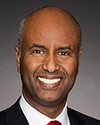
Ahmed Hussen Liberal York South—Weston—Etobicoke, ON

moved that the bill be read the third time and passed.

Mr. Speaker, I rise today with a profound sense of gratitude and optimism as we approach the final stage of Bill S-227, an act respecting Arab heritage month.

Today, we stand at the finish line of a journey that began several years ago with the member of Parliament for Ottawa South, and that has been built upon through collaboration, goodwill and a shared belief that Canada's diversity is one of its greatest strengths. This legislation is simple in its wording but powerful in its purpose. This bill is not new to Parliament. Today we have the opportunity to complete that work. We have the opportunity to fulfill the commitment made by Parliament and deliver a recognition that Arab Canadians have long sought and richly deserve.

For more than 140 years, Arab Canadians have helped build this country. They have served as entrepreneurs, teachers, physicians, engineers, artists, public servants, military personnel, community leaders and, indeed, elected representatives. They have opened businesses on our main streets, cared for patients in our hospitals, educated our children, strengthened our communities and enriched our national culture. Their stories are not separate from the Canadian story. Indeed, they are woven and they are part of the Canadian fabric.

Bill S-227 is about ensuring that future generations understand that reality. It is about ensuring that young Arab Canadians see themselves reflected in our national narrative and know that their heritage is valued, respected and cherished. It is about education as well. Arab heritage month would provide Canadians of all backgrounds with an opportunity to learn about the history, contributions, traditions and languages of Arab Canadians. At a time when misinformation, stereotyping and division can too often find space in public discourse, education remains one of the strongest tools that we all have to build social cohesion. This understanding builds trust. Recognition builds belonging, and belonging strengthens our country.

Throughout this process, I have been reminded of what makes Canada special. We are a country where people from every corner of the world can build a life, raise a family, contribute to their communities and proudly call themselves Canadians. We do not ask people to leave their heritage behind. We ask them to contribute to the rich tapestry that defines our nation. That is the spirit of Bill S-227. This legislation is not about one community alone. It is about the Canada we continue to build together, where diversity is celebrated, where every community is recognized and where every child can see themselves reflected in our shared history.

I want to thank Senator Mohammad Al Zaibak for his leadership and perseverance in guiding this bill through the Senate. His advocacy has been instrumental in bringing us to this special moment.

After years of effort, collaboration and support from parliamentarians across party lines, Conservative members of Parliament, Bloc Québécois MPs, New Democrats and Greens, and from communities right across our country, we now have the opportunity to make Arab heritage month a permanent part of Canada's legislative framework. I encourage all members, all colleagues in this House, to support Bill S-227 and help send it to the next and final stage on its journey towards becoming law so that we can signal to Arab Canadians that they are indeed integral to Canada.
Arab Heritage Month ActPrivate Members' Business

June 2nd, 2026 / 5:25 p.m.

Conservative

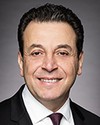
Ziad Aboultaif Conservative Edmonton Manning, AB

Mr. Speaker, we are here once again to consider whether April should be designated as Arab heritage month in Canada. Given the contributions of Arab Canadians to the growth of this country, since the first one arrived in 1882, I am sure this is an idea that we can all agree on.

This community, which started with just a few families, has grown to more than one million Canadians who have Arab heritage. The Arab community in Canada is not, as the media sometimes thinks, a group of people who come from one place and have one way of thinking. We are, in many ways, an example of the diversity that is Canada.

Canada's Arabs trace their roots to many countries: Lebanon, Algeria, Morocco, Saudi Arabia, Syria, Egypt, Palestine, Kuwait, Tunisia, Iraq, United Arab Emirates, Sudan, Jordan, Mauritania, Libya, Yemen, Qatar, Oman and Bahrain. United by a common linguistic root, they have different religions and cultural traditions. The popular perception may be that to be Arab is to be Muslim, but we Arabs know differently. Canada's Arabs identify as Christian, Catholic, Orthodox and various types of Protestants. The majority are of Muslim background. There are many who are a vital component of the societies of the Middle East.

These diverse communities are tied together by a common language, the Arabic language. Even if one does not understand a word, it has a melody that makes it pleasing to listen to. Arabic is spoken by more than 400 million people worldwide. After English and French, Canada's official languages, it is the third most widespread official language on our planet. It is one of the six official languages of the United Nations. When we celebrate Arab heritage month, we are celebrating the people and we are also celebrating this language. It is the language of poetry and mysticism, and of law and humour. It is a language that unites people across the Middle East and North Africa.

The rich literature that can be found in Arabic tells the story of many cultures united under a common banner. To me, that sounds like Canada. For centuries, Arabic was the language of culture and learning, especially when looking for information on science, mathematics and philosophy. Our mathematics system is based on Arabic numerals. We all know that and rarely, if ever, stop to think about why they are called that.

Arabic heritage month would be an opportunity for those of us with Arab roots to share the richness of our culture in perhaps a more deliberate way than is the case now. I must admit, I have never had a conversation about the origins of Arabic numerals and their liberating effect on mathematics that has led to so many scientific advances. Perhaps I should start doing that.

Or, maybe I could initiate discussions about the scientific advances of what is referred to as the Islamic golden age, a period of rapid scientific advancement that took place between the eighth and 13th centuries. Despite its name, the advances of this period were not brought about exclusively by Muslims. Wikipedia tells us:

Christians...contributed to Islamic civilization during the reign of the Umayyads and the Abbasids by translating works of Greek philosophers and ancient science to Syriac and afterwards to Arabic. They also excelled in many fields, in particular philosophy, science...[and theology].

Some of the notable Christian scholars of the time were Hunayn ibn Ishaq, Yusuf Al-Khuri, al Himsi, Qusta ibn Luqa, Masawaiyh, Patriarch Eutychius, and Jabril ibn Bukhtishu.

If not for Arab scholars at that time working to translate works from antiquity, from the original Syriac, Greek, Persian and Latin, into Arabic, much of the knowledge of the ancient world could have been lost forever. We owe a cultural debt to those Arabic scholars of more than 1,000 years ago for preserving so much of the world's heritage.

I could go on and talk about how Arabs have influenced architecture and medicine in ways that continue to impact us today, but members get the idea. There is so much more to Arabic culture and history than most people are aware of. Setting aside April as Arab heritage month would encourage Canadians to discover more about these people and their history.

The Arabs have always exported their culture. We can visit Spain’s Andalusian region and see the Arab influence in the architecture of the region. Does this matter in Canada? There are probably those who say that what happens elsewhere is not as important as what happens inside our borders. The truth is that Arab Canadians have made a huge impact on this country in all the areas one can imagine.

Who was the first international Canadian pop star? It was Paul Anka, a Lebanese Canadian from Ottawa. Who is perhaps our most beloved children’s entertainer? It is Raffi, whose roots are also in Lebanon. What NBA all-star is of Syrian background? It is Jamal Murray, who also represents Canada internationally. Championship wrestler Sami Zayn is a first-generation Canadian born to Syrian immigrant parents.

We Arabs are a social people, which may be why many of us are drawn to political life. We want to serve, though we do not always see things the same way. That may be why Arabs who have served in this House have done so for the Conservatives, the Liberals, the Bloc Québécois and the New Democrats. We are united in our desire to serve, even as we disagree on policies. That, of course, is the very Canadian way. We have not had an Arab Canadian prime minister yet, but Prince Edward Island has had a Lebanese Canadian premier, Joe Ghiz.

It goes without saying that one of the Arabs’ biggest contributions to this country has been in the area of business. We have an entrepreneurial spirit. Wherever commerce happens in this country, whether it is big or small, we are almost certain to find a businessman or woman of Arab descent.

All of this is to point out that it is long overdue for us to acknowledge the contribution of those of Arab heritage to the Canadian mosaic. Setting aside April as Arab heritage month would allow all Canadians an opportunity to pay tribute to a special people. As I have said before, Canada is an example of what a society can be when the people celebrate their heritage without forgetting what unites them in common purpose. Let us celebrate Arab heritage month, whoever we are and wherever we are from.

Arab Heritage Month ActPrivate Members' Business

June 2nd, 2026 / 5:35 p.m.

Conservative

Kurt Holman Conservative London—Fanshawe, ON

Mr. Speaker, I am pleased to rise today on Bill S-227, an act respecting Arab heritage month.

This bill is straightforward. It would designate the month of April each year as Arab heritage month in Canada. It is a simple bill, but it speaks to something meaningful. It gives Parliament an opportunity to recognize the history, culture, work, sacrifice, entrepreneurship, faith, family values and civic contributions of Arab Canadians across this country. Arab Canadians have been part of Canada's story for generations. From the earliest Arab immigrants in the late 19th century to the communities that have grown across the country today, Arab Canadians have contributed to the Canada we share.

Today, Arab Canadians are found in every part of Canadian life. They are small business owners, doctors, nurses, engineers, teachers, tradespeople, artists, writers, public servants, faith leaders, community volunteers, students, parents and grandparents. They are neighbours. They are friends. They are people who came to Canada for freedom, opportunity, peace, dignity and a better future for their children.

Some came from places where basic freedoms cannot always be taken for granted. Others came for opportunity, education, family, safety or the chance to shape their own futures. Whatever their path, they came here because Canada promised something better: a place where people could work hard, own a home, raise a family, worship freely, build a life with the person they love, start a business, speak their mind and contribute to the common good. That is the Canadian promise, and it is worth protecting.

In my own community of London—Fanshawe, we know how much Arab Canadians contribute. We see it in our small businesses. We see it in our restaurants, our community organizations, our charities, our classrooms, our workplaces and our neighbourhoods. We see families who are deeply committed to education. We see entrepreneurs who take risks, create jobs and serve their communities. We see newcomers who arrive with courage and hope and who work incredibly hard to build a life in Canada. We see young people who are proud of their heritage and proud to be Canadian. That is something worth celebrating.

Arab heritage is not one single story. It is rich, diverse and complex. It includes many countries, traditions, faiths, dialects and histories. It includes people whose families have been in Canada for generations and people who arrived only recently. It includes literature, music, food, fashion, scholarship, architecture, poetry, science, business and public service. It includes people who have preserved their heritage while also embracing Canada and contributing to our shared national life.

In Canada, people do not have to forget where they came from in order to belong. They can bring the best of their heritage, their work ethic, their family values, their traditions, their faith, their creativity and their love of community, while helping build one country together. That is the Canadian balance: pride in one's heritage, loyalty to Canada and a shared commitment to the values that keep this country free. Those values matter. Equality before the law matters. Democracy matters. Freedom of speech, freedom of religion, the rule of law and respect for the dignity of every person matter.

Commemorative months can serve a useful purpose when they help Canadians learn, reflect and build respect. They can open doors for schools, community groups, museums, libraries and families to tell stories that might otherwise be overlooked. They can help young people see themselves in Canada's history. They can help neighbours better understand one another.

However, we should also be honest. Commemorative months must not become empty gestures. They should not become virtue signalling or tokenism. They should point to something real like respect, opportunity, equal treatment and safe communities in a country where hard work is rewarded. That same seriousness should guide how we approach Arab heritage month. It should not be a symbolic check mark. It should be a genuine recognition of a community that has helped build this country.

It should encourage Canadians to learn about Arab Canadian history, including the early families who came here in the late 19th century, the communities that grew over the decades, the businesses that were built, the community institutions that became anchors and the younger generations now serving in every field imaginable. It should encourage us to celebrate Arab Canadian food, literature, music, art and entrepreneurship.

It should also encourage us to listen to the real concerns of Arab Canadian families today, concerns about affordability, jobs, housing, safety and whether their children will have the same opportunities that brought so many families here to Canada. This is because heritage is not only about the past but also about whether families can build a future. That is where Parliament has a responsibility that goes beyond symbolic recognition.

We should celebrate Arab Canadians, yes. We should also work to make Canada a country where every family, including Arab Canadian families, can afford a home, find meaningful work, start a business, raise children safely and live with dignity.

One of the things I hear again and again from families in my community is that they do not want special treatment. They want a fair chance. They want hard work to mean something again. They want their children to have opportunities. They want government to get the basics right. They want safe streets and a strong economy. They want schools, workplaces and public services that treat people with respect. They want Canada to be a country where freedom is protected and where people are united by shared responsibility. That is a vision worth defending.

That is also why this bill, while modest, can still matter. It can help ensure that every April, Canadians are invited to learn more about Arab heritage and Arab Canadian contributions. It can help communities mark that heritage with pride. It can help young Arab Canadians know that their story is part of Canada's story. It can help remind Parliament that the people we serve are not abstractions but families with histories, hopes, challenges and dreams.

I want to conclude by speaking directly to the Arab Canadians in London—Fanshawe and across Canada. Their history and their heritage matter. Their contributions matter. Their families, their businesses, their service, their faith communities, their culture, their stories and their dreams for the next generation are part of Canada. This bill would recognize that.

Arab Heritage Month ActPrivate Members' Business

June 2nd, 2026 / 5:40 p.m.

NDP

Heather McPherson NDP Edmonton Strathcona, AB

Mr. Speaker, I rise today to express my support of Bill S-227.

I want to thank Senator Mohammad Al Zaibak for introducing the bill, and I want to note that this legislation, an identical bill, was brought forward and passed unanimously in the previous Parliament but of course died on the Order Paper before receiving Senate consideration.

Canada's Arab communities have contributed enormously to our country, and they deserve the recognition that reflects their place in our shared story. Canada is home to more than one million Arab Canadians. The first recorded arrival of people of Arab origin dates back to 1882, in the early years following Confederation. Arab Canadians have enriched every aspect of Canadian life, including arts and culture, language and literature, and food and hospitality.

I would be remiss if I did not use this opportunity to raise people's awareness of the incredible Lebanese and Arab food in my community, including at Fattoush, a restaurant on Whyte Avenue in my riding that is run by Randa Alead. It is a wonderful place. Everyone should stop in if they are in Edmonton.

Arab Canadians have contributed to business and entrepreneurship, and to public service and politics. I would like to give a shout-out to Joe Hak, a Lebanese Canadian who unfortunately passed away two months ago but who was a real leader in our community, a real leader for Lebanese Canadians in Edmonton and across this country. Arab Canadians have been leaders in faith communities and with civic leadership.

Arab Canadians are not newcomers to the Canadian story. They have helped write the Canadian story for generations. Heritage months are opportunities to educate, celebrate and reflect, and they help future generations understand the contributions of communities that have helped build this country. Recognition sends an important message to young Arab Canadians that they belong, that they are valued and that their stories matter.

That is important for many reasons, but I reflect on the last few years when I have travelled across this country speaking to people, as the foreign affairs critic for the New Democratic Party, about what has been happening within Palestine. I also reflect on people of Arab descent's telling me that they feel like their government does not see them and does not see them as citizens. This moment in time is important for us as Parliament and as a country to recognize the important contributions Arab Canadians make.

It is also important when we look at the rise of Islamophobia, anti-Arab racism and anti-Palestinian racism across this country. Members will recall the Quebec City mosque attack in 2017, the murder of the Afzaal family in London, Ontario, in 2021 and the ongoing vandalism and attacks targeting mosques and Muslim communities. In my city of Edmonton and across this country, Arab Canadians continue to experience discrimination and hate. Where hate tries to divide us, parliamentarians have a responsibility to affirm that every community belongs.

The bill is about more than symbolism. It would create opportunities for schools, community organizations, municipalities, provinces and cultural institutions to celebrate and educate Canadians about the diversity and achievements of Arab communities. It would highlight the diversity of the Arab world and the many cultures, languages, traditions and experiences represented within it.

New Democrats proudly support Bill S-227. We reaffirm our commitment to standing against racism, colonialism, hatred and war, and we celebrate the rich contributions of Arab Canadians to Canada's social fabric. Arab heritage month would help ensure that the stories, achievements, struggles and contributions of Arab Canadians are recognized not only during one month each year but as an essential part of Canada's past, present and future. I urge all members to support the bill.

Arab Heritage Month ActPrivate Members' Business

June 2nd, 2026 / 5:45 p.m.

Conservative

Shuv Majumdar Conservative Calgary Heritage, AB

Mr. Speaker, as the House marks Arab heritage month, I rise not for the ritual gestures that too often accompany such observances but to speak plainly about a civilization whose story stretches across three millennia and whose people have become part of our own. These calendar designations can slide into performance, but they can also compel us to examine substance, the actual inheritance of language, memory and achievement and the choices that have shaped Arab societies in our time. I intend to do the latter.

In his indispensable book Arabs: A 3,000-Year History of Peoples, Tribes and Empires, scholar Tim Mackintosh-Smith demonstrates that Arab identity has never been reducible to a single ethnicity, sect or moment of origin. It is above all a linguistic continuum, the Arabic language acting as a thread that has held together a vast and varied human tapestry from the first recorded mentions of Arabs, in Assyrian records of 853 BCE, through the tribal poetry and trading kingdoms of the peninsula, the urban sophistication of the Levant, the Berber and Arab worlds of the Maghrib and the nomadic traditions of the Bedouin.

Pre-Islamic Arabs were already a presence on the margins of greater empires, their poets celebrating honour, resilience and the stark beauties of desert life. The latter expansion of Arabic carried with it not only faith but administration, scholarship and a capacity for synthesis that absorbed and advanced the learning of others. This is the deep inheritance we acknowledge today. It is not a monolith but a living inheritance of peoples who have been both creators and custodians of civilization.

That inheritance met the modern world in difficult circumstances. After the Second World War, many Arab societies sought dignity, development and independence. One dominant answer was the pan-Arab socialism of Gamal Abdel Nasser. It drew on Soviet models of central direction and anti-western posture, promising to sweep away colonial legacies and unite the Arabs under a single political and economic project. In practice, it produced authoritarian structures, economic rigidities and repeated foreign policy failures.

The United Arab Republic with Syria collapsed quickly. The 1967 war exposed deeper weaknesses. Several societies that followed this path paid in lost decades of growth, suppressed enterprise and the entrenchment of regimes more interested in control than in the human capital of their citizens. The ideology functioned, whatever the intentions of its adherents, as a barrier to the very western institutions, markets and habits of mind that had accelerated development elsewhere.

A second answer rose in reaction. Islamist movements, beginning with the Muslim Brotherhood, presented themselves as moral alternatives to corrupt dictatorships and failed secular experiments. They spoke to real grievances and offered a language of renewal that resonated with many, yet the empirical record where such policies gained real influence is clear: deepened social polarization; restrictions on dissent and on minority communities, including long-established Christian-era populations across the Levant, Egypt and Iraq; economic policies that often failed to generate broad prosperity; and in their most extreme expressions, the incubation of violence that has scarred societies from the Maghrib to the Mashriq and beyond. The costs in emigration of talent, institutional decay and cycles of instability are measurable and ongoing.

There is a striking exception to these patterns, though, and it deserves our attention. In the United Arab Emirates, Sheikh Zayed bin Sultan Al Nahyan built a federation from tribal foundations with a realism and self-confidence rare in the post-colonial era. He prioritized education, infrastructure and competent administration over ideological display. His heirs have extended that project with measurable success: deliberate diversification away from hydrocarbons into technology, finance, tourism, logistics and advanced industry; sustained investment in human capital; and a foreign policy of pragmatic partnerships.

The Abrahamic Family House in Abu Dhabi, which is a single complex containing a mosque, a church and a synagogue, embodies this approach in built form. It is a deliberate statement of coexistence among the Abrahamic traditions, not their subordination. It is the product of a confident Arab leadership, not imported dogma. It is therefore unsurprising that the clerical military regime in Tehran, whose revolutionary ideology has relied on exporting instability and targeting pragmatic Arab success stories, has directed proxy attacks and threats against the UAE in recent years.

Success is an indictment of alternatives. Across the Arab world, the poles of cultural and aspirational gravity have shifted. The old centres, Cairo under its successive experiments, Damascus in its long decline and Baghdad amid its traumas, no longer set the tone they once did. Increasingly, younger Arabs, entrepreneurs and reformers look to Abu Dhabi and Dubai for working models of modernity, prosperity and competent governance. Rhetoric has yielded to results.

This story is not abstract for Canada. Nearly 800,000 Canadians identify as Arab, a population that has more than tripled in two decades through immigration and natural increase. They come from Lebanon, Syria, Egypt, Iraq, the Maghrib, the Gulf states, and elsewhere, the full geographic and human diversity of the Arab world. Many arrived as economic immigrants chosen for their skills. Others rebuilt lives after conflict or persecution. They have contributed in every domain that matters to a modern society, such as enterprise and professional excellence, medicine and engineering, scholarship and the arts, and public service and community building. They have done so while sustaining family structures and work habits that strengthen rather than erode our national social fabric.

In Canada, they have found what many Arab societies have struggled to secure: the protection of individual rights, the rule of law and the possibility of advancement based on merit rather than connection or ideology. Christian and Muslim Arabs alike participate in our institutions on equal terms. That participation is not an accident of geography, but a product of a political order that treats citizens as individuals first. Where Arab citizens enjoy full equality and democratic participation elsewhere, we see another demonstration that liberal institutions remain the most reliable framework for minority flourishing and Arab talent alike, such as with Arab Israelis, both Christian and Muslim, who serve in the Knesset, the courts and the professions.

I would say to our Arab Canadian brothers and sisters that their presence here is not a footnote to someone else's story. From the mighty Nabateans in the times of Rome and the great works of philosophers like Avicenna and Averroës to the modern resilience of a people who have endured and created across centuries, they bring the depth of an ancient linguistic and cultural inheritance and the determination of those who chose this country. Canada is stronger for it. We honour that heritage best not by reducing it to grievance or slogan, but by recognizing its complexity, achievements and continuing capacity to add to a free and self-governing society.

The lessons of the past 80 years are not obscure. Grand ideologies, whether imported socialism dressed as pan-Arab unity or political Islamism promising moral regeneration, have repeatedly subordinated practical governance and individual agency to abstractions with measurable costs in human welfare and stability. Pragmatic leadership that builds institutions, welcomes talent and measures success by results has produced different outcomes. The shift in Arab attention toward those who deliver is rational and observable.

The best tribute the House can offer is to defend the conditions that allow such contributions to continue, such as the rule of law, free enterprise, open inquiry, secure borders and a confident national identity that does not require citizens to shed their inheritances, but requires them to uphold the common principles that make Canada work. In doing so, we honour Arab heritage in the only way that ultimately matters, by ensuring that the sons and daughters of that heritage can flourish here as free people in a free country. That is the Canada worth building and the heritage worth respecting.

Arab Heritage Month ActPrivate Members' Business

June 2nd, 2026 / 5:55 p.m.

Conservative

Brad Vis Conservative Mission—Matsqui—Abbotsford, BC

Mr. Speaker, before I begin, I just want to say that the speech by my colleague, the member for Calgary Heritage, was so wonderful and well informed. My words tonight will not meet that threshold.

What I am here to talk about is shawarma. My first introduction to Arab culture was at Mr. Falafel. It is on 10th Avenue near my old university, the University of British Columbia. I was a poor student, and I probably had enough money to eat out once a week. When I went there and got that big, juicy shawarma sandwich, it was a highlight of my week. I still love eating it. In fact I went back just a few weeks ago to visit some entrepreneurs at UBC, and I stopped by Mr. Falafel. They have been in business for 26 years now. I love that restaurant. It speaks to what many Arabs do when they come to Canada: They start small businesses. They, disproportionately, start small businesses, and they make a positive impact in Canada's economy.

Another shawarma place I have been frequenting since my university days is Shawarma King. It is right up the road on Bank Street. In fact, my buddy Mo has been serving me shawarma there since about 2008, when I moved to Ottawa to do my master's degree at Carleton University. I eat there probably once a week, even to this day. It is nice going to Shawarma King, a long-established shawarma joint in Ottawa, after a long day on Parliament Hill, to talk to my buddy Mo. The food is just incredible: the eggplant, the cauliflower, the mixed beef and chicken, the tahini sauce on top and the tabbouleh salad. I love this food. I think it is the greatest food in the world.

Another place is Falafel King on Denman Street in Vancouver. It serves the best carrot soup I have had in my entire life. Whenever I go to English Bay, I have to stop by Falafel King and get the carrot soup. They also put a lot of tahini on their chicken, and I can never go wrong with that dish. It is honestly one of the best meals, and it brings me joy every time I get to eat it.

There is another place, a new one, and it is a good one. I went to Ajax on a small business tour a few months ago, and I went to Aleppo Kebab. The owner is a Syrian refugee. He used to have a shawarma joint in Syria that served all the tourists who would go to the Roman ruins. Unfortunately, due to all the conflict in that country, he had to come to Canada, but like many people who come from Syria and other Arab countries, he did not sit around getting welfare; he started a business. The shawarma barbecue I got at Aleppo Kebab in Ajax is the best Middle Eastern barbecue I have had in my entire life. It makes sense, as the owner's family has been doing this for generations, and he is a really good businessman.

I love Middle Eastern food. I am giving these examples because they are real and people can relate to them, but they also speak to the broader impact that shawarma restaurants have had for small business in Canada. Another great example of Middle Eastern food has come from some families I have helped in my job. An Iraqi family has given me Iraqi dolma. It is wrapped in a leaf, and it is just mouth-wateringly delicious. They put some rice and lamb in a compressed pot with tomatoes and all sorts of spices. I cannot find better food than what there is in the Middle East. It just blows my mind, and it warms my heart every single time.

The bill we are discussing today is about recognizing Arab contributions to Canadian society. Arab Canadians have had an outweighted impact in terms of food. Shawarma is the greatest food in the world, and I think it is the best form of fast food in the world. Every chance I get to eat it, I am going to continue doing so. I thank all the shawarma restaurants across Canada for keeping me fit and in better shape, not going for a burger or something less helpful, because their food is just so amazing.

When I speak to many of the new immigrants from countries in the Middle East, they do not want to stop at shawarma restaurants. Their frustration with Canada relates to skills recognition. The reason some of these entrepreneurs are so good with their restaurants is that, in their home countries, they were running engineering firms. They were doctors at regional hospitals. They were orthopaedic surgeons. Canada must and can do a better job of admitting people and allowing for their previous work experience to be recognized in Canada.

The common story that has been shared in the House of Commons thousands of times is that of a cab driver or shawarma restaurant owner who had this great career abroad. They came to Canada on the points system, not necessarily as a refugee, but as soon as they got here, they found it almost impossible to practise the profession that got them here in the very first place.

The Liberal government has made commitments to improve skills recognition. I hope to see those promises fulfilled. I think that is a good thing for Canada and a good thing for our economy. Provincial governments across the board have done so as well.

If we take anything from the legislation before us here today, it is that very point: We will not see the full potential of Arab citizens in Canada if we do not modernize our immigration system and our skills recognition to allow people to flourish in the way we want every new Canadian to flourish in our country.

I am thankful for the time to speak today. It was wonderful to talk about amazing shawarma in the House of Commons.

Arab Heritage Month ActPrivate Members' Business

June 2nd, 2026 / 6 p.m.

Conservative

Philip Lawrence Conservative Northumberland—Clarke, ON

Mr. Speaker, it is an honour to rise every time I get the opportunity, but in particular, for this very important private member's bill respecting Arab heritage month.

Before I get into the speech, I would like to take a moment, because it has been some time since I have risen in the House, to say what a great privilege it is to represent the great people of Northumberland—Clarke. It is a true honour to be here. I thank them very much for sending me here three times, and who knows, there may be a fourth.

The heart of today's speech is obviously Arab heritage month. I am going to start by painting the macroeconomic picture, and it will become clear as to why I am doing that.

Canada, right now, is in an economic challenge, really an economic struggle. Of course, as was said many times in the House, we are the only G7 country that is currently in a recession. Our GDP per capita has barely grown over the last 10 years. In fact, it is the worst growth per capita since the Great Depression. We also have an unemployment rate, which is rising, of almost 7%. It is nearly a third higher than the United States—

Arab Heritage Month ActPrivate Members' Business

June 2nd, 2026 / 6:05 p.m.

Liberal

Kevin Lamoureux Liberal Winnipeg North, MB

Mr. Speaker, on a point of order, we are not on the opposition day motion. We are on a very respectful bill that was brought forward that deals with the Arab community. I would ask the member to be relevant.

Arab Heritage Month ActPrivate Members' Business

June 2nd, 2026 / 6:05 p.m.

The Assistant Deputy Speaker John Nater

I thank the hon. member. We allow for broad relevance on these matters. I am sure the member will bring his remarks back to the matter at hand.

The hon. member for Northumberland—Clarke.

Arab Heritage Month ActPrivate Members' Business

June 2nd, 2026 / 6:05 p.m.

Conservative

Philip Lawrence Conservative Northumberland—Clarke, ON

Mr. Speaker, I will get to the punchline because I do not want to keep the member waiting.

We have always needed the type of entrepreneurship and innovation that has been led by Canadians of Arabic origin.

I want to tell members a story about a Lebanese gentleman who I got to know. His name is Ziad. He is not the member in the House. I think I am allowed to say that. I got to work alongside Ziad and it was an absolute honour and privilege. This gentleman is a true shining light for what Canada should be and what the Lebanese community in Canada is. When working beside him, I learned that there was not a business opportunity that this guy could not see. I will not get into the details of the business, but obviously like any business, it is important to have more sales to grow it and to be more productive. When everyone else said that they were not going to get the sale or the business was not going to grow, Ziad would always find a way.

If members have had the honour and privilege of meeting Lebanese Canadians, they know that, bar none, there are no better business people in this country or anywhere in the world. They bring with them an incredible power of positivity. They have a natural mind for business. They get to deliver those products and services, not just because they want to be successful or they want to make a profit, although we know that those things happen, but because they have a deep sense of community and believe, support and trust one another.

Canada is in an economic quagmire. We are in an extreme challenge. We have the most indebtedness of any G7 country outside of Japan. We are facing high unemployment. Our inflation is still within range of 2.8%, but is creeping up. We have the highest food inflation. A quarter of the population is food-insecure. While we have always been highly dependent on Canadians of Arabic origin, we are even more dependent right now, because we need their entrepreneurial spirit.

I want to tell members a story about my friend's dad. She told me the story. Her dad came over here with literally not a dollar in his jeans. He built a construction business. He did not speak English or French. He had everything in life stacked against him, but once again that incredible Lebanese spirit, mind for business, innovation and entrepreneurship shone through. Not only was he able to create a successful business, but he was able to raise a family and help build a community. He supported other Lebanese members of his community within Canada. His daughter went on to be a very successful lawyer. That is the type of entrepreneurship innovation that Canada is increasingly in need of.

One of the stats I will go back to again, if the member will indulge me to digress, but I promise to bring it back, is with respect to what is called the entrepreneurial drought in Canada. Throughout recent history, there have always been more businesses starting than closing in Canada. That ended in 2024. We are now seeing more businesses closing every day in this country. Actually, more businesses are now closing than are opening in Canada. In fact, over 50% of folks who are business owners today say they would not recommend to a friend or an acquaintance to start a new business. However, we desperately need that business in Canada. Certainly, government policies, as one government official said to me, have put a lot of snow on the runway and we need to clear it off now. I think that is very well put. We need to clear the path for these entrepreneurs so that the great entrepreneurs of Arabic or other origin have the ability to succeed and be more successful.

Ultimately, Canada has, I believe, the best workers, the best brains and the most intelligent people in the entire world, which is in no small part because of our diversity. We bring the best and brightest from literally all around the world. I have certainly been impressed by people of all different origins. It makes all the sense in the world to acknowledge that diversity with a spirit of inclusivity so we can allow all Canadians to achieve the economic dream that, unfortunately, because of 10 years of Liberal mismanagement, has increasingly become more difficult to achieve. We have a whole generation that is finding it very difficult to buy a house. The average age of first-time homebuyers is creeping further and further along. I believe all Canadians should have the opportunity to own a house.

I know that Canadians of Arabic origin will be there pushing, as they have with their tremendous legacy throughout the world. They, of course, have been responsible for breakthroughs in nearly every single discipline one can imagine, whether that is culture, mathematics, engineering or science. They have been there, making those breakthroughs, making our world literally a better place, including saving lives with medical breakthroughs.

Canada is more independent. We need Canadians of Arabic origin more than ever because, as one Liberal official said to me, of all of the snow that has been put on the runway over the last 10 years. Now I believe the population is over a million people who count themselves as of Arabic origin, and that is absolutely tremendous. I, for one, am hoping that number grows, because of the amazing contributions they have made. They are some of the best doctors in the world and some of the best engineers. As I said, my own personal experience is with several Lebanese business owners who contain this incredible energy of optimism and spirit that Canada really needs more than ever.

With that, I would say that this private member's bill, the Arab heritage month act, has my full support, and I look forward to it being unanimously passed. I say this as a House of Commons member and a people's representative acknowledging the tremendous accomplishments of Arab people. If I could, I would give a whole year, in fact, but I guess April will have to do.

It is my pleasure to stand here in full support of this private member's bill. I cannot wait for it to be law and to celebrate it here with some great shawarma.

Arab Heritage Month ActPrivate Members' Business

June 2nd, 2026 / 6:10 p.m.

Conservative

Kelly McCauley Conservative Edmonton West, AB

Mr. Speaker, I am pleased to rise on this.

I want to start by mentioning two historic Arab Albertans involved in politics. The first is my very dear friend, whom I call my brother. He is the member for Edmonton Manning. My friend was the very first Lebanese MP ever elected in the province of Alberta. Besides his being a phenomenal representative of the people, I have come to know his family very well. It is an incredible family. My dear friend also donated one of his vital organs to help save his son's life, which is further proof of what a fine gentleman he is. One of his sons later worked for me on a couple of my campaigns and did a phenomenal job, and then moved on to help out the provincial party in Alberta as well.

If I could find an Arab politician to live up to my colleague from Edmonton Manning, it would be Larry Shaben. Larry Shaben was the very first Muslim elected to higher office in North America. That was in Alberta. He was also the very first to serve as a provincial minister in Canada, even when compared to, perhaps, the equivalent in the U.S.

He served as a minister under the great Peter Lougheed, as well as Don Getty. I want to read a quote from Peter Lougheed about Larry Shaben, at Mr. Shaben's funeral: “We all know how much better we are because we knew Larry Shaben. We all know how much better Alberta as a whole is because of Larry Shaben.” I cannot think of a better tribute from one of the greatest Albertans ever to one of the other greatest Albertans than the one Mr. Lougheed made to Mr. Shaben. I wanted to bring that up.

I know that my colleague from Edmonton Manning, whom I would like to call by his name but I will not, will live up to Mr. Shaben as well.

The very first Arab recorded in Alberta was in 1912, known as Ali Ahmed Abouchadi, who was also from Lebanon. He and his uncle, Sine Abouchadi, moved from Lebanon and settled in Lac La Biche, which is now, I think, probably the largest Arab community in the entire world and the largest Lebanese community in the entire world, including Lebanon itself. It is a phenomenal community north of Edmonton that I have had the pleasure of visiting many times. It still maintains incredible Lebanese culture.

I also want to talk about a couple of friends of mine from Edmonton. As my colleague mentioned, we could spend all day talking about contributions from the Arab community in Canada, but I want to mention a couple of dear friends of mine whom I have known for many years.

The first is my office manager, Oula Sanduga. I know she is probably back in Edmonton right now planning my demise for mentioning her and talking about her in the House, because she is a bit shy. I have had the pleasure of working with Oula for 10 years in my office. Before working with me, she worked for the hon. Laurie Hawn, and before that, Peter Goldring. Oula hails, originally, from Palestine. She is a very proud Palestinian. I am very proud to have her with us.

Over the 30 years she has worked in MP offices, she has helped untold thousands of Canadians, whether it is with CRA issues, EI issues or especially immigration issues. We have people contacting our office from around the entire province, knowing that Oula is the one to help. She is considered by all of our offices in Alberta as the most senior, most educated and most experienced person to help out on so many files.

Oula has just returned to our office after very lengthy challenges, and I cannot express how happy we are that she is back with us. I know that my constituents express that exact same feeling. My predecessor, in part of my riding, the hon. Laurie Hawn, used to say about the constituency staff and the MPs that the MP is just the hood ornament and the constituency staff is the engine of the car. Oula is a phenomenally strong-running V8 engine in that comparison.

The other one I want to mention specifically is Oula's father, Dean Sanduga. Dean, of course, also hails from Palestine. He is an incredible community leader and has raised an incredible family. To this day, even though he is considerably older than me, he still stays very active in the community, helping newcomers, helping Canadians and helping Edmontonians. Again, I wanted to thank both of them for all the incredible work they have done.

Now, for the rest of my few minutes I have, I am going to plagiarize and read from a story by someone at the U of A, Sarah Carter. She is a professor there. I found some of the stories she was telling about Syrians coming to western Canada. One of her favourite authors is a gentleman named Habeeb Salloum. My colleague from Abbotsford may like this. Mr. Salloum was famous for writing books, including Arab Cooking on a Prairie Homestead.

One of Mr. Salloum's books concluded with a great comment, as Sarah Carter wrote, “'The saga of the Arab immigrants is truly the story of Canada.' He feared they were being forgotten, as those with Arab heritage sought to assimilate. He hoped 'fellow Canadians and others, after reading our family’s saga will feel that Arab Canadians have contributed to Canada’s history.'” I encourage people to read that book. Those are very strong words from Mr. Salloum.

I want to just start with some of the story that Sarah had written about Arabs in Canada, especially Syrians. She starts off with “Syrians have a long history in Canada. Paul Anka is perhaps the best known Canadian of Syrian ancestry.” I look around the House, perhaps at my colleague from Abbotsford with his love of Arab food. He is so young that I am not sure if he knows who Paul Anka is. I am looking around for the other grey hairs. There are a few of us. Paul Anka is a wonderful gentleman, and yes, I think he is probably the most famous Canadian of Syrian ancestry.

Sarah goes on to say, “there were others; many of whom we must consider 'Old Stock Canadians.'” I think she makes a reference just to show how long people of Syrian heritage and Arab history have been in Canada. It goes back to, as we heard earlier, the beginning of Confederation. She continues, “Somewhat less well known, for example, but still very popular in his day, was 'Canada’s King of the Fiddle,' Ameen 'King' Ganam, born in Swift Current in 1914.” I am aging myself. I actually remember who “King” Ganam was.

I see I am getting the wave that my time is up. I will come back to finish my last two minutes with the story about “King” Ganam and Tommy Hunter.

Arab Heritage Month ActPrivate Members' Business

June 2nd, 2026 / 6:20 p.m.

The Assistant Deputy Speaker John Nater

The time provided for the consideration of Private Members' Business has now expired, and the order is dropped to the bottom of the order of precedence on the Order Paper.