Evidence of meeting #36 for Agriculture and Agri-Food in the 45th Parliament, 1st session. (The original version is on Parliament’s site, as are the minutes.) The winning word was risks.

A video is available from Parliament.

On the agenda

Members speaking

Before the committee

Slingerland  Senior Vice-President, Agriculture, MNP LLP
Singh Gill  Director, Agriculture Risk Management Resources, MNP LLP
Delisle  General Director, Conseil pour le développement de l'agriculture du Québec
LeFort  Senior Economist, Ontario Federation of Agriculture

11:25 a.m.

Senior Economist, Ontario Federation of Agriculture

Ben LeFort

Thank you very much for the question. It's a good question, and it is critical to one of the main points we're making here.

We have heard from members over the years that the AgriStability program payment trigger moving from 85% of historical reference margins to 70% has essentially moved it from a program that was intended, as indicated by its name, to stabilize farm incomes to more of a disaster-level program. If your program margins are falling by 30%, you are in a financial emergency, essentially. That is a fundamental shift of the program. It is really no longer a stabilization of income. It is an emergency-level program.

We have heard from members since that payment trigger has been changed. Once it was changed, year over year, we were hearing consistently that members—farmers in Ontario and throughout Canada—no longer knew when they were going to receive a payment. That was introduced at the same time as the reference margin limitation and other provisions. It made it more complex, it made it less likely to get a payment and it meant that payments were smaller when they were received.

That change is really the single factor that has driven a lot of producers in Ontario out of the program since its implementation, just to recap, because producers no longer felt confident that they would get a payment, they didn't understand how the payments worked and the payments they received were much smaller than they expected.

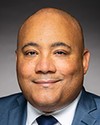
Giovanna Mingarelli Liberal Prescott—Russell—Cumberland, ON

Furthermore, when it comes to AgriInvest, you have advocated for 100% tax-free withdrawals. What specific obstacles do current tax rules create for farmers?

11:25 a.m.

Senior Economist, Ontario Federation of Agriculture

Ben LeFort

Essentially, when a producer deposits into AgriInvest and there's the government match going into the account, there are two separate funds within the account for each producer. The current rules are that they must withdraw the government match before they withdraw their own contributions, and that triggers a tax liability.

We have heard from members directly that they are hesitant to do that and create a new tax liability. It has contributed to many members leaving funds in the program when they would like to take them out to invest proactively in their operations, whether it's to increase efficiency, reduce risks they face or when they're in a difficult financial situation. Reducing that barrier of the tax liability that's created when withdrawing from the account removes another obstacle for producers to access those funds and be much more proactive in managing their risks and increasing the efficiency of their operations.

Giovanna Mingarelli Liberal Prescott—Russell—Cumberland, ON

Can you provide specific examples where AgriInvest's lack of flexibility has delayed or prevented significant investments on farms?

11:30 a.m.

Senior Economist, Ontario Federation of Agriculture

Ben LeFort

What we see is more at the macro level. The funds within the AgriInvest account have been growing over the years and have not been accessed. It is more of a macro-level issue than one caused by specific events.

The intention of that fund was to invest in the operation. It's not the only reason. One of the reasons is that it creates a tax liability. Farmers are more likely to keep the funds sitting on the sidelines when they would like to be investing in new machinery or new ways to mitigate climate change risks or other risks they may face. The more friction we can remove from a program like that, the faster their money moves.

Farmers invest tremendously in their businesses every year. It's a very capital-intensive and input-cost-intensive business. Any friction we can remove to make it easier for farmers to reinvest in their businesses is going to help the farmer at the individual level. We know, given the size, scope and interconnectedness of the industry, it will help Canada and Ontario economically, as well, if we make it easier for farmers to invest.

Giovanna Mingarelli Liberal Prescott—Russell—Cumberland, ON

Thank you very much.

Mr. Chair, how much time do I have left?

The Chair Liberal Michael Coteau

You have 32 seconds.

Giovanna Mingarelli Liberal Prescott—Russell—Cumberland, ON

Okay. I'll ask another question, then.

Mr. Lefort, how would tax-free withdrawals enable producers to react more quickly to sudden shocks, such as rising input costs or extreme weather events?

Be super fast.

11:30 a.m.

Senior Economist, Ontario Federation of Agriculture

Ben LeFort

I'll be super fast.

The idea is that you would have, for example, $20,000 sitting in your AgriInvest account and you're not sure what your tax liability is going to be. All things being equal, if I know I'm not going to pay taxes by pulling that $20,000 out right away, I'm much more likely to take the money quickly and invest it to mitigate those risks and costs that I'm facing.

The Chair Liberal Michael Coteau

Thank you.

Next, we'll go to the Bloc and Monsieur Lemire for six minutes.

Sébastien Lemire Bloc Abitibi—Témiscamingue, QC

Thank you, Mr. Chair.

My question is for you first, Ms. Delisle. Thank you very much for being with us today and for accepting my invitation.

Few studies have made as much of an impression on me as those by Agriclimat, particularly the one conducted in my region, Abitibi—Témiscamingue. About 10 years ago, I was with the Union des producteurs agricoles, and when that study was published, it came as a major shock to me. Basically, it stated that, under a realistic scenario, Abitibi—Témiscamingue, a northern region, would potentially have the climate of Montérégie or the northeastern United States. Of course, there are pessimist scenarios and optimistic scenarios. We agree that, in the past decade, no government decision has been made to slow down the achievement of those targets. So, by 2050, we could end up with a very different climate in Abitibi—Témiscamingue.

My first question is simple: Do you feel that winter is under threat in Quebec and Canada?

11:30 a.m.

General Director, Conseil pour le développement de l'agriculture du Québec

Sarah Delisle

Yes, but I must say that I am neither a meteorologist nor a climate scientist; I'm an agronomist by training.

As you say, we've had the opportunity to work closely with Ouranos and, yes, we have strangely observed that the benefits associated with snow cover will diminish over time, which will further threaten the survival of forage plants, among others, during the winter.

There will also be major weather fluctuations during the winter. The more time passes, the more we observe this. Frequent changes make winters much more difficult in terms of livestock production, specifically regarding environmental management in barns, for example.

Sébastien Lemire Bloc Abitibi—Témiscamingue, QC

Winter plays a key role. More specifically, snow acts as insulation that will protect crops and seedlings, so what impact can this have? Three years ago, particularly in Abitibi‑Ouest, we experienced that perfect storm we talked about here on the committee, during which there were both winter frost and the absence of that snow cover in some regions. It affected the crops.

Tell me about the solutions you're putting in place to help our farms become more resilient.

11:30 a.m.

General Director, Conseil pour le développement de l'agriculture du Québec

Sarah Delisle

One of the things I mentioned in my opening remarks is the development of a practical tool with and for producers, as well as with advisers and researchers. It's unique to Quebec. This type of tool doesn't exist anywhere else in the world. We were able to develop it thanks to Quebec and federal funding.

It's one of the most effective tools. We've observed that most producers who create their climate plan, that is, who review their climate history and anticipate future climate conditions, can work with a certified adviser trained in the subject to identify the main risks and prioritize them to define adaptation strategies and measures for their operations, which are often completely different from those of their neighbours.

With most producers who take this approach, within two years we've found that 55% of the targeted actions have been implemented. A certain percentage of these actions were postponed or revised, and a number of them were withdrawn.

Therefore, we're also conducting studies to see the impact of this tool at the producer level. I think that, for producers, these are important avenues for working proactively on programs to protect themselves against certain risks. It's important to understand that there are risks we can address, and others we can't prevent, that is to say major climate hazards and extreme situations like severe droughts or heat waves. You've experienced these in Abitibi on several occasions. No matter how we adapt, we cannot adapt to completely extreme situations.

Sébastien Lemire Bloc Abitibi—Témiscamingue, QC

You've kind of anticipated my next question, but I'm going to ask it anyway.

In recent years, agricultural producers have experienced major shocks due to the increasing frequency of natural disasters and geopolitical risks. Business risk management programs do not respond to shocks when they occur. They take time to be implemented. They lack predictability.

In your opinion, how can we ensure that authorities place more trust in the farmers on the ground to recognize actual losses when they occur, so that the programs can compensate for those losses? How can you support them in this regard, and what are your observations regarding the effectiveness of our programs?

11:35 a.m.

General Director, Conseil pour le développement de l'agriculture du Québec

Sarah Delisle

As I mentioned in my opening remarks, personally, I don't wish to comment on the effectiveness of the programs. However, the few times we've had such discussions with producers, we've observed that it's truly important for programs to be flexible and innovative.

Some programs are rigid and don't allow for innovation. Others aren't even adapted yet to new planting dates, for example. It's not necessary to make major changes to adjust the programs so that they align with reality in light of climate change in Quebec, particularly in the north. We know that the further north we go, the faster the climate changes. So, yes, the programs need to adapt to these more frequent and rapid changes.

Producers' responsiveness is also linked to the support they receive from trained advisers. We can even consider university and technical curricula, which need to be revised to ensure that the agronomists and technicians who support producers have better training and a better understanding.

In Quebec, we're fortunate to have a number of projects that are strong and inspiring for Canada as a whole. Perhaps we should draw a little more inspiration from them to accelerate the adoption of climate change adaptation and emissions reduction practices—of course if we also want to contribute to reducing emissions.

Sébastien Lemire Bloc Abitibi—Témiscamingue, QC

I'm going to use the last 10 seconds I have left to emphasize something you just mentioned. Planting dates are changing, and the programs are not adapting to that change. In Abitibi‑Ouest, it rained on May 1, which meant that no program was triggered. This is very problematic.

Thank you very much. We'll come back to this when it's my turn to speak again.

The Chair Liberal Michael Coteau

Next, we'll go to the Conservatives for five minutes.

Go ahead, Mr. Gourde.

11:35 a.m.

Conservative

Jacques Gourde Conservative Lévis—Lotbinière, QC

Thank you, Mr. Chair.

Thank you to all the witnesses for being here.

Ms. Delisle, you spoke about climate change in northern regions, such as Abitibi‑Témiscamingue. Heat units have undoubtedly increased, and this has changed the types of crops we can plant, whether forage or grain. We need research on this. Unfortunately, however, the government has cut funding to research centres that could have helped the northern regions. Do you have any comments on that?

11:35 a.m.

General Director, Conseil pour le développement de l'agriculture du Québec

Sarah Delisle

I probably have the same opinion as you, which is that without research, without testing, without on-farm trials, we can't adapt as quickly. So one of the major drivers is acquiring new knowledge, particularly on plant species, particularly on forage crops, but also on other types of species for other crops.

We've not yet conducted many trials to get new practices adopted even more quickly, because it takes several years of on-farm trials. We're fortunate to have programs that are about to end, such as the living labs, whose specific objective is to test practices for adapting to climate change and reducing greenhouse gases on farms.

So, yes, without research, we can't adapt.

11:35 a.m.

Conservative

Jacques Gourde Conservative Lévis—Lotbinière, QC

Your organization has worked closely with researchers on the topics you just mentioned. Have any research or studies been completed? Could this delay the development of certain crops?

11:40 a.m.

General Director, Conseil pour le développement de l'agriculture du Québec

Sarah Delisle

We're on the verge of obtaining new results, including those from the two living labs I mentioned. In Quebec, we're fortunate to have two of them. There has to be follow-up. This is the beginning of something. If there's no follow-up, Quebec and Canada will miss an opportunity to be proactive, to be responsible in land use and to seize other opportunities. We must not forget that Canada is a northern country. There are opportunities and threats, but if we don't adapt and conduct research, producers won't be able to keep up.

Jacques Gourde Conservative Lévis—Lotbinière, QC

Thank you, Ms. Delisle.

Mr. Lefort, we're currently conducting a study on business risk management programs in Canada's agricultural sector. We're looking at improving and updating the programs that were put in place about 25 years ago.

We want to update them, but I think it's a trap. Agriculture is evolving relatively quickly, and I think we should plan these programs for the next 10 to 15 years. If the programs are changed, they won't be changed again for another 25 or 30 years. If they're designed with 2026 in mind, they'll already be lagging behind. Maybe they should be designed with 2035 in mind.

What are your thoughts on that?

11:40 a.m.

Senior Economist, Ontario Federation of Agriculture

Ben LeFort

Certainly, you are very correct. It is something that I touched on in my statements as well: the evolving risks the sector faces. I think the industry is always open for improvements to the programs, in whatever form they take.

You hear a lot of emphasis today on AgriStability because it can catch many different types of risks. It's the only risk management program we have that can trigger a payment for just about any reason, whether it be spiking input costs, commodity prices dropping or a weather event.

Look at AgriInsurance or “production insurance”, as many Ontario producers refer to it. That will cover very specific impacts to your yields if you're producing an eligible commodity. If you look at AgriInvest, that's a relatively small pot of money to make specific investments and mitigate risk, but if we look at a program that can potentially catch different types of risk—even ones we haven't even foreseen yet but we'll be facing—we need that whole farm margin coverage to capture risk no matter where it's coming from.

That's why we emphasize an increased return to the 85% payment trigger. It's why we applaud the recent changes to remove the reference margin limitation and the increases in compensation rate under the program. I think there can be more to increase advance payments in the program to ensure they're more timely, but this is a key program that needs reinvestment because it can capture those risks we haven't anticipated yet.

11:40 a.m.

Conservative

Jacques Gourde Conservative Lévis—Lotbinière, QC

Risk management programs are designed for farms with a well-established revenue stream. These are active farms. Some very large farms can't apply because their revenue is too low, and some new farms, the next generation, run into a lot of problems when they apply for these programs. It's a well-known fact that 40 years—