Thank you.
Evidence of meeting #39 for Agriculture and Agri-Food in the 45th Parliament, 1st session. (The original version is on Parliament’s site, as are the minutes.) The winning word was local.
A video is available from Parliament.

Evidence of meeting #39 for Agriculture and Agri-Food in the 45th Parliament, 1st session. (The original version is on Parliament’s site, as are the minutes.) The winning word was local.
A video is available from Parliament.
Farm Manager, Ferme Agriber Inc., Marc Bercier Seed Cleaning Inc.
Thank you.
Liberal
Liberal
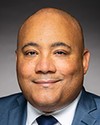
The Chair Liberal Michael Coteau
Next, we'll go to the Bloc for six minutes.
Mr. Lemire, you have the floor.

Sébastien Lemire Bloc Abitibi—Témiscamingue, QC
Thank you, Mr. Chair.
Ms. Bercier, first of all, thank you for your testimony. We have many very committed and passionate witnesses here this morning, and you're one of them.
We're talking about food security and affordability and many issues that obviously have an impact on your production. What you do is key to food security, but the government is determined to build a high-speed rail line that threatens to devastate some of the best farmland in Quebec and Ontario—including yours, potentially.
Do you think Alto truly understands the realities of farming—your machinery, the importance of drainage and the need to have access to every part of your land, be it for grain or hay, or for feeding livestock and other purposes?
How do you feel about the fact that the threat of expropriation hangs over a business like yours, your farm and the neighbouring farms?
Farm Manager, Ferme Agriber Inc., Marc Bercier Seed Cleaning Inc.
Mr. Lemire, I have been voicing my concerns since January. I sent documents about the project's impacts. I met with Ms. Mingarelli at a round table discussion. We want answers. We want to understand Alto's business plan and why this project is necessary. We want data about feasibility. We want transparency about costs.
As farmers, our farmland is the foundation of everything, as I said, so we're asking questions, and I have to tell you that we've received responses, but they're quite generic. There's nothing concrete. I'm a prominent voice on the Alto issue in my community. I hand out signs to show our opposition to the project. I've met so many farmers who come to us in tears. These are strong men, but they're completely devastated by all of this. For some of them, their farms will be sliced in two by the Alto corridor.
This is certainly a cause for concern. We've received letters about how the train corridor could force farmers to take 45-minute detours to get to their fields. As I said, profit margins are already very tight, and these detours would make our workdays longer and drive up payroll costs. We'd also have to use even more gas and take on a host of production costs—costs that are going up—just to access the same fields.
All of these challenges are currently taking a toll on farmers in our region and across Quebec. We're asking questions, and we're getting answers that aren't very concrete, which only adds to the turmoil we're experiencing here.
This whole situation is emotional for me. We're asking questions. There are things we'd like to know. Since we're not getting answers, I figure that, if we're all expropriated at the same time, we need to prepare accordingly. I've started having land appraised. That all costs money, and even if these properties aren't expropriated, we're still getting ready for it. I've consulted my accountant and my lawyer. We're right in the middle of the business transfer process. We're the next generation of farmers, so we're trying to expedite matters. That way, if any land is ever expropriated or subject to pre-emptive rights, we won't be caught off guard and can continue the succession process before that happens.
This is all creating an excessive workload for our accountants, tax specialists and lawyers—all for something we don't even know about yet. That's why farmers are worried and have lost confidence, as I mentioned in my opening remarks.
Here on the farm, we actually had a plan. We were looking to diversify a bit and were thinking of trying the new entrant chicken farmer program here in Ontario. I had already started my business plan and so on. Obviously, my infrastructure and all the land I own are in the Alto corridor. Needless to say, I've put that on hold for now. We're looking to invest more in Canada, but given Alto's lack of transparency, we've put that on hold.
Bloc
Sébastien Lemire Bloc Abitibi—Témiscamingue, QC
Ms. Bercier, thank you for your testimony. The passion you bring to this affects us all. This is a problem we in Quebec are experiencing as well. We also raise concerns about the way things are done.
Do you feel that Alto's balance of power with farmers is so disproportionate that it could literally crush them?
Liberal
Bloc
Sébastien Lemire Bloc Abitibi—Témiscamingue, QC
I would ask you to give us 10 seconds for a short answer.
Farm Manager, Ferme Agriber Inc., Marc Bercier Seed Cleaning Inc.
Absolutely. We're small players. Farmers seem to be a small voice in this big Alto project, which scares us. We obviously feel powerless in the face of all that.
Liberal
Conservative

Tamara Kronis Conservative Nanaimo—Ladysmith, BC
Thank you so much, Mr. Chair.
Mr. Livingstone, thank you so much for making time to be here.
I'm from Vancouver Island, where we have a lot of small farms like yours. I know how busy it is, especially around this time of year, when the chickens are brooding and the calves are calving and everything is starting to sprout, so thank you for making that time.
Like you, our local farmers also struggle with labour and land costs, processing, transport and bureaucracy, but I want to ask you about a very specific kind of bureaucracy.
I have no idea whether you know this or not, but food is one of those areas that constitutionally is shared between the federal government and the provinces. This means that you often have all levels of government messing in your space, but when it comes time to remove a regulation or when there is something that's existing, something that's a challenge, they often turn around and say, “It's not me.”
We're dealing with this, particularly near my riding right now. We have things like ALRs and regional districts and municipalities and provincial zoning and all kinds of changes that are aimed at building homes. It has created a bit of chaos in the agricultural space.
I'm wondering if you might like to speak to that.
Co-owner, Strawberry Hill Farm
We are fortunate where we are that there is not a lot of zoning and that kind of regulation, but you are right. It has taken me years to actually understand who controls what. As you said, there's a lot of cross-control. For example, there's health in New Brunswick. We also own and operate a small abattoir, a meat shop, and we service the local population as well as doing our own chickens. The CFIA, which is federal, does some of the inspecting and regulation, whereas some of it is also done on a provincial level. It's quite confusing.
Often we have questions and issues, and you're right: We do get handed off a lot from one to the other. It's quite difficult to navigate that space.
I'm not sure if I'm answering the question, but it is part of bureaucracy.
Conservative
Tamara Kronis Conservative Nanaimo—Ladysmith, BC
You're dead centre on the target.
One thing I'd like to invite you to do is to make some supplementary submissions on that to the committee, because no one should need a Ph.D. and the British North America Act to get anything done in this country, and farmers are among the people who really do need that.
I want to ask another question before I turn the rest of my time over to my colleague.
There is also a tension in the country between food that has to travel long distances and food that's produced locally. Do you think we do enough to measure how much food is being produced close enough to where Canadians actually live?
Co-owner, Strawberry Hill Farm
No, I don't. I think there's a lot of greenwashing that goes on.
In our case, we have a very loyal customer base and lots of them, and they want to buy local. Where it gets very grey is what you get in the grocery store. As I said, 80% of people buy there. If it comes from Canada, that is usually the best option, but you can't really tell where it's coming from. At least in the east, very little of the bulk of produce in the grocery store—the fruits, the berries—actually comes from even east of Quebec.
Conservative
Tamara Kronis Conservative Nanaimo—Ladysmith, BC
I'm sorry to cut you off. I want to give my colleague a chance to ask a question as well.
Conservative
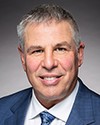
Dave Epp Conservative Chatham-Kent—Leamington, ON
Ms. Bercier, I'm going to ask you two questions. If there isn't time, please respond in writing.
With respect to Alto, I'm getting two streams of concerns in my office, one from those in the path, as you've articulated, and one from across the country around the cost.
The minister stated in the House yesterday that 5,500 farms are affected and that there is going to be access supplied to those farms. I've not seen that anywhere in the world for high-speed rail. I'd like your comments on that and on the impacts.
Secondly, I see that SeCan is in your backdrop. They are very much opposed to the closures of agricultural research stations. You're a private enterprise seed breeder and distributor. Can you talk about the importance of agricultural research to the seed industry and to agriculture broadly?
Liberal
The Chair Liberal Michael Coteau
I'm sorry. I'm going to have to end it there. There are three seconds left.
I'm going next to Mr. MacDonald.
I want to let folks know that there will be votes. It sounds as though, in about 10 minutes, bells will be ringing. If that's the case, then I'm going to have to ask for unanimous consent to continue working during that time. I'm assuming that folks are going to vote remotely, so when the bells ring, I'll ask for unanimous consent. We'll continue working and do the switch over during the bells.
Once I go past the five minutes and then the two and a half for the Bloc, we'll get unanimous consent, stop, move over and hopefully start five minutes early because we will then go into the votes. We'll stop around 12:20 and go into the votes. Then we'll come back and do the draft instructions, etc. I'll need some help from the committee getting to that point.
Mr. MacDonald, you have five minutes.
Liberal

Kent MacDonald Liberal Cardigan, PE
Thank you, Mr. Chair.
I'm going to direct some questions to Mr. Killorn from the P.E.I. Federation of Agriculture.
I'd like to thank you, Donald, for attending today.
I really want to thank the Federation of Agriculture. As you're fully aware, I served as a board member there for many years. It may have been the sounding board for getting me to go further and become a federal member of Parliament.
We know that the federation in P.E.I. serves as a strong voice for producers across all agricultural sectors, but I was particularly interested in your presentation when you mentioned that food security is no longer just about food production, and the part about AgIntel and the agricultural compute strategy. When you represent a riding, as I do, where agriculture remains the cornerstone of the economy, you see the potential in technologies that improve productivity, reduce costs and obviously try to strengthen food security. In the meantime, we have to ensure that farmers continue to own farms and that their data is their data.
Can you speak to why it's important that we have sovereignty over our Canadian data in agriculture rather than have it owned by foreign platforms?
Executive Director, Prince Edward Island Federation of Agriculture
Thank you for that question.
It's great to have you here. You were really tough on me as a board member, so it's nice to have you out of my hair. We were in your riding yesterday. I wasn't, but my team was on the roof at R.A. Rose & Sons, installing an AgIntel antenna, and I was in town getting a haircut. We expect that will save them about $70 an acre this year, and the data will never leave their control.
That's really where this project started. Farmers are not willing to implement precision agriculture. It's so data-intensive that they won't implement it unless they know their data will be secure as an asset for the farm. That was an idea that emerged prior to artificial intelligence becoming such a concern or an opportunity. Now that it's taking place and people are asking ChatGPT or Claude what they should do and how they should do it, we can't lose the sovereignty and control over that data.
As the AI strategy starts to filter out and as you hear about the importance of health and health data, I would argue that agricultural data is equally important to the sovereignty of our economy and certainly of our food security. There's a path forward where we can deliver the value, the business risk management and the food security. It requires an investment in technology and in digital infrastructure, and it will ensure our national sovereignty, our food sovereignty, our national security and our food security.
Much the same as that we don't want to send Canadian chickpeas away and buy marked-up chickpea pasta, our data has to be value added at home. We have to process our data at home. It has to be an asset owned by the farmer. It can't be an asset owned by a large, multinational corporation and have the value add of that data be sold back to the farmer at a significant markup. We have to take a grassroots approach to this, and only then can we leverage these new-found technologies into increased food security.
Liberal
Kent MacDonald Liberal Cardigan, PE
Thank you, Donald.
Can you also speak to how having this data on the farm...? You talked about the Roses up east putting in an antenna—for lack of a better term.
Executive Director, Prince Edward Island Federation of Agriculture
That's what it was, yes.
