Evidence of meeting #8 for Agriculture and Agri-Food in the 45th Parliament, 1st session. (The original version is on Parliament’s site, as are the minutes.) The winning word was office.

A video is available from Parliament.

On the agenda

Members speaking

Before the committee

Proud  President and Adjudicator, Office of the Grocery Sector Code of Conduct
Léger Bourgoin  General Manager, Association des producteurs maraîchers du Québec
Lefebvre  President, Association des producteurs maraîchers du Québec
Graydon  Chief Executive Officer, Food, Health & Consumer Products of Canada
Bergamini  Executive Director, Fruit and Vegetable Growers of Canada

4:05 p.m.

President and Adjudicator, Office of the Grocery Sector Code of Conduct

Karen Proud

As mentioned, the code took over three years. Every word in the code was scrutinized by all of the players. Dispute resolution is no different in that I think there are lots of people around the table who have a lot of stake in this, lots of opinions on what the dispute resolution can or cannot do. We are following what the code allows us to do and what a voluntary organization could possibly do.

I don't think we're that far apart on dispute resolution on most issues. Some concern, in particular, has been raised that some parties want to just make sure nobody can contract out of the code. That's the biggest issue we've been looking at. I think there are provisions in the code that clearly say you can't contract out of the code. Just how we reflect that in the dispute resolution manual, which we're pulling together, has been most in question.

We continue to move forward. There were things that happened months ago when we were fighting over other issues, and we've come to agreements on those. I feel confident. There's so much at stake that I think people just really want to get it right. There's a lot of passion around this, and I still feel confident that we will have a dispute resolution mechanism that people can agree to.

Frankly, I don't think anyone is going to be 100% happy with what we end up with. Maybe that's the magic sauce—if everyone feels they've lost something, we have something we can move forward with. Ultimately, if there are problems, the office is committed to looking at this over time and reporting on where we need to fix things. We expect even the code itself will likely be amended a year from now—dispute resolution as well—because I doubt that we're going to have it 100% right by January 1.

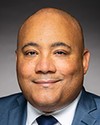
Sophie Chatel Liberal Pontiac—Kitigan Zibi, QC

You made two good points. First of all, yes, we know that an agreement is good when both parties are a little disappointed.

Then you talked about the sort of stick you have, that is to say your ability to prepare reports and send notices of non-compliance. It is an interesting lever, after all. As you say, people have to start by implementing this code and agreeing on a mechanism. Then you have to report within 18 months of the code coming into force. Then the necessary adjustments can be made, as other countries have done. Did I understand correctly?

4:10 p.m.

President and Adjudicator, Office of the Grocery Sector Code of Conduct

Karen Proud

From an enforcement perspective—and I say that lightly because we're not a regulated organization—we really have one stick, and that is naming and shaming. In the formal dispute resolution process, if we come to a non-compliance, that will be published and it will be open to the public. From a reporting standpoint, the office can also write reports about what's working, what's not, how things are going and the sorts of issues we're investigating, as well as what we're hearing from stakeholders.

In the code, we are committed to reviewing the code—

The Chair Liberal Michael Coteau

Ms. Proud, I'm going to stop you there. I apologize.

I'll go to the next person, just so we can maintain time.

Thank you.

We have Mr. Perron.

Yves Perron Bloc Berthier—Maskinongé, QC

Thank you very much, Mr. Chair.

Ms. Proud, I'm an optimistic man, but I'm a little concerned, because you said that three grocery giants had not yet signed on to the code and that they were waiting to see the final version. In the past, two other major retailers didn't want to sign on either, but we had a special meeting here and finally, at the last minute, they decided to sign on.

If I understand correctly, it's just the dispute resolution mechanism that isn't finalized. So what is preventing those three giants from signing on the code right now? Have they made specific requests to you about this mechanism?

4:10 p.m.

President and Adjudicator, Office of the Grocery Sector Code of Conduct

Karen Proud

I honestly think it's very fair that parties are waiting to see the full governance of exactly how we're going to deal with issues as they come up before they sign on to the code. I spent a lot of my career telling government that I couldn't support its policies until I saw all of the details. I think it's no different here. The retailers that you're mentioning have been very much involved in helping draft the dispute resolution management process. As I mentioned, we have an industry working group. There are three retailers who currently sit on that, and they're helping us finalize.

Yves Perron Bloc Berthier—Maskinongé, QC

I'm glad to hear that they've been very active, and I assume they still are. Given that they're waiting to sign on, though, have they made any specific requests to you in terms of dispute resolution and the arbitration process?

4:10 p.m.

President and Adjudicator, Office of the Grocery Sector Code of Conduct

Karen Proud

Throughout the development of the process, we have been negotiating and arguing about various points that have been in that management process. There was language in there that we talked about, and at one point there was mention of remedies. It was raised that the office doesn't have the authority to require remedies. It's very technical things that we're debating—I don't want to say “arguing about”—and that's what we're waiting to finalize before they will sign on. When we're finished with dispute resolution, I expect everyone to sign on, and I will report on that. There will be no more reason, once that is done, to not sign on.

Yves Perron Bloc Berthier—Maskinongé, QC

There's nothing specific keeping them from doing that right now.

4:15 p.m.

President and Adjudicator, Office of the Grocery Sector Code of Conduct

Karen Proud

It's the language in dispute resolution and the drafting of how we phrase certain things within that manual—on both sides.

Yves Perron Bloc Berthier—Maskinongé, QC

Thank you.

The Chair Liberal Michael Coteau

Thank you very much.

We'll now go to the Conservatives for five minutes.

Mr. Gourde.

Jacques Gourde Conservative Lévis—Lotbinière, QC

Thank you, Mr. Chair.

Thank you, Ms. Proud.

It's very interesting, and I think we can stay optimistic. However, I do have some concerns. From farm to fork, there's the producer, big or small, who sells their products to a wholesaler or directly to a large chain, which resells them to consumers in its subsidiaries, the local retailers.

Code compliance could have been made voluntary. However, it was imposed. Since the major grocery chains had no choice, they decided to work together. However, I feel that the stakeholders who control the grocery sector, the wholesalers and especially the chains, are going to test this code. I'm actually sure the code will be tested by the wholesalers.

Do you have any concerns about a weakness in the code that could be exploited by wholesalers? Do you think there's a flaw in the code that should be corrected before it comes into force?

4:15 p.m.

President and Adjudicator, Office of the Grocery Sector Code of Conduct

Karen Proud

I don't think there are gaps that can be filled before it happens, necessarily, but the code is principle-based, so there's not a lot of detail. As you read through the code, it's not a big document. It doesn't read like a regulation, where everything is very specifically laid out. There are going to be elements of the code that are open to interpretation. Our office, at the end of the day, has the final say as to whether or not there was a code violation.

At this stage, I don't know if the language in the code in every single instance is precise enough for it to work as expected. This is something that we're going to look at as we get complaints: whether the code language is strong enough, whether we need to change the code and whether there are things within the code that need to be added because it doesn't help some of the constituents. Everyone is going to come at this with a different interpretation. I hear that already now. We will really have to let it get going and get experience before we know whether there are loopholes or problems with how the code has been written.

4:15 p.m.

Conservative

Jacques Gourde Conservative Lévis—Lotbinière, QC

Do you think we'll be able to help small producers have a place in local grocery stores, in short supply chains? The average producer currently sells maybe 15% to 20% of their production at a stand, and the rest has to go to a wholesaler. To get into a big chain, you have to be a huge multinational.

Small producers are being shut out of their local businesses because there isn't any more room on the shelves. Those displays have been reserved for wholesalers, chains, for mass products. As a result, local products don't necessarily have a place at the local grocery store for small producers. That's very unfortunate, because it would be a second option for them. Are you paying particular attention to that?

4:15 p.m.

President and Adjudicator, Office of the Grocery Sector Code of Conduct

Karen Proud

In terms of the code and the office, again, it's very clear that we don't interfere in pricing decisions. We don't interfere in what will still be very tough negotiations between small suppliers and large retailers. That's not where the code will interact, to try to assist a small supplier in negotiating the sale of their products into those stores. What the code does is provide some protections, so that when you have an agreement with a large retailer, in this case, certain actions and certain behaviours are not allowed under the code. It provides a means for those smaller suppliers to now have somewhere to go to address some of those issues. We're not going to help small suppliers negotiate for space. That's not one of the purposes of the code.

As well, it does try to allow for a system of disputes when issues come up that is more fair and accessible to the smaller supplier, who may not otherwise have had any opportunity to raise concerns about some of the practices they have had to deal with. My hope is that by having a more open and transparent system whereby people are aware of exactly what agreements they're entering into, we can foster more innovation.

The Chair Liberal Michael Coteau

Thank you very much.

Now we'll go to Mr. Connors.

Paul Connors Liberal Avalon, NL

Thank you, Chair.

Thank you, witnesses, for coming out today.

This past week, when I was back in my riding, I was speaking with Atlantic Grocery Distributors, owners of Powell’s Supermarket, an independent grocer in rural Newfoundland. They actually supply most of Newfoundland with grocery items, because the larger retailers are not in those areas. They're looking forward to the implementation of the code of conduct to help them compete with the larger retailers and the promotion of more fairness within the industry.

Can you tell us a bit more about how this code of conduct will directly support such independent small grocers as Atlantic Grocery in rural communities throughout the country?

4:20 p.m.

President and Adjudicator, Office of the Grocery Sector Code of Conduct

Karen Proud

It's a very interesting and important aspect of the Canadian code versus the codes you would find in Australia or the U.K. Our code is a reciprocal code. What I have heard as I have gone around talking to stakeholders, in particular the independent grocers, is that their concerns are more with regard to supply and their ability to get supply of products in a fair way. I think we saw when COVID happened that it was very hard to find some products at the independent grocers.

This is where their main concern is: When there is a supply constraint, they don't want to get cut out of the system and not get access to a reasonable supply. That is covered in the code, whereby when there are times of supply constraints, those suppliers are supposed to be taking into account the needs of all their customers, including the independents. That's particular to the issue I hear all the time from the independent grocers. They welcome this code to be able to address that.

Paul Connors Liberal Avalon, NL

Thank you very much.

You mentioned different countries that have a code of conduct. What have we done to look at what worked in those areas, what didn't work in those areas and how we have improved our code of conduct to sort of offset those? Are we missing anything?

4:20 p.m.

President and Adjudicator, Office of the Grocery Sector Code of Conduct

Karen Proud

There have been many reports about the various systems and what worked and didn't work. At the office we have educated ourselves about that. We also made connections with the previous adjudicator and the current adjudicator in the U.K., as well as the adjudicator in Australia, so that we can start to talk to them about what's working and what's not working and try to just share that knowledge: If they could do it all over again, where would they have started?

An important part of the office's work is to collaborate with those other countries so that we can already be ahead of where they started.

Paul Connors Liberal Avalon, NL

My last question is this. As a consumer of the final product, as a constituent of Canada, why should I be concerned about the code of conduct and its implementation? Can we move ahead without having all the major parties signed on?

4:20 p.m.

President and Adjudicator, Office of the Grocery Sector Code of Conduct

Karen Proud

We can move ahead. This happened in Australia, and it was a good example. They ended up going to a regulated code eventually. One of the issues was that one of the major wholesalers in Australia never joined the voluntary code. They still proceeded and still had positive outcomes in some areas with their code. I think we can do the same. Ultimately, we need to have everyone on board, but we can start.

I think the code is very important for the industry and for the sector in getting a better business-to-business relationship and more transparency, because the outcome we hope to see is similar to where the U.K. has gone. When there's more certainty in your business relationship, there's more potential for investment and innovation. That may not change the price of food you see on the shelf, but it does have benefits for the consumer in the end when there is innovation happening and when there's more potential for growth within the sector. I think that, if we see the same results that they've seen in the U.K., this is very positive for building a strong grocery sector in this country, which is so important for Canada and Canadians.

The Chair Liberal Michael Coteau

Thank you very much.

We appreciate your taking time to be here with us today. It is important work, and I wish you all the best.

We'll suspend for five minutes.

The Chair Liberal Michael Coteau

I would like to call the meeting back to order.

I'm going to try to finish a few minutes before our cut-off, so we can do some housekeeping.

I have a few comments before we start.

Please wait until I recognize you by name before speaking.

For those participating by video conference, click on the microphone icon to activate your mic, and please mute yourself when you are not speaking.

For those on Zoom, at the bottom of your screen you can select the appropriate channel for interpretation—floor, English or French. For those in the room, you can use the earpiece and select the desired channel.

I would remind you that all comments should be addressed through the chair.

Pursuant to Standing Order 108(2) and the motion adopted by the committee on Thursday, September 18, 2025, the committee is resuming its study on the update on the implementation of the grocery code of conduct.

I would like to welcome our witnesses here today.

First, from the Association des producteurs maraîchers du Québec, we have Patrice Léger Bourgoin, director general, and Catherine Lefebvre, president.

From Food Health and Consumer Products of Canada, we have Michael Graydon, chief executive officer. From the Food and Vegetable Growers of Canada, we have Massimo Bergamini, executive director.

You each have up to five minutes per association or group. After the five-minute presentation, we'll open it up to the members of Parliament, as you know.

We'll start off with the Association des producteurs maraîchers du Québec.

Welcome. Hello.