Monsieur Perron.
Evidence of meeting #8 for Agriculture and Agri-Food in the 45th Parliament, 1st session. (The original version is on Parliament’s site, as are the minutes.) The winning word was office.
A video is available from Parliament.

Evidence of meeting #8 for Agriculture and Agri-Food in the 45th Parliament, 1st session. (The original version is on Parliament’s site, as are the minutes.) The winning word was office.
A video is available from Parliament.
Bloc

Yves Perron Bloc Berthier—Maskinongé, QC
Good afternoon, Ms. Proud. Thank you for being with us today. We appreciate your time. We know you're busy, but it's important that you come and answer our questions.
I've been listening carefully to your answers from the beginning. You told our Conservative colleagues that producers' associations could back up complaints related to a systemic problem. You just repeated it to Ms. Dandurand. However, you were explaining the formal process and you said that when a dispute is settled, the associations can no longer intervene. Did I understand correctly?
President and Adjudicator, Office of the Grocery Sector Code of Conduct
Yes. They themselves can't bring a complaint in the formal process. That's reserved for an individual company.
Bloc
Yves Perron Bloc Berthier—Maskinongé, QC
I appreciate your clear answers.
The purpose of the code of conduct is to restore somewhat of a balance. Before the code was introduced, it was discovered that small businesses with seven or eight employees, for example, that sell their products to multinationals or huge companies with a large market share were being intimidated by them or feared they would be.
That said, large companies can be accompanied by their lawyers in the process, whereas small fruit and vegetable producers or others, who operate an SME, can't. Don't you think the process is unfair? Isn't it like holding a trial in which one party is entitled to a lawyer while the other is not? I may be using a strong image, but I wanted to make sure you understood my question.
President and Adjudicator, Office of the Grocery Sector Code of Conduct
I think that's a very good question. What I'm saying is that an association can't bring a complaint. Their member could bring a complaint. They can bring representation within that formal dispute resolution process.
We've also designed the system so that it is not cost prohibitive to a smaller organization. For instance, as part of the formal dispute resolution process, we offer mediation as a first step. That's paid for by the office, so that everybody has an opportunity to take part in it.
We also offer a much more expedient process through a dispute resolution. I would hear one hearing where we are trying to make it as simple as possible through forms that are easy to fill out. We are not looking for legal briefs to be submitted to the office that we could then judge. It is not a court of law. It's an administrative process, and we are trying to design it as such to be simple and easy to use.
When it comes to representation, as I said, the associations can't launch a complaint, but they can certainly help their members.
Bloc
Yves Perron Bloc Berthier—Maskinongé, QC
Okay. I'm reassured by your answer. So the associations can come and support one of their small members who is in the mediation process. They can get advice, among other things, and benefit from someone's expertise. That's better.
You talked about systemic issues. You said that associations could not file formal complaints, but that they could share systemic concerns with you. Can you explain the distinction to me? Also, there's nothing stopping an association with 10 or 15 members from notifying you that they are experiencing the same problem. It would further guarantee the confidentiality of the complaint. Isn't that right?
President and Adjudicator, Office of the Grocery Sector Code of Conduct
There's nothing that stops them from that. As I mentioned, there's the formal process, and then there's the complaints-based process, where I am counting on associations to bring systemic issues to the office. I believe that 90% of our job is not going to be in a formal dispute setting at all. It really is going to be—and this is how the experience has gone in the U.K.—people raising issues through our confidential portal through the associations that bring systemic issues to us.
We look at that and, if we feel that there are concerns with code, we will follow up with the other party to try to get that issue solved before it gets to anything formal. I really feel that's likely to be 90% of my job, and my adjudicator hat is maybe going to be put on one to two per cent of the total time. It really is that role the office plays as a facilitator, as an educator and almost as a mediator between the parties to get those issue solved before they become formal disputes.
Bloc
Yves Perron Bloc Berthier—Maskinongé, QC
I understand the intent of mediation, and I agree with it. I think that will probably resolve a number of issues.
However, to what extent can you guarantee that a small supplier will dare to file a complaint? Even if the process is confidential, as you say, there will be representation and discussions at the resolution stage. Inevitably, that supplier will be identified. How is it possible to guarantee, for example, that they won't suffer reprisals two or three months later, when they might be told that another supplier has been found and their contract won't be renewed?
I have a sub-question: If that ever happens, what powers does the grocery sector code of conduct have? What could you do at that point?
President and Adjudicator, Office of the Grocery Sector Code of Conduct
In the formal process, there will be visibility between the two parties. There has to be, because if somebody files a complaint, the other party has the right to know what that complaint is about. The agreements may be different. There has to be that discussion.
In the confidential, where they're reporting to us and where we may then later follow up, that is all confidential. That information will never be released.
When it comes to the formal process, if anyone brings forward a case, again within the code, it clearly states that it's a violation of the code for there to be repercussions for somebody exercising their rights under the code.
Liberal
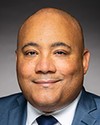
The Chair Liberal Michael Coteau
Thank you very much. I'm going to have to stop you there.
Next, I'm going to go to the Conservatives for five minutes.
Go ahead, Mr. Barlow.
Conservative

John Barlow Conservative Foothills, AB
Thanks, Mr. Chair.
Thanks, Ms. Proud, for coming here today and being so detailed in your answers, which is nice to see.
You were saying that the one aspect of the grocery code that hasn't been completed is the dispute resolution mechanism. My understanding is that a number of the large retailers have not signed on to that. Are you able to tell us which retailers have not signed on, and have they given you reasons as to why they have not signed on?
President and Adjudicator, Office of the Grocery Sector Code of Conduct
The list of members is public on our website, so you can go through there and see all 96 that we have as of today.
We have Empire, who joined right at the beginning. We also have Save-On-Foods, who, while independent, are also a very large retailer. Those are the only two large ones that have signed on so far.
The others are waiting to see what the final governance pieces look like. Frankly, I don't blame them for that. They want to see exactly how the process is going to work, and they want to feel comfortable with where we've landed when it comes to the reach and authority of the adjudicator. They have been working very closely with us in a working group. We have an industry working group that's been helping us work through finalizing the dispute resolution mechanism. They've all been very involved.
My expectation, when we finalize that, is that they all sign on. At this stage, I don't have an indication from any of them that they're not planning to.
Conservative
John Barlow Conservative Foothills, AB
Just so we're clear, for those who may be watching, three of the largest of those five retailers that we talked about during our studies previously—Loblaws, Walmart and Costco—are amongst those that have not signed on to the dispute resolution mechanism.
Is that correct?
President and Adjudicator, Office of the Grocery Sector Code of Conduct
We haven't finalized dispute resolution. They haven't—
Conservative
John Barlow Conservative Foothills, AB
They haven't agreed to be a part of it until they see the final....
President and Adjudicator, Office of the Grocery Sector Code of Conduct
They want to see the final document, yes.
Conservative
John Barlow Conservative Foothills, AB
You've mentioned a number of times that this is a voluntary code, and some of this has been modelled after the United Kingdom's template. However, the United Kingdom also started out voluntary and had to go mandatory, because obviously it wasn't achieving the goals it had set out.
What has to happen in this grocery code of conduct for it to remain voluntary?
President and Adjudicator, Office of the Grocery Sector Code of Conduct
That's a great question.
Not only did the U.K. not succeed in voluntary, but neither did Australia. They've both gone to a regulated system, although they are quite different.
A number of things have to happen. One is that I need to have all of the major grocers and all of the major suppliers sign on to the grocery code. That is the first step through the door if this voluntary approach is going to work. We also need to see, as the office starts working with those entities, that when there are issues related to the code, we are being listened to, that people are being collaborative and that they really are committing to this voluntary code.
I will be incredibly open and transparent in my reporting if the office feels that the code is not working. We fully intend to do similar to what they do in the U.K. It's not going to be Karen Proud's decision as to whether the code is working or not; it is going to be our members in the sectors we will be serving. We will be hearing from them on whether they're seeing the changes, similar to what they've seen in the U.K., and seeing things progressing as we hope.
If we are not, then I will report on the results of that, and we'll have to see what the next steps for this country have to be.
Conservative
John Barlow Conservative Foothills, AB
Thank you for that.
I have time for one last question.
We studied food pricing and food inflation a couple of times in the previous Parliament. The then minister of industry, now the finance minister, was quite adamant that the grocery code of conduct was going to be the salve for food inflation and grocery prices.
Is there anything in the code that stipulates that grocery prices will come down once the code is officially initiated and the grocery chains have signed on? Are there any guarantees that the grocery prices will come down as a result of the grocery code of conduct?
President and Adjudicator, Office of the Grocery Sector Code of Conduct
I don't expect the grocery code of conduct to affect food inflation or the price of food. The grocery code was never designed as such. In fact, one area where the code does not come into play is with regard to price negotiations between retailers and suppliers.
There are some out there who have made comments that it could raise prices. Other academics have talked about how it could lower prices if things are more efficient, but the code itself was never meant to address the price of food or food inflation.
Conservative
John Barlow Conservative Foothills, AB
That's an interesting answer, given the claims of the previous Liberal minister, now the finance minister, that the grocery code was going to be the magic bullet to address food prices.
Thank you, Chair.
Liberal
October 20th, 2025 / 4:05 p.m.
Liberal

Sophie Chatel Liberal Pontiac—Kitigan Zibi, QC
Thank you very much, Mr. Chair.
Ms. Proud, thank you for being here with us.
The grocery sector code of conduct is so important to Canadians. They expect there to be one. They also expect producers and wholesalers to have a good relationship. Therefore, I congratulate you on your work.
You told us today that negotiations on the dispute resolution mechanism are going well. You're still optimistic about that. That's all that's left to deal with. As you said, the code of conduct was signed in 2024. That piece, the dispute resolution mechanism, is missing, but the code of conduct is expected to take effect in January. Is that right?
President and Adjudicator, Office of the Grocery Sector Code of Conduct
It's still my hope and expectation that we can finalize the dispute resolution mechanism before January 1.
Liberal
Sophie Chatel Liberal Pontiac—Kitigan Zibi, QC
I get the impression that some stakeholders in the negotiations surrounding the dispute resolution mechanism would like to use it to expand the scope of the code of conduct, while others would rather limit its scope. Is it your role to help the parties find a middle ground, respect the spirit of the code and adopt it?