Thank you.
Mr. Perron, you have six minutes.

Evidence of meeting #9 for Agriculture and Agri-Food in the 45th Parliament, 1st session. (The original version is on Parliament’s site, as are the minutes.) The winning word was products.
A video is available from Parliament.
Bloc

Yves Perron Bloc Berthier—Maskinongé, QC
Thank you very much, Mr. Chair.
I’d like to thank the witnesses for joining us today. We appreciate their taking time to come here.
I don’t know if you’re related, but since you have the same surname, I’ll add your first names.
Daniel McCann, I’m very interested in your company and recommendations.
You probably heard me tell the minister that in previous sessions, we spoke about pesticide spraying by drone but didn’t really touch on artificial intelligence. Some people have been working on this over the past couple of years, but it has not yet been approved. Furthermore, the same products are currently sprayed by plane. This doesn’t make any sense from an economic or environmental point of view.
Can you give me a quick explanation of the small-scale tests you mentioned earlier?
Chief Executive Officer, Precision AI Inc.
I fundamentally agree with your assertion that it doesn't make a lot of sense. What matters when it comes to agricultural efficacy is the amount of droplet distribution and the amount of chemical that's actually applied to the crop. The manner in which it's done, whether it's from a drone, a plane or a piece of ground equipment, doesn't really matter.
So, I fundamentally agree. I think the regulations were conceived at a time when drone spraying wasn't a thing, so they didn't create a pathway for that. They desperately need to be re-evaluated and thought through from the perspective of outcomes first. What is the outcome you're trying to generate? Can you generate that outcome in a safe manner? Then, reverse-engineer the platform from there.
Bloc
Yves Perron Bloc Berthier—Maskinongé, QC
What scale are you referring to when you say small-scale tests? Do you mean small acreage? Are there examples you can point to? Were they conclusive? We might make mistakes if we move too fast, and that’s why I’d like to have more details on this subject.
Chief Executive Officer, Precision AI Inc.
When we've discussed this with our stakeholder group of people in this industry, one of the challenges is that, based on our current regulatory environment, you're not allowed to actually fly the drones and spray with the drones to collect the data to prove that it's safe. You have a chicken-and-egg problem.
The regulatory sandbox.... If the concern of the PMRA is that you don't want people having carte blanche to go and spray unapproved chemicals in unapproved ways, then create a limited environment where you can collect the data and prove its efficacy. It could be one acre or 10 acres; it doesn't need to be big. You have a statistically insignificant amount of impact that it can generate, but you can collect the data that you need to prove the safety.
Bloc
Yves Perron Bloc Berthier—Maskinongé, QC
Okay. Thank you.
You spoke about predictable timelines for approvals. What would be reasonable?
Obviously, it’s easy to say that seven years is too long, that it’s outrageous, and so forth. Perhaps you’re a scientist, but I’m not. We don’t want to approve just about anything.
To ensure we proceed with a degree of caution, what would the timeline look like?
October 23rd, 2025 / 5:10 p.m.
Chief Executive Officer, Precision AI Inc.
Certainly.
I think that needs to be determined on a case-by-case basis. Even the clarity on that would be much more helpful than the lack of clarity that we currently have.
Again, to go back to it, I'm a big believer in the outcome-based regulatory environment. The regulatory environment we have is good, but, again, it's over-indexed on process and under-indexed on outcomes.
If we take, for example, something like drone spraying, improving the efficacy of the residual data that the PMRA needs can be achieved in a year. If you wanted to even double that and say two years—prove it the first year and see if it can be replicated the second year—then that's two years, instead of seven. That's much more reasonable.
Bloc
Yves Perron Bloc Berthier—Maskinongé, QC
Okay.
You talked about working with other regions and jurisdictions. The other two witnesses also spoke about that.
Obviously, we don’t want to abdicate our environmental sovereignty. Temperatures and soil conditions are not the same either.
Like most people, I assume you’d like to move faster to conditional approval, pending trials adapted to our climate.
Is that the case? Can you explain that to me?
Chief Executive Officer, Precision AI Inc.
Yes, that's exactly correct. Let the science guide the data. Use the data where it replicates. Then, for things we need to adapt, just provide a quick framework for us to adapt those trials to what we're doing.
Bloc
Yves Perron Bloc Berthier—Maskinongé, QC
Okay.
You used the term “regulatory concierge” and I really liked it. There too lies a risk of moving too fast.
How will we know which regulations need to be removed?
Chief Executive Officer, Precision AI Inc.
Can you repeat the question? It wasn't clear. I'm sorry.
Bloc
Yves Perron Bloc Berthier—Maskinongé, QC
In recommendation 4 in your opening remarks, you said that there are multiple regulations and that some kind of “regulatory concierge” was needed. I liked that expression. Basically, this means we need to do some housekeeping.
How will we determine which regulations are outdated and which ones are not? Simply put, there are multiple regulations. Sometimes, new ones are created without removing old ones. That’s serious.
Chief Executive Officer, Precision AI Inc.
It is. I do agree with that.
I think regulations are like bushes that you grow in your yard. If you don't trim them, they will just grow indefinitely and then they don't get healthy. We do need some sort of process, whether it's a concierge or something else, to be able to have a regular review of which regulations make sense and which don't anymore.
Bloc
Yves Perron Bloc Berthier—Maskinongé, QC
Mr. Tyler McCann, in this case, would the ombud identify redundant regulations?
Is my time up, Mr. Chair?
Liberal
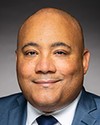
The Chair Liberal Michael Coteau
I was going to say, finish your question, but your time's up. Thank you.
We're going to do one final round. We'll do four minutes, four minutes, and two and a half minutes. I want to keep about five minutes at the end just to talk about the calendar for the next couple of weeks.
I'll go to Mr. Epp, for four minutes.
Conservative

Dave Epp Conservative Chatham-Kent—Leamington, ON
Thank you, Mr. Chair.
Thank you to the witnesses.
I found your testimony extremely good and extremely frustrating. This is not new. We've talked about this. We've had this. Where do we go? I really appreciate bringing solutions to the table, but I want to get at the underlying, fundamental issue somehow to try to move the needle forward on speed. Nobody's talking about denigrating the safety or things like that.
This is not a partisan issue. Around this table, we agree. We saw that in the minister's letter. I think you touched on it, Mr. McCann, on the word “culture.” That's what we somehow have to get at.
What I'm reminded of—I believe I've shared this on the record here before—is advice that was given to me by a former provincial deputy minister, who said, “Dave, a hog will never slaughter itself.” I don't mean to denigrate our agencies by using this term. I love pork. I'm in favour of the pork industry. It is very difficult to initiate change upon oneself. What is it going to take to get at the culture, to actually motivate cultural change? We have mandate letters. We have the ideas that have come forward to committee.
I'm going to go to each one of you. Specifically on culture, in an organization, how do you motivate that change?
I'll start with Mr. Anderson, and we'll go on from there.
Chief Executive Officer, Vive Crop Protection
My recommendation is around looking at how we are performing relative to peers, setting a goal to be one of the most efficient regulatory systems in the world, if not the most efficient, and knowing what those measurements are. Knowing how we compare to those other regulatory agencies for comparative actions, and setting a goal to drive towards those numbers, is one thing that, in my view, can really drive change.
Right now, we're not even keeping score. We don't know if we're winning or losing. We think that matters.
Conservative
Dave Epp Conservative Chatham-Kent—Leamington, ON
I'm going to come back to your point, but I want to hear from both McCanns.
Chief Executive Officer, Precision AI Inc.
The way I think about this is that the regulators are all well intentioned. Everybody wants good things, and that's to protect our environment and people.
I think what we just need to do, again, is remind ourselves that the process only serves the science. If we can get the science faster, and if new innovations and new science dictate new methods, we need to have some sort of pathway for those new methods to be re-evaluated constantly.
Managing Director, Canadian Agri-Food Policy Institute
We need accountability. I think what we've seen is too much talk. I think if we look at what happened, we've seen the Prime Minister and the Clerk of the Privy Council indicate that they're going to hold public servants to account. We haven't seen that yet.
The outcome of the first regulatory reform process tells me that the expectations are not being met, and someone needs to be held to account. That's not a minister. The minister needs to hold his senior officials to account for the work that they're doing or not.
Conservative
Dave Epp Conservative Chatham-Kent—Leamington, ON
Thank you.
I'm going to come back to your idea of metrics—KPIs, comparators to other agencies. You have the EPA. You have the Australian system. I don't think anyone believes that those agencies want to poison their own people or their own environment, so we need to bring them in, but if the culture is such that we don't want to accept that.... I'm going to give you an example that comes out of testimony from the executive officer of CropLife, who expressed a view that no regulator in the world is going to go after cumulative effects, which is what the PMRA has said they're interested in pursuing, when no other regulator in the world.... That gets at the culture of “We are better” or “The other agencies aren't up to our internal standards.”
Can you comment, please?
Chief Executive Officer, Vive Crop Protection
I would generally agree.
There are a variety of countries that I think we would consider peers, and we need to be thoughtful about their approaches and not necessarily say that Canada is special and that we need to do everything special here. There's no need to reinvent the wheel.
Liberal
Liberal

Emma Harrison Liberal Peterborough, ON
Thank you.
Thank you to the witnesses for being here.
I'm going to try to ask really direct questions, because I only have four minutes.
This is for Mr. Daniel McCann.
This is very broad. What regulatory changes would need to be enabled for widespread adoption of drone spraying in Canada?