Okay.
What's the next one?

Evidence of meeting #22 for Access to Information, Privacy and Ethics in the 45th Parliament, 1st session. (The original version is on Parliament’s site, as are the minutes.) The winning word was brookfield.
A video is available from Parliament.
Commissioner, Office of the Conflict of Interest and Ethics Commissioner
Okay.
What's the next one?
Conservative

Michael Cooper Conservative St. Albert—Sturgeon River, AB
That's Mr. Pollock, the CEO of Brookfield Infrastructure, and then in October, the chief operating officer of Brookfield.... It certainly seems like he has an awful lot of contact with Brookfield, and not just anyone from Brookfield, but the CEO of Brookfield Infrastructure and the chief operating officer of Brookfield.
Commissioner, Office of the Conflict of Interest and Ethics Commissioner
This was prior to the election, after the election or...?
Conservative
Michael Cooper Conservative St. Albert—Sturgeon River, AB
After the election. All of these were after the election.
Commissioner, Office of the Conflict of Interest and Ethics Commissioner
You know what the rules are and how this screen is established to prevent everything, etc. You're talking about a meeting with this Mr. Beber, etc. I understand from the Prime Minister and from Mr. Beber's testimony that this was about anti-Semitism—it had absolutely nothing to do with business—and that it was a personal visit, etc. Should it have taken place or not? That's for you to decide. If they just talked about anti-Semitism, it is clearly not—
Conservative
Michael Cooper Conservative St. Albert—Sturgeon River, AB
Well, certainly NorthRiver Midstream wasn't about that, nor was the meeting with Sam Pollock in Washington, D.C., I would submit, and I think most Canadians would agree that it would be a heck of a lot better if the Prime Minister just stayed away from Brookfield, but that isn't happening.
Now, on September 27, while in London, England, Mark Carney attended a working breakfast with Canada's high commissioner to the U.K. and eight international investors. Did you sign off on that meeting, having regard for the list of attendees?
Commissioner, Office of the Conflict of Interest and Ethics Commissioner
I don't sign off on meetings and, as I keep telling you, I give advice, and the advice is confidential. It's up to the Prime Minister to disclose it or not.
Conservative
Michael Cooper Conservative St. Albert—Sturgeon River, AB
Mr. Carney's chief of staff came before this committee and testified that you had been made aware of that meeting and you signed off on that before it took place. Is that accurate?
Commissioner, Office of the Conflict of Interest and Ethics Commissioner
It is. Okay, fine; yes, that was a general meeting with investors as part of his duty as the Prime Minister being in the U.K. and trying to encourage people to invest in Canada. This is one case where they disclosed my advice, and since it's up to him to disclose, I can comment on it.
Conservative
Liberal

Linda Lapointe Liberal Rivière-des-Mille-Îles, QC
Thank you very much, Mr. Chair.
Thank you again to the witnesses for being here today and answering our questions.
We have been looking at this study for some time now. Some witnesses have said that the general exemption provided for in the definition of private interest in the Conflict of Interest Act should be removed.
Could that hinder people's ability to fully carry out their duties?
Commissioner, Office of the Conflict of Interest and Ethics Commissioner
Michael, you can take that.
Legal Counsel, Office of the Conflict of Interest and Ethics Commissioner
The general application exemption is found in all ethics regimes in Canada. It's an almost uniform provision across all provinces.
It's there for a reason. If a public office holder makes a decision and incidentally has an interest, just like all the other people affected by that decision, the decision should be exempted from the allegation that it furthers the decision-maker's private interests. It will be said that the decision-maker is acting in the public interest, not in their own interest.
Liberal
Linda Lapointe Liberal Rivière-des-Mille-Îles, QC
Thank you.
Commissioner, in your most recent annual report, you proposed a number of amendments to the Conflict of Interest Act.
What changes would you like to see in terms of harmonization between the act and the Conflict of Interest Code for Members of the House of Commons?
Commissioner, Office of the Conflict of Interest and Ethics Commissioner
There's obviously the issue of the appearance of a conflict of interest. The code has a special provision that applies to members, which is that they have to avoid the appearance of a conflict of interest. That's a general principle. It isn't in the act, which talks only about actual conflicts of interest.
I suggest changing that because the appearance of a conflict of interest is very important for the public. The public doesn't know the facts or context, but they don't like that kind of appearance. The appearance of a conflict of interest will undermine trust in the government.
For that reason, I believe we should harmonize the code and the act on this issue.
Liberal
Linda Lapointe Liberal Rivière-des-Mille-Îles, QC
Your suggestion is that we look at situations with an apparent conflict of interest to maintain public trust.
Have you discussed the various ways of doing things in Canada?
Are we all on the same wavelength?
Are there any places in the world that inspire you when it comes to provisions related to the appearance of a conflict of interest?
Commissioner, Office of the Conflict of Interest and Ethics Commissioner
British Columbia's legislation deals with exactly that. It imposes an obligation to avoid the appearance of a conflict of interest.
We also have to look at the regimes in England, Scotland and Ireland. Those three countries use different words, but they have exactly the same ideas. Elected and appointed individuals have to avoid the appearance of conflict of interest.
Liberal
Linda Lapointe Liberal Rivière-des-Mille-Îles, QC
Thank you very much.
As members of Parliament, we often receive information about the government's activities and legislative proposals before they're made public.
Do you think we should consider a stronger or more harmonized code for members of Parliament?
Director, Advisory and Compliance, Office of the Conflict of Interest and Ethics Commissioner
According to the rules, members themselves are clearly subject to the Conflict of Interest Code for Members of the House of Commons. Public office holders are subject to the act. One group of individuals is subject to both sets of rules.
It's always easier to have harmonized rules because you know all the rules that apply to each of you. That means it's always clearer when the same regime applies to everyone who's subject to the rules on conflicts of interest.
For example, in Quebec or Ontario, a rules model is used for the various categories of people who are subject to the rules, but within the same framework.
I think it's much more understandable and much clearer for the people subject to those rules when the regime is the same for everyone.
Liberal
Linda Lapointe Liberal Rivière-des-Mille-Îles, QC
Thank you.
That would help us to have better harmonization in that sense, then.
Commissioner, what do you think could constitute an apparent conflict of interest?
Commissioner, Office of the Conflict of Interest and Ethics Commissioner
We gave an example from the Mulroney‑Schreiber affair. Justice Oliphant suggested adopting a definition and amending our act.
Mr. Aquilino, can you read it?
Legal Counsel, Office of the Conflict of Interest and Ethics Commissioner
Unfortunately, I have the definition only in English, but it mainly refers to imposing a regime based on the standard of a reasonable person. The definition would be the following:
An apparent conflict of interest exists when there is a reasonable apprehension, which reasonably well-informed persons could properly have, that a conflict of interest exists.
Conservative
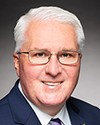
The Chair Conservative John Brassard
Okay. Thank you.
Mr. Thériault, you have the floor for six minutes.
Bloc
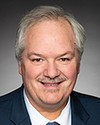
Luc Thériault Bloc Montcalm, QC
Thank you.
Do you conduct any inspections or audits regarding information filed by public office holders or regarding the activities of public office holders?
Director, Advisory and Compliance, Office of the Conflict of Interest and Ethics Commissioner
My office's mandate is to review the documentation provided by public office holders and members of Parliament. Those two systems rely on good faith, and they're based on disclosure by the people who are subject to the rules. For example, my office can't communicate with the Canada Revenue Agency about tax returns. It can't do credit checks either.
The Canadian system is based on good faith and disclosure provided by members of Parliament and public office holders.