
Evidence of meeting #31 for Access to Information, Privacy and Ethics in the 45th Parliament, 1st session. (The original version is on Parliament’s site, as are the minutes.) The winning word was communication.

A video is available from Parliament.

On the agenda

Members speaking

Before the committee

Bélanger  Commissioner of Lobbying, Office of the Commissioner of Lobbying

4:10 p.m.

Commissioner of Lobbying, Office of the Commissioner of Lobbying

Nancy Bélanger

Currently, roughly 60% of organizations and 30% of registered companies indicate that calls to the general public will be a method of communication. Afterwards, we don't hear about it anymore. All of a sudden, there are things in the newspapers. I often hear from MPs and senators that they are bombarded with letters related to certain bills and have no idea who the authors of those communications are.

The purpose of this recommendation is to impose another obligation. When they undertake a public call campaign, in addition to indicating that it is a method of communication, lobbyists will have to record in the registry the public office holders being targeted and the subject of the communication.

Thanks to this registry, you'll be able to see who is behind certain grassroots communications campaigns.

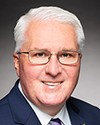
Luc Thériault Bloc Montcalm, QC

How do we operationalize that, because very often we don't know who they are?

4:10 p.m.

Commissioner of Lobbying, Office of the Commissioner of Lobbying

Nancy Bélanger

We hope they will indicate that in the registry. If they do, you'll see when the campaign started, what it was about and the lobbyists involved.

Luc Thériault Bloc Montcalm, QC

In recommendation 18 of your brief, you say—

4:10 p.m.

Conservative

The Chair Conservative John Brassard

Mr. Thériault, can we come back to this issue later? Your time is up.

Luc Thériault Bloc Montcalm, QC

Okay.

Thank you.

4:10 p.m.

Conservative

The Chair Conservative John Brassard

Mr. Hardy, the floor is yours for five minutes.

4:10 p.m.

Conservative

Gabriel Hardy Conservative Montmorency—Charlevoix, QC

Thank you for being with us.

Lobbying is the intent to communicate with public decision-makers to influence their decisions. The act has not been reviewed since 2012. We're reviewing it today, but it's been a while, and things have evolved a great deal. You were saying that the change you want to make affects 70 new organizations. You can imagine that things have changed quite a bit in the past 14 years.

You said you cover paid activities. In your opinion, there is some vagueness, and that should be clarified for activities that are not.

If a consortium owns 500 companies and, every week, a director from one of those companies holds a meeting lasting an hour and a half or two hours, that person doesn't exceed the threshold of eight hours a month.

In such a case, we would never audit that. It would fly under the radar. There would be no problem, despite the fact that these are recognized companies and that we could, at some point, see decisions aligning with the interests of those companies. Everything would be fine.

Is that correct?

4:10 p.m.

Commissioner of Lobbying, Office of the Commissioner of Lobbying

Nancy Bélanger

That's right. All organizations and companies currently have a limit. If the threshold isn't reached, we don't know what's going on.

4:10 p.m.

Conservative

Gabriel Hardy Conservative Montmorency—Charlevoix, QC

You said that the companies aren't necessarily lobbying firms. Any company can want to talk to ministers. If they respect the limit of eight hours a month, there isn't any issue.

This would mean that ministers could spend their time meeting with corporate representatives, despite potential conflicts of interest. As long as these meetings don't exceed the eight‑hour limit, everything's fine.

Is that right?

4:10 p.m.

Commissioner of Lobbying, Office of the Commissioner of Lobbying

Nancy Bélanger

That's right. There isn't any transparency.

4:10 p.m.

Conservative

Gabriel Hardy Conservative Montmorency—Charlevoix, QC

Let me give you an example. A senior executive of a company is given a mandate by a minister or prime minister, on the grounds that the executive knows the industry, to provide economic advice and to help them. At the same time, the executive remains the head of a major corporation. As a result, we could see government decisions aligned with the interests of this company.

In your opinion, is this executive engaged in lobbying, if the executive receives payment from the office of a minister or prime minister and provides advice?

4:10 p.m.

Commissioner of Lobbying, Office of the Commissioner of Lobbying

Nancy Bélanger

If the individual is hired under a service contract to provide advice, it's a service contract. The federal government has a number of these contracts, and it isn't lobbying.

Incidentally, I recently met with a number of groups and gave them advice. These groups included advisory and consultative groups. Although these people are part of the groups at the request of a particular minister, their activities and communications could be seen as benefiting their company. After all, their company pays them to be there. Without their company or their expertise, they wouldn't be there. They must see it as communicating.

4:15 p.m.

Conservative

Gabriel Hardy Conservative Montmorency—Charlevoix, QC

You ask them and you suggest things.

4:15 p.m.

Commissioner of Lobbying, Office of the Commissioner of Lobbying

Nancy Bélanger

I tell them. That's the advice that I give them.

4:15 p.m.

Conservative

Gabriel Hardy Conservative Montmorency—Charlevoix, QC

It's advice. However, as we've seen in the past, a senior finance executive may indeed serve as an adviser to a prime minister. The government's decisions are then aligned with this person's advice, but the person has never done any lobbying in their life.

4:15 p.m.

Commissioner of Lobbying, Office of the Commissioner of Lobbying

Nancy Bélanger

Exactly. It can happen.

4:15 p.m.

Conservative

Gabriel Hardy Conservative Montmorency—Charlevoix, QC

Okay.

Can you think of a situation that you feel is quite conflictual, but that isn't covered by the current Lobbying Act? I'm thinking in particular of a situation that might have slipped under the radar.

It would be a situation that you know is conflictual and that shouldn't have happened, but that you couldn't do anything about. This would have basically led you to recommend improvements to the legislation.

4:15 p.m.

Commissioner of Lobbying, Office of the Commissioner of Lobbying

Nancy Bélanger

The best example is probably when people leave their positions as public office holders to become consultant lobbyists or to take a job with an organization.

When they leave their positions, they're prohibited from lobbying for five years. However, if they take a job with a company, they may engage in lobbying as a significant part of their duties.

In the past, anyone could leave their position, take a job with a company and engage in lobbying activities. The limit used to be 32 hours. Nowadays, it's eight hours. The reason lies in the fact that an exception is made for companies when a person leaves their position. This is tied to the post‑employment restriction on lobbying.

It's quite blatant. Moreover, no reasonable justification explains how an exception would apply to working for a company and engaging in lobbying, but not to a not‑for‑profit organization.

4:15 p.m.

Conservative

Gabriel Hardy Conservative Montmorency—Charlevoix, QC

Basically, when a person knows many people in the government, it can help.

4:15 p.m.

Commissioner of Lobbying, Office of the Commissioner of Lobbying

Nancy Bélanger

This has been the case since 2008. We need to find a way to address this shortcoming.

4:15 p.m.

Conservative

Gabriel Hardy Conservative Montmorency—Charlevoix, QC

Is my time up, Mr. Chair?

4:15 p.m.

Conservative

The Chair Conservative John Brassard

You have 15 seconds left.

4:15 p.m.

Conservative

Gabriel Hardy Conservative Montmorency—Charlevoix, QC

I'm finished, Mr. Chair.

4:15 p.m.

Conservative

The Chair Conservative John Brassard

Thank you, Mr. Hardy and Ms. Bélanger.

Mr. Saini, you have five minutes, sir. Go ahead, please.