Thank you, Mr. Thurlow and Ms. Church.
We now go to Mr. Thériault for five minutes.

Evidence of meeting #8 for Access to Information, Privacy and Ethics in the 45th Parliament, 1st session. (The original version is on Parliament’s site, as are the minutes.) The winning word was rules.
A video is available from Parliament.
Conservative
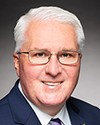
The Chair Conservative John Brassard
Thank you, Mr. Thurlow and Ms. Church.
We now go to Mr. Thériault for five minutes.
Bloc
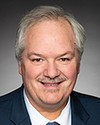
Luc Thériault Bloc Montcalm, QC
There may be some disagreement on whether to introduce the appearance of a conflict of interest into the act.
However, as far as a conflict of interest goes, here's how “private interest” is currently defined in section 2 of the act:does not include an interest in a decision or matter (a) that is of general application; (b) that affects a public office holder as one of a broad class of persons….
One witness told us that, according to that definition, the Prime Minister would not have to recuse himself from 99% of decisions or actions. Generally, even the Conflict of Interest and Ethics Commissioner gave me the same answer, when I was asking about raising the standards for a politician whose situation is nothing like the situation of a politician contemplated during the review of the act in 2013. I'm sure you would agree the two situations are nothing alike.
I'd like to hear your view on the subject. Is a broader definition needed?
I have other examples to give you. Again, the purpose of all this is to ensure that the public has trust in democratic institutions.
Founder, Thurlow Law
At a very high level, I agree with you. I think the rule of general application is one where it is very easy for people of means who are sitting in Parliament to get an even greater benefit.
I will make up an example. Let's say someone who has a $1-billion wealth fund votes on a capital gains tax that would apply to everyone, and that change drew the tax liability down. That would be a very material advantage, but it applies to everyone.
The problem with the position you're advancing is that, if we don't have a general application rule, will parliamentarians ever be able to vote on anything? Where do we draw the line with something in front of Parliament that is important for the country to keep going? We could get into the CUSMA or the USMCA, depending on what you call it. There are so many other things that an individual's past performance or past experience is going to have an impact on. It's very difficult to narrow the rule of general application. I would invite you to make a suggestion and say, “Here is the proposal that I would make.”
Bloc
Luc Thériault Bloc Montcalm, QC
An example that was raised earlier is when Parliament passed global minimum tax legislation, resulting in multinationals having to pay at least 15% in tax.
During the G7 meeting in June, the Prime Minister announced that U.S. companies or subsidiaries would not have to pay the tax. He decided that.
Seven months earlier, Prime Minister Mark Carney, who was running Brookfield at the time, moved his company and its tax residence to New York.
Even though the decision to exempt companies operating in Canada but based in the U.S. is of general application, it seems to be tailor-made for Brookfield. While Canadian taxpayers may benefit as well, there's no denying the fact that, even if it's not part of his blind trust, the decision is going to make him wealthier. He knows full well that it's going to make him wealthier.
Bloc
Luc Thériault Bloc Montcalm, QC
As far as I'm concerned, what I'm describing should prompt us to find a solution to this unprecedented situation, because, while it may be the first, it may not be the last.
Ethically speaking, doesn't that worry you?
Founder, Thurlow Law
No, it doesn't, because when the Prime Minister made that decision and talked about that at the OECD, we were in the process of talking to Americans about our ongoing trade relationship with them.
Bloc
Luc Thériault Bloc Montcalm, QC
That's your political interpretation of what happened. I'm not looking at the situation with his reasons in mind.
Here's what I know: In his position, he will have to make these kinds of decisions in specific situations, and a conflict of interest screen overseen by someone who works for him—his chief of staff—is not good enough.
Do you agree?
Conservative
The Chair Conservative John Brassard
I'm sorry, Mr. Thurlow. Give us a very quick response to Mr. Thériault.
Founder, Thurlow Law
Mr. Conacher made the same accusation about people who are beholden to the Prime Minister. I would just say look at the last couple of parliaments. We had all kinds of people who were “beholden” to prime ministers who stood up to them, some in very famous situations. I don't share your concern.
Conservative
The Chair Conservative John Brassard
Thank you, Mr. Thériault.
Mr. Majumdar, you have five minutes. Go ahead, sir.
Conservative

Shuv Majumdar Conservative Calgary Heritage, AB
Thank you.
The Ethics Commissioner has said that transparency is the cornerstone of the act. I would imagine you would agree. In an August 8 piece, you remarked, “A successful business person usually has a long memory.” I would have to agree. It's part of the job.
As the Prime Minister set up his blind trust, he would probably remember what went into it. Is that right?
Conservative
Shuv Majumdar Conservative Calgary Heritage, AB
As to the full details of the portfolio—the mix, the long-term funds, the major priorities wherever he might be most leveraged—he would have a pretty serious sense of that. Is that right?
Founder, Thurlow Law
One would presume so. I actually phoned some people and said they should emulate the investment decisions. They are pretty good investments. It's a very significant portfolio.
Conservative
Shuv Majumdar Conservative Calgary Heritage, AB
They should emulate the decisions because they know that he's on the inside of the take on these decisions. Is that right?
Founder, Thurlow Law
I would say that is an allegation. I wouldn't repeat it.
Conservative
Shuv Majumdar Conservative Calgary Heritage, AB
You did here.
Let me ask a second question.
Ninty-nine per cent of the decisions the Prime Minister makes aren't subject to conflict of interest laws. He refuses to discuss and disclose the assets of the fund that he established in the investment world prior to becoming Prime Minister, and he could cash in on nearly 100 conflicts of interest. That means he could profit from almost 100 potential conflicts.
Any gains in that fund would translate directly into personal profits for the Prime Minister. Is that right?
Founder, Thurlow Law
I am more inclined to believe Dr. Turnbull, who said it is much more likely that he's leaving money on the table by leaving the private sector he was in. That is the hook that's important here. We're trying to encourage the best and the brightest to become parliamentarians and put their names forward to be part of this decision-making body. We want to encourage them to seek public office and give their wealth of experience to Canadians.
Founder, Thurlow Law
I don't think allegations like the ones you're making are fair when we have a legal mechanism in place allowing the trustee who is responsible for those assets to take actions independent of the Prime Minister's decisions.
Conservative
Shuv Majumdar Conservative Calgary Heritage, AB
I don't see public service as something that comes down from the mount. I see it as something you serve from the bottom up. We might have a very philosophically different idea of what it means to be a public servant. In order to serve, you have to be clean. You have to be ethics-compliant. You have to be completely open and transparent. That is the principle of the act that the Ethics Commissioner has described.
Let me ask this: In that spirit of transparency, to make sure that as public servants public office holders are serving their people, does the public have any way of knowing how the Prime Minister's decisions are impartial?
Founder, Thurlow Law
This is a philosophical question about the difference between trust and efficacy. Both of these things can be true at the same time. The public, based on the debates in Parliament and based on the things we are saying here at this committee, can make that decision. They can based it on the things we are all saying and the evidence we are proposing to be put before them.
I don't—
Conservative
Shuv Majumdar Conservative Calgary Heritage, AB
In that spirit, sir, if I may in the time I have with you, Canadians don't get to know when his so-called ethics screen is triggered. They don't know. We don't know if the decisions he's making are actually benefiting the country or his private fund and his private interests. They can't tell the difference between when he's acting for himself and when he's serving the country. There is a lack of transparency there and an inability to understand and discern whether the decisions Mark Carney is making for the country with the investment people he's talking to are going to profit him or come to the benefit of the country. That cloud of darkness creates massive issues, and this is backed up by the conversation I had with Mr. Conacher in the last committee session.
Do you not see a problem with this?