Evidence of meeting #22 for Finance in the 45th Parliament, 1st session. (The original version is on Parliament’s site, as are the minutes.) The winning word was affairs.

A video is available from Parliament.

On the agenda

Members speaking

Before the committee

Jill McKnight  Minister of Veterans Affairs
McDowell  Acting Deputy Minister, Department of Veterans Affairs
Svenson  Senior Director, Disability and Health Care Policy, Department of Veterans Affairs
Jardine  Veterans Ombud, Office of the Veterans Ombudsman
Schippers  Deputy Veterans Ombud, Office of the Veterans Ombudsman

9:10 a.m.

Conservative

Fraser Tolmie Conservative Moose Jaw—Lake Centre—Lanigan, SK

I'm sorry. With all due respect, Minister, I don't believe you. I don't think the veterans who are going to be watching this believe you. I really pray to God that you're going to make some changes here.

I'm going to ask you another question. How many decades will it take for the $129 million per year to account for all of the savings that you're promising?

Jill McKnight Liberal Delta, BC

Is that the $129 million as it relates to the adjustment to the cannabis for medical purposes?

Fraser Tolmie Conservative Moose Jaw—Lake Centre—Lanigan, SK

Yes. How many decades?

Jill McKnight Liberal Delta, BC

It is an accrued accounting that takes place, and that is what brings us to the total of $4.23 billion.

9:10 a.m.

Conservative

Fraser Tolmie Conservative Moose Jaw—Lake Centre—Lanigan, SK

Minister, one challenge that I think we have is that we're not speaking the same language. I'm just going to ask you a simple question. The military has a special language, and it's called the phonetic alphabet. Do you know the phonetic alphabet?

Jill McKnight Liberal Delta, BC

I am familiar with many elements of it. I would not be able to give you every item right now.

9:10 a.m.

Conservative

Fraser Tolmie Conservative Moose Jaw—Lake Centre—Lanigan, SK

All right. There are a few we could be using that we won't be using, to keep this meeting above parliamentarian—

The Chair Liberal Karina Gould

Do you have one final comment? You have four seconds left.

9:10 a.m.

Conservative

Fraser Tolmie Conservative Moose Jaw—Lake Centre—Lanigan, SK

I have no more.

The Chair Liberal Karina Gould

Thank you, Mr. Tolmie.

Mr. Leitão, go ahead.

Carlos Leitão Liberal Marc-Aurèle-Fortin, QC

Good afternoon, Minister, deputy minister and gentlemen.

Welcome to the committee.

Perhaps, to make sure we're all on the same page.... Earlier, my colleague Monsieur Lefebvre alluded to $4.2 billion in cuts. It's not a cut. In fact, it's a saving over the long term. It is an accounting process over time. The adjustment to the cannabis price leads to that, so we're not removing $4 billion from the department's funding.

Minister, on a couple of occasions, in your dialogue with my colleagues from the opposition, you wanted to ask your officials to clarify some issues, and my colleagues very abruptly moved on and prevented you from doing that. One issue I am interested in hearing about from the officials is this.

I'm interested in French-language services, since our colleagues said they were deficient. Could the officials clarify the situation?

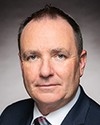
Christine McDowell Acting Deputy Minister, Department of Veterans Affairs

Thank you so much for the question.

Veterans Affairs remains committed to making sure that all of our veterans have access to services in the language of their choice at whatever point of access they enter our system, whether that's by phone, in person or, certainly, through our web publications.

We monitor our claim intake and our response to make sure the applications we receive in French, as well as those we receive in English, are dealt with on a parity basis so that we're providing equal service in terms of response. Our staff are trained to offer that service in both French and English. We have a number of bilingual staff and, in francophone regions, we certainly have the capability to deliver service in French right across the country.

Carlos Leitão Liberal Marc-Aurèle-Fortin, QC

Okay, thank you very much.

There was also some discussion on the issue of the pension adjustments and the amendments brought about by this bill. Maybe you could explain to us why it is important that the definition of “province” excludes the territories.

Jill McKnight Liberal Delta, BC

Would you like a reply from the officials?

Carlos Leitão Liberal Marc-Aurèle-Fortin, QC

Yes.

9:15 a.m.

Acting Deputy Minister, Department of Veterans Affairs

Christine McDowell

I'll get my colleague Nathan Svenson, who is online, to jump in here with a response.

Carlos Leitão Liberal Marc-Aurèle-Fortin, QC

Thank you.

Nathan Svenson Senior Director, Disability and Health Care Policy, Department of Veterans Affairs

Thank you for the question.

To be clear, there is no disparity in benefit entitlement between those who reside in the territories and those who reside in the provinces.

When the program was designed, the term “province” was used in the calculation in the legislation, and that's the application that the department has been using to calculate the benefits since the formula was put in place. That was the original intent. The VAC has been calculating all of these benefits that are noted in the budget implementation act as originally intended, and the objective of the amendments is simply to make the legislation clear.

Thank you.

Carlos Leitão Liberal Marc-Aurèle-Fortin, QC

If we could continue on that topic, there was the issue in the courts and the court decision that appears to go against that practice. Can you give us an update on where we are on that?

9:15 a.m.

Senior Director, Disability and Health Care Policy, Department of Veterans Affairs

Nathan Svenson

I want to correct the assertion made earlier that the government lost in court. The government settled a lawsuit, and settling a court action is a way to avoid the burden on both parties in a lengthy and expensive trial. Settling a court action does not establish that there was any kind of error or failure; it simply resolves the current claim.

The fact remains that VAC has been calculating these benefits as originally intended, and the amendments to the legislation at this time avoid any perceived ambiguity that may continue.

Thank you.

Carlos Leitão Liberal Marc-Aurèle-Fortin, QC

Thank you for that clarification. That indeed makes matters a lot clearer.

As I also understood from previous discussions, no repayments are required.

The Chair Liberal Karina Gould

Thank you very much, Mr. Leitão.

To conclude this hour, I'll turn the floor over to Mr. Garon for two and a half minutes.

Jean-Denis Garon Bloc Mirabel, QC

Thank you, Madam Chair.

Minister, the Parliamentary Budget Officer just released a memo saying that if the government meets the NATO defence spending target of 5% of GDP by 2035-36, including your budgets, Canada's debt-to-GDP ratio will have increased by 6.3% and Canada's deficit will have increased by $60 billion. You won't find that in your notes; it's just been published. Your government is committed to doing that.

First of all, do you think it's realistic to increase the federal debt-to-GDP ratio by 6% or 7% over the next few years?

Then, if your government has committed to meeting those targets and spending like that, why are you cutting your budgets by 15%? How do you reconcile those two decisions? Do you think that's consistent?

Do you think it's easy to understand for members of the public and veterans, as well as new Canadian Forces members? Do you think your government is consistent in its message today?

Jill McKnight Liberal Delta, BC

Our government has made the commitment to reach the NATO 2% this fiscal year, and the 5% by 2035. Veterans Affairs Canada is a significant contributor to the NATO calculation, and that is why we are investing in Veterans Affairs.

Jean-Denis Garon Bloc Mirabel, QC

The Parliamentary Budget Officer just said that if the government meets the 5% target by 2035‑36—and you just said it would reach it—the federal debt-to-GDP ratio would increase by 6.3%, and the deficit would increase by $60 billion, just with defence spending. And yet, you're saying you're going to rationalize and cut your budgets. You can't even tell us whether you're going to reduce the number of public servants. You can't answer that.

How do you reconcile those two things?

Considering the price tag, are you sure veterans will get their share of that money?