Thank you.
What mechanisms are in place to monitor and assess the impact of Canadian aid, in particular to prevent corruption and ensure accountability?

Evidence of meeting #10 for Foreign Affairs and International Development in the 45th Parliament, 1st session. (The original version is on Parliament’s site, as are the minutes.) The winning word was haiti.
A recording is available from Parliament.
Liberal

Tatiana Auguste Liberal Terrebonne, QC
Thank you.
What mechanisms are in place to monitor and assess the impact of Canadian aid, in particular to prevent corruption and ensure accountability?
Ambassador of Canada to Haiti, Department of Foreign Affairs, Trade and Development
I often say that it isn't easy to spend $100 million. I say this with a touch of humour. It really isn't easy to spend such a large amount responsibly. The processes are painstaking, but necessary. The best way to achieve the desired results and to track the money is to work with responsible partners already vetted for reliability.
For example, we use the United Nations Development Programme extensively. The Organization of American States, or OAS, is one of our partners. As I said, we work with non‑governmental organizations, or NGOs, such as Lawyers Without Borders Canada. We're very familiar with this organization. We work with these partners because they know our processes and requirements and they can ensure that Canadian taxpayers' money is being put to good use in the programs that we designed.
Liberal
Tatiana Auguste Liberal Terrebonne, QC
Thank you.
My next question concerns the fact that, as you said, you haven't received a transition plan from Haiti's transitional presidential council.
What will be the Canadian embassy's next step if no transition plan is submitted?
Ambassador of Canada to Haiti, Department of Foreign Affairs, Trade and Development
For a year now, we've been encouraging the transitional presidential council to reach out to stakeholders—to the sectors that created the council in the first place—and to other Haitian stakeholders. It has recently begun to do so.
You could rightly argue that this comes a bit late, but the council is doing it. We met with the members of the presidential council, a collective council, to tell them that their successes and failures will be judged collectively and that their role now is to ensure a smooth transition and appropriate action. There can't be any gaps in the management of the state.
The council has started consultations with stakeholders to bring them back into the government structure. The stakeholders have been excluded over the past year. The members of the presidential council will need to show a great deal of humility in this effort. I think that they understood the message. They will also need a plan for the elections. The action plan must be clear and must include dates and deadlines so that we can see the light at the end of the tunnel well before February 7, 2026.
Liberal
Tatiana Auguste Liberal Terrebonne, QC
Thank you.
Can you provide an update on how Canadian humanitarian aid is being distributed safely and effectively, despite security challenges, throughout Haiti rather than just in the capital?
Ambassador of Canada to Haiti, Department of Foreign Affairs, Trade and Development
Good question. We're working with the United Nations team, which has a humanitarian aid distribution network across the country. For example, the World Food Programme is a key partner. I actually had the opportunity to visit their warehouses during my few short trips outside Port‑au‑Prince. They're well equipped and they have warehouses all over the country. They're always ready to take over. They're really our partner organization for these issues.
The presence of gangs also makes everything more complicated. However, let's be honest. The gang members are business people. Their business model, meaning their source of income, involves setting up roadblocks where they demand a toll from people. Without necessarily needing to negotiate with them, we can still reach different parts of the country despite their presence. Obviously, it's complicated. Our partners are the ones handling this.
Liberal
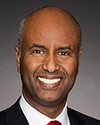
The Chair Liberal Ahmed Hussen
Thank you, Ms. Auguste.
Mr. Brunelle‑Duceppe, you have the floor for six minutes.
Bloc
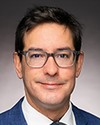
Alexis Brunelle-Duceppe Bloc Lac-Saint-Jean, QC
Thank you, Mr. Chair.
Thank you, Ambassador.
Mr. Myles, thank you as well for joining us today.
This week, the committee met with Mr. Dessources, the Ambassador of the Republic of Haiti to Canada. He told us, for example, that the key lay in preventing weapons and ammunition from entering the country, not with a view to fully resolving the situation, but to improving it quickly. I've also been hearing this for a long time. I don't know what you think about this.
In 2023, I participated in the study carried out by the Subcommittee on International Human Rights of the Standing Committee on Foreign Affairs and International Development. I'll read you a recommendation from the subcommitte. We'll then start the discussion.
That the Government of Canada work with international partners, particularly source countries, to prevent and stop weapons and illegal drugs from being smuggled into Haiti, and assist the Government of Haiti to enhance its border controls. This includes helping the government to increase the number of border service agents, provide better training and tools, as well as make long‑term investments of time and resources in Haiti's security infrastructure.
This recommendation is found in the report released in 2023. This means that we've been aware of this issue for a long time. When we talk about source countries that export weapons, the United States obviously comes up a great deal. It's estimated that 90% to 95% of ammunition and weapons come from the United States.
Ambassador, has your embassy made any efforts to address the issue of weapons imports in its discussions with the Americans?
Ambassador of Canada to Haiti, Department of Foreign Affairs, Trade and Development
Thank you.
You really hit on a critical issue. Gangs are better equipped and better armed than the police force. This is a real problem. There are two ways to address this issue. One is to cut off the supply at the source. The other is to try to intercept the weapons as they arrive in Haiti. We're working on both fronts.
We've regularly raised this issue with our American partners. They know full well that the weapons are mainly coming from their country. They don't deny it. However, they have their own regulatory regime, which makes things quite complicated. All things considered, they clearly understand that this factor is a big part of the problem.
The United Nations has implemented a sanctions regime and an embargo on the arms trade in Haiti. This is also a way to regulate the whole process.
Importing weapons into Haiti legally remains difficult, but illegal channels obviously exist. As a result, we're working with the United Nations Office on Drugs and Crime, or UNODC. We're actually funding the training provided to customs officers. We also purchased scanners to help them inspect containers coming into the port.
This approach is truly multi-faceted. However, you're absolutely right. This factor remains a major source of the problem and a constant concern.
Bloc
Alexis Brunelle-Duceppe Bloc Lac-Saint-Jean, QC
The percentage may vary, but approximately 80% of the capital is occupied or controlled by gangs. Generally speaking, this is the area that we hear about most often. You said earlier that an election plan was vital. However, you also used the word “lucid”, which I greatly appreciate in light of the situation at hand.
When 80% of the capital is controlled by gangs that continue to illegally obtain weapons from the United States, how can the country's elections be organized in a lucid manner?
Ambassador of Canada to Haiti, Department of Foreign Affairs, Trade and Development
I can't predict the future. However, I think that everyone agrees that no elections will be held before the transitional presidential council's term ends on February 7, 2026. Nevertheless, we need to put a plan in place that allows us to work in parallel. The adoption of Resolution 2793 for the gang suppression force gives us hope that, in a few months, we can start to see a much stronger impact on security to help restore a minimum level of security. At the same time, progress must also be made on the elections. This is necessary to show the credibility of the process, but also to keep up the hopes of the people. They're starting to feel a bit discouraged about these issues. That's it.
Bloc
Alexis Brunelle-Duceppe Bloc Lac-Saint-Jean, QC
The gang suppression force is funded through voluntary contributions. Many people are concerned about the sustainability of the funding, since it's voluntary. We know that, when people become accustomed to a problem, sometimes the populations of countries that fund these organizations abroad may suddenly decide to stop funding them. Does this worry you?
Ambassador of Canada to Haiti, Department of Foreign Affairs, Trade and Development
I'm not as concerned about this as you are. Around 80% to 90% of the mission's key costs will be covered by mandatory assessments for peacekeeping. The new resolution is great because it creates this United Nations support office. This office will provide logistical support to cover all costs related to equipment, the establishment of bases, food and medical coverage. The voluntary contributions will be limited exclusively to staff costs. We estimate that the United Nations' mandatory assessments will cover 80% to 90% of the costs. Therein lies the beauty of the new resolution. Not only do we have five times the number of staff, but we've also found a viable and sustainable source of funding.
Bloc
Conservative

Lianne Rood Conservative Middlesex—London, ON
Thank you very much, Chair.
Thank you very much, witnesses, for being here. I appreciate you taking the time to be here today.
Since 2022, Haiti has been the recipient of over $890 million in development aid, of which $450 million has come from Canada. Canada has again announced another $60 million toward stabilizing this failed state.
We hear of rampant corruption and that money is getting lost constantly. I'm wondering if you could name the three biggest corruption risks that GAC is concerned with regarding Haiti's government right now and tell us what safeguards are in place to see that the funding is properly used.
Ambassador of Canada to Haiti, Department of Foreign Affairs, Trade and Development
For the reasons I explained earlier, we take so many precautions to make sure our money is well spent and accounted for that I'm not worried so much about corruption when it comes to Canadian funds. We're not immune to that, and something could happen, but I feel very confident that we have the proper systems in place.
So far, we haven't been able to find any disruptions. It slows things down and makes things more complicated, but in one of the most corrupt countries in the world, it is necessary, unfortunately.
There are, however, major corruption risks, and this is not an easy message to convey. We are here for the 95% of Haitians who are suffering and being held hostage by an elite. I'm not saying that every member of the elite is corrupt, but a small number of members of the economic and political elite are completely disconnected from the rest of the country and honestly don't have much of an incentive to see things differently.
That's not why we're here. We're here for the poor Haitians who are taken hostage by the insecurity and who need hope for a better life for themselves and their children going forward. That's why we are investing so much effort and energy into trying to end the root cause of the insecurity, and the root cause of the insecurity, as I explained, is impunity.
That's why Canada is a leading partner when it comes to sanctions. We have taken 34 autonomous sanctions against members of the elite. Some of them are business people. Others are politicians. Obviously, there are some members of the gangs among them. We are acting at that level because we need to break the cycle and make sure that effort in governance is moving towards rebuilding the country and not just maintaining the status quo once security comes back.
Conservative
Lianne Rood Conservative Middlesex—London, ON
You talk about corruption. Is anybody performing audits of Canadian aid in Haiti this year? What happens if partners fail on basic accountability?
I'm also interested in what you can tell us—what indicators are available—about whether Haiti is functioning or failing. Is aid funding accomplishing anything at all in Haiti, and how much of Canada's funding goes directly to the Haitian people?
Ambassador of Canada to Haiti, Department of Foreign Affairs, Trade and Development
For the first part, I will turn to my colleague Ian, who is more attuned to all of the processes we have in place.
On the second part of your question, it's not as if the money is going directly to Haitians. It is going directly to programs that support their well-being. Putting aside security, rebuilding, helping the PNH to re-equip itself and providing technical support, a lot of the money is going to cantines scolaires—meals for kids—women's health, assistance for legal procedures and so on, but—
Conservative
Ambassador of Canada to Haiti, Department of Foreign Affairs, Trade and Development
—for the first part of the question, I'll turn to Ian.
Conservative
Lianne Rood Conservative Middlesex—London, ON
—we're almost out of time. I'd really like to have Mr. Myles answer the other part of the question, please.
Ian Myles Executive Director, Haiti Division, Department of Foreign Affairs, Trade and Development
Just to clarify, there's no funding going through the Government of Haiti. There's support to the Haitian National Police; that's mostly in the form of equipment or training.
All the other funding coming from Canada is going through trusted partners. Some of those are international—
Conservative
Executive Director, Haiti Division, Department of Foreign Affairs, Trade and Development
Yes. We have Canadian partners and international partners. The international partners tend to be part of the multilateral system—UN agencies and so on—and they have rigorous safeguards and regular audit processes.
On the Canadian ones, we're more involved in the organizing of audits. They report normally on a quarterly basis. We look at those carefully. There are project evaluations. If there's something we spot as a problem or if we think it's high-risk, we'll conduct more intensive audits for it.