Evidence of meeting #14 for Foreign Affairs and International Development in the 45th Parliament, 1st session. (The original version is on Parliament’s site, as are the minutes.) The winning word was diaspora.

A recording is available from Parliament.

On the agenda

Members speaking

Before the committee

Urban  Assistant Deputy Minister, Africa Branch, Department of Foreign Affairs, Trade and Development
Smith  Director General, Pan-African Affairs Bureau, Department of Foreign Affairs, Trade and Development
Nicholls  Director, Central and Southern Africa Bilateral Relations Division, Department of Foreign Affairs, Trade and Development
Steffen  Director General, West Africa and Maghreb Bureau, Department of Foreign Affairs, Trade and Development

4:40 p.m.

Director General, Pan-African Affairs Bureau, Department of Foreign Affairs, Trade and Development

Andrew Smith

—but the Lobito corridor is the one that we are most focused on.

Mario Simard Bloc Jonquière—Hébertville—Pays-des-Bleuets, QC

Thank you.

I am a member of the Bloc Québécois. I would therefore be remiss if I failed to mention the Gérin-Lajoie doctrine, which is the foundation of Quebec's foreign policy.

I know there's a lot of co-operation between Quebec and Africa, particularly with Senegal. Not so long ago, I saw that the Cégep de la Gaspésie et des Îles received $25 million for a type of agricultural program.

My question is very simple: Do you respect these kinds of initiatives by Quebec or other provinces and do they have a place in your strategy?

4:40 p.m.

Assistant Deputy Minister, Africa Branch, Department of Foreign Affairs, Trade and Development

Cheryl Urban

Absolutely.

We work together, even at missions.

Ms. Steffen will give you more details.

4:40 p.m.

Director General, West Africa and Maghreb Bureau, Department of Foreign Affairs, Trade and Development

Susan Steffen

Thank you for your question.

Indeed, we have very close and collaborative relations with the Government of Quebec's overseas offices. There are some in Abidjan, Dakar and Rabat. We work closely together. Sometimes the Quebec office can do something that the embassy can't, and vice versa. We help each other a lot.

Furthermore, in Quebec, the academic community and certain organizations have an affinity with West Africa; they have long-standing relationships, partnerships and ties. For example, the Center for International Studies and Cooperation, or CECI, and the UPA Développement international, or UPA DI, have very strong ties in the region.

We rely on those connections to have very effective projects in areas of expertise.

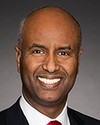
The Chair Liberal Ahmed Hussen

Thank you very much.

Next, we have MP Rood.

You have five minutes.

4:40 p.m.

Conservative

Lianne Rood Conservative Middlesex—London, ON

Canadians have a strong and proud history of engaging with developing African nations through projects like the Muskoka initiative under the last Conservative government. I've been lucky enough to be on the ground in Tanzania, for instance, and have seen first-hand the success stories and felt the gratitude of the residents and the women who have used the clinics for maternal and child care and the birthing centres.

This particular strategy that we're talking about today does not mention maternal, newborn and child health care. I'm curious why the strategy does not include continuing the Canadian legacy of maternal care.

4:45 p.m.

Assistant Deputy Minister, Africa Branch, Department of Foreign Affairs, Trade and Development

Cheryl Urban

Thank you very much for the question.

Indeed, Canada has a very proud history of investing in maternal and newborn child health. In fact, we've been doing that continuously and were doing so even before the Muskoka initiative; it forms the backbone.

The approach with the Africa strategy will always be to build on past Canadian investments and on the legacy of the good things we've done. That includes the leadership we've shown in gender equality and our investment in women and girls and in women's health.

Tanzania is a very good country to use as an example. Perhaps I could turn to Sara, but what I would say about our investments in health in Tanzania is that those are particularly sustainable, and we've been able to help strengthen health systems in Tanzania through investments. That's having a great benefit for women. Africa, as I think is well known, has terrible rates of maternal mortality, so there is a very big need for that.

4:45 p.m.

Director, Central and Southern Africa Bilateral Relations Division, Department of Foreign Affairs, Trade and Development

Sara Nicholls

Absolutely.

I'm so pleased that you've had a chance to see that work in action, because it's some of the best work that happens on the continent, with very strong Canadian partners as well.

If I could add to what our assistant deputy minister said, those investments in health are such a strong platform to stand on for dialogue with the government and in other spaces. The team at the high commission, working with the high commissioner, is very committed to engaging in that space and building on that strong legacy.

4:45 p.m.

Conservative

Lianne Rood Conservative Middlesex—London, ON

I'm just curious as to why it was not included in the strategy specifically. The strategy does not mention it. Is that just an oversight in the strategy?

4:45 p.m.

Assistant Deputy Minister, Africa Branch, Department of Foreign Affairs, Trade and Development

Cheryl Urban

No, it's not an oversight, because the strategy is about a pivot. What we're doing with the strategy is moving towards using international assistance to do more economic growth activities and trade and development.

Those are spaces that we did not use a lot of our international assistance for previously. It does not mean that we're holus-bolus leaving priorities or sectors that we've already invested in. There are a variety of areas in which we invest. In fact, the strategy itself does mention some of the history and the good practices that we've already undertaken. It is not the intention of the strategy to completely leave behind all past investments or priorities.

4:45 p.m.

Conservative

Lianne Rood Conservative Middlesex—London, ON

Thank you very much for that answer.

The strategy promises clearer results. I'm curious as to whether there will be a public country-by-country maternal newborn child health scorecard on maternal deaths, newborn deaths and vaccinations, and if it will be updated each year.

4:45 p.m.

Assistant Deputy Minister, Africa Branch, Department of Foreign Affairs, Trade and Development

Cheryl Urban

We can take note of the interest in having additional information in those areas.

4:45 p.m.

Conservative

Lianne Rood Conservative Middlesex—London, ON

Okay.

4:45 p.m.

Assistant Deputy Minister, Africa Branch, Department of Foreign Affairs, Trade and Development

Cheryl Urban

We certainly do work with partners to track development outcomes in the countries in which we're undertaking development assistance. We report on the results, even at the project level, of what we're investing in. As I mentioned, we have documents that we contribute to the estimates documents in our report on Canadian international assistance that comes out annually, where we try to provide granular-level examples of the results of our development investments.

I don't know if my colleagues have anything to add to that.

4:45 p.m.

Conservative

Lianne Rood Conservative Middlesex—London, ON

On that, are you able to tell us how much Africa strategy funding is explicitly earmarked for maternal, newborn and child health for the next five years, compared to Muskoka levels? Also, how will you protect those dollars from being reallocated?

4:45 p.m.

Assistant Deputy Minister, Africa Branch, Department of Foreign Affairs, Trade and Development

Cheryl Urban

Subsequent to this meeting, we can provide you with detailed information about past investments and the sectors to which those have been directed, but I cannot speak about where funds will go in the coming five years, because that is at the discretion of the department. It's a process to determine where we're going to put our international assistance investments, so that's an ongoing discussion.

4:45 p.m.

Conservative

Lianne Rood Conservative Middlesex—London, ON

Okay.

Thank you.

The last question I have is this: Could you let us know what the top African MNCH partner countries are and what their targets are for maternal and neonatal mortality reductions or skilled birth attendants?

4:45 p.m.

Director, Central and Southern Africa Bilateral Relations Division, Department of Foreign Affairs, Trade and Development

Sara Nicholls

I can speak to the top four, which are Tanzania, Mozambique, Ghana and Ethiopia.

4:45 p.m.

Conservative

Lianne Rood Conservative Middlesex—London, ON

Thank you very much.

The Chair Liberal Ahmed Hussen

Thank you very much.

Next, we'll go to MP Rob Oliphant.

You have five minutes.

Rob Oliphant Liberal Don Valley West, ON

Thank you, again, Chair.

Two words I don't like are “nexus” and “pivot”. I used “nexus” in my last question, and I'm going to use “pivot” in this question.

I want to get a bit more into the pivot you mentioned. There is something we're not communicating well enough, maybe to the opposition and maybe to Canadians, about the massive change this means. We're moving from a 20th-century model of charity and helping to a 21st-century model of mutual prosperity, mutual security and engagement as one-on-one, eye-to-eye, equal relationships, which is quite different for us. It doesn't necessarily mean fewer resources, but it does mean pivoting the resources to things that will create a mobile middle class, which will then become a venue for us to sell products to and provide opportunities for trade. I just want to poke a bit on that one first.

I'll give a heads-up on the second question. In the sixth pillar of the report, we talk about the engagement of African countries on the world stage and opening up multilateral fora for an appropriate proportional representation of African voices at the UN, at the UN organs and in multilateral fora. How are we going to do that?

The first one is a bit more on the pivot and the other one is a little more on the engagement of African countries in their rightful position on the world stage.

4:50 p.m.

Assistant Deputy Minister, Africa Branch, Department of Foreign Affairs, Trade and Development

Cheryl Urban

Okay, thank you very much.

In answering that question, maybe it's beneficial to talk a bit about the context within which we're working. Indeed, the pivot we're talking about is towards greater economic co-operation in our development relationships on the African continent. We know that even when we were consulting for the Africa strategy, that was what our interlocutors in Africa wanted. They wanted greater economic co-operation. We also know that globally, if you look at ODA levels, they are expected in 2025 to drop by 17%. ODA levels in general in the world are decreasing.

This has started a conversation. It's started a global conversation about how we do international assistance and how it can be the most effective. They're looking at different models. Definitely peer-to-peer, mutually beneficial models are a way in which we can look at undertaking development. That involves also bringing in the private sector and looking at innovative ways in which we undertake international development, for example, looking to impact investing and blended finance as ways in which we can undertake development from this point forward.

We can invest in things. For example, we can continue to invest in health, but we can do so in the way the world is coming to, which is making sure that the investments in development are sustainable. We can make sure that we are investing in institutions, so that they themselves have the capacity to undertake them over the long term and make the development benefits more sustainable over the long term. Also, I would say that the focus on trade and investment is something that African partners are looking for, and there's the feeling that those are ways in which they themselves can have control over their own development outcomes.

On the world stage, indeed, I mentioned in my opening remarks that Canada was a champion for making the African Union part of the G20, and we are pleased to see that that has taken place. We also see the benefit and appreciate that, whether Canada is assisting or not assisting, Africans have a greater voice in multilateral organizations. In fact, the whole landscape of multilateral institutions globally is evolving and changing, and the global south is demanding to have a greater voice.

One of the things we do is to provide instruction to our executive directors at international financial institutions, at the World Bank and at the development banks. We are talking to them about the reform of multilateral institutions, international financial institutions and development banks, so that they can—

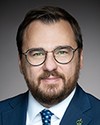
Rob Oliphant Liberal Don Valley West, ON

I want to get one last question in.

How has the strategy been received by African partners, particularly governments, in terms of state-to-state relations?

4:50 p.m.

Assistant Deputy Minister, Africa Branch, Department of Foreign Affairs, Trade and Development

Cheryl Urban

Since the release of the strategy, I would say in general what has been expressed to us is an appreciation that the Government of Canada has recognized that diplomatic relations with Africa are important. They are appreciative that there's a strategy that lays out a framework so that we can get down to business.

I would say additionally that they are impatient to get going. They are very enthusiastic. At missions and at headquarters, we are engaged with partners who really want to see the implementation.

Rob Oliphant Liberal Don Valley West, ON

Thank you.