Evidence of meeting #14 for Foreign Affairs and International Development in the 45th Parliament, 1st session. (The original version is on Parliament’s site, as are the minutes.) The winning word was diaspora.

A recording is available from Parliament.

On the agenda

Members speaking

Before the committee

Urban  Assistant Deputy Minister, Africa Branch, Department of Foreign Affairs, Trade and Development
Smith  Director General, Pan-African Affairs Bureau, Department of Foreign Affairs, Trade and Development
Nicholls  Director, Central and Southern Africa Bilateral Relations Division, Department of Foreign Affairs, Trade and Development
Steffen  Director General, West Africa and Maghreb Bureau, Department of Foreign Affairs, Trade and Development

Mario Simard Bloc Jonquière, QC

Thank you, Mr. Chair.

Thank you for your opening remarks, Mr. Smith.

I don't normally sit on this committee. I'm going to ask you a question that may seem a bit unusual to you.

I was in Sudbury a week ago, and I visited a nickel mine. It was explained to me that the main competitors for Canadian nickel mines are Chinese, but mostly African. Social dumping means that these competing mines are able to extract nickel at very low costs and drive prices down. If I'm not mistaken, the ore sells for $14,000 a tonne. That is a very low price.

In your strategy, are there any developments under way or measures to combat this phenomenon of social dumping? To strengthen economic development and partnerships, do you have any programs or initiatives that aim, on the one hand, through a public education component, to inform people about their rights and enable them to improve their working conditions and, on the other hand, to try, at the very least, to balance this economic functioning between the north and the south, which is often a problem?

3:55 p.m.

Director General, Pan-African Affairs Bureau, Department of Foreign Affairs, Trade and Development

Andrew Smith

As part of the strategy's implementation, there was the announcement of a trade and development program. I think you're touching on some important issues. In terms of dumping, there is very little we can do within Global Affairs to have an impact on the market price of minerals like nickel, but there is a lot we can do in terms of the way in which the minerals are produced. That's something we will certainly look at as we start to implement our trade and development program. We'll be looking at the enabling environment for the development of, in this case, mineral production, whether that be labour standards or other forms of human rights assurances as investments take place, either Canadian investments or other support to a local government.

I would just say that Canada has a very strong reputation globally when it comes to questions about ESG standards. The “towards sustainable mining” standards that have been established by the Canadian Mining Association are very well regarded globally, and we would see them being implemented through our work in Africa.

Mario Simard Bloc Jonquière, QC

Thank you.

I mentioned this because some things seem to have changed between the time you implemented this strategy and the tabling of the 2025 budget, when the government announced its intentions. I don't know if you heard what Prime Minister Carney, said about the budget. He said that he wanted Canada to compete with China in the critical minerals sector and become a global supplier that would be a little more ethical than some other countries. In that context, have you changed your approaches, or is this something you can focus more on?

I understand that a strategy is something that evolves and must be transformed. Is there a feedback loop that is activated when you implement a particular strategy? Is there a way to review the practices you've put in place to respond to changing interests and issues?

4 p.m.

Assistant Deputy Minister, Africa Branch, Department of Foreign Affairs, Trade and Development

Cheryl Urban

To begin, I would say that in the implementation of a strategy, it would be very important to make sure that it remains current with the challenges of today. As I mentioned in my opening remarks, since its release in March 2025, we have already seen the change in global conditions.

The implementation of the strategy is being done in real time. It's being done at headquarters but also by each of our embassies and our heads of mission, who are looking on the ground every day and considering what the current reality is, adjusting and selecting priorities and approaches.

4 p.m.

Director General, West Africa and Maghreb Bureau, Department of Foreign Affairs, Trade and Development

Susan Steffen

I can add to that.

In Africa, when it comes to China, there is very often talk of illegal and artisanal extraction, which causes many problems for the people involved in these activities. That's where competition in the form of dumping can occur. We are therefore focusing much of our efforts on mining issues.

Illegal and artisanal extraction also causes environmental problems. The African governments themselves are increasingly asking us to work on this issue because it causes them security problems and it's a source of frustration for their market.

Mario Simard Bloc Jonquière, QC

I don't want to interfere with the committee's study, but if you have any additional information on this, could you submit it to the committee? It could be interesting.

I want to quickly go back to your strategy, because I think I'm running out of time.

Africa is a very diverse cultural environment. I would like to talk to you mainly about the language issue. Do you have different approaches in French-speaking and English-speaking Africa? In your opening remarks, you talked a bit about the International Organisation of La Francophonie. I guess your approaches are tailored to French-speaking Africa, and then—

4 p.m.

Liberal

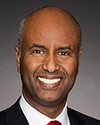
The Chair Liberal Ahmed Hussen

We're over time. Give a very brief response, and then we'll have to move on.

4 p.m.

Director General, West Africa and Maghreb Bureau, Department of Foreign Affairs, Trade and Development

Susan Steffen

All our approaches are modulated and tailored according to the context of each country, whether it is French-speaking, English-speaking or Portuguese-speaking, or whether none of these three languages are spoken there, such as in Ethiopia.

The contexts and forums in which we interact with these countries are different. There is the International Organisation of La Francophonie, which brings together 27 African countries. So it's a good forum for interacting with these countries.

4 p.m.

Liberal

The Chair Liberal Ahmed Hussen

Thank you very much.

Next we have Ziad Aboultaif.

You have five minutes.

4 p.m.

Conservative

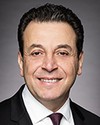
Ziad Aboultaif Conservative Edmonton Manning, AB

Thank you, Mr. Chair.

Ms. Urban and your colleagues, thanks for appearing before committee.

One in five workers at Global Affairs will lose their job. For some, this could be before December of this year. How's that going to affect the Africa strategy and the Africa mission in general?

4 p.m.

Assistant Deputy Minister, Africa Branch, Department of Foreign Affairs, Trade and Development

Cheryl Urban

Global Affairs Canada is one among almost all federal ministries that are going to be undertaking that reduction exercise, understood within a context of current Canadian economic conditions.

When we are looking at undertaking those reductions, it's certainly an exercise that we're doing with regard to making sure that the resources that remain are aligned with what our priorities are. As I was mentioning earlier, in order to deliver on the Africa strategy, it's quite simply a question of understanding where the priorities are for us in order to deliver and where that means we need to keep or move our resources to operate within that framework.

4:05 p.m.

Conservative

Ziad Aboultaif Conservative Edmonton Manning, AB

Speaking of which, you mentioned priorities. I'm keen on priorities.

What are the priorities since we did the Africa strategy in the last Parliament? I believe that there were a lot of recommendations to focus rather than go all over the map in Africa. You must have taken this report into consideration. We know that, in March of this year, I believe, the Africa strategy was released.

Where are the priorities, and where is the focus? Between the job cuts and being effective on such an important strategic market and plan for us, how are you going to balance that? Where is the focus going to be? I'm curious to know.

4:05 p.m.

Assistant Deputy Minister, Africa Branch, Department of Foreign Affairs, Trade and Development

Cheryl Urban

The Government of Canada has been very clear about what its focus is with the seven missions that have come from the Prime Minister.

Within the ministry of Global Affairs Canada, we understand what that means for us in terms of our international engagement. We know we need to be working towards enhancing Canadian economic and security interests and advancing Canadian sovereignty. We have a clear mandate to focus on trade diversification.

We know our engagement in Africa is part of that priority. While the government today is focusing on markets in Indo-Pacific and Europe, this is where we have Canadian engagement at present. We also know that operating in Africa is part of that prioritization and that we have a role to play in focusing on economic co-operation through various means by which we engage. We—

4:05 p.m.

Conservative

Ziad Aboultaif Conservative Edmonton Manning, AB

I'm sorry to cut you off.

As the assistant deputy minister, Africa branch, would you be able to share with us a specific project or projects that the government is working on in order to make the success of the Africa strategy something Canadians can hear some good news about? If there's anything that you can name right now, it would be very beneficial. I know the government is working, but you are part of the government, and you have an important job.

We would like to hear some news from you on that.

4:05 p.m.

Assistant Deputy Minister, Africa Branch, Department of Foreign Affairs, Trade and Development

Cheryl Urban

Sure.

I've already talked to you about some of the initiatives we've undertaken.

Perhaps what you're getting at is this: What this government needs, right now, are deals. What it needs are concrete opportunities, including for the Canadian private sector, so it can truly advance its economic agenda.

4:05 p.m.

Conservative

Ziad Aboultaif Conservative Edmonton Manning, AB

Is there a specific project or specific country you can name? This week, the Prime Minister is in Abu Dhabi. We know this can be good news for, hopefully, the AI industry.

What will be in Africa, and where and how? Where's the focus? I think that is very important to know, rather than the overall generic news about where we're going.

4:05 p.m.

Assistant Deputy Minister, Africa Branch, Department of Foreign Affairs, Trade and Development

Cheryl Urban

I'm happy to provide you with an example. It's not just one country. There are a few countries that come to the top when we're looking at the potential of having real deals.

As an example, we've been working quite a bit with South Africa in the context of G20 and G7 presidencies. We've had numerous meetings at the leader level and the foreign minister level. The Prime Minister is travelling to Johannesburg. He's going to be attending the G20. It's very likely that there will be bilateral meetings held at the leader level there. Canada and South Africa have been working together on developing an ambitious economic agenda to advance both of our economies.

4:05 p.m.

Conservative

Ziad Aboultaif Conservative Edmonton Manning, AB

I'm sorry. Is it in AI? Is it in mining? Is it in oil and gas? Is it in education?

Can you name something?

4:05 p.m.

Assistant Deputy Minister, Africa Branch, Department of Foreign Affairs, Trade and Development

Cheryl Urban

I don't want to get ahead of any kind of news release that comes out after the G20 meeting.

What I can say is that they are working on concrete elements of that agenda. I can say specifically that, if you look at the link between the G20 and G7 presidencies, there are joint priorities in the areas of AI, critical minerals and wildfire. There are joint areas, including a joint interest in increasing investment between the countries.

The Chair Liberal Ahmed Hussen

You're over the time, sir, unfortunately.

Next, we have MP Rob Oliphant.

You have five minutes.

Rob Oliphant Liberal Don Valley West, ON

Thank you, Chair.

Thank you to the witnesses for coming. Thank you for the work you did.

I have several thank yous. One thank you is for taking seriously the work of this committee in the development of the strategy. There were two tandem processes going on. There was one here, around this table, where we heard from witnesses, and there was the process that was happening at Global Affairs, with approximately 600 representations, consultations and written submissions. That was a lot. Thank you for taking parliamentarians seriously.

I could follow up on Mr. Aboultaif's questions. What I would cite first as the most significant change is the development of a trade hub. While we don't get deals done, it's been six months or seven months—we had an election in the middle of this and we had many things go on in summer—but the trade hub is up and running. I can give you a few minutes on that.

What I am hearing in the community, from both Africans and Canadians, is that they now have a place to go and they now have a sense that there is one-stop shopping. They're able to bring together a bunch of different players in the nexus—I don't like that word—of bringing all of those things together. That is one thing.

In terms of deals, those come. They can come in agri-food, mining, construction, infrastructure and a variety of things that Canada has expertise in.

I want to push a bit on the diaspora. You mentioned it in your remarks, but among the things we—I have to say we—identified were the strength and the comparative advantage Canada has compared to other countries. In the struggle and the so-called scramble for Africa are the Canadian diaspora communities from every part of Africa. We have citizens, business people, academics, organizations, institutions, francophones, anglophones, lusophones and others who are in universities, business associations and trade groups. One of the imaginings was that we would find a home for them.

We have a trade hub, but we talked about finding a way to not have random or ad hoc conversations with diaspora African Canadians who showed up. Rather, we need to try to make a system of it whereby Canadians who have African roots have a place to go, like the trade hub, to say, “These are our ideas and these are our connections. We have the language capacity, the cultural capacity, experience and all the things.”

Can you talk a bit about how we're going to do that?

4:10 p.m.

Assistant Deputy Minister, Africa Branch, Department of Foreign Affairs, Trade and Development

Cheryl Urban

The trade hub has been quite game-changing for Global Affairs Canada and our ability to engage on trade issues. The team is busy prioritizing markets, taking into consideration Canadian strengths and Canadian sectors that can be engaging with interlocutors.

On the diaspora, we committed to developing a diaspora engagement mechanism. I'll turn to my colleague, Drew Smith, who can talk to you a bit more about some of the activities of our trade hub, how we've been able to leverage that, and what we can look forward to in engaging more systemically with the diaspora. In the lead-up to the strategy, we learned how valuable it is to have an ongoing dialogue with diaspora communities.

4:10 p.m.

Director General, Pan-African Affairs Bureau, Department of Foreign Affairs, Trade and Development

Andrew Smith

Before moving to the trade hub, I would note that the diaspora relationship is very much multi-faceted. Noting the recommendation from this committee that informal engagement—as well as more formal, structured, ongoing strategy implementation engagement—with the diaspora is important, it's central to how we're looking at the relationship with the diaspora. We're seeing that diaspora relationship play out in many areas of the work we're doing to implement the strategy.

On the trade hub, as Cheryl just mentioned, market prioritization is very important. It's come up in other questions today how we take the strategy and move from Africa to important countries and regions, whether we're talking about trade and investment or peace and security. Central to the work we're doing right now is trying to establish where those priority markets are and how we want to engage.

The budget has provided expanded tools for us to engage through the trade hub to support Canadian enterprises looking to get into the African market. This is where the diaspora is very important. We can work in Canada with the Canadian diaspora community that is engaged in commercial relationships with Africa or looking to expand into and export to Africa.

The Chair Liberal Ahmed Hussen

Thank you very much.

Mr. Simard, you have the floor for two and a half minutes.

Mario Simard Bloc Jonquière, QC

Thank you very much, Mr. Chair.

With the aim of strengthening your ties, diplomatic commitments and interpersonal relationships, the academic community is an excellent vehicle for exchanges between countries, as is the scientific community.

In my former life, at the Université du Québec à Chicoutimi, several of my colleagues maintained relations with African universities. To my knowledge, these were never structured by the government. They were initiatives that came more from the professors themselves in their specific fields of research.

Are there elements in your strategy that can support these initiatives, which would benefit everyone involved in academic exchanges?