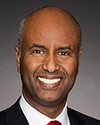
Evidence of meeting #18 for Foreign Affairs and International Development in the 45th Parliament, 1st session. (The original version is on Parliament’s site, as are the minutes.) The winning word was investment.

A recording is available from Parliament.

On the agenda

Members speaking

Before the committee

Ben Marc Diendéré  Ambassador, Permanent Observer African Union and Canada’s Special Envoy for Africa, Department of Foreign Affairs, Trade and Development
Clark  Director General, Central, Southern and Eastern Africa Bureau, Department of Foreign Affairs, Trade and Development
Steffen  Director General, West Africa and Maghreb Bureau, Department of Foreign Affairs, Trade and Development
Kerr  Chief Executive Officer, Development Finance Institute Canada (DFIC) Inc.

4:45 p.m.

Chief Executive Officer, Development Finance Institute Canada (DFIC) Inc.

Lori Kerr

In the Canadian context, obviously we collaborate with Global Affairs Canada on the development side. We have a partnership with them, and I can explain that.

In terms of collaborating with local governments, the work that we do is with and through the private sector. That's our primary client base, and that's who we have most of our engagement with.

4:45 p.m.

Conservative

Shelby Kramp-Neuman Conservative Hastings—Lennox and Addington—Tyendinaga, ON

Can you speak to the threat that organizations like the Rapid Support Forces or Boko Haram pose to gender equality? Do you feel like these organizations and other terrorist groups pose any threat or difficulties in delivering programming on the continent?

4:45 p.m.

Chief Executive Officer, Development Finance Institute Canada (DFIC) Inc.

Lori Kerr

I think that would be a great question for colleagues at Global Affairs Canada to answer.

4:45 p.m.

Conservative

Shelby Kramp-Neuman Conservative Hastings—Lennox and Addington—Tyendinaga, ON

That's perfect. Thank you.

What can governments do to alleviate additional security threats or issues, or is that also a question for Global Affairs Canada?

4:45 p.m.

Chief Executive Officer, Development Finance Institute Canada (DFIC) Inc.

Lori Kerr

Yes, thank you. That would be more for Global Affairs Canada.

4:45 p.m.

Conservative

Shelby Kramp-Neuman Conservative Hastings—Lennox and Addington—Tyendinaga, ON

Can you speak to whether or not there's been any discussion with the new government to shift the primary lens from gender equality and the environment to any other issues?

4:45 p.m.

Chief Executive Officer, Development Finance Institute Canada (DFIC) Inc.

Lori Kerr

As a public policy mechanism of the Government of Canada, our mandate is to align with Canadian international assistance priorities. We manifest that through our internal strategy and our corporate plan.

The strategy that we're putting forward continues to have the three impact goals that I mentioned: climate and nature action, gender equality and women's economic empowerment.

Shelby Kramp-Neuman Conservative Hastings—Lennox and Addington—Tyendinaga, ON

Thank you.

Can you acknowledge whether or not the Chinese or Russians are involved at all in the gender equality space on the continent?

4:50 p.m.

Chief Executive Officer, Development Finance Institute Canada (DFIC) Inc.

Lori Kerr

I'm not in a great position to answer that question.

4:50 p.m.

Conservative

Shelby Kramp-Neuman Conservative Hastings—Lennox and Addington—Tyendinaga, ON

Thank you.

In your introduction that was prepared, you suggest that sub-Saharan Africa represented 40% of FinDev Canada's portfolio in 2024. By sector, 59% of its portfolio was in the financial industry, 22% in sustainable infrastructure, and 18% in agribusiness and forestry value chains. FinDev Canada's most recent annual report shows $55.6 million in net financing and investment income in 2024.

I'm just curious if you could elaborate. What does the $55.6 million mean? What does it count for? Could you go into a little more detail on that $55.6 million?

4:50 p.m.

Chief Executive Officer, Development Finance Institute Canada (DFIC) Inc.

Lori Kerr

Are you talking about the $56-million net financing investment income?

4:50 p.m.

Conservative

Shelby Kramp-Neuman Conservative Hastings—Lennox and Addington—Tyendinaga, ON

That's correct.

4:50 p.m.

Chief Executive Officer, Development Finance Institute Canada (DFIC) Inc.

Lori Kerr

That's the demonstration of FinDev Canada's sufficiency and effectiveness as a development finance institution. When we make investments and we provide loans, we expect to be repaid with interest on our loans and with a return on equity on the investment. The income that we're making more than offsets all of my administrative costs in the organization. It's a show of financial effectiveness and that we're good stewards of the Canadian government capital that's been invested in us.

4:50 p.m.

Conservative

Shelby Kramp-Neuman Conservative Hastings—Lennox and Addington—Tyendinaga, ON

Thank you.

I'm going to pass the last minute and a half to my colleague.

4:50 p.m.

Conservative

Lianne Rood Conservative Middlesex—London, ON

Thank you very much.

I'm going to ask you the same question I asked in the first panel. How are you increasing blended finance opportunities, and is there a goalpost to reach?

4:50 p.m.

Chief Executive Officer, Development Finance Institute Canada (DFIC) Inc.

Lori Kerr

Indeed, blended finance is a tool that's in FinDev Canada's tool kit. It's a very important instrument that we have. We have two concessional finance facilities, both funded by the government. The first one of $76 million that was provided in 2021 focused on gender equality.

The second one, the $700-million concessional finance facility that we have, is really focused on private capital mobilization. Through this facility, we're looking to increase risk sharing with the private sector in order to mobilize more investment within and into emerging markets. Private capital mobilization is indeed a goal of FinDev Canada. We do so on our own balance sheet as well as with this very useful tool of concessional finance where we provide blended finance solutions.

4:50 p.m.

Conservative

Lianne Rood Conservative Middlesex—London, ON

Thank you. I'll leave it there.

The Chair Liberal Ahmed Hussen

We will go next to Rob Oliphant.

You have six minutes.

Rob Oliphant Liberal Don Valley West, ON

Thank you, Mr. Chair.

Thank you to all the folks at FinDev Canada for what you do.

I want to lift us out of the weeds a little bit.

I don't know this for sure, but I think that, in 2017-18, there were discussions that looked at perhaps limited scarce resources on the development side in our world, not just in Canada but around the world, and there was an idea that we should change the way we do that to ensure that we have a development footprint and that we do it with a revolving fund of financing. I think, however, it's not just because of less money, but it's a better way to do development.

I would like your thoughts on this. It's not just about scarcity; it's about empowerment, engagement, mutual respect and understanding of how we deal with partners in developing countries. Obviously, Africa is the lion's share of any one region, but generally, am I right that there are collateral benefits to doing this that aren't just about scarce money?


4:50 p.m.

Chief Executive Officer, Development Finance Institute Canada (DFIC) Inc.

Lori Kerr

Indeed, I would agree. I would say that development finance is a distinct tool in the broader development tool kit that Canada has. There are aid and humanitarian assistance and many things and other more commercially oriented tools as well, but development finance is really uniquely placed. We provide a bridge to commercial opportunity. We have a high-risk appetite with the traditional commercial capital, and we're really trying to pave the way for opportunities contributing to shared prosperity, to economic growth, to climate action and to social progress. All of these benefits in emerging markets then have benefits back to Canada.

It's uniquely placed in that there's a return on that investment, not just financially, as we talked about before. We're an efficient instrument because we're covering our costs, but it's also a very effective instrument in terms of building relationships and working in partnership with the countries, the markets, that we serve.

Rob Oliphant Liberal Don Valley West, ON

In terms of partnerships, there are bilateral partnerships that we obviously have. There are partnerships with enterprises of a variety of sizes. There are also, as you mentioned, multilateral development banks, and I'm assuming the African Development Bank is where we are a shareholder, but what is our relationship with that?

4:55 p.m.

Chief Executive Officer, Development Finance Institute Canada (DFIC) Inc.

Lori Kerr

With the African Development Bank, we've been looking for opportunities to collaborate with them. In fact, one transaction where we did collaborate with them was a transaction called BOAD, the Banque Ouest Africaine de Développement, which is the West African Development Bank, alongside the African Development Bank and our Italian development finance institution counterpart as well. We provided a loan to support their lending activities for small and medium-sized enterprises in agribusiness and renewable energy. We look for opportunities to collaborate with the African Development Bank and other bilateral development finance institutions that are active on the continent.

Rob Oliphant Liberal Don Valley West, ON

You mentioned the Italian equivalent. Are there others? I'm also wondering where we fit in that pack in terms of capitalization: How good are we?

Voices

Oh, oh!

Rob Oliphant Liberal Don Valley West, ON

Boast for a minute, if you want.