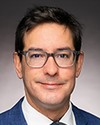
Good morning. My name is Mark Richardson, and I am the director general of the Central America and Caribbean bureau at Global Affairs Canada. As the chair said, I'm joined by my colleague Ian Myles, the executive director of the Haiti division.
Today, I will provide an overview of the situation in Haiti as well as Canada’s response.
The situation in Haiti is dire. Since the assassination of President Moïse in 2021, the country has plunged into a deep and multi-faceted crisis. It is now at a critical point as gang violence and chaos continue to escalate.
Despite the courageous efforts of the Haitian National Police and the Kenya-led Multinational Security Support Mission, or MSSM, gangs now control over 90% of the capital and are expanding their hold to other parts of the country.
The gangs are exceptionally well funded and equipped through kidnapping, extortion and drug and weapons trafficking. They have become increasingly brutal. They recruit children and use sexual violence, massacres and intimidation to assert control. More than 8,700 people have been killed since 2024 alone.
The political situation is similarly challenging. The mandate of the transitional presidential council, established in April 2024, is set to expire in February. It is increasingly unlikely that credible elections will be held before then.
Haitian citizens are bearing the brunt of this crisis. Over half of the population urgently needs humanitarian assistance, and over 1.3 million are internally displaced by the violence.
The crisis also has impacts beyond Haiti, including for Canada's own national interests and those of Haiti's neighbours. Haiti's instability creates ideal conditions for transnational crime to thrive. Illicit flows of money, drugs and weapons are expanding, and Haitian gangs are building ties to criminal networks in the region and even in Canada. Desperate conditions are driving irregular migration as Haitians seek safety and opportunity elsewhere, and the extremely high-risk business environment is hindering economic recovery.
Canada's response to the crisis has been comprehensive and supported by multiple departments and agencies. Since 2022 we've invested over $450 million towards peace and security, humanitarian and development initiatives. On the security front, both the Canadian Armed Forces and the RCMP have played important roles in delivering equipment, initiatives, training and logistical support for the MSSM and the Haitian National Police. Despite the challenging operational environment, dedicated Canadian and international organizations continue to work hard to alleviate suffering, provide basic services and fight corruption and human rights abuses. Among other things, for example, Canadian international assistance helped deliver daily hot meals to over 100,000 schoolchildren last year.
As we approach the expiry date of the MSSM's mandate on October 2, the international community is at a crossroads and must chart a new path forward. To this effect, the U.S. and Panama recently tabled a UN Security Council resolution that would replace the MSSM with an expanded international force supported by a robust UN support office. The goal is to better leverage the UN's unique expertise in operational capacity to help stabilize Haiti.
Canada is currently engaging in intensive diplomatic advocacy to support the resolution. For example, later this afternoon the honourable Minister of Foreign Affairs, Minister Anand, will co-chair a high-level meeting on Haiti at the UN General Assembly to further galvanize international support.
I will now switch to French.
While building stability remains the immediate priority, Canada continues to work with its Haitian and international partners to address the root causes of the recurring crises in Haiti. This includes fighting corruption, as well as efforts to strengthen and reform the economy, the justice system and the security sector.
I want to thank the committee members for their attention and commitment to this important and ever-evolving issue.
Thank you.