Thank you.
Mr. Brunelle‑Duceppe, you have the floor for two and a half minutes.

Evidence of meeting #2 for Foreign Affairs and International Development in the 45th Parliament, 1st session. (The original version is on Parliament’s site, as are the minutes.) The winning word was gangs.
A video is available from Parliament.
Liberal
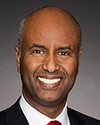
The Chair Liberal Ahmed Hussen
Thank you.
Mr. Brunelle‑Duceppe, you have the floor for two and a half minutes.
Bloc
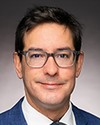
Alexis Brunelle-Duceppe Bloc Lac-Saint-Jean, QC
There is one topic that everyone wants to avoid when talking about the situation in Haiti, and that is arms trafficking. The main reason gangs are so powerful in Haiti is that they have access to weapons and munitions. It's estimated that about 90%—if not 100%—of those weapons and munitions come from the U.S.
First, I think we could target the gangs' access to weapons. However, if our American partner doesn't take action to prevent access to these weapons, we'll never solve the security problem resulting from the power of gangs in Haiti.
Is the Canadian government putting pressure on its American partner to do everything in its power to stop arms trafficking?
Cutting off the gangs' access to weapons and munitions is probably the key to making the entire country of Haiti safe.
September 23rd, 2025 / 11:45 a.m.
Director General, Central America and Caribbean Bureau, Department of Foreign Affairs, Trade and Development
We know that arms trafficking is a very serious problem, a huge challenge in Haiti.
The efforts of the Government of Canada so far have focused on training customs officers to help them find and—
Bloc
Alexis Brunelle-Duceppe Bloc Lac-Saint-Jean, QC
I'm so sorry to interrupt. I don't mean to be rude, but unfortunately I only have two and a half minutes.
The problem comes from the United States. I think the way to halt arms trafficking is through political pressure from the Government of Canada on its American neighbour.
First, do we know if the Government of Canada is in talks with the U.S. government about arms trafficking?
Second, in your opinion, is cutting off the gangs' access to weapons the key to a safer Haiti?
Executive Director, Haiti Division, Department of Foreign Affairs, Trade and Development
I thank the member for his question.
I think it's no secret that a large portion of the weapons, almost all of them, in fact, come from the United States. The U.S. government doesn't deny that. I think the Americans are becoming more and more aware of it. They hear about it from us, as well as from everyone around the table. I think that on the U.S. side, the solutions are also complicated.
In the meantime, as part of Canada's G7 presidency, we are working to strengthen our joint efforts in support of the Caribbean countries to improve maritime surveillance.
We know it's only part of the solution, but we believe it's really an important part.
Liberal
The Chair Liberal Ahmed Hussen
Thank you, Mr. Brunelle‑Duceppe and Mr. Myles.
We have next MP Lianne Rood. You have five minutes.
Conservative

Lianne Rood Conservative Middlesex—London, ON
Thank you, Mr. Chair.
Thank you so much, witnesses, for being here today.
I know some of my colleagues have asked this question previously. We know that resources are scarce, and I think we can all agree that what aid is present should not fall into the hands of criminals. Along those lines, we know that nearly half of all Haitians are facing acute hunger.
How does the government assess whether its current contributions to food assistance are effectively reaching the most vulnerable populations and actually improving food security on the ground?
Director General, Central America and Caribbean Bureau, Department of Foreign Affairs, Trade and Development
International assistance has been a key part of our effort up to right now. Through the more than $450 million that we have provided Haiti since 2022, a key element of that has been focused on food security in terms of delivering emergency food assistance to over one million people; providing daily hot meals to schoolchildren, as I mentioned in my opening statement; and also providing training to Haitian farmers to help them increase their productivity of a variety of key products.
Ian, I don't know if you would like to add to that.
Executive Director, Haiti Division, Department of Foreign Affairs, Trade and Development
I think nuance is important as well. We often speak of the gangs controlling 85% to 90% of the capital. It really is influence that they have in that area. In terms of the actual space, it's estimated that it's 40% to 50% that they control fully. The others are areas where they're active and where they can actually pose a danger and an influence. That does mean that there are parts of the capital we can access through humanitarian assistance. Some are easier than others.
It also is important to remember that most of the country is not under the control of the gangs. It's really concentrated in the capital and some of the outlying areas. In terms of our development assistance and our humanitarian assistance, much of it is targeting people in other parts of the country who otherwise will be cut off because they also rely on the capital for their ports, imports and so on.
Conservative
Lianne Rood Conservative Middlesex—London, ON
It's great that you mentioned the fact that the ports are in the capital and that the capital is controlled by the gangs. I'm just curious.... There have to be ongoing food supply chain disruptions because of the gang violence in the ports, and that obviously is causing instability with the supply chain.
What steps is Canada taking to ensure sustainable access to food rather than just providing short-term emergency aid?
Executive Director, Haiti Division, Department of Foreign Affairs, Trade and Development
The supply of food is a critical area. There's food that comes in through ports, but there's also food that's grown within Haiti, and they're both important. The ports are not all located in Port-au-Prince, though the biggest ones are, and they're not fully controlled by the gangs either. They're part of that territory that is highly subject to risks in getting in and out. There is, however, food coming in and out of that port—mostly into that port—and that's been critical. It's the same thing with other essential supplies. That's been one of the advantages of this multinational support mission that's helped the Haitian police to secure some of those routes, but they're not fully secured, and that's definitely a source of concern.
We do have longer-term development projects aimed at enhancing livelihoods and promoting climate-smart agriculture through drought-resistant crops and so on. That's been critical to help ensure food supplies in other parts of the country. Even one of our largest programs, done with the World Food Programme, which is about school feeding programs, is sourcing most of that food from local producers, so there's actually an economic benefit to that as well.
Conservative
Lianne Rood Conservative Middlesex—London, ON
Thank you very much.
Food is part of the overall health and well-being of the folks there in Haiti.
After the targeted attack on one of its convoys in March 2025, Doctors Without Borders, given the deteriorating security situation in downtown Port-au-Prince, withdrew from an emergency centre and a trauma hospital. Quickly, to what extent are international humanitarian organizations currently able to operate in Haiti?
Director General, Central America and Caribbean Bureau, Department of Foreign Affairs, Trade and Development
That's an excellent question, and that is one of our concerns. One of our primary interests and one of the needs that we recognize is to restore stability so that international organizations like Doctors Without Borders and others can safely operate in Haiti.
Liberal
The Chair Liberal Ahmed Hussen
Thank you very much.
We will now move to Ms. Anita Vandenbeld, please.
Liberal

Anita Vandenbeld Liberal Ottawa West—Nepean, ON
Thank you very much, Mr. Chair, and thank you to our officials.
I want to ask a bit on the development and humanitarian side of things.
I know that not only is Canada one of the largest donors, but we have also used our influence to be first in a number of areas and then leverage other countries. For instance, concerning the UNDP basket fund for security, we were one of the first to come in at scale, and I'd be interested to know the impact that's had on other donors following suit.
More particularly, I know that sexual exploitation was mentioned earlier. During the previous G7 presidency, Canada initiated the Whistler declaration, which then led to codes of conduct and accountability in the area of sexual exploitation done by international organizations.
I was wondering if you could comment on the leadership role that Canada is playing, not just in the dollar figures but as a country that has come in at scale early on in multiple different areas, including the food you mentioned and the localization of the food system. Could you talk about Canada's impact on getting other countries to also come in at scale?
Director General, Central America and Caribbean Bureau, Department of Foreign Affairs, Trade and Development
I think that's an excellent question from the member in terms of the role that we can play in mobilizing. Historically, Canada has played that role in Haiti, and we have seen success in terms of bringing in other countries. We are currently the second-largest donor in Haiti and have also helped to encourage some of our G7 members, the OAS and other members of the UN to get engaged. In terms of the specific numbers, I turn it to my colleague Ian to cover those.
Executive Director, Haiti Division, Department of Foreign Affairs, Trade and Development
The question of leadership is critical, particularly in Haiti, because there aren't that many players. There are not many countries that maintain embassies, let alone direct bilateral development programs.
We've often found ourselves working heavily with multilateral organizations, and that's been very helpful. In that sense, we've often been able to leverage those multilateral organizations, because they often don't have the resources to do everything from their side, but there are not too many other players there to get them on board, so that's a bit of a challenge.
From our side as well, we have regular program evaluations, and one of the frequently recurring recommendations is to focus, because there's a really high chance of dispersing our efforts.
Increasingly, we've tried to work on trying to address root causes, so when we talk about security, we're talking about the immediate crisis, but ultimately, as one of the members mentioned earlier, we need to address root causes, and that brings us to the area of governance.
Liberal
Anita Vandenbeld Liberal Ottawa West—Nepean, ON
Thank you very much.
I also want to talk about that intersection between humanitarian aid and security and, in particular, reference the same report that my colleague Mr. Brunelle-Duceppe mentioned in the subcommittee on human rights. We heard a lot of testimony about the situation of adolescents and youth, who, because of the humanitarian situation, not enough food at home and not being able to support themselves, end up in orphanages even if they're not orphans. They get recruited as gang members. The pipeline into the gangs starts from the humanitarian side of things. Also, for a lot of the girls, there's transactional sex and recruitment into sex work.
I wonder if you could comment a little about the work that we and others are doing to make sure we aren't losing an entire generation of young people in Haiti because of this conflict.
Executive Director, Haiti Division, Department of Foreign Affairs, Trade and Development
The member has touched on a key area that we really struggle with. It's an immediate issue in terms of the ongoing recruitment of young people—as you say, extorted sex and so on from often very young, vulnerable people. Also, there's the sense that if we succeed in our efforts to stabilize the country, we need livelihoods for those people. We need to help them to reintegrate into society. Many of them have witnessed atrocities; many of them have committed atrocities. We're conscious that this creates mental health challenges as well as very tangible economic challenges.
One of the key partners that we've been working with, or at least comparing notes with, is UNICEF. They are very conscious of this. We look at them as one of the leading thinkers in terms of how you breach that, because it is an immediate problem as well as a future problem.
Liberal
The Chair Liberal Ahmed Hussen
Thank you very much.
We will now begin our third round of questioning, beginning with MP Kramp-Neuman.
Conservative

Shelby Kramp-Neuman Conservative Hastings—Lennox and Addington—Tyendinaga, ON
Thank you.
I think over the next several minutes I'm going to do some follow-up, because there have been lots of really good questions here.
I will just touch base on a question that my colleague from the Bloc posed. Was the CAF operations capacity playing a role in the decision not to put boots on the ground earlier?
Director General, Central America and Caribbean Bureau, Department of Foreign Affairs, Trade and Development
I cannot speculate on that question. That's not something I'm aware of.
My understanding is that in looking at our options and what was being asked of us at the time, and in talking to our various stakeholders both here in Canada and in Haiti, we came to the conclusion that our efforts were best focused on trying to galvanize support from the international community, as well as continuing to do what we were doing in terms of international assistance in Haiti.
Conservative
Shelby Kramp-Neuman Conservative Hastings—Lennox and Addington—Tyendinaga, ON
I'm understanding that many observers are pointing out that the Canadian Armed Forces are suffering a widening commitment capability gap. I was just curious on what the view of the department was on that capacity.
Director General, Central America and Caribbean Bureau, Department of Foreign Affairs, Trade and Development
Just to clarify, you were asking me to comment on Canadian Armed Forces capacity. Okay.
Unfortunately, that's not within the purview of the ministry of Global Affairs Canada to comment on that. That would need to be someone from the Department of National Defence or the Canadian Armed Forces themselves.