Evidence of meeting #2 for Foreign Affairs and International Development in the 45th Parliament, 1st session. (The original version is on Parliament’s site, as are the minutes.) The winning word was gangs.

A video is available from Parliament.

On the agenda

Members speaking

Before the committee

Richardson  Director General, Central America and Caribbean Bureau, Department of Foreign Affairs, Trade and Development
Myles  Executive Director, Haiti Division, Department of Foreign Affairs, Trade and Development

12:40 p.m.

Director General, Central America and Caribbean Bureau, Department of Foreign Affairs, Trade and Development

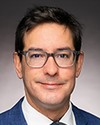
Mark Richardson

To the best of my knowledge, the situation continues to be extremely fluid in terms of how the gangs are operating. As we've commented previously, there are ties to the elites. There are different alliances at different times, depending on the interests of the gangs themselves.

At this point, I will turn to Ian to see if he has anything else to add on that point.

12:40 p.m.

Executive Director, Haiti Division, Department of Foreign Affairs, Trade and Development

Ian Myles

I can say only that this is certainly something that's followed very closely by the different law enforcement and intelligence agencies.

12:40 p.m.

Conservative

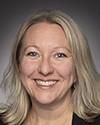
Shelby Kramp-Neuman Conservative Hastings—Lennox and Addington—Tyendinaga, ON

This may be a pipe dream, but I'll follow up on a question from my colleague. Beyond immediate humanitarian assistance, too often we look at the short term. I'm just curious whether you're familiar with or comfortable with sharing what Canada's long-term plan would be for supporting governance, rebuilding institutions and ultimately reducing Haiti's dependency on external aid?

September 23rd, 2025 / 12:40 p.m.

Director General, Central America and Caribbean Bureau, Department of Foreign Affairs, Trade and Development

Mark Richardson

That's an excellent question. Oftentimes we get accused of being too forward-looking, in fact, and not focused enough on what's happening immediately.

In terms of the international assistance and our engagement strategy with Haiti, it has been developed in such a way that it does try to look long term to try and address the security stabilization piece, but also to build up robust democratic institutions and a judicial system that works and to support social services to Haitians that actually give them the services that they need.

12:40 p.m.

Conservative

Shelby Kramp-Neuman Conservative Hastings—Lennox and Addington—Tyendinaga, ON

Perfect.

I think, with time running close, I'll ask you an open-ended question.

Are there any particular lessons we have learned as Canadians that can be applied moving forward?

12:40 p.m.

Executive Director, Haiti Division, Department of Foreign Affairs, Trade and Development

Ian Myles

The key lesson is to not underestimate the scale of the problem and the need to stay engaged over the long term. The previous international UN-led mission was there for, I think, 13 years. When they left, many were saying it was too early, and we're here a few years later, wondering if we should put another one in.

Part of that is not just because it takes a long time but because there is also this tendency to look at the security as if it's an independent thing, rather than looking at this ecosystem of the power structures and the economic dynamics.

To give one example, the existence of so many economic monopolies is a source of great concentration of wealth. That holds the country back, but it also leads to corruption and fighting among those who want to control those monopolies. Economic reforms are part of that picture; legal reforms are part of that picture, and transparency is as well.

12:45 p.m.

Conservative

Shelby Kramp-Neuman Conservative Hastings—Lennox and Addington—Tyendinaga, ON

Thank you.

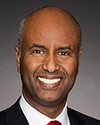
The Chair Liberal Ahmed Hussen

Thank you very much.

We will now go to Madame Fortier.

Mona Fortier Liberal Ottawa—Vanier—Gloucester, ON

Thank you, Mr. Chair.

That's interesting. My colleagues have touched on several themes that I wanted to discuss, but I'd like to drill down on one, namely, the fact that Canada is coordinating its efforts with international partners. Is there anything we haven't talked about yet in terms of that coordination with international partners?

A little earlier, you briefly mentioned the role of the Organization of American States. What role could this organization play in this situation? It could also be other multilateral partners or allies.

Could you tell us more about that?

12:45 p.m.

Director General, Central America and Caribbean Bureau, Department of Foreign Affairs, Trade and Development

Mark Richardson

We think a body like the Organization of American States could play a very important role.

A resolution by the Americans and the Panamanians was just passed at the United Nations Security Council. This resolution supports the effort of the United Nations and the United Nations Security Council. The Americans and the Panamanians are our partners and can provide international aid.

For more details, I will turn to my colleague Ian Myles.

12:45 p.m.

Executive Director, Haiti Division, Department of Foreign Affairs, Trade and Development

Ian Myles

I would like to answer the part of the question about the Organization of American States.

It's been around for a long time. They passed a resolution just a month or two ago. It emphasized that international aid had to become a priority for the organization itself, but also for its member countries. It recognizes that Haiti is its neighbour, and helping that country is part of its mandate. Historically, its strength has been precisely the promotion of elections, democracy and these reforms.

At one point, the question was raised about the role it must play in terms of security. I think the answer was that it's not really in their mandate and they don't have the capacity. However, it recently published a very ambitious road map in which it announced what it wanted to do. Marine safety is on this road map, which is encouraging. However, it is still too early to know what its added value will be.

It's possible that a convening role can help people coordinate their affairs and then build the capacity of countries in the region. You have to understand that you can't do everything. It's countries like Jamaica that need to be able to monitor their own borders and the waters in their region.

Mona Fortier Liberal Ottawa—Vanier—Gloucester, ON

Thank you.

We know that the minister will be making a statement this afternoon. Obviously, you can't comment on that at this point. However, if you have any ideas to submit to us as part of our study, following her intervention, we invite you to do so. We're trying to see if there's a way for this committee to come up with recommendations or ideas. I therefore invite you to do so, after the minister's remarks, of course. If you can send us any information, the committee would be happy to receive it in writing or by any other means.

Thank you.

The Chair Liberal Ahmed Hussen

Thank you very much.

Colleagues, we don't have time for another full round, but if there are one or two questions that someone needs to ask, here's your opportunity.

Monsieur Brunelle-Duceppe.

Alexis Brunelle-Duceppe Bloc Lac-Saint-Jean, QC

Thank you, Mr. Chair. That's kind of you.

We know that, in 2022, Canada offered more than $80 million as part of the Multinational Security Support Mission, or MSSM. Kenyan President Ruto recently welcomed these discussions about mission succession. He also added that he regretted that we did not have the necessary means to carry out this mission to the end. He said that results were too often underestimated. I guess we've invested $80 million. I assume you've had to do occasional updates on the program.

How does your department evaluate, for example, the results of this $80‑million investment from Canada as part of the mission itself?

Basically, do you have any kind of accountability from the department, based on the money that was invested by Canadian taxpayers in this mission?

12:50 p.m.

Director General, Central America and Caribbean Bureau, Department of Foreign Affairs, Trade and Development

Mark Richardson

Mr. Chair, I'll turn it over to my colleague Ian Myles.

12:50 p.m.

Executive Director, Haiti Division, Department of Foreign Affairs, Trade and Development

Ian Myles

Mr. Chair, it's clear that we can't say that the results are what we expected or what we wanted. We can see that the crisis is still very acute today, as it was a year ago. However, we can also see that the government and transitional authorities are still in place. This would not have been evident without the presence of the Multinational Security Support Mission.

Earlier, we talked about ports, maintaining access to ports to bring in food and basic necessities. We can say that we were able to do so, when that probably wouldn't have been the case. People have died. However, it is not clear how many deaths there will be afterwards.

I think it's clear that the new mission proposed in the resolution is not the magic solution either. There will be challenges precisely because reliance on part of the costs on voluntary contributions is real, especially if the force is increased from 1,000 to 5,500 people. It remains a challenge. That is why the purpose of the event that will be held this afternoon is, among other things, to mobilize resources. It's about leveraging other contributors who are coming in with money, not just the United States or Canada. There are other contributors, but they're not on the same scale as we are.


Alexis Brunelle-Duceppe Bloc Lac-Saint-Jean, QC

If I may, I would like to ask one last follow-up question.

I imagine there are documents or reports within the department that show lessons learned from what was invested, which was $80 million, and the results achieved. Do those documents or reports exist, first of all? If so, will these reports help us improve the impact of Canadian investments in foreign affairs in the future?

12:50 p.m.

Executive Director, Haiti Division, Department of Foreign Affairs, Trade and Development

Ian Myles

The mission itself has evolved a great deal, even since I was involved in the file. We're talking about 1,000 people, whereas we had only 400 from June to January. We only reached 1,000 people around February, so it wasn't that long ago. The lack of staff and equipment, among other things, was limiting. However, the challenge is still there, even though we've seen things improve. Lessons are emerging over time, and we don't yet know the future of the mission, where it will go. Even if we consider that our role is a matter of big money, like the $86 million, and that it is something substantial for Canada, I estimate that it represents probably less than 10% of the cost of the mission. It's really the United States that has done the most, especially in cash. They funded the base, a lot of equipment, food aid, and so on, which is not always visible. So separating the results produced by our contribution from what was produced by the mission as a whole is still a challenge.

The Chair Liberal Ahmed Hussen

Thank you very much.

The last question goes to MP Aboultaif.

12:55 p.m.

Conservative

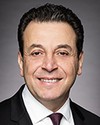
Ziad Aboultaif Conservative Edmonton Manning, AB

Thank you, Chair.

Thank you again to the witnesses, who have been at this for two hours.

The U.S. is basically leading the charge on Haiti. It also seems that problem is of the Americas, more or less. Now the U.S. is suspending any new aid for international development, which means that's obviously going to affect every front going, and there's more demand, of course, and more money, especially if it's going to be the bigger mission for Haiti.

Do you know or are you aware of whether Canada was asked to put more money into this mission?

12:55 p.m.

Director General, Central America and Caribbean Bureau, Department of Foreign Affairs, Trade and Development

Mark Richardson

We are obviously concerned about the vacuum that the lack of U.S. aid will leave. We are, as we've stated, the second-largest foreign supporter of Haiti at this time.

In terms of looking at what they're proposing and in terms of what is necessary to try to provide security and stability for the Haitian people, it does really address one of the key issues, which is trying to provide a stabilized security situation through both this hybrid gang suppression force, which would be much larger than the current MSSM, as well as a key piece of that that has really impeded the success of the MSSM in the UN support office.

As the member stated, USAID is withdrawing its assistance. The U.S. leadership here is drawing from experience in terms of some of the challenges that the MSSM itself has faced in terms of trying to put forward a solution or a response that will be more stable and sustainable in the long term.

12:55 p.m.

Conservative

Ziad Aboultaif Conservative Edmonton Manning, AB

Your response is asking me to read between the lines. The question is very clear. Are you aware of any request to Canada to increase financial participation in this mission, yes or no?

12:55 p.m.

Director General, Central America and Caribbean Bureau, Department of Foreign Affairs, Trade and Development

Mark Richardson

At this time, the discussions and our efforts are really focused on—and I can speak to our efforts and what we're doing—trying to pass the resolution and encouraging the passing of the resolution within the UN Security Council. In terms of what Canada's contribution would be after the fact, that is something I can't speak about at this time, as it remains a matter of ongoing discussions.

12:55 p.m.

Conservative

Ziad Aboultaif Conservative Edmonton Manning, AB

I got three-quarters of an answer. That means there's something going on, but you're not willing to speak, you don't want to speak about it, or you can't speak about it at the moment. Is my understanding correct?

12:55 p.m.

Director General, Central America and Caribbean Bureau, Department of Foreign Affairs, Trade and Development

Mark Richardson

I can't speculate about what Canada's response and engagement will be with the gang suppression force or what that will look like. At this point in time, we don't know whether the resolution will pass. Obviously, we will be a key contributor to the UN support office through our assessed contributions. That's something that is a given should it be passed.

In terms of the gang suppression force itself, we have been asked, as one of the key contributors to Haiti, along with the other members who have been supporting the MSSM thus far and the United States, to be part of what has been called the standing group of partners to oversee the gang suppression force that has been proposed to be put in place. We have come out and said that we will form part of that. It's essentially a governance body, a bit of a coordination body for the force.

In terms of what Canadian support could be going forward after that, that's something that hasn't been contemplated yet at this time.