Evidence of meeting #22 for Foreign Affairs and International Development in the 45th Parliament, 1st session. (The original version is on Parliament’s site, as are the minutes.) The winning word was threats.

A recording is available from Parliament.

On the agenda

Members speaking

Before the committee

Lynd  Assistant Director, Canadian Security Intelligence Service
Ouellette  Director General, Canadian Security Intelligence Service

René Ouellette Director General, Canadian Security Intelligence Service

I'd like to add something about trends.

Traditionally, our partners in the north and in the Arctic were mainly our federal partners, because the threat was primarily directed at our main partners. Our advice was therefore given to those departments.

As my colleague mentioned, the threats now tend to affect other levels of government and other sectors, including the research sector and the private sector. This forces us to have a broader range of partners so that we can provide information to those who have the authority to make decisions to protect themselves against these threats.
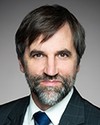
Steven Guilbeault Liberal Laurier—Sainte-Marie, QC

I would like to ask one last question, Mr. Chair.

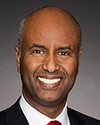
The Chair Liberal Ahmed Hussen

Yes.

Steven Guilbeault Liberal Laurier—Sainte-Marie, QC

I imagine that one of the threats that is on the rise is cybersecurity-type threats, that is to say cyberthreats. Are there ways to work with our partners, particularly local governments and communities, to prepare them to face these threats?

4:15 p.m.

Assistant Director, Canadian Security Intelligence Service

Paul Lynd

One of the ways is building the resiliency that I mentioned and making sure they're aware of the threat. There are other government departments that also have that expertise—the CSE's cyber centre, for example—and are making sure that the local infrastructure and these partners are aware of whom to turn to and where they can get that threat-related information. They're making those connections between other federal government departments and those being targeted.

The Chair Liberal Ahmed Hussen

Thank you very much.

Next, we'll go to Monsieur Brunelle-Duceppe.

You have six minutes.

Alexis Brunelle-Duceppe Bloc Lac-Saint-Jean, QC

Thank you, Mr. Chair.

Mr. Lynd and Mr. Ouellette, welcome to the committee. Thank you for being here.

We heard Donald Trump's speech on Greenland, which focused primarily on the Chinese military threat. When it comes to Greenland and the Arctic, some experts tell us that focusing solely on the Chinese military threat is a mistake. The director of the Canadian Security Intelligence Service, Daniel Rogers, has stated that non-Arctic countries, such as the People's Republic of China, are looking to establish a foothold in the region for strategic and economic purposes.

Could you tell us about the real challenges posed by China's Arctic ambitions?

Isn't the challenge more in the grey areas, such as data collection and the potential use of the data that's collected?

February 12th, 2026 / 4:15 p.m.

Assistant Director, Canadian Security Intelligence Service

Paul Lynd

I would say it's a multi-faceted threat. It's not just data collection and worrying about what they would do with the data. Some of the concerns we have, as I mentioned before, are around economic security and predatory foreign investment. They're things of a clandestine or deceptive nature.

You mentioned China. China is in strategic competition to control critical minerals and supply chains. By some accounts, it already controls between 60% and 90%, depending on what you use to measure critical minerals.

The concerns we have are clandestine or deceptive investment practices or economic engagement in certain market sectors in the Arctic. From a CSIS perspective, we investigate, collect information on that and advise the government on the risks and the threat, and we do so under the Investment Canada Act, which is a very powerful tool. It allows us to provide security advice and recommendations to the government so it can make informed decisions on those investments.

Alexis Brunelle-Duceppe Bloc Lac-Saint-Jean, QC

Experts also say that when countries want to work with China on critical infrastructure, it creates a certain vulnerability.

When China develops relationships in the areas of port, airport and energy infrastructure, it gives it levers that it can use when economic or political conflicts suddenly arise.

How do you view the recent diplomatic thaw and trade agreements between Canada and China, considering what I just said in my introduction and if we accept that as legitimate?

4:15 p.m.

Assistant Director, Canadian Security Intelligence Service

Paul Lynd

I would say that there's no such thing as anything that's zero risk. This is the issue. Basic risk management practice, as I'm sure many of you are aware, is that you review something, determine or measure what the risk is and put in as many mitigations as possible. What you have left is a residual risk. With the residual risk, you either accept it, transfer it somewhere else or further mitigate it.

The service's perspective is that we would investigate any threat to the national security of Canada, and we would provide that advice to government. That is but one of a number of inputs the government needs to weigh and measure in order to make informed decisions.

With the recent trade engagement with China, I would say that CSIS will continue to provide the government with economic security considerations and advice on national security, so it can weigh those different inputs and make informed decisions.

Alexis Brunelle-Duceppe Bloc Lac-Saint-Jean, QC

Mr. Ouellette, you spoke earlier about the fact that you are communicating more and more with other levels of government because the situation requires it.

Have you felt that there have been attempts by hostile states to influence local political actors or even local economic actors?

4:20 p.m.

Director General, Canadian Security Intelligence Service

René Ouellette

From time to time, we do indeed see efforts by certain foreign countries to conduct disinformation campaigns in an attempt to divide the population with regard to the federal government.

Everyone agrees that there is history between the Crown and indigenous peoples in the north. It's a complex history, and we're working closely with our indigenous partners in the north to try to mitigate the efforts of hostile foreign governments that are trying to undermine confidence in the work we've done recently.

Alexis Brunelle-Duceppe Bloc Lac-Saint-Jean, QC

If I understand correctly, there is a risk of misusing a story that was horrific, but is now being repaired.

I have another question, but you don't have to answer it: Have you seen any attempts by hostile governments to map critical infrastructure on our territory in the Arctic?

4:20 p.m.

Assistant Director, Canadian Security Intelligence Service

Paul Lynd

Without getting into specifics, I would say that it's something that we would be alive to and focused on and would investigate if it came to our attention.

The Chair Liberal Ahmed Hussen

Thank you very much.

We're going next to the second round of questions.

MP Majumdar, welcome to the committee.

You have five minutes.

4:20 p.m.

Conservative

Shuv Majumdar Conservative Calgary Heritage, AB

Thank you, Mr. Chair.

I have a lot of questions. I was hoping we could, as best as possible, have approximate yes and no answers, but I understand that some nuance is required.

My first question is, do you think that China is the greatest principal threat to our Arctic sovereignty?

4:20 p.m.

Assistant Director, Canadian Security Intelligence Service

Paul Lynd

I would say it's a primary threat, yes.

4:20 p.m.

Conservative

Shuv Majumdar Conservative Calgary Heritage, AB

What about airspace and subsea? Do foreign actors pose significant threats in those domains as well?

4:20 p.m.

Assistant Director, Canadian Security Intelligence Service

Paul Lynd

I think foreign actors can pose significant threats to those as well. I'm not informed enough to be an expert on those areas, but it's definitely something that CSIS would investigate.

4:20 p.m.

Conservative

Shuv Majumdar Conservative Calgary Heritage, AB

Has CSIS identified Chinese or Russian attempts to map, survey or access Canadian subsea regions?

4:20 p.m.

Assistant Director, Canadian Security Intelligence Service

Paul Lynd

I do not have that information available at this time. I'm not in a position to make an informed response.

4:20 p.m.

Conservative

Shuv Majumdar Conservative Calgary Heritage, AB

Are there ongoing efforts that you may be aware of by China or Russia to collect intelligence on Canada's Arctic region?

4:20 p.m.

Assistant Director, Canadian Security Intelligence Service

4:20 p.m.

Conservative

Shuv Majumdar Conservative Calgary Heritage, AB

Is Canada's Arctic airspace fully secure against foreign incursions or surveillance?

4:20 p.m.

Assistant Director, Canadian Security Intelligence Service

Paul Lynd

Again, that would be a question that would be outside of the mandate of CSIS. I wouldn't be in a position to provide an informed response.