Evidence of meeting #22 for Foreign Affairs and International Development in the 45th Parliament, 1st session. (The original version is on Parliament’s site, as are the minutes.) The winning word was threats.

A recording is available from Parliament.
On the agenda

Members speaking

Before the committee

Lynd  Assistant Director, Canadian Security Intelligence Service
Ouellette  Director General, Canadian Security Intelligence Service

4:20 p.m.

Conservative

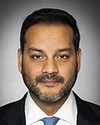
Shuv Majumdar Conservative Calgary Heritage, AB

To the best of your knowledge, have foreign aircraft conducted incursions or surveillance activities in Canada's Arctic region?

4:20 p.m.

Assistant Director, Canadian Security Intelligence Service

Paul Lynd

Again, I'm sorry, but I'm not in a position to be able to respond in an informed manner, because I don't know.

4:20 p.m.

Conservative

Shuv Majumdar Conservative Calgary Heritage, AB

How about drone satellites or unmanned systems currently being deployed by foreign actors in the Arctic? Has that ever comprised part of the threat analysis you conduct?

4:20 p.m.

Assistant Director, Canadian Security Intelligence Service

Paul Lynd

Yes, that would comprise part of the threat analysis. We would investigate that area.

4:20 p.m.

Conservative

Shuv Majumdar Conservative Calgary Heritage, AB

Have you any notion of whether that's been happening in the Arctic?

4:20 p.m.

Assistant Director, Canadian Security Intelligence Service

Paul Lynd

I'm unfortunately not in a position to get into any specifics right now. I apologize, but I'm not able to provide an informed answer to that question.

4:20 p.m.

Conservative

Shuv Majumdar Conservative Calgary Heritage, AB

Have China or Russia engaged in activities that undermine Canadian Arctic sovereignty?

4:20 p.m.

Assistant Director, Canadian Security Intelligence Service

Paul Lynd

Yes, China and Russia have engaged in those activities.

Shuv Majumdar Conservative Calgary Heritage, AB

Are there Chinese or Russian Arctic activities occurring that are not immediately visible or publicly declared, to the best of your knowledge?

4:20 p.m.

Assistant Director, Canadian Security Intelligence Service

Paul Lynd

I believe that there are activities going on at all times and, yes, I would say that there are some that are not fully public at this time.

4:20 p.m.

Conservative

Shuv Majumdar Conservative Calgary Heritage, AB

You mentioned economic security as being a principal threat for how China compromises Canadian sovereignty, Canadian IP and Canadian advantages. Are foreign actors using commercial, scientific or research platforms to conceal strategic Arctic operations?

4:25 p.m.

Assistant Director, Canadian Security Intelligence Service

Paul Lynd

I think all of those vectors are a possibility to be considered, and CSIS would be interested in investigating the potential for all of those to be used in the manner you described.

4:25 p.m.

Conservative

Shuv Majumdar Conservative Calgary Heritage, AB

Are there Arctic activities being conducted in ways designed to avoid clear attribution to China or to Russia?

4:25 p.m.

Assistant Director, Canadian Security Intelligence Service

Paul Lynd

The very heart of foreign interference is that it's clandestine, deceptive and meant to hide the true connection to the hostile state actor.

4:25 p.m.

Conservative

Shuv Majumdar Conservative Calgary Heritage, AB

Do gaps exist then, in your best assessment, in Canada's monitoring capabilities that could allow covert foreign activity to go undetected?

4:25 p.m.

Assistant Director, Canadian Security Intelligence Service

Paul Lynd

It's hard to answer that question in the manner that it's been posed, because when you mention detecting covert activity, as I mentioned, CSIS is constantly investigating threats to the security of Canada in the Arctic and across the country. To the degree to which there are gaps, it's hard to characterize a response to that question, because we are aware of what we're able to detect. We're not always aware of what may be going on that we have not yet detected.

4:25 p.m.

Conservative

Shuv Majumdar Conservative Calgary Heritage, AB

To the best information you are able to glean from your own analysis, from government and colleagues across other agencies and partners, Five Eyes and otherwise, are any of these gaps in deterrence in Canada's Arctic strategy being directly and disproportionately exploited by Russia or by China?

4:25 p.m.

Assistant Director, Canadian Security Intelligence Service

Paul Lynd

I apologize. It's a difficult question to answer, because I'm not informed on any specific gaps I'd be able to use as an example that are being exploited. I would say that it's quite likely the possibility exists that there are different gaps in our approach that are being exploited by hostile state actors.

For example, we mentioned the Investment Canada Act, which is a fantastic tool. It allows us to provide security advice to government to make informed decisions. If your question is whether that act and that tool are capturing everything, the answer would be no. There would likely be opportunities. We know that hostile state actors are looking to exploit and work around areas that would prevent them from triggering a notification under the Investment Canada Act.

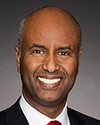
The Chair Liberal Ahmed Hussen

Thank you.

We'll go to the next questioner.

Anita Vandenbeld, you have five minutes.

Anita Vandenbeld Liberal Ottawa West—Nepean, ON

Thank you very much.

Welcome to the committee, Mr. Ouellette and Mr. Lynd.

I'd like to carry on with what you were talking about earlier in terms of information sharing. This is, I understand, two-directional information sharing. You're sharing with Inuit first nations communities, and they are also then providing information back.

To what extent are you also engaging researchers, scholars and academics, given that yesterday we announced a new Inuit university? How would they play into the information networks that you have?

4:25 p.m.

Director General, Canadian Security Intelligence Service

René Ouellette

To a large extent, part of our approach in the Arctic and the north has been to speak not only to those who live there but also to expert scholars and researchers. Our focus is in a number of areas. We would speak to university and college administrators who design policy around research partnerships, for example, about the threats that might come with hostile states seeking to engage in partnerships for purposes other than those they are mentioning, and with researchers as well, who can provide us with insights into the history, culture and languages of the north and of the Arctic to help us better understand the region and be able to then feed back information that will be relevant to them.

Anita Vandenbeld Liberal Ottawa West—Nepean, ON

Of course, once the Inuit university is there, that would be a....

4:25 p.m.

Director General, Canadian Security Intelligence Service

René Ouellette

Yes, we look forward to that. We meet with a number of scholars as well. We participate in conferences, workshops and panel discussions where we are openly speaking with folks who would be involved in the set-up of these places.

Anita Vandenbeld Liberal Ottawa West—Nepean, ON

Thank you.

We know that DND has declared that climate change is a national security threat. We know that the Arctic has 70% of our coastline. To what extent are you looking at climate change and all of the related changes in the north as a security threat?

4:25 p.m.

Director General, Canadian Security Intelligence Service

René Ouellette

We're aware of the impact that climate change could have on towns, obviously, and on populations and so on.

In terms of the threat itself, if it's not conducted by a foreign state in terms of an espionage activity or a foreign interference activity, it's not necessarily something that we would investigate per se, but obviously the implications of climate change are significant, and we're aware of them.