Thank you very much.
We'll go to MP Kramp-Neuman next.
You have five minutes.

Evidence of meeting #23 for Foreign Affairs and International Development in the 45th Parliament, 1st session. (The original version is on Parliament’s site, as are the minutes.) The winning word was crisis.
A recording is available from Parliament.
Liberal
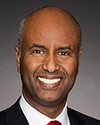
The Chair Liberal Ahmed Hussen
Thank you very much.
We'll go to MP Kramp-Neuman next.
You have five minutes.
Conservative

Shelby Kramp-Neuman Conservative Hastings—Lennox and Addington—Tyendinaga, ON
Thank you, Chair.
Thank you for being here this afternoon.
Does the department have any numbers on the percentage of Cuban fuel imports that relied on shadow fleets—Russian, Venezuelan or otherwise?
Director General, Central America and Caribbean Bureau, Department of Foreign Affairs, Trade and Development
Mr. Chair, that's a very interesting question.
In terms of shadow fleets, no, we don't, to the best of my knowledge, have details on the percentage.
What we know is that Cuba is able to supply roughly between 30% and 50% of its own energy and electricity needs through a combination of solar power, which it's in the process of developing, and its own oil and gas resources, and that it made up the bulk of what it's not able to supply domestically through imports that were principally previously from Venezuela and then from Mexico. We understand that it has also received fuel imports from a variety of other countries in the past.
Conservative
Shelby Kramp-Neuman Conservative Hastings—Lennox and Addington—Tyendinaga, ON
Correct me if I'm wrong, but is it correct that our government recently implemented additional sanctions on the Russian shadow fleet? Is this expected to have any effects on the Caribbean?
Director General, Central America and Caribbean Bureau, Department of Foreign Affairs, Trade and Development
Unfortunately, I don't have those details at hand in terms of who we have put sanctions on.
This is something that, with your permission, Chair, I would follow up with, if it's of interest to the member.
Conservative
Shelby Kramp-Neuman Conservative Hastings—Lennox and Addington—Tyendinaga, ON
That would be great. Thank you.
Has the department assessed the stability of the regime in Havana in the wake of the disruption of Cuba's oil supply?
Director General, Central America and Caribbean Bureau, Department of Foreign Affairs, Trade and Development
Mr. Chair, an evaluation may be going further than what I would say. We certainly monitor what is going on in the country and remain engaged to be able to understand what is happening on the ground.
Despite the lack of fuel being imported, because of the U.S. measures in particular, I can say that the Cuban government appears to be quite stable. It has developed itself throughout all areas of the economy and society in Cuba. It shows no indication of being unstable at this time.
Conservative
Shelby Kramp-Neuman Conservative Hastings—Lennox and Addington—Tyendinaga, ON
Could you speak to what coordination the Canadian government is taking with the United States in regard to additional sanctions that I spoke to with the Russian or Venezuelan shadow fleets, and what steps are being taken, if any, to mitigate these effects on nations like Cuba?
Director General, Central America and Caribbean Bureau, Department of Foreign Affairs, Trade and Development
Mr. Chair, unfortunately, I don't have information on any discussions. I'm not privy to discussions with the United States with regard to our sanctions on the shadow fleet.
I can say that we have regular and ongoing discussions with our U.S. counterparts, including with respect to Cuba and our mutual concerns about the Cuban people, their state and their well-being.
Conservative
Shelby Kramp-Neuman Conservative Hastings—Lennox and Addington—Tyendinaga, ON
Given the shift in the American strategy, has there been any long-term reassessment of Canada's Caribbean strategy?
Director General, Central America and Caribbean Bureau, Department of Foreign Affairs, Trade and Development
Obviously, we are all looking at the shift that happened in the last number of months and how it impacts our interests in the region. I can't speculate on any future strategy for the Americas, or a change in policy as a result of that, at this time.
Conservative
Shelby Kramp-Neuman Conservative Hastings—Lennox and Addington—Tyendinaga, ON
Thank you.
Changing lanes a wee bit, why has the Government of Canada refused to impose targeted, Magnitsky-style sanctions on senior Cuban officials responsible for human rights abuses when it has sanctioned officials from other regimes for far less? I'm curious about what message this sends to dictators around the world.
Liberal
The Chair Liberal Ahmed Hussen
It's a legitimate question in general, but given today's focus on the humanitarian situation and consular affairs for Canadians, I think the question is a little bit out of scope. I was willing to give you more discretion for the earlier questions, but this one goes out of scope. I would urge the member to please come back to the focus of the hearing.
Conservative
Shelby Kramp-Neuman Conservative Hastings—Lennox and Addington—Tyendinaga, ON
Could we perhaps have some more details on the aid package? There was a media report that an aid package is being sent to Cuba. Could you speak more specifically to what could be included in it?
Director General, Central America and Caribbean Bureau, Department of Foreign Affairs, Trade and Development
Unfortunately, I can't speak more specifically to what may be included in the aid package. I can say that, as Minister LeBlanc and Minister Anand have stated, we will provide humanitarian assistance. We are ready to provide humanitarian assistance to the Cuban people, and we're discussing this with humanitarian partners on the ground in order to determine what will be included in the package.
Liberal
The Chair Liberal Ahmed Hussen
Thank you very much.
Next, we'll go to MP Vandenbeld.
You have five minutes, please.
Liberal

Anita Vandenbeld Liberal Ottawa West—Nepean, ON
Thank you very much to the officials for being here today.
I would like to start with something you said about Canada's being, right now and perhaps over the last five decades, one of Cuba's leading western donor countries on humanitarian assistance. There have been some questions about whether Canada is going to assist. If I'm not mistaken, we are currently providing support to the World Food Programme, and to other agencies and other organizations on the ground. We wouldn't just suddenly have to come up with aid in the current crisis. There's actually ongoing assistance happening right now.
February 24th, 2026 / 4:10 p.m.
Director General, Central America and Caribbean Bureau, Department of Foreign Affairs, Trade and Development
That is indeed the case. As I stated earlier, over the last seven years, on average, we've provided $6.5 million in development assistance to Cuba in a variety of areas. This is concentrated on food security, nutrition, the empowerment of women entrepreneurs, work related to sexual and gender-based violence, gender equality and renewable energies. We have a number of projects in which we have worked, for instance, with Cuban agriculture—folks who work in the agriculture sector, particularly women—in order to help them to increase their yields significantly through education, assistance and giving equipment, while also helping them to strengthen their supply chains.
As I was preparing for this appearance, I was really pleased to see the results of a project on the renewable energy side. We've provided solar energy kits to 72 different communities, particularly to households led by women and to a variety of institutions, schools and hospitals. We've provided support to help sustain their electricity needs off the grid.
Liberal
Anita Vandenbeld Liberal Ottawa West—Nepean, ON
Thank you. I've been getting letters from my constituents, not just on the consular side but also certainly out of concern for the people of Cuba. It's good to know that we are there. It is a fairly common practice that we would want to make sure we're consulting those agencies on the ground, whether multilateral or Canadian partners, to determine what is needed, as opposed to just sending what we think might be needed. It's much better to determine that when these crises happen. Is that the process you're going through right now?
Director General, Central America and Caribbean Bureau, Department of Foreign Affairs, Trade and Development
Yes, that is exactly the process we're going through right now. We believe that it's best to find out from agencies on the ground what is actually needed rather than trying to determine what we think is needed.
Liberal
Anita Vandenbeld Liberal Ottawa West—Nepean, ON
With regard to diplomacy, my understanding is that, with a few very rare exceptions, Canada often has diplomatic relations with countries that we don't necessarily agree with on how they're governed, on human rights or on other aspects. Having those channels of communication can be very helpful.
In the case of Cuba, could you tell us, what if there had been an absence of those kinds of, as you said, hard and frank conversations—an absence of the economic impact of Canadian trade and tourism? If there were no diplomatic channel, do you think there might be worse situations today in terms of human rights and governance in Cuba?
Director General, Central America and Caribbean Bureau, Department of Foreign Affairs, Trade and Development
That's an excellent question.
I can't speculate on what might have been or could have been, but if we look back at the results that we've achieved over the years through our diplomatic engagement with Cuba, I think we can say that we have definitely benefited the Cuban people through the development projects that we've done, with the blessing of the Cuban government.
We have certainly been able to have open and frank dialogues about increasing transparency within their government institutions and about our human rights concerns, particularly with regard to political prisoners and the treatment of those prisoners, most recently in the wake of the protests in 2021 and our concerns related to the folks who were arrested after that. If we did not have those diplomatic channels, this wouldn't allow us to respond to the concerns of the Canadian people about what is happening in Cuba.
Our diplomatic engagement with Cuba has been very much based on the premise that it's better to have a conversation, to be able to try to talk through our differences, to recognize where we're not aligned and to say the hard things at times. As said by a member of your committee who's not here at this time, I'll say that we're friends, and having friendly relations allows us to speak uncomfortable truths at times. Canada has sought to do that.
Liberal
Bloc
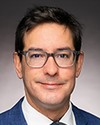
Alexis Brunelle-Duceppe Bloc Lac-Saint-Jean, QC
Does your department have any indication that the American embargo is worsening the humanitarian situation, in particular by limiting access to fuel or essential goods?
Director General, Central America and Caribbean Bureau, Department of Foreign Affairs, Trade and Development
We can safely say yes. The measures that the United States implemented almost 60 years ago are having an impact on the Cuban economy and people.