Evidence of meeting #31 for Foreign Affairs and International Development in the 45th Parliament, 1st session. (The original version is on Parliament’s site, as are the minutes.) The winning word was japan.

A recording is available from Parliament.

On the agenda

Members speaking

Before the committee

Ostwald  Associate Professor, Institute of Asian Research, University of British Columbia, As an Individual
Van Assche  Full Professor, Department of International Business, HEC Montréal, As an Individual
R. Nagy  Professor, China Policy Project Lead and Senior Fellow, International Christian University, Macdonald-Laurier Institute, As an Individual
Paskal  Non-Resident Senior Fellow, Foundation for Defense of Democracies, As an Individual

5 p.m.

Conservative

Michael Chong Conservative Wellington—Halton Hills North, ON

Thank you, Mr. Chair.

5 p.m.

Liberal

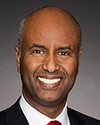
The Chair Liberal Ahmed Hussen

Thank you very much.

Next we go to MP Rob Oliphant for six minutes.

5 p.m.

Liberal

Rob Oliphant Liberal Don Valley West, ON

Thank you, Mr. Chair.

I have three questions I'm going to try to address with the witnesses.

The first has to do with the north Pacific, particularly looking at Japan and South Korea as strategic partners. The second would be lessons learned from Australia and New Zealand. On the third one, I'm going to push a bit more on the Pacific Islands as a place of real interest.

As to the north Pacific, Professor Nagy, you're in Japan. You've had a career there. Can you talk a bit about where Japan is vis-à-vis Canada? We've had recent high-level visits. We have a relatively new government in Japan. How do you see the Canada-Japanese bilateral relationship evolving over the next few years?

5:05 p.m.

Professor, China Policy Project Lead and Senior Fellow, International Christian University, Macdonald-Laurier Institute, As an Individual

Stephen R. Nagy

That is a super question.

I look at Japan as the canary in the coal mine in terms of how to deal with the challenges within the region, in particular China, and how to not only manage engagement, but also build resilience into the relationship and deterrence. At the same time, Japan has the most nuanced policies towards Southeast Asia.

In the context of how Canada engages with Japan, there are some real opportunities to learn from Japan. We can build some synergies into our policies of how we engage with Southeast Asian countries bilaterally but also through ASEAN.

In Southeast Asia, a country-by-country approach is important, but we have to recognize that ASEAN moves as a whole. If we want to have credibility, we have to recognize ASEAN centrality within the region.

Japan has done this exceptionally well, and they do it through soft means of building infrastructure, connectivity, business investments and trade agreements. It's a really good platform for how we're engaging within the region.

I have met with China. It's not a zero-sum relationship with China. They engage. They have a $300-billion trade agreement every year. It's by and large equal. They have huge difficulties as well, but they're wise enough to try to balance. We can learn from how Japan is managing.

Where do we head in the next four or five years? I see stability in the Japanese political system. I see that they are willing to invest in defence, in resilience and in partners that want to build strong ties. Energy security and critical minerals security are going to be huge places for Canada and Japan to build synergies. Our government has already been doing this, but there's a lot more that we can do in terms of Japan and Canada.

Mr. Oliphant, it's too simplistic—

Rob Oliphant Liberal Don Valley West, ON

I want to push a bit on—

5:05 p.m.

Professor, China Policy Project Lead and Senior Fellow, International Christian University, Macdonald-Laurier Institute, As an Individual

Stephen R. Nagy

Can I just finish?

Rob Oliphant Liberal Don Valley West, ON

No, it's my time.

I also want to push a bit on South Korea.

5:05 p.m.

Professor, China Policy Project Lead and Senior Fellow, International Christian University, Macdonald-Laurier Institute, As an Individual

Rob Oliphant Liberal Don Valley West, ON

Only Canada and South Korea have really identified the north Pacific as an area. What does that signify in terms of a regional approach?

5:05 p.m.

Professor, China Policy Project Lead and Senior Fellow, International Christian University, Macdonald-Laurier Institute, As an Individual

Stephen R. Nagy

I'm glad you said South Korea, because as we think about energy security and critical minerals, it's not just Japan that's going to be our partner. We should work with South Korea as well.

On the north Pacific side, this nomenclature is not actually recognized outside the region. When I first read it in the Indo-Pacific strategy, I wasn't sure what it meant. I work with many people at GAC and Defence. I understand they want to link the Arctic, but it's not a terminology that has currency within the region. If we want to get more Canadian contributions in the region and to be taken seriously, we need to speak the currency of the region. That means talking about northeast Asia rather than the north Pacific.

Still, South Korea shares many national interests with Canada. Importantly, it shares values with Canada. It's a clear partner for helping us engage with China, Southeast Asia and the broader region.

Rob Oliphant Liberal Don Valley West, ON

Talking about Australia and New Zealand for a moment, my concern with the South Pacific Islands is that if you take Papua New Guinea out, which is 10 million people, and you take Fiji out, you're left with a number of countries with 20,000 or 25,000 people. How does that possibly relate to our work in South Korea, Japan, China even, Indonesia and Malaysia? I'm wondering if Ms. Paskal can talk about where that's coming from. We have Commonwealth ties already, so you're saying to cut Canberra out, but we are related quite profoundly to them through the Commonwealth. Our Commonwealth instincts should be there. We're not Americans; we're Canadians, so the Commonwealth is important.

5:05 p.m.

Non-Resident Senior Fellow, Foundation for Defense of Democracies, As an Individual

Cleo Paskal

Of course, the Commonwealth is important, but you meet people where they are at. Would you interact with Vietnam through Canberra? These countries are not part of the rest of the Pacific.

On the point about Australia and the bang for the buck you get in the Pacific, if we engage with Japan, at best we could be the eighth or ninth most important trading partner of Japan. If you're in the Pacific, which costs a lot less and is highly strategically important, you can be the point person for other people who want to come in and understand the Pacific, including the EU. There are areas, for example, that speak French, like New Caledonia and French Polynesia, where Canada's bilingual profile could be particularly value-added.

New Caledonia is having a lot of problems. They have 20% of the world's nickel. When you're looking at how important these locations are, I would not go by population. One hundred thousand Americans died during World War II because of the strategic importance of the locations. We're looking at deep-sea mining. If you're looking at just resources, for example, you have situations like, again, New Caledonia.

It's so important for stability in the South Pacific.

With all due respect to my Australian friends, they have messed up so badly that we now have to look at the situation. The corruption of Pacific island leaders, in many cases, especially in the South Pacific, gets laundered through Australian banks and real estate, and they never do what the U.S. just did in designating illegal partners.

The Chair Liberal Ahmed Hussen

Thank you very much.

We go next to Mr. Brunelle-Duceppe.

You have the floor for six minutes.

Alexis Brunelle-Duceppe Bloc Lac-Saint-Jean, QC

Ms. Paskal, that was really an extraordinary answer to a question that didn't require an answer like that. I commend you for that.

Ms. Paskal, we haven't talked about the Solomon Islands yet. I think it's important to talk about them since, obviously, China has intervened in this territory, which is also strategic.

Can you outline what's happening there?

5:10 p.m.

Non-Resident Senior Fellow, Foundation for Defense of Democracies, As an Individual

Cleo Paskal

I believe you met Daniel Suidani. His is a very sad case.

I'm going to explain this in English because this is actually a little emotional and breaks my heart.

He was the premier of Malaita Province when the Solomon Islands switched from Taiwan to China. The thing about the Pacific Islands is that if you understand how China operates in the Pacific Islands, it's like a mini version of how they operate globally. It really helps you understand the mechanisms that China uses.

In 2019, when the Solomon Islands switched from recognizing Taiwan to China, he stood up for his people and said that he did not want Chinese companies operating in his province, and they targeted him as a result. He came to the U.S. to try to gain an understanding. He also came here and met with members like you.

I don't know if you know what happened to him. They hounded him through lawfare. He became very ill. This was just last summer. He had kidney failure and went to the hospital in Honiara. The only dialysis machine in that hospital was donated by China. The person who decided who would get medical care was a Chinese person who answered to the embassy. Daniel Suidani did not get medical care and he died.

We're increasingly starting to see across the Pacific Islands the use of medical care by China to export the social credit system to exert leverage on locals.

Thank you so much for mentioning Daniel Suidani and his fight, which I hope will continue.

Alexis Brunelle-Duceppe Bloc Lac-Saint-Jean, QC

You talked about the diplomatic space that Canada should be occupying in the Indo-Pacific. Nothing has been confirmed, but there are rumours that, as a result of the current cuts in various departments, including Global Affairs Canada, Canada could close diplomatic representation in certain places. There are two places that come up often: Auckland, New Zealand, and Osaka, Japan. I'm referring to the consulates.

In the context of the Indo-Pacific strategy, wouldn't it be a considerable loss if those two consulates were closed? If you agree, I'd like to know why.

5:10 p.m.

Non-Resident Senior Fellow, Foundation for Defense of Democracies, As an Individual

Cleo Paskal

I'm never going to say something should be closed. As part of the Five Eyes though, I wonder what is really being done in Auckland. If it's not a strategic location for the protection of information, I would say that the consulate is less important than the one in Osaka.

The war is going to be in the central and north Pacific. The other thing about the Solomon Islands is that this is the site of the Battle of Guadalcanal, and the Chinese are currently rebuilding. They're involved in putting in infrastructure at Henderson Field, where a lot of Americans died. They have studied the World War II map, and they're replicating it.

Alexis Brunelle-Duceppe Bloc Lac-Saint-Jean, QC

Do I have any time left, Mr. Chair?

The Chair Liberal Ahmed Hussen

Yes. You have two minutes and 23 seconds.

Alexis Brunelle-Duceppe Bloc Lac-Saint-Jean, QC

Fantastic.

Mr. Nagy, you talked about relations with the United States. You told us that, in three, four or five years, there would be changes in the leadership of the various administrations. I agree with you 100%. I have confidence in the democratic, judicial and legal institutions of the United States.

What we have to remember is that the Chinese Communist Party will probably still be there in 50 years. Doesn't that raise significant concerns considering our diplomatic and trade rapprochement with China right now?

As to our relationship with the United States, shouldn't we include the United States in Canada's Indo‑Pacific strategy?

5:15 p.m.

Professor, China Policy Project Lead and Senior Fellow, International Christian University, Macdonald-Laurier Institute, As an Individual

Stephen R. Nagy

Thank you for the question, Mr. Brunelle‑Duceppe.

It's really important. You're right. The Chinese Communist Party will be around for the next 20 or 30 years, and we need to ensure that we are creating a broader strategy with that in mind.

As for the United States, we've seen oscillations in the United States' power. It does become unpredictable, but at the same time, we have a geographic, institutional, legal.... Let's not forget the millions of families that have connections within the United States. I continue to advocate for building with the United States an indispensable relationship of concrete measures for dealing with foreign interference seriously and dealing with Arctic security seriously.

Also, it's important for us to continue to have a strategic vision of how we're going to engage with the Indo-Pacific with the United States as a key partner, but that doesn't mean we have the same policy as the United States. We are Canadian. We can engage with the region through Canadian interests, but we will never be able to have an effective policy with the Indo-Pacific without having the strongest and deepest relationships with the United States.

We should remember that Indo-Pacific countries, whether South Korea, Japan or Southeast Asian countries, look to Canada, and they understand that we are close to the market in North America and the United States. We share many institutions and laws. We share respect for the rule of law. We have strong cross-state partnerships, and despite the challenges in the relationship today, we'll continue them three or four years from now.

We need to continue to invest, and not just in Washington. Canadian leaders need to visit all 50 states to build the strongest of partnerships that advocate for Canada's interests. Some leaders are doing this, but we need to do much more, because the United States is not going away and neither is our geographic relationship.

Thank you, Mr. Brunelle-Duceppe, for a great question.

The Chair Liberal Ahmed Hussen

Thank you very much.

We go next to MP Kramp-Neuman.

You have five minutes.

5:15 p.m.

Conservative

Shelby Kramp-Neuman Conservative Hastings—Lennox and Addington—Tyendinaga, ON

Thank you, Chair.

Thank you, Madame Paskal and Professor Nagy, for your expertise and perspectives today.

I'll start with a first question in regard to how the government has painted the Indo-Pacific strategy update as more of an evolution than a new document. Given the government's shifting position on China and given the immense weight the nation plays in the Indo-Pacific, I have a first question for Madame Paskal. Is there any concern that this signals a fundamental change in the approach to the region?

5:15 p.m.

Non-Resident Senior Fellow, Foundation for Defense of Democracies, As an Individual

Cleo Paskal

Do you remember the old TV show and the old ads about “Miss Cleo”? On this one, I don't know. All I can do is go by actions, and I suspect that one of the reasons that maybe they're not.... The Indo-Pacific strategy, when it came out, was pretty good, and it got a lot of positive attention across the region. I suspect that anything new would be somewhat watered down and would invite criticism from a lot of different sides, so why do it, I guess, if you're the government?

That's as good as I can get. I'm sorry.

5:15 p.m.

Conservative

Shelby Kramp-Neuman Conservative Hastings—Lennox and Addington—Tyendinaga, ON

That's fair.

Earlier this year, I had the privilege of visiting Taiwan with a Canadian delegation and speaking with leadership there, since they are extremely concerned about how Taiwan fits into the revamped Indo-Pacific strategy from our government, which has made it clear that they are seeking closer economic ties with China.

What messaging does this send to our allies in the region? Further, what message does it send when two government MPs were sent home from Taiwan when we were there?