Evidence of meeting #36 for Foreign Affairs and International Development in the 45th Parliament, 1st session. (The original version is on Parliament’s site, as are the minutes.) The winning word was important.

A recording is available from Parliament.

On the agenda

Members speaking

Before the committee

William Browder  Head of the Global Magnitsky Justice Campaign, Hermitage Capital Management Ltd.
Kolga  Director, DisinfoWatch, As an Individual
Kara-Murza  Vice-President, Free Russia Foundation
McInnes  Principal, Arendt Chambers—International Human Rights and Justice

4:45 p.m.

Head of the Global Magnitsky Justice Campaign, Hermitage Capital Management Ltd.

Sir William Browder

When we first came up with the Magnitsky act, the idea was that we didn't want the perpetrators of crimes and corrupt officials to enjoy the benefits or the fruits of their criminal activity. The idea was to freeze their assets. It was sort of a half-baked idea, because we hadn't fully thought through what we would do with those assets once they're frozen.

Since then, I've worked with various of your colleagues in Canada on what is called the frozen assets repurposing act, which is this concept of taking those frozen assets and repurposing them for the benefit of victims. Since then, I've worked on the concept that the frozen Russian central bank reserve should be confiscated.

I'm not specifically familiar with the mechanisms in the provision that you mentioned, but I would say that this is the logical next step: Once you've frozen these assets that belong to corrupt individuals and human rights violators, something should be done with those assets. How that should be done I will leave to the legal experts, who are probably more familiar with the issues than I am.

4:50 p.m.

Conservative

Michael Chong Conservative Wellington—Halton Hills North, ON

Thank you.

Madame McInnes, do you have any views on this as a Canadian?

4:50 p.m.

Principal, Arendt Chambers—International Human Rights and Justice

Kate McInnes

I wouldn't want to say anything about this without doing a bit more research. I apologize for that. Twelve months strikes me as quite a quick turnaround, but it's always good to set deadlines. That's my only comment at this point.

4:50 p.m.

Conservative

Michael Chong Conservative Wellington—Halton Hills North, ON

Thank you.

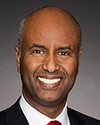
The Chair Liberal Ahmed Hussen

Thank you very much.

Mr. Guilbeault, you have five minutes.

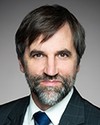
Steven Guilbeault Liberal Laurier—Sainte-Marie, QC

Thank you very much, Mr. Chair.

I'd also like to thank all of our guests. I, too, am always impressed by the high calibre of our witnesses, particularly today, as Mr. Brunelle‑Duceppe pointed out earlier. So I thank them for being with us.

I think we all agree on the principles. What we are trying to do in asking you questions is to try to find the best ways to put the principles we agree on into practice. So I have three questions, which I would ask you to answer quickly.

The first is about the list. I would like to come back to what my colleague Mr. Oliphant was saying earlier. I don't have the kind of experience that many of you have in human rights, but I do have some experience in diplomacy. I think there's a significant difference between, on the one hand, giving the government of a democratic country the discretion it needs to try to save a person's life in the best possible way and, on the other hand, having conditions imposed on it by an authoritarian country.

I have witnessed negotiations or, in some cases, have participated in negotiations where discretion was needed to reach an agreement. In addition, I think my colleague made the point earlier that it's difficult to have a rule that will apply in every case. Sometimes it also takes a certain amount of discretion to find the right way to achieve the objectives. That's the first point I wanted to make.

With respect to the CRTC, I'm obviously not against that principle, but you have to understand that in Canada, we don't have legislation or regulations that enable us to tackle what's happening online, that is to say, all aspects of digital publications. So a system would have to be created. Even if we gave the CRTC the power proposed in Bill C‑219, it would apply only to traditional publications, meaning print media, television and that kind of thing, while everything is moving increasingly online.

So I'd like to hear your thoughts on that. What countries have established those kinds of systems? Would we, for our part, be prepared to work towards that?

My last question is about clause 6 of the bill, which my colleague Mr. Chong was talking about. Once again, it's difficult for governments to dictate strict deadlines for independent tribunals since there can be appeals and reviews.

This is a question that, rather than being very specific, is perhaps directed more generally to you, Ms. McInnes. Legislation cannot replace the power of the courts. So how can we provide a framework for that?

4:50 p.m.

Vice-President, Free Russia Foundation

Vladimir Kara-Murza

Thank you very much for your questions. I will answer the first question, particularly as regards discretion with respect to the situation of political prisoners.

I think it's important to divide your question in two.

Part of it has to do with technical negotiations, such as those to organize a prisoner swap. It has to be discreet, of course, or else it won't work. For example, every time journalists ask me if any work is under way for more political prisoner exchanges or to release Russian political prisoners, I always say that I have no comments to make. In that sense, absolutely, discretion is needed, otherwise nothing will happen.

As I already said when I answered your colleague's question, in my case, for example, I had absolutely no idea that anything was happening with the prisoner exchange. It was exactly the same thing for all my other colleagues who were part of the same exchange; I asked them about that afterwards. It's interesting though that people in other countries knew. The Americans and the Germans knew that there would be an exchange. We Russians didn't know anything. So there was complete discretion, and that's how it should be done, definitely.

As to the other part of your question, in terms of campaigns and advocacy in support of political prisoners, by definition, that can only be done publicly. You can't advocate for a political prisoner in secret. It just doesn't work. That's what I was talking about when I said that this part must absolutely be public. In addition, it can help improve the conditions of political prisoners. As we've already discussed with Anita Vandenbeld, knowing that they're not forgotten gives them tremendous moral support.

The Chair Liberal Ahmed Hussen

Thank you very much.

We'll go next to Mr. Brunelle-Duceppe for two and a half minutes.

Alexis Brunelle-Duceppe Bloc Lac-Saint-Jean, QC

Thank you, Mr. Chair.

I'll turn to you, Mr. Browder, since I don't think you have much time left with us. It's good to see you again. It's been a long time since we've seen each other.

You've previously stated that the most effective Magnitsky laws were those that made it possible not only to freeze the assets of individuals, but also held to account the people around those same individuals.

If Bill C‑219 is passed, do you think it will be a way for Canada to have possibly the toughest or, in any case, one of the toughest Magnitsky laws in the world?

4:55 p.m.

Head of the Global Magnitsky Justice Campaign, Hermitage Capital Management Ltd.

Sir William Browder

This would be a step forward. This is a discussion that we have with all different countries about the Magnitsky act. Everybody—all activists—has the same complaint, which is why we allow these people's family members to enjoy the fruits of their crimes in these countries when these people are sanctioned. It's shocking that Sergei Lavrov, the foreign minister, was sanctioned, yet I believe his stepdaughter lives in a 5-million-pound apartment in London. She's allowed to do that, and there's nothing they can do about it.

Yes, Canada could be the leader in this whole thing. So far, this is not a concept that has been taken up by other countries. It's a concept that has been proposed by human rights campaigners all over the world to different countries. It's something that Canada can lead on.

I should point out something in my whole story about the Magnitsky act that is important for everyone to know in a broader context, which is that I was able, along with Vladimir, to get the Magnitsky act passed in the United States in 2012. We said to ourselves that we needed to have Magnitsky acts in other countries, because otherwise, people will avoid America and that will be that. I knew that most countries wouldn't follow the American lead; even back then, there was a lot of anti-Americanism. There's certainly a lot more now.

I asked myself, “What's the next country that could really set off a chain reaction in terms of legislation?” I said to myself that Canada is that country. I probably flew to Ottawa 20 times between 2012 and 2017. Marcus Kolga used all of his great experience with the political process to shepherd me, Vladimir and others through Canada. In 2017, the Canadian Parliament unanimously passed the Canadian Magnitsky act. Following that, it was like a domino effect. Everybody else said, “Well, if Canada is doing it, then we should do it.” I can say with 100% certainty that was the case: When I went to the European Union, when I went to the U.K. and when I went to Australia, everybody looked at the Canadian example.

5 p.m.

Liberal

The Chair Liberal Ahmed Hussen

Thank you.

5 p.m.

Head of the Global Magnitsky Justice Campaign, Hermitage Capital Management Ltd.

5 p.m.

Liberal

The Chair Liberal Ahmed Hussen

Thank you very much.

Next, we'll go to Ziad Aboultaif.

You have five minutes.

5 p.m.

Conservative

Ziad Aboultaif Conservative Edmonton Manning, AB

Thank you, Chair.

Thanks to the witnesses.

Mr. Kara-Murza, your work as an advocate and journalist has exposed you to the depth of the intentions of Russian foreign interference efforts. To what degree do you believe that Canada remains vulnerable to Russian interference, and how do you assess the effectiveness of the Canadian sanctions regime?

5 p.m.

Vice-President, Free Russia Foundation

Vladimir Kara-Murza

Thank you so much for the question.

We know that the Kremlin has global tentacles, and its security services certainly have global ambitions. This was the case in Soviet Communist times as well.

In 1992, a year after the collapse of the Soviet regime, when there was a court case going on at the Constitutional Court of the Russian Federation with regard to the Soviet Communist Party, some of the archives of the former Communist Party's central committee were partially and cautiously declassified. Even from that small number of documents that were made public, the world was shocked by how far those tentacles from the Kremlin reached, including here in Canada, the United States and countries across western Europe.

The organization that came to power in Russia together with Putin in 2000, 26 years ago, is the same old Soviet KGB, just with a different abbreviation in its name. It's been doing exactly the same thing. We know about the massive media disinformation campaigns. We know about attempts to influence elections. We know about instances of transnational repression, which is one of the issues being addressed here in Bill C-219.

Because Canada is such an important part of the international community—Bill Browder was just saying how important it was to get the Magnitsky law passed here in Canada, and I fully concur with his assessment—and because Canada is a member of the OSCE, because it's a member of the G7 and because it's one of the most important countries in the world, it is very clearly one of the key targets of Kremlin attacks and Kremlin campaigns in all sorts of different ways, from propaganda and disinformation to physical attacks in terms of transnational repression.

I believe it is very important for this country to put up its defences against any potential attacks and close any potential gaps, loopholes and weak spots that could leave it vulnerable to hybrid aggression by the Kremlin, because that's its preferred method now. It's not going to send tanks or planes here, but what about hybrid attacks and hybrid aggression? It will very much do that, and it is important to be on guard against that and be defending yourselves against that.

5 p.m.

Conservative

Ziad Aboultaif Conservative Edmonton Manning, AB

We've spoken of the implementation of the laws. We've made the first attempt. Of course, we've got the Magnitsky law in place, and Bill C-219 is supposed to further strengthen the regimes that we have in order to fight back, because we're always going to be vulnerable and we're always going to be subject to those attacks, especially because we are Canada.

How important is it for our other allies to be at the same level? Are we, as Canada, at the same level, let's say, as the United States and the United Kingdom in how strong our regime is and, on the implementation side, how effective it is?

5 p.m.

Vice-President, Free Russia Foundation

Vladimir Kara-Murza

Thank you so much for this.

One of the biggest problems for many years and many decades has been that dictators have long learned how to work together very effectively. The dictators' club is very tightly knit. They coordinate, they co-operate and they share—I'm not going to call them best practices—worst practices among themselves. It is long past time that democracies learned to coordinate and co-operate with similar effectiveness, and I think one of the most important areas in which this should be a priority is the area of sanctions.

Many years ago, when Bill and I were beginning this global campaign for accountability, there was an interparliamentary body, an interparliamentary forum committee, specifically on Magnitsky sanctions. It was chaired by Irwin Cotler, who was then a member of the Canadian Parliament, and it included legislators from different places in the world: the U.S., countries across western Europe, the European Parliament and so on.

It would be a very useful and very important idea to go back to similar formats of creating some sort of interparliamentary body or interparliamentary format to share the best practices for how to defend democracies against dictatorships and how to put these sanctions in place against human rights abusers, violators of the rule of law and crooks. How can they be shared and strengthened, and how can democratic nations work together against dictators at least as effectively as dictators, unfortunately, are working together against democratic nations?

There are already, of course, existing forums and bodies in which this work can take place. One obvious one is the parliamentary assembly of the OSCE, the Organization for Security and Co-operation in Europe, of which Canada is a full member. Another potential body is the Parliamentary Assembly of the Council of Europe, of which Canada is an associate member, and Canadian parliamentarians do take regular part in these sessions.

It's important to use formats such as these to share best practices and copy them across the board so that the democratic world stands united against these threats, as opposed to allowing the Kremlin to find weak spots among democracies to see where it can find vulnerabilities and where it can try to damage them more.

The Chair Liberal Ahmed Hussen

Thank you very much.

Next, we'll go to MP Clark. You have five minutes.

Braedon Clark Liberal Sackville—Bedford—Preston, NS

Thank you very much, Mr. Chair.

Thank you to all of our witnesses for being here today. It's been a real honour for all of us to hear your testimony.

Mr. Kara-Murza, I'd like to ask you this question first, and then I'll invite Ms. McInnes and others to comment as well. One of the challenges of dealing with bad actors, as it were, is that they often get to adapt, move and change faster than governments. They're not constrained by laws, regulations, morality and all of these other things that constrain many of us in these institutions.

I know we're dealing with the bill right now, but I'm curious about your thoughts on what we should be thinking about next. How can we make sure that our sanctions regimes in Canada, and internationally, are as proactive as possible, as opposed to dealing with things once something has already taken place, which unfortunately is where we often find ourselves.

I'll start with you, Mr. Kara-Murza, and then go to Ms. McInnes.

I'm not sure if our other witnesses are able to stick around and answer as well, but I'd be happy to hear from them too.

5:05 p.m.

Vice-President, Free Russia Foundation

Vladimir Kara-Murza

Thank you for your question.

First of all, I would say that it's important to have areas of expertise on which you're able to build in order to find the best solutions and the most effective ways to counter these dictatorships. In this sense, Canada is an immensely rich country because here you have diasporas from all of these nations suffering under dictatorial rule across the world. Canada is one of the most multinational, multi-faceted countries on the face of the earth. Nobody knows Russia better than Russians. Nobody knows Venezuela better than Venezuelans. Nobody knows Iran better than Iranians, and so on. It's really important to draw on that expertise and to work with these communities.

When it comes to Russia, organizations such as the one I represent, the Free Russia Foundation, which is a civil society organization now in its second decade of operation, have been founded by Russians, operated by Russians and led by Russians—anti-Putin, pro-democracy, anti-war Russians, to state the obvious. Those country-specific solutions, at the end of the day, have to come from people who know these countries best.

I'm absolutely certain that the same principle should apply when you're dealing with China, Cuba, Iran, Venezuela and all of these dictatorships. In this sense, Canada is in a much better position than most countries because you have access to these amazingly diverse resources of knowledge and expertise about these countries. This will help you fine-tune these solutions to make sure that they apply in the most effective way possible.

In what is unfortunately my area of expertise—political imprisonment—if this provision of Bill C-219 were to go through and were to be adopted, this provision on the public reporting for prisoners of conscience would make Canada the first in the world. Yes, there are interparliamentary bodies that have specific mandate holders on the situation with political prisoners. They are the OSCE Parliamentary Assembly's American Congressman Steve Cohen and, with the Parliamentary Assembly of the Council of Europe, Swedish parliamentarian Azadeh Rojhan. They're leading the portfolios on political prisoners, but no country on the national level has ever had such a mandate.

If Canada does this, it would be groundbreaking and immensely important. You led the way and, in many ways, showed the example of the Magnitsky law almost a decade ago; I believe that this would also show a very good precedent for other democratic nations to follow.

One particular tool that I want to emphasize, which is contained in Bill C-219, is actually the empowerment of you—parliamentary committees. This is not a comment on any particular country or political party; it's just a general comment from the experience I've had over many years of working in this area.

As a matter of rule, as a matter of practice, government bureaucrats, diplomats and people who belong to the executive branch are always very reluctant to stand up to these dictatorships and to put human rights issues on the table and on the agenda of these international negotiations, because they're cautious. Your job is to be nice to these people if you're a professional diplomat. Very often, though, it means being nice to murderous, criminal, corrupt dictatorships, whereas in my experience, leadership of principle on these issues—on issues of human rights—has always come from parliamentarians.

The only country, for now—before this provision is, I hope, adopted here in Canada—that allows parliamentary initiative on sanctions is the United States. The U.S. Magnitsky.... Both the Russia-specific Magnitsky act and the global Magnitsky act provide an opportunity for leaders of key congressional committees in both houses to initiate sanctions against specific people.

I can tell you that some of the most important sanctions we were able to secure in the United States of America, for example, were sanctions against General Alexander Bastrykin, the head of Putin's so-called law enforcement system—his main tool of oppression—or sanctions against Ruslan Geremeyev, a close operative of Kremlin-appointed Chechen henchman Ramzan Kadyrov, who was one of the organizers of the assassination of Boris Nemtsov and many other people.

These sanctions were put in place only because there was congressional initiative to make sure these sanctions were in place. It puts the government in a position of either having to sanction these people or having to explain why they are suddenly protecting murderers, crooks and human rights abusers.

To me, one of the most important provisions of Bill C-219 is this provision that would allow committees, such as this committee, to pass motions and then put the government in the position of having to either sanction these crooks and abusers or explain why they're unwilling to do so.

The Chair Liberal Ahmed Hussen

Thank you.

We go next to MP Rood.

You have five minutes. You're on the list.

5:10 p.m.

Conservative

Lianne Rood Conservative Middlesex—London, ON

I didn't know I was asking questions.

I thought another member was taking it.

I'm sorry.

Alexis Brunelle-Duceppe Bloc Lac-Saint-Jean, QC

I can speak on his behalf, Mr. Chair.

5:10 p.m.

Conservative

Lianne Rood Conservative Middlesex—London, ON

Mr. Ziad can ask them. Okay.

I can ask one question after.

I'm sorry.

5:10 p.m.

Conservative

Ziad Aboultaif Conservative Edmonton Manning, AB

Thank you, Chair.

Clause 5 of Bill C-219 would render “Immediate family members” of sanctioned foreign nationals ineligible for a visa. Given recent events, such as the incident that happened with the Iranian individuals and IRGC members and family, how can Canadians be confident in the government's screening mechanisms?

I would ask any of the witnesses to weigh in on this, if possible. I asked earlier about how we can make sure that the implementation of the sanctions regime we have is working effectively and protecting Canadians as well.