Evidence of meeting #40 for Foreign Affairs and International Development in the 45th Parliament, 1st session. (The original version is on Parliament’s site, as are the minutes.) The winning word was amendment.

A recording is available from Parliament.

On the agenda

Members speaking

Before the committee

Sharp  Assistant Director, Admissibility Policy, Department of Citizenship and Immigration
Brookfield  Director General, Sanctions and Strategic Export Controls, Department of Foreign Affairs, Trade and Development
Budnisky  Senior Director, Communication Legislative and Regulatory Policy, Department of Canadian Heritage

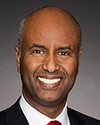
The Chair Liberal Ahmed Hussen

I call this meeting to order.

Welcome to meeting number 40 of the House of Commons Standing Committee on Foreign Affairs and International Development.

Pursuant to the order of reference of the House of Commons of Tuesday, February 24, 2026, the committee will now proceed to the clause-by-clause consideration of Bill C-219, an act to amend the Department of Foreign Affairs, Trade and Development Act, the Justice for Victims of Corrupt Foreign Officials Act (Sergei Magnitsky Law), the Special Economic Measures Act and the Broadcasting Act.

I would now like to welcome the officials who are with us today to assist the committee and answer members' questions during the meeting.

From the Canada Border Services Agency, we have Brett Bush, director general, immigration and asylum policy.

From the Department of Canadian Heritage, we have Charlene Budnisky, senior director of communication legislative and regulatory policy, and Pietro Cimino, acting manager, broadcasting, by video conference.

From the Department of Citizenship and Immigration, we have Matthew Sharp, assistant director of admissibility policy.

From the Department of Foreign Affairs, Trade and Development, we have Robert Brookfield, director general of sanctions and strategic export controls. We also have Jennifer Keeling, deputy director, human rights and freedoms, as well as Vindya Seneviratne, deputy director, sanctions policy division.

Before we proceed, I'd like to provide members of the committee with a few comments on how committees proceed with the clause-by-clause consideration of a bill. This is an examination of all the clauses in the order in which they appear in the bill. I will call each clause successively. Each clause is subject to debate and a vote. If there is an amendment to the clause in question, I'll recognize the member proposing it, who may explain it.

The amendment will then be open for debate. When no further members wish to intervene, the amendment will be voted on. Amendments will be considered in the order in which they appear in the package that each member received from the clerk. Amendments have been given a number in the top right corner to indicate which party submitted them. During debate on an amendment, members are permitted to move subamendments.

Once every clause has been voted on, the committee will vote on the title and the bill itself, and an order to reprint the bill may be required if amendments are adopted so that the House has a proper copy for use at report stage. Finally, the committee will have to order the chair to report the bill to the House.

I thank the members for their attention and wish everyone a productive clause-by-clause consideration of this bill.

Pursuant to Standing Order 75(1), consideration of clause 1, short title, and of the preamble are postponed.

(On clause 2)

The chair therefore calls clause 2.

Under clause 2 is the new G-3.
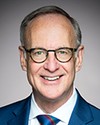
Rob Oliphant Liberal Don Valley West, ON

Thank you, Mr. Chair.

Before I begin, I'll say that we will be having a number of amendments that have been given notice for and maybe one or two that we will table during the meeting.

I want to start by thanking Mr. Bezan for the bill; Mr. Lawrence, who had a bill in the last Parliament; and Ms. Lantsman, who worked extensively on that bill. Raising these issues for Canadians and for the international community has been really important. We will be, in good faith, attempting to do two things as we walk through these amendments.

First, we want to strengthen some of the parts around transnational repression, which we think has been very much on Canadians' minds in a number of communities. This has been of interest to many Canadians who are worried about the safety and security of their neighbours and the ability for Canadians to exercise democracy in their daily lives without fear of some repercussion from another foreign entity.

We'll also be mindful through this bill about ensuring that there's no collateral damage that was unintended in the bill. We want to ensure that we have a bill that is responsive to the needs of human rights defenders and those who are prisoners of political conscience, while also making sure that we respect their liberties and their freedoms at the same time. We want to ensure that we do not restrict the government from being able to help Canadians in trouble—primarily—as well as citizens of other countries who may find themselves victims of repressive governments. We'll be mindful of doing that.

I come at this very much from my role as parliamentary secretary, more than my role as MP, in which I've had to work on these cases for many years. We've worked extensively with officials who do this in their daily lives. We get to pass legislation, and they have to work with it. Therefore, I also want to thank all the officials who are joining us today.

Behind these officials are hundreds of people in missions around the world who deal with complex consular cases, as well as human rights defenders from other countries. We are going to be doing that.

We also want to honour the life, work and witness of Sergei Magnitsky as we approach this bill. We want to make sure that it is honoured and that Canada can stand with like-minded countries around the world that are attempting to change the way repressive regimes work and the way we can stand up for democracy and human rights in the world.

That being said, I'm going to take the third amendment, G-3, from the government side, which is in respect to clause 2. Clause 2 begins at line 3 of page 2 and continues through until line 20 or so of page 3.

I move that clause 2 of Bill C-219 be amended by replacing line 10 on page 2 to line 13 on page 3 with the following.

It would begin—let me get this correct.

The Chair Liberal Ahmed Hussen

There's a point of order.

3:50 p.m.

Conservative

James Bezan Conservative Selkirk—Interlake—Eastman, MB

We all have a copy of the amendments. If you want to give an explanation, fine, but I don't think we need to read them verbatim.

Rob Oliphant Liberal Don Valley West, ON

Okay.

It is short. It changes it to:

cludes an outline of the measures that the Government of Canada has taken to advance human rights—and support prisoners of conscience and human rights defenders—internationally as part of Canada’s foreign policy.

(5) The Minister must publish the first report under subsection (4) within 12 months after the day on which this subsection comes into force.

That would be our first amendment, and you have it as G-3.

The Chair Liberal Ahmed Hussen

I place the amendment on the floor for debate.

Go ahead, Mr. Bezan.

3:50 p.m.

Conservative

James Bezan Conservative Selkirk—Interlake—Eastman, MB

We are not happy about this amendment, because it changes the front end of this on the human rights and removes some of the requirements around the reporting.

We had witnesses. Vladimir Kara-Murza said,

The one thing that never works...talking about this issue here...is so-called quiet diplomacy. When somebody tells you, “Oh, we're going to raise it privately. We're going to make sure we'll discuss it with them in a polite way”, that's the best way of knowing they're not going to do anything about it. The only defence, the only hope, the only lifeline for a political prisoner who is sitting in a prison cell in Siberia, in Xinjiang, in Venezuela or wherever it may be, is publicity, advocacy and public attention.

Brandon Silver, when he appeared, said, “more public reporting can be helpful. We've found cases in which it has, more often than not, led to release.”

Marcus Kolga reflected that.

Bill Browder said, “I can tell you that in 100% of the cases, it's a good thing for governments to name and shame, to label authoritarian regimes as acting out badly and arresting people who shouldn't be arrested, and to name prisoners of conscience. It's never a bad thing.”

In light of the testimony we heard and the work that all of us have done with different diaspora communities in our meetings over the years, with prisoners of conscience and with people who have faced persecution because of their political beliefs, religious beliefs or opposition to these authoritarian regimes around the world, now we're going to take out some of the definition. We're going to, essentially, at the end of the day, reduce some of the reporting requirements and what's in those reports. The only ones, really, who are going to be happy about this are the dictators, such as Vladimir Putin, Xi Jinping and the ayatollahs.

The Chair Liberal Ahmed Hussen

Mr. Oliphant, go ahead.

Rob Oliphant Liberal Don Valley West, ON

With all due respect to those witnesses—particularly Mr. Kara-Murza—who spoke about their personal experiences, people who did not testify at this committee have had a different experience, and they have not had a public profile.

I want to make sure that those who've had experiences of success—as we and the world had in that case—because of public attention.... There have been many cases that we don't hear about because they are still personal and private. We are trying to say one size does not fit all cases.

We had testimony from the Human Rights Action Group in their written brief—which was our number nine brief—from Mr. Robert Brookfield with Global Affairs Canada, as well as from Angelica Liao-Moroz on May 7. There were three different opinions that were contrary to those.

What I think the government is asking for is the flexibility to use nuance and discretion to decide when it is best to go public, and to encourage family members and NGOs to go public, and when not to go public.

In my own personal experience, three years ago, I had a very difficult case. I was working on the case of a non-Canadian citizen who was a permanent resident of Canada incarcerated in another country. There were NGOs that wanted to go public. I had to work with them very carefully to ensure the safety of that particular political prisoner, as well as many others, and we were able to bring him home. That's a case in which he was in such a situation that he would not testify at a committee like this because it would be too difficult for him.

We're trying to balance things. We believe that public declarations are, at times, extremely important and should be used. However, requiring these can put people's lives in danger. We have witness testimony that would back that up and would hold to our amendment.

The Chair Liberal Ahmed Hussen

Are there any other comments on this amendment?

3:55 p.m.

Conservative

James Bezan Conservative Selkirk—Interlake—Eastman, MB

There are other written briefs, as well, from people such as Michael Kovrig, Bennett Kovrig, Grace Chen and Ariana Botha, who said it's important to send a “vital message to families that their loved ones remain a priority and [this] reinforces transparency and accountability in efforts to secure their release.” They wrote in support of increased reporting requirements.

The Prosperity, Advancement, Networking and Direction Settlement Services and the Iranian Justice Collective also wrote, “A response requirement would make Canada's sanctions system more transparent, more serious, and more accessible to victims and diaspora communities.”

There was also Andrea Charron and the Human Rights Foundation. They said that having a consistent reporting mechanism, reviewing the people on the list and those whom we're trying to help, making that public is ultimately in the best interest of the victims and their families.

I think it sets the standard for us as Canadians, as well.

The Chair Liberal Ahmed Hussen

Mr. Oliphant is next.

Rob Oliphant Liberal Don Valley West, ON

The point is taken. However, again I would say that my same argument would apply: Every family is different, and I don't believe that every family needs that to know that the government is standing with them.

I know that our consular officials work literally 24 hours a day in supporting the families, but families don't always find the support successful, because their loved one is still not home and they're in a difficult situation. As a pastor, I know that if someone is in a difficult position, you want to show your support.

Every family is different. Again, I would say that we want discretion at the hands of not only our minister in reporting, but of our consular officials in the way that they support families who are in very difficult positions.

The Chair Liberal Ahmed Hussen

I see no further comments on this amendment.

(Amendment agreed to on division)

We go next to CPC-1.

4 p.m.

Conservative

Michael Chong Conservative Wellington—Halton Hills North, ON

Mr. Chair, I'm not going to move this amendment.

(Clause 2 as amended agreed to)

(On clause 3)

4 p.m.

Liberal

The Chair Liberal Ahmed Hussen

We're on clause 3.

Mr. Oliphant is next.

4 p.m.

Liberal

Rob Oliphant Liberal Don Valley West, ON

On clause 3, you're not—

4 p.m.

Conservative

Michael Chong Conservative Wellington—Halton Hills North, ON

We have no amendments, and neither do you.

4 p.m.

Liberal

Rob Oliphant Liberal Don Valley West, ON

Okay.

4 p.m.

Conservative

Michael Chong Conservative Wellington—Halton Hills North, ON

Agreed.

4 p.m.

Liberal

Rob Oliphant Liberal Don Valley West, ON

I'm just looking. I have a lot of paper here. I thought that there had been a Conservative one. I'm sorry.

(Clause 3 agreed to)

(On clause 4)

4 p.m.

Liberal

The Chair Liberal Ahmed Hussen

On clause 4, we have the new G-4.

4 p.m.

Liberal

Rob Oliphant Liberal Don Valley West, ON

Yes. I would amend that.

4 p.m.

Liberal

The Chair Liberal Ahmed Hussen

Continue, Mr. Oliphant.

4 p.m.

Liberal

Rob Oliphant Liberal Don Valley West, ON

With respect to clause 4, I move that we amend it by replacing line 1 on page 4 with the following:

4 (1) Paragraph 4(2)(a) of the Act is replaced by the following:

(a) a foreign national is responsible for, or complicit in, gross violations of internationally recognized human rights;

(2) Subsection 4(2) of the Act is amended by strik—

It also amends the clause by adding after line 6 on page 4 the following:

(f) a foreign national has engaged in activities that undermine or are likely to undermine international peace, security or stability.