Evidence of meeting #41 for Foreign Affairs and International Development in the 45th Parliament, 1st session. (The original version is on Parliament’s site, as are the minutes.) The winning word was work.

A video is available from Parliament.

On the agenda

Members speaking

Before the committee

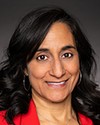
Anita Anand  Minister of Foreign Affairs
Carruthers  Assistant Deputy Minister and Chief Financial Officer, People and Corporate Management Branch, Department of Foreign Affairs, Trade and Development
Do  Director General, Development Finance Bureau, Department of Foreign Affairs, Trade and Development
Hutchison  Director General, Trade Strategy Bureau, Department of Foreign Affairs, Trade and Development

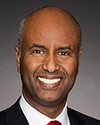
The Chair Liberal Ahmed Hussen

I call this meeting to order.

Welcome to meeting number 41 of the House of Commons Standing Committee on Foreign Affairs and International Development.

Pursuant to Standing Order 108(2) and the motion adopted on Thursday, June 11, 2026, the committee is meeting to study the subject matter of the main estimates 2026-27 and the supplementary estimates (A) 2026-27.

Today's meeting is taking place in a hybrid format pursuant to the Standing Orders.

I would now like to officially welcome our witnesses for the first hour.

Appearing in person, we have the Honourable Anita Anand, Minister of Foreign Affairs. From the Department of Foreign Affairs, Trade and Development, we have Arun Thangaraj, deputy minister; Sara Wilshaw, senior assistant deputy minister, international trade and chief trade commissioner; Alexandre Lévêque, assistant deputy minister, Europe, Middle East and Arctic branch; Robert Brookfield, director general of sanctions and strategic export controls; and Shirley Carruthers, assistant deputy minister and chief financial officer, people and corporate management branch.

I now invite the minister to deliver her opening remarks for up to five minutes.

3:30 p.m.

Oakville East Ontario

Liberal

Anita Anand LiberalMinister of Foreign Affairs

Thank you so much, Mr. Chair.

Before I begin, I'd like to take a moment to thank the public service. It is National Public Service Week, and to the public servants who work here, ensuring that this committee and other facets of the parliamentary process run well, thank you so much.

Thank you for giving me the opportunity to appear before you today to discuss the main estimates 2026‑27 and the supplementary estimates (A).

Global Affairs Canada has asked for a total of $7.2 billion in budgetary spending, which reflects $6.8 billion in voted expenditures and $400 million in statutory expenditures. The supplementary estimates (A) increased this request by an additional $23.9 million.

Through principled pragmatism, we are strengthening our alliances, we're diversifying our partnerships in terms of trade, and we are championing multilateralism.

Our goal is simple. We want to ensure that Canada's international engagement leads to greater security, resilience and prosperity for Canadians here at home. Canada is transforming its economy to make it stronger and more resilient to global shocks. Over the past year, our government has established more than 20 economic and security partnerships across five continents. It has opened up access to a market of 1.5 billion new consumers.

Canada is on course to double our market access this year through our trade agreements with India, ASEAN, Mercosur, Thailand and the Philippines. The government aims to double non-U.S. trade and catalyze $1 trillion in investment in Canada over the next five years in energy, transportation, data and defence, to name just a few sectors that we are focusing on.

As we diversify our trade partnerships, we must never lose sight of our core values and, above all, our commitment to human rights. Our trade must reflect these values. Forced labour has no place in Canadian supply chains or in the products on our shelves.

No one person, let alone many, should be trapped in an exploitative employment relationship so that others can benefit from lower costs. Canadians want confidence that our whole economy is built on fairness, not human exploitation. That is why last week we introduced Bill C-35, the ban on importing goods made with forced labour. The legislation is going to give the CBSA broader authority to enforce prohibitions, establish a public list of at-risk goods and require supply chain tracing before such goods can enter Canada. It's going to place the onus on importers to prove that their goods are free from forced labour.

This is Canada standing up for human rights, and this is Canada standing up for workers' rights, Mr. Chair. We're demonstrating to other middle powers that you don't have to choose between strong trade and strong values. We're delivering both.

Moving to humanitarian assistance, Canada's foreign policy is grounded in principled pragmatism, advancing national interests while remaining firmly anchored in our values. Humanitarian assistance is a core pillar of this approach. Canada has committed more than $450 million to support stability in Haiti. Canada has committed more than $13 million to Cuba.

For Sudan, the amount is over $120 million. For Lebanon, it's $37.7 million.

Our government must always ensure that we remain committed to supporting humanitarian assistance around the world.

In a world marked by uncertainty and instability, Canada's approach is clear. We'll strengthen our economic foundations, support our alliances and remain true to our values.

We will be disciplined in our choices, strategic in our partnerships and steady in our commitments. That is how Canada will remain secure at home and credible abroad.

Thank you.

The Chair Liberal Ahmed Hussen

Thank you for your statement, Minister.

I now open the floor to questions from members, beginning with Mr. Michael Chong.

You have six minutes.

3:35 p.m.

Conservative

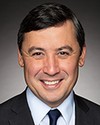
Michael Chong Conservative Wellington—Halton Hills North, ON

Thank you, Chair.

Thank you, Minister, for appearing.

I have two questions on Taiwan, and then I'll go on to other questions.

MP Judy Sgro indicated that she will lead a delegation of MPs to Taiwan this fall.

If MP Sgro is sanctioned, will you commit to publicly defending the long-standing practice of Canadian MPs going to Taiwan?

Anita Anand Liberal Oakville East, ON

Yes, I will, of course.

I base that point of view on the independence of Parliament and parliamentary privilege, which are both pillars of Canada's democracy. Members of Parliament and senators have a long-standing practice of visiting Taiwan and, indeed, choosing the jurisdictions they wish to travel to in order to represent Canadian interests and values.

Successive Canadian governments have in fact maintained respect for the one China policy. That policy remains unchanged. However, within that framework, Canada and Taiwan maintain significant economic, cultural and people-to-people ties.

As I reiterated at the beginning of my response, I will always stand up for our parliamentarians. That applies in the member's case, as well as to the member he mentioned.

3:35 p.m.

Conservative

Michael Chong Conservative Wellington—Halton Hills North, ON

Thank you.

Can you tell us when the Canada-Taiwan trade co-operation framework agreement is going to be finalized?

Anita Anand Liberal Oakville East, ON

I want to begin this response by indicating that there are strong economic ties between Canada and Taiwan. Taiwan is ranked as Canada's 15th-largest global merchandise trading partner and the sixth-largest in Asia, with two-way merchandise trade totalling about $9 billion.

The framework arrangement the honourable member of Parliament mentioned is not within my purview as Minister of Foreign Affairs, but I will continue to advocate strong trade relations, as the economic relationship already exemplifies.

3:40 p.m.

Conservative

Michael Chong Conservative Wellington—Halton Hills North, ON

I appreciate that answer. I would note that, under the framework legislation for the act, you are the lead minister over and above other ministers, such as the Minister of International Trade.

I have a question relating to the protection of diplomats in Canada.

As you know, earlier this year there was a shooting at a U.S. consulate. A recently unsealed U.S. indictment indicates that U.S. authorities believe the shooting is related to an IRGC or Iranian regime-linked network. You are responsible, under the Vienna Convention, for the protection of foreign missions here in Canada.

Can you tell us if there is a link between the U.S. consulate shooting and the Iranian regime?

Anita Anand Liberal Oakville East, ON

I want to start by underlining the importance with which we take the security and safety of not only Canadians but also the foreign diplomats who are operating and representing their respective countries on Canadian soil.

I want to add that the IRGC is a listed terrorist entity under Canadian law. We take that relationship on the terms you have seen via that listing, as well as not having diplomatic relations with Iran for well over 10 years.

In response to the question, the RCMP is working on this case. The investigation is proceeding. I am personally not part of that investigation. As you can imagine, the rule of law mandates that the executive branch of government not play into the process of independent investigations.

3:40 p.m.

Conservative

Michael Chong Conservative Wellington—Halton Hills North, ON

Understood.

Anita Anand Liberal Oakville East, ON

I don't have information to divulge.

I would like to close my answer by expressing deep sympathy to the family of the officer who was killed.

3:40 p.m.

Conservative

Michael Chong Conservative Wellington—Halton Hills North, ON

Understood. Thank you.

Do you have any information that would link the U.S. consulate shooting to an Iranian-linked network?

Anita Anand Liberal Oakville East, ON

As I indicated, in an ongoing investigation it would be inappropriate for me to speculate. I do not have information.

3:40 p.m.

Conservative

Michael Chong Conservative Wellington—Halton Hills North, ON

Okay. Thank you. I wasn't asking you to violate the sub judice convention or to interfere with the ongoing criminal investigation. It was just a question about whether or not you have information linking the Iranian regime to that shooting.

Another question I have—

The Chair Liberal Ahmed Hussen

Thank you. I'm sorry. We're just over time.

3:40 p.m.

Conservative

Michael Chong Conservative Wellington—Halton Hills North, ON

It's six and a half minutes, isn't it?

The Chair Liberal Ahmed Hussen

I'm sorry. You're right. You have one more minute. I apologize.

3:40 p.m.

Conservative

Michael Chong Conservative Wellington—Halton Hills North, ON

Thank you, Mr. Chair.

My final question is this. It's been two years, as in 24 months, since Bill C-70 was adopted by Parliament into law. The government officials at the time indicated that they hoped it would be up and running within 12 months. It's now almost two years later.

While I know that you're not the public safety minister, Foreign Affairs has an important interest in this bill, seeing as it counters foreign interference. Can you tell us when this registry will be up and running?

Anita Anand Liberal Oakville East, ON

Mr. Chair, my honourable colleague was in the House when that very question was put to the Minister of Public Safety. We've been absolutely clear that Canada's sovereignty must be respected. The minister has been clear that we will be vigilant in our efforts to combat the spread of foreign influence at all levels of government. All this work will culminate in the establishment of that registry.

You have seen that we have made an appointment relating to the first foreign influence transparency commissioner in Anton Boegman. The work continues. We will continue to ensure that this particular policy effort is brought to its rightful conclusion with the establishment of the commission, with that individual as the foreign interference commissioner.

Thank you.

The Chair Liberal Ahmed Hussen

Thank you very much.

Next is MP Rob Oliphant.

You have six minutes.

Rob Oliphant Liberal Don Valley West, ON

Thank you, Chair.

Now for some tougher questions, which is what we like to do.

Minister, in your plans you talked a lot about the Arctic and Arctic sovereignty. You indicated that we will be looking at two consulates. You opened one in Nuuk, and you are looking at one in Anchorage. Can you talk about the importance of the Arctic in terms of our foreign policy and in terms of our strategic positioning in the world?

Anita Anand Liberal Oakville East, ON

Thank you for the question.

Remember that, when I was the minister of National Defence, I made it a top priority to work on protecting the Arctic and ensuring its sovereignty.

As Minister of Foreign Affairs, I'm now continuing this work. I can assure you that I'll be working with Canada's current Minister of National Defence, Mr. McGuinty.

I'll also work with the other countries that believe in the need for Arctic sovereignty, especially given the current geopolitical situation. We're currently seeing a Russian threat near the Arctic Circle.

I have been working closely with our like-minded partners—Finland, Sweden, Denmark, Norway, Iceland—to ensure that we are together advocating for greater NATO focus on the Arctic. Indeed, in Sweden recently, the United States joined a meeting of those countries. We together issued a statement that indicates and underlines our forward-looking work together, given that the geopolitical environment is indeed seeing the Russian threat moving further and further north towards the Arctic Circle.

I will also say on the NATO point that, yes, NATO came forward with an operation called Arctic Sentry earlier this year. That is on a permanent-presence basis. That is a very important initiative. Indeed, when I was opening the consulate in Nuuk, Greenland, earlier this year, it was very important to discuss not only Canada's commitment but also NATO's commitment to the security, sovereignty and territorial integrity of Denmark and Greenland. At the same time, NATO should have a full-blown strategy relating to the Arctic. Sentry is not a strategy. It is an exercise in operation. I raised this issue with Secretary General Mark Rutte and in the meeting in Sweden, as I just mentioned, of the “Arctic seven”. We will be working with like-minded countries within NATO towards that full-blown strategy for NATO on the Arctic.

Rob Oliphant Liberal Don Valley West, ON

This committee has done quite a bit of work on the Arctic foreign policy. One of our requests of the government is for constant engagement with the people of the north, including the territorial governments as well as first nations and Inuit governments. Can you advise the committee on whether or not those people will still have an ongoing consultative role in your evolution of the Arctic foreign policy?

Anita Anand Liberal Oakville East, ON

Absolutely. Yes, always. The gist of my conversations with the ICPC, with Natan Obed, and indeed across our government, including with, for example, Minister Gull-Masty, Minister Alty and Minister Chartrand, has been to ensure that the rollout of our Arctic strategy will always involve a focus on indigenous voices, as well as to ensure that the economic benefits that will no doubt accrue as we work towards 3.5%—this is the work that's ongoing—will include work with indigenous peoples. We recently appointed an Arctic ambassador, Virginia Mearns, and she's been doing a wonderful job making sure that we have those liaisons in place.

Dual-use infrastructure is going to bring economic benefits to the north—the Prime Minister has been clear about that—and indeed having indigenous voices at the table, Inuit in particular, is going to be very important.

I'd like to thank all of the Inuit who have been working with us on this strategy. I've had a number of meetings with them, including in Nuuk, Greenland, when they came to see the raising of the Canadian flag in Nuuk. I'd like to thank them for coming and for the engagement.

Rob Oliphant Liberal Don Valley West, ON

I would just note that today in the House, we recognized members of the Canadian Armed Forces, including rangers. I thought that was very good.

I'm probably out of time. I would just say thank you for your work, and thank you to your team, who so often support us here at this committee with so many of our questions.

Thank you, Mr. Chair.

The Chair Liberal Ahmed Hussen

Thank you so much, Mr. Oliphant.

We go next to Monsieur Brunelle-Duceppe.

Mr. Brunelle‑Duceppe, you have the floor for six minutes.

Alexis Brunelle-Duceppe Bloc Lac-Saint-Jean, QC

Thank you, Mr. Chair.

Good afternoon, Minister. Thank you for joining us today.

I would like to talk about the agreement with Taiwan. We recently met with some of your officials. I asked them whether the reason for not signing the agreement with Taiwan stemmed from the government's fear of upsetting Beijing. I was met with a deafening silence in response. So I'm asking you this question. The negotiations ended a year ago. You said in your opening remarks that Canada signed multiple trade agreements. You boasted about this. You gave yourself a pat on the back.

Can you tell us whether your reason for not signing this agreement with Taiwan stems from a fear of upsetting Beijing?

Anita Anand Liberal Oakville East, ON

I'm not sure if the member is aware—and I thank him for the question—but we have recently made sure that we resolve certain trade tensions with China for the benefit of adding billions of dollars to Canada's agricultural sector.

At the same time, we are also pursuing our policy relating to defence and security. You will have seen that the Department of National Defence oversaw a sail through of the Taiwan Strait. The reflection here is that the Government of Canada is pursuing a number of policy initiatives at the same time on the economy, ensuring that we're unlocking economic advantages, for example, for the canola industry—

Alexis Brunelle-Duceppe Bloc Lac-Saint-Jean, QC

Thank you, Minister. You aren't answering my question.

Anita Anand Liberal Oakville East, ON

—but at the same time, it's ensuring that the defence and security—and our view that the—

Alexis Brunelle-Duceppe Bloc Lac-Saint-Jean, QC

Minister, you aren't answering my question.

Anita Anand Liberal Oakville East, ON

—Indo-Pacific is free and open—should remain part of our foreign policy.

Alexis Brunelle-Duceppe Bloc Lac-Saint-Jean, QC

I gather that you have mastered the art of avoiding questions and wasting time. That's unfortunate, and it's unfortunate for democracy. I asked you a clear question—

Steven Guilbeault Liberal Laurier—Sainte-Marie, QC

Mr. Chair, I have a point of order.

Alexis Brunelle-Duceppe Bloc Lac-Saint-Jean, QC

Mr. Guilbeault, please don't raise a point of order. I have six minutes of speaking time.

Steven Guilbeault Liberal Laurier—Sainte-Marie, QC

You don't just impute motives in this manner to the minister. I understand that this isn't necessarily the answer—

Alexis Brunelle-Duceppe Bloc Lac-Saint-Jean, QC

I hope that the time used for this point of order won't be taken off my speaking time.

The Chair Liberal Ahmed Hussen

Actually, Mr. Guilbeault pre-empted me.

You can, of course, ask questions, but to try to impugn the intentions of the minister is a little bit....

Alexis Brunelle-Duceppe Bloc Lac-Saint-Jean, QC

Okay.

Thank you, Mr. Chair.

Minister, who asked the two Liberal members of Parliament to leave Taiwan while Mr. Carney was on a trip to Beijing?

Was it you?

Anita Anand Liberal Oakville East, ON

Thank you again for the question.

I would like to emphasize that our members can travel anywhere in the world, and that our foreign affairs are sovereign.

Our foreign policy is not dictated by any other nation.

Alexis Brunelle-Duceppe Bloc Lac-Saint-Jean, QC

Okay.

So no one asked these members of Parliament to do so. They left of their own accord.

Do you swear on the Bible or on any book, Minister?

No one in your government asked them to leave.

Is that right?

Anita Anand Liberal Oakville East, ON

As I said, the independence of Parliament is a pillar of Canadian democracy.

Members and senators have a long tradition of travelling all over the world. They're free to travel wherever they want.

Alexis Brunelle-Duceppe Bloc Lac-Saint-Jean, QC

Good. Thank you.

So no one in your government asked these members of Parliament to leave Taiwan. That's your response.

Minister, you recently introduced Bill C‑35 on forced labour. We would like to congratulate you on certain aspects. You incorporated many of the components set out in the Bloc Québécois's bill on forced labour, Bill C‑251.

That said, multiple reports have documented forced labour, including a report from the University of Sheffield. This report shows that forced labour was used to produce Chinese electric vehicles.

My question is as follows.

The bill will give you the authority, by order in council, to list products that will be banned here or that must undergo an assessment to determine whether forced labour played a role in their production.

We have evidence of the use of forced labour in the supply chains for these electric vehicles. Can you confirm for the committee that, after the passage of Bill C‑35, you will add Chinese electric vehicles to the list of products made using forced labour?

Will this render the agreement that Mr. Carney signed with Xi Jinping null and void?

Anita Anand Liberal Oakville East, ON

Thank you again for the question.

At this time, we can't confirm the goods that will be included on the list. We already introduced the bill last Friday. We'll now be holding discussions across the country with the members of Parliament and stakeholders to hear their views. In the fall, during the next parliamentary session, we'll have a list. We'll return here to the committee to discuss it.

Alexis Brunelle-Duceppe Bloc Lac-Saint-Jean, QC

We can't wait.

Anita Anand Liberal Oakville East, ON

At that point, I can discuss the products that will or won't be on the list.

Alexis Brunelle-Duceppe Bloc Lac-Saint-Jean, QC

Good. I understand. It's good to hear you respond in this way.

If forced labour is proven to have been used in the supply chain for Chinese electric vehicles, will you add these vehicles to the list of products banned in Canada?

Anita Anand Liberal Oakville East, ON

I want to be clear that forced labour for any product or good is already prohibited under Canadian law. We have laws from 2020 and 2024 that specifically prohibit forced labour in a supply chain. Bill C-35 provides additional tools to the CBSA to ensure that any good made by forced labour does not enter the country, period.

The Chair Liberal Ahmed Hussen

Thank you very much.

Alexis Brunelle-Duceppe Bloc Lac-Saint-Jean, QC

Thank you.

The Chair Liberal Ahmed Hussen

Next, we go to MP Rood.

You have five minutes.

3:55 p.m.

Conservative

Lianne Rood Conservative Middlesex—London, ON

Thank you very much.

Thank you very much, Minister, for being here today.

Minister, your government just announced another $100 million for Gaza and the West Bank, on top of more than $500 million already sent since late 2023. In fact, you issued flexible and unearmarked funding without Canadian controls a day after the UN fired 70 workers for deep ties to Hamas terrorists. We've seen multiple reports of Canadian aid being directed to, stolen by or controlled by Hamas in the past.

How can you guarantee taxpayers that none of this money will end up in the hands of terrorists or be redirected by the Palestinian Authority to support Hamas operations? Can you let us know how safeguards failed and allowed Canadian aid to support Hamas?

Anita Anand Liberal Oakville East, ON

I want to specifically reinforce a very important point. The Government of Canada does not tolerate any misuse or diversion of international assistance. We work with experienced humanitarian partners. We work to deliver life-saving assistance. Partners are required to maintain strong internal controls. In addition to those internal controls, my department carries out enhanced due diligence. Any partner receiving Government of Canada money is thoroughly vetted.

I want to specifically underline, with regard to Hamas—we have repeatedly said this, and I will underscore it here today—that Hamas should play no part in the future government of Palestine and that Hamas should demilitarize. In no way does this government associate itself with Hamas.

I have my officials here, if you'd like to have questions answered on the due diligence process.

3:55 p.m.

Conservative

Lianne Rood Conservative Middlesex—London, ON

Minister, respectfully, over the past five years, your own numbers have shown that Canada has sent over $11 billion in aid to dozens of countries that are under Canadian sanctions or that have terrible human rights records. I have an Order Paper question to prove it, so you can't deny this. It's Q-328. This paints the picture that Canadian taxpayer dollars are being laundered through bilateral and multilateral projects and going to regions under sanctions.

Why are you issuing this funding?

Anita Anand Liberal Oakville East, ON

A long-standing part of Canada's foreign policy is dedicated to humanitarian aid. If you look at Cuba, Lebanon, Gaza or Sudan, there is a clear line in support of our values and Canadians' values related to humanitarian aid.

On the integrity of that aid, I take issue with the point about our due diligence not being effective. We take every precaution to ensure that our aid reaches civilians and that the due diligence process, before it is delivered, is functional, rigorous, contains oversight and is held to the highest standards. These safeguards form the cornerstone of our approach.

I will ask Madam Carruthers if she'd like to add to that particular response.

Shirley Carruthers Assistant Deputy Minister and Chief Financial Officer, People and Corporate Management Branch, Department of Foreign Affairs, Trade and Development

Certainly.

In terms of the development assistance that has gone to some of the countries you are alluding to, I can say that, in some cases, it has flowed through multilateral organizations. Countries such as India and China, for example, are eligible for development assistance under the ODAA Act, so—

4 p.m.

Conservative

Lianne Rood Conservative Middlesex—London, ON

I'm sorry. My time is very short.

Minister, shouldn't compassion start at home for the people who built and defended this country? I believe Canadians deserve that transparency before we send another cent to anyone who does not contribute directly to our country.

I'm asking if you will commit to a full public audit of all Canadian aid funding so we can know exactly where every dollar went and have proof that it hasn't benefited terrorists or corrupt foreign officials, or been siphoned away into bureaucracies abroad.

4 p.m.

Liberal

Anita Anand Liberal Oakville East, ON

Mr. Chair, with great respect to the honourable member, I do not accept the premise of the question. We will not apologize for helping people both at home and abroad.

4 p.m.

Conservative

Lianne Rood Conservative Middlesex—London, ON

Minister, my question was this: Will you commit to a full public audit of all Canadian aid funding so we know exactly where every dollar went and have proof that it hasn't benefited terrorists or corrupt foreign officials, or been siphoned away into bureaucracies abroad?

4 p.m.

Liberal

Anita Anand Liberal Oakville East, ON

Actually, my continuing to appear at committee, the supplementary estimates process and the work the Treasury Board of Canada does before it releases any funds are all to ensure that this very due diligence process occurs. I know this as a former president of the Treasury Board. I sat around that table numerous times to ensure that accountability and due diligence related to taxpayer dollars were being undertaken.

All funding is subject to rigorous vetting. As minister, I have doubled down on the importance of being prudent with Canadian taxpayer dollars.

4 p.m.

Conservative

Lianne Rood Conservative Middlesex—London, ON

Minister, why should Canadians trust our government—

4 p.m.

Liberal

The Chair Liberal Ahmed Hussen

I'm sorry. We're out of time. Thank you.

Next is MP Clark.

4 p.m.

Liberal

Braedon Clark Liberal Sackville—Bedford—Preston, NS

Thank you very much, Mr. Chair.

Thank you, Minister and everyone else, for being here.

Off the top, I will say that I think Canada's history of foreign aid and multilateral support is something that, as a country, we should be incredibly proud of. It's something that continues to save lives around the world. It is a real testament to our nation's history, culture and influence around the globe.

I just wanted to say that.

Minister, in your opening comments, you mentioned the phrase “principled pragmatism” a couple of times. I think that an effective foreign policy is a coherent foreign policy.

I'm curious about how you see the framing of principled pragmatism. Do you see it as a cornerstone of Canada's foreign policy? How does it trickle down to practical levels, so that the tactics follow the strategy?

4 p.m.

Liberal

Anita Anand Liberal Oakville East, ON

It is helpful to talk about the frame of our foreign policy, given how many specific and detailed questions are arising in this committee appearance, so thank you for raising that.

The foreign policy that we are executing today is a direct response to the very volatile geopolitical environment and the fact that multilateral institutions that we have traditionally relied upon for our prosperity are not functioning as they did.

The gist of the Prime Minister's speech in Davos and subsequent work that we've been doing to build on that framework is to exemplify that while we are pragmatic, while we have signed 20 security, defence and economic agreements on five continents over the past year, we are continuing to uphold the principles that have long been a part of our foreign policy.

I spent the last response talking about humanitarian assistance. In the last year alone, when you look at our humanitarian aid to populations that are incredibly vulnerable, starving or oppressed, you will see that commitment to our values and principles being upheld.

Indeed, I laid out some of these values in my speech to the United Nations on September 29 of last year: the idea that we will stand for environmental sustainability, we will stand for gender equality, we will stand for reconciliation and we will stand for humanitarian aid.

In fact, that's a set of principles that largely defines much of the work in our government. I think many of us would say that while we are pragmatic, we will always stay true to those principles. Indeed, Bill C-35 reflects the principle that we hold dearly, that there should not be slavery in supply chains, and we will not accept goods into this country if they are made as a result of exploitation in the supply chain.

Braedon Clark Liberal Sackville—Bedford—Preston, NS

Thank you very much, Minister.

I think another example where we've seen this come to life, of course, is our support for Ukraine. I don't have all of the numbers at hand, but I'm sure that Canada has been one of the largest per capita contributors to Ukraine over the last handful of years. Just in the last 24 hours, I saw the Prime Minister with President Zelenskyy in France as well.

Minister, could you just give us, in the minute or so we have remaining, a bit of an update on what we're doing to continue to support Ukraine and what we hope to see over the next six to 12 months to continue the great work that we've done?

Anita Anand Liberal Oakville East, ON

This is a good question that focuses on work that has been ongoing in the Government of Canada since 2015 with Operation Unifier, whereby members of the Canadian Armed Forces have trained approximately 47,000 members of the Ukrainian armed forces. That is part of the work we're doing.

Layer on top of that the work over the past four and a half years, since the illegal and unjustifiable further invasion of Ukraine by Russia, during which we've put forward approximately $25.5 billion in multiple forms of aid. That would be financial, economic and military aid, for example.

On top of that, we are also working with civil society and countries around the world relating to the return of Ukrainian children. We are the co-hosts of that effort internationally. I've just, in the recent past, returned from Brussels, where we had a very large gathering of countries supporting the return of Ukrainian children who have been indoctrinated, kidnapped and taken by Russia during the war.

There's more work to be done to bring Ukrainian children home to their families. We will be hosting another such summit here in Canada, in Toronto, on September 29 and 30. We very much hope that members of our government and beyond will be able to attend. It is extremely important, not just for Ukrainians but for the principle of democracy writ large.

I'd like to thank MP James Bezan from the Conservative caucus, in fact, with whom we have been working over the past number of years to ensure that there is a unified message going forward for Ukrainians in Canada.

The Chair Liberal Ahmed Hussen

Okay.

Next is Mr. Brunelle-Duceppe.

You have two and a half minutes.

Alexis Brunelle-Duceppe Bloc Lac-Saint-Jean, QC

Thank you, Mr. Chair.

Minister, my question is quite simple. I would like a yes or no answer.

Do you swear that no one in the government ordered Ms. Jaczek and Mrs. Lalonde to cut short their trip to Taiwan in January 2026?

Anita Anand Liberal Oakville East, ON

Not to my knowledge....

Alexis Brunelle-Duceppe Bloc Lac-Saint-Jean, QC

Good. Thank you.

Can you tell the committee how much was cut from international development assistance in the latest 2025 budget? I just want you to give me the figure.

4:05 p.m.

Assistant Deputy Minister and Chief Financial Officer, People and Corporate Management Branch, Department of Foreign Affairs, Trade and Development

Shirley Carruthers

It's $2.7 billion over five years.

Alexis Brunelle-Duceppe Bloc Lac-Saint-Jean, QC

So the Canadian government cut international assistance by $2.7 billion.

Yesterday, representatives from the United Nations Children's Fund spoke before the Subcommittee on International Human Rights of the Standing Committee on Foreign Affairs and International Development. They told us that we couldn't do more with less. When people tell us that we can do more with less, that just isn't true. When we have less, we do less.

How do you explain the fact that the government is spending extraordinary amounts on defence while your department is cutting international assistance by $2.7 billion?

This was done under your department's authority. Yet all the non‑governmental organizations and groups involved in international assistance say that the current situation is appalling.

What would you say to them?

Anita Anand Liberal Oakville East, ON

I thank the honourable member for the question.

It should be noted that we have a program for humanitarian assistance. We're also continuing to diversify our supply chains. We recognize that we were elected because Canadians wanted a more effective government. We'll strike a balance between these objectives.

I'd like to continue by saying that we are operating our program at 85% capacity, so 85% of our work is continuing.

We were elected on a mandate to render government more efficient. That's exactly what we're doing, while providing humanitarian aid and supporting NGOs and international organizations. We're ensuring that the work we're doing across government is as efficient as possible.

Finally, I'd like to underline that there have been no cuts to our humanitarian budget.

The Chair Liberal Ahmed Hussen

Thank you very much.

Before I move to the next questioner, I would like to get unanimous consent from colleagues.

We have a vote in 28 minutes, and I want to get your consent so we can continue the meeting.

Are you agreeable to that?

Some hon. members

Agreed.

The Chair Liberal Ahmed Hussen

Thank you.

Next is MP Michael Chong.

You have five minutes.

4:10 p.m.

Conservative

Michael Chong Conservative Wellington—Halton Hills North, ON

Thank you, Mr. Chair.

Minister, I'd like to talk a little about Canada-U.S. relations.

Mexico has, formally and publicly, announced a table on the review of CUSMA.

When is Canada going to formally start a table to review CUSMA?

Anita Anand Liberal Oakville East, ON

I believe Minister LeBlanc, the minister responsible for Canada-U.S. trade, will be meeting shortly with his counterpart, Jamieson Greer, the United States ambassador for trade. It is the work of Minister LeBlanc, as well as our chief negotiator Janice Charette, to ensure that this dialogue is continuing with the United States.

I also want to underline that the CUSMA trade agreement in place has 85% of Canada-U.S. trade continuing to operate and pass through the 49th parallel tariff-free. The work they will do is to continue that co-operation while advocating for those suffering in the sectoral tariff domain, particularly with respect to steel, aluminum, lumber and auto.

As I said, this work is ongoing, and it's extremely important.

4:10 p.m.

Conservative

Michael Chong Conservative Wellington—Halton Hills North, ON

Can you give us any idea when the tables will be started?

Mexico is currently at formal tables established between Mexico and the United States. Canadians have no idea when formal tables are going to be established and what date they will start on. It's creating a great deal of uncertainty in the business community and among Canadian workers.

Do you have any idea when tables on the review of CUSMA or tables on bilateral irritants such as section 232 tariffs will be established? Do you know the dates?

Anita Anand Liberal Oakville East, ON

As I said, the discussions with the Americans in the formal channels with the chief negotiator and the minister responsible have been ongoing.

4:10 p.m.

Conservative

Michael Chong Conservative Wellington—Halton Hills North, ON

My question isn't about—

Anita Anand Liberal Oakville East, ON

The work they will continue to do is to advocate on the 232 tariffs.

4:10 p.m.

Conservative

Michael Chong Conservative Wellington—Halton Hills North, ON

I understand that.

My question isn't about discussions, phone calls or meetings. My question is this. When are the formal tables going to be established? On what date will they start? If you don't have a precise date, perhaps you could give the committee a sense of what month they're going to start in. Mexico has started formal tables.

Anita Anand Liberal Oakville East, ON

Mr. Chair, I'm sure my honourable colleague is aware that my purview is different from that of the Minister for Canada-U.S. Trade. It is not unusual for bilateral discussions between different parties to move at a different pace.

4:15 p.m.

Conservative

Michael Chong Conservative Wellington—Halton Hills North, ON

I understand. We don't have it.

Anita Anand Liberal Oakville East, ON

In the meantime, I will continue to work with Minister LeBlanc and my counterpart in Mexico to build that bilateral relationship.

4:15 p.m.

Conservative

Michael Chong Conservative Wellington—Halton Hills North, ON

We don't have any guidance about when the tables will be established. That's clear.

I have a question about the overall approach of the Government of Canada as expressed by the Prime Minister and other ministers of the government.

I was interested to read several weeks ago about the government now pushing fortress North America and tighter integration of the Canadian and American economies. This is something the Prime Minister talked about in New York recently. He also talked about Canada strong making America great again. It seems to be a very different approach from the approach of a year ago, when it was about countervailing tit-for-tat. It was about the relationship with the U.S. being over, and so on and so forth.

Can you tell us about the change in approach on bilateral relations and what the thinking behind that is?

Anita Anand Liberal Oakville East, ON

I differ with you to some extent, in that the United States remains Canada's largest trading partner, the most significant market for many businesses, and over 70% of Canadian businesses continue to choose the United States as their first export destination. Geography matters. We're fully cognizant that the reliance and the work that Canadian companies are going to be doing will involve the relationship with the United States. Look at defence, for example. We have a situation in which much of the defence industry is integrated with its U.S. counterparts.

Recognizing that the U.S. remains Canada's largest trading partner, we have to move forward in ways that are co-operative. My work with Secretary Rubio is and will continue to be outside of the trade relationship per se and how we are building our bilateral ties.

In fact, the work we're doing together on the Arctic is one example. I will be travelling to Anchorage this summer to open a Canadian consulate there. I've discussed this with Secretary Rubio. Again, we're on the same page about the need to work together for Arctic security and protection. There is work being done with the Americans.

I will say that we have to be fully cognizant of that relationship overall, in sectors within the trade context and outside it.

The Chair Liberal Ahmed Hussen

Thank you very much.

MP Fortier, you have five minutes.

Mona Fortier Liberal Ottawa—Vanier—Gloucester, ON

Thank you, Mr. Chair.

Minister, thank you for joining us.

I would like to take this opportunity to thank the members of the public service for their work, since it's National Public Service Week. I know that everyone here today works hard, and so do the people at Global Affairs Canada and in other departments.

I would like to talk about Haiti. You spoke about Haiti in your opening remarks. I also want to ask you a quick question about Canada and the francophonie.

As you said, the government has provided over $450 million in ongoing bilateral assistance, humanitarian assistance and multilateral funding. For some time now, under your leadership, the government has been promoting efforts to implement the United Nations‑backed Gang Suppression Force in Haiti. Furthermore, it has demonstrated a commitment to the Haitian people. We want to ensure their security and sovereignty. They want this as well.

I know that you have worked a great deal with allies and contributor countries to promote the troops' efforts and the humanitarian operations. Some of these countries include El Salvador, Chad, Bangladesh, Guatemala and Côte d'Ivoire. You will be attending the General Assembly of the Organization of American States next week in Panama.

Can you talk about the next steps or the steps currently under way?

You're making other efforts to rally allies and to move forward with the Gang Suppression Force in Haiti.

Can you tell us what role Canada plans to play in Haiti's rehabilitation and reconstruction efforts?

Anita Anand Liberal Oakville East, ON

As always, thank you for your hard work. I would also like to thank my colleague, Robert Oliphant.

We'll make sure that we're there for Haiti and for the Haitian people. The instability in Haiti has been going on for a long time. Since 2022, we've invested over $460 million in peace and security in Haiti. We're counting on the interim government to organize elections as soon as possible. This is a critical time. Canada remains ready to support the Haitian people in their return to stability.

Drawing a thread from the last question about working with the United States and how that affects our foreign policy, I will say that Secretary Rubio and I have been working together on gathering international funds for Haiti. This work dates back to last summer, when we began discussion about Canada's support for a UNSC resolution. I met with Secretary Rubio a few times leading up to the UN General Assembly week. Together, we worked on that resolution.

After that was passed, we then continued to advocate within the G7 and beyond for other countries to step up with financial aid for security and stability in Haiti. When I was in Doha, for example, I spoke with the Qataris about supporting Haiti. They came forward with funding. When I was at the G7, I spoke with my counterparts there about supporting Haiti. Germany actually stepped up with funding for Haiti.

This is a moment when, if we wish to continue to see democracy and stability thrive and exist, we need to work together as like-minded countries. It's not just one country; it's regional stability. I'll be travelling to Caricom next week in Panama.

I'll be co‑chairing a meeting, with a number of my counterparts, on regional stability.

The foundation of any economic recovery has to be the stability of institutions within a country. That is very much the centre of the conversation that we will have in Panama next week.

Mona Fortier Liberal Ottawa—Vanier—Gloucester, ON

You probably won't have time to answer my question. However, could you provide a brief update on Canada's bid to host the 2028 francophonie summit?

It would be held in the national capital region, specifically in my constituency of Ottawa—Vanier—Gloucester. I imagine that discussions on this matter are ongoing. We hope that Canada's bid will be successful.

The Chair Liberal Ahmed Hussen

Please give a very brief response, Minister. We're out of time.

Anita Anand Liberal Oakville East, ON

I also believe that we must continue our efforts to host the francophonie summit, which would be held here in the national capital region. I would also like to thank you for your efforts. Now is the time for Canada to be on the same page regarding the importance of the francophonie.

The Chair Liberal Ahmed Hussen

Thank you.

MP Chong, you have five minutes.

4:20 p.m.

Conservative

Michael Chong Conservative Wellington—Halton Hills North, ON

Thank you, Chair.

I want to go back to trying to understand the government's foreign policy direction. The Prime Minister has recently said two things. I mentioned one thing he mentioned earlier, which was that he supported building fortress North America. More recently, he has said that he believes the next world order will likely be built out of Europe. If the next world order is being built out of Europe and we're in fortress North America, how does that work? In other words, are we seeking closer ties with Europe, or are we building fortress North America? It just seems to me to be incongruous.

Maybe you could explain to our committee where the government is going on all of this.

Anita Anand Liberal Oakville East, ON

Sure. I'd love to respond to that. I thank the member for always the constructive conversation.

There is nothing inconsistent with seeking to diversify our trading relationships. That's exactly what is happening here. We have a strong trading relationship with the United States. We need to address sectoral tariffs—the 232s, as you said—and we will continue to do that through the negotiation process, through the dialogue and through the discussions. At the same time, we can diversify trading partners while maintaining existing relationships. Those 20 agreements struck over the past year in security, defence and the economy are extremely important. The work we are doing with the EU, as the only non-EU member of SAFE, is another example of diversification.

The diversification doesn't rest on just those particular points. Let's look at ASEAN. We're looking to conclude an FTA in 2026. Let's look at Mercosur. We're also working to ensure that we have an FTA there. Even last year, we concluded an FTA with Indonesia. Over and above FTAs, it's foreign direct investment. We are having an investment summit here in September. The Prime Minister has received commitments of up to $100 billion in foreign direct investment.

Regarding foreign affairs, in terms of the work we are doing internationally, I've directed our officials to ensure that two-way trade and foreign direct investment are at the very top of the agenda, which will ensure that we double non-U.S. trade over the next 10 years.

4:25 p.m.

Conservative

Michael Chong Conservative Wellington—Halton Hills North, ON

Thank you for that. I would just note that despite all the fanfare about travelling around the world and trying to attract foreign investment, the reality is that according to Statistics Canada's May 29 release, business capital investment in Canada declined 0.7% last quarter, the fifth consecutive quarterly decline. None of this seems to be working. Business capital investment is in fact declining, notwithstanding foreign investment flows. I just want to make that point.

To go back to the earlier point, it just seems to be somewhat contradictory to build fortress North America, which implies a tariff wall around North America, and then to try to further diversify trade in the Indo-Pacific region and in Europe. I would point to the fact that today it's been reported that the Prime Minister was talking to President Trump about the 49,000 electric vehicles that the government has decided will be admitted to Canada at a much reduced tariff. To me, that seems to be an example of the incongruity between building fortress North America and at the same time agreeing to allow 49,000 EVs manufactured in the PRC into Canada.

Again, it seems to be a contradiction. I think, from what I've been reading, some European allies are actually questioning how fortress North America is consistent with diversifying trade with the European Union.

Anita Anand Liberal Oakville East, ON

Mr. Chair, allow me the time to respond to this question.

There is no contradiction between growing the Canadian economy—doubling non-U.S. trade over the next 10 years by diversifying our trade relationships, including with Europe—and ensuring that Canadian businesses have markets south of the 49th parallel.

Our responsibility as a government is to grow the Canadian economy at a moment when the geopolitical order and in particular the world trading order that have been at the heart of Canada's prosperity for decades are being completely rewired.

Again, there is no incongruity between ensuring that we have a strong relationship with the United States and Mexico and diversifying non-U.S. trade, including with Europe, including with the ASEAN, including with Mercosur, including in the gulf region, from which I just returned, and the list goes on.

We will double non-U.S. trade. We will bring home $1 trillion of investment, $100 billion of which the Prime Minister has already received a commitment for. This is work that is pragmatic. It is not automatic, but it will continue, and we will deliver for Canadians and the Canadian economy.

The Chair Liberal Ahmed Hussen

Thank you, Minister.

Mr. Sari, you have five minutes.

Abdelhaq Sari Liberal Bourassa, QC

Thank you, Mr. Chair.

Minister, thank you for joining us. I want to thank your team as well.

You spoke about the five continents in terms of diplomatic co‑operation. I really appreciated this. However, I would like to focus on one continent in particular, which is Africa. I would also like to divide my comments into two components.

The first component is humanitarian assistance. Minister, you know quite well that security challenges are widespread. There are also challenges related to food security and climate change. My first question for you is as follows.

Can you talk a bit about the government's efforts to address these challenges?

The second component is as follows. Africa isn't merely a source of challenges or problems. There may also be some quite promising business and diplomatic opportunities.

Can you talk about these two types of partnerships that Canada can have with the African continent?

Anita Anand Liberal Oakville East, ON

Thank you for the question.

As you know, we have a strategy for Africa. I would also like to thank Mr. Oliphant for his work on this matter.

Regarding Canada's Africa strategy, we'll continue to build relationships with the African countries. There's no doubt about this. We'll also continue to implement Canada's Africa strategy. This means that, through multilateral partners such as the African Union, we'll support local leadership. The relationship isn't just about providing humanitarian assistance. That isn't the case.

Our strategy will include another component. We'll also engage in a dialogue about our economic relationships. Africa is the largest recipient of international assistance. However, some African countries are also quite rich in natural resources, for example. We'll continue to identify complementary sectors in Canada and in African countries.

I'll be travelling to Africa in the coming weeks. I'll continue to build our economic relationships with Africa, because some African countries are true powerhouses. We'll continue to seek opportunities to diversify our supply chains and our agreements with them.

Abdelhaq Sari Liberal Bourassa, QC

Climate change affects a number of countries. As you said, Africa offers a number of opportunities when it comes to natural resources.

How can we strike a balance and continue to show our commitment to combatting climate change while making these investments?

Anita Anand Liberal Oakville East, ON

As I said, we have certain values when it comes to foreign affairs, such as climate change. This means that, in each of our approaches and policies with every country, we discuss how to emphasize the significance of climate change, as well as how to promote our values in general, such as the ban on forced labour.

It's a way to discuss multiple issues at once.

Abdelhaq Sari Liberal Bourassa, QC

My final question relates to the remarks made by my colleague Ms. Fortier regarding the francophonie.

One of the continents with the highest concentration of francophone communities is Africa.

During your next visit or in your future collaboration, how do you plan to capitalize on this to promote a stronger francophonie?

As you can see, I'm from Quebec, and it's clear that the francophonie is one of the challenges on which we want to work hard.

We, too, naturally wish to host the francophonie summit. It is not only Ms. Fortier who wishes this.

Anita Anand Liberal Oakville East, ON

It is worth highlighting the Prime Minister's speech at Davos regarding the importance of multilateralism and the importance of middle powers working together.

The same applies to the francophonie. The Organisation internationale de la Francophonie is a multilateral organization composed of several French-speaking states, such as Canada. That is why we want to host the Sommet de la Francophonie—because we are like them. We have a multilateral system, we speak both French and English, and we are a bilingual country.

Furthermore, our people want their voices to be heard on the international stage in both official languages. That is our policy, and we will continue to seek ways to engage on the international stage alongside other middle powers on behalf of our people. We must recognize that hosting the summit will also bring several economic benefits to the nation's capital. It is therefore important that we work together on this.

The Chair Liberal Ahmed Hussen

Thank you very much.

Monsieur Brunelle-Duceppe, you have two and a half minutes.

Alexis Brunelle-Duceppe Bloc Lac-Saint-Jean, QC

Thank you, Mr. Chair.

Minister, you may find me tiresome, but I must return to the question I asked you earlier.

When I asked you whether the government had put pressure on Mrs. Lalonde and Ms. Jaczek to return to Canada, you replied: “Not to my knowledge”. That is what you said. You will want to check the committee's blues.

However, in a joint statement, Ms. Jaczek and Mrs. Lalonde clarified that they had returned to Canada early on the government's advice in order to avoid any confusion regarding Ottawa's foreign policy.

What you're telling me is that Canada's Minister of Foreign Affairs is unaware of a statement made by two MPs from the government caucus who alluded to Canada's foreign policy.

There is one thing I hate, Minister, and I'm saying this so that it's clear—we're amongst ourselves—I don't like being made a laughing stock.

What you're telling me is that you were not aware of this statement regarding the fact that these two MPs were told by their government to cut their trip short and return to Canada.

Do you stand by what you said earlier?

Anita Anand Liberal Oakville East, ON

First of all, I want to say that I value the contributions of my hon. colleague, and in no way am I undermining or making light of your question. It's fully within the process of the committee for you to raise questions of concern to you, and that's exactly what I'm underlining that I have respect for.

My answer remains on the record. I had no conversations with those members, and I will simply say—

Alexis Brunelle-Duceppe Bloc Lac-Saint-Jean, QC

No, that is not the question I asked you. The question is this: were you aware that—

Anita Anand Liberal Oakville East, ON

Could I just finish my answer?

Alexis Brunelle-Duceppe Bloc Lac-Saint-Jean, QC

Were you aware that your government had exerted pressure to get them to return? That is the question I am asking you. Please answer me with a yes or a no.

Earlier, you told me: “Not to my knowledge”.

Do you stand by what you said earlier?

Anita Anand Liberal Oakville East, ON

I stand by what I said, and I will also say that the principle that I have continually operated under, that I have expressed at this committee today, is that parliamentarians—

Alexis Brunelle-Duceppe Bloc Lac-Saint-Jean, QC

They made a statement.

Anita Anand Liberal Oakville East, ON

—have the ability to decide where they are travelling—

Alexis Brunelle-Duceppe Bloc Lac-Saint-Jean, QC

They made a statement.

Anita Anand Liberal Oakville East, ON

—and we will—

Alexis Brunelle-Duceppe Bloc Lac-Saint-Jean, QC

You didn't know that.

Anita Anand Liberal Oakville East, ON

—as the honourable member who previously asked that question knows—

Alexis Brunelle-Duceppe Bloc Lac-Saint-Jean, QC

That's what you'd have me believe.

The Chair Liberal Ahmed Hussen

Monsieur Brunelle-Duceppe, I believe the minister is answering your question.

Anita Anand Liberal Oakville East, ON

—provide diplomatic support to those MPs when they are travelling.

Thank you.

The Chair Liberal Ahmed Hussen

Thank you very much, Minister, for your appearance today and for answering our questions.

We will now briefly suspend to prepare for our next panel with officials, as well as to vote.

Thank you. The meeting is suspended.

The Chair Liberal Ahmed Hussen

I call this meeting to order.

I would like to welcome the officials for the next half hour.

From the Department of Foreign Affairs, Trade and Development, we have Shirley Carruthers, assistant deputy minister and chief financial officer, people and corporate management branch.

Thank you for staying with us.

We also have Cam Do, director general, development finance bureau; David Hutchison, director general, trade strategy bureau; and Emmanuelle Lamoureux, director general, strategy bureau.

We will now continue with questions from members, beginning with Mr. Aboultaif.

You have five minutes.

4:55 p.m.

Conservative

Ziad Aboultaif Conservative Edmonton Manning, AB

Thank you, Chair.

I'm sorry to keep you waiting, by the way. The time is running.

On the estimates, vote 10, grants and contributions, there will be less money available in that category. For the sake of the committee, can you tell us what vote 10 includes and how this is going to affect your operation in general?

4:55 p.m.

Assistant Deputy Minister and Chief Financial Officer, People and Corporate Management Branch, Department of Foreign Affairs, Trade and Development

Shirley Carruthers

Thank you very much for that question.

Under vote 10, we have a number of different programs. I think we have 19 programs overall, but our biggest program is for international development assistance, where the biggest portion of our reductions from the comprehensive expenditure review will take place.

In terms of our overall development budget and the impact moving forward, you'll see that our overall reference level, or the amount of budget that we have within the department, will actually return to pre-COVID levels. Since COVID, our international development assistance budget had increased quite dramatically. As part of the $2.7 billion that I referenced earlier for the reduction of our overall development budget, that is where you'll see the biggest impact.

4:55 p.m.

Conservative

Ziad Aboultaif Conservative Edmonton Manning, AB

Okay. That's about a 30% to 33% reduction, and you said that you're bringing it to pre-COVID. On the $2 billion you'll be missing, where was that spent so that you will be able to cut it?

4:55 p.m.

Assistant Deputy Minister and Chief Financial Officer, People and Corporate Management Branch, Department of Foreign Affairs, Trade and Development

Shirley Carruthers

The reductions we made in the comprehensive expenditure review were mostly in the area of health—in global health programming. This is an area where our contributions have grown disproportionately over the years, just in terms of our overall investments. In addition, we will need to make some other modest reductions within some of our other programming. For example, some of the funding to international financial institutions will be reduced.

Obviously, with a cut of this magnitude, we'll also have to decrease our bilateral programming. This is something that we actually visit routinely, in terms of the level of programming within all of the different countries. We do some alignments based on different country priorities, local contexts and shifts, so we will see some reductions in that space as well.

4:55 p.m.

Conservative

Ziad Aboultaif Conservative Edmonton Manning, AB

Will you be able to go into more detail about which programs were affected the most?

You also mentioned FinDev, in a way. How much has FinDev achieved? How much money have you spent on FinDev, and how is this going to impact this whole program? Is there a chance that FinDev will be gone, that they won't be there anymore?

I'd like to go into more detail on this, rather than get a generic answer.

4:55 p.m.

Assistant Deputy Minister and Chief Financial Officer, People and Corporate Management Branch, Department of Foreign Affairs, Trade and Development

Shirley Carruthers

No problem. With respect to FinDev, one thing I can mention is that there was a recent budget announcement for $5.3 billion for climate finance within this portion of money. Some of that funding will come to Global Affairs. Another portion—an additional $2 billion—will actually go to FinDev. This is outside of the actual comprehensive expenditure review.

5 p.m.

Conservative

Ziad Aboultaif Conservative Edmonton Manning, AB

You mentioned the cuts in the health care area. It does affect certain partners. Are some of these partners being affected completely? Are we cutting off some partners completely? We're talking about large sums of money here.

5 p.m.

Assistant Deputy Minister and Chief Financial Officer, People and Corporate Management Branch, Department of Foreign Affairs, Trade and Development

Shirley Carruthers

Yes, we are.

One of the principles we had when we were looking at reductions across the development portfolio was not to cut any of our existing programs. It is possible that when some of these programs come to a natural end, they won't be renewed. In that aspect, eventually some partners that are currently receiving funding won't be receiving funding in the future, but we did take a very deliberate decision not to cut any of the existing projects that we have ongoing with certain organizations.

As I mentioned, right now, we're actually programming our development assistance within 50 different countries, so with a reduced budget, we will need to recalibrate or focus our development assistance in fewer countries.

5 p.m.

Conservative

Ziad Aboultaif Conservative Edmonton Manning, AB

Is the department convinced that some of the programs are not effective or that we can go along without them? Can you be specific on the programs that will be experiencing severe cuts? What are they?

5 p.m.

Assistant Deputy Minister and Chief Financial Officer, People and Corporate Management Branch, Department of Foreign Affairs, Trade and Development

Shirley Carruthers

Again, I think the sector that will be the most impacted is health. In previous iterations, it was one of the biggest areas that we were contributing funding to. That's one thing I could offer.

5 p.m.

Conservative

Ziad Aboultaif Conservative Edmonton Manning, AB

Thank you.

5 p.m.

Liberal

The Chair Liberal Ahmed Hussen

Thank you very much.

Next is MP Steven Guilbeault.

Mr. Guilbeault, you have the floor for five minutes.

5 p.m.

Liberal

Steven Guilbeault Liberal Laurier—Sainte-Marie, QC

Thank you very much, Mr. Chair.

I would like to thank all the witnesses for joining us.

I would like to wish all members of the public service here with us a happy National Public Service Week.

I would like to return to the issue of climate finance, which you touched on briefly. For the benefit of all members of the committee, I would like to point out that $5.9 billion has been pledged as part of the economic statement. Just over $3 billion will be allocated to the Global Affairs Canada, and just over $2 billion will be allocated to FinDev Canada.

I would like to ask two questions.

On the one hand, these sums are in addition to the traditional amount allocated to development aid. On the other hand, comparisons can be made. You may have the figures. I believe Great Britain has cut its climate finance aid by nearly 25%. I believe France has cut its climate finance aid by 37%.

Could you provide the committee members with some information on this matter?

My second question is as follows. This is the first time, as part of this commitment, that we have set ourselves the objective of mobilizing private-sector funds to help tackle climate change in developing countries, the countries of the global south.

Could you also provide the committee with some information on this aspect?

Thank you.

5 p.m.

Assistant Deputy Minister and Chief Financial Officer, People and Corporate Management Branch, Department of Foreign Affairs, Trade and Development

Shirley Carruthers

Yes, certainly. In terms of the funding that I referenced, the $5.3 billion that we received would be in line with our previous five-year commitment for climate change. Between 2021 and 2026, we also had a five-year commitment for climate change of $5.3 billion that was shared between Global Affairs Canada and ECCC.

I will hand it over to my colleague, Cam Do, who can provide some additional information with respect to the overall commitment.

Cam Do Director General, Development Finance Bureau, Department of Foreign Affairs, Trade and Development

Thank you so much.

On the $5.3 billion, FinDev got an additional $2 billion—that's recapitalized by EDC—and then an additional $732 million of concessional facility. That's an extension of the current concessional facility that they have. There is a new target to mobilize public-private capital. For every dollar of public investment put in from Canada, $3 will be mobilized.

This is additional funding to the current ODA budget. Both Great Britain and France significantly reduced their climate finance, so Canada is really holding its own by maintaining this amount.

5 p.m.

Liberal

Steven Guilbeault Liberal Laurier—Sainte-Marie, QC

Thank you for those answers.

If I recall correctly, this announcement on climate finance was welcomed by several NGOs, both in Canada and internationally.

Could you provide us with some information on this, if you have it?

We talked about FinDev Canada. To answer Mr. Aboultaif's question, perhaps you could provide us with some information, in particular on the GAIA fund, which was launched in 2024 by FinDev Canada.

Correct me if I am wrong, but, if my memory serves me correctly, the federal government is investing $75 million. The aim is to mobilize $1.5 billion to assist developing countries, particularly with regard to adaptation for the least developed countries and small island states.

Could you also provide the committee with some information on this matter?

Thank you.

5:05 p.m.

Assistant Deputy Minister and Chief Financial Officer, People and Corporate Management Branch, Department of Foreign Affairs, Trade and Development

Shirley Carruthers

Thank you very much. I'll once again ask Cam Do to respond.

5:05 p.m.

Director General, Development Finance Bureau, Department of Foreign Affairs, Trade and Development

Cam Do

This $5.3-billion announcement by both Canadian NGOs and international NGOs was very well received.

On Gaia, yes, you're correct. We put in $75 million, and it mobilized $1.5 billion. It's a very unique fund, because it's the first time that a fund is really focused on adaptation. It has a target of 70%, and it's also working with the Mitsubishi company.

Steven Guilbeault Liberal Laurier—Sainte-Marie, QC

Very briefly, Ms. Do, could you share with the committee the reaction, in particular, of several developing countries to the announcement of the GAIA fund at COP29 in Azerbaijan? That would be very helpful.

5:05 p.m.

Director General, Development Finance Bureau, Department of Foreign Affairs, Trade and Development

Cam Do

I don't have the answer to that right now, but I think in general it's very well received, because adaptation is a key thematic for developing countries, especially in Africa.

Steven Guilbeault Liberal Laurier—Sainte-Marie, QC

Thank you very much.

The Chair Liberal Ahmed Hussen

Thank you very much.

Before we go to the next questioner, I just wanted to remind members to keep their phones away from the microphones. It causes issues for the interpreters.

Thank you.

We go next to Mr. Mantle.

You have five minutes.

Alexis Brunelle-Duceppe Bloc Lac-Saint-Jean, QC

Mr. Chair, it would be kind of you to give me the floor. I realize that I can sometimes be a bit blunt, but still.

The Chair Liberal Ahmed Hussen

We continued the previous round, so you will have an opportunity after Madame Fortier.

Alexis Brunelle-Duceppe Bloc Lac-Saint-Jean, QC

Mr. Guilbeault has just had six minutes to speak. Maybe he's crossed the floor to join the Conservatives, but I don't think so.

Mr. Aboultaif and Mr. Guilbeault have had their six-minute speaking time. It is now my turn to speak for six minutes.

The Chair Liberal Ahmed Hussen

No. I'm continuing the previous....

Alexis Brunelle-Duceppe Bloc Lac-Saint-Jean, QC

Is that the case even though we have moved on to a different group of witnesses?

The Chair Liberal Ahmed Hussen

It was you, then Mr. Aboultaif and then Mr. Guilbeault. Now, it's Mr. Mantle, Madame Fortier and then you.

Alexis Brunelle-Duceppe Bloc Lac-Saint-Jean, QC

All right. So it's not the same as with a new group of witnesses.

The Chair Liberal Ahmed Hussen

We continued the speaking order.

Alexis Brunelle-Duceppe Bloc Lac-Saint-Jean, QC

Really?

The Chair Liberal Ahmed Hussen

That's why.

Alexis Brunelle-Duceppe Bloc Lac-Saint-Jean, QC

That's interesting.

The Chair Liberal Ahmed Hussen

Mr. Mantle, you have five minutes.

5:05 p.m.

Conservative

Jacob Mantle Conservative York—Durham, ON

Thank you, Mr. Chair.

Thank you to our officials for being here and providing valuable testimony.

The minister spoke at some length in her statement on issues around forced labour, so I'm going to focus my questions on those. I'll let you decide who is best placed to answer those questions.

Could you tell me when the first draft of Bill C-35 was completed and sent to the minister's office for review?

5:05 p.m.

Assistant Deputy Minister and Chief Financial Officer, People and Corporate Management Branch, Department of Foreign Affairs, Trade and Development

Shirley Carruthers

I'll hand this one over to my colleague, David Hutchison.

David Hutchison Director General, Trade Strategy Bureau, Department of Foreign Affairs, Trade and Development

I don't have information on that, but we would be pleased to provide that to the committee at a later date.

5:05 p.m.

Conservative

Jacob Mantle Conservative York—Durham, ON

Thank you. I would appreciate that. A written response would be more than sufficient.

Can you tell us what goods will be on the list of goods that will be placed under deemed reasonable suspicion for production by forced labour?

5:05 p.m.

Director General, Trade Strategy Bureau, Department of Foreign Affairs, Trade and Development

David Hutchison

I'm not in a position—

Rob Oliphant Liberal Don Valley West, ON

On a point of order, I don't believe that this is actually in the estimates or the supplementary estimates that we are discussing today. I think it's quite out of scope for what our study is.

The officials are not the officials who would be preparing legislation. They're related to the work that we are mandated to do in today's effort.

I do not believe that this is within what we should be doing today.

The Chair Liberal Ahmed Hussen

I'll give Mr. Mantle the opportunity to respond to that.

5:05 p.m.

Conservative

Jacob Mantle Conservative York—Durham, ON

Thank you, Mr. Chair.

On the same point of order, the Minister of Foreign Affairs has been designated as one of the ministers responsible for Bill C-35. She spoke at great length on Canada's approach and response to forced labour. I assume the officials are prepared to answer questions based on what the minister has provided to the committee, so I believe it's properly in scope.

The Chair Liberal Ahmed Hussen

Continue.

5:05 p.m.

Conservative

Jacob Mantle Conservative York—Durham, ON

Thank you.

I had paused my time at about 57 seconds, so I'll continue.

Could you answer my previous question?

5:10 p.m.

Director General, Trade Strategy Bureau, Department of Foreign Affairs, Trade and Development

David Hutchison

As the legislation has just been tabled, I'm not in a position as a public servant to comment on what may or may not be included in the implementation of that legislation.

5:10 p.m.

Conservative

Jacob Mantle Conservative York—Durham, ON

That's fair enough.

In your view as officials for the ministry, do you have goods that you're concerned about? Obviously, our prohibition has been in force for about five years now. Are there goods that are concerning to you?

Let me give you some examples. Are you concerned about polysilicon from China?

5:10 p.m.

Director General, Trade Strategy Bureau, Department of Foreign Affairs, Trade and Development

David Hutchison

I'm not responsible for the forced labour file. I don't have expertise to share on that.

There have been previous publications by the Government of Canada related to forced labour and various items at risk. The committee may wish to refer to those publications.

5:10 p.m.

Conservative

Jacob Mantle Conservative York—Durham, ON

Thank you for that.

I'm interested in the ministry's perspective, as the officials will be providing advice, I presume, in the creation of this list. We've been having an import prohibition for—

Rob Oliphant Liberal Don Valley West, ON

On a point of order, this legislation is at first reading. It will come to second reading. The House of Commons will have a chance to debate it at second reading and may choose to refer it to a committee. It will come to this committee, so then this committee will have an opportunity to have those questions answered with officials who are prepared to answer those questions . At this point, I do not believe that this is in the scope of this meeting.

The Chair Liberal Ahmed Hussen

The official has made it clear that he's not the official responsible for this line of questioning.

Again, I'm giving you an opportunity to—

5:10 p.m.

Conservative

Jacob Mantle Conservative York—Durham, ON

On the same point of order, I would respectfully disagree with my colleague.

The bill itself does not include the list. It's left to further regulation-making authority, so there won't be discussion on that specific list. I'm—

The Chair Liberal Ahmed Hussen

If you have concerns about the bill and whether or not it's strong enough, that's for the committee—

5:10 p.m.

Conservative

Jacob Mantle Conservative York—Durham, ON

I'm engaging with the comments the minister made to the committee this afternoon.

The Chair Liberal Ahmed Hussen

The minister is not here, and—

5:10 p.m.

Conservative

Jacob Mantle Conservative York—Durham, ON

I understand that.

The Chair Liberal Ahmed Hussen

—the official has made it very clear that he's not the official responsible for—

Alexis Brunelle-Duceppe Bloc Lac-Saint-Jean, QC

On a point of order, Mr. Chair.

The Chair Liberal Ahmed Hussen

I was in the middle of a sentence. I didn't finish what I was saying.

The official has made it very clear that he's not the person responsible for this particular issue.

I'm just trying to move things along and—

Alexis Brunelle-Duceppe Bloc Lac-Saint-Jean, QC

On a point of order, Mr. Chair.

You're telling me that the minister isn't here. However, you're also telling me that it will be the same group of witnesses. I haven't had my six-minute speaking time.

The Chair Liberal Ahmed Hussen

I didn't finish my sentence.

I said that the minister is not here, and the official has made it clear that he's not the official responsible for this line of questioning.

Alexis Brunelle-Duceppe Bloc Lac-Saint-Jean, QC

I am continuing with the same point of order, Mr. Chair.

If the minister was officially part of the same panel of witnesses as the officials, then my Conservative colleague is entitled to ask questions, as this was stated whilst that same panel of witnesses was present.

If you decide that this is a new panel of witnesses, it would be my turn to speak, but this is the same panel. As the minister has made some comments on this matter, I believe my colleague is entitled to ask questions. Otherwise, please give me the floor for six minutes and we will resume the question-and-answer session with the panel of witnesses.

The Chair Liberal Ahmed Hussen

That's why, in the beginning, I allowed the first question. The official then made it clear, on the record, that he is not the official responsible for this issue.

Mr. Chong.

5:10 p.m.

Conservative

Michael Chong Conservative Wellington—Halton Hills North, ON

I want to speak to the issue of relevance, because this is the second point of order on it.

I take your point about the witness not being the individual responsible for the subject matter at hand.

Generally, members of committees do not have specific rules governing the nature of the questions they can put to witnesses, other than the general requirement of relevance. Clearly, this line of questioning is relevant. In fact, the minister herself, in her opening remarks, talked about the forced labour bill with respect to the estimates. That's why she was here.

I think it's entirely in order for a member of this committee to ask questions of witnesses about this. They may not be able to answer them, but I think this is entirely relevant.

Rob Oliphant Liberal Don Valley West, ON

May I respond, Chair?

The Chair Liberal Ahmed Hussen

Mr. Oliphant.

Rob Oliphant Liberal Don Valley West, ON

I would ask about the relevance related to this.

The topic of our meeting is “Subject Matter of Main Estimates 2026-27: Votes 1, 5, 10, 15 and 20 under Department of Foreign Affairs, Trade and Development, Vote 1 under International Development Research Centre, and Vote 1 under International Joint Commission”.

This legislation was introduced at first reading. It has nothing to do with these particular main estimates. It will be very appropriate to discuss them when we do the main or supplementary estimates related to these. I know chairs—I have been the chair of a committee—have given leeway on lines of questioning. However, I think it is an abuse of our committee's time to spend time on something that we will have a responsibility to deal with if the House decides to pass it at second reading. If and when they refer it to this committee, we'll have a lot of time.

With respect to the list, there is no list. The reality is that we have not voted at second reading even to continue the legislation. How can there be a phantom list at this point, when the legislation is not passed?

The Chair Liberal Ahmed Hussen

I am of the opinion that I've given you leeway, Mr. Mantle. I hope you bring this to a close, because, again, even if I were to allow you to continue this line of questioning, the official has made it clear that he's not the point person on this particular issue.

I'm trying to understand the line of questioning and the relevance.

5:15 p.m.

Conservative

Jacob Mantle Conservative York—Durham, ON

I'd like to speak on the same thing, in response to your and Mr. Oliphant's comments.

I'm concerned that there's now reference to a phantom list. I would expect that after five years of enforcing this, there would be a list or some understanding of a list. I'm not asking them to give me every bullet point. I'm asking them about what they know about this, as officials. I think it's very relevant to ask this of the officials, who are here to assist the minister in responding to the committee's questions. The minister discussed this at length.

How is that not relevant, Mr. Chair?

The Chair Liberal Ahmed Hussen

The official then responded to your question.

5:15 p.m.

Conservative

Jacob Mantle Conservative York—Durham, ON

I will proceed with my questioning.

The Chair Liberal Ahmed Hussen

Continue.

5:15 p.m.

Conservative

Jacob Mantle Conservative York—Durham, ON

If the official does not know, then he or she is free to say so. I am free to ask for more information.

You will be aware that U.S. Customs and Border Protection publishes the UFLPA list, which is a list of designated entities under that U.S. law. As well, they publicly issue press releases about withhold release orders for the blocking of importation of goods that are suspected to be produced by forced labour.

Does the Department of Foreign Affairs do the same?

5:15 p.m.

Director General, Trade Strategy Bureau, Department of Foreign Affairs, Trade and Development

David Hutchison

Canada has forced labour legislation on the books, and a new piece of legislation has been tabled, which includes a proposal to publish a list.

5:15 p.m.

Conservative

Jacob Mantle Conservative York—Durham, ON

That's the list, yes, but does your ministry or the government currently provide any data with respect to importations into Canada that have been blocked or detained for forced labour?

5:15 p.m.

Director General, Trade Strategy Bureau, Department of Foreign Affairs, Trade and Development

David Hutchison

I'm not aware of Global Affairs Canada's publishing any of that data. Enforcement of Canada's forced labour import prohibition rests with CBSA.

5:15 p.m.

Conservative

Jacob Mantle Conservative York—Durham, ON

Thanks.

I wanted to ask your officials, because the CBSA, of course, does not publish any of that data, so I was wondering if other government departments do.

Just today, U.S. Customs and Border Protection issued a withhold release on a Serbian copper mine owned by a Chinese entity on its suspected use of forced labour at that mine. Public reporting says that those copper products are imported into Canada.

Can you confirm for us today whether copper products produced by forced labour from this mine in Serbia are in the Canadian market?

5:15 p.m.

Director General, Trade Strategy Bureau, Department of Foreign Affairs, Trade and Development

David Hutchison

Mr. Chair, I don't have any knowledge on that issue.

5:15 p.m.

Conservative

Jacob Mantle Conservative York—Durham, ON

Could you undertake to review and write back to the committee on that issue?

5:15 p.m.

Director General, Trade Strategy Bureau, Department of Foreign Affairs, Trade and Development

David Hutchison

To the extent to which Global Affairs Canada presently has any competency in that area, the department will follow up.

5:15 p.m.

Conservative

Jacob Mantle Conservative York—Durham, ON

Thank you.

I just remind everyone that the Minister of Foreign Affairs is being selected to be the minister responsible for this bill.

Let me ask you another question.

In September last year, the U.S. CBP issued a withhold release order against Giant Bicycles, whose bicycles are widely available in Canada. It has two stores in Ottawa and three in Toronto.

To your knowledge, are bicycles that have been produced by forced labour currently in the Canadian market?

5:15 p.m.

Director General, Trade Strategy Bureau, Department of Foreign Affairs, Trade and Development

David Hutchison

I have no knowledge on that issue.

The Chair Liberal Ahmed Hussen

Thank you very much.

Next, we go to Madame Fortier. You have five minutes.

Mona Fortier Liberal Ottawa—Vanier—Gloucester, ON

Thank you, Mr. Chair.

We know that the main estimates included a review of operational matters. I believe that consular affairs fall under this heading.

I would like us to discuss, specifically, the issue of the consular services provided by the government. We know that these services are necessary and essential for Canadian travellers going abroad, or even for Canadian residents living abroad.

We obviously want to be a responsible and efficient government, and this is precisely about modernizing consular services so that we can be more efficient.

Could you tell us about the measures currently being taken to modernize consular services and improve their efficiency?

5:20 p.m.

Assistant Deputy Minister and Chief Financial Officer, People and Corporate Management Branch, Department of Foreign Affairs, Trade and Development

Shirley Carruthers

Yes, absolutely.

One of the initiatives we actually did put forward within the context of the comprehensive expenditure review, in order to achieve savings and find efficiencies, was to modernize our consular services. What this really entails is not reducing services to Canadians but actually improving the way we deliver our services.

Going forward, or after the overall modernization project has been completed, we'll have a new digital service window. What this digital service window will do is allow Canadians to access services online. For example, right now folks have to actually go into our embassies for services. Going forward, routine transactions would be enabled through this new digital service window. Say, for example, someone is abroad looking for consular services or assistance. Perhaps they have lost their passport. They would be able to go online and better understand what steps are necessary in order for them to get their passport replaced.

We know that, of course, there are more complex consular cases. The hope is that this new, modern, digital service window will enable us to free up some resources. In addition to the resources that we'll free up in terms of identifying savings within the reduction exercise, it will also allow folks more time to concentrate on those more complex types of consular cases.

Mona Fortier Liberal Ottawa—Vanier—Gloucester, ON

I have had the privilege of seeing many complex types of consular cases.

How do you intend to use AI or digital services without, however, replacing the face-to-face services that are necessary?

For example, will you have a criterion to ensure that services are always provided in person so that complex cases can be dealt with properly, while offering other services using AI or digital services?

5:20 p.m.

Assistant Deputy Minister and Chief Financial Officer, People and Corporate Management Branch, Department of Foreign Affairs, Trade and Development

Shirley Carruthers

It's a great question. Again, just in terms of the overall modernization, they will be enabled, as you mentioned, through AI, through conversational AI and web-based intake forms. There will be automated triage and routing. For those cases that are the most complex, obviously there would be a piece of this.

In terms of the overall complex cases, this isn't something where we're looking at having it be provided through these digital services. This would be something where we would have resources freed up within our overall footprint of resources to be able to deal with those on an individual case basis.

Mona Fortier Liberal Ottawa—Vanier—Gloucester, ON

Thank you.

It was a major concern. I realize that it's important to be efficient. Given the sheer volume of work involved, we need to ensure that the necessary services are in place.

I recently had the privilege of travelling to Côte d'Ivoire. I was able to speak with staff at the embassy to see if we had the necessary resources. The question at hand was how we were going to make use of digital services.

As I do not have much speaking time left, I would simply urge Canadians to always register on the travel.gc.ca website so that we know where they are and can contact them should any unfortunate situations arise elsewhere in the world. It is important to register before travelling abroad.

The Chair Liberal Ahmed Hussen

Next is Monsieur Brunelle-Duceppe.

You have two and a half minutes.

Alexis Brunelle-Duceppe Bloc Lac-Saint-Jean, QC

Thank you, Mr. Chair.

Good morning to all the witnesses. Thank you for joining us today.

I shall ask my first question straight away, as I do not have much speaking time.

When a private member's bill relating to your department is tabled, do your officials begin analyzing the bill as soon as it is tabled, regardless of the political party that tabled it?

5:25 p.m.

Director General, Trade Strategy Bureau, Department of Foreign Affairs, Trade and Development

David Hutchison

Of course, when a piece of legislation is tabled that's relevant to our department's mandate, experts in our department take a look at it.

Alexis Brunelle-Duceppe Bloc Lac-Saint-Jean, QC

All right. Thank you.

As I do not have much speaking time, you may answer my questions with a simple “yes” or “no”.

Bill C‑251 was introduced by my colleague Simon‑Pierre Savard‑Tremblay.

Have you compared the provisions of Bill C‑35 with those of Bill C‑251?

Are there any parts of Bill C‑251 that have been incorporated into Bill C‑35, which was introduced by the Minister of Foreign Affairs last Friday?

5:25 p.m.

Director General, Trade Strategy Bureau, Department of Foreign Affairs, Trade and Development

David Hutchison

I'm not in a position to comment on how the legislation was prepared. I think those who were responsible took advantage of a number of resources available.

Alexis Brunelle-Duceppe Bloc Lac-Saint-Jean, QC

The office of the Canadian ombudsperson for responsible enterprise, or CORE, has just been abolished.

Were there any instructions from your department regarding the government's decision to simply abolish that office?

5:25 p.m.

Director General, Trade Strategy Bureau, Department of Foreign Affairs, Trade and Development

David Hutchison

From a departmental perspective, we're not in a position to comment on the decisions of the government and on how those decisions were formed.

Alexis Brunelle-Duceppe Bloc Lac-Saint-Jean, QC

I'm not talking about how the decision was formed. However, I imagine the government seeks your advice, as it is part of your job as a public servant to advise the government. I imagine that, before abolishing an office such as that of CORE, the government turns to you and asks for your advice. I can see someone nodding in agreement.

What advice did you give when the government consulted you? What advice did you give them?

5:25 p.m.

Director General, Trade Strategy Bureau, Department of Foreign Affairs, Trade and Development

David Hutchison

There's an ongoing exchange of advice that is confidential with the minister. We're not in a position to share that with the committee.

The Chair Liberal Ahmed Hussen

Thank you.

Alexis Brunelle-Duceppe Bloc Lac-Saint-Jean, QC

Thank you.

The Chair Liberal Ahmed Hussen

Thank you very much for your appearance today.

We will now briefly suspend to prepare the committee for clause-by-clause consideration of Bill C-219.

The Chair Liberal Ahmed Hussen

I call this meeting back to order.

Pursuant to the order of reference of the House of Commons on Tuesday, February 24, 2026, the committee will now continue the clause-by-clause consideration of Bill C-219, an act to amend the Department of Foreign Affairs, Trade and Development Act, the Justice for Victims of Corrupt Foreign Officials Act (Sergei Magnitsky Law), the Special Economic Measures Act and the Broadcasting Act.

I would like to welcome the officials who are with us.

From the Department of Foreign Affairs, Trade and Development is Robert Brookfield, director general of sanctions and strategic export controls. Thank you, sir, for continuing on with us from the previous session.

Joining us by video conference are Jennifer Keeling, deputy director of the human rights and freedoms division, and Vindya Seneviratne, deputy director of the sanctions policy division. Welcome.

Before I continue, again, just for the record, I'm assuming that we have unanimous consent to continue working throughout the time before the votes.

Some hon. members

Agreed.

The Chair Liberal Ahmed Hussen

At the last meeting, the committee agreed by unanimous consent to stand clauses 21 and 22. Stood clauses are considered after all of the other clauses of the bill have been disposed of. We are now ready to go back to clause 21, which is now open for debate.

(On clause 21)

Rob Oliphant Liberal Don Valley West, ON

Mr. Chair, I would ask the committee to move to G-9, which is an amendment we are presenting. It is with respect to clause 21, that Bill C-219, in clause 21, be amended by replacing line 30 on page 9 with the following:

“Global Sanctions and Special Economic Measures Act (Sergei Magnitsky Law No. 2)” in the

and by replacing lines 26 and 27 on page 10 with the following:

(1), is to be read as a reference to the “Global Sanctions and Special Economic Measures Act (Sergei Magnitsky Law No. 2)”.

The Chair Liberal Ahmed Hussen

Shall G-9 carry?

(Amendment agreed to)

(Clause 21 as amended agreed to)

(On clause 22)

We then go to clause 22 and G-10.

Rob Oliphant Liberal Don Valley West, ON

Again, I have an amendment. I would ask the committee to turn to G-10, which is, similarly, that Bill C-219, in clause 22, be amended by replacing line 30 on page 10 with the following:

“Global Sanctions and Special Economic Measures Act (Sergei Magnitsky Law No. 2)” in the

and by replacing lines 4 and 5 on page 13 with the following:

read as a reference to the “Global Sanctions and Special Economic Measures Act (Sergei Magnitsky Law No. 2)”.

I would move that as an amendment.

The Chair Liberal Ahmed Hussen

Shall G-10 carry?

(Amendment agreed to)

(Clause 22 as amended agreed to)

(On clause 1)

Next, we go to the short title and amendment G-2.1.

Rob Oliphant Liberal Don Valley West, ON

I would also have an amendment on that, and it's G-2.1.

I move that Bill C-219, in clause 1, be amended by replacing lines 1 and 2 on page 2 with the following:

1 This Act may be cited as the International Anti-Corruption and Human Rights Act (Sergei Magnitsky Law No. 3).

We may be the only country in the world with three Magnitsky laws.

The Chair Liberal Ahmed Hussen

Shall G-2.1 carry?

5:35 p.m.

Conservative

Michael Chong Conservative Wellington—Halton Hills North, ON

On division.

(Amendment agreed to on division)

(Clause 1 as amended agreed to on division)

(On the preamble)

The Chair Liberal Ahmed Hussen

We go next to the preamble and G-1.

Rob Oliphant Liberal Don Valley West, ON

I also have an amendment in the preamble. It is that Bill C-219, in the preamble, be amended by replacing lines 5 to 7 on page 1 with the following:

eign state that has engaged in activities that undermine international peace, security or stability in a manner inconsistent with international law or who is responsible for, or complicit in, gross and systematic violations of internationally recognized human rights or acts of corruption;

The Chair Liberal Ahmed Hussen

Shall G-1 carry?

(Amendment agreed to)

We're now on G-2.

Rob Oliphant Liberal Don Valley West, ON

G-2, with respect to ongoing with the preamble, is that Bill C-219, in the preamble, be amended by replacing lines 12 to 18 on page 1 with the following:

And whereas this Act will enable Canada to impose sanctions on foreign nationals who have engaged in activities that undermine international peace, security or stability in a manner inconsistent with international law or who are responsible for, or complicit in, gross and systematic violations of internationally recognized human rights or acts of corruption;

The Chair Liberal Ahmed Hussen

Shall G-2 carry?

(Amendment agreed to on division)

(Preamble as amended agreed to on division)

(On the title)

Next, we go to the title and amendment G-0.1.

Rob Oliphant Liberal Don Valley West, ON

Yes, I again have an amendment. It is that Bill C-219 be amended by replacing the long title on page 1 with the following:

An Act to amend the Department of Foreign Affairs, Trade and Development Act, the Justice for Victims of Corrupt Foreign Officials Act (Sergei Magnitsky Law) and the Special Economic Measures Act

The Chair Liberal Ahmed Hussen

Shall G-0.1 carry?

(Amendment agreed to)

(Title as amended agreed to)

Shall the bill as amended carry?

Some hon. members

Agreed.

The Chair Liberal Ahmed Hussen

Shall the Chair report the bill as amended to the House?

Some hon. members

Agreed.

The Chair Liberal Ahmed Hussen

Shall the committee order a reprint of the bill as amended for use of the House at report stage?

Some hon. members

Agreed.

5:40 p.m.

Conservative

Michael Chong Conservative Wellington—Halton Hills North, ON

Mr. Chair, I just want to thank the members of the committee, and the parliamentary secretary in particular, for their co-operative approach on working on this private member's bill. I express it on behalf of my colleague, MP James Bezan. While we didn't agree on everything, I thought the process was constructive.

I want to thank all members of the committee, including Mr. Oliphant and Mr. Alexis Brunelle-Duceppe, for their work on this.

The Chair Liberal Ahmed Hussen

Thank you.

I think that represents the overall view of all the members. Thank you very much.

5:40 p.m.

Conservative

Michael Chong Conservative Wellington—Halton Hills North, ON

Mr. Chair, there have been discussions among members of the committee, and if you would allow me, I think there's unanimous consent for me to move the following motion:

That the committee recommend that the Minister of Canadian Identity and Culture, pursuant to section 15 of the Broadcasting Act,

(a) request that the Canadian Radio-television and Telecommunications Commission (CRTC) hold a hearing to determine whether CCTV 9 Documentary, CCTV English News, CCTV Entertainment Channel, CCTV-4 and CCTV-Français be removed from the List of non-Canadian programming services and stations authorized for distribution, and

(b) request that the CRTC make a report as soon as feasible; and

that the chair report this to the House.

The Chair Liberal Ahmed Hussen

Mr. Oliphant, do you have a comment on this?

Rob Oliphant Liberal Don Valley West, ON

Yes. While the critic and I had discussions with respect to this, when I've spoken to my colleagues, they have requested that 48 hours' notice be given on this. We would not be able to give unanimous consent to have it debated and discussed today, without 48 hours' notice.

We would have to come back to this.

The Chair Liberal Ahmed Hussen

There's no unanimous consent.

5:40 p.m.

Conservative

Michael Chong Conservative Wellington—Halton Hills North, ON

Mr. Chair, on a point of order, could I ask you to consult with the procedural clerk and tell us whether or not 48 hours' notice is required for this motion?

The Chair Liberal Ahmed Hussen

I proactively did that. My understanding is that you would need 48 hours' notice.

5:40 p.m.

Conservative

Michael Chong Conservative Wellington—Halton Hills North, ON

Okay, so consider my intervention a notice of motion.

I appreciate that. Thank you.

The Chair Liberal Ahmed Hussen

Excellent. Thank you very much, Mr. Chong.

We will now briefly suspend in order to go in camera and discuss the last item on our agenda.

[Proceedings continue in camera]