Evidence of meeting #49 for Foreign Affairs and International Development in the 45th Parliament, 1st session. (The original version is on Parliament’s site, as are the minutes.) The winning word was europe.

A recording is available from Parliament.

On the agenda

Members speaking

Before the committee

Lévêque  Assistant Deputy Minister, Europe, Middle East and Arctic Branch, Department of Foreign Affairs, Trade and Development
Collins  Professor, International Economic Law, As an Individual
Robertson  Fellow, Canadian Global Affairs Institute
Nadjibulla  Co-Founder and Chief Executive Officer, Centre for Strategic Statecraft
Fortin LeFaivre  Senior Vice-President, International Policy and Global Partnerships, Canadian Chamber of Commerce
LeRoy  Senior Director, International Policy and Global Partnerships, Canadian Chamber of Commerce

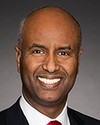
The Chair Liberal Ahmed Hussen

Colleagues, I call this meeting to order.

Welcome to meeting number 49 of the House of Commons Standing Committee on Foreign Affairs and International Development.

Pursuant to Standing Order 108(2) and the motion adopted by the committee on October 7, the committee is meeting regarding its study on opportunities for Canada to strengthen its relationship with the European Union.

Before proceeding, I would like to remind members that an informal meeting with a delegation from the European Affairs Committee of the Danish Parliament will take place at 1 p.m. on Monday, November 16, right after our regular meeting. I encourage all members to attend.

I would now like to welcome the witnesses for the next hour.

From the Department of Foreign Affairs, Trade and Development, we have Alexandre Lévêque, assistant deputy minister, Europe, Middle East and Arctic branch. We also have, from the same department, Isabelle Poupart, director general, European and Arctic affairs.

Up to five minutes will be given for opening remarks, after which we will proceed with the rounds of questions.

I would now like to invite Alexandre Lévêque to take the floor.

Alexandre Lévêque Assistant Deputy Minister, Europe, Middle East and Arctic Branch, Department of Foreign Affairs, Trade and Development

Thank you, Mr. Chair and committee members.

I want to begin by thanking you for the opportunity to appear before you today to discuss Canada's relationship with the European Union and the work that's under way to strengthen this important partnership.

The relationship between Canada and the European Union has never been more important. The international landscape is becoming increasingly complex, marked by geopolitical instability, economic uncertainty, rapid technological change and growing pressures on the rules‑based international order. Against this backdrop, Canada and the European Union, as partners with shared values and policies based on common principles, are working closely together to advance their shared interests and to tackle common challenges.

As members of the committee will be aware, last week Prime Minister Carney hosted António Costa, president of the European Council, and Ursula von der Leyen, president of the European Commission, in Montreal for the 21st Canada-EU summit.

The summit marked an important milestone in the bilateral relationship and launched the alliance for the future, which is a framework intended to deepen co-operation across a wide range of strategic areas.

The summit sparked renewed interest in the relationship between Canada and the European Union. However, we need to recognize that the results announced are the product of considerable work carried out over a long period. Many of the initiatives announced at the summit build on existing partnerships and ongoing discussions, including the Canada‑European Union Comprehensive Economic and Trade Agreement.

At the same time, the summit marks the beginning of a significant new transformational implementation phase as mechanisms announced at the summit are implemented and negotiations begin on 17 initiatives launched there.

This work will advance collaboration across six strategic areas: trade and regulatory co-operation; digital, research and communications technologies; critical raw materials and energy; financial services and markets; security and preparedness; and people-to-people ties.

Given the breadth of these focus areas, government departments across Ottawa are engaged in negotiations with European counterparts.

These areas reflect key issues shaping Canada's long-term prosperity and security. They include strengthening supply chains; supporting innovation and competitiveness; advancing co-operation on emerging technologies, including AI; enhancing economic resilience; and deepening collaboration on shared security challenges.

Making progress will require the ongoing commitment of governments as well as the steady involvement of stakeholders. The scope of the Canada‑European Union program ensures that the provinces and territories, indigenous partners, businesses, educational and research institutions, labour unions and civil society all have important perspectives to contribute. Many of the issues under discussion relate to areas within the jurisdiction or expertise of the provinces and territories. This makes collaboration at the national level particularly crucial. The strength of the partnership with Europe will depend in part on the effectiveness of collaboration within Canada.

For officials, the focus in the period ahead will be on supporting the implementation of the summit outcomes, advancing practical co-operation with European counterparts and ensuring that engagement with Canadian stakeholders informs the development of this evolving partnership.

We have a great deal of work ahead of us, but the opportunities afforded by a closer and better‑coordinated partnership with the European Union are just as significant.

I look forward to discussing these efforts with the committee and answering your questions.

Thank you.

The Chair Liberal Ahmed Hussen

Thank you very much for your statement.

I will now open the floor for questions, beginning with MP Philip Lawrence for six minutes.

4:35 p.m.

Conservative

Philip Lawrence Conservative Northumberland—Clarke, ON

Thank you, Chair.

Thank you, witnesses, for being here.

There are nine European Union member states that have yet to fully ratify CETA, the comprehensive economic and trade agreement. What concrete actions has the department taken to secure ratification? Has the EU summit in any way brought us closer to ratification by those nine outstanding countries?

4:35 p.m.

Assistant Deputy Minister, Europe, Middle East and Arctic Branch, Department of Foreign Affairs, Trade and Development

Alexandre Lévêque

This is an effort that has been going on for years. Where we see movement is in the lead-up to the summit. Already, you can see that Slovenia is the latest member to ratify. It's the first one in about four or five years.

There is a sense of renewed momentum and of the importance of ratifying the CETA. There are two or three other EU members that are on the path to ratifying it in the not too distant future. Ireland is on the way to doing this. Belgium is on the way to doing it. We see a renewed interest in doing it.

As for us, we did ratify. We did our job, and I think the numbers speak for themselves. Close to an 80% increase in trade in 10 years is the best proof you need, and we're demonstrating that.

4:35 p.m.

Conservative

Philip Lawrence Conservative Northumberland—Clarke, ON

That 80% number, though, is on a very small, absolute number. Trade to Europe still represents a very small portion of our total exports. Is that not correct?

4:35 p.m.

Assistant Deputy Minister, Europe, Middle East and Arctic Branch, Department of Foreign Affairs, Trade and Development

Alexandre Lévêque

The commercial relationship with the EU represents roughly 8%. It is the second-largest relationship after the United States.

4:35 p.m.

Conservative

Philip Lawrence Conservative Northumberland—Clarke, ON

Trade with the United States is quite a bit bigger. Depending on the number you pick, I think it's in the neighbourhood of 75% or 80% of our exports.

4:35 p.m.

Assistant Deputy Minister, Europe, Middle East and Arctic Branch, Department of Foreign Affairs, Trade and Development

Alexandre Lévêque

At its height, it was about 75%. It's been coming down over the past year, but yes, EU trade is still a fraction of what we have with the U.S.

4:35 p.m.

Conservative

Philip Lawrence Conservative Northumberland—Clarke, ON

That's right, so the idea that we could replace the exports or the trade we have with the United States with EU trade in even the medium term is unrealistic.

4:35 p.m.

Assistant Deputy Minister, Europe, Middle East and Arctic Branch, Department of Foreign Affairs, Trade and Development

Alexandre Lévêque

I don't think that this is the objective at all. Nobody wants to replace what we have with the United States. What we want to do is grow with the economy that is essentially the second-largest market in the world.

4:35 p.m.

Conservative

Philip Lawrence Conservative Northumberland—Clarke, ON

I have no doubt that there were positive discussions between Canada and the European Union. However, there was actually nothing that came out that would make it easier for a Canadian business to sell any of its products in Europe.

4:40 p.m.

Assistant Deputy Minister, Europe, Middle East and Arctic Branch, Department of Foreign Affairs, Trade and Development

Alexandre Lévêque

I don't think that accurately reflects the state of things.

First of all, the CETA is a very comprehensive accord that opens the doors for Canadians to export. We were not going to ever renegotiate the CETA as part of this—

4:40 p.m.

Conservative

Philip Lawrence Conservative Northumberland—Clarke, ON

Nor am I proposing that. I'm just saying the CETA existed, obviously, before the Carney government and even before the Trudeau government. The CETA existed before. There's really been no....

If you are a Canadian exporter and you're attempting to export your product, whether you have a farm in Saskatchewan or you're a manufacturer in Ontario, there's been nothing that came from that summit that would make it easier to trade with or facilitate your trade with the European Union. Is that not correct?

4:40 p.m.

Assistant Deputy Minister, Europe, Middle East and Arctic Branch, Department of Foreign Affairs, Trade and Development

Alexandre Lévêque

I would say there are two things that came out of this summit that would make it easier and more accessible for Canadians to do business with the EU.

One is a renewed momentum on addressing some of the trade barriers or regulatory elements that have made it harder for Canadian exporters to penetrate the European market. We've had a lot of success and progress in our talks on how to eliminate these—

4:40 p.m.

Conservative

Philip Lawrence Conservative Northumberland—Clarke, ON

I don't mean to be difficult or argumentative, but momentum is different from a barrier actually being removed. Can you point to one barrier that was removed as a result of the summit?

4:40 p.m.

Assistant Deputy Minister, Europe, Middle East and Arctic Branch, Department of Foreign Affairs, Trade and Development

Alexandre Lévêque

I think we're very close to finalizing an understanding of how to remove the unintended consequences of the CBAM, the carbon border adjustment mechanism, as an impediment to Canadian exporters. There was never an intention on the part of the EU to block Canadian exporters through their regulatory processes.

4:40 p.m.

Conservative

Philip Lawrence Conservative Northumberland—Clarke, ON

Just on that carbon border adjustment, if I may—because you've brought it up, and it's actually in my next line of questions—is there a willingness on the Canadian side to move up our carbon pricing to qualify underneath the carbon-based initiative?

4:40 p.m.

Assistant Deputy Minister, Europe, Middle East and Arctic Branch, Department of Foreign Affairs, Trade and Development

Alexandre Lévêque

I'm afraid that's outside of the scope of what I'm qualified to talk about. That's really a question for ECCC.

To finish on this, whether it's that or the European Union deforestation regulation, there were some unintended consequences of these regulations being put in place. We're on the verge of being able to open that up and have a common understanding on how not to let that affect Canadian exporters negatively. That is directly as a result of the talks that happened at the summit and at the margins of the summit.

The other one is the announcement of a digital trade agreement. It's not for farmers, but the digital trade agreement will actually make it easier for any small or medium-sized Canadian enterprise in the digital business—

4:40 p.m.

Conservative

Philip Lawrence Conservative Northumberland—Clarke, ON

No, that's entirely—

4:40 p.m.

Assistant Deputy Minister, Europe, Middle East and Arctic Branch, Department of Foreign Affairs, Trade and Development

Alexandre Lévêque

No, actually. The conclusion of the negotiations took place a couple of weeks before the summit, and now it's just a matter of it following—

4:40 p.m.

Conservative

Philip Lawrence Conservative Northumberland—Clarke, ON

It's implementation, so it's not immediate.

4:40 p.m.

Assistant Deputy Minister, Europe, Middle East and Arctic Branch, Department of Foreign Affairs, Trade and Development

Alexandre Lévêque

That's in the weeks to come, because it needs to be submitted to Parliament for ratification.

4:40 p.m.

Conservative

Philip Lawrence Conservative Northumberland—Clarke, ON

Okay. I appreciate your positivity. Maybe it's seven years of being in this House, but words like “momentum” and “on the verge” don't excite me. They do the opposite. They make me nervous as to whether there will be actual change going forward.

For what it's worth, I certainly hope that you are right and that I am incorrect.

4:40 p.m.

Assistant Deputy Minister, Europe, Middle East and Arctic Branch, Department of Foreign Affairs, Trade and Development