Evidence of meeting #7 for Foreign Affairs and International Development in the 45th Parliament, 1st session. (The original version is on Parliament’s site, as are the minutes.) The winning word was gangs.

A recording is available from Parliament.

On the agenda

Members speaking

Before the committee

E. Anthony Dessources  Ambassador of the Republic of Haiti to Canada, Embassy of the Republic of Haiti
Da Rin  Analyst, Haiti, Latin America and the Caribbean, International Crisis Group
Martel  Project Director, Mission inclusion

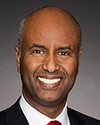
The Chair Liberal Ahmed Hussen

I call this meeting to order.

Welcome to meeting number seven of the House of Commons Standing Committee on Foreign Affairs and International Development.

Today's meeting is taking place in a hybrid format, pursuant to the Standing Orders. Members are attending in person in the room and remotely using the Zoom application.

Before we continue, I'd like to ask all in-person participants to consult the guidelines written on the cards on the table. These measures are to help prevent audio feedback incidents and to protect the health and safety of all participants, including the interpreters. You'll also notice a QR code on the card, which links to a short awareness video.

Please wait until I recognize you by name before speaking. For those participating by video conference, click on the microphone icon to activate your mic and please mute yourself when you are not speaking. For those on Zoom, at the bottom of your screen you can select the appropriate channel for interpretation: floor, English or French. For those in the room, you can use the earpiece and selected the desired channel. I remind you that all comments should be addressed through the chair. For members in the room, if you wish to speak, please raise your hand. For members on Zoom, please use the “raise hand” function.

The clerk and I will manage the speaking order as best we can, and we appreciate your patience and understanding in this regard.

Pursuant to Standing Order 108(2) and the motion adopted by the committee on Tuesday, September 23, 2025, the committee is meeting to study the situation in Haiti and Canada's response.

I would now like to welcome our witness for the first hour, His Excellency, Mr. Anthony Dessources, Ambassador of the Republic of Haiti to Canada, who joins us by video conference.

Up to five minutes will be given for opening remarks, after which we will proceed with the rounds of questions.

I now invite His Excellency to make his opening statement for five minutes.

Welcome to the committee.

H. E. Anthony Dessources Ambassador of the Republic of Haiti to Canada, Embassy of the Republic of Haiti

Good morning everyone, members of the Standing Committee on Foreign Affairs and International Development.

Thank you for inviting me to appear as part of this study on the situation in Haiti and Canada's response.

My name is Anthony Dessources. I am Haiti's new ambassador to Canada, and I presented my credentials to the Governor General, Ms. Mary Simon, on September 24 of this year.

After consulting with the authorities of my country, I was able to accept the committee's invitation to appear today, Tuesday, October 21, 2025.

On behalf of the Haitian government, I would like to extend my gratitude to Canada for its unwavering support to Haiti in various areas of co-operation, and for the kind hospitality [Technical difficulty—Editor].

The Clerk of the Committee Simon Larouche

Mr. Ambassador, your Internet connection is not strong. The sound keeps cutting out, and we can't hear what you're saying.

Try turning off your camera during your remarks to increase your Internet capacity. It might help with the sound.

11:10 a.m.

Ambassador of the Republic of Haiti to Canada, Embassy of the Republic of Haiti

H. E. Anthony Dessources

I apologize. Can you hear me now?

The Clerk

No. Your microphone needs to stay on, otherwise we can't proceed. I was suggesting you turn off your camera, but you have to keep your headset on.

11:15 a.m.

Ambassador of the Republic of Haiti to Canada, Embassy of the Republic of Haiti

H. E. Anthony Dessources

I am really sorry.

I will start again.

Good morning everyone, members of the Standing Committee on Foreign Affairs and International Development.

Thank you for inviting me to appear as part of this study on the situation in Haiti and Canada's response.

My name is Anthony Dessources. I am Haiti's new ambassador to Canada, and I presented my credentials to the Governor General, Ms. Mary Simon, on September 24 of this year.

After consulting with the authorities of my country, I was able to accept the committee's invitation to appear today, Tuesday, October 21, 2025.

On behalf of the Haitian government, I would like to extend my gratitude to Canada for its unwavering support to Haiti in various areas of co-operation, and for the kind hospitality it has shown to the Haitian community in Canada. I would also like to take this opportunity to recognize the international community's efforts to help Haiti, especially its involvement in the recurrent Haitian socio-political crisis over the last few years with a view to finding a democratic and sustainable outcome.

Ladies and gentlemen, committee members, previously known as the jewel of the West Indies, Haiti now faces an unbearable situation, making life extremely difficult for the majority of its citizens. Haitian authorities are having a lot of difficulty managing this multidimensional crisis.

First is the security issue, which is proving quite hard to solve. Despite the Haitian government's efforts, with the help of the Multinational Security Support mission—

The Clerk

I am sorry to interrupt, Mr. Ambassador, but the connection is still an issue. The interpreters are unable at this time to interpret your remarks, because of the poor Internet connection.

Give me a moment to discuss the situation with the chair.

The Chair Liberal Ahmed Hussen

Colleagues, we'll suspend for a few minutes. We're hoping to resolve this technical issue.

Thank you.

The Clerk

Mr. Dessources, I apologize for the situation. Because of a technical issue, we won't be able to proceed. We won't have enough time after your opening remarks for member questions. I will contact you to reschedule at your convenience, so you can join us in person, if that's possible. The committee members are very much looking forward to hearing your views on our study.

Because of the technical issues we've been experiencing, your appearance in this context would not be suitable for committee members.

11:25 a.m.

Ambassador of the Republic of Haiti to Canada, Embassy of the Republic of Haiti

H. E. Anthony Dessources

That is very unfortunate. I am disappointed not to be able to present. Hopefully, we can do this again.

Goodbye.

The Chair Liberal Ahmed Hussen

I call the meeting back to order.

I'd like to now welcome our witnesses who are joining us by video conference for the second hour.

From the International Crisis Group, we have Diego Da Rin, analyst, Haiti, Latin America and the Caribbean. We may be joined later by Little Footprints Big Steps' co-founder and executive director, Morgan Wienberg, by video conference. Also, right now, we're being joined by Andréanne Martel, project director of Mission inclusion.

Up to five minutes will be given for opening remarks, after which we will proceed with rounds of questions.

I now begin by inviting Mr. Da Rin to make an opening statement of up to five minutes.

Diego Da Rin Analyst, Haiti, Latin America and the Caribbean, International Crisis Group

Thank you for having me and inviting me to join this morning's proceedings. All protocols are observed.

I would like to focus my remarks today on the new possibilities for curbing gun violence opened by the UN Security Council's authorization of a new foreign security mission for Haiti.

In the coming months a window of opportunity may emerge to lay the foundations for lasting peace, but this could also turn into another failed attempt to rein in the growing power of gangs.

Haiti will face two important transitions in the coming months. First, the Kenyan-led security mission will transition into a gang suppression force, but there is little clarity about how this process will be managed. Second, in February 2026, the mandate of the current transitional administration will end, and it will need to be replaced by a new governing structure.

Credible elections cannot take place before the Transitional Presidential Council's term ends. Gangs control much of the two departments where over half of the electorate resides, as well as the main national highways, which would prevent the distribution and centralization of electoral materials. Holding elections amid the wide opposition to Haiti's current leadership will also inevitably trigger a post-electoral crisis, with political groups refusing to recognize the results.

While maintaining the current transitional structure could help preserve some political stability, the government is severely discredited due to corruption scandals and the endless political infighting, which has prevented it from designing and implementing a comprehensive security strategy to enhance coordination among the different security forces operating on the ground.

Consultations to establish a new political arrangement to succeed the transitional government after February have only recently begun and have shown little progress. There is a significant risk that any last-minute agreement will result in a weak governance structure lacking sufficient support, and may be perceived by Haitians as being imposed by the international community.

The multinational force authorized, two years ago, the deployment of a multinational mission that would be composed of 2,500 officers, but it has only been able to deploy 1,000 of them. Due to a lack of funding, personnel and equipment, the force has only been able to establish three of the planned 12 bases that were meant to maintain a continuous presence and carry dedicated operations against the gangs in all territories they currently occupy.

The mission operates with less than 30% of its required equipment. Armoured vehicles are not suited to the urban environment in Port-au-Prince and a lack of spare parts has left half of the fleet out of service. Although the force now has two helicopters for medical evacuations, it still lacks air and maritime combat capabilities, which are critical to disrupt supplies to the gangs.

The new security mission's concept was deployed mainly to address the funding shortages and logistical challenges that have limited the foreign force's operational capacity so far. The mission will have a UN support office based in Port-au-Prince, which will be funded through predictable resources coming from the UN's assessed peacekeeping budget. However, the cost of the mission's personnel will still depend on voluntary contributions. At full deployment, this could amount to around $100 million per year. Without these contributions, the new mission will not be able to reach and sustain its full capacity to achieve its objectives.

It is still unclear how the transition to the new force will unfold. Countries currently participating in the current mission have expressed their intention to remain under the gang suppression force, but it is not yet known whether the currently deployed contingents will be fully integrated into the new structure. In the meantime, voluntary contributions will be needed to pay for the mission's logistics and basic personnel needs to ensure that current personnel remain operational on the ground until the new force is fully deployed. A gap between the outgoing Kenyan-led mission and the incoming gang suppression force must be avoided at all costs as gangs will certainly take advantage of it.

The new force has a more offensive mandate than the previous one, but operations should begin in rather accessible areas to minimize civilian casualties, while disrupting gang supply chains and cutting off the revenue sources. Initial victories in sparsely populated areas, as, for example, regaining control of specific sections of national roads currently held by gangs, would carry symbolic value, build public support and encourage defections within gang ranks.

It is unlikely that the new security force will solve Haiti's security problem by arresting or killing all of the estimated 12,000 gang members—of whom 30% to 50% are minors—nor would such an approach be desirable, as most gang members join these groups at a young age to meet their most basic needs in an environment offering few, if any, alternatives. Haitian authorities have recently launched a program to help minors who want to leave gangs do so safely, but it currently envisions reaching only a fraction of the estimated number of children involved in these groups.

Haitians should also start exploring when and under what conditions they could contemplate talking with the criminal groups, with the goal of permanently dismantling them. The Haitian state, with international support, should consider what kinds of exit pathways could be offered beyond minors, including for senior gang members willing to disarm and co-operate with authorities.

As Haitian authorities and their international counterparts plan for these two crucial transitions, they must be prepared for the Viv Ansanm gang coalition to step up attacks in an effort to derail them, expand territorial control, target critical infrastructure and attempt to bring down the transitional government again, as they did last year.

Thank you.

The Chair Liberal Ahmed Hussen

Thank you very much for your remarks.

We'll go next to Andréanne Martel, project director of Mission inclusion.

You have up to five minutes for your opening remarks.

Andréanne Martel Project Director, Mission inclusion

Thank you for inviting me to appear once again before the committee.

I was invited in 2022 to share my recommendations based on my many years of experience in Haiti, especially in the assessment of humanitarian and rebuilding projects.

I appear today on behalf of my colleagues at Mission inclusion, based in Léogâne, Haiti.

A Canadian organization, Mission inclusion has been in Haiti since 2016, supporting communities in developing successive projects funded by Global Affairs Canada. Our dedicated team of 14 works closely with Haitian women's organizations and civil society members.

My remarks today draw directly on our partners' experience, because despite the current crisis, they continue their essential work. I am here to ensure that their voices and those of the communities they help are heard.

It has been widey documented that during any crisis, women and girls systematically find themselves increasingly vulnerable, exposed to all types of violence. Just between January and July 2025, the gender-based violence in Haiti subcluster reported 6,269 incidents.

Each week, hundreds of acts of sexual violence are perpetrated against women, but almost no one talks about it, and those are only the documented cases. The reality is much worse. In fact, 77% of victims are adults and 14% are girls under 18 years of age. Almost half of incidents are rapes, including 62% that are gang rapes. Gangs use sexual violence as a weapon of war, and three quarters of reported incidents are perpetrated by gang members.

In Haiti, almost 40% of health institutions are closed. Often, women who experience violence don't have access to health care, including emergency contraception and psychological support. Only 25% of rape victims are seen by a health professional within 72 hours. A little more than half of incidents involve internally displaced populations living in other communities or on sites for displaced people.

Although women are very active in resilience-building, they are largely being excluded from decision-making institutions. Haiti's transitional presidential council has nine members, but only one is a woman and she is a non-voting member. This is a violation of the country's constitutional quota of 30%. The sustainable stabilization of Haiti is impossible without security and the protection of women’s fundamental rights.

Haitian civil society organizations, like women's organizations, have remained involved despite difficult conditions. Because they are close to communities and know their reality, these organizations can put forward tailored solutions, which is why they are so effective at what they do.

Given that this crisis has been raging for decades, strictly humanitarian approaches are no longer enough. That's why at Mission inclusion, we believe in the inclusive triple nexus approach. It is a mistake to think that stabilization must come before capacity-building or development. Supporting development and cohesion in Haiti will help to stabilize the situation. Our approach revolves around three simultaneous components.

On the humanitarian front, we meet the needs of the population by supporting health services for displaced people and survivors of violence, and by providing psychological support to displaced people and victims of gender-based violence.

On the development front, we sustainably strengthen Haiti's health systems by helping partner institutions provide more, safer and better services in physical and mental health. This includes reproductive rights and sexual health. We also help women's organizations improve their capacity to take action.

On the peace-building front, we support intercommunity dialogue to strengthen social cohesion, prevention and pre-emption in conflict management.

These three components are closely linked. Without safe humanitarian services, there can be no stability. Without strong local institutions, there can be no sustainable development. Without cohesion, humanitarian and economic projects fall apart. Constant integration is key to this type of approach.

Finally, I'd like to make three recommendations.

First, Canada must not only continue to fund Haitian civil society organizations that work in equal partnership with Canadian organizations, but also increase its support for those Haitian organizations.

Second, as I said, protracted crises require the simultaneous integration of humanitarian urgency, development and peace. Strictly humanitarian approaches targeting the short term are no longer enough.

Third, long-term investments are needed and must prioritize the protection of rights, especially women's rights.

Canada will truly contribute to Haiti's stabilization thanks to the flexible mechanisms and long-term commitment it provides to Haitian civil society organizations and institutions. Without these conditions, every initiative has to start from scratch, and Haitian partners are wearing themselves out trying to rebuild what shouldn't collapse again.

I will end by reminding the committee that now is not the time to let the Haitian population down, nor Haitian women, who will carry the stigma and trauma of these acts of violence for the rest of their lives. There is still time to make a difference and reassert our solidarity by continuing to support them, fighting against impunity and exposing acts of violence. Haitian women and girls are not asking for charity. They want solidarity, dignity and respect. Canada can continue on this path.

Thank you.

Noon

Liberal

The Chair Liberal Ahmed Hussen

Ms. Martel, thank you for your presentation.

I'll now open the floor for questions, beginning with MP Kronis for six minutes.

Noon

Conservative

Tamara Kronis Conservative Nanaimo—Ladysmith, BC

Thank you so much, Mr. Chair.

One of the tragedies of Haiti is that the gangs are eating the next generation, in the sense that 30% to 50% of gang members are minor children, as you've explained. I'm wondering whether you have any insights into what Haiti needs to be able to do to help those minor children exit that gang lifestyle and have a more promising future.

Please, go ahead.

Noon

Analyst, Haiti, Latin America and the Caribbean, International Crisis Group

Diego Da Rin

Thank you.

To keep the discussion flowing smoothly, I will speak in French.

At the beginning of the year, the Haitian government introduced a program offering minors a way out. This three-party project brings together the government, the civil society organization Volontariat pour le développement d'Haïti and the United Nations Children's Fund, or UNICEF.

UNICEF signed an agreement with the Haitian government to help minors arrested during gang operations, for instance, by providing various services to support their proper reintegration into society.

Last year, before the program was even introduced, UNICEF managed to demobilize and disarm around 140 minors. The goal of this new program, called PREJEUNES, is to establish a systematic approach and a more formal program to give all those minors a way out. It is estimated that between 3,000 and 5,000 minors find themselves in this situation.

For now, the program has two components. One is prevention to counter recruitment, and the other is the demobilization of minors. I think the prevention component is further along, although there are transit sites. The sites provide minors with places to stay right after leaving the gang. I might add that another site is being built in the southern part of the country. The program's planned capacity is limited to a few hundred minors. I don't have the exact numbers, but two months ago, it was 200 or 300 minors.

There are institutions, there's a presidential commission tasked with opening those sites, and there's the institutional infrastructure. Based on what we heard, more international support is needed, because there isn't enough funding to develop a more ambitious program.

12:05 p.m.

Conservative

Tamara Kronis Conservative Nanaimo—Ladysmith, BC

That's where I wanted to go with my question. How effective is it?

12:05 p.m.

Analyst, Haiti, Latin America and the Caribbean, International Crisis Group

Diego Da Rin

The first prevention centre was set up in July. No transit centres for demobilized minors are currently operational. I can't say then whether it's effective or not. Somehow, more actors need to be involved and greater efforts deployed to do this, because there will be two challenges.

First, we need to determine how to physically remove minors from gang strongholds without them getting killed. This is because any gang member who tries to leave or is suspected of wanting to leave is severely punished in various ways by the gangs. This will require some serious thought and, to date, there's no clear answer to the question of how to physically remove minors from these zones.

Second, it's essential to determine what to do once they're placed in the transit centres. These centres are only designed to house minors for a few months. After that, they need to know what will happen to these minors—

12:05 p.m.

Conservative

Tamara Kronis Conservative Nanaimo—Ladysmith, BC

I'm sorry to interrupt you. I just want to make sure I get the second half of this question in before my time runs out.

When you speak about the effectiveness...and I share your concerns that, while the programs exist, it's a question of how effective they're going to be. You spoke about the need to ensure that there's no gap between the MSS and the GSF, yet there is a ceiling on personnel and, on top of that, this program's being funded through voluntary contributions as opposed to assessments at the UN.

I'm wondering if you could weave together this issue of the need to get children extracted from the gangs with the fact that there are programs, but there are going to be personnel restrictions. Could you comment on that before our time runs out?

The Chair Liberal Ahmed Hussen

We have time for a very brief response, please.

12:05 p.m.

Analyst, Haiti, Latin America and the Caribbean, International Crisis Group

Diego Da Rin

Under the transition framework, the current mission will only receive funding from contributors to the United Nations peacekeeping budget starting in April.

Funds must therefore be obtained to maintain Kenyan personnel until March. Neither the Multinational Security Support, or MSS, mission nor the Gang Suppression Force, or GSF, have demobilization capabilities. The United Nations Integrated Office in Haiti, or BINUH, in the review of its mandate in January, could primarily have increased capacity to implement this type of initiative, as it will have more capacity and personnel.

The Chair Liberal Ahmed Hussen

Thank you very much.

We will proceed next to MP Anita Vandenbeld, who is joining us by video conference.

You have six minutes. Please proceed.

Anita Vandenbeld Liberal Ottawa West—Nepean, ON

Thank you.

I want to thank our witnesses for their testimony here today.

The first one I want to follow up with is Mr. Da Rin.

You mentioned in the beginning of your remarks that there is some danger in holding elections too soon if the gangs are still controlling, for instance, the roadways and access to the polls. We've seen in a number of places.... I worked at one point in Bosnia, where the elections were held at a point when the only people with the organizational capacity to fight elections were the warlords, those who had actually caused the conflict and the ultra-nationalists, so they ended up getting democratic legitimacy from the fact that they were able to do that.

I'm also concerned about some of the cuts that have been made to organizations like the National Democratic Institute and others that were doing capacity building. I know there are a few of those.

Could you tell me the impact of that, particularly—and I would like Andréanne to weigh in a little bit—on the pluralism and on women in politics? I know you mentioned the 30%. Before I entered politics, I actually did capacity-building training for women politicians in Haiti. I'm wondering what the possibilities of that would be if the elections were held at a moment when that capacity wasn't there.

12:10 p.m.

Analyst, Haiti, Latin America and the Caribbean, International Crisis Group

Diego Da Rin

At present, in order to hold elections, certain conditions must be met in terms of security, logistics, and a certain degree of political consensus, particularly in Haiti during this transition period. I'm no expert on elections; the experts were the ones telling me this.

None of these three conditions is currently being met in Haiti, particularly those relating to security and political consensus. For several months now, different political actors involved in the transition have been telling us that they won't accept elections organized by the current transitional government. This has been stated by various governments.

However, logistically speaking, some progress has already been made. Work has been done to set up polling stations in departments and municipalities and to train election staff.

Since the beginning of the year, we've recommended that, instead of setting a specific date for the next elections, the government, in collaboration with its international partners, establish and achieve a minimum security threshold. This would allow for a calendar of security objectives to be linked to a calendar of election objectives in three areas: logistics, political consensus and security. This would make it possible to see what the government is and isn't doing to achieve its objectives by a specific deadline.

For the report we published on the subject in February, we conducted approximately 300 interviews. Very few Haitians told us they wanted elections. Haitians want security.