Thank you so much.
I'll be sharing my time with Dr. Powlowski.
Please go ahead.

Evidence of meeting #7 for Health in the 45th Parliament, 1st session. (The original version is on Parliament’s site, as are the minutes.) The winning word was doctors.
A video is available from Parliament.
Liberal

Maggie Chi Liberal Don Valley North, ON
Thank you so much.
I'll be sharing my time with Dr. Powlowski.
Please go ahead.
Liberal
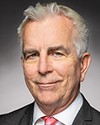
Marcus Powlowski Liberal Thunder Bay—Rainy River, ON
Dr. Srivastava, I think nurse practitioners are a big part of the solution for rural Canada. Where you have maybe two doctors in town, you can share the call with a good nurse practitioner. It doesn't seem to me we're graduating enough nurse practitioners. Do you want to talk a little bit about how many nurse practitioner schools we have and what we can do to try to get our numbers up, and how much that's part of the solution to the problem?
President-Elect, Canadian Association of Schools of Nursing
I don't have the exact numbers of NP schools or graduates with me, so I apologize. I don't want to provide incorrect information. I agree with you. NPs are expanding and they are very much a part of the solution, working with physicians in urban centres but also in rural communities as part of team-based care. More work is definitely being done. I think in terms of expanding the scope of practice for the NPs there is a lot of good work that has been done there in both collaborative models working and providing support. I would absolutely support that. We need to continue to expand that and look at models where there is strong collaboration among physicians in remote communities. This is where technology helps to provide the supports needed for new nurse practitioners who may be working without proper mentorship support.
Liberal
Marcus Powlowski Liberal Thunder Bay—Rainy River, ON
I will do a quick follow-up with Dr. Watling.
There are a lot of physicians who have been trained overseas who perhaps would be willing to become physician assistants. Especially in remote areas, people with some surgical skills who are practising as physician assistants would seem to me to be a useful avenue. What do you think of the idea of getting more physician assistants out there?
Chief Executive Officer, Royal College of Physicians and Surgeons of Canada
I very much agree.
Liberal
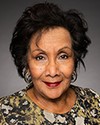
The Chair Liberal Hedy Fry
I want to thank the witnesses for coming and answering questions.
I'm going to suspend the meeting to prepare for the next meeting. Thank you very much.
Liberal
The Chair Liberal Hedy Fry
I will resume the meeting.
I will now continue with the next group of witnesses. There are three.
I want the committee to know that we will go to 1:05 because we started our meeting five minutes late. My bad on that one.
From the College of Family Physicians of Canada, we have Dr. Carrie Bernard, president.
From the Federation of Medical Regulatory Authorities of Canada, we have Stephanie Price, executive director.
From the Internationally Trained Physicians of Canada, we have Dr. Therese Bichay, director.
I want to let the witnesses know that you have five minutes to present. I will give you a one-minute cue and then a thirty-second cue, because I have to cut you off at the end of that time. We then have a question and answer period. The time allotted is for the question and the answer.
October 23rd, 2025 / 12:15 p.m.
Conservative

Todd Doherty Conservative Cariboo—Prince George—Omineca, BC
I have a point of order. I'm sorry, Madam Chair.
I just feel that I have to make a comment, as I am only briefly sitting in here.
I have served on a number of committees. It is customary that, if a committee is going to sit past the allotted time—we are all busy, and we all have different meetings that we have to go to—the chair will put the question to the committee whether it is okay that we sit past the allotted time. I appreciate that you were late, and you apologized for that, but for you to just arbitrarily say that we're going to sit to 1:05, without first canvassing the committee, is not our normal committee practice. I think it would have been proper to please petition the committee.
We all have to check. I realize it's only five minutes, but we all have to check our schedules, and for you to just arbitrarily say that we're going to sit past one o'clock is an abuse of power, in a sense.
Liberal
The Chair Liberal Hedy Fry
Mr. Doherty, I did not actually arbitrarily do it. I told Mr. Mazier. He did not say no. I spoke to the Liberals. They did not say no. I did not ask Mr. Thériault, and that is my only fault. I spoke to everyone else before I began the meeting, though. I'm sorry, Mr. Doherty.
I'll begin the meeting so that we don't waste any more time. I'll begin with the first witness, who is with the College of Family Physicians of Canada.
Dr. Carrie Bernard, please begin.
Carrie Bernard President, College of Family Physicians of Canada
Good afternoon, everyone.
I'm Dr. Carrie Bernard, a family doctor with 25 years of experience practising in Brampton, Ontario, and the president of the College of Family Physicians of Canada.
I'm coming to you today from the treaty and traditional territories of the Mississaugas of the Credit First Nation, the Haudenosaunee Confederacy, and the Huron-Wendat and Wyandot nations.
Thank you for the opportunity to speak to the committee on these important and complex issues, the interaction between immigration policy and the health workforce in Canada.
Family doctors are the foundation of Canada's health care. Our members deliver 50% of all medical services provided to Canadians. International medical graduates comprise 31% of family doctors practising in Canada. We simply do not train enough domestically. International medical graduates and internationally trained physicians play a crucial part in access to primary care and frequently work in rural and remote communities, providing access to Canadians who would otherwise go without.
We know that relative to other OECD countries, Canada trains fewer family doctors per capita. The number is about 4.2 family doctors per 100,000 in Canada, compared with 6 in the U.K., 5.8 in Australia and 6.5 in the Netherlands. A recent Health Canada study estimated that we're almost 23,000 family doctors short at this point in time, and over six million Canadians report not having a regular family doctor. We cannot begin to address these daunting needs without looking to internationally trained family doctors.
As we consider solutions, it's important to clearly state that we must never compromise the high standards of care provided by family doctors. Further, there is no substitute for the type of medical care and expertise provided by family doctors, who are licensed and certified as meeting the standards of the College of Family Physicians of Canada.
While 92% of medical graduates match to their residency spot of choice, only 24% of international graduates do. These are qualified candidates who could, after postgraduate training, be providing care as part of the Canadian system, but there isn't enough capacity to accommodate all of them. We must expand the total number of family medicine resident seats to support Canadian and international medical graduates.
This is consistent with the federal government's pledge to increase medical school and residency spaces, which we applaud, but any time we consider increasing training capacity, it's imperative that proportional investments be made in community practices where the residents learn. These sites cannot accommodate extra learners without support. We want to set everyone up for success.
In addition, introducing arbitrary barriers to qualify for the CaRMS residency match, such as spending two years in an Ontario high school, a requirement that was issued recently, is not a way to bolster our workforce. This could contribute to destabilizing the family medicine workforce pipeline. We should expand capacity, not actively push qualified candidates away.
I think everyone here believes that the immigration process should align with the needs of Canada's health workforce. Current criteria may welcome skilled health professionals through the comprehensive ranking system, but they provide little support for obtaining the credentials needed to contribute to health care once these professionals are living in Canada. We need to expand programs like practice-ready assessment. This could increase the number of physicians who are ready to enter the workforce while actively contributing to care. Like the royal college, we would welcome federal support for this.
The CFPC is also working to streamline certification pathways so that more qualified candidates can join the workforce sooner.
We often see candidates from countries with similar family medicine training who may lack certain components, such as training and education in mental health or obstetrics. While these gaps must be addressed, these professionals can still practise in the areas where they do have competence, contributing to caring for Canadians as they obtain the extra skills they need to be fully certified family physicians. Such programs require funding. Flexible structures will help integrate health professionals faster and expand workforce capacity. The CFPC is looking forward to supporting this process.
Additionally, instances exist where established physicians are facing issues with their immigration status, such as the highlighted story of Michael Antil, an American physician caring for more than 2,000 patients in Toronto who is struggling to get residency status.
Liberal
The Chair Liberal Hedy Fry
Sorry, Doctor, but I think we're running out of time. Please wrap it up. You can fill in the rest in your answer time.
President, College of Family Physicians of Canada
Okay.
We want to maintain standards and support the profession by working towards achieving a family physician for every Canadian and make sure everyone has access. We're happy to have solutions.
Liberal
The Chair Liberal Hedy Fry
We'll now go to the next witness, the Federation of Medical Regulatory Authorities of Canada.
Ms. Stephanie Price, you have five minutes. Welcome.
Stephanie Price Executive Director, Federation of Medical Regulatory Authorities of Canada
Thank you and good afternoon. I'm Stephanie Price. I'm the executive director at the Federation of Medical Regulatory Authorities of Canada. We're the organization that brings together the 13 medical regulatory authorities who regulate physicians, licensing them and making sure they are accountable to the Canadian public.
At FMRAC, our goal is to advance medical regulation and support the medical regulatory authorities, the MRAs, in their work to protect the public. An important priority for FMRAC and the MRAs is ensuring that Canadians have reliable access to safe, high-quality care. Physicians are the engine of the health care system. They provide the skills and professionalism needed to deliver high-quality, safe medical care.
As this committee has noted, we have a shortage of physicians in Canada. Internationally trained physicians, ITPs, can help address that shortage in the short term. Many ITPs are a ready a source of the skills, knowledge and care that Canadians need. Currently there are many challenges facing ITPs. The medical regulatory system in Canada is robust, and that's good for Canadians. We expect all our physicians to be competent, ethical professionals, and the MRAs are dedicated to upholding those standards.
While the legislation, policies and practice can vary by province or territory, broadly speaking, applicants for licensure as a physician must meet five requirements. They must be able to communicate with their patients, so there is a language requirement. They are trusted professionals who must act ethically with integrity and honesty, so there is a good character requirement. Because their mental and physical health impacts the care that they provide, there is a fitness to practice requirement. And of course we expect them to have and demonstrate medical knowledge and skills required for care and we expect them to maintain those skills and knowledge through ongoing clinical practice.
For physicians who are educated, trained and maybe even practised outside Canada, there can be challenges in meeting some of those requirements. Pre-immigration, many ITPs are unaware of the requirements of our system, the fact that regulation takes place at the provincial and territorial level, or that there are many different pathways to licensure. One change that could be made to the immigration system would be to provide clear information about licensure, certification and assessment to ITPs. Providing this information well before they arrive in Canada would allow them to make informed decisions about whether or not to choose Canada.
Additionally, for ITPs who are already in Canada, we could provide navigational supports so that they spend their time applying to licensure, not trying to understand the licensure system. Currently, physicians who spend time trying to understand the system lapse in their practice and therefore lose the currency required to gain licensure. Navigational support programs could reduce the amount of time it takes for ITPs to understand and access licensure, getting them into practice and providing care to Canadians sooner. Those navigational supports could also include financial supports to help new immigrants offset the costs associated with licensure and certification.
A second improvement would be to align the language requirements between the immigration system and the regulatory one. Currently, the immigration system has a language requirement that doesn't match that of the regulators, meaning there is extra time and expense for ITPs to meet two different language test requirements.
A third improvement would be to expand how ITPs can demonstrate their medical knowledge and skills. This could include expanding residency programs, which, as we have heard today, train physicians in a specialty and lead to Canadian certification; but we could also expand practice-ready assessment programs. PRA programs are an important way to assess ITPs through direct observation of their clinical skills in a supervised setting. These programs are shorter and less expensive than going through a residency training program.
Expanding the number of PRA programs or the spots in PRA programs would increase the number of ITPs who can be assessed, and if successful, licensed. These programs require funding both for the infrastructure that houses them and for the assessors who work in them, but scaling them up would make a significant difference.
With each of those pathways, it's imperative that internationally trained physicians receive comprehensive onboarding and orientation so that they understand how the culture and practice of medicine in Canada may differ from in their home country.
FMRAC and the MRAs are committed to upholding high standards and increasing the number of ITPs who can access licensure in Canada. We believe it's possible to do both by improving the links between regulation and immigration and by expanding the number of ways in which licensing requirements can be met, while maintaining high standards and protecting the public and the safety of Canadians.
Thank you.
Liberal
The Chair Liberal Hedy Fry
Thank you very much. You're 13 seconds under. Congratulations.
We'll now go to our third witness. From Internationally Trained Physicians of Canada, we have Dr. Bichay.
You have five minutes, please.
Therese Bichay Director, Internationally Trained Physicians of Canada
Thank you for the opportunity to speak before you today.
My name is Dr. Therese Bichay. I am originally from Egypt, where I completed my medical degree and internship and practised as a family doctor for several years.
Over those years, I had the privilege of walking alongside patients through illness, recovery and sometimes loss. I built long-term relationships with my patients and provided care with compassion, dedication and clinical expertise. Practising medicine was not only my profession; it was and still is my passion and purpose.
Like many skilled professionals, I immigrated to Canada with the hope of continuing my medical career and building a better future for my family. Canada's immigration system in fact awards immigration points for being a doctor, recognizing our skills as valuable to the country's economy and social fabric. However, what many of us discover after arriving is that these points—these promises—do not translate into a pass for licensure. The profession that we were selected and welcomed for becomes instead a closed door, which is very frustrating.
Upon arriving here in Canada, I began the long journey towards licensure. I passed all the required medical exams, had my credentials verified and completed the English language proficiency test repeatedly, as they expire every two years, even though language proficiency naturally improves with immersion in time. I completed observerships, worked as a clinical assistant and am currently working as a physician navigator in the emergency department, yet I'm still not working as a licensed physician.
I continue to volunteer, learn and contribute to my community wherever possible. In addition to all of this, in order to meet the recency of practice requirement, which is a mandatory part of all the licensing pathways, I travel back to Egypt every two or three years to maintain my clinical skills and my recent practice. You can imagine how this has been emotionally, financially and professionally exhausting, yet it is the only option available. In Canada we have no clear or accessible avenues existing for internationally trained physicians to maintain clinical recency if they are not already licensed. It's a big barrier that all the internationally trained physicians face.
Despite all of this, I remain without a licence to practice medicine in Canada and I'm not alone in this. Thousands of internationally educated physicians across the country find themselves in the same position—qualified, experienced and ready to serve, but sidelined and ignored by a system that is fragmented and opaque. This is happening at a time when Canada is in the midst of a severe health care crisis. More than 6.5 million Canadians do not have access to a family doctor. Emergency departments are overwhelmed. Wait times for primary care and specialist appointments continue to grow. Communities, especially rural and underserved ones, are struggling without basic medical care.
Internationally trained doctors face many barriers that prevent them from stepping in and helping, although they are willing. Residency positions are both limited and inequitably distributed, with few spots reserved for international graduates. Practice-ready assessment programs are not standardized across all provinces. Each province has its own eligibility requirements, timelines and quotas, which creates confusion and limits mobility.
Another thing is that nearly all of the pathways require recent clinical experience, yet there are not enough structured, accessible opportunities for international physicians in Canada to obtain it. Many of us are left with no option but to leave the country, if we are even able to do so.
The recognition of credentials favours so-called “approved jurisdictions”, which privileges doctors from a select group of countries while effectively discouraging training from the rest of the world, regardless of quality or performance on Canadian exams.
The last thing is that there are no transitional clinical roles that meaningfully lead to licensure. Many of us are willing to start in supervised or provisional positions that could serve as a bridge, but such pathways are non-existent.
It is profoundly disheartening to feel invisible in a country we chose and now call home. We came here not just to build a life but to contribute meaningfully to our communities and to a health care system that desperately needs support. Instead, we find ourselves stuck, our experience undervalued, our qualifications questioned and our voices often not heard.
This is a national health care issue. When qualified physicians are blocked from practice and sidelined, patients suffer. When licensing pathways are opaque and inaccessible, we all pay the cost in delayed care, overburdened systems and human lives.
Thank you.
Liberal
The Chair Liberal Hedy Fry
Thank you very much.
I'll now go to the question and answer segment, and that begins with a six-minute round. Each questioner has six minutes, and that includes questions and answers.
I'll begin with Mr. Mazier, please, from the Conservative Party.
Conservative
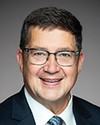
Dan Mazier Conservative Riding Mountain, MB
Thank you, Chair.
Thank you to the witnesses for coming here today.
Dr. Bernard, did the federal immigration department consult with the College of Family Physicians of Canada on this year's federal immigration levels plan, yes or no?
Conservative
Dan Mazier Conservative Riding Mountain, MB
Did the federal immigration department ask for any data on the current capacity of Canada's health care system?
Conservative
Dan Mazier Conservative Riding Mountain, MB
Thank you.
Dr. Bichay, welcome.
You graduated from medical school. Is that correct?
Director, Internationally Trained Physicians of Canada
Yes, that's correct.
Conservative
Dan Mazier Conservative Riding Mountain, MB
You completed your training after medical school. Is that correct?