Thank you so much.
We'll now turn to Mr. Al Soud for five minutes, please.

Evidence of meeting #17 for Procedure and House Affairs in the 45th Parliament, 1st session. (The original version is on Parliament’s site, as are the minutes.) The winning word was debate.
A video is available from Parliament.
Liberal

The Chair Liberal Chris Bittle
Thank you so much.
We'll now turn to Mr. Al Soud for five minutes, please.
Liberal

Fares Al Soud Liberal Mississauga Centre, ON
Thank you, Chair.
I am not a usual member of this committee, but this is an important study. I say this not only because you've all graciously agreed to have me here, but because open dialogue is fundamental to our democracy, and therefore the readiness of the Leaders' Debates Commission is fundamental to our democracy.
Of course, I suspect few would agree with that statement more than you, Mr. Cormier. You even noted this in your opening remarks, so thank you for being with us today.
I'll jump straight into questions now.
The time of the French language debate during the recent election was moved so Canadians could watch both the debate and the Habs game. Your report indicates that 43% of Canadians watched a debate, and 87% said that the debates were important to democracy. I'm mindful that there was a 34% increase in viewership since 2021.
What's interesting to me, given these numbers, is the parallel that it creates, because we often hear that Canadians are not interested in political democracy. Nevertheless, I think these numbers show that when the conditions are right, people care and tune in. How do we ensure that the conditions are right as often as possible?
Executive Director and Acting Commissioner, Leaders' Debates Commission
Which conditions are you referring to?
Liberal
Fares Al Soud Liberal Mississauga Centre, ON
I'm talking about the conditions of people watching these debates and having access to these debates.
Executive Director and Acting Commissioner, Leaders' Debates Commission
The fact that people expect them and they're expected to happen and that you have a commission whose work it is to organize these things and make sure there's production and wide distribution helps establish the permanency of debates in the political environment. This is hugely important, given that now, with social media and disinformation, people don't know what to believe anymore.
It's one of the rare occasions where they have the leaders of the parties side by side live on stage, unmediated and unaltered by third parties, and can hear what they say and what their propositions are for the problems that face the nation. It's hugely important. The Leaders' Debates Commission plays a part in this architecture of democracy, if you like, and we believe it does have an impact.
Liberal
Fares Al Soud Liberal Mississauga Centre, ON
My colleague Madame Brière alluded to this earlier, but part of the commission's mandate is to ensure that debates are accessible to all Canadians regardless of where they live or how they consume information. To that point, the debates were available in 15 languages—you kindly referred to this—including five indigenous languages, ASL and LSQ. To that point, the debates were available on 34 television outlets, 10 radio networks and 60 digital streams.
Looking back at the 2025 debates, how effective were your accessibility measures, and what lessons are you applying to improve accessibility in future elections?
Executive Director and Acting Commissioner, Leaders' Debates Commission
The big change as of the last election is that people now get information from more than just the mainstream media. Mainstream media is still hugely important and is still the biggest part of the audience, but at the same time, where we can grow the audience is with different streaming models.
We had radio networks that don't usually broadcast the debates do so this time. We had a lot of smaller digital media outlets that reached communities that don't always feel concerned with politics. Widening interest, buy-in and confidence in the debates can work in favour of trust in the political process, hopefully.
Liberal
Fares Al Soud Liberal Mississauga Centre, ON
In prior contexts, you've mentioned that debates must meet Canadians where they are, including in online spaces that didn't exist a decade ago. You alluded to this just now.
Based on that, how did the commission adapt debate formats and distribution to reach younger and digital first-time voters across streaming services, social media and mobile platforms?
Executive Director and Acting Commissioner, Leaders' Debates Commission
We devised with the producers a format that I think was more conducive to capturing people's attention and keeping them watching, because it was more about content and discussion. Leaders had time to actually develop their answers. In this sound bite culture, that doesn't happen very often. I think that helps to attract audiences.
We also made sure it was available on many different technological platforms, whether it was YouTube, TikTok or streams of groups more in tune with these new demographics and young people who do not stay informed the same way I do, which is traditional media, but via new media. Our intention is to keep growing that community of broadcasters and streamers to increase even more both the availability and the viewership of the debates in the next cycle.
Liberal
The Chair Liberal Chris Bittle
Thank you so much.
For our witness, I know we discussed the possibility of a short break at noon. However, we will go through. I think there is consent among the parties to do one more round of questions, so we'll just power through.
We will go to Mr. Lawton for five minutes, please.
Conservative

Andrew Lawton Conservative Elgin—St. Thomas—London South, ON
Thank you.
Mr. Cormier, we discussed last time that there have been three elections in which the Leaders' Debates Commission has been established and responsible for organizing state-run debates. I'm still having a bit of difficulty understanding precisely what the commission's role is between elections. Would you agree to provide to the committee your calendar of what you have done since the last election?
Executive Director and Acting Commissioner, Leaders' Debates Commission
I don't necessarily keep a calendar of all the calls and meetings I have, so it wouldn't represent the right picture of what I do.
Conservative
Andrew Lawton Conservative Elgin—St. Thomas—London South, ON
Do you have a list of things you've achieved or accomplished since the last election that you could provide?
Executive Director and Acting Commissioner, Leaders' Debates Commission
I could do that, yes.
Conservative
Andrew Lawton Conservative Elgin—St. Thomas—London South, ON
Thank you very much.
Just for the sake of the committee, I'll note that as a journalist, before I became a member of Parliament, I had to engage with the Leaders' Debates Commission. You were very gracious in testifying in the lawsuit on press freedom, Lawton v. Canada, in which True North, and subsequently Rebel News, was granted authorization to accredit. However, the instinct of the Leaders' Debates Commission in the 2019 election was to draw a line and not permit independent media to attend the debate and the scrums, where there was an opportunity to pose questions to leaders.
In the 2021 election, there was a bit of a different approach. Some independent media, myself included, were accredited. Some were not. The Leaders' Debates Commission once again went to court and was unsuccessful.
Then in 2025, there was a broader accreditation, but in the end, scrums were abruptly cancelled, thus denying independent media the opportunity to ask questions of party leaders.
Why, in every single election, has there been a desire by the Leaders' Debates Commission to prevent certain journalists from accessing the proceedings and asking questions of the leaders of parties in this country?
Executive Director and Acting Commissioner, Leaders' Debates Commission
If we go back to 2019, the media that we thought did not deserve accreditation were media that we did not believe adhered to professional standards and that had demonstrated they were more advocates than actual journalists. It was the same thing in 2021.
We lost the cases in court because the court told us that the commission does not have the authority to decide that. Since there is no legal definition of “journalism”, the court is not in a position to solve that question, so we lost those two cases.
We took stock of that, and for 2025, we decided to widen the definition of what a media organization is. If you produce content on Canadian affairs, you're in. It's on that basis that we admitted the media.
Conservative
Andrew Lawton Conservative Elgin—St. Thomas—London South, ON
Anyone can watch the debate on YouTube or on television. The critical difference between being accredited as a journalist by the Leaders' Debates Commission and not being accredited is access to the scrums.
I understand that you're moving away from scrums in the future, but that is precisely the point here. There was an opportunity to say that Canadians deserve access to political leaders, and at every single election, the commission has put up a barrier where only certain journalists—namely elite parliamentary press gallery journalists—meet the criteria for what you constitute as a journalist. Then, when everyone was allowed in, you cancelled the scrums altogether. How is that in keeping with transparency?
Executive Director and Acting Commissioner, Leaders' Debates Commission
I take issue with that. We accredited 60 different media organizations this time and a wide variety of new media.
Conservative
Executive Director and Acting Commissioner, Leaders' Debates Commission
Yes, because we could not guarantee a proper environment for press conferences. I was in the press room during the debates, and there was too much tension and there were too many arguments. The last thing I wanted to do was cancel the scrums. I believe in accountability and access to leaders, but it has become too disruptive for the public interest of the commission and the debates. I'm truly sad about that, but that's the case.
Liberal
The Chair Liberal Chris Bittle
Thank you very much, Mr. Lawton.
We'll turn to Mr. d'Entremont for five minutes, please.
Liberal
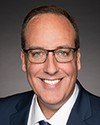
Chris d'Entremont Liberal Acadie—Annapolis, NS
Thank you very much, Chair.
Thank you for being with us, Mr. Cormier.
I want to continue on where Mr. Lawton left off.
Looking forward to the next possible election, whenever it may show up, if we're starting to take all of these other sources of media and trying to find ways to include them in the larger traditional media—CBC/Radio-Canada, CTV—where do we think we're going? Will we be adding everybody who has a podcast mic, or will there be more of an accreditation issue we'll have to seriously consider as we go forward and all these media groups are created?
Executive Director and Acting Commissioner, Leaders' Debates Commission
It's a very rapidly evolving question: What is journalism and what is new journalism? The commission is not the body or the forum for litigating those questions. These are social questions that are very important. The commission has neither the capacity nor the mandate to tackle that larger question.
We will abide by the court ruling that we have to admit a wide spectrum of media organizations, and we're happy to do that. At some point, does capacity enter into the equation? As you know, we had 200 journalists this time. That's a lot. That's a big press room. How many can we accommodate? We'll have to discuss this and see, with the next commissioner, what is the best course forward.
Liberal
Chris d'Entremont Liberal Acadie—Annapolis, NS
On the other question, you mentioned that CBC/Radio-Canada was the only bidder, really, on the request the last time around, whereas prior to that, we had a consortium and there were a number of different prior offers.
I'm hoping this is not creating a trend that only CBC/Radio-Canada is interested, or that maybe at some point the larger organizations don't want to be producers. What could be the options if CBC/Radio-Canada or one of the large TV groups decides not to produce something like this?
Executive Director and Acting Commissioner, Leaders' Debates Commission
I think we're all aware that media organizations are having financial difficulties for various reasons that I won't get into at this point. It is, I think, a point to consider. What effect does this have on the capacity of major networks to continue to produce the debates? The public broadcaster agreed to step forward for the past three cycles, and I have no reason to believe they wouldn't have the capacity to continue doing so. They have public financing and that helps.
This doesn't mean we're not open to having other people apply to produce a debate. It's an open process, as you know, and there's a very thorough process to go through to prove technical capacity, experience and other criteria to make sure that debates can reach the maximum number of people and be produced professionally.
We'll have to evaluate that if these hypotheses come to pass, but it is a very unstable environment, the media environment now, and people make the choices they have to make.