It is a tool. My point is that it is one of several tools that we have.
On that, I think we can agree. It is a tool, and it's an important tool, and once established, it will—

Evidence of meeting #20 for Procedure and House Affairs in the 45th Parliament, 1st session. (The original version is on Parliament’s site, as are the minutes.) The winning word was elections.
A recording is available from Parliament.
Liberal
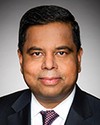
Gary Anandasangaree Liberal Scarborough—Guildwood—Rouge Park, ON
It is a tool. My point is that it is one of several tools that we have.
On that, I think we can agree. It is a tool, and it's an important tool, and once established, it will—
Conservative

Blaine Calkins Conservative Ponoka—Didsbury, AB
Now that we've established that we understand each other, the question that I have for you, then, is as follows: Are you going to implement this in the same way that you implemented your gun confiscation program?
I ask because it seems to me, based on the premise of my previous questions, that Beijing says, “Jump”, and your government says, “How high?” You pulled those MPs off that trip either out of a direct request from Beijing or because you're afraid of Beijing. It seems to me that your government doesn't understand, just as in the gun confiscation program, who the good guys are and who the bad guys are.
Can you reassure me that Canadians will not be affected or impacted with the implementation of your registry program in their ability to vote and participate in our democracy?
Liberal
Gary Anandasangaree Liberal Scarborough—Guildwood—Rouge Park, ON
You just can't help yourself, can you, Mr. Calkins?
Conservative
Blaine Calkins Conservative Ponoka—Didsbury, AB
I'm just following up on your initiatives, Minister.
When the camera is on and when people are recording, we just want to hear what you have to say.
Liberal

Élisabeth Brière Liberal Sherbrooke, QC
Thank you, Mr. Chair.
Thank you, Minister, and all the other witnesses, for being with us.
Minister, I'm going to ask my question in French.
You said in your opening remarks that Canadians expect their government to protect our democracy, which obviously includes our electoral process. You also mentioned that the threat of foreign interference was complex and that the mechanisms were also delicate and complex.
What would you say to Canadians to reassure them and show them that the government is doing what it needs to do to ensure that the fight against foreign interference remains a priority?
Liberal
Gary Anandasangaree Liberal Scarborough—Guildwood—Rouge Park, ON
Thank you for the question, Mrs. Brière.
Let me just say at the outset that we have one of the most robust electoral systems in the world. It is one that is truly independent and that adheres to every element of democracy, ensuring that Canadians can go to the polls without repercussions and without having any form of intimidation. It is truly remarkable. We should be very proud of our democracy and our electoral process.
It is not perfect. When we see challenges from foreign actors or those who would try to undermine our democracy, we need to take action. That's what our government has done, including with SITE TF, an independent body that during the elections does their work very effectively, and with the establishment of the transparency commissioner. It is all meant to ensure that Canadians can not just be safe but also feel safe.
Liberal

The Chair Liberal Chris Bittle
Thank you so much.
We'll turn to Madame Normandin for one minute, please.
Bloc

Christine Normandin Bloc Saint-Jean, QC
Minister, you mentioned that you would be mindful that cars entering Canada would not be able to transmit sensitive information. However, that's a core function of modern cars if we want them to work.
To what extent was the Prime Minister briefed on this security concern before proceeding with the agreement with China on vehicle imports?
Liberal
Gary Anandasangaree Liberal Scarborough—Guildwood—Rouge Park, ON
The Prime Minister is quite well briefed on many issues, including on issues around trade. I think you will find that especially with vehicles, all vehicles coming into Canada will have safeguards in place where our information will be protected. That is, I think, a very important principle that we're working under, and I'm confident that it will not impede on the privacy rights of Canadians.
Liberal
The Chair Liberal Chris Bittle
Thank you so much.
I'd like to thank the minister and the witnesses for being here.
We'll suspend for the next panel.
Liberal
The Chair Liberal Chris Bittle
We're back.
Again, I remind you to consult the cards on how to prevent audio and feedback incidents.
Welcome to our second panel. Welcome back once again to a frequent flyer, Mr. Perrault, Chief Electoral Officer; Serge Caron, deputy chief electoral officer for digital transformation; and Josée Villeneuve, deputy chief electoral officer, regulatory affairs.
Mr. Perrault, I invite you to give your opening statement please.
Stéphane Perrault Chief Electoral Officer, Office of the Chief Electoral Officer
Thank you, Mr. Chair, for the invitation to appear before the committee as it studies foreign election interference.
I will briefly discuss our preparation for the 45th general election, what we experienced with respect to electoral operations, as well as our efforts to address inaccurate information about the electoral process.
Protecting elections against foreign interference requires a whole-of-society approach. At Elections Canada, our role in the delivery and protection of a federal election includes ensuring physical and personal security, the cybersecurity of our infrastructure and the security of the information regarding the electoral process. Our focus is on improving our resilience against attempts at election interference, whether they be foreign or domestic.
In the lead-up to and during the 45th general election, we continued to work closely with our security partners to understand potential threats and to secure our IT systems and the overall electoral process. And, as I told the committee when I appeared in October, Elections Canada did not experience any breaches to its IT infrastructure or interference with its electoral operations during the election.
However, as recognized by the Foreign Interference Commission, the biggest threat to our democracy comes from information manipulation, particularly through social media platforms. The role of Elections Canada in combatting disinformation and misinformation is very specific but critical to the security of our electoral process and the trust of Canadians. During and between elections, Elections Canada is focused on providing Canadians with accurate information about the federal electoral process, not only so that they may exercise their right to vote but also to inform them of the procedures and safeguards in place to ensure the integrity of the process.
In preparation for the election and to counter information manipulation, we've developed a range of information products as part of our voter information campaign. These include products available in 50 languages as well as detailed content on electoral integrity. We also published a media guide for speakers of Mandarin, Cantonese and Punjabi, the three most spoken languages in Canada besides English and French, with information on subjects beyond what we typically include in our information products, such as electoral security, the national register of electors and political financing safeguards.
Based on testimonies heard before the Foreign Interference Commission, and to prevent electors from being intimidated or influenced to vote in a certain way or not vote at all, we added new accessible web content about safeguards in the electoral process, including messages emphasizing the secrecy of the vote. These messages were shared widely through a range of communication channels during the 45th general election.
In the lead-up to, as well as during the election, we monitored the public information environment to observe inaccurate narratives about the electoral process. In addition to monitoring traditional media, Elections Canada monitors 60 different platforms, news websites, blogs and online forums in 22 different languages. I would note that Elections Canada is not equipped to determine whether the source of inaccurate information about federal elections is domestic or foreign. Instead it focuses on the impact that inaccurate information might have on Canadians' ability to register and vote or on their trust in the electoral process. Though we did observe an increase in inaccurate narratives compared to previous elections, we were able to provide Canadians with easy access to information about the electoral process. We promptly corrected this information and misinformation through our various channels such as a repository of official communications and our social media posts. We did interact with social media platforms when appropriate regarding specific messages that we saw that were concerning.
However, during the 45th general election, we noticed a shift in the digital information environment. The emergence of new elements, such as artificial intelligence and influencers, is changing the way in which Canadians have access to information about the electoral process and amplifies the manipulation and circulation of inaccurate information, whether domestic or foreign. This shift, in addition to the presence of other existing factors, such as polarization and the interconnectivity of the Canadian and American information environments, may lead to a situation where the information circulating online has long-lasting consequences on Canadians’ trust in the electoral process.
Prior to the election, in November 2024, I presented to Parliament and to the Foreign Interference Commission a series of recommendations to better protect elections against threats, including from foreign actors.
A key recommendation I made was to prohibit false information about the electoral process that is knowingly and deliberately being spread in order to interfere with the ability of Canadians to exercise their right to vote or to undermine trust in an election or its result.
My other recommendations dealt with the use of deep fakes, the funding of third parties and the protection of nomination and leadership contests.
The Foreign Interference Commission endorsed most of my recommendations, including the ones I have mentioned here.
Mr. Chair, I would encourage the committee to consider these recommendations in its study of foreign interference. I would be happy to make my officials available to the committee should it wish to study those.
Thank you. I would be happy to answer members’ questions.
Liberal
The Chair Liberal Chris Bittle
Thank you so much.
We'll turn to Mr. Van Popta for six minutes, please.
Conservative
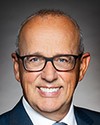
Tako Van Popta Conservative Langley Township—Fraser Heights, BC
Thank you, Mr. Chair.
Thank you to the witnesses for being here and to Mr. Perrault for coming once again to our committee to engage in this very important study on the impact of foreign interference in our elections.
I think we are all in full agreement that this is an extremely important topic. Commissioner Hogue, in her study, stated that information manipulation “poses the single biggest risk to our democracy.” She said, “It is an existential threat.” I gather from your earlier testimony that you would agree with that.
Earlier this week, we had witnesses from the critical election incident public protocol panel come before us. They have underlined that this is a risk. They expanded by saying that foreign interference activities in Canada continue to be “pervasive, sophisticated, and persistent”. Just before you came here, in the earlier panel today, the minister quoted those same words.
Despite that, the “Retrospective Report on the 45th General Election” stated that “none of the incidents reviewed by the Panel threatened Canada’s ability to have a free and fair election.”
I put that to the witnesses earlier this week. They reaffirmed that, but they also pointed out that one of their goals is that “Canadians must have full confidence that their election is secure”.
I know that in your testimony you talked a bit about that.
Earlier witnesses were less equivocal with this answer, in nice bureaucratic language:
The CEIPP Panel is encouraged that public reaction to the enhanced communications posture adopted during GE45 viewed such efforts as generally effective.
Have we met the goal? Has the panel met the goal? Has your department met the goal of ensuring Canadians have full confidence that their elections are in fact secure?
Chief Electoral Officer, Office of the Chief Electoral Officer
I think we have every reason to be confident in the overall security of our elections.
I think we face challenges, like all democracies, but I think Canada checks all the boxes in terms of a free and fair election. Some of the improvements you noted for the last elections were positive improvements, from my perspective. Overall, I share the assessments that were made.
Conservative
Tako Van Popta Conservative Langley Township—Fraser Heights, BC
How can I be sure that the public in my riding, which has a large Chinese diaspora community, are confident and that they're not staying home because they're afraid of something? Would you have evidence of that? I'm not saying that specifically for my riding, but for any given riding. Would you be able to say with some degree of assuredness that the public there is confident in the robustness of our democratic systems?
Chief Electoral Officer, Office of the Chief Electoral Officer
Overall, I think the surveys show that Canadians trust our electoral process and trust that we at Elections Canada are among the most trusted institutions in the country, so generally speaking, yes.
I know there are pockets of distrust, and I think a lot of that distrust is based on incorrect information. One of our key roles is to make sure that we provide, as much as possible, information about the safety of our electoral process.
You mentioned something that is of concern to me and it was of concern to me prior to the election—and which I mentioned in my remarks—which is people staying home because they're afraid. I think it's important for Canadians to know and for anybody who's listening to know that the vote is secret, and that how they vote is not something that can be determined by anybody. They should feel secure in going to the polling stations and casting a ballot. It won't be known how they voted.
Conservative
Tako Van Popta Conservative Langley Township—Fraser Heights, BC
I agree that they should feel secure. I believe our systems are robust, but my concern continues to be with diaspora communities that feel threatened because of something that is going on back in the country from which they've come. They still have family members and friends there.
Chief Electoral Officer, Office of the Chief Electoral Officer
I share that concern. That's why we launched a wide-ranging information campaign on the electoral safeguards. We also had some regional educators out in B.C., in Surrey, and in Toronto to talk about the safeguards of our electoral process.
We have a network of community groups in our Inspire Democracy program with whom we share information. There are over 900 community groups that receive that information. They, in turn, are well positioned to share that with members of their communities or with people they work with. It's an important issue. There's no silver bullet for this. It's something that we need to tackle, and we need to continue expanding our efforts.
Conservative
Tako Van Popta Conservative Langley Township—Fraser Heights, BC
Thank you.
I have a question about how new electors get their names put onto the list of electors. It's my understanding that it's pretty easy for a person to have their name entered. When I'm out door knocking, people will say, “My daughter just turned 18; what should she do?” You can go online or you can go to the polling station, get there a couple of minutes early and just show some ID. Showing a passport, of course, would be good enough—sufficient, but not necessary.
Chief Electoral Officer, Office of the Chief Electoral Officer
No, a passport—
Conservative
Tako Van Popta Conservative Langley Township—Fraser Heights, BC
A driver's licence or anything else, other documents, even just a library card if they don't have government issued photo ID, almost anything is good enough.
Are you assured that no non-Canadians are getting onto the voters list?
February 5th, 2026 / 12:15 p.m.
Chief Electoral Officer, Office of the Chief Electoral Officer
We know that in some cases non-Canadians do get on the register, because we received the information from IRCC on non-Canadians and we checked that against the register.
Conservative