Evidence of meeting #14 for Human Resources, Skills and Social Development and the Status of Persons with Disabilities in the 45th Parliament, 1st session. (The original version is on Parliament’s site, as are the minutes.) The winning word was immigration.

On the agenda

Members speaking

Before the committee

Bizzarro  Co-Coordinator, Mouvement autonome et solidaire des sans-emploi
Hussan  Executive Director, Migrant Workers Alliance for Change
Skuterud  Professor, Department of Economics, University of Waterloo, As an Individual

4:55 p.m.

Conservative

Colin Reynolds Conservative Elmwood—Transcona, MB

Thank you, Mr. Chair.

Thank you, witnesses, for coming today. I appreciate your being here.

My first question is for Mr. Bizzarro.

I was in the construction industry for almost 20 years, and I was on and off EI many times through training, through periods of unemployment.

You're proposing that we lower the threshold for employment insurance benefits. I have personal experience with people who would rather be on employment insurance than go to work. If we are lowering the threshold for benefits and extending the benefit periods, how do we protect the employment insurance system from abuse?
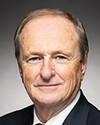
4:55 p.m.

Co-Coordinator, Mouvement autonome et solidaire des sans-emploi

Michaël Bizzarro

Thank you for the question, which often comes up in conversations about benefits for the unemployed.

I would just like to remind you that, according to the annual report by the Canada Employment Insurance Commission, the CEIC, approximately 1% of claimants defraud employment insurance.

We are trying to make progress so that more unemployed people can access benefits, but EI discriminates against many of these people. In our opinion, the 1% of unemployed workers who defraud employment insurance is a very small number.

We're not interested in fighting potential fraudsters; we're interested in making things better for other unemployed people.

5 p.m.

Conservative

Colin Reynolds Conservative Elmwood—Transcona, MB

When that study was done and it refers to fraud, my assumption would be that a fraud would be somebody who is collecting benefits, but maybe earning cash on the side.

Can you confirm that the fraud is the same as somebody who is just not trying very hard to get a job? I don't know if that would be fraudulent.

5 p.m.

Co-Coordinator, Mouvement autonome et solidaire des sans-emploi

Michaël Bizzarro

The EI eligibility rules are the same for all unemployed workers in Canada. They are required to meet, seek work and report their income every two weeks. The CEIC makes the rules, and the rules work. There is a stereotype about some workers trying to take advantage of the system, but the CEIC has rules to manage benefits, and it works very well that way.

5 p.m.

Conservative

Colin Reynolds Conservative Elmwood—Transcona, MB

Thank you.

My next question is for Mr. Skuterud.

What lessons can we learn from our past, or from other OECD countries, that would help us tackle the rise in youth unemployment here in Canada?

5 p.m.

Professor, Department of Economics, University of Waterloo, As an Individual

Mikal Skuterud

Mr. Hussan and I have both sort of pointed to the same factor. Coming out of the pandemic, there was a very big increase in price inflation. Prices were increasing a lot faster than labour costs. That gives companies margins. When the prices you can sell things at are rising faster than what you have to pay your workers, there are profit margins. That increases labour demand. Now the incentive is to produce a whole lot more and to hire more workers, these low-skilled workers.

There was this huge increase in labour demand. Then there was a lot of hyperbolic talk about a labour shortage crisis, much of it driven by a business lobby. The government responded to that by doing things like removing any restrictions on the number of hours that international students work, which we've seen in the data. I had a student that worked on this with a labour force survey. It was clearly evident that there was an increase in the amount of labour market activity off campus by international students.

All of that sort of blew up, and now we're coming back to another point, because the Bank of Canada has now put the breaks on inflation. We're in a bit of a cycle. Every time we move into—

5 p.m.

Liberal

The Chair Liberal Bobby Morrissey

Mr. Skuterud, you can follow up at a later time.

Thank you, Mr. Reynolds. We went over a bit.

Ms. Fancy, you have five minutes or less.

Jessica Fancy-Landry Liberal South Shore—St. Margarets, NS

Thank you very much.

Through you, Chair, thank you to all the witnesses today for their testimony.

I'll just say that if you have more to say outside of the time or parameters we're giving you today, please don't hesitate to write things up and send them along to our clerk.

I'd like to start with Mr. Bizzarro.

Welcome, Mr. Bizzarro.

You've long argued that young and seasonal workers need stronger transitions between training and stable employment. I have a rural riding in Nova Scotia.

How can the $307.9-million youth employment and skills strategy, YESS, which provides mentorship and mental health support for over 20,000 youth annually, help bridge that gap for young Quebeckers as well as people from my riding to enter today's labour market?

5:05 p.m.

Co-Coordinator, Mouvement autonome et solidaire des sans-emploi

Michaël Bizzarro

Excuse me, Ms. Fancy, the interpretation cut out and I think I missed part of your question.

Caroline Desrochers Liberal Trois-Rivières, QC

Mr. Bizzarro, we can't hear you.

5:05 p.m.

Co-Coordinator, Mouvement autonome et solidaire des sans-emploi

Michaël Bizzarro

Excuse me, Ms. Fancy, the interpretation stopped, and I think I missed part of your question. I'm sorry.

Jessica Fancy-Landry Liberal South Shore—St. Margarets, NS

Could I reclaim my time very quickly, Chair? I'll be quick.

I just want to know what your take on our youth employment and skills strategy is and if it helps provide mentorship and mental health support for over 20,000 youth. How can that help bridge the gap for young people entering today's labour market force?

5:05 p.m.

Co-Coordinator, Mouvement autonome et solidaire des sans-emploi

Michaël Bizzarro

If I understood your question correctly, you want to know our opinion on mental health care for young people entering the workforce.

Is that correct?

Jessica Fancy-Landry Liberal South Shore—St. Margarets, NS

Yes, please, for one minute.

5:05 p.m.

Co-Coordinator, Mouvement autonome et solidaire des sans-emploi

Michaël Bizzarro

I'm sorry, but MASSE doesn't have a position on that issue, so I'd rather not comment.

Jessica Fancy-Landry Liberal South Shore—St. Margarets, NS

That's fair, then.

I'd like to turn my attention to Mr. Hussan.

Welcome, Mr. Hussan.

You mentioned a possible solution. We're about solutions here and how we bolster our programs within government, so I'd like to give you a minute or so to discuss that. You mentioned a national youth job development strategy. I'm looking for some of your ideas about that possible strategy.

5:05 p.m.

Executive Director, Migrant Workers Alliance for Change

Syed Hussan

Thank you so much.

Very quickly, I've been wracking my brain about the study that was referenced earlier about the Bank of Canada, and I realized what it is, and it's clearly a misreading if you don't have proper economics training.

That study says that wages would have been 0.7% higher if the current characteristics of temporary workers had not changed.

5:05 p.m.

Conservative

Garnett Genuis Conservative Sherwood Park—Fort Saskatchewan, AB

[Inaudible—Editor] the abstract.

5:05 p.m.

Executive Director, Migrant Workers Alliance for Change

Syed Hussan

No, absolutely, I understand that's all you read.

If the characteristics of temporary workers had not changed, it would have been—

5:05 p.m.

Conservative

Garnett Genuis Conservative Sherwood Park—Fort Saskatchewan, AB

I've read the whole document. If it had not changed, it would have been—

5:05 p.m.

Executive Director, Migrant Workers Alliance for Change

Syed Hussan

—[Inaudible—Editor] higher if the characteristics—

5:05 p.m.

Conservative

Garnett Genuis Conservative Sherwood Park—Fort Saskatchewan, AB

[Inaudible—Editor]

The Chair Liberal Bobby Morrissey

Try to respect the decorum, Mr. Genuis.

5:05 p.m.

Executive Director, Migrant Workers Alliance for Change

Syed Hussan

It's basically this. What the report said is that if the temporary workers had not changed, then the wages would have been 0.7% higher. It does not say that there had been wage suppression, and 0.7% is very low. It's not causation; it's that it would have been mechanically lower on average.

That's what it is, so, please, it would be helpful to go to ChatGPT, maybe—

Jessica Fancy-Landry Liberal South Shore—St. Margarets, NS

That's wonderful, thank you.

Mr. Hussan, we're going to put the train back on the tracks here.

In terms of policy development or policy tightening, I'm wondering what you could tell us about the policy tightening that you mentioned within your introductory remarks.