I ran over here.
Evidence of meeting #7 for Indigenous and Northern Affairs in the 45th Parliament, 1st session. (The original version is on Parliament’s site, as are the minutes.) The winning word was rcmp.
A video is available from Parliament.

Evidence of meeting #7 for Indigenous and Northern Affairs in the 45th Parliament, 1st session. (The original version is on Parliament’s site, as are the minutes.) The winning word was rcmp.
A video is available from Parliament.
Liberal
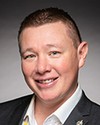
Jaime Battiste Liberal Cape Breton—Canso—Antigonish, NS
Thank you for joining us today, Chief.
I know you've had many conversations with me over the frustrations you've had with the RCMP. I know that you have a background of experience not only as a chief, but also, you started off working with the Unama’ki Tribal Police as well as the Mi'kmaw Legal Support Network.
I'm wondering if you can compare the community's feeling towards the RCMP versus when there was an Unama’ki Tribal Police. What were the benefits of having a tribal police who spoke the language, who were mostly Mi'kmaq community members, as opposed to what you're dealing with now with the RCMP?
Eskasoni First Nation
Yes, certainly, Jaime. Wela'lin.
We call the police Mountie aqq. That means “Mounties”.
I was part of the Unama'ki Tribal Police. I was a jail guard. I assisted in my younger days when I was going to university. That was my part-time job. The majority of them were Mi'kmaq.
The higher officers weren't Mi'kmaq. This group was sent off to Regina and had tutoring, but it was really difficult for indigenous officers to enter depot. The Mi'kmaq were mostly constables. For any RCMP officer it is a very difficult process, but for indigenous people, it's very difficult.
We know that many people in our communities have really good backgrounds and are really good people. I even wanted to try it out myself to see if I could get into Regina. It's very difficult for indigenous officers, with our backgrounds and everything, and it just didn't work.
However, at the time of the tribal police, we were able to take a crew to depot. They helped each other because that's the spirit of our people. We work together as communities. There are huge differences, Jaime.
For instance, when talking to the elders, it wasn't just the police officers. Even on the phone lines, we had dispatchers who spoke Mi'kmaq. With 911, our elders would get frustrated and upset. They would hang up and try to call the police station. Those are the issues that our people are facing because 911 is not helpful. It's all English. Our people deserve to have somebody to talk to in their language, talking and explaining to them.
Sometimes they speak English, and it may be a broken English, but right away, a Mi'kmaq officer understands the situation, even before entering. They know the background of this person or know that maybe they get easily upset. They know which buttons could be pushed, and they can de-escalate issues just by talking or with humour and those types of things.
I even remember that my godfather was a police chief at the time. If somebody was pissed off, he would come in and say something to make them laugh. That was the style that our people used for indigenous policing. They understood the families and even other communities as well.
In Unama'ki, in Cape Breton, my brother worked in all these communities. They know each family because we're tied in, in some way or the other. That's the difference. It's a huge difference. If you put a stranger officer in there, they are going to have a lot of problems. They get freaked out by the person screaming or yelling or whatever, and they might shoot them.
That's what happened in Big Cove, in Elsipogtog, when somebody was asking for help, for a mental health check, and they ended up being shot. It happened in Red Bank. When I spoke to Chief Bill Ward, it was the same thing. It freaked out the people over there, and they shot him. Those people should still be alive today. They were innocent, harmless people who were seeking mental health support, and they got shot. My fire chief could have been shot as well.
This is what we're dealing with here. We're dealing with lives. It's really important. It's in your hands to give us the opportunity, to listen to us and to bring in tribal police, special constables or peace officers. I think a hybrid approach would work in our communities, or bring back tribal police with more sufficient funding. The tribal police was poorly funded. It was set up to fail.
Liberal
Jaime Battiste Liberal Cape Breton—Canso—Antigonish, NS
Thank you, Chief.
You talked about Nova Scotia having some of the highest graduation rates because the Mi'kmaq of Nova Scotia took over their own education system. Do you think that success could be replicated if the Mi'kmaq took over their own policing, if there was a five-year or a 10-year grant, as MK is given?
Eskasoni First Nation
Absolutely.
Again, in any sector that our Mi'kmaq leadership tackles.... Whether it's education, social or health, they are all intertwined. All of the organizations that we have help in our communities to end the intergenerational trauma within our communities. Those are essential services—even the answer from the gentleman here. It's very essential. They all work together. If it's addictions, if it's mental health—which is rising—those are the areas where we should work together and should be part of it. If it's our self-government.... Our policing should be one of the things, as well.
I commend Kahnawà:ke. They took control of their police over there. Also, in Listuguj in Quebec.... In Quebec, it seems like they're doing a really good job in that area. We need to focus on improving, whether it's the RCMP or the provincial police.
Right now, we're under review. We're looking at going back to the RCMP, and we will sign.... We never signed a CTA. What's a CTA? Does anybody know? It's a community tripartite agreement. We never signed it because we don't feel that it's working for our community. We're trying to have a deal done that will improve our policing.
Liberal
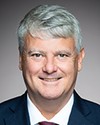
The Chair Liberal Terry Sheehan
Thank you very much.
Mr. Lemire, you have the floor for six minutes.
Bloc

Sébastien Lemire Bloc Abitibi—Témiscamingue, QC
Thank you, Mr. Chair.
Meegwetch.
Chief Denny, thank you for being here, for your leadership, for your testimony, and for your passion for your people and the policing model.
Bloc
Sébastien Lemire Bloc Abitibi—Témiscamingue, QC
If I speak in French, can you hear the interpretation?
Bloc
Sébastien Lemire Bloc Abitibi—Témiscamingue, QC
Perfect.
Eskasoni first nation has adopted a self-administered policing model, which means they have their own police service, separate from provincial or federal models, established through an agreement with the federal government, the Province of Nova Scotia and your community. To what extent do you think this agreement has enabled the community to better control its financial resources and its own policing governance model? Does this more community-based approach have a positive and tangible impact on safety, but also on the feeling of trust among the people of Eskasoni?
Eskasoni First Nation
Back in the nineties, when we had tribal police, it was funded provincially. The tribal police folded at the time. I wasn't there; I was young. I was an employee at the time.
There was a police commission at the time, and it was working with the provincial police and the RCMP. I think funding went on for almost 10 years, and finally they didn't renew it. The RCMP took over, the H division, which is all across Nova Scotia. All of the tribal police members became RCMP officers at that time. Along the way, only a few went, so they continued working as RCMP officers to the point where they couldn't work on a beat anymore—meaning working the streets. They were dealing with mental health, PTSD and health issues. The majority of them are retired now.
Now we're on the brink of losing one more officer. She's on almost her 25th year. She's going to retire soon. Then we have two young ones. They don't speak the language, but they grew up in the community. They know the reservation life. They know the background, and they know the people. They're very important to young individuals. We need more of our indigenous officers to work in their communities. Right now, it's not happening. They're having a hard time getting in, even though they have education. They're smart. They can read. They're capable. They're healthy.
In our communities, we really push healthy living. We invest our own dollars, our own resources, in young people to be healthy, to eat healthy and to exercise—including me. I exercise and train because I want to be a role model for our young people. I do not drink. I've never taken drugs. I want to be a role model. I want our people to have a good life, not the life like when I was younger.
Many people in my generation—I'm 50 years old—in our younger days.... I don't want our young people to go through what we went through: the discrimination, the racism, amongst police officers and everybody in that age. We need to change that now, and it's in our hands here, together—indigenous leadership and all the leaders here in Ottawa.
Bloc
Sébastien Lemire Bloc Abitibi—Témiscamingue, QC
Obviously, changing this culture requires funding. We understand from your opening remarks that this funding must be predictable and long-term.
The Auditor General's report found that under community tripartite agreements, the RCMP didn't have a national staffing strategy to meet its obligations, leaving each division to manage its own shortcomings. We also heard that Public Safety Canada ensures insufficient accountability for compliance with these agreements.
Is that an issue you're seeing in Eskasoni? What impact does the lack of federal coordination or responsibility have on the trust and continuity of policing services in your community?
Eskasoni First Nation
I think there are more options available beyond just whether it's self-administered or the trilateral agreement. There are hybrid policing models, as I mentioned earlier, adding peacekeepers or adding special constables. Back home we have our regional police, as they call them, provincial police. It shouldn't be the one-size-fits-all CTA. It should be customized for the community.
You mentioned the RCMP. The postings should not be mandatory in indigenous communities. It prevents the non-indigenous from gaining sufficient cultural competence. It also prevents indigenous officers from remaining in first nations. Those are the issues we're facing in the agreements. We noticed that, and something needs to be done. More of our community members want to go over to the RCMP right now, and I believe they should, like they did back in the day.
That needs to change. From talking to some officers, retired officers, I know that they felt even when they were in Regina, it wasn't customized for our own people. They went there without really knowing or without any knowledge. We need to improve on that.
With regard to the agreements, that should be properly funded, not just for constables but also for higher levels and in police academies as well. As I mentioned, the first nations police chiefs of Canada are providing those services to all the officers. That's really needed back home and everywhere, I believe, because this is brought up everywhere. It's a national issue. It's an issue in my community, because we're the largest community.
My community is an amazing community. It's a beautiful, amazing and smart community, but we're still having to fight drugs. There is a drug epidemic, and it's happening within our communities. We're having a hard time. The officers are going after the wrong people. They're going after the people who bribe for a couple of bucks, but there are the big ones out there who need to be attacked and to be arrested. They're not even in our communities. They're lurking on the outside and feeding off people with mental health issues, people in vulnerable situations and people who are impoverished: I'll give you $1000 if you sell these off. Don't keep them at home. Be careful.
That's why we put our own dollars into this. It's an issue. When we ask the RCMP if they can provide an officer, there's no funding. But we'll pay for it. We're desperate. People are dying. Young people are dying at a fast rate right now.
Just over this past summer, I think we had four deaths there, Jaime, due to overdoses of fentanyl and many other drugs in our community.
We're hurting over here. Our young people are dying. We need to fix that.
Liberal
The Chair Liberal Terry Sheehan
Thank you very much for that, Chief.
Next we have Billy for five minutes, please.
October 27th, 2025 / 4:05 p.m.
Conservative

Billy Morin Conservative Edmonton Northwest, AB
Thank you, Chair.
Thanks for coming today, Chief. I'm glad to get to know you and your community more, and your story.
Certainly, I do agree with you that Eskasoni is a leader in that people learn from you, but you also learn from other first nations. We all have something principally in common across this country—namely, that for policing in our communities, long-term solutions come from inside our communities, whether it's community policing or family policing, or something from the community, anyway, given—
Conservative
Billy Morin Conservative Edmonton Northwest, AB
Okay. I'll speak up.
I certainly agree with you that the solutions lie inside our communities when it comes to long-term solutions in our communities, but I would also say that Canada is a big country. As much as we do have some things in common, regions have different challenges. On the west coast, not to take away from anybody else, they've been in the news for drug-related things with the government. There's a little bit more access to drugs there, in Vancouver in particular. In the prairies we have a similar situation.
Of course, in your community and across this country, there are those things, but one unique aspect of the east coast is that treaty rights and fishery rights have been in the news, of course, over the last decades. When it comes to moderate living and livelihood, fishing with elver fishers, treaty rights and traditional rights, and balancing those with the Canadian economy and non-indigenous Canadians who work on the east coast, I'm wondering how the RCMP has handled that situation. Have things gotten better under the RCMP? Do they work in a peaceful way? Are things getting better with the RCMP when it comes to moderate fishery livelihoods?
Eskasoni First Nation
Yes, I believe they're trying. That aspect, again, would have been different if we had more indigenous officers and somebody who speaks the language to be a liaison of some sort.
In the past, if there was a blockade or a protest when it came down to our rights, sometimes the RCMP would listen to what the government said, or even to industry. We'd hear from industry that we have to move and get out of there. Well, we have treaty rights and we have a right to fish and hunt. The RCMP are always in a tough spot—like, who do they help out there? That needs to be straightened up.
In my strong opinion, I believe they try to work things out and be mediators. They always mention that they make sure nobody gets hurt and make sure it's peaceful and safe for all.
A few years back, what happened in Elsipogtog—when there was a raid and one of the elders was shot in a protest—broke a lot of hearts and not just in Elsipogtog, but right across the country in indigenous communities. It's really hard to watch when you have an elder.... It just recently happened to our fire chief and the community was very upset.
We are working on our community and with the RCMP to work together. We're telling them that it all comes down to community policing. Be out there and talk to the elders. Tribal police members used to visit the elders. They would hang out with the elders and drink tea. They'd go to the hockey game or they'd go to the ball game. They were parked over there talking to the kids playing basketball and joking around with the kids and the young people. That's what it is. I think that's community policing.
We know that there are some people out there who are difficult. It's not their fault. We can work things out with them. We can try to help them and try to change our people and their past. We don't judge them from their past. We try to say, “Hey, we can help you here. We can educate you, get you trained, get you work and get your children back.” It's those types of things.
We have a lot of kids who go into child welfare as well. We try to get them to bounce back and try to get them to new homes. We give away many homes to these families. Some of them we had to take back because drugs were involved in some sort. It's very difficult. The RCMP are along the way—any police really. When the tribal police and our indigenous officers were around, it was way simpler.
Conservative
Billy Morin Conservative Edmonton Northwest, AB
Thank you for that, Chief. I wholeheartedly agree that community policing is a priority going forward.
Chair, I'd just like an opportunity to do some housekeeping and introduce the motion that was put on the table last week.
Conservative
Billy Morin Conservative Edmonton Northwest, AB
I'll read out the motion for the record and then I would appreciate if we can have a vote on it.
I move the following:
Given that the damning report recently released by the Auditor General of Canada entitled, 2025 Reports of the Auditor General of Canada: Follow Up on Programs for First Nations, that found that in spite of an 84% increase in spending at Indigenous Services Canada, the department failed to address over half of the recommendations they agreed to, and given that Indigenous Services Canada has failed to address unsatisfactory drinking water conditions, has failed to address emergency preparedness on First Nations reserves, and did not assess whether remote First Nations communities have access to essential health services, among other failures, the Auditor General and Minister of Indigenous Services be invited by the committee to address the concerns raised in the report, provided that both witnesses testify at the same meeting, with the Auditor General scheduled for the first hour, followed by the Indigenous Services Ministers for the second hour, and that the meeting take place no later than on Monday, November 3, 2025; that the meeting be televised; and that the committee report its findings to the House.
Liberal
Liberal

Ginette Lavack Liberal St. Boniface—St. Vital, MB
I'd like to thank my colleague for the motion he has brought forward.
I do have some amendments to the motion that I'd like to propose. Really, the amendments I am proposing are not to change the intention or the spirit of the motion, but are more toward the language so that it might be more constructive and collaborative. They really pull in the language used in the Auditor General's reports and the findings.
We didn't get here overnight. We know that indigenous peoples have been suffering from decades of chronic underfunding and colonial and discriminatory policies. It's not 10 years of programs and development that are going to solve all these problems, but we want to move forward, we want to continue to find the right solutions and collaborate on that. We want to work on this motion to bring forward the minister and the Auditor General.
I have written copies that I could circulate that show the changes we're proposing.