Thank you, Mr. Volpe.
When was the last time you or the committee gave an update to the Prime Minister, Minister Leblanc, Minister Joly and, perhaps, Premier Ford on the dire situation happening in Essex-Windsor?

Evidence of meeting #35 for Industry and Technology in the 45th Parliament, 1st session. (The original version is on Parliament’s site, as are the minutes.) The winning word was businesses.
A recording is available from Parliament.
Conservative
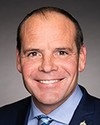
Chris Lewis Conservative Essex, ON
Thank you, Mr. Volpe.
When was the last time you or the committee gave an update to the Prime Minister, Minister Leblanc, Minister Joly and, perhaps, Premier Ford on the dire situation happening in Essex-Windsor?
President, Automotive Parts Manufacturers' Association
It was about four and a half hours ago.
Conservative
Chris Lewis Conservative Essex, ON
That's excellent.
I know you can't disclose a lot, but what did they say? Do they understand the urgency of what's happening?
President, Automotive Parts Manufacturers' Association
I think there's an acute understanding that industrial Canada, especially in southwestern Ontario and all spots between London and Windsor—with apologies to Hamilton, Burlington and Guelph—are carrying the brunt of this. They should be the focus. Any relief we're seeking should put those at the forefront.
Conservative
Chris Lewis Conservative Essex, ON
Thank you.
How often do you meet, and when is the next committee meeting?
President, Automotive Parts Manufacturers' Association
The first one was four and a half hours ago.
Conservative
President, Automotive Parts Manufacturers' Association
I don't know the cadence of it. Part of the update there was that we're going to hear about it. Some of it will be regular cadence. Another will be on the toing and froing of the discussions with the Americans.
Conservative
Chris Lewis Conservative Essex, ON
Thank you.
Towards the end of your testimony, sir, you mentioned that Michigan mould-makers are faring a bit better than Ontario mould-makers right now, but that's not the testimony we've heard from the people who own the shops. They told us last week that Michigan mould-makers are actually closing at a faster rate than Ontario mould-makers. I'm not sure whether somebody's crossed a line there, but that's fine.
Last Thursday, we had a witness from Windsor. He opened up a personal invitation to the Prime Minister to go down to his shop floor in Windsor so he can really, truly understand the dynamic and urgency of this problem. I don't have the Prime Minister's phone number, but I'm sure that you, as a committee, probably get his ears more than I could.
Would you please send him that message about that gentleman? We can get you the name. It's really important that the Prime Minister come down to Windsor-Essex.
President, Automotive Parts Manufacturers' Association
I hosted the Prime Minister down in Windsor-Essex. He's acutely aware of it, because nobody in Windsor-Essex is quiet. You can give your own personal testimony on that. Everybody knows we have an acute issue. They're rather articulate about it, because they're stuck in it.
What I would say to your constituents, to some of the other witnesses here and to the ones who came in last week is that I'm not quiet about this either.
To your point about the Michigan mould-makers, there is a bigger volume and a bigger cluster in Michigan. Whoever said that last week might have been right in terms of numbers, but you have to look in terms of the volume of work as well.
Conservative
Chris Lewis Conservative Essex, ON
Thank you so much, Mr. Volpe. I appreciate your very honest answers.
Mr. Aalbers, how much longer can your business survive, facing the state of the industry as it is today?
President, Aalbers Tool and Mold Inc.
As it is today, it's incredibly difficult to source any American work. Any contracts or negotiations we had at the start of the month—any bidding that was taking place—have essentially frozen because of the unpredictable nature of what we're going through at the moment.
I would say that, long term, if this remains in place, becomes consistent and doesn't change, we could adapt. We could recover and maintain ourselves in a year and a half to two years. With it being as variable as it has been, that's not necessarily guaranteed.
Conservative
Chris Lewis Conservative Essex, ON
Thank you, Mr. Aalbers.
The last question I have is probably the most important question I have.
I realize this situation is imminent. It's not even next week or the month after. We've been told quite a few times that maybe July will be the end date on this.
What immediate backstops are needed to support the industry so it can survive in the short term?
Thank you.
President, Aalbers Tool and Mold Inc.
In the short term, it would be if we could get a continuation, an extension, on the counter-tariff exemptions for U.S. steel. Even though they are tariffed at the 10% rate, that is a significantly better selling point than 50%. It means that a number of our projects could possibly be argued to press forward. Beyond that, it would be a show of force in regard to negotiations and the intention to resolve this and keep it at either a consistent tariff level or no tariff but to enforce the idea that it simply can't be changed on a whim, as it has been.
Conservative
Liberal

The Chair Liberal Ben Carr
Thanks very much, Mr. Lewis.
Ms. O'Rourke, the floor is yours for six minutes.
Liberal

Dominique O'Rourke Liberal Guelph, ON
Thank you very much, Mr. Chair.
Mr. Aalbers, earlier in this meeting MP Borrelli said the people she's spoken to didn't want funding of any type. I'm confused, because we've really been listening to industry to hear what would be a possible bridge while, clearly, our experts are working on resolving trade challenges with the United States.
The Windsor Essex Chamber of Commerce's recommendations were to reconsider and reinstate the blanket remission framework and implement short-term cashflow support measures. Obviously, everyone's goal is to resolve the section 232 dispute.
If there was short-term cashflow support to help provide the certainty to you and your workers—we heard from other people about concern around loss of workers—do you think that's reasonable for the government to do?
President, Aalbers Tool and Mold Inc.
I think that would be an assistance. In regard to one of the struggles that we're facing in the workflow that's coming out, which became unfrozen in January and began coming through the shops, all the expenses the shops have taken on is likely to be frozen in place. The burden and costs on that are borne entirely by the local industries in this area, and they're unable to pass that along or to charge a customer for what their expenses are in the meantime.
Liberal
Dominique O'Rourke Liberal Guelph, ON
Thank you.
Mr. Lavigne, could you please send us your recommendations right away?
We are speaking with the Minister of Industry and the Minister of Finance. We raised the issue with the Prime Minister. We would be pleased to not only include those recommendations in the committee's final report, but also to champion the industry in Ontario, Quebec and elsewhere in Canada.
Could you send those to us very quickly?
Vice-President, Public and Economic Affairs, Fédération des chambres de commerce du Québec
Of course. We can send them by email right away. We would be pleased to do so.
Liberal
Dominique O'Rourke Liberal Guelph, ON
Mr. Volpe, if we go back in time a bit—you know I chair the auto caucus—there are lots of allusions about Windsor Essex being an area very highly challenged. I don't dispute that. Guess who is number two in this report? It's the city of Guelph.
When we agreed to this study, we agreed, everybody around this table, that this was serious and urgent, and we wanted to hear from our witnesses.
Mr. Volpe, going back a little, I recall hearing Lana Payne, president of Unifor, say no deal is better than a bad deal.
Is that still your position? Even if we negotiate a deal tonight, what assurances would Canada have that this would be with a partner who is dealing in good faith?
President, Automotive Parts Manufacturers' Association
Everybody who's in the business wants to be in the business over the long term. Short-term liquidity issues aside, which are helpful for SMEs, in the tooling space but also in the volume parts space we want to have some assurance that the volume of business that you are engineered for, that you are platformed for, is available, either from the market that has gone away for emergency tariff purposes or by finding new markets.
This is a proud industry that has contributed to Canada. It's contributed to building Canada but also to Canada in crisis. It's the industry that stepped up and did all the PPE and ventilators during the pandemic, on very short time frames. They want to have that path restored. There have been a lot of recommendations made on what a new path would look like, all of which have long-term structural issues, like making a major concession on tariffs or making a major concession on new manufacturers that don't buy from the supply chain. None of that works.
Liberal
Dominique O'Rourke Liberal Guelph, ON
I have another quick question. You bring a broader perspective of the industry. Thank you for raising the fact that the mould-makers were identified as a critical part of our supply chain. We all have interest in making sure they're surviving, thriving and able to benefit from major projects, from infrastructure to defence and the auto sector.
What are your recommendations around immediate actions, and what do you think support should look like for organizations?