
Thank you, Chair.
Evidence of meeting #35 for Industry and Technology in the 45th Parliament, 1st session. (The original version is on Parliament’s site, as are the minutes.) The winning word was businesses.
A recording is available from Parliament.

Evidence of meeting #35 for Industry and Technology in the 45th Parliament, 1st session. (The original version is on Parliament’s site, as are the minutes.) The winning word was businesses.
A recording is available from Parliament.
Liberal

The Chair Liberal Ben Carr
Thanks very much, Ms. Borrelli.
Mr. Fragiskatos, welcome to the industry committee. The floor is yours for six minutes, sir.
Liberal
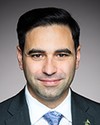
Peter Fragiskatos Liberal London Centre, ON
Thank you, Chair.
Thank you to colleagues.
I'm obviously not a full member of this committee, but this subject is of critical importance.
Ms. Borrelli spoke from the vantage point of a Windsor MP. I'm here as a London MP and, with that in mind, obviously I'd like to begin with Mr. Bates.
Mr. Bates, thank you very much for appearing today. This testimony that you're giving is critical. Thank you also for the work that you're doing on behalf of Londoners at this very important time, to say the least.
You mentioned Great Lakes Copper. I was there just recently, in fact, but I can understand, and we all know the devastating impact that the recent changes under 232 have had and will have for businesses like that, along with Arctic as well. It's very well known in London. I think it's been there since the 1960s.
Mr. Bates, my first question for you is this. How many businesses does the council represent that are impacted by this recent change?
Manufacturing Consortium Manager, Southwestern Ontario, EMC Canada
The London Regional Manufacturing Council will encompass every manufacturer in the London region, which can be 600 to 800 companies, small, big and everywhere in between. Through my role at EMC, I work with companies all across Canada, and there are a lot of manufacturers in Canada. Obviously, southern Ontario is the Canadian manufacturing heartland, and there are thousands of companies.
Liberal
Peter Fragiskatos Liberal London Centre, ON
Okay. I hate to put you on the spot like this, but I think it's important for the purposes of the committee and frankly for the recommendations that are given to the government.
Is there a particular recommendation that you think will have maximum impact, a recommendation that you could put forward in terms of a policy action from the federal government that will help the most. What would bring the greatest good for the greatest number, so to speak?
Manufacturing Consortium Manager, Southwestern Ontario, EMC Canada
If I knew that, then we'd have—
Liberal
Manufacturing Consortium Manager, Southwestern Ontario, EMC Canada
I'd say it's renegotiating the USMCA in a mutually beneficial light and some of the things that were brought up by the people whose stories I'm relaying, SR and ED credits and tax breaks. The retaliatory tariffs are—
Liberal
Peter Fragiskatos Liberal London Centre, ON
I don't mean to interrupt, sir, but I do have limited time. I should have been more precise. The fault is on my end.
Is there a particular policy action with respect to responding to the recent changes that have been made under the 232 tariffs that you think would have maximum impact?
Manufacturing Consortium Manager, Southwestern Ontario, EMC Canada
That's an incredibly hard question to answer, sir. I cannot give you a definitive answer on that.
Liberal
Peter Fragiskatos Liberal London Centre, ON
We'll try Mr. Caron from the Ontario Chamber. Do you have thoughts on that matter, sir?
Vice-President, Policy, Ontario Chamber of Commerce
Yes, I do. In terms of the specific change that was just made, emergency payments and relief to the impacted companies are what will keep these companies going through the months ahead.
Now, we want to look at the short term of our manufacturing base, and Mr. Bates said something really important earlier that I will echo, which is that the Ontario tax credit, the Ontario manufacturing investment tax credit, will now provide enhanced support of 15% from the province. For the federal government to match that would provide a much bigger incentive for companies who, through this time, may not be doing a lot of shipping but can do retooling to pivot to new opportunities, so simplicity in accessing this credit and a more generous credit would provide a powerful incentive for companies.
Liberal
Peter Fragiskatos Liberal London Centre, ON
I appreciate that.
Mr. Bates, does that sound like something that the council could get behind, could put forward as a key policy option that would help?
Manufacturing Consortium Manager, Southwestern Ontario, EMC Canada
Yes, 100%. Thank you for that, Mr. Caron. That was well said. Yes, I agree.
Liberal
Peter Fragiskatos Liberal London Centre, ON
Mr. Caron, I know you shared this during testimony, but it's another opportunity for you to put it on the record. What is another policy option that would have maximum impact?
Vice-President, Policy, Ontario Chamber of Commerce
I think we heard from Mr. Lecours earlier that companies are lost often in the maze of the complexity of the changes and, while the Canadian government cannot overnight turn itself into an e-customs broker, help to access services like that or guidance from trade commissioners or other qualified government officials would go a long way towards helping companies sometimes understand the basics of which tariffs now apply to their businesses. I flag the Chamber network, which is representing, again, 60,000 businesses across Ontario.
You have local networks in organizations, volunteers and paid staff who can echo and augment the message that the government is bringing. There's a bit of a public awareness component to this that we certainly need to put in play.
Liberal
Peter Fragiskatos Liberal London Centre, ON
Thank you very much.
I think I'll end it there, Chair. I have about 30 seconds left.
To the council in London, thank you, and to Mr. Caron as well.
Mr. Lecours, really, you put it very well. You have family who are impacted. All of you do, in some way, shape or form, I'm sure.
This issue is impacting every part of the country, particularly southwestern Ontario, which is so dependent on trade. We have to find ways to diversify our economy, but that is a medium- and long-term objective. The aim needs to be to assist in the short term. Your ideas and presence here are critical to that end, so it's much appreciated, sir.
Thank you.
Liberal
The Chair Liberal Ben Carr
Thank you, Mr. Fragiskatos.
Mr. Ste‑Marie, go ahead for six minutes, please.

Gabriel Ste-Marie Bloc Joliette—Manawan, QC
Thank you, Mr. Chair.
Good afternoon to my colleagues.
Witnesses, thank you for being here. All the information you gave us and all the human stories you shared are very touching and heartbreaking. I echo the words of my colleague Mr. Fragiskatos just now. We stand with you, of course.
Mr. Caron, my fear is that the United States will not have negotiated a fair trade agreement by July 1, because we see that the U.S. president isn't trying to do that. He is just looking for new ways to impose new tariffs and not implement what is already signed.
He is the one who negotiated CUSMA, which seems to be in direct contravention with the executive order from early April. This is the first time that the total value of a manufactured product is subject to a tariff, which completely undermines the trade agreement he himself signed.
If it takes time before a suitable agreement with the United States can be reached, if, for example, it drags on until the mid-term elections or even after that, and if nothing is done, could your members survive the current crisis with the additional 25% tariffs?
Vice-President, Policy, Ontario Chamber of Commerce
That's a big question. This is a question that will vary from business to business. For example, large auto parts producers are a bit more resilient and have a few more options to get through the crisis. However, it's more difficult for small businesses.
At the beginning of the year, there was already a significant impact. The Ontario economic report that we published, which can be found online, gives some detail about the main impacts, such as order deferrals and corporate debt. This is happening in a context where many businesses are going through succession planning, where businesses are transitioning to the next generation. There is a weakness here: an early withdrawal from the market can kill a business. It's a challenge. We have a number of manufacturers in Ontario that are asking themselves this question right now.
It's really an individual issue, and that's why it's important to have a range of support measures. A single measure won't resolve everything and get us through the crisis. Businesses have different needs. They are in different industries and have varying degrees of sophistication.
Bloc
Gabriel Ste-Marie Bloc Joliette—Manawan, QC
Thank you.
Do you talk to the chambers of commerce south of the border, your counterparts, so that they can put pressure on their government?
Vice-President, Policy, Ontario Chamber of Commerce
Absolutely.
In fact, last month I was in Washington with Jean‑Pierre Giroux, president of the Excellence in Manufacturing Consortium. We were at the U.S. Chamber of Commerce. Last year, we made a number of statements before the Michigan Chamber of Commerce and the New York Chamber of Commerce.
Indeed, we continue to engage our counterparts in the United States. In fact, their voices are the loudest with their government. Among those from the business community that we met, nobody told us they loved the tariffs or that they wanted them to continue. I think there's a lot of consensus in the business community, among small and large businesses in the United States, that this has to stop.
Bloc
Gabriel Ste-Marie Bloc Joliette—Manawan, QC
Thank you.
I want to add that the most recent executive order on steel and aluminum tariffs seems illegal under CUSMA and could lead to lawsuits from the Americans.
In terms of the range of measures that can be put in place to help businesses get through the crisis, some SMEs told the committee that a one-time targeted temporary wage subsidy could be considered to ensure that they can keep their skilled workers, the welders and machinists, and the expertise they have developed. Are your members talking about that too?
Vice-President, Policy, Ontario Chamber of Commerce
Employment insurance already has a similar option in work-sharing, which is being done. That's available. However, the problem that businesses have is that often employees don't want to sit around doing nothing. That's why I think that an interesting solution is a federal and provincial tax credit, which becomes an even larger tax credit when combined, that gives money to businesses so they can invest in machinery.
Canada is seriously lagging in productivity because we have a shortage of robotics. We don't have enough AI. We don't have enough cutting-edge technology. It is imperative that we invest in that, since we have capacity that is available. We could use that to set up new technologies in the factory.
That's in a context where businesses are under pressure. We can't just give them 10%. We have to make it a little more generous to make it worthwhile.
Bloc