Evidence of meeting #3 for Subcommittee on International Human Rights in the 45th Parliament, 1st session. (The original version is on Parliament’s site, as are the minutes.) The winning word was conflict.

A recording is available from Parliament.

On the agenda

Members speaking

Before the committee

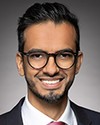
Langlois  Executive Director, Amnistie internationale Canada francophone
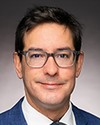
Lawson  Humanitarian Representative to Canada, Doctors Without Borders
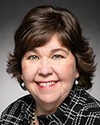
Babb  Director of the Promised Land Program and Strategic Adviser to Doctors Against Racism and Antisemitism, Macdonald-Laurier Institute
Medani  Associate Professor of Political Science and Chair of the African Studies Program, McGill University, As an Individual
Unruh  Professor and Director, Department of Geography, McGill University East Africa Field Studies Semester, As an Individual

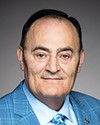
The Chair Liberal Fayçal El-Khoury

I call this meeting to order.

Welcome to meeting number three of the House of Commons Subcommittee on International Human Rights of the Standing Committee on Foreign Affairs and International Development.

Pursuant to Standing Order 108(2), the subcommittee is meeting to study the human rights situation in Sudan.

Today's meeting is taking place in a hybrid format, pursuant to the Standing Orders.

Members may attend in person or remotely using the Zoom application.

Before we continue, I would ask all in-person participants to consult the guidelines written on the cards on the table. These measures are in place to help prevent audio and feedback incidents and to protect the health and safety of all participants, including the interpreters. You will also notice a QR code on the card, which links to a short awareness video.

I would like to make a few comments for the benefit of the witnesses and members.

Please wait until I recognize you by name before speaking. For those participating by video conference, click on the microphone icon to activate your mic, and please mute yourself when you are not speaking. For those on Zoom, at the bottom of your screen you can select the appropriate channel for interpretation—floor, English or French. For those in the room, you can use the earpiece and select the desired channel. I remind you that all comments should be addressed through the chair.

If members in the room wish to speak, they must raise their hand. Members participating on Zoom must use the “raise hand” function.

The subcommittee clerk and I will maintain the speaking order as best we can. Thank you for your patience and understanding.

I would now like to welcome our guests.

We have France‑Isabelle Langlois, executive director of Amnistie internationale Canada francophone, by video conference. Welcome, France‑Isabelle Langlois.

From Doctors Without Borders, we have Michael Lawson, humanitarian representative to Canada. Welcome, Michael Lawson.

From the Macdonald-Laurier Institute, we have Casey Babb, director of the promised land program and strategic advisor to Doctors Against Racism and Antisemitism. Welcome, Casey Babb.

As an individual, we have Khalid Medani, associate professor of political science and chair of the African studies program at McGill University. Welcome, Khalid Medani.

Also as an individual, we have Jon Unruh, professor and director of the department of geography, East Africa field studies semester, at McGill University. Welcome, Jon Unruh.

Each witness will have five minutes for their remarks. I would ask that everyone try to respect that time limit.

We'll start with France‑Isabelle Langlois of Amnistie internationale Canada francophone.

Ms. Langlois, you have the floor.
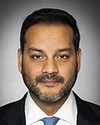
France-Isabelle Langlois Executive Director, Amnistie internationale Canada francophone

Good afternoon, hon. members.

Thank you for inviting me to appear before the committee.

Since Amnesty International last appeared before this committee on October 1, 2024, the situation in Sudan has not improved. It has actually deteriorated. The people of Sudan feel forgotten in the spiral of violence that has engulfed the country, where the parties to the conflict are sowing death and destruction, with no regard for human rights or international humanitarian law.

Since April 2023, the conflict in Sudan between the Rapid Support Forces, or RSF, and the Sudanese Armed Forces, or SAF, has claimed tens of thousands of lives and displaced more than 12 million people, making it the world's largest humanitarian crisis.

Given the scale of the fighting and the organization of both sides, the situation can be considered a non-international armed conflict under the Geneva Conventions. It is therefore subject to international humanitarian law, which aims to protect civilian populations and other non-combatants in armed conflicts. Amnesty International considers both the RSF and the SAF to be state forces. Various non-state armed groups and militias are also involved.

Amnesty International investigated and established that all parties to the conflict have committed serious violations of international human rights and humanitarian law. Some of the violence committed constitutes war crimes and even crimes against humanity.

On October 26, 2025, the RSF claimed to have conquered several areas of El Fasher, the last major city in Darfur controlled by the SAF. El Fasher had a population of over 1.5 million, including hundreds of thousands of internally displaced persons. It is estimated that approximately 260,000 civilians were trapped in the city as the October 26 attacks approached.

The reports coming out of El Fasher are appalling. People were killed in their homes or while desperately searching for food, water and medicine. They were caught in the crossfire as they fled and were shot in targeted attacks. Women and girls, some as young as 12, were raped and subjected to other forms of sexual violence by belligerents on both sides.

The RSF has a long history of committing massive violations, including targeted attacks against non-Arab communities and massacres reminiscent of those that took place in Darfur two decades ago.

There is no safe place. With every passing minute, countless lives are being destroyed. Canada must act now and call on the UN Security Council to extend the existing arms embargo on Darfur to the entire country and ensure its full implementation. As a reminder, in July 2024, Amnesty published a report documenting a steady influx of arms into the country, fuelling the conflict and an unprecedented humanitarian crisis.

Amnesty International is therefore calling on Canada to demand that the UN Security Council extend the arms embargo that applies to Darfur to the entire country.

It is also calling on Canada to ask the Security Council to strengthen its monitoring and verification mechanisms in order to effectively monitor and prevent international transfers and the illicit diversion of arms to the country.

Amnesty International is also calling on the Canadian government to support the mandate of the Human Rights Council's independent international fact-finding mission, which was recently renewed for one year.

It is calling on Canada to ask the UN Security Council to extend the mandate of the International Criminal Court, the ICC, to cover not only Darfur but the entire Sudanese territory so that it can bring justice to all victims.

Amnesty International is calling on the Canadian government to urgently enforce all outstanding arrest warrants related to the situation in Darfur, including against former Sudanese president Omar Al Bashir, and to strengthen political and financial support for the ICC so it can investigate violations committed in Darfur and elsewhere in Sudan.

Lastly, it is calling on the government to demonstrate its commitment to and support for the victims of Darfur and all situations under investigation by taking concrete action to defend the ICC against attacks by the United States and other states.

Thank you.

4 p.m.

Liberal

The Chair Liberal Fayçal El-Khoury

Thank you, Ms. Langlois.

Mr. Lawson, you have the floor for five minutes.

Michael Lawson Humanitarian Representative to Canada, Doctors Without Borders

Thank you and good afternoon to you, Mr. Chair, and to all the members of this committee. Thank you for having me here today.

I represent Doctors without Borders/Médecins Sans Frontières, MSF, an international aid organization that provides medical care to people affected by armed conflict and humanitarian emergencies around the world. One of the worst of those emergencies right now is taking place in Sudan, where we operate in some of the areas worst hit by a brutal war characterized by atrocities against civilians and where many people cannot access the humanitarian assistance they urgently need.

I apologize in advance that my colleague, Michel-Olivier Lacharité, head of MSF's emergency operations for Sudan, was unable to join us by video link today as planned. I will present some of the information he was planning to share.

In recent days, we've seen the awful situation in Sudan take a further turn for the worse. El Fasher, the capital of North Darfur in Sudan, which was already facing an unprecedented humanitarian crisis after more than 500 days of siege, saw its situation deteriorate even more after the city was taken over by the Rapid Support Forces, the RSF, on the weekend of October 26.

MSF was operational in El Fasher until last year when attacks against our health activities forced us to evacuate. In April, we were again forced to evacuate from the nearby Zamzam camp for displaced civilians after it, too, was attacked. We are now based in the town of Tawila, 60 kilometres away from El Fasher, where we run a hospital with 200 beds and 500 staff.

We have been receiving there as patients many of the people who have managed to flee El Fasher, including over the past few days, who have been reporting to us what they have been witnessing directly. El Fasher is now the scene of mass atrocities, and although the pattern of the violence being committed is not new, it is rapidly intensifying and radicalizing. Civilians continue to be directly targeted. Children are not spared. Elderly people are not spared. Women are not spared. Non-Arab populations continue to be directly targeted. Civilian and medical infrastructure is also being targeted. Escaping from El Fasher is extremely difficult. Those attempting to flee are victims of extortion who must pay for their survival and who risk kidnapping, assault or worse.

At our hospital in Tawila, MSF has received more than 500 victims of gunshot wounds in the past week alone. We have received wounded people who had been left for dead and many cases of torture and bodily violence, approximately 20 per day. We also continue to see high numbers of cases of sexual violence, which has been a major characteristic of this war. Even before the recent developments in El Fasher, we had received 200 cases of sexual violence at our hospital in Tawila in September alone. These are not sporadic or isolated cases, but are consistent with the high and constant level of violence against civilians that we have observed for months. This has not changed over the past week, but has simply intensified. We estimate that there have been thousands of direct deaths in El Fasher and its outskirts in recent months, probably even more if one includes indirect deaths caused by the absence of care and those caused by famine.

The malnutrition situation is extremely severe. In several internally displaced person sites in the El Fasher area, nutritional assessments carried out in mid-March showed 38% global acute malnutrition among children under the age of five, of which 11% were severe acute malnutrition. That was more than seven months ago, after which the siege of El Fasher only intensified.

This extreme vulnerability is now further reinforced by increased direct violence. The risk of massive mortality remains extremely high. In Tawila, our teams receive not only children but also adult women and men whose levels of malnutrition are alarming. On October 27 in Tawila, all 70 of the children under the age of five received at our facilities were suffering from acute malnutrition. On October 28, 20% of adult men coming from El Fasher were also suffering from severe acute malnutrition.

What we are seeing right now in North Darfur following the takeover of El Fasher is not an anomaly. It is a scaled-up continuation of a system of targeted destruction of civilians as the dominant operational model of the RSF.

I want to take this moment to remind the members of this committee that civilians in conflict are meant to be protected under international humanitarian law, which forbids warring parties from deliberately targeting civilians or from attacking aid workers or preventing access to essentials such as food, water and medical care. I would also like to point out that we, as MSF, have already been calling on Canada to do more to stand up for international humanitarian law in conflict zones, most recently through a petition signed by tens of thousands of Canadians and delivered last month to the Prime Minister, asking his government to hold violators of IHL accountable.

Now more than ever, as we watch civilians—

The Chair Liberal Fayçal El-Khoury

Can you wind up, please? We are almost at time.

4:05 p.m.

Humanitarian Representative to Canada, Doctors Without Borders

Michael Lawson

—come under attack in Darfur, it is necessary for Canada to uphold international humanitarian law. Now more than ever, violators and those who support them must be held to account and now more than ever, especially today on the eve of this government's new federal budget, it is necessary for Canada to prioritize life-saving international aid and humanitarian assistance for places like Sudan and for people affected by conflict, displacement, starvation and disease.

Thank you.

The Chair Liberal Fayçal El-Khoury

Thank you, Mr. Lawson.

Now I invite Mr. Casey Babb, please. You have the floor for five minutes.

Casey Babb Director of the Promised Land Program and Strategic Adviser to Doctors Against Racism and Antisemitism, Macdonald-Laurier Institute

Thank you, Mr. Chair and esteemed members of the committee, for inviting me to speak about the situation in Sudan. I'm honoured to be here today in my capacity as a director with the Macdonald-Laurier Institute and as an adviser to both Doctors Against Racism and Antisemitism and Secure Canada.

Right now, as we gather here today, men, women and children throughout Sudan are wondering if they'll make it, if they can do it again, if they can survive another night, night 933 of what should be described as a genocide, Sudan's second in 20 years.

Indeed, while there are numerous conflict zones around the world that warrant attention and action right now, the situation in Sudan is the world's biggest humanitarian crisis, a civil war that has forced 12 million people from their homes, has led to widespread famine and suffering and has killed as many as 400,000 people by some estimates.

Scenes circulating online show women shielding their children while they're taunted before being killed, mothers hanging from trees with their infants, child soldiers murdering adults, and streets and fields filled with dozens of murdered people while their killers gleefully celebrate on camera. Barbaric sexual violence is widespread, with militants using it not only as a form of terror but also as a reward, a type of compensation.

Sudan right now is hell on earth.

Sadly, many activists continue to focus on theatrics. NGOs seem to spend every waking minute focusing on other areas, and humanitarian organizations are often too busy using their status to launch political campaigns as opposed to carrying out the work they're expected to do. All the while, the people of Sudan are being fed into the maw of war.

Where are the protests, the boycotts, the campus takeovers, the red carpet pins, the ice cream flavours, the lawn signs and the bumper stickers? The silence has been profoundly disturbing. So many people have been killed that one report recently stated, “The pools of blood are so thick, the piles of bodies so exposed, that the ethnic purge...is visible from space.”

They mean that quite literally. Caught between the Muslim Brotherhood-aligned and -supported Sudanese Armed Forces and the Arab supremacist Rapid Support Forces—an outgrowth of the Janjaweed, which carried out similar heinous crimes between 2003 and 2005—the people of Sudan, particularly Black, non-Arab groups, are suffering immensely.

In addition to the unfathomable human toll of this war, the geopolitical ramifications are significant. In collaboration with the Muslim Brotherhood—which Canada should quickly move to designate as a terrorist organization—and a loyal following of Islamists, Iran is using this conflict to re-establish a presence in the region and rebuild their network of terror, which has been decimated since October 7.

If they have it their way, Sudan could once again become a hub of Islamic terrorism, a base for groups like Hamas and Hezbollah, as well as the Houthis, to re-establish their footing. Make no mistake: Iran does not care about the human suffering in Sudan any more than they care about the suffering in Gaza.

This isn't just a situation that state actors are looking to exploit. Non-state actors such as ISIS have already called for jihad in Sudan, denouncing both the SAF and RSF as enemies of Islam.

All of this could be hugely important for Canada and Canadians. Going forward, it is imperative that Canada, along with our allies, pursues substantive and concrete measures that can immediately alleviate the suffering and devastation in Sudan. That, of course, must be the primary focus: ending the suffering and holding those responsible to account.

I'll end there. Thank you very much.

The Chair Liberal Fayçal El-Khoury

Mr. Babb, that was good timing.

Now I would like to invite Professor Khalid Medani.

Welcome, Professor Medani. You have the floor for five minutes.

Khalid Medani Associate Professor of Political Science and Chair of the African Studies Program, McGill University, As an Individual

Thank you very much. It is a great honour to be here. I came from Montreal.

I want to thank the chair. It's a real privilege.

I want to thank all of you who have shown concern for Sudan.

Today I'm speaking to you in my capacity not only as someone of Sudanese origin but also, most importantly, as an academic and researcher who has spent over 30 years researching, writing and teaching about the war in Sudan and the many wars in the country, and in Africa more generally. I have worked in policy as a researcher at the Brookings Institution and at the Woodrow Wilson school for scholars. I was also a homeland security fellow at Stanford University.

I'm giving you this résumé because I'm going to speak a little bit about the academic part of the war but also policy recommendations.

First, I want to briefly explain why the war matters to Canada and the world. Second, I want to emphasize the depth of the humanitarian crisis, because I know that some of my colleagues from Sudan were not able to be here. Third and finally, if I can do it quickly enough, I want to point to the nature of the war before outlining some policy recommendations that I believe would gain and generate bipartisan support in this body.

In terms of why the war in Sudan should matter, given the limited coverage, it's really important to understand that not only did it interrupt one of the most important and powerful experiments in the transition to democracy, which began in December 2018, but when the war began on April 15, 2023, it went on to threaten the entire region. We noted very early in the war that this would happen.

As many of you know but it's worth repeating, Sudan borders seven different countries. It's a crucial country with respect to the Sahel region. It's a crucial country with respect to the very turbulent politics of the Red Sea region. That becomes a really important aspect of why Canada, and of course now the United States and its allies, are all of a sudden finally focusing on Sudan. It's for these reasons.

Another very important reason, of course, is the humanitarian crisis itself. There is absolutely no question that Sudan is absolutely the worst humanitarian crisis in the world. It has been called a “failure of humanity”. Food insecurity and famine are affecting 60% of the population.

As a Sudanese, I can turn to you and say that no Sudanese family has not been affected. No home has not been destroyed. Obviously, the role of the war in Darfur in El Fasher is extremely important as well, but I was told by my colleagues in Sudan and elsewhere to emphasize what the war is about.

It's not a usual war. It's not a usual civil war. It's a war against the civilian population. That is very different from the kind of war we know from other contexts in Africa and elsewhere. It is really worth repeating that both sides, not only the Rapid Support Forces militia but also the Sudanese Armed Forces, have been executing, have been terrorizing and have been displacing 13 million people, now 14 million people, in just less than three years. That becomes a really important aspect of the humanitarian toll. El Fasher is so devastated not only because of the Rapid Support Forces but also from the drones that the Sudanese Armed Forces utilize. It's also, of course, because of the groups allied with the Sudanese Armed Forces in Darfur that represent a particular ethnic group, the Zaghawa.

Very quickly, rather than me explaining to you why Darfur and Sudan and El Fasher should matter, I contacted a friend of mine from Darfur and told him I was coming here. I asked him what he thought the Canadian government should do. His response was brief but crucial. Rather than have me pontificate in an academic sense, let me just read you what he said.

He said, “Hello Prof. Khalid. Good to hear from you. You know more than I do about the conflict. But [I] will jot down my/our Darfuri community thoughts about what is happening and the priorities. Canada is capable in the diploma[tic] efforts, if they can neutralize the [United Arab Emirates], this can stop the flow of arms, communication equipment, [logistics].” In addition to that, he said, Canada must play a role in the “access to unfettered humanitarian aid” and there must be a “call for [a] lasting ceasefire”. He said that civilian protection is a priority, “both in IDP camps and to those who fled to neighbouring countries like Chad”. As well, “lack of accountability”—here is another priority—“is the reason for the recurrence of violence specifically in Darfur”.

I just want to note for you that in the past 18 months, he lost 40 members of his immediate family. He reminds us that “since the genocide in [the] early 2000s, all perpetrators are still at large, committing the same crimes. Hold [accountable] both RSF for their crime and [the Sudanese Armed Forces] for their complicity 'the wishful blindness' since they [knew] this day [was] coming, yet [did] nothing” about it, and, in fact, left.

I know I don't have too much time, but I want to quickly mention something that I think is important for Canada.

The Chair Liberal Fayçal El-Khoury

Please do it quickly.

4:15 p.m.

Associate Professor of Political Science and Chair of the African Studies Program, McGill University, As an Individual

Khalid Medani

Yes, I understand.

What can Canada do? How can Canada implement this?

First of all, Canada should very quickly involve itself in the humanitarian cause in Sudan for strategic reasons in addition to humanitarian reasons. Sudanese Canadians have been asking for this for a long time. The situation is unlikely to get better, and that becomes a very crucial issue. This is the reason for my estimation that the U.S. has decided to move forward with the Quad.

Canada can do two things. One is to push for a humanitarian corridor as soon as possible to open up a route for aid from Chad and other routes. The second is to appoint a special envoy to Sudan who not only goes to the Arab capitals but, crucially—and I want to emphasize this here—goes to the IGAD-African Union countries that so far have not been central to the negotiations in the Quad.

The envoy is something that the AU and IGAD are calling for. Here I'm once again calling for a Sudan envoy, on the part of the Canadian government, to highlight the issue of conflict gold. This is extremely important. We can go into details, but Canada can play a very important role—

The Chair Liberal Fayçal El-Khoury

I'm sorry, Dr. Medani. I gave you two seconds, not—

4:15 p.m.

Associate Professor of Political Science and Chair of the African Studies Program, McGill University, As an Individual

Khalid Medani

Okay. You gave me a lot. Let me conclude here.

Thank you.

The Chair Liberal Fayçal El-Khoury

Thank you.

Now I invite Professor John Unruh to take the floor for five minutes, please.

Jon Unruh Professor and Director, Department of Geography, McGill University East Africa Field Studies Semester, As an Individual

Thank you, Mr. Chair.

In 2009, I was part of the United Nations mission to Darfur, which gave us access to the leadership of the various sects that were involved in that conflict. The aim was to assess their willingness and capacity to engage in negotiations. We had access to a perspective that was broader and structural.

Since then, I've worked with four academics from Sudan to examine the role of transitional justice in the Darfur conflict. There are strong links, as Professor Medani mentioned, between the earlier conflict and the current one. The overall objective is the same. Territorial control previously was about control of grazing rights. Currently, it's about economic control, including gold and economic corridors. They're going about that control in the same way—large-scale ethnic cleansing. We know what that looks like. Our colleagues have described how horrific that is.

The overall point about the earlier conflict and the current one is that there is a large constituency behind the current conflict, as there was earlier on, meaning a population that supports and drives and gains from the military advances of the RSF in Darfur.

That means that trying to resolve the Darfur conflict, trying to resolve the Sudanese conflict, will leave the Darfur underlying set of issues still going on. Those sorts of issues are long-term. They're deeply ingrained and are not solvable by Canada or the international community in the near or medium term.

The attention, instead, needs to focus on the current ethnic cleansing that results in what the ICC does term as genocide in Darfur. The current risk to the current situation is that international attention is diverted elsewhere—Ukraine, Syria, Gaza—so neglect prevails in Darfur and Sudan.

Severe human rights violations continue to worsen. There are massacres. Famine is a heavy prospect. Agriculture is of course not under way in Darfur, and unfortunately neither is humanitarian food aid. We have a potential spread of the conflict internationally. The Zaghawa tribe is present both in western Darfur and in eastern Chad, with linkages up into the Chadian military and government.

The U.A.E. funds the RSF in a large respect, primarily due to the flow of what we call conflict gold coming out of northern Darfur through the RSF, landing in the U.A.E. This is like conflict diamonds. It's used to fuel the war. That's a primary linkage there.

In 2019, 1,000 RSF forces were present in Libya. They were also present in Yemen and in another war. They are used internationally already as a set of combatants. The proxy war possibilities are quite large coming out of this conflict if it goes unattended.

On ethnic connections, there's large-scale poverty and unhappiness among Arab tribes in Chad, which leads to the recruitment of young Chadian individuals into the RSF. Proximity of jihadist forces elsewhere in the Sahel also means that they look for areas of instability, and Darfur is certainly that.

You're looking at the ultimate balkanization of Sudan, where, like in Libya and Somalia, you have de facto on the ground different governments in different parts of the country—the RSF in the west and SAF in the east.

Recommendations include robust and ongoing international direct threats by Canada and by the international community to the perpetrators of the ethnic cleansing in Darfur now. It's actually fairly straightforward to find out who exactly they are—not just the top commanders but the lower-level combatants as well.

When we were in Darfur in 2009-10, we were amazed at how quickly the narrative on the ground changed when former president al-Bashir was indicted by the ICC. That narrative changed from thinking you were going to be able to keep the lands that you had conquered through ethnic cleansing to suddenly questioning that. It stood down and changed a degree of the fighting there. Again, direct threats to specific combatants on the ground by Canada and the international community would be useful there.

Coercive pressure needs to be applied to the U.A.E. We've already tried diplomatic pressure, and we are where we are today. Canada can employ coercive pressure to the U.A.E. to stop the weapons that flow.

With regard to the conflict gold, just like with conflict diamonds, there are international constructs that can be used against these flows, specifically for gold. The “OECD Due Diligence Guidance for Responsible Supply Chains of Minerals from Conflict-Affected and High-Risk Areas” is an international mechanism that Canada can lean into and use to try to pinch off the gold supply from Darfur to the U.A.E., which is supplying the RSF with weaponry.

Ultimately, of course, limited kinetic action in specific areas in Darfur by Canada and the international community would make a large point.

The tools are there. The coercive, precise tools are there. In my view, Canada, along with the international community, needs to get much more precise, robust and coercive in the application of these tools.

Thank you.

The Chair Liberal Fayçal El-Khoury

Thank you to the witnesses.

Now I would like to start the period of questions and answers. For the first round, every member has seven minutes.

I would like to start with Mr. Majumdar. The floor is yours.

4:20 p.m.

Conservative

Shuv Majumdar Conservative Calgary Heritage, AB

I thank all the witnesses for providing testimony on the range of this humanitarian crisis, which is the biggest in the world today. There are 12 million displaced and more than 400,000 killed. Obviously, there are many multi-dimensional aspects to what has created this and what continues to prolong it. It's a very difficult topic that has certainly been borne out in social media in recent days. The world is a lot smaller.

Dr. Medani, thank you for taking the time to share one of the stories from Darfur itself.

I note that this conflict, as Dr. Babb had described, has been fuelled by a few dimensions. Particularly, I'd like to zero in a little bit on the SAF itself as an entity about which there are some very dubious concerns.

The Quad that Dr. Medani described had issued a statement very recently. That included Egypt, Saudi Arabia, U.A.E. and the U.S.A. A core part of the lines that were proposed included “Sudan's sovereignty”, “no...military solution to the conflict” and “unhindered humanitarian” corridors. I think the U.A.E. has contributed $100 million twice now to try to provide alleviation of the conflict that we're seeing in Rufaa, El Fasher and so on.

On the future governance, one of the lines that stood out to me was, “Sudan's future cannot be dictated by violent extremist groups part of or evidently linked to the Muslim brotherhood, whose destabilizing influence has fuelled violence and instability across the region.”

Dr. Babb, on that point, to pick up from your testimony, how is it that the Muslim Brotherhood is connected to the Sudanese military or the SAF? What impact does that have on the conflict?

4:25 p.m.

Director of the Promised Land Program and Strategic Adviser to Doctors Against Racism and Antisemitism, Macdonald-Laurier Institute

Casey Babb

I'll be brief. The Muslim Brotherhood has been very savvy and strategic over many decades in injecting themselves not just into various conflict zones around the world, but into countries that are at peace, including here in Canada.

In Sudan, they are very much a part of the Sudanese army. They are Islamists in cahoots with the senior ranks of the Sudanese army. They are using this as an opportunity to hopefully exert greater control over Sudan and certain parts of the country, as one of my colleagues here mentioned, in terms of the balkanization of the country. The brotherhood sees this as an opportunity.

I realize that many policy-makers in Washington and Ottawa are concerned with the brotherhood. Sudan is an area of the world that you're going to want to pay very close attention to because, while they are active elsewhere, Sudan could end up being a very transformative place for the brotherhood, depending on how this conflict evolves.

4:25 p.m.

Conservative

Shuv Majumdar Conservative Calgary Heritage, AB

Thank you very much for that.

Following up on that, the SAF is in the Red Sea region, which is a territory that defines so much of the world's geopolitical security. Its trading route has been noted. There is agricultural potential for feeding over a billion people in the region. It's an incredibly important area.

Dr. Babb, what would you say is Iran particularly interested in with respect to Sudan right now? What is it hoping to achieve? Who is it partnered with to provide the SAF with the munitions, the drones and the technologies it's been using to wage this war on the people?

4:25 p.m.

Director of the Promised Land Program and Strategic Adviser to Doctors Against Racism and Antisemitism, Macdonald-Laurier Institute

Casey Babb

Thank you for the question.

In terms of Iran, as I mentioned in my brief remarks, their proxies throughout the region have been decimated since the heinous terrorist attacks in Israel on October 7. That includes in Syria, in Lebanon and in Gaza, and elsewhere, such as in Yemen.

They are looking at Sudan as a possible area where they can exert greater control and influence. They could then use it, as they have done for many decades around the world, as a hub for terrorist financing, for training in particular, which they've done in the past, and for recruitment. There's really a void there in Sudan where they see opportunity, and there is, of course, a lot of opportunity for them.

Canada and our allies need to make sure we are putting policies in place to make it increasingly difficult for the regime in Iran to exploit the human suffering, the chaos and the carnage in Sudan to achieve their long-term strategic objectives, which, of course, will undoubtedly lead to the loss of Canadian lives in time, just as we saw on October 7.

While Sudan may seem as if it's in a silo, or it may seem as if Iran's activities are siloed from what's happening in Sudan, Canada, Israel and elsewhere, they are not. A lot of this is very connected, and people in Canada need to start waking up to the fact that we need to get serious about Iran in Sudan and the Muslim Brotherhood in Sudan because it could come back to bite us in a very real and deadly way.

4:25 p.m.

Conservative

Shuv Majumdar Conservative Calgary Heritage, AB

Thank you.

In the brief time I have left, Dr. Babb, I'm curious.... This conflict has been spiralling for some time now. I think you said there have been 933 nights of horror of the worst variety the world has seen in a very long time. How is sexual violence being weaponized in this conflict, and how does it compare to some of the other atrocities that Canada has to deal with in looking at how we promote our values and our interests?

4:25 p.m.

Director of the Promised Land Program and Strategic Adviser to Doctors Against Racism and Antisemitism, Macdonald-Laurier Institute

Casey Babb

Thank you for the question.

Sexual violence is routinely part of conflict, as many people in the room will know. In Sudan, women and girls have been horrifically assaulted. It is used to humiliate, to terrorize, to demoralize and to dehumanize. It is used as a weapon of war. It was used as a weapon of war in Israel on October 7, so there are linkages there as well.

Mothers are being attacked in front of their children, raped in front of their children, including nursing mothers. Nurses are being sexually assaulted as well. Children, frankly, at ages that I can't bring myself to discuss here, are being savagely assaulted as well.

The Chair Liberal Fayçal El-Khoury

Can you wrap it up, please, Dr. Babb?

4:30 p.m.

Director of the Promised Land Program and Strategic Adviser to Doctors Against Racism and Antisemitism, Macdonald-Laurier Institute

Casey Babb

Yes.

A recent UNICEF report found that 33% of the sexual assault victims are boys. We've seen similar things in other conflict zones. This, of course, as others have noted, is one of the most egregious elements of this war in Sudan.

The Chair Liberal Fayçal El-Khoury

Thank you.

Thank you, Mr. Majumdar.

Mr. Zuberi, you have the floor for seven minutes, please.

Sameer Zuberi Liberal Pierrefonds—Dollard, QC

Thank you, Mr. Chair.

Thank you to the witnesses for being here and to the many in the audience today from the Sudanese community who have come in person to witness this committee in action.

Professor Medani, you were about to add some points to your concluding remarks. I want to give you a moment to add any other points you have, and then I'll continue with my line of questioning.

The Chair Liberal Fayçal El-Khoury

Thank you, Mr. Zuberi.

Go ahead, Professor Medani.

4:30 p.m.

Associate Professor of Political Science and Chair of the African Studies Program, McGill University, As an Individual

Khalid Medani

Thank you. That's very kind of you.

There are two points I want to make. One of them is not only to propose a special envoy for Sudan and the Sahel region, but also to fold it into Canada's Africa strategy, which was released in March. I think it can really buttress that international security piece, that component of it. As you know, that report was very much a transition. One of its new aspects was an emphasis on diversification for Canada, particularly with respect to trade and investment. I don't want to reduce this awful conflict to that. It's the place I'm from. However, I do think it's really important to highlight that. Sudan is very important for Canada, for that region and for the Sahel region.

Another thing to discuss, to conceive of or to contemplate is a Sudan working group in Global Affairs. That was a working group the Canadian government had in the past, and it can bring people together, particularly the expertise.

The final point is to really return to the practical matter of the Quad. I can discuss the transition and the reality of the Muslim Brotherhood, which is very different from Iran, for religious, ideological, strategic and economic reasons. However, I think it is really important, practically, for the Canadian government to consider what is going on with the Quad.

The framework itself has been reaffirmed by the African Union and by IGAD. Boulos, the special adviser to Trump, recently said that there is a second phase, the transition phase after the three-month truce, being discussed at the moment, and that is to bring in Qatar, Turkey and other countries. I think it would be useful, and it's something to think about, for Canada to be a really participatory actor in that particular phase because it has a great deal of experience in humanitarian intervention and peacebuilding.

I want to emphasize, finally, the issue of really bringing Sudanese civil society together as part of the transition, which is how conflicts usually end. That is very important. The majority of Sudanese are not Muslim Brotherhood. In fact, millions of them went to the streets, actually, to overthrow the Muslim Brotherhood regime, so we want to side with the Sudanese people, like those sitting behind me, like myself and others, and with those who are friends of Sudan.

Thank you.

Sameer Zuberi Liberal Pierrefonds—Dollard, QC

Thank you.

I have about four minutes left.

Professor Medani and Professor Unruh, you both have an academic specialization in Africa and have extensive personal experience and academic experience. I was curious about your thoughts on sanctions and on individuals who are involved in the conflict and the warring, locally.

What has been their effect in the past? Do you think they're salutary? Should Canada give an eye to this, to sanctioning individuals in the conflict?

4:30 p.m.

Associate Professor of Political Science and Chair of the African Studies Program, McGill University, As an Individual

Khalid Medani

I think that, in the past, it's been a mixed bag.

Certainly, the implementation of sanctions against Omar al-Bashir actually hardened the regime. It didn't help that there were, of course, other sanctions that affected the entire country—American and European sanctions. In fact, that's what occurred after the revolution. There's a long story of what that did to the majority of the Sudanese population.

Sameer Zuberi Liberal Pierrefonds—Dollard, QC

I'm speaking more about targeted sanctions towards individuals.

4:35 p.m.

Associate Professor of Political Science and Chair of the African Studies Program, McGill University, As an Individual

Khalid Medani

I think targeted sanctions are very useful in the context. I think they're extremely useful. I think they're being utilized and have been, and I think that's one of the reasons both parties are actually coming to the table, despite the fact that they're saying they're not.

Absent rigorous political negotiations, they actually will not have a role, but I agree—

Sameer Zuberi Liberal Pierrefonds—Dollard, QC

You're suggesting sanctions, but coupled with rigorous political negotiations.

You've both testified that Canada can play a contributing role in encouraging negotiations. Would you want to testify to that at all?

4:35 p.m.

Associate Professor of Political Science and Chair of the African Studies Program, McGill University, As an Individual

Khalid Medani

I would testify to the sticks that need to be implemented in addition to some carrots, depending.... That's number one. Yes, I would testify to that. However, that's why I gave this big speech about the Quad and negotiations and taking that seriously.

Sameer Zuberi Liberal Pierrefonds—Dollard, QC

Exactly, and we've taken note of that.

4:35 p.m.

Associate Professor of Political Science and Chair of the African Studies Program, McGill University, As an Individual

Khalid Medani

Lastly, I also think it's very important that Sudan.... The U.A.E. is a very important actor, but there are upwards of 14 countries actually involved in the arms supply in Sudan.

Sameer Zuberi Liberal Pierrefonds—Dollard, QC

Can you speak about the actors behind the conflicting parties? I'd like to get down to the kernel of that, if you can.

4:35 p.m.

Associate Professor of Political Science and Chair of the African Studies Program, McGill University, As an Individual

Khalid Medani

The United Arab Emirates is directly but mostly indirectly buying the arms that are funnelled to the Rapid Support Forces. The United Arab Emirates has a number of different interests in Sudan and in Africa in general. This is what is being worked out by the Quad. We can discuss that. It's not really about Sudan; it's an Africa strategy. That's really important and cannot be underestimated.

On the other side, the Sudanese Armed Forces is getting arms. They're not from Iran. Iran did, in the early period, give them drones, but these are from some of the most important and powerful countries you wouldn't even guess, including, for example, Turkey. In addition to that, there are other smaller countries like Serbia that you would be shocked to hear are also involved.

The Sahel region is not just about actors funnelling these kinds of arms. The biggest problem is really small arms supplies. The trade across the Sahel is what people have to focus on. What that requires is expanding the arms embargo that remarkably only applies to Darfur, as if that is the only part of the conflict.

Everyone is calling for a rigorous expansion of the arms embargo. That should be part and parcel of the Quad's relationship or discussion, because the fifth point of the Quad, if you saw the statement—and, of course, someone read it out here—is really about agreeing, at least in rhetoric, that external intervention, including arms flows, undermines the process towards peace in Sudan.

We should take that at its word and try to build on that to expand the arms embargo. There's a great deal of support in the United Nations unanimously for that, and we have to try to work it out and evade the Security Council in some way in doing that. There are precedents to do that. You don't have to wait for Russia and China to veto it. There are other ways to implement and expand the arms embargo.

John, you wanted to add—

The Chair Liberal Fayçal El-Khoury

Thank you. I'm sorry. The time is over.

Thank you, Mr. Zuberi.

Mr. Alexis Brunelle-Duceppe, go ahead, please.

Alexis Brunelle-Duceppe Bloc Lac-Saint-Jean, QC

Thank you, Mr. Chair.

I would like to thank all the witnesses for being here. I would also like to thank Ms. Langlois for being here with us.

Mr. Lawson, you mentioned severe acute malnutrition, including among adults. That points to a total collapse of the survival system. We know that hunger is also used as a weapon of war.

Can you tell us more about your most recent findings on this?

4:35 p.m.

Humanitarian Representative to Canada, Doctors Without Borders

Michael Lawson

Thank you for the question.

Once again, I apologize that my colleague Michel‑Olivier Lacharité is not here to answer questions, as he is the director of emergency services at Doctors Without Borders.

It's to say that, yes, indeed, it's quite clear, and it's been quite clear for a long period of time now. We have been, in our own capacity of providing medical care, seeing incredibly high numbers of malnutrition. We already know, of course, that the famine designation is around the Zamzam camp. We already know the IPC designation.

You picked up on the fact that we're also seeing adults arriving at our facilities in states of acute malnutrition. I would like to highlight how abnormal that is. In most of the work we do in terms of providing medical care to malnutrition cases, these are usually children under the age of five. The fact that we are now seeing such a high number of adults arriving at our facilities in Tawila who are also suffering from malnutrition really speaks to the impact of this siege.

Again, this siege has cut off essentials from the population inside El Fasher. It's emblematic of the way that a lot of this war has been conducted. It's worth pointing out that these extreme levels of malnutrition point to the deliberate impediment and blocking of life essentials under this siege as part of the way this war is being conducted.

Again, I'll just return to the point that we know that this is a violation of international humanitarian law and that this is something we established decades ago should not be a part of a conflict situation. There should be protections for civilians. There should be no blockage of something as essential as food. Turning food into a weapon of war is the kind of activity for which there need to be consequences for these violations.

Alexis Brunelle-Duceppe Bloc Lac-Saint-Jean, QC

Earlier, you told us that your facilities are located about 60 kilometres from El Fasher and that you take in the few people who manage to flee El Fasher.

Are you gathering testimony from the people who have managed to flee? If so, can you share their stories?

4:40 p.m.

Humanitarian Representative to Canada, Doctors Without Borders

Michael Lawson

Yes, what we're hearing from the people who are arriving from El Fasher are the reports of targeted violence. We are hearing, as my colleagues have also mentioned, about high incidences of sexual violence and of people being targeted in the streets. We are not witnessing these directly ourselves. This is what we are hearing from our patients who are arriving.

I want to pick up on something that you mentioned. We're quite alarmed about the relatively low number of people who are arriving from El Fasher in Tawila. Tawila is 60 kilometres away. The people who are arriving at our facilities are in incredibly poor states of health. It's also an incredibly small number. It's in the hundreds so far—the people we have seen.

Coming from a city the size of El Fasher, these numbers do not add up. There should be more people arriving. We should be seeing higher numbers, but we're not seeing them now. This is a cause of grave concern because it indicates that people are still trapped in El Fasher or are simply not getting out. This is, again, a cause for significant alarm.

Alexis Brunelle-Duceppe Bloc Lac-Saint-Jean, QC

Ms. Langlois, it seems to me that the crisis in Darfur in 2003 to 2008 attracted a little more attention from the international community. This particular crisis has already lasted far too long. We started hearing about it because the city of El Fasher fell.

Why do you think the international community and the international media have paid so little attention to this crisis?

4:40 p.m.

Executive Director, Amnistie internationale Canada francophone

France-Isabelle Langlois

Thank you for your question, Mr. Brunelle‑Duceppe.

Indeed, 20 years ago, Darfur was getting more attention than it is now. Other crises around the world aren't getting much attention either. Everyone is focused on the situations in Palestine and Ukraine.

The power of the international community is in decline. In general, it is turning a blind eye to what is happening around the world. The Trump administration's disengagement from international and multinational aid is having terrible consequences. We are already seeing this on the ground, especially in Sudan. It is important for countries like Canada to turn the spotlight on the situation in Sudan.

I will reiterate what my colleagues said. This is the most serious humanitarian crisis at this point in time. Civilians are being caught in the crossfire. They are being threatened with starvation, which is being used as a weapon of war, along with sexual violence against Sudanese women and girls.

That is why Canada must stand up as a champion of international institutions, multilateralism, and humanitarian aid.

Alexis Brunelle-Duceppe Bloc Lac-Saint-Jean, QC

Thank you, Ms. Langlois.

Mr. Unruh, you mentioned Sudanese gold, which has a lot in common with what are known as blood diamonds from Sierra Leone and several other regions.

Who is buying that gold?

4:45 p.m.

Professor and Director, Department of Geography, McGill University East Africa Field Studies Semester, As an Individual

Jon Unruh

Can you say that again?

Alexis Brunelle-Duceppe Bloc Lac-Saint-Jean, QC

Who is buying Sudanese gold these days?

Who are the buyers? Ultimately, they are keeping this war going and causing it to escalate because of the profits involved.

4:45 p.m.

Professor and Director, Department of Geography, McGill University East Africa Field Studies Semester, As an Individual

Jon Unruh

Definitely, there are profits. Gold is one. The territorial control over Darfur by the RSF would enable other forms of profit.

There is some understanding that international actors—the U.A.E. among them—own, operate or lease very large areas of agricultural land in and around Darfur. The retention of that land speaks to the insecurity of some of the wealthier, smaller Arab and other states with regard to feeding themselves. What they want is access to very large areas of agricultural and other economically valuable land.

Corridors of movement can be taxed. They can be captured and held as choke points. There's a very large economic aspect to this. At the same time, there are international tools, very specific ones, designed specifically for such blood workings fuelling armed conflict that can be used. Some of them originated here in Canada.

Canada should be very good at pushing very hard on some of these international constructions that can stop the flow of, say, gold, and that can divert attention and choke off money coming from agricultural land and various other interests. I might argue that the situation—

The Chair Liberal Fayçal El-Khoury

Thank you, Mr. Unruh. That was almost one minute.

Alexis Brunelle-Duceppe Bloc Lac-Saint-Jean, QC

Is my time up?

The Chair Liberal Fayçal El-Khoury

Yes, Mr. Brunelle‑Duceppe.

Alexis Brunelle-Duceppe Bloc Lac-Saint-Jean, QC

Okay.

I'll pick up on this later.

The Chair Liberal Fayçal El-Khoury

For the second round of questions, each member will have only five minutes.

We'll start with Fred Davies.

Mr. Davies, you have the floor.

4:45 p.m.

Conservative

Fred Davies Conservative Niagara South, ON

Thank you, Chair.

The conflict between the SAF and the RSF, with de facto lawlessness, groups operating with impunity, numerous attacks on civilian infrastructure, the massive displacement of millions of people and the overwhelming humanitarian catastrophe, has finally I think captivated the attention of some of the world, but there appears to be no clear road map for peace.

The humanitarian crisis is worsening, with evidence of summary executions and mass killings of civilians. I'm at a loss to see the pathway and any semblance of security.

Dr. Babb, as governments around the world are dealing with uncertain economies and the disruption from the U.S., the more I read or try to understand here, the less I really know, and I am somewhat discouraged. Can you tell me, in your view, what you think Canada should do right now to help mitigate this war?

4:45 p.m.

Director of the Promised Land Program and Strategic Adviser to Doctors Against Racism and Antisemitism, Macdonald-Laurier Institute

Casey Babb

Thank you for the question. I'll keep this brief.

Canada, as my colleague Mr. Unruh noted and as others will know, has had a presence in Sudan for decades, I believe since at least 2005. In recent years, though, our presence abroad in conflict zones has been very contained and restricted. In my view, the immediate concern is to stop the suffering and to stop the violence, the killing and the sexual violence. This means increasing that presence, probably in terms of a peacekeeping operation of some sort, something where we seem to have lost our way, to a certain extent.

Roughly 30 years ago, Canada had somewhere in the range of 3,500 people deployed on peacekeeping operations. I think right now that there are about 20. I think we have maybe nine people in Sudan. My figures could be off slightly, but probably not by a lot. Peacekeeping operations really offer a unique opportunity that most other exercises do not, in bringing together groups that have great differences but are able to find common ground when it comes to peacekeeping operations. That could be a pathway here.

4:45 p.m.

Conservative

Fred Davies Conservative Niagara South, ON

Thank you.

You just indicated that Canada has nine people on the ground. To suggest that Canada has any capacity for peacekeeping, to inject it into this territory right now, is pretty unrealistic. We have a lot of investment to make in our own military, our own peacekeeping forces and our own capacity and training to understand on the ground what that means.

Beyond that, Canada's role is still fuzzy to me. I'm just looking for some guidance on where else you think we could be useful.

4:50 p.m.

Director of the Promised Land Program and Strategic Adviser to Doctors Against Racism and Antisemitism, Macdonald-Laurier Institute

Casey Babb

Right.

In Canada's Africa strategy, we highlight the growing threat of terrorism in Africa, and terrorism is probably more pronounced in Africa than anywhere else in the world, actually. We could seek out ways to bolster our counterterrorism operations and activities in the region to make it harder for bad guys to do bad things.

As my colleague here, Mr. Medani, noted, there are somewhere in the range of over a dozen countries that are, to varying degrees, involved with this conflict. We could find ways there, diplomatically, to bring people together.

4:50 p.m.

Conservative

Fred Davies Conservative Niagara South, ON

To pick up on that, Dr. Babb, you're suggesting that the multilateral approach is probably the most useful at the moment.

In terms of nations that are actually involved, getting involved or should be involved, what is the level of co-operation and communication now between countries that want to help bring an end to this war?

4:50 p.m.

Director of the Promised Land Program and Strategic Adviser to Doctors Against Racism and Antisemitism, Macdonald-Laurier Institute

Casey Babb

I can speak to that briefly. I believe there are probably others who are better suited to speak to that—perhaps Mr. Medani or others.

4:50 p.m.

Conservative

Fred Davies Conservative Niagara South, ON

Certainly.

4:50 p.m.

Director of the Promised Land Program and Strategic Adviser to Doctors Against Racism and Antisemitism, Macdonald-Laurier Institute

Casey Babb

Canada has a well-oiled machine when it comes to these multilateral efforts. We do have people who have been doing this for a very long time, and there are a variety of actors, as I noted, who are quite active in the region in one way or another. There's no shortage of opportunities for us to get out there and interact with these people and bring people together. The more we talk with one another, hopefully the faster we can bring an end to the human suffering.

The Chair Liberal Fayçal El-Khoury

Thank you, Mr. Davies.

4:50 p.m.

Conservative

Fred Davies Conservative Niagara South, ON

Boy, that went fast.

The Chair Liberal Fayçal El-Khoury

Ms. Vandenbeld, you have the floor for five minutes, please.

Anita Vandenbeld Liberal Ottawa West—Nepean, ON

Thank you very much, Mr. Chair.

Thank you so much to the expert witnesses today. I'd also like to acknowledge members of the Sudanese Canadian community who are here in the room watching. I know that many of you likely have family and have gone through terrible times in the last two years.

One of the things that we would note about this horror that is happening in Sudan is that it is both the worst humanitarian crisis in the world, as many of you have stated, and also one of the least covered. It's one that I think, if more Canadians knew about it, we would be seeing a lot more outrage about it and a lot more desire to help.

With that, I'd like to start with you, Professor Medani. You said something that was very interesting about the population in Sudan, which is that there are civilians who are protesting, that there are people who are trying to empower themselves to act on this.

I would also note that just this week we celebrated the 25th anniversary of Security Council Resolution 1325 on women, peace and security. I worked on a project at one point with women in the Horn of Africa to find ways for them to be able to empower for peace.

My question is starting with you and then Ms. Langlois and others who wish to answer. How is it that we can empower both civilians and women in Sudan, because we look at women very much as the victims. They are victims of horrible atrocities, but they can also be agents for peace and agents of change? How do we empower those women, whether it is to collect forensic evidence that can be used in international courts, whether it's ways to create local governance or whether it's at the peace table?

What can the international community do to help empower the women of Sudan?

4:50 p.m.

Associate Professor of Political Science and Chair of the African Studies Program, McGill University, As an Individual

Khalid Medani

I'm going to say something counterintuitive and maybe ironic. In the region, both in Africa and the Arab world, Sudan historically has been known in the contemporary period as the one country with the strongest civil society.

That, I think, you saw in the revolution itself, the popular pro-democracy revolution. The reason I make that point is that the best way Canadians can help is to work with what is there. There is capacity, including in Darfur, with journalists and others. There is a siege, a lack of communications, but a journalist just recently said, “Can you give me a number of a journalist in Darfur?” I called a friend and I gave her the number. There are veterinary doctors in Darfur. There weren't in the first war when I was there. There are female activists in Darfur. They are doctors, journalists, professional.... I can give you a list. I have them in my notes.

There are a number in Sudan themselves, and what is really important about the folks sitting behind me is that the mobilization of the Sudanese diaspora globally is very strong. There are many initiatives.

Finally, I just want to say, and not to be too academic about it, that in all the wars—Liberia, Sierra Leone, Rwanda—you will see that in the process of implementing peace, civil society is crucial, not peripheral but crucial in actually setting the agenda, implementing the peace and the ceasefire, and of course, building peace as occurred in Sierra Leone, Liberia, Rwanda. We're not talking here about the type and quality of the regimes but about what happened at the end of the war.

Finally, if you don't mind me saying because I have Sudanese here, in terms of what Canada can do, multilateralism is crucial and key. That is how other conflicts have ended, and you'll see movement now, if you want to follow the Quad more.

I would be remiss if I did not also say that there are many refugees and many Sudanese Canadians who would very much appreciate, as Canadians and residents here, if the pathways to coming and reconciling with their loved ones would be expedited. There are many details about that. This does not counter the immigration policy of the country but rather really is one of the central humanitarian aspects of Canada's policy, which is so world-renowned.

I really want to make sure this is a concrete something that Canada can do, maybe not today but certainly tomorrow.

Anita Vandenbeld Liberal Ottawa West—Nepean, ON

Thank you very much.

I only have a little bit of time.

Ms. Langlois, perhaps you want to add to that, particularly in terms of human rights defenders.

4:55 p.m.

Executive Director, Amnistie internationale Canada francophone

France-Isabelle Langlois

Thank you.

Actors must strengthen existing mechanisms and support the arms embargo. They must support the International Criminal Court and humanitarian aid organizations working on the ground.

Humanitarian aid must reach the people. Everything possible must be done to relieve the situation. Necessary steps to resolve the conflict must be taken as quickly and diplomatically as possible.

Indeed, Sudanese society, both here and in Sudan, can help find ways forward.

We have the tools of international diplomacy at our disposal, and we must use them. Do we have the will to do so?

Canada can. It can play a leading role.

The Chair Liberal Fayçal El-Khoury

Thank you, Ms. Langlois.

Mr. Brunelle‑Duceppe, you have the floor for five minutes.

Alexis Brunelle-Duceppe Bloc Lac-Saint-Jean, QC

Thank you, Mr. Chair.

I want to pick up where I left off about who is buying the gold.

Mr. Medani, it looked like you wanted to speak to that.

4:55 p.m.

Associate Professor of Political Science and Chair of the African Studies Program, McGill University, As an Individual

Khalid Medani

Yes, you're going to get us in trouble. I don't know who's purchasing gold personally. In the case of Sudan, I want to emphasize that the gold is smuggled. That is a really important aspect—90%. Sudan is the third-largest exporter of gold in Africa and the 12th-largest in the world. Given the gold prices now, which are unprecedented since the seventies, the pressure to extract gold is really a big burden on Darfurians. That's why my friend mentioned it directly.

It's very important to understand what kind of gold is imported. It's smuggled. The reason that's important—I think my colleague was mentioning it—is that there are ways of persuading, not only through coercion but also through diplomacy, the United Arab Emirates to follow international regulations when it comes to the gold trade. The majority of it goes to the Dubai markets, to Abu Dhabi, in the Emirates. That's not a secret. That's well known. Some of it has ended up in Russia, through Syria, but most of it goes to Dubai.

The point here is that, number one, it's smuggled. Therefore, the campaign to regulate it is really crucial. That can be done through coercion and through diplomacy to follow the international property rights associated with the trade in gold.

The other thing is the way gold is done in Sudan. This is important. It's artisanal gold. The people who are actually excavating the gold are some of the biggest victims in Darfur, in Kordofan and in many regions. They should not be penalized in the campaign for gold. They need to be part of a transition, a security sector reform, and those are the mechanics, the kinds of things that Canada is so good at, because they've actually worked with respect to truth and reconciliation and peacebuilding. You have academics here in Canada who are experts on this issue.

The principle of “do no harm” in the context of regulating gold and making sure it's not used for recruitment is crucial. The artisanal gold miners are the ones who are the most vulnerable. They have very little to do with the leadership of the Rapid Support Forces.

Alexis Brunelle-Duceppe Bloc Lac-Saint-Jean, QC

Thank you for your excellent remarks, Mr. Medani.

Mr. Lawson, you told us that your teams have left and returned several times, that you're trying to set up wherever you can. I'm sure your teams are exposed to violence or, at the very least, threats.

What additional protection are you asking for?

Actually, what protection do your teams and medical facilities have in the field now?

What additional measures are you requesting to provide better protection for your teams and medical facilities in the field?

5 p.m.

Humanitarian Representative to Canada, Doctors Without Borders

Michael Lawson

I mean, the protection we have as a humanitarian aid organization is actually the fact that we are a neutral, impartial and recognized aid organization. This is the protection we have everywhere we go. It's the work that we do. It's the fact that we deliver medical care, impartially, to anyone who needs it. This allows us to negotiate access into many places where we work.

In North Darfur in particular right now, as I said and as you highlighted, we had to evacuate from El Fasher. We had to evacuate from Zamzam. It is just another demonstration that the basic humanitarian principles that underpin international and humanitarian law, that underpin the idea of a global humanitarian sector in the first place and that underpin the idea that an organization such as ours is actually capable of delivering medical aid and assistance where it's needed most are being completely undermined. This is a very clear example. We're watching it unfold in real time.

It's also not the only example. We have come under attack in many other conflict zones in many other parts of the world. We're seeing a gradual, I would say, but probably accelerating erosion of the basic principles that should protect humanitarian assistance and protect neutral and impartial humanitarian care.

In answer to your second question, about what should be done, this is why it's worth reiterating that these principles, the basic principles of IHL, need to be upheld. Canada, as a member state of the international community, needs to be at the table for just upholding international humanitarian law and finding a way, as my colleagues here have already mentioned, for violators to be held to account. This requires some of that same multilateral work. It also requires work with the close allies who've been mentioned in other ways here. It's central. It's central to not only the specifics of the conflict we're seeing in Sudan right now but also to the very idea that when there are humanitarian emergencies, assistance and humanitarian aid can reach the people who need it.

Alexis Brunelle-Duceppe Bloc Lac-Saint-Jean, QC

My question is for Mr. Unruh, or maybe Mr. Medani.

I may be mistaken, but it seems to me that the African Union—

5 p.m.

Liberal

The Chair Liberal Fayçal El-Khoury

Sorry, Mr. Brunelle‑Duceppe. Perhaps you could ask that question during the next round.

Ms. Kronis, you have the floor for five minutes, please.

5 p.m.

Conservative

Tamara Kronis Conservative Nanaimo—Ladysmith, BC

Thank you.

I want to thank all the witnesses and those who have come today to bear witness to the witnesses. You're experiencing an awful lot of pain. The crisis is heartbreaking. The witnesses have provided a lot of helpful updates about the nature of the crisis.

Dr. Babb, I'd like to ask you about some of the structural features of the conflict and some of the governance issues in Sudan. As you know, just about a month ago, we got the first substantive ICC decision, I think, at the trial level, where Ali Muhammad Ali Abd-Al-Rahman was convicted of 27 counts of crimes against humanity and war crimes. That's important, because those decisions really do document for history what happened largely in Darfur in 2003-04 around the so-called emergency plan that was constructed after the El Fasher airport attack.

To set the stage a little bit more, as you know, the ICC is intended to complement, not replace, national criminal systems. The principle of complementarity has the ICC stepping in when states don't or are unwilling to genuinely prosecute crimes in their territory. What concerns me is that since that time frame in the early 2000s, things have just continued to get worse, notwithstanding the presence of some international justice mechanisms there. The reports that I've received have indicated that notwithstanding transitional constitutional activity or reform agenda, any reform in the legislative branch is still stalled. Attempts at civilian governments are repeatedly derailed.

I'm wondering what your view is of Sudan's capacity for governance. How do we get out of this? What is the capacity for governance in 2025? What is the state of the judiciary domestically? We've had 25 years of civil society being ripped apart in Sudan. What do we need to do to regain some form of governance capacity in Sudan?

5:05 p.m.

Director of the Promised Land Program and Strategic Adviser to Doctors Against Racism and Antisemitism, Macdonald-Laurier Institute

Casey Babb

Again, I'll be brief. Well, I think I'm usually brief. I don't know if I actually am.

5:05 p.m.

Conservative

Tamara Kronis Conservative Nanaimo—Ladysmith, BC

That makes one of us.

5:05 p.m.

Director of the Promised Land Program and Strategic Adviser to Doctors Against Racism and Antisemitism, Macdonald-Laurier Institute

Casey Babb

I do think.... I don't want to divert to Professor Medani, but he would probably be better suited to answer this question.

As you noted, the international bodies that are supposed to be charged with upholding international law are not what they were some time ago, so it seems, evidently, and we're seeing that in other areas that are experiencing conflict.

In terms of internally to Sudan, the country has, as was noted earlier, a very rich and storied history of civil society. That is a great strength of Sudan. We need to find ways to empower them, uplift them and put them in positions where they can see a transition away from this carnage, which is really a war between—as we so often see in war—men who are power-hungry and are driven by perverse ideologies and desires. If we can find ways to uphold international humanitarian law and do as much as we can for civil society, then we'll probably be in a better situation.

In Sudan, these structural issues go back decades. Even when there is a pause in fighting, these issues persist.

5:05 p.m.

Conservative

Tamara Kronis Conservative Nanaimo—Ladysmith, BC

I want to take this opportunity to turn to Dr. Medani to elaborate a tiny bit in the little bit of time I have left.

The headwinds that the ICC and international society are facing are the usual ones, but they're legion here. The lack of co-operation from Sudanese authorities makes it hard to gather evidence; it makes it hard to get the evidence you need to be able to do trials. There's the ongoing conflict and security on the ground. There are the resource constraints. There are the usual problems with arrest warrants that I personally remember from a previous life when I was involved in this work. There are the issues around the protection of victims and witnesses. There is the blocking of humanitarian aid by all sides and the weaponization of aid. Then there are all kinds of allegations that international parties are arming one side or another.

What's the path forward?

The Chair Liberal Fayçal El-Khoury

Excuse me. The time is over, but I'll give you 45 seconds because the question is important.

Go ahead...but no more.

5:05 p.m.

Associate Professor of Political Science and Chair of the African Studies Program, McGill University, As an Individual

Khalid Medani

I'll repeat the question: What's the path forward with respect to the governance structures and those kinds of elements?

5:05 p.m.

Conservative

Tamara Kronis Conservative Nanaimo—Ladysmith, BC

Yes, it's this question around governance. How do you find the truth that's going to enable the reconciliation, for lack of a better word?

5:05 p.m.

Associate Professor of Political Science and Chair of the African Studies Program, McGill University, As an Individual

Khalid Medani

First of all, it's not easy, but it's in patches. The Yale laboratory, for example, is doing these things. This is very important for accountability. You have human rights activists on the ground, as well as journalists and others I prefer not to mention in open source, whatever you call it. That's very important. Civil society around the country—

5:10 p.m.

Conservative

Tamara Kronis Conservative Nanaimo—Ladysmith, BC

What about the judiciary?

5:10 p.m.

Associate Professor of Political Science and Chair of the African Studies Program, McGill University, As an Individual

Khalid Medani

The judiciary has been decimated—there's no question. All of that is absolutely true. This has been a real objective of the war. When I began and said that this is a war against civilians, it was to actually decimate not only the infrastructure of the country but also civil society and those institutions. In that sense, it is a horrendous war in a way that is difficult to describe beyond even the numbers.

Having said that, in other countries like Somalia, where I worked, and others, the Sudanese diaspora here and elsewhere is extremely.... It has very high capacity, just like it does in Somalia and Somaliland, for example.

Canada actually worked for capacity building in terms of the South Sudanese diaspora. That didn't work for political reasons, but not because it was a bad idea. That's why a Sudan working group—if you don't mind me reiterating—that brings the expertise together to facilitate this kind of capacity building is important. That's part of the peacebuilding phase. It's one, two, three. Other countries have implemented this.

However, I am not going to sit here and say that there isn't decimation in—

The Chair Liberal Fayçal El-Khoury

Thank you, Professor Medani.

Ms. Dhillon, you have the floor for five minutes, please.

Anju Dhillon Liberal Dorval—Lachine—LaSalle, QC

Thank you, Mr. Chair.

I will start with Mr. Unruh.

You were speaking about something very interesting that nobody mentioned before about the underlying Darfur conflicts. Even if Sudan is globally resolved, there are still those underlying issues. Could you please elaborate on those?

5:10 p.m.

Professor and Director, Department of Geography, McGill University East Africa Field Studies Semester, As an Individual

Jon Unruh

Certainly.

Initially, in the first Darfur conflict, which was around 2003 or so, what was thought to be one of the primary drivers of that conflict was climate change, which drove a lot of the nomadic population south from the Sahara into central and southern Darfur. They interacted with the farming population over grazing resources.

Previously, there was a lot of north-south movement seasonally by the nomadic population. They would come down into the farming areas using corridors that everybody knew about and they would interact with the farming population. There were agreements between the two with regard to when they would enter the agricultural areas and graze and when they would not. That was fairly resilient up until the time when the Sudanese government decided to change things and favour the nomadic population. Now they could enter the farming areas anywhere they wanted, ignore the previous rules, the governance structures and the customary land rights restrictions that were there, and do what they wanted. That really aggravated, in an earlier way, the ongoing conflict.

That's a tough one to solve. It's difficult to get back to a situation where everybody knows the rules and you can co-operate on coming and going.

It does resonate today, though, in terms of civil society. There is a high value there. The Sudanese civil society is robust. We saw in 2009, out of that UN effort, many of what we call “mini peace accords” between one constituency and others, with constituencies supporting opposite sides in the conflict. They know each other. The constituency of the RSF knows who the constituency of the farming population is. They live amongst each other. They have descendants and relatives, so they would stitch together a small peace accord amongst themselves. There would be commerce back and forth, etc., and they would agree to these things.

Once we saw one, we started to ask where else they were. They were, in fact, sprinkled around the area.

Supporting that would be an interesting effort. There's a lot of capacity internationally that has direct access to those constituencies on the ground. That could actually be used.

With the civil society there that actually belongs to opposite constituencies in this conflict, you could, from the outside, ask what they need. More importantly, you could actually ask them what they have for us, such as evidence of what they're witnessing getting to the outside. It could be proposals for what would they suggest in terms of an on-the-ground, civil society effort involving women and others to stitch together these small-scale, constituency mini accords where the constituencies are on the opposite sides of the conflict.

That's a sort of bottom-up effort that can be done. You'd have to pair that with top-down sanctioning of actual combatants that are active on the ground.

Anju Dhillon Liberal Dorval—Lachine—LaSalle, QC

Thank you so much. That was going to be my next question for you.

I see Dr. Medani nodding as well. Would you like to add to that about civil society? You mentioned it's the people—millions of civilians—who wish to have peace and resolve this issue.

I see behind us that the room is full today. I thank the audience very much and members of the community who came and took the time to listen to this very important testimony and show us that they're here in solidarity.

Would you like to pick up on this, Dr. Medani?

5:15 p.m.

Associate Professor of Political Science and Chair of the African Studies Program, McGill University, As an Individual

Khalid Medani

I would like to say that these traditional conflict resolution mechanisms are extremely robust. My colleague knows far more than I do as he's a geographer, but I am in Darfur and I have seen it with my own eyes. It is not only in Darfur, but elsewhere.

I wanted to jump in to say something about the way forward. Underlying all of this—conflict resolution at the grassroots and the multilateralism—is something that is very important and the ultimate objective. I have to be cautious about saying this, but the ultimate objective is a civilian democracy.

In the context, globally, where there is disillusionment with democracy, particularly in that region but also in the west, it's interesting to see that both warring parties are, in their rhetoric, talking about a democratic transition. I know it's hard to believe, but that represents their desperate attempt to get legitimacy because they know domestically that this is ultimately what the Sudanese people want. Also, it's good, at least for the time being, that this is agreed upon by the Quad, the majority of which are not democratic countries.

That becomes a very important aspect of the way forward.

What role can Canada play? I can't give too much advice except to say that what is being talked about is the rule of law, federalism and constitutionalism. Those are the beginnings of what many Sudanese.... Even now, at least in rhetoric and discourse, the regional actors, who are not pro-democracy as such, are actually signing on the dotted line for a transition towards a civilian democracy. I think that's important.

The Chair Liberal Fayçal El-Khoury

Thank you, Professor Medani.

Now we have Mr. Alexis Brunelle-Duceppe.

You have five minutes.

Alexis Brunelle-Duceppe Bloc Lac-Saint-Jean, QC

Thank you very much, Mr. Chair.

I'm going to ask the witnesses a question, but they are obviously not obliged to answer it.

The government released Canada's Africa strategy just before the election. The document is about 18 pages long. Sudan is mentioned perhaps once or twice, at most.

Do you think the strategy is consequential enough?

Should Canada adopt this strategy for the entire continent?

Does this point to a misunderstanding of the humanitarian crisis that's happening in Sudan and of the role Canada should play there? The Africa strategy document is barely 18 pages long.

Mr. Medani, I'll go to you first, then to Mr. Lawson.

5:15 p.m.

Associate Professor of Political Science and Chair of the African Studies Program, McGill University, As an Individual

Khalid Medani

My colleague Jon and I share something, and that is that we are both part of McGill University's African studies program. I think I can speak for both of us here and say that it's not nearly enough, but then the rest will be my point of view.

Not to say too much about the Africa strategy, but it's very.... I'm not sure what the peace and security component is, and I can't tell you what the insider discussions are. All I can say is that the issue of peace and security is not a marginal thing. It's not exclusively a soft power thing.

It is something that Canada has a great advantage in because of its neutrality in these contexts. It is not a superpower like the United States, but certainly, with respect to resolving conflicts, to engaging with African leaders, IGAD and the African Union, that is something that is under-theorized, let's just say, in the document, so one questions how serious Canada is with respect to the Africa strategy.

I think it is the wave of the future. China knows it, and so does the United Arab Emirates, which is the fourth-largest investor in Africa. The Africa strategy should be more robust and, of course, Sudan and the Sahel should be central, because that region of Africa is actually the most wealthy in terms of natural resources.

You can correct me if I'm wrong, Jon.

5:20 p.m.

Humanitarian Representative to Canada, Doctors Without Borders

Michael Lawson

As a representative of an international aid organization, I'm not going to speak to the geopolitical value of Canada's Africa strategy, but I will say that the fact it exists is important, as is the fact that Canada recognizes that there is engagement needed in Africa. A huge portion of the work we do takes place in Africa.

One thing we would note is that in any strategy for engagement, humanitarian assistance and the need to address the large number of humanitarian crises and conflicts that remain on the African continent are of paramount importance. Whatever the strategy that brings Canada there, it is essential for humanitarian assistance to remain a fundamental component of how Canada engages with different parts of the world, including very much in Africa, where we continue to see an overrepresentation of conflict and crises.

Alexis Brunelle-Duceppe Bloc Lac-Saint-Jean, QC

Thank you.

I didn't have enough time to ask my next question earlier. Here it is.

You are, of course, experts on the African continent and everything that is happening there. I may be mistaken, but I get the sense we're talking about the silence of the international community.

Am I mistaken, or is the African Union also very silent on the current crisis in Sudan?

Would you shed some light on that for me, please?

5:20 p.m.

Associate Professor of Political Science and Chair of the African Studies Program, McGill University, As an Individual

Khalid Medani

I'm going to keep talking if you ask me questions. That's my problem. That's what I get paid for. I apologize.

The African Union is very compromised. The problem is that the leaderships of the African Union and IGAD have taken sides. That's the perception, at least. Long story short—the Kenyan government is seen to be taking sides with the Rapid Support Forces. At an inopportune time, Museveni hosted the head of the Rapid Support Forces. What they did is something that peacemakers cannot do in the context of war, I think, and that is to show bias. That really undermined the negotiations. Within the African Union, they are a collection of countries. They have represented their biases and that has undermined the kind of coordinated and coherent coalition you need to negotiate a peace.

What does that mean? That means that.... I don't want to keep returning to Canada. What that usually means is that a third party has to come in there, whether it is in Europe or elsewhere, or in Canada, in order to actually reformulate that process and give more legitimacy, even to the IGAD and the African Union. An example, of course, in this instance, would be that the IGAD and the African Union now affirm their support for the Quad and its framework, because their framework was, of course, compromised.

That outside third party angle is why we are asking Canada to be part of this process, despite the criticism and tensions. This is about Africa and a very different conflict—

The Chair Liberal Fayçal El-Khoury

Thank you, Professor Medani.

Mr. Majumdar, you have the floor for five minutes.

5:20 p.m.

Conservative

Shuv Majumdar Conservative Calgary Heritage, AB

Thank you, Professor Medani. As do so many of our colleagues, I thank you for being such an articulate voice for the policies that are at play, as well as for the community that is represented physically with you here and around the country, which is obviously paying very close attention to how Canada grapples with these issues.

I have a few questions about the background that you have in this space. You have written extensively about informal markets, youth militancy and extremist ideologies. Much of that is being focused in Sudan today. In your mind, what big economic factors would play a bigger role in the extremist ideologies that are appealing to Sudan's youth today?

If I could extrapolate a little further, the Quad statement has indicated a future for Sudan that, to your point, would include civil society, the private sector and the local informal private sector, hopefully to the benefit of the governance of the people. In the wake of such exhausting violence, how do you see the economy of Sudan benefiting the people of Sudan and being more appealing to build a country that's prosperous rather than disintegrating again into extremist and fanatical factions that are bent on war with each other?

5:20 p.m.

Associate Professor of Political Science and Chair of the African Studies Program, McGill University, As an Individual

Khalid Medani

The blueprint is there in the transition for Sudan.

First of all, thank you for your nice comments. I am always proud to represent my country. I can tell you that's a generational thing. We all represent our country, and I'm proud to represent other countries I'm a citizen of.

In this particular case, in the transition after the revolution, there was discussion about answering this question. Civil society decided at the time to go about dismantling what stood in the way of what you're talking about, that is, the distribution of public goods in a way that may not necessarily bring happiness, let's say, but would bring stability. This was to actually go about dismembering or dismantling the deep state.

In all of these countries, the sheer violence or state violence is usually owed to two things. One of them, of course, is ideology and this obsession with power, but that cannot be prosecuted without a dominance of the domestic economy, both commodities and financial markets and all of that. The state violence you see is executed and prosecuted by the state. What to do is to go about—and this is written by Sudanese—dismantling that part of the economy that is actually under the hegemony and monopoly of just a few people in the state. This is the reason the war started.

I know there is a lot of discussion about why the war started. It started for one reason: The Sudanese population wanted to dismantle the corruption. Imagine a war that starts for that singular reason on the part of both parties, because that's the only thing they agree upon, that they refuse to dismantle their great profits.

What does that mean? It means democracy has to be promoted, and it means an economy that may not be equal for everyone but certainly an economy that is not dominated by a singular state. That can be done. It's done elsewhere. The Sudanese have a blueprint for it. I'll send it to you if you want. This is why the war began, so we have to return to that and deal with it.

The recruitment of militants is a different thing. You can read my book, but that's a socialization thing. They're not as strong as you might think in Sudan. They're weak. They're hanging on for dear life, utilizing their allies in the military establishment because they no longer have support in civil society beyond militias that they have just recently expanded. They have been unable to recruit.

I'll stop there.

5:25 p.m.

Conservative

Shuv Majumdar Conservative Calgary Heritage, AB

Thank you. I think I have about a minute left.

In that context, in some of the literature that you've provided and the work that you've done, you've described how Islamist local leaders exploit these resources to promote themselves.

How do we build a future in Sudan that lays that in the dustbin of history and allows the Sudanese people to live in pluralism with each other?

5:25 p.m.

Associate Professor of Political Science and Chair of the African Studies Program, McGill University, As an Individual

Khalid Medani

My goodness, you should be paying me.

The problem with looking at the Islamist movements globally and the Muslim Brotherhood.... I know there is a real interest in the Muslim Brotherhood for a lot of reasons.

The tension is usually at the leadership level. The leadership level is not so different from others. My interest has always been to look at the youth and the rank and file. When you look at why they join these organizations, you'll find mostly secular reasons, issues of underemployment more than employment and issues having to do with trying to make a life, a social life, in the context of deep economic and even political crises. The answer to that, usually, is to provide those kinds of things absent the ideological manipulation of a few leaders.

I know that I've been criticized in the Middle East region for being too sympathetic to the young people being recruited. I'm not sympathetic to their ideology, but I'm sympathetic to their social and economic conditions because that's something we can do something about.

The Chair Liberal Fayçal El-Khoury

Thank you, Professor Medani.

Mr. Zuberi, you have the floor.

Sameer Zuberi Liberal Pierrefonds—Dollard, QC

Thank you, Mr. Chair.

Thank you, again, to the witnesses for being here and to those in attendance who are from the community.

I wanted to talk a bit about the Quad. You mentioned the Quad a number of times. It consists of the U.S., Egypt, Saudi Arabia and the U.A.E. On September 12, they came out with a road map that would calm the situation. They were hoping, at the time, that it would last three months. We find ourselves in the situation we're in.

You've also suggested, Professor Medani, that Canada contribute to multilateral efforts to calm the situation, to quell the fighting and to protect people. How do we enter that conversation when the Quad already exists? Aside from what you said about a special envoy, how else do you suggest that we enter that conversation?

5:30 p.m.

Associate Professor of Political Science and Chair of the African Studies Program, McGill University, As an Individual

Khalid Medani

The conversation can be entered outside of the Quad. It's being entered by Turkey and by other countries. It can be entered with Canada's relationship and good offices with the European Union, which it's working very hard to improve for a variety of reasons. It can be utilized even with countries that Canada is having discussions with, including China, for example, which has a big interest in the region, in Sudan.

I think we can enter through its other allies. It also has relationships with African countries. That becomes a really important entry point. I'm not sure why Canada would not also enter into something and prioritize peace over other tensions. Those things can be compartmentalized, and that, I think, is important. I want to mention that Canada could also really do something that the Quad is unable and unwilling to do, and that is to include civil society.

The problem with the Quad is that they have different strategic interests, which is clear, but among Sudanese, it's partially controversial. It looks like a colonial project. No Sudanese are involved. There is no civil society involved. No one is sure what is going to come out of it without Sudanese civil society being included. I think Canada can make the case that civil society as part of these negotiations is really important, and hopefully, Canada and others can facilitate that. There are many civil society initiatives they can build upon.

Sameer Zuberi Liberal Pierrefonds—Dollard, QC

Certainly.

Now flipping to civil society, Mr. Lawson, you're with Médecins Sans Frontières. Can you speak about your activities on the ground? What do you know of civil society on the ground, and what are the contributions to being a productive actor in this humanitarian situation?

5:30 p.m.

Humanitarian Representative to Canada, Doctors Without Borders

Michael Lawson

For some of the MSF activities on the ground, we do as we normally do. We're the providers of emergency medical care. We run our own health facilities. We work in conjunction with the ministry of health and with other actors where possible.

What's worth pointing out, for this context specifically, is the essential nature of the civil society organizations that exist on the ground right now. When we've talked about malnutrition and about the difficulty of access to food, a huge factor in the ability to do any food distribution has been the local soup kitchens, the local organizations. This exists somewhat outside the norm of the usual response in a lot of these sorts of contexts and conflicts.

I think it's worth pointing out the huge gap between the humanitarian needs and the ability of the international humanitarian sector to meet those needs. This is coming at a time when we've seen immense cuts overall to humanitarian assistance funding and to international aid. In some ways, that has affected activities and response efforts in Sudan directly. In other ways, it has been indirect, but the result is the same. There is a lack of a big international assistance response, so we do see a reliance on the smaller, more nimble, more effective local organizations.

Sameer Zuberi Liberal Pierrefonds—Dollard, QC

The humanitarian assistance that Canada provides, then, is critical in calming the situation.

5:30 p.m.

Humanitarian Representative to Canada, Doctors Without Borders

Michael Lawson

Absolutely. The humanitarian assistance that Canada provides is essential in this context and in virtually every other humanitarian context.

Sameer Zuberi Liberal Pierrefonds—Dollard, QC

Thank you.

My last question is for Professor Medani.

I'm sure you're familiar with the refugee program that's exclusively for Sudanese people who have a connection to Canada. There are 716 who are now safe and secure because of the program that is in existence. There are 7,300 who have been prioritized by the immigration department.

Do you think that program is important in terms of making a contribution in this humanitarian crisis on the part of Canada?

The Chair Liberal Fayçal El-Khoury

Excuse me, but your time is up.

You have about 20 seconds. Please be quick.

5:30 p.m.

Associate Professor of Political Science and Chair of the African Studies Program, McGill University, As an Individual

Khalid Medani

I have to answer that.

[Witness spoke in Arabic]

[English]

I was born in Lebanon, by the way. That's another thing we'll talk about.

That is a push by the Sudanese Canadians in the diaspora in their hundreds, if not thousands. That answers your question. I was only a spokesperson in some elements of that. It was also in the interest of other Canadians, including the Canadian media, who felt it was the right thing to do because of Canada's ethical values and also because the Canadian government had done it for the Ukrainians in the Ukrainian war and for Latin Americans as well, even though the numbers are much higher and it's expedited much more, with less bureaucratic sluggishness. There are so many people waiting in line, and bureaucratic issues have arisen to the point where it's frustrating. Some Sudanese have died in Sudan, failing to come up....

You have Sudanese Canadians here who have a whole list of effective ways to make it much more efficient and guarantee Canada's security and protection. All of that is laid out. I'm not the one who is leading that, because I stay in my ivory tower. The real Canadians are the ones who can come and do it for you.

The Chair Liberal Fayçal El-Khoury

Thank you, Professor Medani.

Mr. Alexis Brunelle-Duceppe, you have the floor.

Alexis Brunelle-Duceppe Bloc Lac-Saint-Jean, QC

Thank you, Mr. Chair.

Mr. Lawson, you're not the only one who has talked about the humanitarian aid budget. Several other people have talked about it too.

First of all, Ms. Langlois said that budgets for international aid are shrinking dramatically, not only in the United States, but in all wealthy countries.

Canada is hardly exemplary in this regard, because it allocates around 0.28% or 0.29% of its GDP to international aid. Since 1970, the United Nations' target has been 0.7%. We are nowhere near that target.

That said, I would like you to answer my question very objectively, because my goal is not to engage in politics at this time. It may seem that way, but that's definitely not what I'm doing.

I will put my questions to Mr. Lawson first, then Ms. Langlois and the McGill University representatives can answer.

Clearly, we can see willingness on the part of Mr. Carney's new government—as they like to call it. It wants to link international aid with international trade. That is no secret; they have been public about it. Moreover, the two departments share a parliamentary secretary.

In the context of the crisis we're discussing today, to what extent can the government's desire to link international aid and international trade have an impact on the ground in different areas, particularly in Sudan?

Could you tell us objectively whether their move to link these two issues is a viable long-term policy?

5:35 p.m.

Humanitarian Representative to Canada, Doctors Without Borders

Michael Lawson

From our perspective, the purpose of humanitarian assistance funding and of international aid is to address humanitarian needs. That is the only reason for it. When we see people who have been cut off from access to care and life essentials, people who are exposed to suffering as a result of conflict or disaster or crisis, this is the reason that the humanitarian sector exists. This is the reason that our organization exists. The reason for humanitarian assistance funding is to alleviate the suffering of people who are caught up in crises. That is the only fundamental reason, from our perspective, that humanitarian assistance is needed, and that should be the motivating force behind Canada's ongoing commitment to providing relief for people who are caught in humanitarian crises.

Alexis Brunelle-Duceppe Bloc Lac-Saint-Jean, QC

Thank you, Mr. Lawson.

Ms. Langlois, would you like to add anything to that?

5:35 p.m.

Executive Director, Amnistie internationale Canada francophone

France-Isabelle Langlois

Linking humanitarian aid to trade policy is extremely worrisome.

However, it's not a new approach. It has been around for at least two decades, if not three. The trend is significant.

During that time, governments have invested more and more in the military and defence at the expense of humanitarian aid. Those two sectors should be completely separate.

Underfunding humanitarian aid will inevitably lead to humanitarian crises and conflict around the world. This approach will lead to a very dangerous spiral.

Alexis Brunelle-Duceppe Bloc Lac-Saint-Jean, QC

Mr. Unruh and Mr. Medani, can you please answer the questions I asked the other two witnesses?

5:35 p.m.

Associate Professor of Political Science and Chair of the African Studies Program, McGill University, As an Individual

Khalid Medani

I think the coverage of Sudan and what's happening in El Fasher remind us that humanitarianism is a real thing globally. Going away from the normative impulse, I can only answer that in the first war in Darfur, I was in El Fasher and Kabkabiya and I saw what your organization was doing, including the mobile clinics.

That is done not because of economic interest but because of sheer humanitarianism. If the Canadian population or the government feels that this is no longer of value.... My students would disagree, but I don't know if that notion of supporting and helping people who are dying is no longer a value in its own right. Most people in Canada are immigrants, and many remember their great-grandparents or others who suffered in these kinds of wars. I went to high school in Germany, and my German friends have a very vivid memory. That's why they, or at least the population, tend to have empathy. That's really important. The government is something else.

Having said that, whether it's USAID or others, if you want to talk to policy-makers on the other aspect, yes, sure, you'll find that aid—not humanitarian aid as such but aid in general—has been linked directly to trade. USAID is clear about it, and I'm sure Canadians and other countries are, outside of humanitarian aid. That is a different story. I think that non-exploitive aid and trade are on equal terms.

What Africans would like in general is something to consider. If policy-makers feel that different types of aid would promote trade for Canada, sure, that's open to discussion and that is how the world is organized. I think Canada would benefit from greater trade in Africa, but I'll leave that up to you.

The Chair Liberal Fayçal El-Khoury

Thank you. That puts an end to our question and answer period.

On behalf of the committee members, myself, the clerk and analysts, and the interpreters, we would like to thank all our witnesses for being here. We heard very good answers to good questions. I also thank everyone in the room.

Hopefully peace will prevail not only in Sudan but around the world.

Thank you. We'll take a minute to allow us to go in camera.

[Proceedings continue in camera]