Thank you.
Mr. Scheer, you have the floor for five minutes, please.

Evidence of meeting #4 for Subcommittee on International Human Rights in the 45th Parliament, 1st session. (The original version is on Parliament’s site, as are the minutes.) The winning word was religion.
A recording is available from Parliament.
Liberal
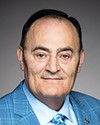
The Chair Liberal Fayçal El-Khoury
Thank you.
Mr. Scheer, you have the floor for five minutes, please.
November 17th, 2025 / 5:15 p.m.
Conservative
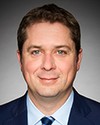
Andrew Scheer Conservative Regina—Qu'Appelle, SK
Thank you very much, Mr. Chair.
I'll be sharing my time with Ms. Kronis. I'll take just two and a half minutes, if that's all right.
Thank you very much to all our witnesses today. I think this is an incredibly important meeting to have. One thing I've heard from everyone who has presented is the need to build awareness of what's going on. I think it was Ms. Schierstaedt who said that the silence is deafening. Going into this meeting, I might have had a superficial understanding of what was going on. I've learned so much about the conflict, and I thank you all for that.
I'd like to talk a little bit about why we think that is and what we can do to get more attention on these problems. When I think about the conflicts going on in other parts of the world, with similar scales of displacements and similar levels of loss of life or persecution, there's a tremendous amount of media attention on some of those conflicts, to the point where lower levels of government, even municipal officials, are being asked to weigh in on one side or the other.
Dr. Bennett, can you speak to why you think that is? Why is the Canadian media, and maybe the international media, just not highlighting this? What more can we do to underline this? I think one of the witnesses said there's a lack of media attention and a lack of political attention. Sometimes those two things go hand in hand. When there's more media awareness, there will be more political attention to it as well.
Rev. Dr. Andrew P.W. Bennett
Thank you very much for the question.
As one of my theology professors used to say, that's question 6,502 that you ask when you get to heaven. It's a very difficult question to answer. The Canadian media has, obviously, limited reach. I think it's just generally hard for them to focus on these issues. That's an endemic issue and an endemic challenge.
I think part of the thing we have to do is recognize that in Canada we don't have the information we need. We have to go to those places where that information can be found. As I've said before, there are numerous organizations we can look to—many of them are represented in the witnesses at this committee today—to get a better understanding and analysis of what is happening and certainly to have the Nigerian Canadian community play a more significant role in informing the government on what is happening. Having Mr. Usman here is a very valuable representation of that.
That's one thing I found when I was serving as ambassador: You can really dig into the communities that are present in Canada to have a better understanding of the dynamics that are there on the ground in their countries of origin. I think we've seen that today. There's nothing we can do, I think, through this subcommittee to direct the Canadian media to be broader in its remit.
Conservative

Tamara Kronis Conservative Nanaimo—Ladysmith, BC
On that note, I'd like to go back to Mr. Usman, if I could.
Digging into the question of accountability, when it comes to Boko Haram and the Fulani herdsmen, where is their funding coming from?
President, Association Of Nigerians in Nanaimo
That's a billion-dollar question. That's a question that a lot of Nigerians can't answer, or that they're just going guess about. Is it the government? Is it people in the government who are sponsoring them? Is it an outside government, as in non-Nigerian, sponsoring them? You see all the material online and they have these weapons. You wonder where they're getting them from and who is funding them.
It's a tricky question. Yesterday, when I was preparing for this, I was talking to my cousins in the village. They said it's probably the foreign organizations that are tapping gold or mineral resources, now that they've been discovered in places like Nasarawa or Benue. These companies are the ones funding these herdsmen to chase the villagers away.
A lot of things go into it. Can I tell you who has sponsored them and how they're getting their resources? No—but somebody is. It's a government or an organization.
Conservative
Tamara Kronis Conservative Nanaimo—Ladysmith, BC
Maybe I'll move on to something a little bit more optimistic.
I have absolutely loved the time I've been able to spend with your community. I have learned a lot. One of the things I have seen is that Nigerians in Canada from all different walks of life are largely able to put these conflicts aside and find camaraderie and community together.
I'm wondering whether or not that experience provides any prescriptions for solutions here. Is there any advice you could provide for your fellow countrypeople who are not here, in terms of creating more community?
Liberal
President, Association Of Nigerians in Nanaimo
For people who know Nigerians, Nigerians are very fond people. They are people who enjoy life. They like to live life to the fullest. That's who we are. It doesn't matter your tribe, your religion, your race or wherever you're from. It's who we are.
My word to my fellow Nigerians and people is to keep the faith. Like I said, my mom is a Christian. I was brought up in the church world. My dad is a Muslim. I went to the mosque. I know both religions. Keep up the faith. We'll pray. We hope for the best.
We've never been blessed with great leadership. I was born in 1985. I probably know a little bit of politics. We've never been blessed with great leadership. We've always suffered from bad leadership and bad government. These things are why we are where we are today.
Liberal
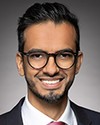
Sameer Zuberi Liberal Pierrefonds—Dollard, QC
Mr. Usman, you were about to touch upon the actors behind the different parties in Nigeria.
Can you elaborate upon that, including other states? Who is fuelling the conflicts?
President, Association Of Nigerians in Nanaimo
To quote one of our former heads of state, Abacha said that any conflict in your country that lasts over 24 hours, the government knows about it. That's what he said.
Honestly, I don't know who is fuelling this. It's bigger than what they are saying. It's bigger than just a random herdsman, cow herders or just people having access to these weapons. It looks like there are mercenaries. These are people who have trained. These are people who are being sponsored because it's tactical.
I get calls at 6 a.m. saying that a whole village has been sacked. It's strategic. It's planned. There have to be powers that be or companies supporting these people. I don't have names of people who sponsor them, but it's definitely not just random villages doing this.
Liberal
Sameer Zuberi Liberal Pierrefonds—Dollard, QC
Why isn't the government intervening despite the fact that, as you mentioned, there are boots on the ground in other parts of Africa from Nigeria? In your opinion, why is the government not intervening with boots on the ground?
President, Association Of Nigerians in Nanaimo
That's the million-dollar question. I go back to saying that Canada needs to hold Nigeria accountable to answer that question.
If Canada is asking Nigeria why it isn't dealing with this problem, the Nigerian government should be able to provide an answer that's a little bit satisfactory or even very satisfactory for the Canadian government to be able to view the plan around it.
Liberal
Sameer Zuberi Liberal Pierrefonds—Dollard, QC
I will put the same two questions to Ms. Onubogu. Can you please elaborate briefly on either one of these two points?
Director and Senior Fellow, Africa Program, Center for Strategic and International Studies
The question you've raised on who is financing these networks provides an opportunity for Canada and the international community to work closely with Nigeria on intelligence sharing and gathering.
This is one of the areas, in terms of when I talk about weaknesses in institutions in Nigeria, where we see some weakness. Work with Nigerian security actors at the national level, at the state level and at the local level to think through the process of how you gather intelligence and how you act on intelligence.
Apart from working with government agencies, there's also work that can be done with civil society groups, like religious and community organizations. Some of them, we have seen, have been extremely successful, especially when it comes to early warning, tracking and being able to understand before some of these conflicts break out.
Liberal
Sameer Zuberi Liberal Pierrefonds—Dollard, QC
I'll pass the rest of my two minutes to my colleague, Ms. Vandenbeld.
Liberal
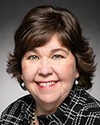
Anita Vandenbeld Liberal Ottawa West—Nepean, ON
My question is also for Ms. Onubogu.
I want to talk a little bit more about what the reconciliation would look like at the community level, which is something you've all talked about, particularly when you look at the fighters and the reintegration in order to create reconciliation in communities.
There is also the role of women. We know there's no sustained peace unless you have women involved. Rather than looking at women as just the victims, what is their role in civil society with helping to establish peace at the local level?
Director and Senior Fellow, Africa Program, Center for Strategic and International Studies
I will answer this question based on my practical experience. Before I joined the CSIS, I worked with the U.S. Institute of Peace for over 10 years in communities across the middle belt, focusing specifically on this issue. One of the things we saw in working in local communities was that mothers, especially, were able to quickly identify the early signs of their sons or daughters being co-opted into violent extremist groups. Women were able to come together to form early warning networks and work closely with local community security operatives who were also connected to either the task force or the military task force that had been set up in those communities.
We've seen communities across the middle belt being able to band together. We've seen community projects that have been run solely by communities in many instances. They were actually led by the women in those communities. One significant area that hasn't even been spoken about in the middle belt—in parts of Kaduna, in particular—is the role female religious leaders from both the Christian faith and the Muslim faith have played in bringing communities together. Across Nigeria's middle belt, you'll find civil society organizations and networks from both the Christian and Muslim faiths that have been working in these communities for years and understand the conflicts.
One thing I always try to make folks understand is that a lot of these conflicts in these communities are predictable because these communities have been able to create—
Liberal
The Chair Liberal Fayçal El-Khoury
Thank you, Ms. Onubogu.
Alexis Brunelle-Duceppe, you have four minutes.
Bloc
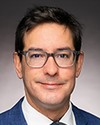
Alexis Brunelle-Duceppe Bloc Lac-Saint-Jean, QC
Mr. Usman, since I have four minutes, I'd like to give you two minutes so you could share something that hasn't already been said.
Do you have anything to add to the study we're doing today?
President, Association Of Nigerians in Nanaimo
Thank you so much for that. We have said a lot of things, and a lot of things have been shared about what is actually happening in Nigeria.
I want to emphasize that we shouldn't oversimplify what's going on in Nigeria. Are Christians being persecuted in Nigeria? Absolutely. Is there a bigger problem in Nigeria? Yes, there's a bigger problem in Nigeria, and that problem is insecurity, which Nigeria needs help with. If we're able to help Nigerians, be they Christians, Muslims or traditionalists, Nigeria will fare better.
I'm glad to have the opportunity to be here. I appreciate it. This is my first time doing something like this. I'm glad to be able to share my experience and my story. I'm glad that Canada is coming to the forefront and recognizing what's happening in Nigeria, and is willing to help. My community doesn't take this for granted. We sincerely appreciate it.
That's all I can add. Thank you.
Bloc
Alexis Brunelle-Duceppe Bloc Lac-Saint-Jean, QC
You've done an excellent job.
Ms. Onubogu, I'd also like to give you the opportunity to share something that hasn't been said yet.
What would you like to add? This is the last turn.
Director and Senior Fellow, Africa Program, Center for Strategic and International Studies
I think almost everything has been said at this point. As you all know, we are also following these discussions in the U.S. For me, joining from Washington, D.C., it's wonderful to see that this discussion is also being had in Canada. It is one that deserves international solidarity, given Nigeria's importance and the country's relevance. This is an issue that deserves international solidarity in order to ensure a sustainable solution to the crisis at hand.
Thank you.
Liberal
The Chair Liberal Fayçal El-Khoury
Thank you. That concludes our meeting.
Mr. Usman, this is your first time doing this, and you did great.