Thank you.
Evidence of meeting #4 for Medical Assistance in Dying in the 45th Parliament, 1st session. (The original version is on Parliament’s site, as are the minutes.) The winning word was equality.
A recording is available from Parliament.

Evidence of meeting #4 for Medical Assistance in Dying in the 45th Parliament, 1st session. (The original version is on Parliament’s site, as are the minutes.) The winning word was equality.
A recording is available from Parliament.
Liberal
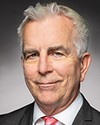
The Joint Chair Liberal Marcus Powlowski
Thank you.
We go to Professor Wells for two minutes and 50 seconds.
Senator, Alberta, PSG
Thank you.
My questions are for Dr. Gilbert.
We've heard many references, including here today, to the UN special rapporteur, the three UN experts and the UN Committee on the Rights of Persons with Disabilities and the conclusions they have drawn with respect to MAID in Canada.
Do you believe it would be reasonable for us as committee members to base any conclusions about MAID MI-SUMC on these documents?
Prof. Daphne Gilbert
There is nothing on the record in that report, or in the committee reports from the UN, that show they consulted with anyone outside of those who are opposed to MAID MI-SUMC. They didn't talk to any experts or people with lived experience who were not opposed. They had a private briefing session with organizations that only brought the anti-track 2 perspective.
I think it's hard to base profound decisions like what you're facing on a report that is based on very one-sided submissions. It would be better to consider the research that is objective and based on looking at both sides of the issue.
Senator, Alberta, PSG
It sounds like that's a reminder to our committee to ensure that we are balanced in perspectives over the course of our hearings and that we do not favour any one side over the other. Thank you for that.
Is it true that the plaintiffs in Truchon and Gladu were persons with disabilities and, for example, were not on what came to be known as track 1?
Senator, Alberta, PSG
Is it true that decisionally capable people with disabilities have the legal authority to refuse life-sustaining treatment?
Prof. Daphne Gilbert
Yes. If they have capacity, they can make decisions about their treatment.
Senator, Alberta, PSG
Is it true that decisionally capable people with disabilities living in circumstances of what some describe as internalized ableism or socio-economic vulnerability or marginalization have the legal authority to refuse life-sustaining treatment?
Prof. Daphne Gilbert
As long as all of their options are carefully reviewed with them, as required by the legislation, then yes.
Senator, Alberta, PSG
Is it true that decisionally capable people with serious mental illness have the legal authority to refuse life-sustaining treatment, even when the consequence of that refusal will be death?
Senator, Alberta, PSG
Is it true that decisionally capable people with serious mental illness living in circumstances of socio-economic vulnerability and marginalization have the legal authority to refuse life-sustaining treatment?
Prof. Daphne Gilbert
Yes. Again, as long as their options are carefully reviewed with them, as the legislation requires, then yes.
Liberal
The Joint Chair Liberal Marcus Powlowski
Thank you, Senator.
We will go to the last round.
Ms. Jansen, you have two minutes and 50 seconds.
Conservative
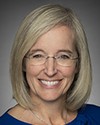
Tamara Jansen Conservative Cloverdale—Langley City, BC
A woman's assisted suicide request is rooted in violence, trauma or abandonment, and Canada responds by making her eligible for MAID on the basis of mental illness.
Is that really about autonomy, or is that a profound failure of protection, Dr. Grant?
Professor Isabel Grant University Killam Professor, Peter A. Allard School of Law, University of British Columbia, As an Individual
Obviously, I think that's a profound failure of the system in a number of ways, not just in terms of protection but in terms of the fact that we have woefully failed to provide the resources that women need to escape violence.
Much of my research has focused on how women with mental illness are particularly targeted for violence and for sexual violence. The idea that death to the victim would be an appropriate response to violence against women is utterly untenable.
If I could just mention it, Professor Sheehy and I participated in the UN hearings. It was open to any organization that wanted to make a submission. I do take issue with the assertion that they were having secret meetings. Those meetings were open to any organization that wanted to make a submission.
Conservative
Tamara Jansen Conservative Cloverdale—Langley City, BC
Canada doesn't even systematically track trauma, abuse or violence in MAID requests, so how can Parliament consider expanding MAID for mental illness when it's still blind to some of the very factors that are driving women towards death through MAID?
Prof. Isabel Grant
I think the work of Dr. Nicolini and the work of Dr. Kim have really demonstrated the degree to which trauma and history of violence contribute to a desire to die, either through suicide or through psychiatric euthanasia. I just don't see a safeguard that's going to prevent that in a world where women are facing violence.
Conservative
Conservative

Andrew Lawton Conservative Elgin—St. Thomas—London South, ON
Thank you.
Professor Gilbert, you've spoken, advocated and written that health care facilities that are publicly funded should not have the right to not offer MAID on the basis of a religious objection. We have had testimony from numerous psychiatrists and medical practitioners who do not feel, for medical reasons and knowledge of psychiatry, that MAID for mental illness should happen at all, irrespective of safeguards.
Do you believe that health care facilities should be allowed, if this expansion proceeds legally, to not offer this to people with mental illness, solely based on that?
Prof. Daphne Gilbert
I believe that individual practitioners have the right to have a conscientious objection but that institutions do not.
Conservative
Andrew Lawton Conservative Elgin—St. Thomas—London South, ON
Then you'd force institutions to euthanize people with mental illness, even if they don't believe it's medically legitimate?