Evidence of meeting #4 for Medical Assistance in Dying in the 45th Parliament, 1st session. (The original version is on Parliament’s site, as are the minutes.) The winning word was equality.

A recording is available from Parliament.

On the agenda

Members speaking

Before the committee

Christopher Lyon  Visiting Research Fellow, Centre for Death and Society, University of Bath, As an Individual
John Maher  Psychiatrist, Ontario Association for ACT & FACT
Pierre Dalphond  Senator, Quebec (De Lorimier), ISG
Joint Chair  Hon. Yonah Martin (Senator, British Columbia, C)
Tony Loffreda  Senator, Quebec (Shawinigan), ISG
Pamela Wallin  Senator, Saskatchewan, CSG
Kristopher Wells  Senator, Alberta, PSG
Peters  Co-Founder, Disability Filibuster
Catherine Frazee  Professor Emerita, School of Disability Studies, Toronto Metropolitan University, As an Individual
Hewitt  Board Chair, Disability Without Poverty
Carr  Chief Executive Officer, Inclusion Canada
Kerri Froc  Associate Professor, University of New Brunswick, As an Individual
Daphne Gilbert  Full Professor, University of Ottawa, Faculty of Law, As an Individual
Elizabeth Sheehy  Professor Emerita of Law, University of Ottawa, As an Individual
Isabel Grant  University Killam Professor, Peter A. Allard School of Law, University of British Columbia, As an Individual

Krista Carr Chief Executive Officer, Inclusion Canada

Mr. Chair and members of the committee, my name is Krista Carr, and I am CEO of Inclusion Canada. We are the national federation representing people with an intellectual disability and their families, with 13 provincial and territorial member associations and more than 300 local associations across the country.

Every day, we advocate, educate and deliver programs in the area of disability and human rights. We work to ensure that people with an intellectual disability have the same access, dignity, opportunity and equality as everyone else.

We also live the harsh reality of legislated poverty and failed support systems, housing shortages, inadequate home care and insufficient disability and mental health supports. We confront systemic discrimination and historical disadvantage. We watch as people are made vulnerable by the very systems that are supposed to be providing support. We navigate systems that regularly send messages to persons with disabilities that they are broken, that they are a burden to their families and to society, and since 2021, because of track 2 MAID, that their lives are not worth living.

We live the consequences of this MAID regime every single day. We see a pattern in which individuals choose assisted suicide not out of a genuine desire to die but because the supports needed to live with dignity are simply not made available. We answer calls weekly from individuals with a disability who were offered MAID when they attempted to access the health care system for everything from a bruised hip to pneumonia.

Across this country, persons with disabilities are being steered toward death when what they seek is help. This is the human side of MAID, and it is not rare. When I tell you this is happening, I ask you to believe me and to believe them. Please do not dismiss these experiences as anecdotes. They are people whose lives are directly affected by the laws you have written.

MAID is a human rights issue, and it's an equality issue. Track 2 MAID applies only to persons with disabilities who are not dying. This disability-based access to assisted death constitutes discrimination contrary to section 15 of the charter. It devalues the lives of persons with disabilities, reinforces harmful stereotypes and deepens historical disadvantage. No amount of additional safeguards can change that.

Canadians without disabilities who experience poverty, isolation or social suffering are not offered death. They are offered suicide prevention, treatment, housing and support. Persons with disabilities are entitled to the same response. However, we are offering people with disabilities MAID instead of help.

Track 2 is incompatible with Canada's domestic and international human rights obligations. In 2025, the UN Committee on the Rights of Persons with Disabilities expressed extreme concern about track 2 and recommended that Canada repeal it, including the planned expansion to mental illness as the sole underlying condition. The committee linked MAID requests to failures in poverty reduction, health care, housing and community mental health services.

I will briefly address arguments this AMAD committee has heard.

It has heard that the disability organizations do not represent the disability community on this issue. This claim is inaccurate and deeply offensive. Disability organizations are governed by and accountable to persons with disabilities. Our organizations are recognized by Canadian courts and international bodies as representative organizations of persons with disabilities. We speak as voices shaped by lived experience and a history of discrimination.

You have been asked to give equal weight to end-of-life advocacy organizations. Respectfully, they don't represent people with disabilities as a class. On matters of disability law, Parliament must give the greatest weight to organizations rooted in the disability community itself.

Parliament is now being asked to add mental illness to track 2. There is no professional consensus on this. In 2022, the heads of psychiatry at all 17 Canadian medical schools called for the delay, warning that there is no accepted way to distinguish a MAID request from suicidal ideation. The American Psychiatric Association opposes physician-assisted death where mental illness is the sole condition.

Treat people with disabilities the same. If others in crisis are met with suicide prevention, meet people with disabilities with suicide prevention. If other Canadians with mental illness are met with treatment, meet people with disabilities with treatment. If people with disabilities are poor and isolated, meet that poverty and isolation with housing, income and support so they can live with dignity.

You cannot call it equality when everyone else receives help and people with disabilities receive death.

Committee members, maintain the exclusion for mental illness, repeal track 2 and do not write one law for everyone else and another one for us. You cannot reverse death.

Thank you.
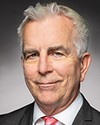
The Joint Chair Liberal Marcus Powlowski

Thank you.

Next up is Mr. Patzer for four minutes and 40 seconds.

I would suggest, since I think we're all eager to try to get out of here by 9:45, that you're certainly welcome to make it less than four minutes and 40 seconds.

Jeremy Patzer Conservative Swift Current—Grasslands—Kindersley, SK

That's a tough ask of a politician, Mr. Chair.

Any which way, thank you to all the witnesses for coming today. I really appreciate the stories that you are all willing to share.

I'm going to start with Ms. Carr.

Before this committee even considers expanding MAID to mental illness alone in 2027, can you give us a flavour of the kinds of calls that Inclusion Canada receives from people and families about the existing MAID framework? What do these stories tell us about the risks of expanding it further?

8:10 p.m.

Chief Executive Officer, Inclusion Canada

Krista Carr

Thank you for the question.

We receive calls weekly, and we get them not just from people with intellectual disabilities and their families. Because we have been vocal on the issue, we also get them from people with all different types of disabilities.

They fall into two categories: people with disabilities who reach out to us in a last ditch attempt to find someone to help them, because they have tried so hard for so long to get the help they need; and people with disabilities who have accessed our health care system for regular, ordinary, everyday things and been offered MAID along the way for everything, as I mentioned, from a bruised hip because of a fall out of a taxicab to treatment for pneumonia. One thing they have in common is that none of them wanted to die.

We have had people call us such as a person with a disability who was a victim of intimate partner violence and had no access to income to get out of that situation because she was on disability income support who felt like if she couldn't get out of that situation, it would be better to be dead, or she may be killed. We had a person with muscular dystrophy who was living with a parent who died of cancer and had been providing a significant amount of support. Once that support was gone, they could not get the support they needed to live in their own home and were going to be institutionalized. We've had people on waiting lists for three years for chronic pain management specialists.

The list goes on and on. We have a binder of examples.

8:10 p.m.

Conservative

Jeremy Patzer Conservative Swift Current—Grasslands—Kindersley, SK

Thank you for that.

The question before this committee is about MAID where the sole underlying condition is mental illness. Based on the data we already have, what does that tell us about who is receiving MAID now and why they are receiving it? Why should that make Parliament cautious about expanding MAID for mental illness?

8:10 p.m.

Chief Executive Officer, Inclusion Canada

Krista Carr

Often we're quoting the track 1 data on MAID, but the data we have on track 2 MAID tells us that the people accessing track 2 MAID are disproportionately women, indigenous, living in poverty, low income and isolated, and they feel they're a burden on their families.

8:15 p.m.

Conservative

Jeremy Patzer Conservative Swift Current—Grasslands—Kindersley, SK

We're being told this next expansion can be done safely, but if we expand MAID for mental illness as a sole underlying condition, what conditions would that actually include, and what would that mean for suicide prevention in Canada?

8:15 p.m.

Chief Executive Officer, Inclusion Canada

Krista Carr

The definition that will be used comes out of the DSM-5, which is the definition of “mental disorder”. There are 290-some different labels that fall under that distinction. That includes intellectual disability, autism, trauma, eating disorders and gender dysphoria, and the list goes on and on. We're talking about a hugely wide expansion to a significant number of people.

8:15 p.m.

Conservative

Jeremy Patzer Conservative Swift Current—Grasslands—Kindersley, SK

Thank you very much, Chair.

I will leave it at that.

The Joint Chair Liberal Marcus Powlowski

Thank you very much.

Dr. Ramsay, you have four minutes and 50 seconds.

Jacques Ramsay Liberal La Prairie—Atateken, QC

I would like to thank all the witnesses very much.

Ms. Carr, you introduce the concept of social determinants, such as hardship, poverty, lack of housing and isolation. In life, everyone suffers from some kind of health problem. We don’t live in a vacuum. We may have a health issue, which is often linked to other factors or determinants. I completely agree with you. These determinants should be analyzed during a discussion with the individual.

However, what bothers me is that if we deny a person the right to access medical assistance in dying based on such determinants, we are engaging in reverse discrimination—that is, I could argue that because the person is poor, they do not have the right to medical assistance in dying.

I would like to hear your thoughts on this.

Next, in what ways are social determinants more closely linked to a mental health issue than to a physical health issue?

I would say they are more closely linked to physical health issues than to mental health issues.

I would also like to hear your thoughts on this.

8:15 p.m.

Chief Executive Officer, Inclusion Canada

Krista Carr

Thank you very much for the question.

To your first point around the social determinants of health, you're correct. That applies equally to everybody in the population, much like track 1 MAID applies equally. If you have a terminal illness, it doesn't matter what socio-economic conditions, disability supports, any other kinds of supports or anything you have in your life; you qualify for track 1 MAID. Track 2 MAID is a completely different story.

We have singled out one group of charter-protected individuals—persons with disabilities—and that is the definition that is met under track 2 MAID: It's if you have a disability and you are not dying. There's a fundamental equality issue at play here because we only offer track 2 MAID to one particular group of people. The people we are offering it to—persons with disabilities—tend to have multiple forms of intersecting discrimination, such as poverty and lack of access to supports, etc.

When someone is in the general population, suffering is equal across the board. Anyone can suffer intolerably. It's part of the human condition. When someone else is suffering intolerably, we do what we can to alleviate that suffering or provide the supports and services necessary. That's not the case when it comes to people under track 2 MAID who are experiencing those same conditions.

To your second question on whether the social determinants of health apply less to people with mental illness than to people with a physical disability, I believe—

Jacques Ramsay Liberal La Prairie—Atateken, QC

Or at least no further—

8:15 p.m.

Chief Executive Officer, Inclusion Canada

Krista Carr

Right.

What I would say to that is that people with mental illnesses are in a situation where they are persons with a type of disability who are not dying, and they often do not have access to the supports they require as far as mental health goes.

I look at the population I serve. I serve people with an intellectual disability, 40% of whom have a co-occurring mental health issue, mental illness, etc. Even if they could access specialist services, very often those specialists are not trained to deal with people who have an intellectual disability or autism, and a mental illness, so they are not getting the support and treatment they require to live a good life. I would say the social determinants apply.

If you layer on the situation they're in, poverty.... When you can't pay for mental health services, when you can't pay for counselling and when you can't pay for psychiatry that isn't provided through your health care system, then you are multiply disadvantaged.

I would say that the social determinants apply just as much, if not more, to people with a mental illness as they do to people with physical disabilities.

The Joint Chair Liberal Marcus Powlowski

Thank you very much.

Mr. Thériault, you have the floor for five minutes.

Luc Thériault Bloc Montcalm, QC

Thank you very much.

The Joint Chair Liberal Marcus Powlowski

Excuse me. You have the floor for four minutes.

Luc Thériault Bloc Montcalm, QC

I thank all the witnesses for their testimony.

Ms. Carr, if I understand your presentation and reasoning correctly, you are saying that there is systemic discrimination, that people with disabilities are treated poorly, and that this would have an adverse effect. Indeed, this would mean that the system’s inability to properly care for these individuals would leave them with only one option: medical assistance in dying.

Regarding track 2, I understand that you are opposed to expanding medical assistance in dying to individuals whose death is not imminent—that is, in all scenarios under track 2.

Don’t you think it would be systemic discrimination if the Supreme Court had ruled, in general terms, that any person living with a disability would never have access to medical assistance in dying, simply because they fall into the category of people with disabilities?

8:20 p.m.

Chief Executive Officer, Inclusion Canada

Krista Carr

Thank you very much for the question, Mr. Thériault.

What I would say to that is that the Supreme Court didn't say that. As a matter of fact, the Supreme Court didn't even say that it would apply to people with a mental illness. The Supreme Court ruled on the facts of the case before it, and it was very clear about that—

Luc Thériault Bloc Montcalm, QC

I’m sorry, but the Supreme Court did say that a blanket exclusion is contrary to an individualized assessment. We cannot consider that belonging to a category of people justifies excluding them from access to medical assistance in dying. Assessments must therefore be made on a case-by-case basis. However, if we end up saying that people with disabilities would not have access to medical assistance in dying simply because they have a disability, we are engaging in systemic discrimination.

You may disagree with me on this, but that is what I understand from what you are saying. You are saying that medical assistance in dying should not be a solution and should not appear to be a solution. Indeed, it is not a solution. We must be able to treat people properly, which is an absolute right.

Before the Superior Court of Quebec, Ms. Gladu said she wanted to have that option, that choice. She was disabled; she lived a full and complete life, but she wanted the possibility of accessing medical assistance in dying. If she had been denied that, it would have been systemic discrimination.

8:20 p.m.

Chief Executive Officer, Inclusion Canada

Krista Carr

You are correct that I do not agree with you. On the systemic discrimination, if that were the argument, then we would offer MAID to anybody who was suffering and wasn't dying, but we don't do that. We offer MAID to people with terminal illnesses, equally across the board, who are dying, but track 2 MAID is only for one particular group of people. It's for people with disabilities who are not dying.

If we are going to say that we are somehow not creating systemic discrimination, why wouldn't we be offering MAID to everybody? We would be offering it to everybody who wanted it who said they were suffering intolerably, but we don't. We don't do that. I don't think anybody around this table would think that's a good idea. Why, then, is it okay to offer MAID to people with disabilities who are not dying? Is it because their lives are somehow less worth living than everyone else's?

The Joint Chair Liberal Marcus Powlowski

Thank you very much, Mr. Thériault.

Senator Dalphond, you have three minutes.

8:25 p.m.

Senator, Quebec (De Lorimier), ISG

Pierre Dalphond

Thank you, Mr. Chair.

Ms. Carr, you said that your organization receives calls every day. How many of these people who were offered MAID were assessed?

8:25 p.m.

Chief Executive Officer, Inclusion Canada

Krista Carr

With regard to the people who have been offered MAID, to my point, I was talking about people who go to the health care system for other typical things that anybody else would go for and who are asked about MAID: Have you considered MAID? Are you interested in MAID? Perhaps you should go down this route.

As was mentioned in the panel—

8:25 p.m.

Senator, Quebec (De Lorimier), ISG

Pierre Dalphond

I'm sorry. My three minutes move fast.

I understand, from the beginning of your answer, that they will call you, but you don't know what happens after. You don't know if they went to the assessment. You don't know if they were assessed as, yes, they could have it.