Good morning, everyone. Welcome back. I wish you all a very good 2026.
Let me first give the warmest of welcomes to MP Shannon Stubbs for being back with us. I know we all missed her, on all sides of the House.

Evidence of meeting #20 for Natural Resources in the 45th Parliament, 1st session. (The original version is on Parliament’s site, as are the minutes.) The winning word was contract.
A video is available from Parliament.
Liberal
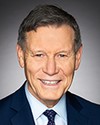
The Chair Liberal Terry Duguid
Good morning, everyone. Welcome back. I wish you all a very good 2026.
Let me first give the warmest of welcomes to MP Shannon Stubbs for being back with us. I know we all missed her, on all sides of the House.
Liberal
Conservative

Shannon Stubbs Conservative Lakeland, AB
I'm okay with that.
You sent lovely words on behalf of the committee, Chair, which is true to your personality and not surprising at all. Thank you.
Am I allowed to say this, John-Paul?
I did ask for his permission, so I might make a video of this at some point. John-Paul sent me the very best possible get-well message that a Liberal MP could send a rural, populist Conservative from Alberta, which had very nice words about how he hopes I'm recovering and doing well, even if I'm a pain in the ass on committee. It was best get-well note I've ever received.
Liberal
The Chair Liberal Terry Duguid
You're a very constructive pain in the ass. Welcome back. We're really, sincerely very glad to have you with us again.
Folks, we have some new people around the table, so I am just going to introduce them briefly. We have Jean-Luc Plourde, who is with us as our new clerk. He's very experienced. He was on the finance committee. He survived finance, so surely he can survive RNNR.
We have Laura, our amazing analyst. Joining us is Avalon, who will be assisting with analyst duties and helping write our reports. Naaman is just joining us for a few meetings. Welcome, all.
We're going to get right into it. I've already called the meeting to order. I'd like to, as I always do, acknowledge that we are on the unceded territory of the Algonquin Anishinabe nation.
Before we begin, I would like to ask all in-person participants to read the guidelines written on the updated cards on the table. These measures are in place to help prevent audio feedback incidents. We have amazing interpreters, as you know, and we want to protect their health and safety, and the health and safety of all participants.
Today's meeting is taking place in a hybrid format. I would like to remind participants of the following points. Before speaking, please wait until I recognize you. For those participating by video conference.... Do we have anybody by video conference today? We don't, so that is redundant.
Pursuant to Standing Order 108(2) and the motion adopted on Thursday, December 4, 2025, the committee shall resume its study of the management of Canadian Nuclear Laboratories by U.S. companies.
I would like to welcome our witnesses. We have with us, as an individual, Christian Leuprecht, professor at the Royal Military College of Canada and Queen's University. Welcome, sir.
From the Ottawa River Institute, we have Ole Hendrickson, who is the president of the institute.
You will each have five minutes for your opening remarks, after which we will open the floor to questions.
Mr. Hendrickson, we are going to start with you. You have the floor for five minutes.
Ole Hendrickson President, Ottawa River Institute
Thank you, Chair, for this opportunity to appear as a witness.
The government-owned, contractor-operated, or GOCO, model for managing AECL's nuclear assets and asset retirement obligations creates major risks—ballooning tax expenditures, an ever-growing nuclear liability, poor waste disposal projects and public health risks. These risks increase when AECL's responsibilities are contracted to U.S. corporations with little Canadian experience.
In 2015, the former AECL subsidiary, Canadian Nuclear Laboratories, or CNL, was sold to a U.S.-led consortium for one dollar. That was the final act of restructuring AECL. The stated rationale was that private sector rigour and expertise would reduce AECL's nuclear liability and operating costs. But this did not happen. Last year, as total AECL funding went from $1.59 billion to $1.95 billion, AECL's asset retirement obligations—that is, the decommissioning liability—went from $8.7 billion to $9.5 billion.
Parliamentary e-petition 6636, signed by nearly 2,500 Canadians, noted that AECL's performance under the GOCO model was never audited. It called for an independent, objective and systematic assessment by the Auditor General of Canada, and asked that any new contract be delayed until audit results were made public and discussed by Parliament. This also did not happen.
The NRCan minister, Tim Hodgson, replied that AECL's performance under the GOCO model was part of a special examination conducted by the Auditor General in 2017, with a subsequent special examination slated for 2026-27. The 2017 audit occurred only one year after restructuring, when AECL “had not yet evaluated the contractor's performance with respect to annual earnable awards.” The audit found that AECL had no “formal, systematic process for monitoring and reporting on the risks”, and that AECL's reporting framework could not measure the overall objectives of restructuring, which were to “enhance efficiency and effectiveness, and to contain and reduce costs and risks for Canadians over time.”
Do these weaknesses persist? How were fee awards issued during the previous contract? What are the award provisions in the new contract? Has the committee seen it?
Richard Sexton, an American with ties to members of the previous contracting corporation, was AECL's president during most of the previous contract. He served as fee determination officer. Another American, David Hess, joined AECL as lead contracting officer in April 2015. He is shown today on LinkedIn as managing “the multi-billion dollar cost-reimbursement contracts and agreements governing the contractors’ activities” and as holding “unlimited contracting authority”.
AECL is building an advanced nuclear materials research centre without a regulatory hearing or other form of government oversight. It would allow training and experimentation in handling plutonium, the key element in nuclear weapons. Benefits to Canadians are questionable, but obvious for American members of Nuclear Laboratory Partners of Canada, all of whom manage U.S. nuclear weapons facilities.
Radiation's health risks make managing nuclear waste far more expensive than for other waste. American contractors have an ever-growing guaranteed revenue stream if AECL's waste remains in storage or is put in an above-ground facility, such as the proposed NSDF, where it would require centuries of institutional control and monitoring. They have no incentive to examine safer, in-ground facilities. By insisting on a permanent facility at AECL's Chalk River Laboratories on the Ottawa River, the American contractors are ignoring the geological and biophysical limitations of that location. Their experience with waste management in arid U.S. environments is not transferable to an earthquake-prone area next to a river that provides drinking water for millions of Canadians.
When American managers arrived in 2015, they discarded existing long-term waste management plans.
Liberal
The Chair Liberal Terry Duguid
Mr. Hendrickson, I'm going to have to ask you to finish up. You're over time.
President, Ottawa River Institute
The GOCO model has not worked. It has not delivered cost savings. The Government of Canada should manage its own nuclear decommissioning and radioactive waste activities.
Christian Leuprecht Professor, Royal Military College of Canada and Queen's University, As an Individual
Mr. Chair and members of the committee, thank you for this invitation. I will speak in English, but you may ask your questions in the official language of your choice.
I just want to say, as a preamble, that I think it's really important that we put partisan politics aside. The report this committee is going to write is incredibly important, because this is about the legislative branch holding the executive to account. The basic principle of the Westminster parliamentary system here, which is ministerial responsibility, has failed us. You've already heard that AECL is not being held to account. It was not held to account by its board, and it was not held to account by the minister.
I will try to explain to you why I think what happened here is absolutely unacceptable and reflects the cognitive dissonance that we have in this town, where we talk about diversifying and protecting Canadian sovereignty, and then we sell the Crown jewels or effectively give the Crown jewels over to Americans to manage in contracts.
The CNL contract that is the subject of this meeting was not competitive. As you heard in previous testimony, there was a single bidder. Awarding a seemingly uncompetitive bid to a U.S. consortium with no actual Canadian participation raises questions about the way the bid itself was structured and the way CNL is structured. That cognitive dissonance, at a time when the government is making a big deal about diversification, raises four concerns: value for money, sovereignty, national security and accountability.
Instead of swapping out management when we went to the GOCO structure, the new structure simply created a new layer of management, so now, instead of one layer of management, there are three layers of management: CNL, AECL, and the contractor, NLPC. That's efficiency the Canadian way.
At the time of the first GOCO contract, in 2015, two of the companies that made up the consortium were Canadian. All companies that are now part of the consortium are U.S.-owned. Nordion and Kinectrics have since been acquired by U.S. entities. Some of these companies are direct competitors to CNL, because Kinectrics and BWX do the same work that CNL bids on.
These companies earn far more from their U.S. operations than they do from the CNL contract. Where do their loyalties lie? Online testimony suggests that CNL contract priorities over the last 10 years were driven by maximizing profitability of the U.S.-led GOCO, not what was best for Canada.
At stake in the new contract are administrative barriers to be put in place by CNL to avoid conflicts of interest and access by contractors to intellectual property held by CNL. Those barriers are largely dependent on cybersecurity and information management. Given that Canada has no cybersecurity legislation for critical infrastructure, contrary to Mr. Dermarkar’s previous testimony at this committee, my level of confidence in any such barriers—let alone their effectiveness—is very low. By way of example, the first regulations on cybersecurity for nuclear were introduced only in late 2025.
There is also a broader strategic issue with American companies managing the direction of CNL, since the contract effectively reduces CNL to a service provider. The contractor sets priorities and decides who controls IP and whose industrial base benefits from Canadian public investments, basically telling CNL what work to do and what work not to do.
Currently, there is a quasi race to design, construct and build secure supply chains for small nuclear reactors. Ontario is spending $1 billion on small modular reactors. Moreover, defence applications are part of Canada’s SMR action plan. National Defence is looking at a subset of SMRs known as micro modular reactors for use in the Arctic and at some bases.
When the U.S. political executive is keenly interested in the Arctic and threatening to annex Canada, does Canada really want U.S. companies to have access to dual-use IP and proprietary strategic Canadian nuclear information, such as what, when and where Canada might place SMRs in the north? Would that not be detrimental to Canadian national security? The government purports that its intent is to protect Canadian sovereignty, yet it allows foreign actors to set strategic directions at Canada’s only national nuclear laboratory.
In awarding the CNL contract, AECL made an economic decision that considers neither national security nor sovereignty. The bid was reviewed only by AECL and its government-appointed board. There appears to have been no external review or accountability for the way AECL awarded the contract, and had the bid not gone through, that would have jeopardized AECL's existence and the jobs of AECL management. The bidding process, in my view, was neither fair nor accountable.
What needs to happen? I have six points.
One, conduct an independent threat and risk assessment of the contract. This assessment should be carried out not by a government agency but by an independent third party that is completely unbiased.
Two, conduct an economic review on whether the labs operated any more efficiently under the previous contract to see if there were real cost savings. By going from one layer of management to three, I would venture to guess that there were no cost savings.
Three, if that turns out to be the case, then fold AECL. Turn CNL back into a Crown corporation, thereby eliminating triple layers of executive management. Hire new management at CNL based on clear metrics of competency, KPIs and accountability. The U.K. tried the GOCO model and has reverted to the previous model. We can learn from our allies.
Four, establish a new accountability structure, different from the GOCO model. To be sure, there were inefficiencies, but as the U.K. shows, a GOCO is not the only solution.
Five, this matter reflects broader, systematic issues with government accountability. Why is NRCan only getting involved now, after AECL was effectively unaccountable for the last 10 years? Who holds AECL to account? The fact that Elizabeth May raised the issue shows a continuity in the executive's disregard for ministerial accountability.
Six, the Canadian Nuclear Safety Commission has the same problem: no accountability.
Liberal
The Chair Liberal Terry Duguid
Thank you.
I gave you a little extra time there, Mr. Leuprecht.
We will now go on to questions. We're going to start with Mr. Tochor for six minutes.
Go ahead, Mr. Tochor.
January 27th, 2026 / 11:15 a.m.
Conservative
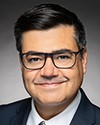
Corey Tochor Conservative Saskatoon—University, SK
Thank you, Chair.
Thank you to our witnesses.
Given that this is a contract of over $1 billion a year, is it even remotely reasonable to foist all the blame on AECL for the single-bidder contract to the all-American firms?
Conservative
Corey Tochor Conservative Saskatoon—University, SK
We are going to be limited in time.
Go ahead, Mr. Leuprecht.
Professor, Royal Military College of Canada and Queen's University, As an Individual
I'm sorry; can you reformulate your question?
Conservative
Corey Tochor Conservative Saskatoon—University, SK
Is AECL solely to blame for this? Obviously it's not. This is the line that the government is giving us, that it's all AECL. There has to be some accountability here within government. Would you agree?
Professor, Royal Military College of Canada and Queen's University, As an Individual
I think this is my broader point about ministerial accountability. When we cut out, effectively, all Canadian content and Canadian players from this contract, that to me, especially in the time we live in, is not acceptable.
Conservative
Corey Tochor Conservative Saskatoon—University, SK
Do you think it created red flags with all the climate concerns about our neighbours to the south?
Professor, Royal Military College of Canada and Queen's University, As an Individual
Look, I sit on two boards, one of which I chair.
That this did not raise flags with the board, and especially with the chair of the board, to me is stunning. That it then did not raise flags with the minister's office suggests to me that we didn't pay close attention to what was happening and that we sold a good story and narrative.
Conservative
Corey Tochor Conservative Saskatoon—University, SK
Just playing out on the negative of having this all-American group take over their labs, can you walk us through an example of that going terribly badly? We've heard from other whistle-blowers the concern about American agreements and having to share some of those secrets they may obtain at our nuclear labs.
Professor, Royal Military College of Canada and Queen's University, As an Individual
This is a fascinating question.
In November, we had a round table with about 100 IP lawyers in Quebec. They run a fantastic initiative about how this country effectively gives away free IP, going back to the Avro Arrow. This is what we're observing. Look at the investments we've already made in the F-35 and the investments in, for instance, the German-Norwegian consortium.
The way we structure our IP, whether it's in research or in the way we operate critical infrastructure, is not strategic in terms of making sure it stays in Canada, which is why I'm so concerned that the safeguards that the executive at AECL talks about will not be effective, because I'm not sure they understand how readily they can be circumvented.
Conservative
Corey Tochor Conservative Saskatoon—University, SK
How do you square this circle? We've heard a lot in the media about the defence industrial strategy from the government, and then they go ahead and give control over nuclear ops to an all-American group. Square that for me. How can you possibly square that? How could they?
Professor, Royal Military College of Canada and Queen's University, As an Individual
It is ultimately up to the the duly, legitimately elected government of the day to set priorities.
My concern is that this deal illustrates priorities that are entirely driven by economics.
Conservative
Corey Tochor Conservative Saskatoon—University, SK
Do you think it's a concern that our Prime Minister owns shares in one of these companies? Is that a part of the missing piece on it?
Professor, Royal Military College of Canada and Queen's University, As an Individual
I think it is always problematic when.... Conflict of interest, if you look at the definition from the Government of Canada, is not just material conflict of interest, pecuniary, but the perception of a conflict of interest. This clearly creates a perception of a conflict of interest in the eyes of Canadians.