I just need three seconds, Mr. Chair.
Mr. Godbout, is it possible to table that study you have just mentioned with the committee?

Evidence of meeting #53 for Natural Resources in the 45th Parliament, 1st session. (The original version is on Parliament’s site, as are the minutes.) The winning word was waste.
A recording is available from Parliament.
Bloc
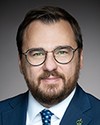
Mario Simard Bloc Jonquière—Hébertville—Pays-des-Bleuets, QC
I just need three seconds, Mr. Chair.
Mr. Godbout, is it possible to table that study you have just mentioned with the committee?
Director of the Department of Engineering Physics, Polytechnique Montréal
Yes, of course. We will follow that up.
Liberal
Conservative

Jeremy Patzer Conservative Swift Current—Grasslands—Kindersley, SK
Thank you very much.
Ms. Clavero, in your response to my colleague about SMRs on enriched fuel, you said you had secured the fuel for your reactor for the testing. Where did you get that fuel from?
Chief Executive Officer, Conexus Nuclear Inc.
I'm sorry. I'd like to clarify that Ontario Power Generation has secured their fuel supply. This would be a question to discuss with them. They have talked about it in public.
Conservative
Jeremy Patzer Conservative Swift Current—Grasslands—Kindersley, SK
All right. I just wanted to clarify that.
At Polytechnique Montréal, Mr. Godbout, where do you guys get the fuel for your SLOWPOKE reactor?
Director of the Department of Engineering Physics, Polytechnique Montréal
I will let my colleague Darren answer that.
SLOWPOKE-2 Reactor Manager, Polytechnique Montréal
We actually converted our fuel. SLOWPOKE back in 1976 was highly enriched uranium. Since 1997, it's been low enriched uranium.
We'd have to see the actual source and maybe get back to you on that. I don't want to say something that's not correct. I don't have an actual answer, but we could find that documentation for you.
Conservative
Jeremy Patzer Conservative Swift Current—Grasslands—Kindersley, SK
Yes. I would appreciate it if you could table that with the committee.
Mr. Chair, maybe you could follow up with them on that.
The reason I ask is that I'm from Saskatchewan. Obviously, we have some of the largest uranium deposits in the world in northern Saskatchewan. Generally, I just want to hear whether any of the institutes working in the field of nuclear study are utilizing the resource we have right here in Saskatchewan.
Are there any planned or future developments with Saskatchewan uranium, going forward, from anybody in the meeting? We'll start with Polytechnic Montréal and then go to Ms. Clavero and maybe UNB.
Director of the Department of Engineering Physics, Polytechnique Montréal
There aren't at the present time. We don't have the answer because, in 1997, neither I nor Darren was present at the last refuelling operation. We don't expect to need refuelling for 15 or 25 years. It's really a long-term question.
Conservative
Chief Executive Officer, Conexus Nuclear Inc.
Our membership is really made up of the utilities. SaskPower did join Conexus in 2024, so we would work with them for any future fuel needs.
Conservative
Jeremy Patzer Conservative Swift Current—Grasslands—Kindersley, SK
At UNB, is there any collaboration with Saskatchewan at all on uranium?
Director of Innovation, Centre for Nuclear Energy Research, University of New Brunswick
At present, we don't typically do much on the fuel side, but we do collaborate as necessary as part of the Conexus group and as part of the UNENE group and others. As projects materialize, we're certainly open to conversations.
As a matter of fact, we're having a conversation with the Saskatchewan Research Council today.
Conservative
Jeremy Patzer Conservative Swift Current—Grasslands—Kindersley, SK
That's fantastic.
Ms. Clavero, what are the biggest practical challenges with doubling the electricity grid capacity by 2050? Have you done any work on that?
Chief Executive Officer, Conexus Nuclear Inc.
What we spoke about earlier around workforce capabilities and capacity is definitely a challenge. I think we will need, as a country, to really invest in getting our capabilities and growing that population. It's not only about reaching students within university but about getting to students at a younger age, because it's the ones who are in high school right now who will help us in the future. It's about getting them interested in nuclear.
We spoke about the regulatory space. There are some very good things that are happening in the regulatory space, but we continue to work on ensuring that we are looking at these projects from a risk-informed approach and making sure that our regulatory framework is ready for different technologies, such as SMRs. For our existing fleet, and even technologies such as AI, robotics and automation, are we ready to regulate those?
The third thing is that we really need to make sure that our supply chains are ready. We have had an industry that has been holding still for almost 20 years, and now we're suddenly expanding at a rapid pace. The supply chain needs contracts, projects and definitive decisions made so that industry knows what to prepare for.
Conservative
Jeremy Patzer Conservative Swift Current—Grasslands—Kindersley, SK
Give a very short answer, please.
Beyond the labour force, what would be the number one risk that you face right now in the industry? What's the biggest thing that would need to be de-risked?
Chief Executive Officer, Conexus Nuclear Inc.
I would say the biggest risk is that we're not putting enough attention toward the actual cost and investment needed for R and D and capacity.
Liberal

The Chair Liberal Terry Duguid
Thank you.
Thank you, Mr. Patzer.
The last person on this panel is Mr. Danko for five minutes.
Liberal

John-Paul Danko Liberal Hamilton West—Ancaster—Dundas, ON
Thank you, Mr. Chair.
I'm the member from the riding of Hamilton West—Ancaster—Dundas, in Ontario. We have McMaster University in my riding.
The nuclear industry has been a very important part of Ontario's economy for a long time. I'm really pleased to be joined by a fellow nuclear representative from the province of New Brunswick as well.
When we look at Canada's nuclear strategy, I think it's intrinsically tied together with the electrified Canadian economy strategy. These things go together in generation capacity and then distribution, with billions of dollars of federal investment to help support both. In total, it's over $115 billion in the next five years for electrification. There's some direct investment in infrastructure, and we just saw, in budget 2026, $6.5 billion specifically for the nuclear strategy and the nuclear industry.
Maybe I'll go first to Mr. McPherson from the University of New Brunswick. You have experience in New Brunswick with the CANDU CANDU6 reactor that you have there. How did you see that as being part of New Brunswick's economic growth and uplift?
I'd also like your comments on the federal investment in the nuclear industry moving forward.
Director of Innovation, Centre for Nuclear Energy Research, University of New Brunswick
With 40 years of CANDU history, Point Lepreau has been an integral part of the economy of New Brunswick. It provides several hundred high-paying jobs, ancillary spinoffs in the supply chain and an indirect job market in the southern part of the province.
New Brunswick, like most Canadian provinces, is a heavy winter-load location, so having adequate baseload through Point Lepreau, which provides 40% of New Brunswick's electricity, ensures that we have the ability to meet not only domestic demand but also industrial demand as it grows. In terms of emissions and greenhouse gas reductions, New Brunswick sits at over 80% GHG non-emitting every year. Point Lepreau makes up a big part of that.
We get a number of intrinsic values from nuclear in the province. As we looked at the opportunity to conduct the first refurbishment of CANDU 6, we learned a tremendous number of lessons—lessons that Ontario can now apply to come in on time and on budget in terms of new refurbishments in that province. We can also look at opportunities to expand across the country into Saskatchewan and Alberta. We've been able to generate lessons in New Brunswick, in terms of what new nuclear opportunities look like across the country.
In terms of thinking about opportunities outside the scope of nuclear—like wind west, new renewable generation and backing baseload for Quebec, P.E.I. and others—nuclear provides that backbone. When you can work with industry to ensure a cheap, safe, reliable and sustainable baseload of electricity for the system, you can have conversations about new AI centres and new manufacturing, which propagate jobs and investment in the economy.
Overall, federally, I'm very excited to see the budget that's been tabled and to work with federal partners like NRCan, ISED and ACOA. New infrastructure, new programs and new resources will continue to be the significant investments that we need not just in New Brunswick but also across the country to facilitate the goals of the nuclear and electrification strategy.
Liberal
John-Paul Danko Liberal Hamilton West—Ancaster—Dundas, ON
I think I have just about a minute left.
I am going to ask about workforce capability and capacity. You've all spoken about that as a risk, but I see it as a real opportunity. Those are jobs for the next generation, which is fantastic news.
In the little time I have left, Ms. Clavero, I would like to ask you about the export of CANDU technologies around the world as an economic growth opportunity for Canada.
Chief Executive Officer, Conexus Nuclear Inc.
Absolutely.
The international fleet is now refurbishing. The first opportunity is to take those refurbishment lessons learned and use them overseas.
Second, Cernavodă 3 and 4 are the two units that will be completed in Romania. These will be the next new CANDUs in the world, which is a great opportunity. Other countries are very interested. Partners in China are interested in CANDU.
There's a lot of opportunity for growth, and we continue to see our portfolio of services for international members grow.