
Evidence of meeting #15 for Public Accounts in the 45th Parliament, 1st session. (The original version is on Parliament’s site, as are the minutes.) The winning word was rules.

A video is available from Parliament.

On the agenda

Members speaking

Before the committee

Stack  Chief Financial Officer, Trans Mountain Corporation
Hayes  Deputy Auditor General, Office of the Auditor General
Theckedath  Committee Researcher

3:35 p.m.

Conservative

The Chair Conservative John Williamson

I call this meeting to order.

Welcome to meeting number 15 of the House of Commons Standing Committee on Public Accounts.

Today's meeting is taking place in a hybrid format, pursuant to the Standing Orders. Members are attending in person in the room, and I know we have one witness who's appearing remotely via the Zoom application.

I'd like to remind participants of the following points. Please wait until I recognize you by name before speaking. This, of course, will apply more to the second half of the meeting when we're discussing some committee business. We all have speaking orders for the moment, and of course I'll organize any comments that are to be raised in the order I receive them.

If you're on Zoom and wish to participate—although I don't think any members will be on Zoom—it's the same thing; just raise your hand.

Pursuant to Standing Order 108(3)(g), the committee is resuming consideration of report 5, professional services contracts, of the 2024 reports 5 to 7 of the Auditor General of Canada, which was referred to the committee on Tuesday, June 4, 2024.

Unfortunately, before I introduce the witnesses, I'll let you know that we had one witness who was, in the end, unavailable today, so I have cut the committee time for this a little short. I think I'm going to do two rounds, which will give members of the government three slots. The official opposition will have two, and the Bloc Québécois will have two. If there's a desire, we might go into another half-round, but we're going to see how it goes.

Without further ado, I'll just introduce our witnesses today.

From the Trans Mountain Corporation, we have Mr. Todd Stack, chief financial officer. It's nice to have you in today, sir. As I said, we will not be keeping you here for the two hours. We'll just run through some questions here.

From the Office of the Auditor General, we have Andrew Hayes, the deputy auditor general; and Josée Surprenant, director. It's good to see you both.

Mr. Stack, you have the floor for an opening statement of about five minutes, and then we'll hear a few words from Mr. Hayes. Without further ado, the floor is yours, please.
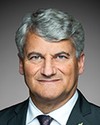
Todd Stack Chief Financial Officer, Trans Mountain Corporation

Thank you. I hope the audio is coming through okay.

Mr. Chair and members of the committee, I'm pleased to appear today on behalf of Trans Mountain Corporation. My name is Todd Stack, and I'm the chief financial officer at Trans Mountain. I've been in my role since October 2024.

I'm joining you today from Calgary. In the spirit of respect, I honour and acknowledge the traditional territories and the people of the Treaty 7 region in southern Alberta, which include the Blackfoot Confederacy, the Tsuut'ina Nation and the Stoney Nakoda Nations. Calgary is also home to the Métis Nation of Alberta, the Calgary Elbow Métis District and the Calgary Nose Hill Métis District.

I'm pleased to be with you today on behalf of our organization, which was listed in the Auditor General of Canada's 2024 report on professional services contracts.

The Government of Canada purchased the Trans Mountain pipeline system and the expansion project in 2018. We are a wholly owned subsidiary of the Canada Development Investment Corporation, governed by an independent board of directors, with a mandate to operate in a commercial manner.

Today, we operate Canada's only pipeline system transporting oil products to the west coast. Trans Mountain began operations in 1953, and we began operation of the expanded system in May 2024. The pipeline is delivering on its potential to reach offshore markets, generating revenue for regional and national economies. In 2025, the first full year of operating the expanded system, Trans Mountain is on track to return over $1.7 billion to the federal government in interest payments and other disbursements.

With regard to the study at hand, we welcome the additional oversight and recommendations we receive from external experts, including the Auditor General and this committee. The Office of the Auditor General reviewed one contract with McKinsey that Trans Mountain entered into in late 2022 and completed in late 2023. The contract was issued during the construction phase of the expansion project. A guiding principle of our project execution was the duty of project management to maximize shareholders' return by optimizing costs and meeting scheduled milestones. The contractor was retained based on their unique experience in the implementation of cost and productivity programs.

We agree with the Auditor General that two key components of a procurement program are, one, to ensure that the federal government receives value for money from external contracts and, two, to ensure that contracts are awarded in accordance with procurement policies, which includes ensuring that appropriate conflict of interest safeguards are in place. With regard to the first component, I can attest that Trans Mountain received value for money from this work. With regard to the second component, the Auditor General's report provided a single recommendation: for departments to proactively ensure that there are no real or perceived conflicts of interest among those involved in the procurement process.

We have acted on this recommendation, as reflected in the action plan filed. We have implemented a more proactive conflict of interest declaration process, which includes an in-depth questionnaire to identify all potential types of conflict of interest, and we've instituted annual, mandatory conflict of interest training. The annual training reinforces the requirement to declare any potential conflicts of interest when they arise and not to wait for the annual declaration process. In addition, the company maintains a robust whistle-blower program, which further enforces and identifies potential conflicts.

In conclusion, Mr. Chair and committee members, we have acted on the recommendation received, and we are committed to working diligently to uphold our procurement standards and policies.

3:35 p.m.

Conservative

The Chair Conservative John Williamson

Thank you very much.

Mr. Hayes, I understand you have a few comments you'd like to make. The floor is yours, please.

Andrew Hayes Deputy Auditor General, Office of the Auditor General

Mr. Chair, thank you for the opportunity to discuss our 2024 report on professional services contracts.

I want to begin by acknowledging that this hearing is taking place on the traditional unceded territory of the Algonquin Anishinabe people.

Joining me today is Josée Surprenant, a director in our office.

Since we appeared before this committee in October, I will not reread our opening statement. I understand that it's been redistributed to members.

It should be noted that Trans Mountain was not part of the sample of 33 contracts reviewed to assess value for money. To better support the committee's work, I'm going to yield the rest of my five minutes of speaking time to you.

We would be happy to answer any questions the committee may have.

3:40 p.m.

Conservative

The Chair Conservative John Williamson

Thank you very much.

I'll now begin the first round, which will consist of three members for six minutes each.

Mr. Deltell, you have the floor for six minutes.

3:40 p.m.

Conservative

Gérard Deltell Conservative Louis-Saint-Laurent—Akiawenhrahk, QC

Thank you, Mr. Chair.

Good afternoon, colleagues. It's always nice to see you in committee.

Greetings to the representatives of the Office of the Auditor General.

Mr. Stack, welcome. Thank you for participating in this democratic exercise of testifying before a parliamentary committee. My first questions are for you.

Was Gerald Butts hired, in any capacity, to recommend or facilitate using McKinsey's services for Trans Mountain?

3:40 p.m.

Chief Financial Officer, Trans Mountain Corporation

Todd Stack

No, there was no recommendation from Mr. Butts or any government in the hiring of McKinsey.

3:40 p.m.

Conservative

Gérard Deltell Conservative Louis-Saint-Laurent—Akiawenhrahk, QC

Was Dawn Farrell, who heads the federal government's major projects office, involved in recommending that McKinsey's services be used for Trans Mountain?

3:40 p.m.

Chief Financial Officer, Trans Mountain Corporation

Todd Stack

The decision to hire McKinsey was approved by the executive level. At the time, Dawn Farrell was the chief executive officer at Trans Mountain, so she was part of that decision-making process.

3:40 p.m.

Conservative

Gérard Deltell Conservative Louis-Saint-Laurent—Akiawenhrahk, QC

Mr. Stack, would your company agree to submit to the committee all communications that took place between the management team of Trans Mountain when Ms. Farrell was there, regarding the hiring of McKinsey?

3:40 p.m.

Chief Financial Officer, Trans Mountain Corporation

Todd Stack

I'm not sure I'm able to make that commitment at this point in time. However, I would commit to get back to the committee with a response and provide that to the committee clerk.

3:40 p.m.

Conservative

Gérard Deltell Conservative Louis-Saint-Laurent—Akiawenhrahk, QC

I would remind you that Trans Mountain is a federal government company, and Ms. Farrell is still in a federal government position.

We would like to know why your company, Trans Mountain, awarded a major contract to a private firm, McKinsey, that is under investigation.

From our perspective, Mr. Stack, it is very much to be expected that Ms. Farrell's communications on this specific issue would be detailed.

We're not asking for corporate secrets, we want to know how such a major contract could have been awarded to this firm and what role Ms. Farrell may have played in that.

3:40 p.m.

Chief Financial Officer, Trans Mountain Corporation

Todd Stack

Our board.... The discussions at our board are minuted, and there are members of the Department of Finance, as well as CDEV, sitting on the board of directors, so they would have that information as well.

3:40 p.m.

Conservative

Gérard Deltell Conservative Louis-Saint-Laurent—Akiawenhrahk, QC

We understand that the Trans Mountain project is very important. We also understand that an astronomical budget was allocated to it, without any serious spending controls.

In 2017, this project was valued at $7.4 billion, and in 2023, it grew to $34 billion, almost five times the estimated cost. We're not talking about a small overrun here. We're talking about a flood, and taxpayers had to foot the bill.

Ms. Farrell took up her duties in August 2022, two months before McKinsey was awarded a non-competitive contract worth nearly $33 million.

Why did you offer a non-competitive contract when the rules are very clear?

November 18th, 2025 / 3:45 p.m.

Chief Financial Officer, Trans Mountain Corporation

Todd Stack

Let me just touch on a couple of items there.

First of all, the overall costs of the projects are currently under review with the CER as part of our ongoing rate process. It has access to all of the documentation associated with the costs and the cost increases over time in order to assess those as part of our toll.

With regard to the sole-sourcing, direct assignment of the contract to McKinsey, at the time.... Look, the company had a lot of cost and productivity initiatives under way right from the beginning of the project in order to manage the schedule and costs. When McKinsey was hired, it was mid-project; it was about halfway through or even a little bit more than halfway through the project. Just in the ongoing desire to continue to look for ways to continually improve both the schedule and the costs, it was decided that we needed to bring in somebody who had very unique and specialized skills to help us look for opportunities that weren't already under way.

3:45 p.m.

Conservative

Gérard Deltell Conservative Louis-Saint-Laurent—Akiawenhrahk, QC

What you have to understand is that Ms. Farrell is currently in charge of the Major Projects Office, which is going to invest billions of dollars.

However, according to the Auditor General's report that we are currently considering, Trans Mountain's budget reached astronomical proportions, and contracts were awarded without following the basic rules for contracts that Crown corporations award to private companies.

What should Ms. Farrell do to improve her record at the major projects office, based on her experience with Trans Mountain?

3:45 p.m.

Chief Financial Officer, Trans Mountain Corporation

Todd Stack

Yes, I think the Auditor General's report was actually very comprehensive in some of the key factors associated with good procurement practices, and we would endorse those as well. I'm sure that Ms. Farrell would also take those on to her new role in the Major Projects Office. First of all, having good policies in place and requesting competitive bids are definitely preferred practices. In our particular case as a stand-alone corporation, sole-sourcing is an approved method of assigning work, but we do look to use RFPs for as many projects as we can or as many contracts as we can.

3:45 p.m.

Conservative

The Chair Conservative John Williamson

Thank you very much, Mr. Deltell.

Next is Ms. Tesser Derksen.

You have the floor for six minutes, please.

Kristina Tesser Derksen Liberal Milton East—Halton Hills South, ON

Thank you very much, Mr. Chair.

Thanks, Mr. Stack, for joining us today.

I have some questions of a more general nature.

I understand that the amount spent so far—as of September 30, 2023—was $32 million or in that range. It's a non-competitive contract that's the subject of the meeting today. As far as the Auditor General's report goes, I think the concern there is that the non-competitive contract was granted without a justification that was clearly linked to your own policies or one of the exceptions in the competitive procurements contained in the policy, if I'm getting that correct.

I want to start with a kind of obvious question here. Your department made a decision to contract out. As I understand, that's up to the department. You have deference to determine that. The question I have is with respect to what you were expecting, what benefit you were expecting to realize by contracting out, as opposed to keeping the work internal.

3:45 p.m.

Chief Financial Officer, Trans Mountain Corporation

Todd Stack

There are a couple of items that maybe I'll just put in there.

As reported in the Auditor General's report, the cost was $32 million. The final cost was actually $33 million—just for reference and for a bit more background. The initial engagement with McKinsey was estimated at about $18 million for a six-month contract. Then, because of the success and the value created in the project, it was decided to extend that contract, which ended up with the ultimate cost of around $32 million. It was extended to about 12 months, as opposed to the six months originally contemplated.

I apologize, but was the remaining part of the question the justification?

Kristina Tesser Derksen Liberal Milton East—Halton Hills South, ON

Yes, well, I mean, the Auditor General was pointing to the.... I don't think there was necessarily a concern with your decision. It was a concern with the justification for your decision to contract out. What type of benefit would your department expect to realize by contracting something like this out rather than by looking internally?

3:50 p.m.

Chief Financial Officer, Trans Mountain Corporation

Todd Stack

As I mentioned, project controls, innovative ideas, and initiatives to increase productivity were some things that were initiated in the project right from the beginning, in the planning phases. However, as has been mentioned, the project did see ongoing pressures on both the cost and the schedule, so it was decided to bring in an outside party. Again, it was to try to generate new ideas and new momentum in the company to both meet the schedule and drive costs down. You—

Kristina Tesser Derksen Liberal Milton East—Halton Hills South, ON

I'm sorry to interrupt, Mr. Stack.

Just on that point, would it be your opinion that you may have actually found some efficiencies by contracting out, or am I taking it a step too far?

3:50 p.m.

Chief Financial Officer, Trans Mountain Corporation

Todd Stack

Absolutely, we did.

One of McKinsey's big skills is bringing in cost and productivity improvement initiatives, and the entire purpose is to get multiples of value from what their costs are. The process that McKinsey brought in, and then the initiatives implemented by the team, gave multiples of the $33 million spent on their services. That is the measuring factor in deciding whether.... Again, we kept them for six months. We extended it for six months. That would not have been done if they were not generating value through that first six-month period.

Kristina Tesser Derksen Liberal Milton East—Halton Hills South, ON

Thanks very much.

Moving on to some other concerns that the Auditor General's report raised with respect to the conflict of interest policies, I note that you did respond to the Auditor General's recommendation. You noted that all employees are required to affirm their compliance with the conflict of interest policy and to identify conflict of interest situations to their supervisors.

Can you talk to us about the training? You did mention training, and there may have been a recent review of the training that employees receive. Talk to us about the type of training employees undergo with respect to identifying those conflicts of interest.