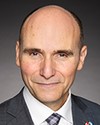
Evidence of meeting #29 for Public Safety and National Security in the 45th Parliament, 1st session. (The original version is on Parliament’s site, as are the minutes.) The winning word was rcmp.

A video is available from Parliament.

On the agenda

Members speaking

Before the committee

Gary Anandasangaree  Minister of Public Safety
O'Gorman  President, Canada Border Services Agency
Michael Duheme  Commissioner, Royal Canadian Mounted Police
Rogers  Director, Canadian Security Intelligence Service
Dakalbab  Commissioner, Correctional Service of Canada
Geddes  Deputy Minister, Department of Public Safety and Emergency Preparedness

4:40 p.m.

Conservative

Frank Caputo Conservative Kamloops—Thompson—Nicola, BC

I understand. Thank you.

4:40 p.m.

President, Canada Border Services Agency

Erin O'Gorman

I also want to talk about the fact that we work closely with our law enforcement partners. Some of the people on warrant are actually in prison, and because they are on warrant, when they're released our law enforcement colleagues will call us, and we will come and take carriage of them.

4:40 p.m.

Conservative

Frank Caputo Conservative Kamloops—Thompson—Nicola, BC

I wasn't trying to put words in your mouth. We're told by the government that things are getting better, but things have gotten worse.

To our new commissioner, welcome, Mr. Dakalbab. If I'm not pronouncing that correctly, please let me know.

You and I have spoken before, and I have some questions, some of them pointed. I don't expect you to know the answers. What I would ask is that you get back to me or the committee in writing on these issues.

There have been a number of escapes from minimum security in the last three years. I trust that you know what an override is. Somebody is coming out in the computer at “medium”, but somebody makes the decision to make them a minimum-security inmate.

Can you please advise this committee and me of how many of those who have escaped in the last three years were on override status?

Talal Dakalbab Commissioner, Correctional Service of Canada

You are correct. I don't have the number yet, but I'd like to clarify that there is no doubt, as I start as the commissioner, that my top priority—and I'm happy to work with every member around this table—is the security of the public. This is the number one priority that I have as a mandate, as well as ensuring the security of our staff.

We will make sure that you get the number for these overrides, but to be clear, the system doesn't give the final answer. There is an assessment, and there are criteria in the CCRA that have to be followed in order to establish the level of security.

4:40 p.m.

Conservative

Frank Caputo Conservative Kamloops—Thompson—Nicola, BC

I am aware that the override doesn't just happen. There's policy, but somebody does come out at a number, and Corrections can adjust it or decide the security level.

One thing that's been told to me by multiple people is that there's a use of pseudonyms. I've asked for these things in ATIPs. Have you ever heard of CSC using pseudonyms for people's names—including me, a parliamentarian—in order to avoid access to information requests?

4:40 p.m.

Commissioner, Correctional Service of Canada

Talal Dakalbab

I am absolutely not aware, but I am on day two.

4:40 p.m.

Conservative

Frank Caputo Conservative Kamloops—Thompson—Nicola, BC

Yes, of course.

4:40 p.m.

Commissioner, Correctional Service of Canada

Talal Dakalbab

This is something I will have to look into, because if that is the case, that is obviously not the purpose of the Access to Information Act.

4:40 p.m.

Conservative

Frank Caputo Conservative Kamloops—Thompson—Nicola, BC

I would ask that you do a thorough investigation. I would ask that you investigate, frankly, people like me and my name. I have had people come to me and tell me that this is a common practice on encrypted devices. I believe those devices should be examined, and if people are using methods to try to stymie ATIPs, that should be ended immediately. My office is open if people want to talk to me about it—because people already have.

Are you prepared to report that back to this committee as well?

4:40 p.m.

Commissioner, Correctional Service of Canada

Talal Dakalbab

I would need to verify what is going on, and if it is happening, I am more than happy to be transparent about the actions we will take to address it.

4:40 p.m.

Conservative

Frank Caputo Conservative Kamloops—Thompson—Nicola, BC

Thank you. I appreciate that.

We're already off on a better foot than in previous meetings. I appreciate that.

This is the last thing I'm going to ask you about. There's an ISIS fighter, an ISIS sniper, doing time. I believe that within two years, he was transferred to minimum security. This is a person who went overseas and dreamed of being a suicide bomber. I saw him twice in minimum security, with no fences and townhouse-style living.

How is somebody like that in minimum security when minimum security requires a person to be a low public safety risk? How is that possible?

4:40 p.m.

Commissioner, Correctional Service of Canada

Talal Dakalbab

I'm not familiar with the case, but if this person has been in minimum for two years—

4:40 p.m.

Conservative

Frank Caputo Conservative Kamloops—Thompson—Nicola, BC

Well, they went into it after two years of their sentence, so very early.

4:45 p.m.

Commissioner, Correctional Service of Canada

Talal Dakalbab

I heard that you had seen them multiple times in minimum. If they've been living in a minimum institution without a risk of escape, I honestly believe that this means the person has had the proper assessment.

I just want to be cautious, because I've heard at this table multiple times now the reference to minimum, medium and maximum institutions. Obviously, the escape is a different issue, but most of these people are coming back to our communities. We need to make sure we are managing them properly so they can return to the communities in a safe manner and as law-abiding citizens.

I'll look into it, but I—

4:45 p.m.

Conservative

Frank Caputo Conservative Kamloops—Thompson—Nicola, BC

This is an ISIS terrorist and that's an issue for me.

The Chair Liberal Jean-Yves Duclos

I'm sorry to interrupt, but the time is over. Time is always too short.

We'll go to MP Acan for six minutes, please.

Sima Acan Liberal Oakville West, ON

Commissioner Duheme, the Auditor General's report yesterday on recruiting for the RCMP emphasized that work is needed to ensure that the RCMP meets full operational requirements. Last week, your agency released the recruitment plan for 2026 to 2029. The plan outlined key actions the RCMP will undertake to address the concerns outlined by the Auditor General surrounding the application process and workforce planning, which include understanding training times, the application times and implementing a recruitment model that reduces national vacancy concerns.

The recommendation from the Auditor General is for the RCMP to recruit approximately 3,400 additional officers to meet operational requirements across the force. Budget 2025 provided $1.8 billion over four years to strengthen the organization's response to threats and support the recruitment of 1,000 new RCMP personnel to support its federal policing mandate.

Could you share with members of this committee the actions being taken through the RCMP's recruitment plan for 2026 to 2029? Would you say that these investments and initiatives by the government are steps in the right direction?

Commr Michael Duheme

There are just a couple of things I want to hit. The funding we got for the 1,000 employees—it's 750 police officers and 250 public service employees with a special skill set—is aside from what came out of the Auditor General's report. The Auditor General's report does say that we would require up to 3,400 additional resources, and that's if I had no attrition. The 3,400 would cost close to $900 million. Currently, we are funded for simply 40 troops going through, and we're cash managing for 45 to 50 this year.

I think there's an important step here. The Auditor General's report was not a surprise to us. Actually, the RCMP had already invoked some measures to address the shortcomings where the organization had been lagging in bringing people in the door for several years. I'll bring up three points.

The process we have is very linear. We've brought someone in from the exterior who is looking at the whole process. We were comfortable having a more dynamic process based on what we saw with the Five Eyes and with other Canadian law enforcement so that we will be able to get entry, from the time you apply to the organization to when you get to Depot, down to six months. It brings a more human side to the whole process, because that's important. We don't want to lose anybody during the process because it's taken too long. That's one good thing. We're already seeing this with a pilot project that started in February.

The other reason we find ourselves in this situation is retention. At one point, we had the old mentality that anybody who joined the RCMP would serve anywhere in Canada. The reality is that we were seeing a lot of people joining the RCMP, getting fully trained, going to the posting and then transferring to another police department. Then we would be without that resource. We saw several like that, so we adopted a more flexible post, according to priorities and where people want to go.

The last key reason we find ourselves in this position I'd chalk up to leadership not addressing the issues as they're raised. You heard the minister earlier. This dates back to COVID. You had the unfortunate incident of the George Floyd matter, and then you had the defund the police campaign. Citizens had less of an appetite to join law enforcement. This was typical with all law enforcement. I think we were a little slow getting out of the gate for that, and it's about catch-up right now.


Sima Acan Liberal Oakville West, ON

On the topic of the supplementary estimates, the Auditor General's report mentioned the force generation program totalling “nearly $355 million for both 2023-24 and 2024-25”.

Funding fundamentally plays a role in supporting the training infrastructure at Depot, from instructors to facilities used. Financially, each officer is an investment of experience and capital, as you also mentioned here.

At this committee, we have heard from academics and from representatives of the National Police Federation about dedicated funding for specific programs, whether for border security or training. Would the RCMP benefit from predictable and dedicated funding streams to support its federal policing mandate? Could you comment on how that would impact operations and recruitment?

Commr Michael Duheme

Very quickly, we are extremely focused on ensuring that all pennies and dollars that come in for federal policing are spent on federal policing. That is Sam's job.

We are doing a detangling exercise, if you wish. We realize that there's some federal funding that comes in to support Canadian law enforcement—not just the RCMP, but Canadian law enforcement writ large. We want to untangle that to see exactly what the government is supporting across the country and where it desires to be in that law enforcement space when it comes to funding.

If funding is dedicated to federal policing, we will have stronger federal policing as we move forward, because the funds are meant for federal policing.

Sima Acan Liberal Oakville West, ON

Thank you very much, Commissioner.

President O'Gorman, as I mentioned, I had the privilege of attending the CBSA graduation in Rigaud, and it was a very exciting day for those officers, who will be working to keep our borders safe and secure.

My question is primarily about CBSA recruitment. Of course, the government has made funding allocations toward 1,000 new CBSA personnel, but I was wondering how that staffing will support our agency's ability on the front line—for example, with removals or staffing ports of entry or immigration detention facilities.

The Chair Liberal Jean-Yves Duclos

Unfortunately, we'll have to see whether Ms. O'Gorman and her team can answer the question in writing. That was a great question too.

Mrs. DeBellefeuille, the floor is yours for six minutes.

Claude DeBellefeuille Bloc Vallée-du-Haut-Saint-Laurent, QC

Thank you, Mr. Chair.

Ms. O'Gorman, I never thought I'd talk to you about your 1,000 officers because I believed the answer I was given.

We'll stop talking about 1,000 officers and instead talk about 800 officers, because 800 officers will be trained, including in Rigaud, where the full training is provided. I did the math and figured that, to reach the goal of 800 officers, at least 240 more need to be trained every year for three years. These officers are in addition to the 575 already trained in Rigaud. That gave a total of 840 officers trained toward the target set by the minister. It started this year and will end in 2029.

The director of the Rigaud school was so happy to tell me that the target would be met because two cohorts of recruits were being added in Rigaud and two were being added in Chilliwack. I learned that it didn't work in Chilliwack.

Explain to me how you are going to reach your goal of 260 new additional officers this year with just the two cohorts from Rigaud. It's a matter of math for me. Can you explain it to me clearly and briefly?

4:50 p.m.

President, Canada Border Services Agency

Erin O'Gorman

We can train at least 750 officers in Rigaud per year.

Claude DeBellefeuille Bloc Vallée-du-Haut-Saint-Laurent, QC

Yes, but with 150 officers, you can't—