Thank you very much, Mr. Banks.
You have five minutes, Mrs. Gillis.

Evidence of meeting #36 for Veterans Affairs in the 45th Parliament, 1st session. (The original version is on Parliament’s site, as are the minutes.) The winning word was gillis.
A recording is available from Parliament.
Liberal

The Chair Liberal Marie-France Lalonde
Thank you very much, Mr. Banks.
You have five minutes, Mrs. Gillis.
Natalie Gillis Licensed Counselling Therapist and Canadian Certified Counsellor, Valhalla Visions Counselling Clinic
Chair and members of the committee, thank you for this opportunity to be here with you this evening as the owner and sole proprietor of Valhalla Visions Counselling Clinic, located in Saint John, New Brunswick.
My name is Natalie Gillis. I'm a licensed counselling therapist and a Canadian certified counsellor, offering individual counselling therapy and industrious case management for military veterans, RCMP, first responders, various health and educational professionals, group home and treatment centre workers, and those who have endured domestic and interpersonal violence.
A grandfather served with Carleton and York during World War II, and a grandmother worked at the air force base in Stephenville, Newfoundland.
I was an air cadet for six years. One barricading factor for me in joining the forces was the multifactorial aftermath of an accident at CFB Borden during my athletic instructor's course, when I hyperextended my neck after landing on my head. As a result, I've mitigated as an allied affiliate to community for roughly three decades. I'm a member of the Order of St. George, and one role I have as a therapist is assisting clients while they adjust to and mitigate their injuries.
Marie-Hélène Gaudreau, I applaud you for initiating this study.
Zoe Royer, I felt the emotion in your voice as a military spouse when you asked questions.
Mr. Tolmie, you've maintained steadfast composure throughout this process. I don't just hear you; I visibly see the magnitude of the hurt that you harbour. I want you to know that.
I'm here today because it remains to be seen that the PCVRS program facilitates the feasibility, capacity and advanced levels of aptitude to care for this complex section of human health and suffering. I'm declining reimbursement from the government for this trip, and if possible, please use these totals towards counselling therapy for a veteran. Likewise, I'm not making business claims in the future.
I drove here from New Brunswick, to echo previous statements and testimonies, to supply additional context followed by suggestions, because I believe in showing up for the team. For decades, the veteran community has been experiencing a spiritual famine and psychological draught.
My colleague Dr. Alisha Henson and Clea, who presented here last week together, are two of the many individuals I've had an irretractable pleasure of working with. To substantiate this claim, I note that Alisha completed training and then rushed here to make an appearance. Moreover, Clea declared during their students' video recorded presentation, which has been on McGill's website since last summer, that we are not throwing PCVRS under the bus.
If a veteran throws you the ball to let you into their world, you are Babe Ruth hitting a grand slam. Modern research, ethical practices and informed consent emerged after the barbaric atrocities of World War II, during the Nuremberg trials. As a succession from that, if veterans are being forced to switch clinicians, that is not autonomy, and the system is stripping them of a critical life support while wilfully interfering with someone else's sanctuary. I'm not concerned just about the need for a national standard; I'm worried about other staff who might not be sufficiently trained. I thank previous witnesses for asserting how abrupt termination of a therapeutic relationship is damaging.
I've come with reference material on how ethical closure with clients should be conducted and the instances when immediate cessation of services is to occur. To share the load, others could perhaps supply supplementary research, ethical codes of conduct and standards of care. I have some other topics of interest to share as well, regarding readiness for change and the military culture.
In support of Dr. Henson's call, I say that at heart you need a fearless baseline of maturity, resilience, applied emotional intelligence, critical thinking skills, objectivity, the absence of an adversary lens, the patience of Job and demonstrated life experience to complement the therapeutic alliance with a veteran. Priorities delay my updating my LinkedIn profile and website, but some lines of employment that have developed grit for me over the years were doing human services work, safely cleaning hospitals and clinics, working with some of the most challenging behavioural cases in the province from the Restigouche hospital, cofacilitating narrative therapy to court-mandated clients and, in other capacities, working with those along the spectrum of the sex offender registry.
My grandfather, who served in World War II, and his wife were in the hospital together before they both passed away two weeks apart, three weeks before Christmas in 1992. He had a rare form of blood cancer, and she had suffered from two strokes. I remember being witness to the love he still had on his face when he tried to talk to her. She refused to look at him, out of embarrassment due to her disfigurations and inability to speak. Anyone working with veterans and their families needs a required competency beyond something called “cognitive empathy”.
Sealing the envelope, veterans require retention of connections, tenacity, stamina and insatiable will until the very end from us.
Liberal
The Chair Liberal Marie-France Lalonde
Thank you very much.
We will now start our first round. There will be six minutes for each member.
I believe, Mr. Richards, that you are up for six minutes.
Conservative
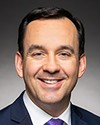
Blake Richards Conservative Airdrie—Cochrane, AB
Thank you, both of you, for your contributions today. Thank you for your service to the country and for your service to veterans.
I have a lot of questions for both of you. I'd like to start, though, with Mr. Banks.
You made a brief mention of a concern I've heard from a lot of veterans about the Afghan monument groundbreaking ceremony. I wanted to give you a minute or two to elaborate on that, if you'd like, because I've heard it from a lot of veterans, and I think it's important that this committee hear it.
Sergeant (Retired), As an Individual
Thank you for the question.
A lot of this is insulting because, first, we have not forgotten the selection scandal. We know that this was not the monument that was selected by the selection committee. This was the monument selected by the government, and it's a bad design.
The kit crosses are not significant in military culture. They're two pieces of wood that we slap together to hang our stinky, sweaty gear on at the end of the day. They have the cultural significance of a hockey bag. What that should have been are the rifle, boots, helmet and dog tags, which are symbolic. I understand that the artist went to Afghanistan on a professional development trip, but he didn't understand what he saw, apparently. It's sad, because that's now the monument that's going to represent a war in which thousands died, with 158 Canadians among them.
The soil turning was another scandal on its own. I was there, but it was as though they didn't even want us there. There were no invitations sent to veterans. I found out about it through the families. Most families weren't invited, and we're talking about families of those who had fallen. They weren't invited until two weeks before the soil turning. At that point, only those in the national capital region could attend. For the seating arrangement, we were put at the back.
Yes, there were veterans who were included as part of the ceremony, but they were not in any way the focus. They were tokens. I'm sorry for those veterans, because it should not have been that way. Not one veteran was invited to the microphone to speak, but three indigenous leaders were, and multiple politicians were invited to speak. Not one veteran was invited to the microphone. Not one veteran was highlighted in the stories that were shared. Not one fallen soldier was recognized by name.
Since then, there's been nothing from the department: no apologies, no acknowledgement and no “we'll do better for the unveiling”, just silence and patting themselves on the back. This is not what veterans deserve.
Conservative
Blake Richards Conservative Airdrie—Cochrane, AB
I thank you for your courage to share that, because I know it's not.... I know that many veterans talk about the repercussions they're afraid to face when they speak out about things that have gone wrong. I just really hope that it's heard. I hope it's listened to, and I hope they do better next time. I hope there is an apology, frankly.
What do I have for time?
Conservative
Blake Richards Conservative Airdrie—Cochrane, AB
I'll try to see if I can give you both a chance to answer this question. You talked a lot about some of the issues.
I want to hear from you, Ms. Gillis, from a clinician's perspective. I know that you've worked with other clinicians in terms of mental health. Could you maybe summarize what you see are the on-the-ground realities that are being faced with this PCVRS contract and what should be done about it?
Mr. Banks, from the veteran's perspective, what should be done to improve this situation?
I'm going to start with you, Ms. Gillis.
Licensed Counselling Therapist and Canadian Certified Counsellor, Valhalla Visions Counselling Clinic
One thing I could probably echo is what my colleague Dr. Henson mentioned last week: a national standard for clinicians. One of the things that I'm concerned about is veterans being stripped from their care providers, which is essentially a rupture, and I have a lot of information for the committee to review that supports how very destructive that is.
Some of the training that's out there right now is fluctuating, and there are different regulations between the provinces. Not every province is regulated, so that's also something that needs to be looked at. Regarding standards of care for psychotherapy in general, the regulated provinces are Ontario, Quebec, Nova Scotia, P.E.I. and New Brunswick. British Columbia and Alberta are trying to make way with regulated practices, and this is very important, because at this point someone could call themselves a counsellor, and if there's no body to follow for regulations, that's a big issue.
Still pertaining to mental health, I want to say something about training and education levels. She spoke of years of supervision needed. You need to have grit to work with this demographic. It's indisputable. When I think about the young people who are graduating with social work degrees at 21 years old in general, and they're going in to take children away from families who have weapons or anything going on there, if they don't have supplementary life experience to deal with the energy that comes with that and the repercussions of direct, indirect or vicarious trauma, I'm worried about those people too.
When we're dealing with people who have a lot of complex health circumstances that may or may not be officially detected yet, a full medical workup should be explored before entering into a rehabilitation program. I don't know why that's not happening, because if people are walking around with traumatic brain injuries or this, that and everything, it's a disservice.
Liberal
The Chair Liberal Marie-France Lalonde
Thank you very much, Ms. Gillis.
I would now like to invite Madame Auguste to take the floor.
Madame Auguste, you will be asking your questions in French, so I will invite our witnesses to put their earpieces in.
Madame Auguste will be addressing both of you in the French language.
Ms. Auguste, you have the floor for six minutes.
Liberal

Tatiana Auguste Liberal Terrebonne, QC
Thank you very much, Madam Chair.
I'd like to begin by sincerely thanking you, Mr. Banks, for your service and dedication to all veterans. What you are doing is truly admirable. You are very involved with the Royal Canadian Legion. You participate in many activities and events related to veterans.
As a very involved veteran, could you enlighten us and give us a little more detail on the issues with Partners in Canadian Veterans Rehabilitation Services that veterans are telling you about? Can you tell us which issues come up most often in your discussions?
Sergeant (Retired), As an Individual
Part of the biggest problem is that the system is not robust enough to take on such a complicated demographic. Veterans have unique needs, and the RSSs and the contractors seem in no way adequately prepared to deal with the level of trauma that we're bringing in.
I don't want to take up too much of your time, because I know you want to ask other questions, but one of the biggest problems is allowing the contractor to have control over our benefits. They are here to provide rehabilitation services, not to determine a veteran's rehabilitation goals or overrule a medical professional. There is no way that the system can work under those conditions.
Allowing a contractor to make a decision about which direction the rehabilitation should go should not fall on the RSS. It should fall on the medical professionals.
I mentioned in my opening remarks that when I went through the process, they told me what I was going to do, and there were no ifs, ands or buts about it: If I didn't do it, I would be out of the program.
If they have that level of power, then they're not really interested in helping. They're interested in getting us through a system, and there's no accountability. We need to have some level of accountability. If they're going to violate our rights, violate the terms of the contract or outright lie about the conditions of their client base, there need to be real financial and criminal penalties.
Liberal
Tatiana Auguste Liberal Terrebonne, QC
Thank you very much.
Ms. Gillis, I'd like to ask you a question similar to the one I asked Mr. Banks. Based on your professional experience, what issues related to Partners in Canadian Veterans Rehabilitation Services are really recurring among veterans?
Licensed Counselling Therapist and Canadian Certified Counsellor, Valhalla Visions Counselling Clinic
I can probably give an example.
Sometimes when I do get referrals, they may request that I do EMDR with them, but if I haven't done my homework to gather further documentation completed by other health clinicians before they enter the program, I could do a lot of damage. Some trauma interventions require emotional regulation before starting a more deeply rooted therapy intervention.
There are all sorts of steps you need to take before implementing trauma therapy. You have to make sure that your veteran is, ideally, situated as comfortably as possible. That includes chronic pain and whether they're sleeping. I am notorious for asking every client, when they first come in, “How are your medications? Are you feeling motivated to take them? Are you drinking?” I don't ask them if they're drinking to accuse them of anything. I just keep encouraging them by saying that it's important for me to know so that we can keep on track, to the best of our ability, and make sure there are no mishaps, and so that I can track their health that way—everything from sleep to retention. If people can't focus, therapy is not going to work. They have to be situated as comfortably as possible. I will beat that to death.
When it comes to PCVRS, it feels very pressured. When they're constantly going to rehab—rehab here, rehab there, driving everywhere.... I had this conversation briefly with Dr. Heather MacKinnon, and she even echoed that there is no time for them to recover, and it doesn't make any sense. They're being run through this PT program, if you want to think about it that way. They're not in the military anymore. They need a break. Realistically, they're not going to heal and go back to school or work if they're being pushed beyond their limits and it's causing further injury. I don't understand where this methodology is coming from, unless there are ulterior motives.
When we think about the statistics of everything, too, we have to be very careful about how much we might be cheerleading the positive numbers, because in general, as ethical providers, we have to remain cautionary. We can be optimistic, but we have to be realistic and objective about how things are being assessed.
The internal validity of the program is still a big question mark over my head. At the same time, I'm not condemning the program, because I have heard of some genuinely good experiences. However, I don't want to have that misconstrued in any way, because there is still a lot that we're seeing that is not representing the best interests of these clients.
Liberal
Tatiana Auguste Liberal Terrebonne, QC
If I understand you correctly, you think those aspects need to be improved, but you also see that some people have truly had a good experience with that program.
Licensed Counselling Therapist and Canadian Certified Counsellor, Valhalla Visions Counselling Clinic
With the positive experiences, again, it's still a very small number, from what I'm seeing. I want to clarify that. I don't want anybody thinking this is getting too far ahead of itself, but I will always honour those genuine experiences that people have had, because that's what we want. When the majority is still facing all these catastrophic experiences, I think we're still trying to find that balance.
When we're assessing a program, even in the unpublished manuscript that Dr. Henson and I put out before we did the McGill thing, we have to be very biased and find balance. It's the right thing to do.
Liberal
The Chair Liberal Marie-France Lalonde
Thank you very much.
Madame Gaudreau will address you in French. I want to make sure you are prepared.
Ms. Gaudreau, you have the floor for six minutes.
Bloc

Marie-Hélène Gaudreau Bloc Laurentides—Labelle, QC
Thank you very much, Madam Chair.
I would like to point out that we are conducting this study not only because it's important, but also because the situation is not perfect. If it were, we wouldn't be here. It doesn't have to affect 10,000 or 75,000 people; even if it's a problem for one person, that's already one person too many who is suffering from this situation. I'm a little tired of hearing claims that things are going pretty well. It's great if that's the case for some people, as that's what we want, but we want things to be good for everyone. You're important.
My question is for Ms. Gillis.
The report we discussed last week states that this therapy may even be harmful to veterans. Is that possible?
Licensed Counselling Therapist and Canadian Certified Counsellor, Valhalla Visions Counselling Clinic
Can you clarify which therapy?
It's my memory; excuse me.
Licensed Counselling Therapist and Canadian Certified Counsellor, Valhalla Visions Counselling Clinic
It's the program. Okay. I'm sorry.
Therapeutic rehabilitation should be focused around what people are capable of doing. I collaborate with therapeutic clinics to keep on top of our clients' success rates. When you have a teamwork-based set-up, the veteran feels better. If they're having panic attacks before they're going into their sessions or anything....
I've had to do a lot of work with my folks who have astronomically high rates of physical pain. They're scared to walk. They're scared to do anything.
I've worked with vets who've been out for years, and then they start coming to me. I have to first get them used to coming to see me. They're pacing back and forth in the room. Until they get comfortable doing that, you're not going to get therapy done. I'm sorry. I'm just going to call it.
Over time, I build that team with them: physio, massage, chiropractic and everything like that. They can start to settle into things, and they feel more confident, I want to say, doing the movements that they need to do with physical rehab.
If you don't have a team that's there for them, forget it. You're not going to get success or anything. I think that needs to be considered, again, on top of everything else.
They're tired. They're exhausted, and that's not rehabilitative. It's destructive. It causes further injury.
Bloc
Marie-Hélène Gaudreau Bloc Laurentides—Labelle, QC
We need adaptability. We need to humanize and understand others.
I think we need to do some soul-searching, particularly in light of the report we were told about. I was speechless when they even quantified and qualified what it would cost to make a change. As I said last time, it's a matter of political will. It's not because we don't have the money or can't reinvest. We're precisely at the moment when we need to reflect, take action and change course if necessary. There are indeed positive experiences, even as we discuss what's not going so well.
I would like to continue by talking about transparency and trust. I have a question for Mr. Banks on this.
Mr. Banks, you may not have read the report, but it mentions a lack of transparency that undermines trust in the PCVRS program.
You also talk to other veterans. Based on those exchanges, to what extent has veterans' level of trust in the program become a therapeutic issue?
Sergeant (Retired), As an Individual
I'm sorry. The last bit of the translation came in very quietly. I couldn't hear it.
Liberal