House of Commons Hansard #166 of the 44th Parliament, 1st session. (The original version is on Parliament's site.) The word of the day was women.

Topics

line drawing of robot

This summary is computer-generated. Usually it’s accurate, but every now and then it’ll contain inaccuracies or total fabrications.

Statements by Members

Question Period

The Conservatives relentlessly questioned the Prime Minister about alleged Chinese foreign interference in Canadian elections. They demanded transparency regarding his knowledge of funds from Beijing to candidates and parties, warnings about candidates in interference networks, and the lack of action against diplomats and police stations. They called for an independent inquiry and for his chief of staff to testify.
The Liberals address concerns about foreign interference, denying federal candidates received money from China. They advocate for an independent special rapporteur to examine mechanisms and restore confidence, while defending existing oversight bodies like NSICOP. On International Women's Day, they highlight efforts against gender-based violence and commitment to $10-a-day childcare and abortion access.
The Bloc criticizes the Prime Minister's refusal to establish an independent public commission of inquiry into foreign interference in Canadian elections. They reject his solutions of a secret committee and a special rapporteur, asserting that existing measures did not work and that the integrity of democracy is at stake.
The NDP demand a public inquiry into foreign interference to restore electoral confidence. They also advocate for Indigenous women and girls through a red dress alert, call for inclusion of trans women in the hate combat plan, and urge support for the Official Languages Act.

Resignation of Member Members pay tribute to Marc Garneau, the Liberal MP for Notre-Dame-de-Grâce—Westmount, upon his resignation after 14 years. Speakers from various parties praise his distinguished career as an MP, minister, and the first Canadian astronaut. They commend his dedication to public service, his respectful demeanor, and his challenge to members to act with dignity in the House. 4000 words, 40 minutes.

National Strategy on Flood and Drought Forecasting Act First reading of Bill C-317. The bill establishes a national strategy for flood and drought forecasting. It aims to use advanced technology to create accurate prediction systems, addressing environmental damage and financial losses across Canada in cooperation with stakeholders. 100 words.

Employment Insurance Act First reading of Bill C-318. The bill amends the Employment Insurance Act and Canada Labour Code to provide a new 15-week EI period for adoptive and intended parents. It aims for greater parity in parental benefits and acknowledges unique attachment needs for adoptive families. 200 words.

Old Age Security Act First reading of Bill C-319. The bill seeks to improve seniors' financial health by extending the 10% Old Age Security increase to all seniors at age 65 and raising the Guaranteed Income Supplement eligibility threshold for working seniors. 100 words.

Corrections and Conditional Release Act First reading of Bill C-320. The bill amends the Corrections and Conditional Release Act to provide crime victims with timely and accurate information about offenders' sentences and parole eligibility, aiming for transparency and a stronger voice for victims. 300 words.

Petitions

Online Streaming Act Members debate a motion regarding Bill C-11, An Act to amend the Broadcasting Act. The government proposes to accept 18 of 26 Senate amendments, while respectfully disagreeing with eight others, primarily to avoid interpretative issues, maintain the CRTC's regulatory flexibility, and keep the bill's focus on including online undertakings in the broadcasting system. Conservatives argue the bill would stifle digital creators and censor online content. 8800 words, 1 hour.

Pandemic Day Act Second reading of Bill S-209. The bill proposes establishing March 11 as "Pandemic Observance Day" to commemorate the impact of COVID-19. Members discuss remembering victims, honouring frontline workers, and learning from the pandemic for future preparedness. While broadly supported, some members criticize the government's handling of the pandemic response, citing incompetence and corruption. 5500 words, 45 minutes.

Adjournment Debates

Mental health funding parity Gord Johns criticizes the government for failing to achieve parity between mental and physical health funding, citing a constituent's struggle to afford addiction treatment for his son. Élisabeth Brière defends the government's investments in mental health services through bilateral agreements with provinces and territories, and online support portals.
Seniors and rising food costs Mel Arnold accuses the government of failing seniors amidst rising inflation and food costs. Mark Gerretsen defends the government's record, citing increased OAS pension, restored GIS/OAS eligibility age, and CPP enhancements. Arnold dismisses one-time payments as insufficient, while Gerretsen insists he gave a thorough answer.
Impact of the Carbon Tax Kyle Seeback argues the carbon tax is failing to reduce emissions and hurting families, citing increased food bank use and financial instability. Élisabeth Brière defends government actions, highlighting reduced child care costs, increased employment, and inflation relief measures, arguing that the carbon tax provides rebates to families.
Was this summary helpful and accurate?

Democratic InstitutionsOral Questions

2:40 p.m.

Bloc

Marie-Hélène Gaudreau Bloc Laurentides—Labelle, QC

Mr. Speaker, during a press conference on Monday, the Prime Minister listed his protection measures against foreign interference: in 2017, he formed the National Security and Intelligence Committee of Parliamentarians; in 2018, he created election financing legislation to fend off foreign financing and, in 2019, he came up with a plan to protect democracy and set up a working group on the threats to democracy. It is a list of everything that did not work.

We all see that it did not work. Now it is time to listen to the opposition. What is the Prime Minister waiting for to set up an independent public commission of inquiry?

Democratic InstitutionsOral Questions

2:40 p.m.

Papineau Québec

Liberal

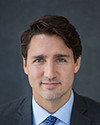
Justin Trudeau LiberalPrime Minister

Mr. Speaker, I am waiting for the independent special rapporteur—meaning the independent expert who will be responsible for investigating the mechanisms in place free of any partisan politics—to do their work. The rapporteur will determine whether we need more mechanisms, not only to ensure that the government can do its utmost to protect our democracy and our institutions, but also so that Canadians can have confidence that everything is being done to protect our democracy, our elections and our institutions.

Democratic InstitutionsOral Questions

2:40 p.m.

Bloc

Marie-Hélène Gaudreau Bloc Laurentides—Labelle, QC

Mr. Speaker, it is understandable that the Prime Minister prefers to sweep the issue of interference under the rug. It is understandable that he does not want to hear it mentioned ever again and that he wants to move on.

However, it is not that simple, and it will take more than a secret committee and a rapporteur doing the Prime Minister's bidding. The Prime Minister is playing with public confidence in our electoral system, and that is not very good news. I invite him to listen to the opposition parties. Will he establish an independent public commission of inquiry into foreign election interference?

Democratic InstitutionsOral Questions

2:45 p.m.

Papineau Québec

Liberal

Justin Trudeau LiberalPrime Minister

Mr. Speaker, I find my hon. colleague's comments to be rather disturbing, suggesting that experts may not be as well suited to protect our democracy as the opposition parties.

We are not claiming that one party is better suited than the others for protecting the integrity of our institutions and our elections. That is precisely why Canadians want us to rely on non-partisan experts to make recommendations and to ensure that everything is being done to ensure that they can have confidence in our processes.

Democratic InstitutionsOral Questions

2:45 p.m.

Carleton Ontario

Conservative

Pierre Poilievre ConservativeLeader of the Opposition

Mr. Speaker, which staff members in the Prime Minister's Office did CSIS brief that there was a Liberal candidate implicated in a foreign interference network? I would like their names.

Democratic InstitutionsOral Questions

2:45 p.m.

Papineau Québec

Liberal

Justin Trudeau LiberalPrime Minister

Mr. Speaker, I have addressed a number of questions along the lines of national security. I want to point out another issue that I know is preoccupying for Canadians.

Just recently, Conservative Party MPs knowingly dined with a far-right German politician. Christine Anderson and her party's far-right, xenophobic, anti-science, pro-Putin views are well known. The member's carefully crafted condemnation that neither he nor his MPs will repeat publicly will not cut it. It is time he gave Canadians real answers and apologize.

Democratic InstitutionsOral Questions

2:45 p.m.

Carleton Ontario

Conservative

Pierre Poilievre ConservativeLeader of the Opposition

Mr. Speaker, the Prime Minister's Office was briefed three weeks before the 2019 election about a candidate who was implicated in a foreign interference network.

Which members of the Prime Minister's staff were present for that briefing? We would like their names, please.

Democratic InstitutionsOral Questions

2:45 p.m.

Papineau Québec

Liberal

Justin Trudeau LiberalPrime Minister

Mr. Speaker, it is extremely important that, as a Parliament, as parliamentary committees, as a government and as Canadians, we look into the issue of foreign interference. That is why, at parliamentary committee, the ministers of democratic institutions and foreign affairs are scheduled to appear tomorrow. PROC has heard from Elections Canada, the director of CSIS, the chief of the CSE, the deputy commissioner of the RCMP, the deputy minister of foreign affairs and the deputy minister of international trade.

To quote the member for Carleton, “for hundreds of years, the principle of ministerial accountability has been paramount here in the House and in its committees.” We agree.

Democratic InstitutionsOral Questions

2:45 p.m.

Carleton Ontario

Conservative

Pierre Poilievre ConservativeLeader of the Opposition

Mr. Speaker, well, if he believes that he should be responsible, then he should answer the question.

Which members of his staff were briefed by CSIS that one of his candidates was implicated in a foreign interference ring, and was Katie Telford, his chief of staff, among those briefed, yes or no?

Democratic InstitutionsOral Questions

2:45 p.m.

Papineau Québec

Liberal

Justin Trudeau LiberalPrime Minister

Mr. Speaker, Canadians can well see that there are important partisan and political considerations overlaying all these exchanges in the House, which is why Canadians want us to be able to step back as a country and see what actually happened, who actually was doing their job to protect against foreign interference and was everyone doing the right things.

That is why pulling forward an independent expert to oversee the work that is being done to ensure everything that needed to be done was done and was done properly, and that it continues to be done, is going to be important, and that is what we are proposing.

Women and Gender EqualityOral Questions

2:45 p.m.

NDP

Laurel Collins NDP Victoria, BC

Mr. Speaker, on International Women's Day, we must recognize that indigenous women, girls and two-spirit people experience higher levels of violence. They are murdered and go missing at disproportionate rates, but after eight years, the Liberals have barely implemented any of the calls for justice from the MMIWG2S report. Indigenous women, girls and two-spirit people deserve better.

My colleague from Winnipeg Centre has urged the government to create a red dress alert to save countless lives. Will the Prime Minister do it?

Women and Gender EqualityOral Questions

2:45 p.m.

Papineau Québec

Liberal

Justin Trudeau LiberalPrime Minister

Mr. Speaker, on this International Women's Day, and every day, our hearts are with survivors and families of missing and murdered indigenous women, girls and 2SLGBTQI+ people. Addressing this ongoing violence requires living up to our goals as a country and all the calls for justice. We are taking a whole-of-government approach, supported by an over $2-billion investment in concrete measures to keep people safe and a $4-billion investment to support indigenous housing needs. We know there is more to be done, and we will continue to do it urgently.

Women and Gender EqualityOral Questions

2:50 p.m.

NDP

Lisa Marie Barron NDP Nanaimo—Ladysmith, BC

Mr. Speaker, as we mark International Women's Day, we must address the ever-increasing coordinated and dangerous campaigns of hate targeting trans women across Canada and abroad for being who they are. Several hundred Canadian organizations and civil society groups are declaring that gender equity cannot exist without uplifting, celebrating and supporting trans women.

Will the Prime Minister hear their call for action and include trans people and trans women in the upcoming national action plan to combat hate?

Women and Gender EqualityOral Questions

2:50 p.m.

Papineau Québec

Liberal

Justin Trudeau LiberalPrime Minister

Mr. Speaker, we know that even as we celebrate International Women's Day today, trans women in particular are facing extraordinarily dangerous degrees of hate and violent acts. That is why we continue to reinforce that everyone has the right to live free from violence.

Since 2015, we have taken real action to end gender-based violence in our communities by developing our first federal strategy to prevent gender-based violence and making historic investments to prevent and end gender-based violence. We know we have much more to do, including to protect trans women, and we will do that.

Women and Gender EqualityOral Questions

2:50 p.m.

Liberal

Taleeb Noormohamed Liberal Vancouver Granville, BC

Mr. Speaker, on International Women's Day, we celebrate the contributions, achievements and leadership of women and girls in my constituency and around the world, but we cannot forget that the fight for gender equality must also be driven by men and boys. Access to abortion is an issue that impacts us all, and we know how important access to this reproductive health service is.

Could the Prime Minister tell the House what the government is doing to ensure everyone has the right to make decisions about their own bodies?

Women and Gender EqualityOral Questions

2:50 p.m.

Papineau Québec

Liberal

Justin Trudeau LiberalPrime Minister

Mr. Speaker, I thank the hon. member for Vancouver Granville for his hard work and his advocacy. Here in Canada, universal access to abortion is guaranteed and protected under the Canada Health Act, but we know that in Canada there are still those, even in the House, who would like to resurface the debate on the right to abortion.

This cannot be ignored, and we must remain vigilant. We will, on this side of the House, always unequivocally stand up for women's fundamental right to choose.

Democratic InstitutionsOral Questions

2:50 p.m.

Carleton Ontario

Conservative

Pierre Poilievre ConservativeLeader of the Opposition

Mr. Speaker, during the 2019 election, the intelligence services warned the Prime Minister's Office that at least one of his Liberal candidates was part of a foreign interference network.

Is that candidate now part of the Prime Minister's caucus, yes or no?

Democratic InstitutionsOral Questions

2:50 p.m.

Papineau Québec

Liberal

Justin Trudeau LiberalPrime Minister

Mr. Speaker, as the national security advisor and I said last fall, we have no information that any federal candidates received money from China. That remains the case today.

Democratic InstitutionsOral Questions

2:50 p.m.

Carleton Ontario

Conservative

Pierre Poilievre ConservativeLeader of the Opposition

Mr. Speaker, I will repeat the question. Three weeks before the 2019 election, our intelligence services notified the Prime Minister's Office that one of his candidates was implicated in a foreign interference network.

According to our intelligence agencies, were any members of the Prime Minister's party or any of his ministers part of that network, yes or no?

Democratic InstitutionsOral Questions

2:50 p.m.

Papineau Québec

Liberal

Justin Trudeau LiberalPrime Minister

Mr. Speaker, I have answered that question many times. I know there are other important questions Canadians have for the Conservative leader.

Just recently, Conservative Party members dined with a far-right German politician. Christine Anderson and her party's far-right, xenophobic, anti-science, pro-Putin views are well known.

The Leader of the Opposition's carefully crafted condemnation, which neither he nor his MPs will repeat, will not cut it. It is time he gave Canadians real answers and apologized.

Democratic InstitutionsOral Questions

2:55 p.m.

Carleton Ontario

Conservative

Pierre Poilievre ConservativeLeader of the Opposition

Mr. Speaker, obviously, members of the Prime Minister's Office were present when our intelligence services warned his office that one of his candidates was part of the interference network.

Was Katie Telford aware, yes or no, of that warning? Did she inform the Prime Minister, yes or no?

Democratic InstitutionsOral Questions

2:55 p.m.

Papineau Québec

Liberal

Justin Trudeau LiberalPrime Minister

Mr. Speaker, I know that Canadians have many questions about that. That is why we proposed mechanisms to allow independent experts to ensure that everything is being done.

Everything was done to protect our institutions and our elections from foreign interference. Obviously, this includes work done by parliamentary committees. That is why the minister responsible for democratic institutions and the foreign affairs minister will appear before committee tomorrow.

The House of Commons Standing Committee on Procedure and House Affairs has already heard from Elections Canada officials, the director of CSIS, the chief of the CSE, the deputy commissioner of the RCMP, the deputy minister of foreign affairs and—

Democratic InstitutionsOral Questions

2:55 p.m.

The Speaker Anthony Rota

The hon. Leader of the Opposition.

Democratic InstitutionsOral Questions

2:55 p.m.

Carleton Ontario

Conservative

Pierre Poilievre ConservativeLeader of the Opposition

Mr. Speaker, if the Prime Minister respects committees, why did he prevent them from doing their work?

He is currently obstructing a motion to have his chief of staff testify. Katie Telford was apparently informed by intelligence services of foreign interference in our electoral system.

Will the Prime Minister be transparent and let Katie Telford testify before the parliamentary committee, yes or no?

Democratic InstitutionsOral Questions

2:55 p.m.

Papineau Québec

Liberal

Justin Trudeau LiberalPrime Minister

Mr. Speaker, it has been clearly established that ministerial responsibility is an important responsibility. That is why we are always willing to participate in the work of committees, including by sending the minister responsible for democratic institutions and the foreign affairs minister to committee tomorrow.

I want to quote someone: For hundreds of years, ministerial responsibility has been a key principle in the House and at committees.

The member for Carleton said that. We entirely agree with what he said several years ago.