House of Commons Hansard #212 of the 44th Parliament, 1st session. (The original version is on Parliament's site.) The word of the day was sanctions.

Topics

line drawing of robot

This summary is computer-generated. Usually it’s accurate, but every now and then it’ll contain inaccuracies or total fabrications.

Canada Pharmacare Act First reading of Bill C-340. The bill introduces the Canada Pharmacare Act, establishing a framework for universal, comprehensive, and public pharmacare across Canada, modeled on the Canada Health Act to ensure affordable prescription medications. 200 words.

Inquiries Act First reading of Bill C-341. The bill amends the Inquiries Act to ensure that Parliament, not the government, determines the commissioners for future commissions of inquiry, aiming to strengthen democratic accountability. 200 words.

Human Resources, Skills and Social Development and the Status of Persons with Disabilities Members debate the fourth report of the Standing Committee on Human Resources, Skills and Social Development and the Status of Persons with Disabilities, concerning Canada's housing crisis. Conservatives argue that the federal government's policies have led to doubled rents and home prices, advocating for reduced municipal regulations and private sector incentives for purpose-built rentals. Liberals highlight their National Housing Strategy and historic investments, while the NDP and Bloc Québécois emphasize the need for affordable housing and stopping the financialization of housing. 24300 words, 3 hours.

Petitions

Immigration and Refugee Protection Act Report stage of Bill S-8. The bill aims to amend the Immigration and Refugee Protection Act, making individuals sanctioned under the Special Economic Measures Act inadmissible to Canada. Liberals support the bill, stating it closes a legislative gap to prevent human rights abusers and those involved in international peace breaches from entering. Conservatives and NDP, while supporting the bill's intent, criticize the government's inconsistent application and enforcement of existing sanctions, such as the Magnitsky Act and the listing of the IRGC. The Bloc Québécois emphasizes Canada remaining a refuge, not a haven for criminals. 19500 words, 2 hours in 2 segments: 1 2.

Statements by Members

Question Period

The Conservatives demand an independent public inquiry into foreign interference, accusing the government of cover-ups and delays. They criticize the Liberals' inflationary spending, which has caused high housing and rent costs, and food bank usage. They also call for axing the carbon tax and allege intimidation of an MP.
The Liberals emphasize their efforts to address foreign interference through collaboration, rejecting partisanship. They defend their fiscal record, highlighting investments in housing, child care, and dental care, while criticizing Conservative calls for cuts. They also discuss support for Ukraine, aid for wildfire victims, and gun violence prevention.
The Bloc focuses on establishing an independent public inquiry into foreign interference, with the commissioner setting its mandate quickly. They also push for emergency measures and easier EI for wildfire victims, and ensuring official language compliance in documents.
The NDP pushes for affordable student rent and universal pharmacare to help Canadians afford prescription drugs. They also demand the Canada disability benefit and raise concerns about job losses and environmental damage from port expansion.

Alleged Breach of Government Obligation to Appoint Officer of Parliament—Speaker's Ruling The Speaker rules on a question of privilege regarding the vacant Conflict of Interest and Ethics Commissioner position, concluding it is not a prima facie question of privilege due to timing. 500 words.

Alleged Intimidation of Member Members debate a question of privilege regarding a message sent by the Minister of Justice to an MP, discussing alleged attacks on Justice Iacobucci's integrity and the Minister's stated intention to share this disrespect with the Italian Canadian community. 400 words.

Violence Against Pregnant Women Act Second reading of Bill C-311. The bill, Bill C-311, an act to amend the Criminal Code (violence against pregnant women), aims to make pregnancy an explicit and mandatory aggravating factor in sentencing for crimes against pregnant women. Conservative members argue it is a common-sense measure to protect vulnerable women. However, Liberal, NDP, and Bloc Québécois members oppose it, stating it is a thinly veiled attempt to reopen the abortion debate and could undermine women's reproductive rights by implicitly recognizing fetal personhood. They also contend that judges already have the discretion to consider pregnancy as an aggravating factor. 7000 words, 1 hour.

Government Business No. 26—Amendments to the Standing Orders Members debate making hybrid sittings permanent, with Liberals and NDP emphasizing increased diversity and accessibility, work-life balance, and parliamentary continuity during crises. Conservatives and the Bloc Québécois express concerns about eroding accountability, straining interpreters, and diminishing in-person interaction, advocating for consensus or a sunset clause for such significant changes. 49900 words, 5 hours.

Lebanese Heritage Month Act Second reading of Bill S-246. The bill S-246 designates November as Lebanese Heritage Month to acknowledge the significant contributions of Lebanese Canadians across the country. Members from various parties highlight the community's resilience and cultural richness, their historical impact on Canada from the fur trade to business, and the importance of celebrating their heritage and traditions. The bill passed unanimously. 6400 words, 45 minutes.

Adjournment Debates

East Prairie Métis Settlement Blake Desjarlais asks Irek Kusmierczyk about assistance for the East Prairie Métis Settlement after wildfires destroyed homes and infrastructure. Desjarlais emphasizes the need for temporary housing and infrastructure repair, and criticizes the minister's initial lack of awareness. Kusmierczyk outlines federal support for Alberta's wildfires and commits to working with partners.
Roberts Bank terminal expansion Elizabeth May criticizes the approval of the Roberts Bank terminal expansion, citing the threat to endangered species. Irek Kusmierczyk defends the project, emphasizing its economic benefits and the 370 legally binding environmental conditions. May rebuts this, accusing the government of fakery regarding environmental concerns.
Canada disability benefit Mike Morrice expresses concern for people with disabilities. He urges support for Senate amendments to Bill C-22, and for the bill to be budgeted. Irek Kusmierczyk assures Morrice the government shares his urgency, and mentions actions taken to create a barrier-free Canada.

Was this summary helpful and accurate?

The EconomyOral Questions

2:25 p.m.

Papineau Québec

Liberal

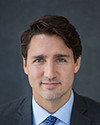
Justin Trudeau LiberalPrime Minister

Mr. Speaker, we know how much the Leader of the Opposition has asked us to trust independent experts and not Liberals on various issues of importance. We disagree. We think Liberals have important things to say.

However, if he is looking for a strong independent voice, he can look no further than the Governor of the Bank of Canada, who recently confirmed that government spending was not “contributing to the slowing” of the economy. Nor was it “standing in the way of getting inflation back to target.”

We continue to invest in supporting Canadians in targeted ways, while the Conservatives continue to talk about cuts to programs and services.

The EconomyOral Questions

2:25 p.m.

Carleton Ontario

Conservative

Pierre Poilievre ConservativeLeader of the Opposition

Mr. Speaker, if he does not trust Liberals on the economy, why should anybody else?

It was, in fact, his own finance minister who, just weeks before she introduced her budget, said that deficits were like pouring gas on the inflationary fire. Then weeks later she introduced $60 billion, or $4,200 per family, of brand-new gas on that fire.

Our children are screaming because of the debt they are going to inherit from the government. Will the Prime Minister act responsibly and introduce a plan to balance the budget to bring down inflation and interest rates?

The EconomyOral Questions

June 13th, 2023 / 2:25 p.m.

Papineau Québec

Liberal

Justin Trudeau LiberalPrime Minister

Mr. Speaker, the finance minister said that, and then she brought in a responsible and fiscally sound budget that continues to contribute.

I know the Conservatives do not like it because it gets in the way of a good political argument, but if we look at the facts, we have the lowest deficit in the G7 and the best debt-to-GDP ratio, and we have preserved our AAA credit rating, while being there to support Canadians who need it in targeted non-inflationary ways.

While the Conservatives continue to propose cuts in programs, cuts in help for Canadians and cuts to services, we will continue to be there in a way that continues to fight inflation and support Canadians.

HousingOral Questions

2:25 p.m.

Carleton Ontario

Conservative

Pierre Poilievre ConservativeLeader of the Opposition

Mr. Speaker, the Prime Minister's inflationary spending binge caused the price of everything to go up. All that spending and all that money he flooded into the financial system bid up housing prices, which doubled, leading to the most expensive housing prices in the G7. It now takes 25 years for the average family in Toronto to save for a down payment. They used to be able to pay off an entire mortgage in that time period. It takes roughly 90% of a Vancouver family's monthly income to pay the average monthly mortgage.

Will the Prime Minister balance the budget to bring down inflation and interest rates so that Canadians do not lose their homes?

HousingOral Questions

2:25 p.m.

Papineau Québec

Liberal

Justin Trudeau LiberalPrime Minister

Mr. Speaker, if the Leader of the Opposition were serious about housing, he would have supported our housing investments. Instead, he is focused on cutting services, picking fights with municipalities and protecting wealthy landlords.

On this side, our plan includes collaborating with municipalities, including investing $4 billion to fast-track new housing approvals to create 100,000 new homes; tying infrastructure investments to housing; helping Canadians save up for their first homes; providing support for low-income renters; and converting surplus federal lands into affordable housing.

HousingOral Questions

2:25 p.m.

Carleton Ontario

Conservative

Pierre Poilievre ConservativeLeader of the Opposition

Mr. Speaker, the Prime Minister has had eight years to deliver on those promises. The only thing he has done is double the average rent, double the average mortgage payment and double the down payment on the average house. He has made Vancouver and Toronto two of the 10 most expensive cities in the world. It now takes 25 years to save enough money for a down payment.

Will the Prime Minister finally put an end to his inflationary deficits so as to reduce interest rates and enable Canadians to keep their homes?

HousingOral Questions

2:25 p.m.

Papineau Québec

Liberal

Justin Trudeau LiberalPrime Minister

Mr. Speaker, over the past few years, we have helped Canadians save for their first home through measures like the first-time homebuyer incentive and the tax-free first home savings account. We are investing in building and repairing more housing, including by helping municipalities accelerate the construction of 100,000 new units. We are making sure housing units are used as homes by putting an end to unfair practices that drive up prices. For example, we are prohibiting foreign actors from buying a home, and we are introducing a federal rule to discourage flipping.

Democratic InstitutionsOral Questions

2:30 p.m.

Bloc

Yves-François Blanchet Bloc Beloeil—Chambly, QC

Mr. Speaker, the resignation of the special rapporteur appointed by the Prime Minister could turn out to be a turning point in the crisis surrounding the independent public inquiry. The Minister of Intergovernmental Affairs, Infrastructure and Communities showed signs of openness that I welcome with a mixture of enthusiasm and caution.

I would like the Prime Minister to tell me if he would agree that the first thing that needs to be done, before any further action can be taken to bring this matter to a positive conclusion, is to put in place an independent public inquiry.

Democratic InstitutionsOral Questions

2:30 p.m.

Papineau Québec

Liberal

Justin Trudeau LiberalPrime Minister

Mr. Speaker, I want to thank the Bloc Québécois leader for suggesting some credible and reasonable names. We are quite willing to look at them and to continue working with the Bloc to establish a process that has the confidence of the House and of Canadians. The importance of the foreign interference issue far transcends partisan rhetoric or personal attacks.

We will work constructively, as we always have, to take this issue seriously, to continue the work we started and to restore Canadians' confidence in our electoral system and in our democracy.

Democratic InstitutionsOral Questions

2:30 p.m.

Bloc

Yves-François Blanchet Bloc Beloeil—Chambly, QC

Mr. Speaker, I have to come back to this. We have to first agree on one fundamental principle: A commission of inquiry and the one or more commission chairs who are appointed must be completely independent from the government in order to do their job properly.

If we agree on that principle, then and only then can we move forward and look at potential candidates. If the minister or the Prime Minister wants to talk to me about it, I can be reached at any time.

However, I do have a question for the Prime Minister. Can we agree that all of this should be clearly and formally resolved before we rise for the summer?

Democratic InstitutionsOral Questions

2:30 p.m.

Papineau Québec

Liberal

Justin Trudeau LiberalPrime Minister

Mr. Speaker, we agree that we need to move forward quickly and appropriately. I am very open to such discussions with the opposition parties. Unfortunately, over the past few months, we have seen a lot of partisanship, toxicity and personal attacks, which is shameful, but I am pleased that people are now open to taking the matter of foreign interference seriously.

We are here to work in good faith and to continue our work on foreign interference in order to protect our democracy, our institutions and our electoral system.

HousingOral Questions

2:30 p.m.

NDP

Jagmeet Singh NDP Burnaby South, BC

Mr. Speaker, when I was at university, my brother had to live with me and I had to work three jobs. It was a tough time, but things are even harder these days for students, who have to cram together into apartments that are too small, too expensive and substandard, just to make ends meet.

It is a matter of dignity. When will this government stop wasting time and start taking action to lower rent for students?

HousingOral Questions

2:30 p.m.

Papineau Québec

Liberal

Justin Trudeau LiberalPrime Minister

Mr. Speaker, for years, we have been investing in housing, in various programs to help students and low-income families and to encourage housing construction. We will continue to do that.

We know we have to be there for our students, because support for them in the short term will contribute to society in the long term. That is why we eliminated interest on federal student loans in the last budget. We will continue to be there with more help for students, which includes continuing to look at ways to help them with rent.

HousingOral Questions

2:30 p.m.

NDP

Jagmeet Singh NDP Burnaby South, BC

Mr. Speaker, I want the Prime Minister to imagine what it is like for students trying to find a place to rent in this country right now. Take for example a student in Windsor. The CBC reports that a 24-year-old student living in an apartment in Windsor with his sister is on the verge of homelessness because the cost of rent has gone up by so much. Sadly, this is the story of so many students who cannot find a place to rent that is within their budget. The reality is that the government has been a failure when it comes to housing.

When will the government take this issue seriously and take concrete steps to bring down the cost of rent for students?

HousingOral Questions

2:30 p.m.

Papineau Québec

Liberal

Justin Trudeau LiberalPrime Minister

Mr. Speaker, we took this issue seriously back in 2017 when we put forward a $40-billion national housing strategy that the Conservatives opposed, even though they had not engaged in housing for 10 years and then got up to about $70 billion in the national housing strategy.

More recently, we put $4 billion on the table directly to invest with municipalities instead of fighting with them like the Conservatives wanted to do; to work with them, to accelerate investments, to accelerate zoning processes, to accelerate permitting, to build more supply of housing and to take the pressure off so many Canadians around the housing market.

Democratic InstitutionsOral Questions

2:35 p.m.

Conservative

Michael Barrett Conservative Leeds—Grenville—Thousand Islands and Rideau Lakes, ON

Mr. Speaker, for months now the Prime Minister has tried to cover up Beijing's interference in our democracy. He has denied, he has changed his story and he has hired as many members of the Trudeau Foundation as will accept the job to try and help him with that cover-up.

Now that David Johnston has done what this House called on him to do and resigned from the made-up position that the Prime Minister gave him for $1,500 a day, will the Prime Minister do what this House has called on him to do three times and call a public inquiry?

Democratic InstitutionsOral Questions

2:35 p.m.

Beauséjour New Brunswick

Liberal

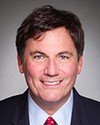
Dominic LeBlanc LiberalMinister of Intergovernmental Affairs

Mr. Speaker, I think the Prime Minister was clear in his response to a previous question today. Our government is looking to collaborate in a constructive way with opposition parties, to hear from experts and other professionals in this space, to design precisely those next steps forward since Mr. Johnston has decided to leave his position as special rapporteur.

We think that Canadians would benefit from a collaborative conversation, one that we have always been inclined to have. We found it difficult on the other side to find a willing partner, but we are more encouraged this week than we were a week ago.

Democratic InstitutionsOral Questions

2:35 p.m.

Conservative

Michael Barrett Conservative Leeds—Grenville—Thousand Islands and Rideau Lakes, ON

Mr. Speaker, Canadians have not been encouraged by the inaction of the government. We heard today at committee that the deputy minister for foreign affairs knew for two years that members of this House were being targeted for intimidation by foreign state actors like the dictatorship in Beijing. What did the government do? Absolutely nothing. It is not a comedy of errors, it is a tragedy of errors with the government. Opposition parties have three times called for the government to have a public inquiry and have been ready to collaborate the entire time.

Will the government now make up for lost time and the wasted months on this issue and finally call a transparent public inquiry?

Democratic InstitutionsOral Questions

2:35 p.m.

Beauséjour New Brunswick

Liberal

Dominic LeBlanc LiberalMinister of Intergovernmental Affairs

Mr. Speaker, I was surprised to hear a Conservative member speak about inaction on this file because that is exactly what the Leader of the Opposition did for two years when he was the minister responsible for democratic institutions.

Our government is the first government to take concrete steps to counter foreign interference in democratic institutions. We have strengthened these measures time and time again, and now we are looking forward again to hearing constructive suggestions from the opposition about how we can work together to further strengthen these measures. That has always been our approach and we will continue to do that.

Democratic InstitutionsOral Questions

2:35 p.m.

Conservative

Larry Brock Conservative Brantford—Brant, ON

Mr. Speaker, here we are. The government has wasted three months deflecting and dodging on this issue. Canadians have not been duped; no public inquiry, no truth and no responsibility has been shown by this government. Now, with David Johnston's resignation, the government has only one option, an open and independent inquiry. Canadians support it, the majority of this House supports it and even their very own Liberal minister declared that it was never off the table.

When will this government call a public inquiry?

Democratic InstitutionsOral Questions

2:35 p.m.

Eglinton—Lawrence Ontario

Liberal

Marco Mendicino LiberalMinister of Public Safety

Mr. Speaker, there is one thing that the hon. member said across the way that I do agree with, which is that we continue to look at all options including a public process to shine a light on the way in which we are fighting foreign interference. What is important now is that the Conservatives stop with the partisan attacks, roll up their sleeves and get down to work so that we can better protect our democratic institutions. That is work that the government has been committed to doing since day one.

This is not a partisan issue. We need to work together to overcome the challenges of foreign interference.

Democratic InstitutionsOral Questions

2:35 p.m.

Conservative

Larry Brock Conservative Brantford—Brant, ON

Mr. Speaker, the whole government is about partisanship. From day one, the Prime Minister has had zero interest in letting Canadians learn the truth. He refused to tell us what he knew and why he did nothing about it. He selfishly used David Johnston to delay the process and cool the air around the issue.

Now that Mr. Johnston has resigned, it is time for the Prime Minister to do what Canadians are demanding. While he laughs at me, I will ask him this question. Will he call a public inquiry right here, right now?

Democratic InstitutionsOral Questions

2:35 p.m.

Ajax Ontario

Liberal

Mark Holland LiberalLeader of the Government in the House of Commons

Mr. Speaker, when I was in opposition, I was a critic for public safety. We asked for information on national security. We asked to be able to see into every corner of government. The minister at that time, who is now the Leader of the Opposition, said no. He said no to an independent group of parliamentarians who could look into every aspect of national security.

We said yes. The members opposite had an opportunity using NSICOP. They then had an opportunity offered by the Prime Minister for the Leader of the Opposition to get a briefing. They also said no. They have another opportunity now to collaborate, to stop being so partisan, to put the national interests first and to participate.

Democratic InstitutionsOral Questions

2:40 p.m.

Conservative

Luc Berthold Conservative Mégantic—L'Érable, QC

Mr. Speaker, we learned this morning that the RCMP has opened more than 100 investigations into foreign interference. The RCMP is conducting investigations involving more than 100 Canadians who were influenced by a foreign state.

A real leader makes real decisions. A real leader takes responsibility for his decisions. The Prime Minister does neither. He has no backbone. He is incapable of making important decisions. That is why he chose a special rapporteur and gave his friend, the Minister of Intergovernmental Affairs, the option of trying to waltz around the issue and not have an independent public inquiry.

Will he stop waltzing around and finally launch an independent public inquiry?

Democratic InstitutionsOral Questions

2:40 p.m.

Eglinton—Lawrence Ontario

Liberal

Marco Mendicino LiberalMinister of Public Safety

Mr. Speaker, I want to express my gratitude to the commissioner of the RCMP for the update on RCMP investigations he provided to the committee earlier today. It is proof of the concrete action that the RCMP is taking to fight foreign interference.

Now the Conservatives must stop their squabbling and partisan games and do the work that will better protect our democratic institutions.